

When the kitchen, dining area, and living room share one space, small details are seen together. A warm wooden bowl in the kitchen may sit in the same view as a sofa and dining table. That can make decorating feel harder than it needs to be. Start with a few colors and textures you enjoy, then repeat them in different ways. These natural decor ideas focus on the finishing details that help an open-plan home feel connected. They work around the layout you already use. Choose one scene to try first, leaving the surfaces and walking routes ready for daily life.
Start here: To connect an open-plan home, repeat a small set of colors and materials across the kitchen, dining area, and living room. Use different shapes and textures so the spaces feel related without making every piece match.
1. Cream Sofa Cushions Linked to Cream Dining Seat Pads
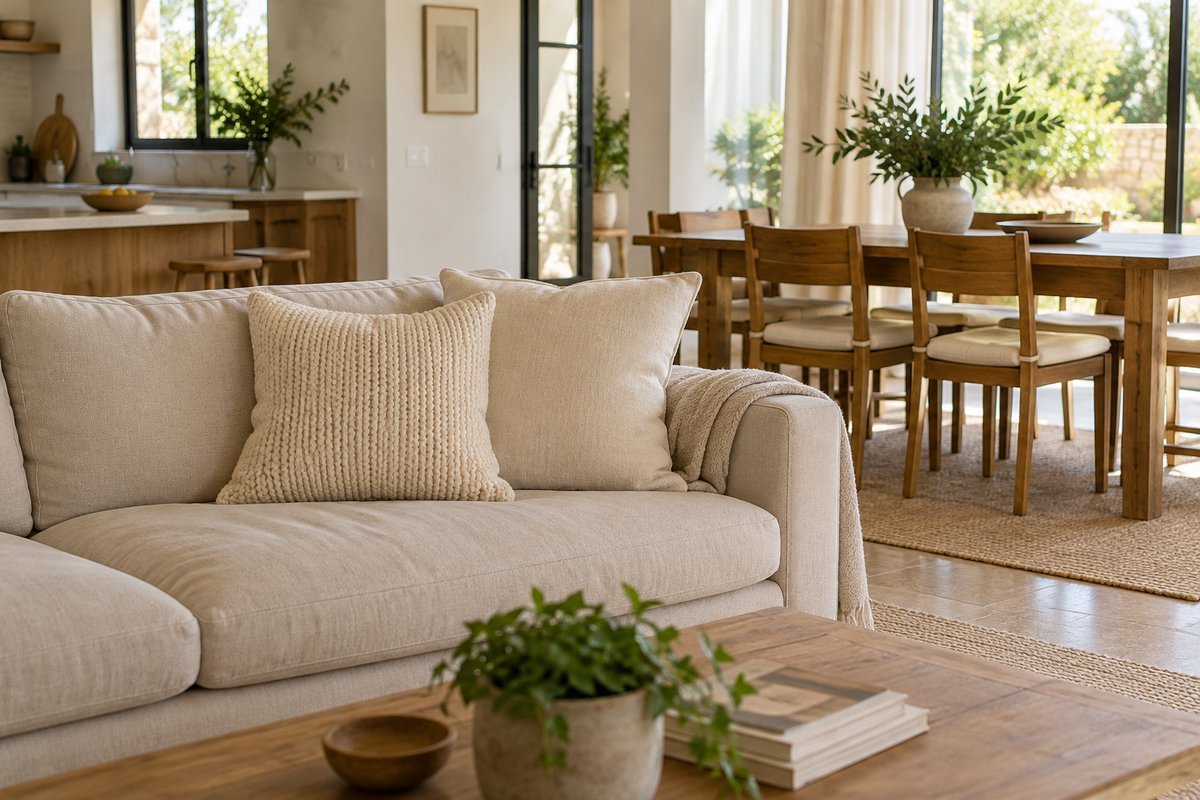
Picture a plain sofa with two cream textured cushions, with cream seat pads on the dining chairs beyond it. The fabrics do not need the same weave. One can be softly ribbed while the other is smooth and washable. Their shared color gives the two areas a gentle link without requiring matching furniture.
Look at both areas from the room’s main entrance before choosing shades. A bright cool white can look quite different from warm cream in the same view. Use samples when possible. Choose cushion and seat-pad covers for how they will be used and cleaned. A kitchen-side chair may need a tougher fabric than a sofa cushion. Keep the number modest so the soft details help the room rather than fill every seat.
2. A Wooden Fruit Bowl Echoed by a Wooden Side Table
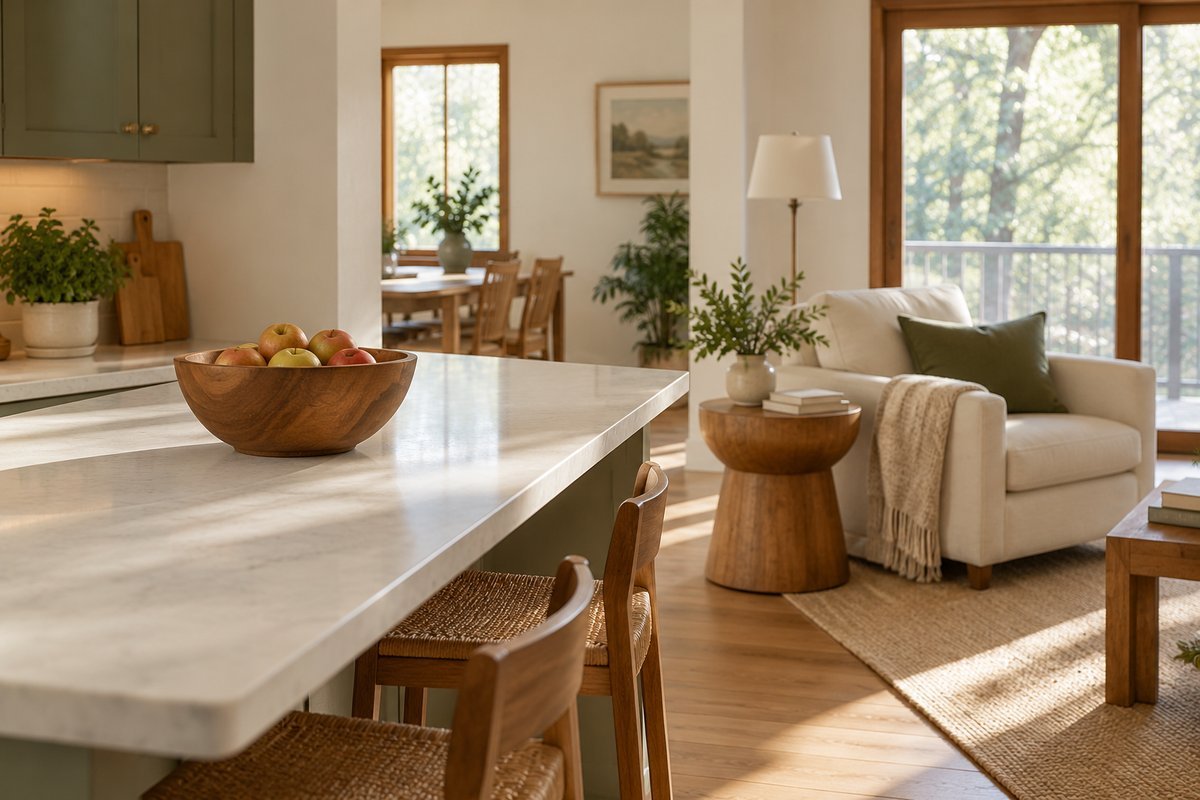
A useful kitchen bowl can connect with a living-room side table across the space. Imagine a medium brown fruit bowl on a pale counter and a similar wood tone beside a cream armchair. The shapes are different, but the warm color repeats. Leave the area around the bowl clear so the counter remains easy to use.
You do not need an exact wood match. Compare the main undertones and aim for a comfortable relationship. Keep food in a bowl made and cared for appropriately for that use. The side table should fit beside the chair without blocking its route. Before buying something new, move a bowl or small table you already own into the shared view and see whether the two areas feel more connected.
3. Clay-Colored Dining Napkins With a Clay Living-Room Vase
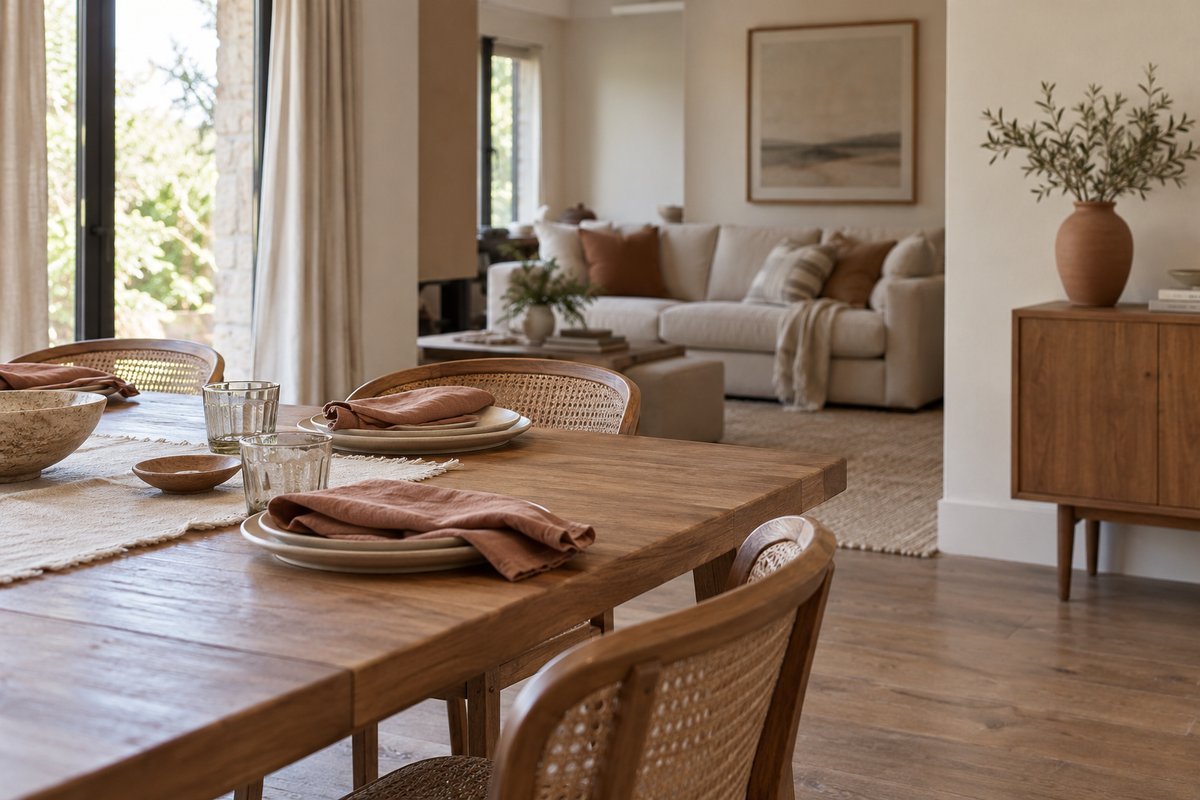
Picture a simple dining table set with muted clay-colored napkins. Across the room, a plain vase in a related shade sits on a low cabinet. That small repeat brings warmth to the shared view. Keep the flowers or stems simple so the vase’s color can do its work without introducing several more strong shades.
Choose napkins you can wash easily and a vase that suits its contents. Protect the cabinet from moisture if you use real flowers. You can keep the napkins in a basket when the table is not set; the color does not need to be on display all day. A repeated tone can be occasional rather than fixed. This makes the room flexible for meals, work, and other everyday uses.
4. A Linen-Look Curtain Beside a Plain Woven Dining Shade
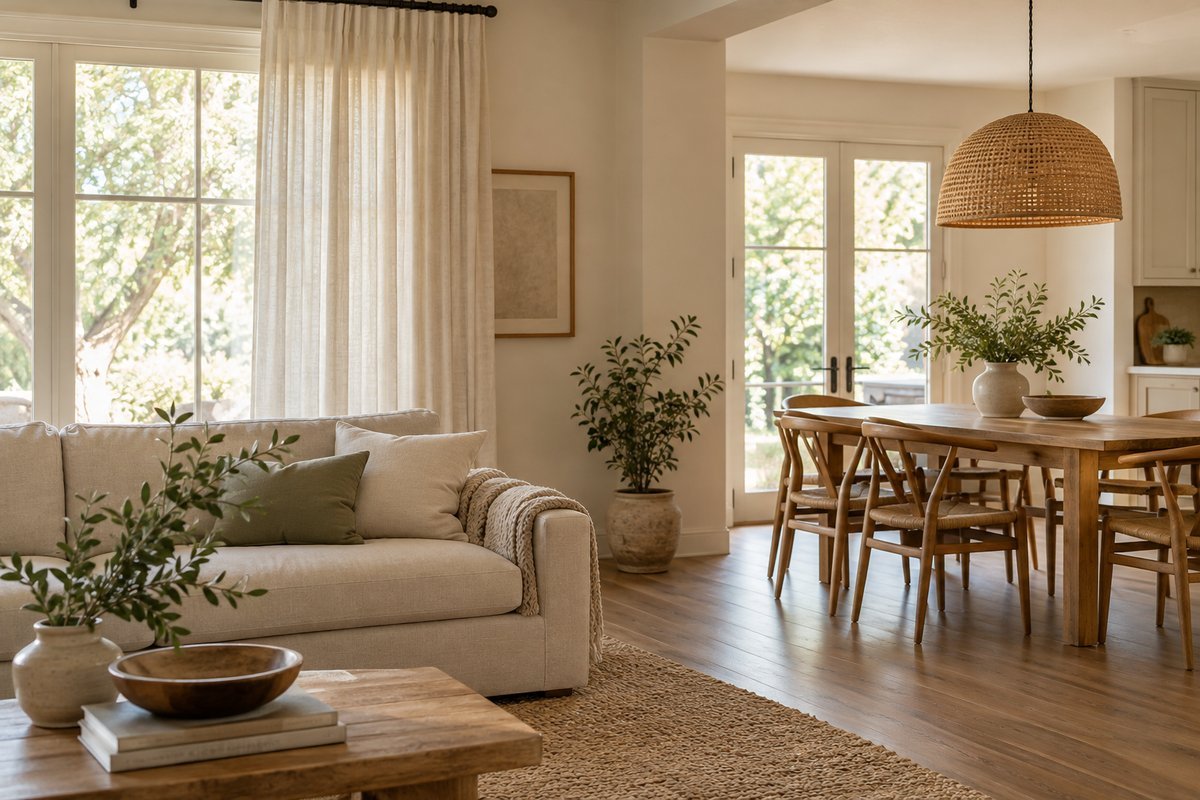
Soft window fabric and a woven-look shade can sit comfortably in one room. Imagine light cream curtains in the lounge and a simple tan light shade over the dining table. Their textures differ, but both have a quiet, natural look. Keep the furniture around them plain enough that the materials remain easy to notice.
Choose window coverings for privacy and light control first. A sheer curtain may need another layer at night. Any light shade must suit its fitting and bulb, with the clearances its maker requires. Fixed electrical changes need a suitably qualified person. Check how the two pieces look together from different parts of the room before adding more woven objects. A little texture can be enough in a space with many visible surfaces.
5. Green Kitchen Towels Repeated in a Living-Room Throw
A muted green towel can link the kitchen with a soft green throw in the seating area. Picture the towel on a proper rail and the throw folded over one sofa arm. Warm white walls and wooden furniture give the green room to stand out. This is a simple way to connect areas without changing paint or large furniture.
Place kitchen fabric where it can dry and stays clear of cooking heat. Choose the throw for comfort and care needs, not just for a color match. Close shades can work better than trying to match every fabric exactly. If green already appears in artwork, use that as your starting point. Keep other accent colors limited so the small repeats feel clear rather than lost among many competing details.

6. A Low Ceramic Group on a Shared Sideboard
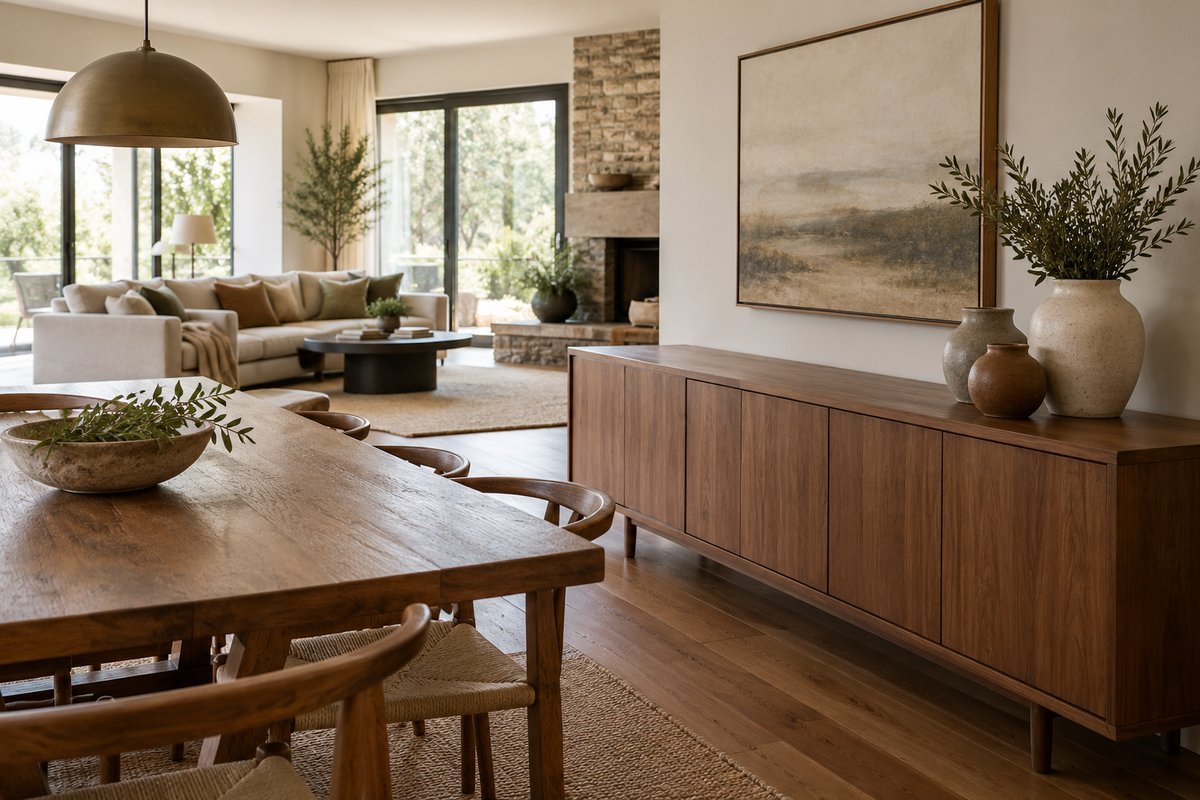
A sideboard visible from both the dining and living areas can hold one quiet display. Imagine three simple ceramic pieces in cream, warm gray, and brown, grouped at one end. The other end stays open for serving or setting down everyday items. The broad shapes bring texture without needing shelves full of small objects.
Choose pieces with different heights but enough space between them to see each outline. Keep fragile objects away from the edge and from doors that may swing nearby. If the sideboard is used often, put the group on a suitable tray that can move. This lets the furniture keep its main job. There is no need to style the whole top; an open surface can make the shared room feel easier to use.
7. A Plain Rug With a Small Textured Footstool
A simple rug and one textured footstool can give a lounge area warmth without several layers. Picture a pale flat-looking rug beneath a cream sofa, with a small woven-style footstool nearby. The footstool adds a rougher texture against the smoother fabric. A wooden coffee table keeps the materials connected.
Choose a rug suited to the floor, household, and traffic, with suitable grip where needed. Check that doors and walking routes remain clear. A footstool should be stable and intended for its use; a decorative basket is not a substitute for seating. Follow care guidance for both pieces. If the room already has a patterned floor, a plain rug can make the textures easier to see without adding another busy design.

8. A Pair of Simple Plant Pots in Separate Parts of the Room
Two plant pots in a similar warm neutral shade can create a gentle repeat across an open space. Imagine one beside a bright lounge window and another on a suitable kitchen-side shelf. The plants can differ in shape and size. The pots provide the link, so the greenery does not need to be arranged as a large collection.
Choose each plant for its own light and care needs rather than putting it somewhere only to balance the room. Protect furniture from water and make sure shelves can carry the load. Check suitability for children and pets when selecting species. If the second location does not suit a live plant, use another object in a related pot color instead. A visual link should not make plant care harder.
9. A Soft Brown Table Runner With Brown Picture Frames Nearby
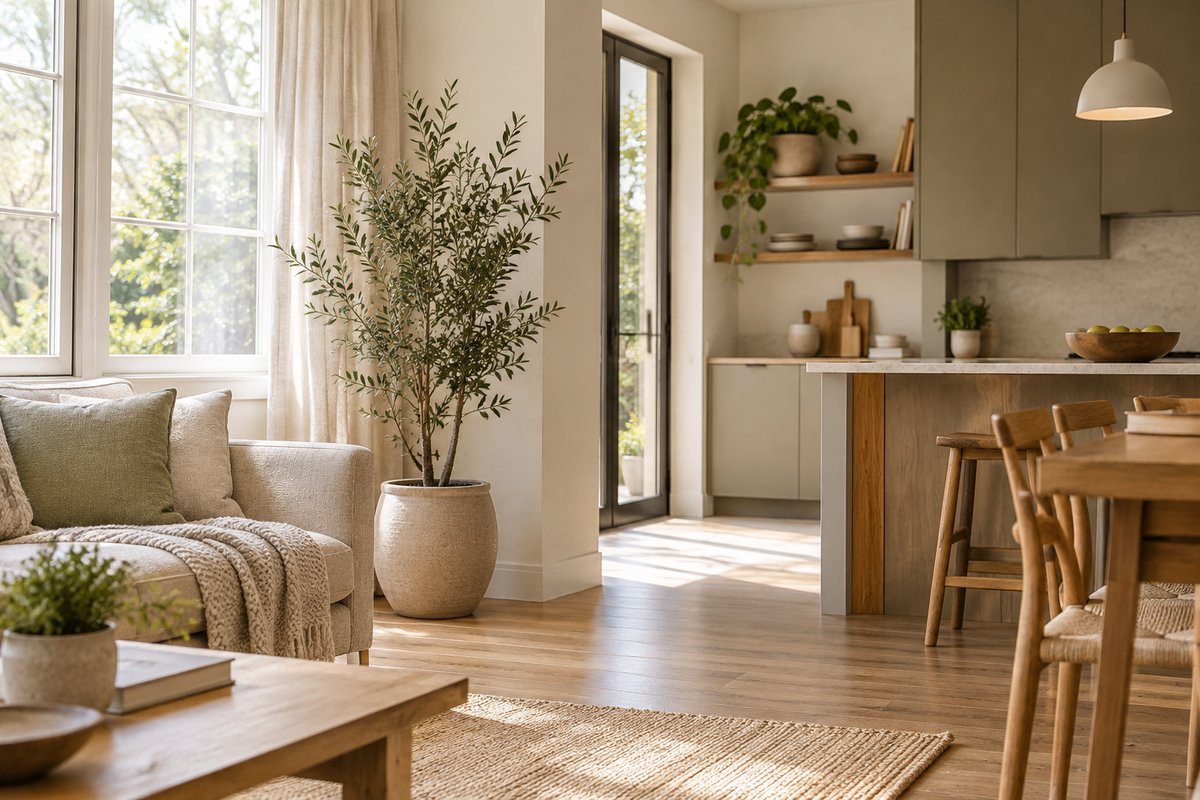
A muted brown runner can connect a dining table to framed art in the lounge. Picture plain fabric on a light wooden table, with two simple brown frames on a nearby wall. Keep the pictures themselves quiet in color. The shared frame-and-fabric tone brings the view together without making the artwork and table decoration identical.
Choose a runner length that does not catch on chairs or trail into a busy route. Remove it when the table is needed for messy tasks. Hang artwork with appropriate fittings and test the frame sizes with paper first. You can use existing frames in different shapes if their tones work together. A small repeated detail often feels more relaxed than changing every frame or cloth to match a new set.
10. A Natural Storage Basket Beside a Closed Wood Cabinet
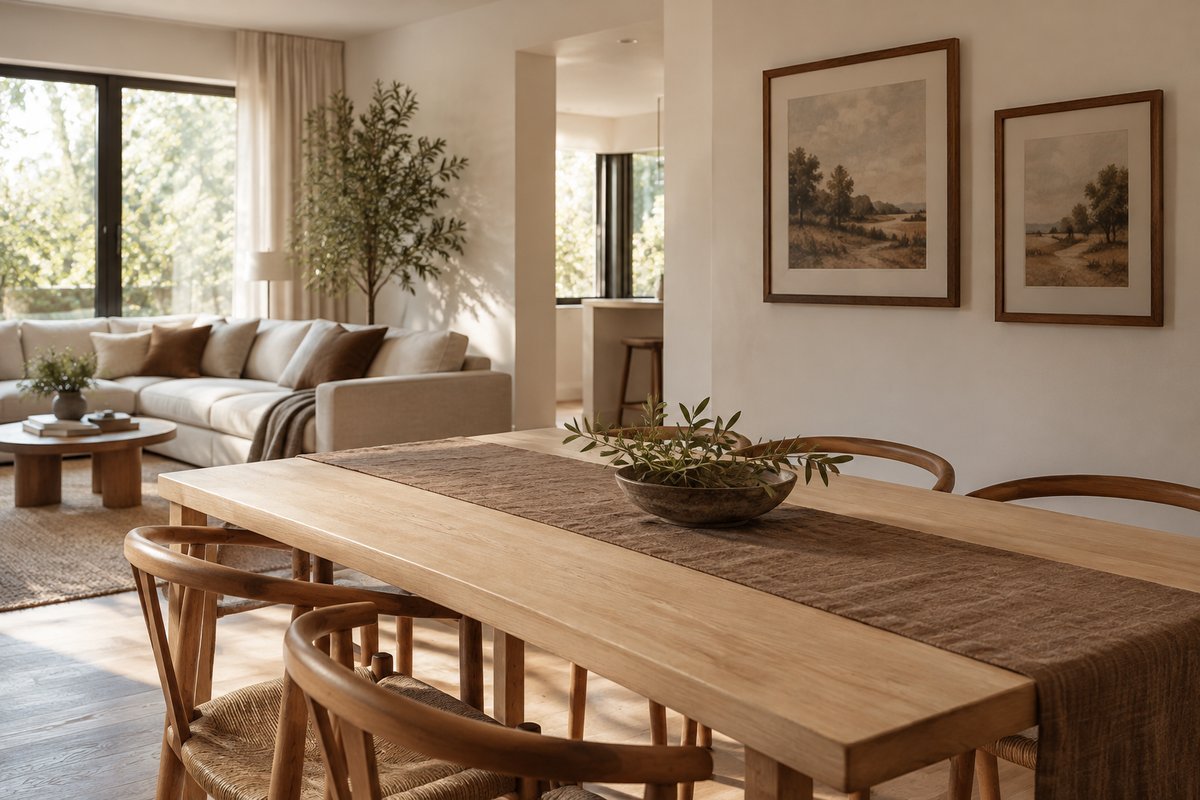
Picture one sturdy basket for spare throws beside a plain wooden cabinet. The basket is light tan, while the cabinet is a deeper brown. A small cream lamp above gives the scene a soft finish. The mixed wood-and-fiber tones add depth without requiring more furniture in the open room.
Choose a basket large enough for its contents but small enough to keep the route clear. Do not fill it with so many throws that they trail onto the floor. Check that cabinet doors and drawers open fully. If the basket makes the corner cramped, store the throws inside the cabinet instead. The useful texture can move to a smaller item elsewhere. Practical storage should remain easy to reach and easy to put away.
Repeat a Few Details, Then Stop
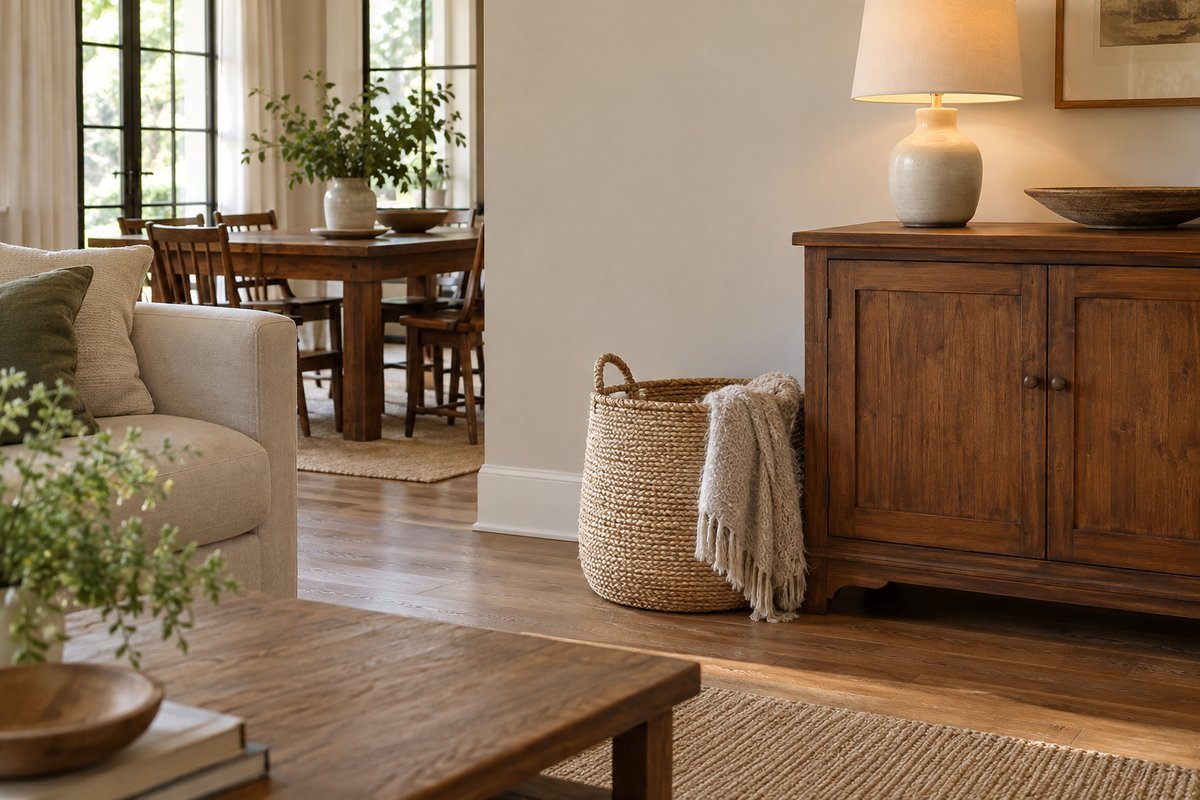
Stand where you can see the kitchen, dining table, and sofa together. Notice the colors and materials that already appear more than once. Choose one of those as a link before adding something new. A cream fabric, warm brown wood, or muted green accent can give you a clear starting point without changing the whole room.
Try one small repeat in another area and use the room normally for a few days. Check whether it helps the view without making cooking, cleaning, or sitting less comfortable. Remove anything that keeps getting moved out of the way. Natural decor can be simple and varied. You only need a few thoughtful links for the room to feel connected while each area still works for its own purpose.
Common Questions
Does all the wood need to match in an open-plan room?
No. Compare warm or cool undertones and the amount of each finish visible from the main entrance. A light table and a darker cabinet can sit comfortably together when a few smaller details repeat their tones.
How can I connect the kitchen and living room without buying furniture?
Try moving a bowl, cushion cover, throw, or ceramic piece you already own. Repeat one existing shade in the other area, then check that the change still leaves cooking surfaces, seats, and walking routes useful.
What is a good first step if the room feels busy?
Clear one shared sightline before adding decor. Remove objects that interrupt a useful surface, then choose one linking color or texture. Live with that small change before adding another.
More Ideas for Your Home
open living room layout ideas · warm neutral home decor ideas · budget living room details