
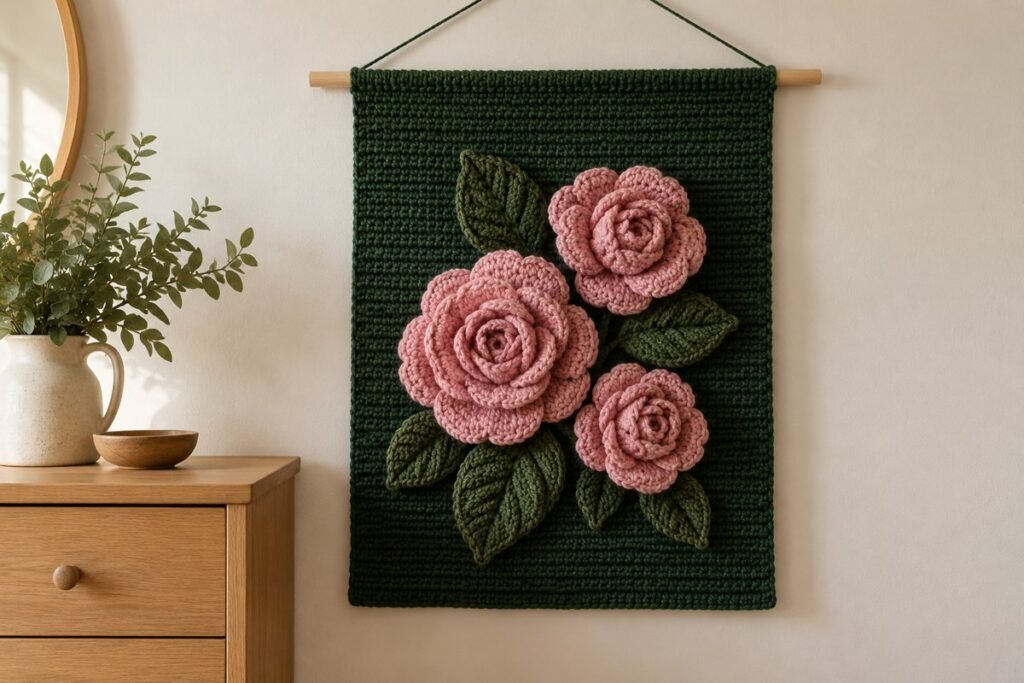
Floral crochet wall decor can bring color and soft texture to a room without taking up shelf space. There are plenty of looks beyond white petals and yellow centers: a small rose bouquet, a row of lavender stems, or one tulip on a narrow panel. The key is to choose a flower shape and display format that suit the wall you actually have.
These ten ideas focus on styling finished pieces or planning the look of a future project. You’ll find choices for framed crochet flowers, fabric panels, and open hoops, along with tips on scale and placement. If you prefer a daisy theme, start with our crochet daisy wall hanging ideas.
The ten display scenes below are AI-generated styling illustrations. They show color and placement ideas, not tested crochet patterns or completed projects. The separately credited bouquet photograph shows real crochet work.
Choose the Shape, Color, and Size First
Start with the wall rather than the yarn basket. A narrow strip beside a desk may suit one tall flower panel; a wide sideboard may work better with a horizontal hanging. Make a paper outline of the full piece, including its rod, frame, and loop, and try it on the wall before choosing a finished design.
- For a light, open look: try a hoop or a short branch-style arrangement.
- For a clear rectangular outline: choose a fabric panel with some backing visible around the flowers.
- For raised petals you want to frame: check the depth of a shadow box and the thickness of the work.
- For an easy color starting point: pick one flower shade, one green, and a quiet background.
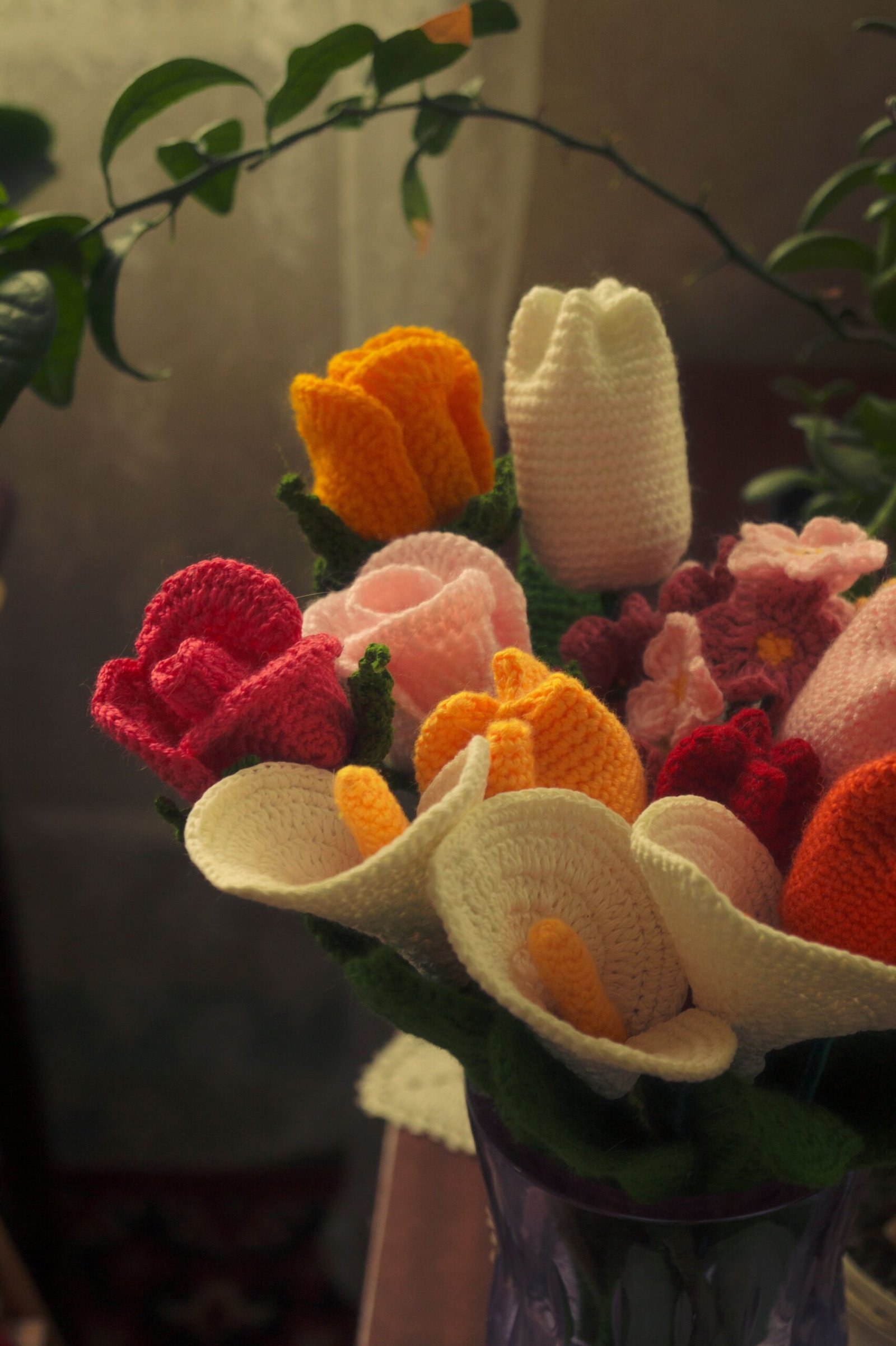
A real crochet bouquet is a useful reference for comparing flower shapes and color combinations. Notice how tall tulips, rounded flowers, and smaller blossoms create different outlines. You can borrow the palette without trying to copy the whole arrangement onto a wall.
10 Floral Crochet Wall Decor Ideas
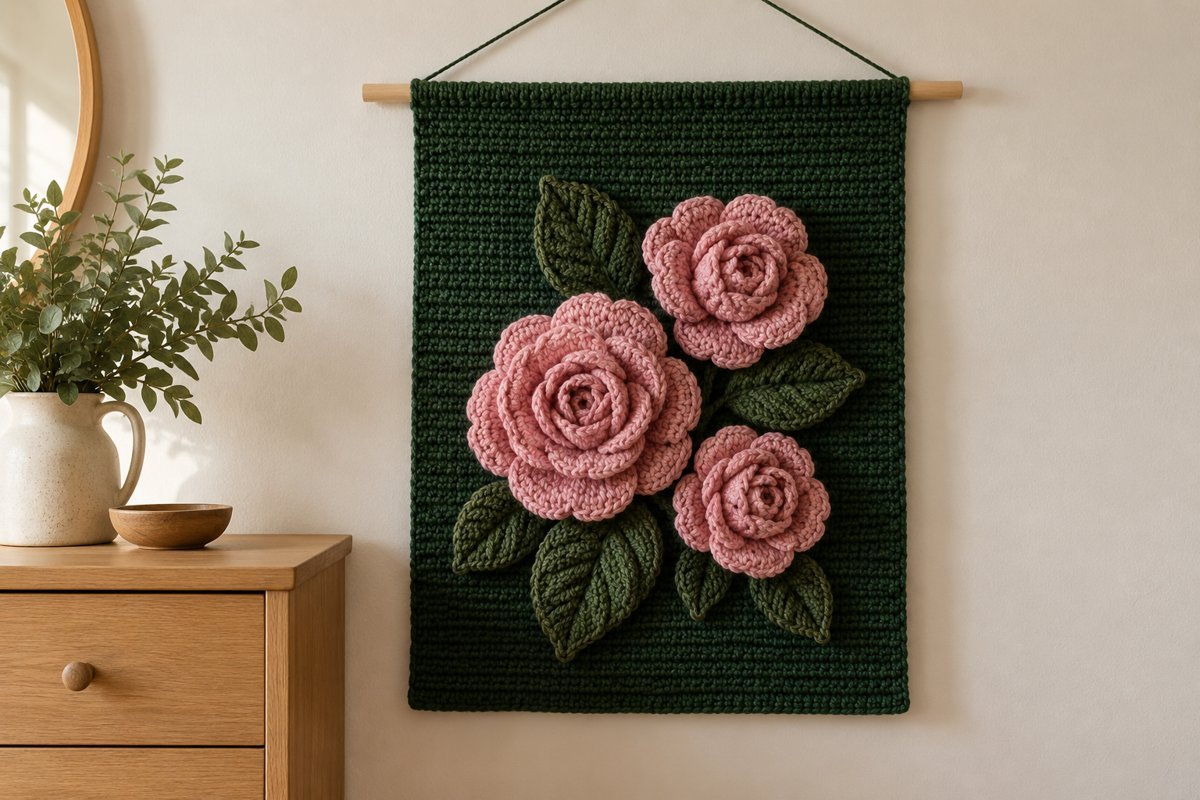
1. A Small Rose Bouquet on a Deep Green Panel
Three dusty pink crochet roses can give a simple wall panel a clear focal point. Group them like a small bouquet, with a few green leaves rather than a full field of flowers. A deep green backing makes the pink stand out, while a plain wooden rod keeps the edges simple. Try this beside a dresser or reading chair, where you can enjoy the raised petals up close.
Leave some bare wall around the panel so the bouquet has a clear outline. Before choosing a finished piece, check that the backing hangs evenly and the flowers do not pull it out of shape. For a handmade version, follow a suitable pattern and its assembly instructions. Keep it away from the spot where bags or coats tend to brush the wall.
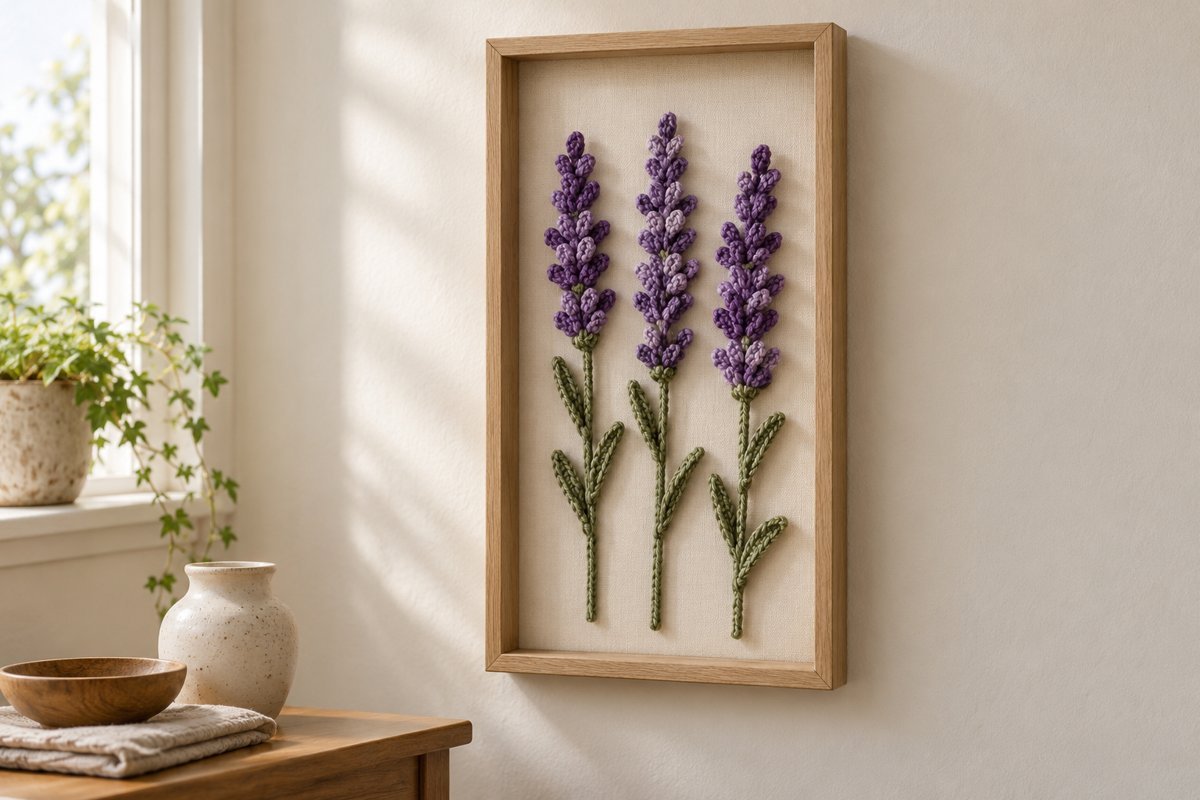
2. Three Lavender Stems in a Narrow Shadow Box
A slim light wood frame can make crochet lavender feel like a small botanical study. Set three purple stems against cream backing, with space between the flower heads. The simple arrangement works well above a bedside table or on a narrow wall near a reading corner. Keep nearby accessories quiet so the fine yarn details remain easy to see.
Measure the thickest part of the crochet before choosing the frame. A shadow box needs enough depth to avoid flattening the flowers; an ordinary picture frame may be too shallow. Ask the maker or a framer about support that will not stretch the work. Test the purple against the backing in your room’s light—a slightly deeper shade may read more clearly than very pale lavender.
3. Red Poppy Shapes Above a Plain Sideboard
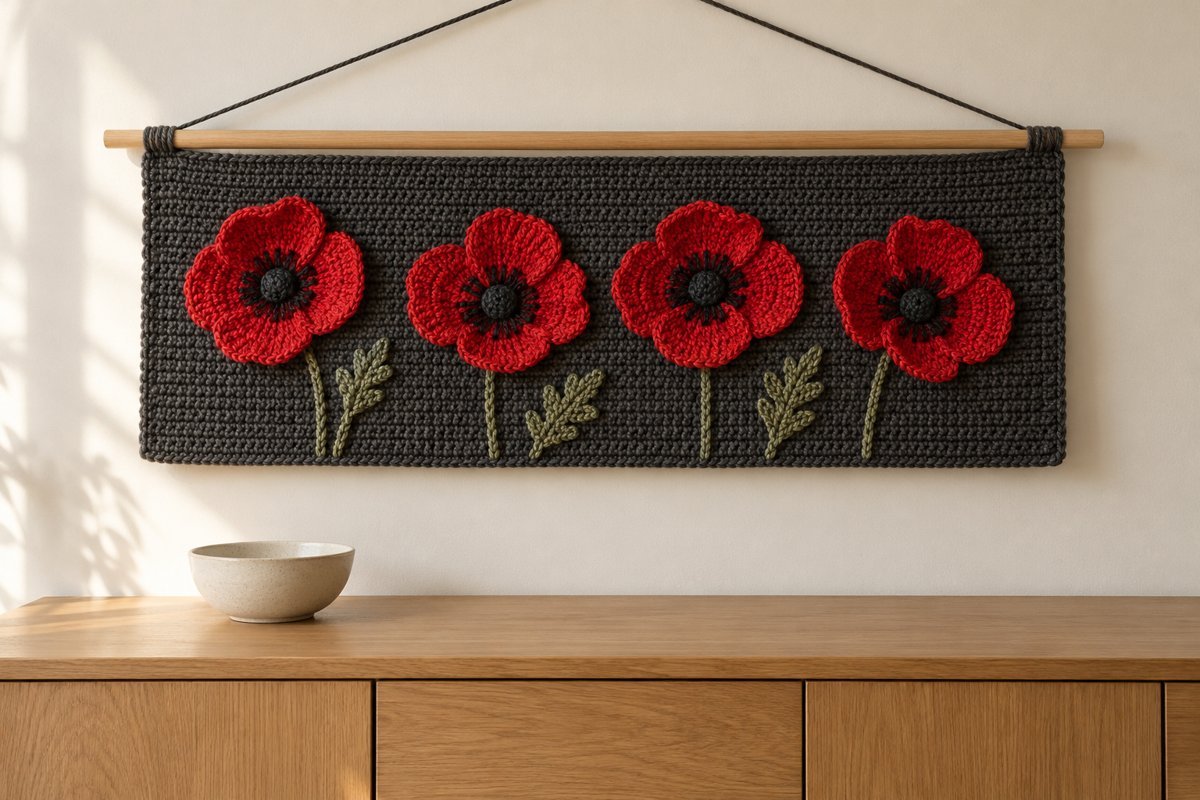
A short row of red crochet poppy shapes adds a stronger color accent. Space the flowers across a charcoal backing so their dark centers and rounded petals remain distinct. Above a low wooden sideboard, the horizontal shape can balance the furniture without filling the whole wall. One cream bowl below is enough to complete the scene.
Check the full width against the sideboard before buying or making the hanging. Leave a comfortable gap between the fabric and anything on the furniture. If bright red feels too strong, try brick or rust with a softer dark backing. These are decorative flower interpretations; choose a real pattern if you want to reproduce a particular shape.
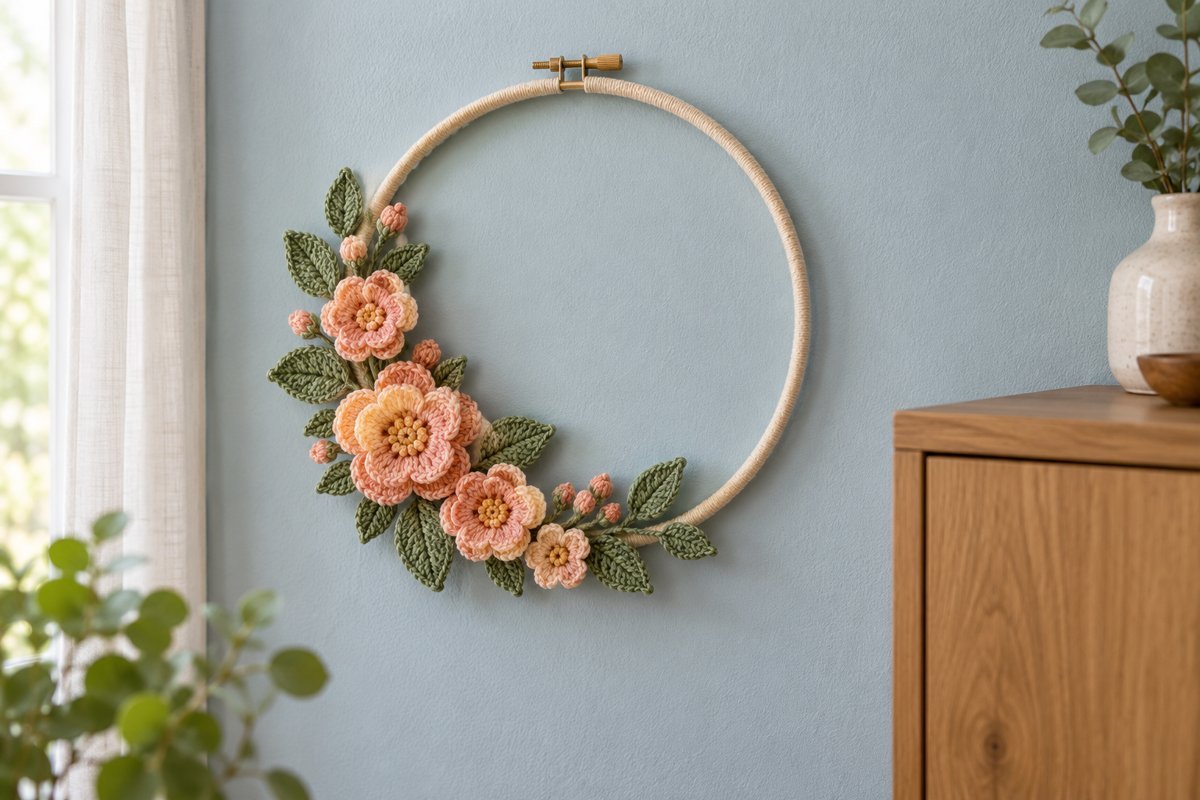
4. Peach Blossoms Along an Open Hoop
An open hoop suits a small group of peach crochet blossoms and sage leaves. Gather the flowers along one side and leave most of the center empty. Against a pale blue wall, the cream hoop creates a clear outline without looking heavy. The rounded shape is especially useful beside a rectangular cabinet or a group of simple framed pictures.
Choose a hoop size in relation to the wall, not just the flowers. A few blossoms with breathing space often look calmer than a tightly packed ring. Check the hoop, hanging loop, and flower attachments, then use a fixing suited to the finished weight. Keep loose cords and small detachable pieces out of reach of young children and pets.
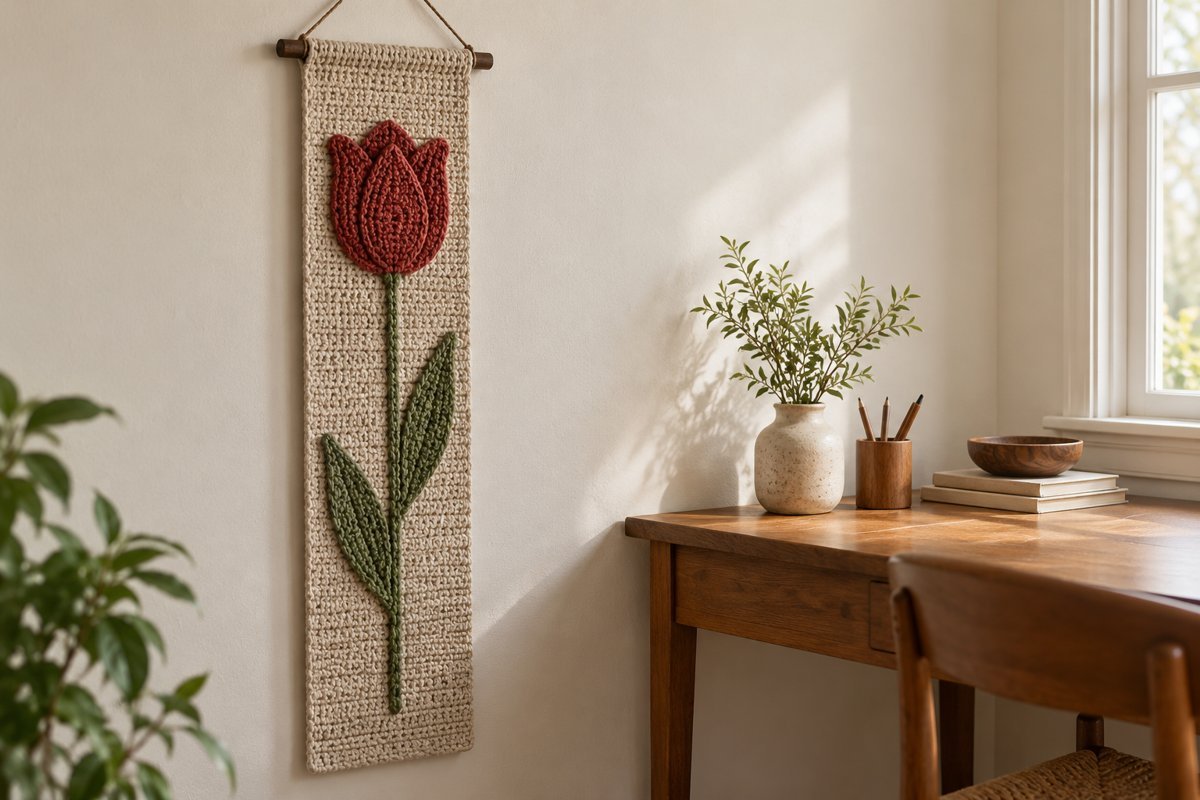
5. One Crochet Tulip on a Tall Linen Panel
A single tulip can give a narrow wall enough detail. Picture a muted red flower with two green leaves on a tall natural linen panel. A dark wooden rod frames the top while the long stem draws the eye down. Beside a desk, this format adds color without needing a shelf or a wide strip of wall.
Measure the whole hanging, including the rod and loop, and check nearby door handles or desk lamps. The panel should sit flat, with enough room for you to move around the desk. Keep the rest of the corner simple—a plain pencil cup or a small stack of books will let the flower remain the main decorative detail.
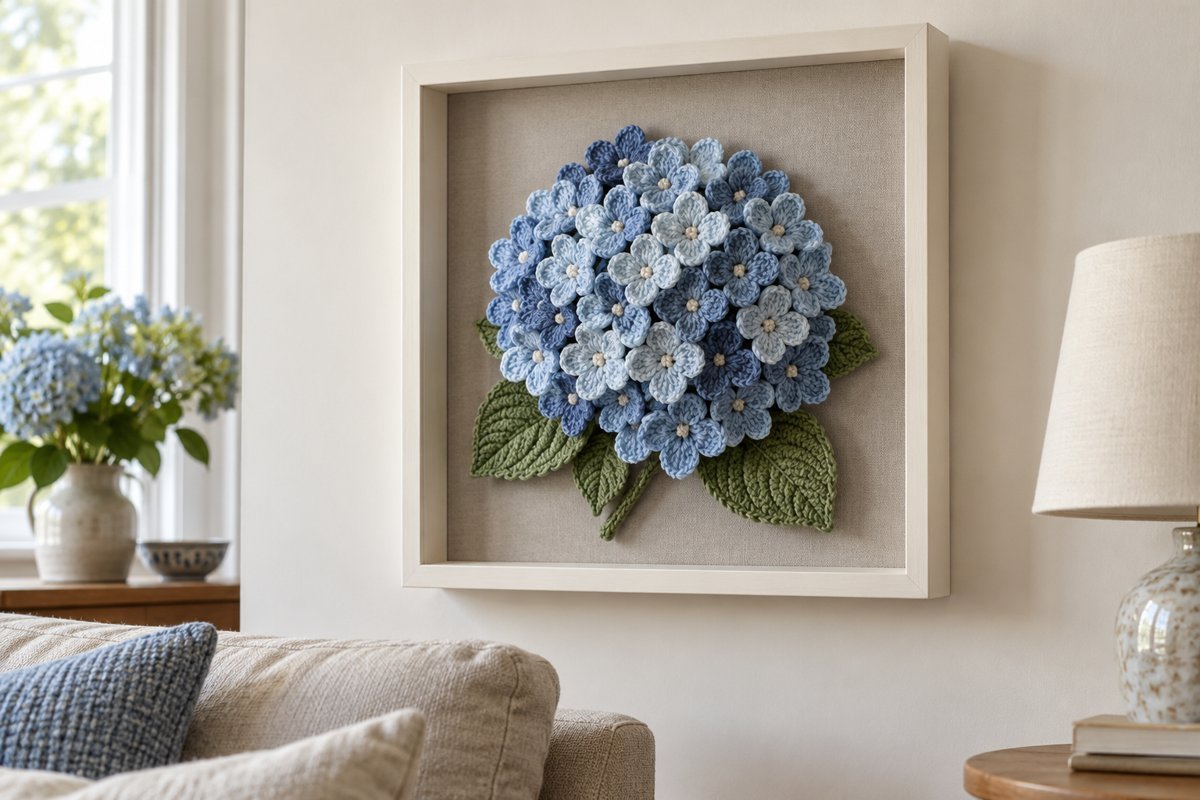
6. A Blue Hydrangea-Inspired Cluster in a Deep Frame
Small blue crochet blossoms can form one rounded floral cluster inside a deep cream frame. Mix a few related blues, then add just enough green leaves to define the edge. A warm gray backing gives the pale flowers contrast. This is a good option when you want a fuller flower shape without a large hanging bouquet.
Allow depth for the raised work and ask about a suitable mounting method. Step back before choosing the final color mix: if the flowers merge into a flat patch, a slightly darker blue can make the cluster easier to read. This is a styling concept inspired by hydrangeas, rather than a tested pattern for a particular flower.
7. Mustard Flowers With Dark Green Leaves
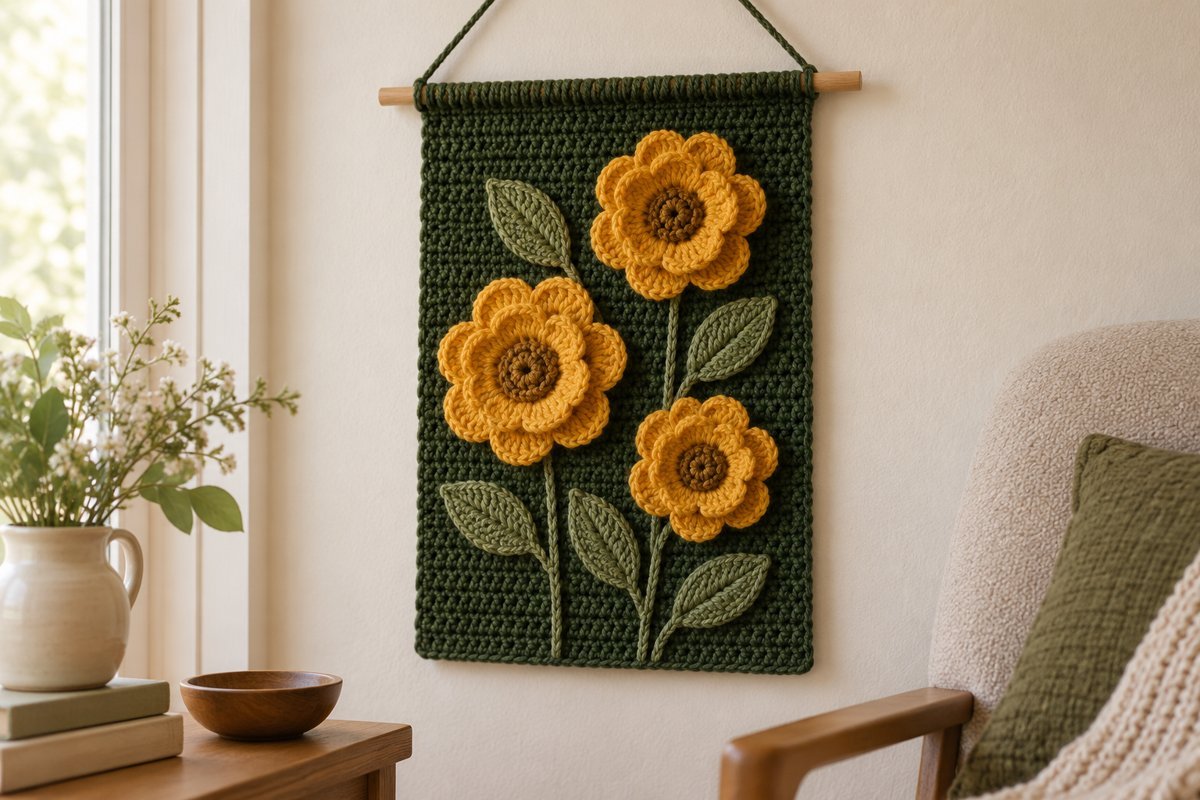
Mustard-colored layered flowers bring warmth to a neutral room. Arrange three at different heights on a dark green panel, with simple leaves connecting the shapes. Keep the bottom edge straight so the flowers provide most of the movement. Cream walls, a wooden chair, and a plain cushion make an easy setting for this richer palette.
View mustard yarn or a finished sample in daylight and under a lamp. It may look golden, yellow, or brown beside different furnishings. If the room already has several strong colors, choose a smaller panel rather than repeating every shade in the hanging. Raised petals also need space away from passing shoulders and open cupboard doors.
8. Pink Buds on a White Branch-Shaped Support
A few crochet buds and blossoms can follow the line of a white branch-shaped support. Space them unevenly, with short green leaves and open gaps between the flowers. On a muted gray wall, the pale support becomes part of the design. This arrangement works when you want a gentle horizontal line rather than a solid fabric rectangle.
Choose a properly made, clean support and a hanging method suited to its weight. A found branch is not automatically ready for indoor display. Keep the piece clear of doors and curtain edges that could catch it. If you plan to make the arrangement, use the pattern creator’s attachment guidance; a styling image shows placement, not how securely the parts are joined.

9. Three Floral Squares in One Long Frame
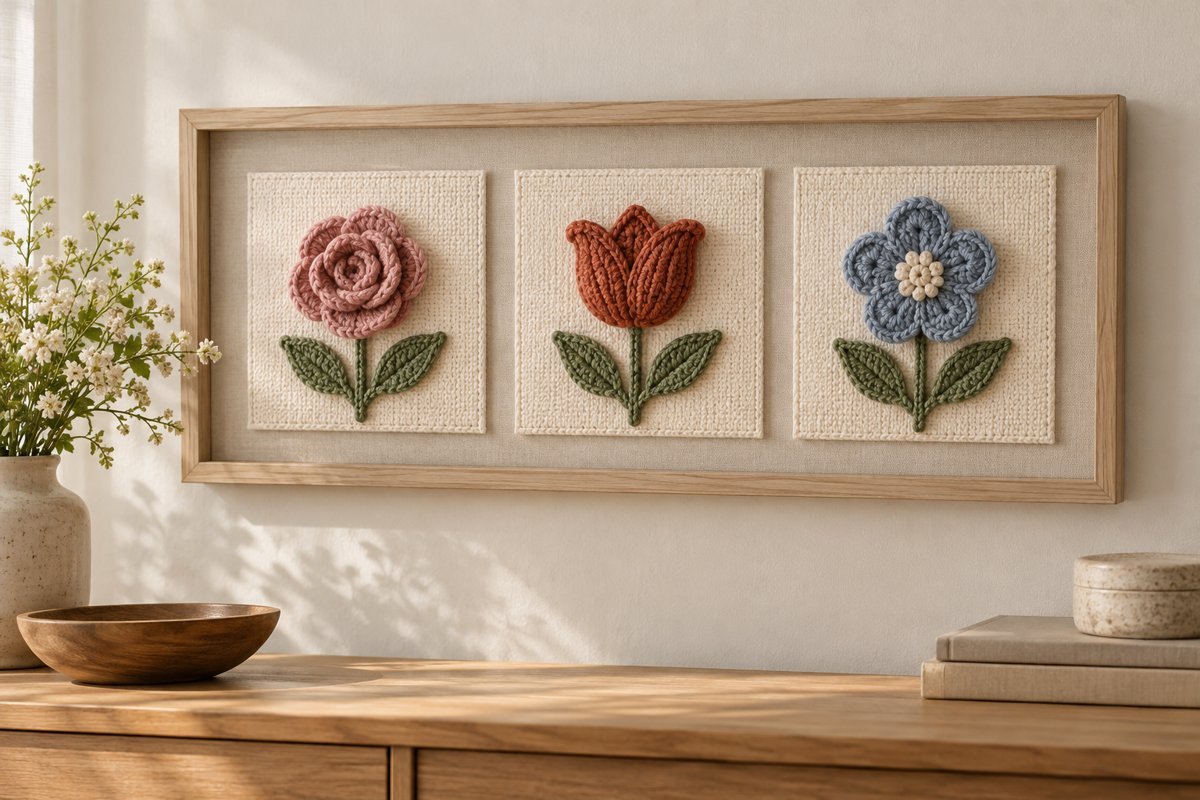
A long shadow box can bring several flower shapes into an orderly set. Try a muted pink rose, a rust tulip, and a simple blue blossom on separate cream squares. Using the same green for the leaves helps the group feel connected. The frame gives the pieces a shared edge while leaving each flower enough room to stand on its own.
Leave margins around the squares and enough depth for raised stitches. Check the entire frame width against the furniture below before hanging it. If you prefer individual frames, keep their spacing even and their backing colors consistent. Our living room gallery wall ideas can help you plan a balanced arrangement around handmade pieces.
10. A Tonal Green Hanging in a Quiet Corner
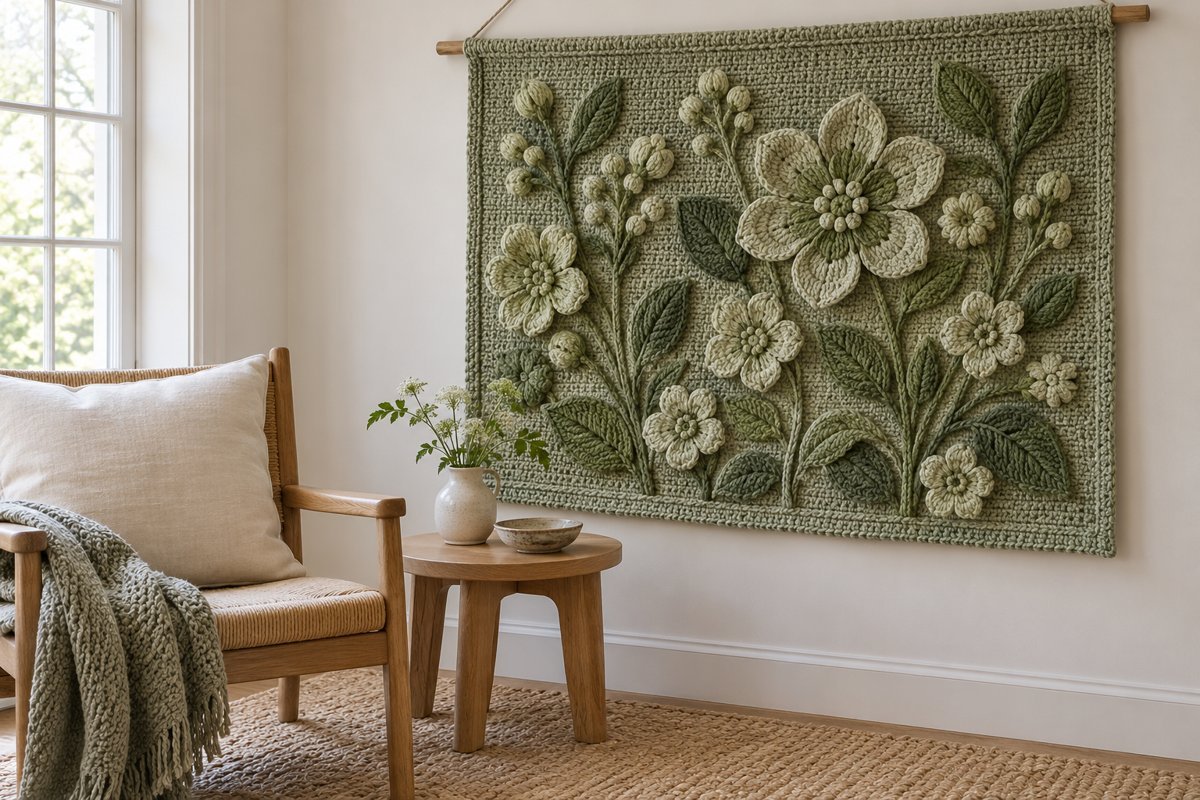
A nearly single-color hanging makes texture the main attraction. Pair pale green crochet flowers and leaves with a slightly deeper sage backing. Beside a guest-room chair, a cream cushion and a small wooden table can carry the calm mood through the corner. The subtle contrast makes the flowers feel softer than a bright mixed bouquet.
Check the hanging in both daylight and evening light. If the flowers disappear into the backing, choose a deeper background or lighter petals. Place the piece where you can reach it for cleaning, and follow its maker’s care guidance. For more ways to build a welcoming corner around soft texture and natural materials, explore our cottagecore corner ideas.
Plan the Display Before Choosing a Pattern
Once you know the shape you want, look for a pattern or a maker whose finished piece suits that space. Check the listed dimensions, materials, skill level, and assembly guidance. For a framed piece, confirm the depth as well as the height and width. For a hanging, include the support and cord in the measurements.
For example, the Mini Flower Wall Decor Hanging by Crostitcherry is a separate flower-hanging pattern listed as intermediate on Ribblr. Review the designer’s own instructions and materials before starting; it is not the pattern for the illustrated scenes in this article.
For a purchased piece, ask how it should be hung and cared for. Use fixings appropriate to both the wall and the finished weight. Follow the maker’s cleaning instructions, and keep textile art clear of flames, hot lamps, and heaters. A reachable spot makes regular care easier.
Questions About Styling Crochet Flower Wall Art
Can crochet flowers go in an ordinary picture frame?
Flat motifs may fit, but raised petals need more space. Measure the finished work before selecting a frame and avoid pressing dimensional flowers against the glass. A deep shadow box may be a better match. Ask a framer or the maker about a suitable support method.
How do you keep a floral hanging from looking crowded?
Choose one main flower or a small group, then leave some backing or open wall visible. Repeat a leaf color to connect the arrangement. If the piece competes with nearby art, remove one neighboring object or choose a smaller hanging before adding more details.
Where does floral crochet wall decor work in a small room?
Try a narrow wall beside a desk, the space above a low cabinet, or a quiet corner near a chair. Check door swings, curtain edges, and everyday walking routes. One well-placed hanging can provide enough texture without filling every empty wall.
Choose the arrangement that suits your room, then let its color and handmade texture carry the corner. One small piece with space around it is a useful starting point; you can always build a larger display once you know how it feels in daily life.