
Dark wood cabinets can give a kitchen warmth and a strong sense of character. They can also make it hard to choose the next detail, especially if the room has little daylight. You do not have to paint them or start a full renovation to enjoy a different look. Sometimes a lighter wall, a simpler counter, or a small color change is enough. These dark wood kitchen ideas focus on the details around the cabinets. Each scene shows a clear pairing you can test in your own space. Keep the wood you like, protect the working areas, and choose changes that suit your daily routine.
Start here: To balance dark wood kitchen cabinets, start with the surfaces and details around them: wall color, backsplash, countertop space, hardware, and window coverings. Test a small movable change before replacing a permanent finish.
1. Dark Brown Cabinets With Warm Cream Walls
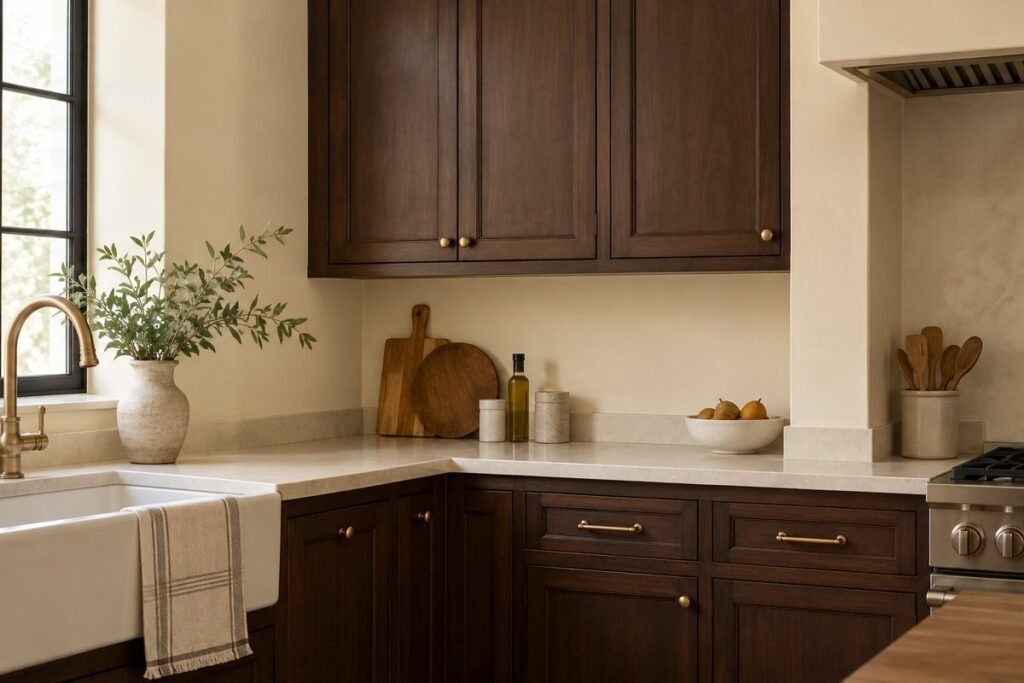
Picture deep brown cabinet doors against warm cream walls. A plain pale counter and a small white bowl keep the scene light. The wall color gives the dark wood a clear outline without creating a harsh contrast. Keep nearby towels simple so the main relationship remains between the wood and the wall.
Try cream samples beside an actual cabinet door in daylight and under the kitchen lights. Some creams can look yellow or gray next to particular wood finishes. Check the color in more than one spot before painting. Use a wall finish suited to the location and follow its care guidance. If the current wall already works well, leave it alone and repeat its light tone in a few useful objects instead.
2. Dark Cabinets With Brushed Silver Handles and Gray Towels
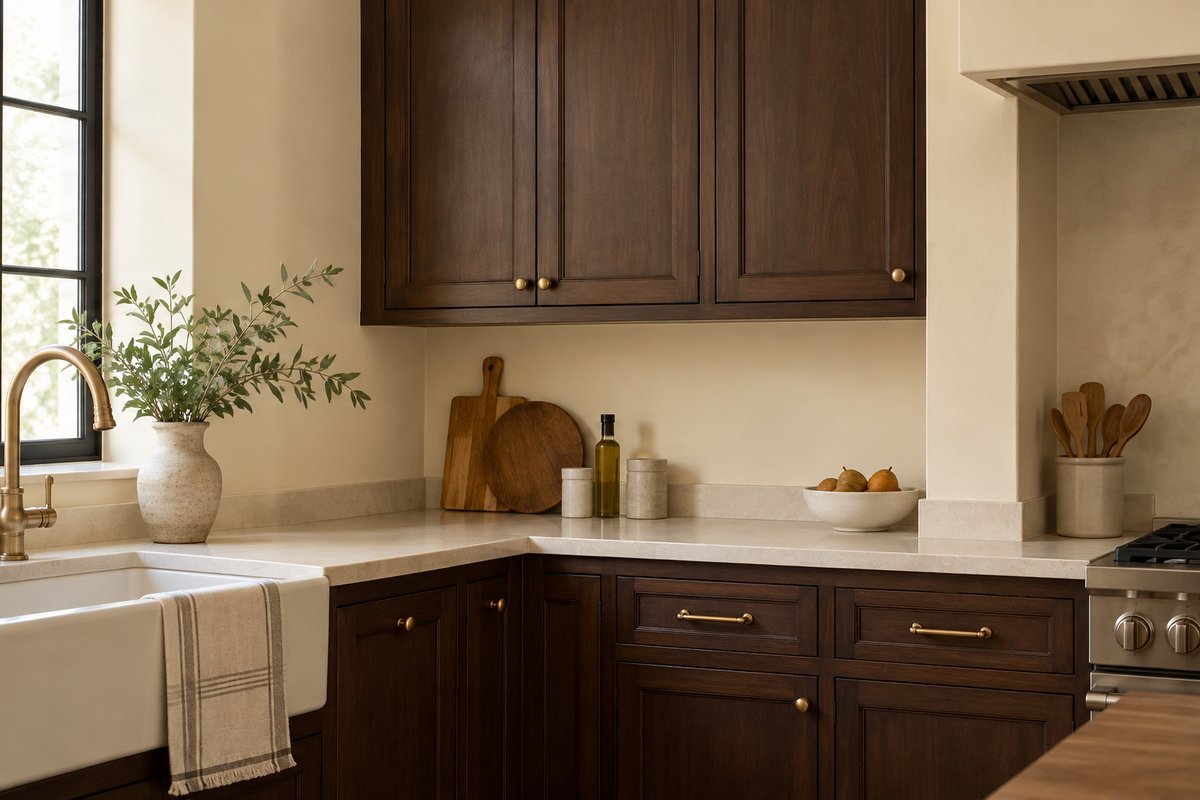
A cooler metal can give dark wood a crisp, simple edge. Imagine brown cabinet fronts with plain brushed silver handles, a gray towel on a proper rail, and a clear countertop. The repeated cool shades create a quiet contrast to the warm wood. You do not need several decorative accessories to complete the look.
Before changing handles, measure the existing fixing holes and check the door thickness. A similar hole spacing may make replacement simpler, but hardware still needs to fit and work properly. Keep old handles until you know the new ones suit the doors. If replacing hardware is not practical, start with a gray towel or small utensil pot. A small color test can help you judge the direction before committing to a larger change.
3. A Cream Tile Backsplash With Dark Wood Lower Cabinets
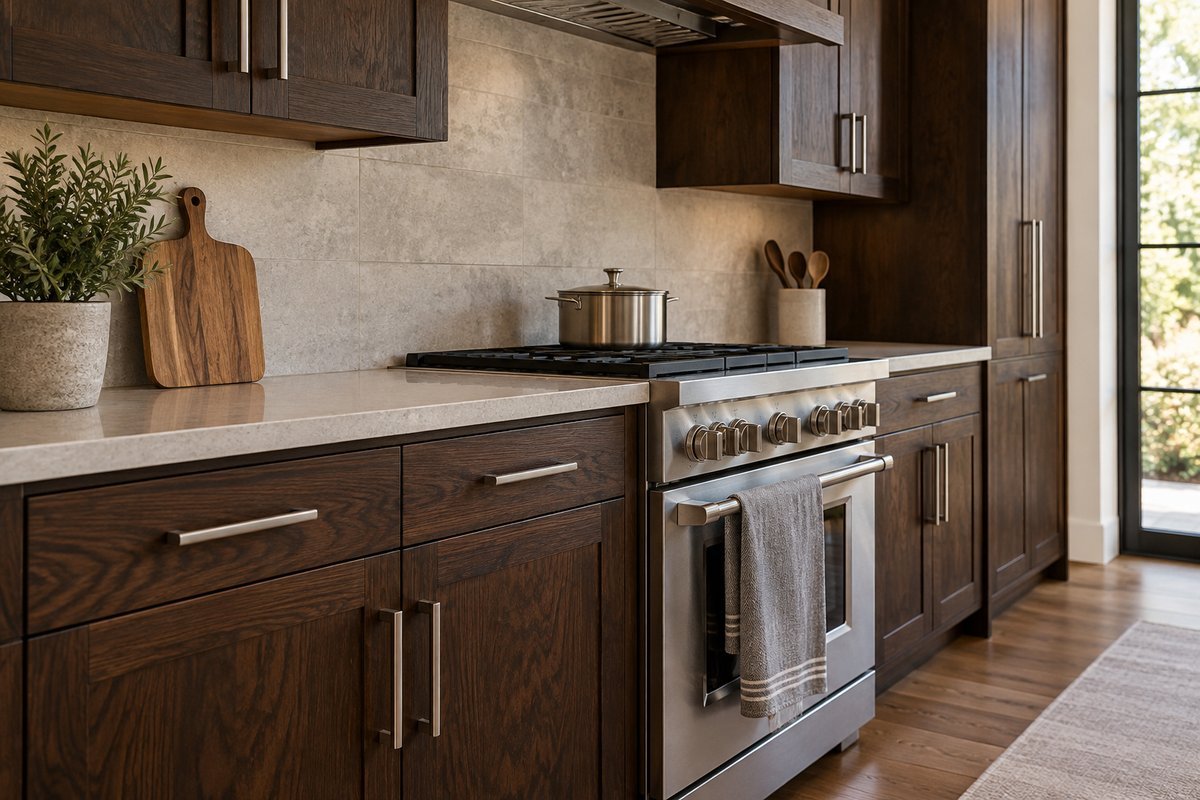
A pale backsplash can create a clear band above dark lower cabinets. Picture simple cream tiles with quiet grout lines, a pale countertop, and brown doors below. Keep the counter display modest: one utensil pot and a small board in a proper rack. The lighter wall surface balances the visual weight of the cabinets.
For a real backsplash change, check that the material, installation, and wall preparation suit the area, especially around heat and water. Samples should be viewed beside both the cabinet and counter. Do not choose only from a picture of another kitchen. If a renovation is not planned, use the scene as color guidance and work with light accessories on your existing counter. Avoid covering a backsplash with products not intended for that location.
4. Dark Wood Cabinets With Muted Green Dining Chairs
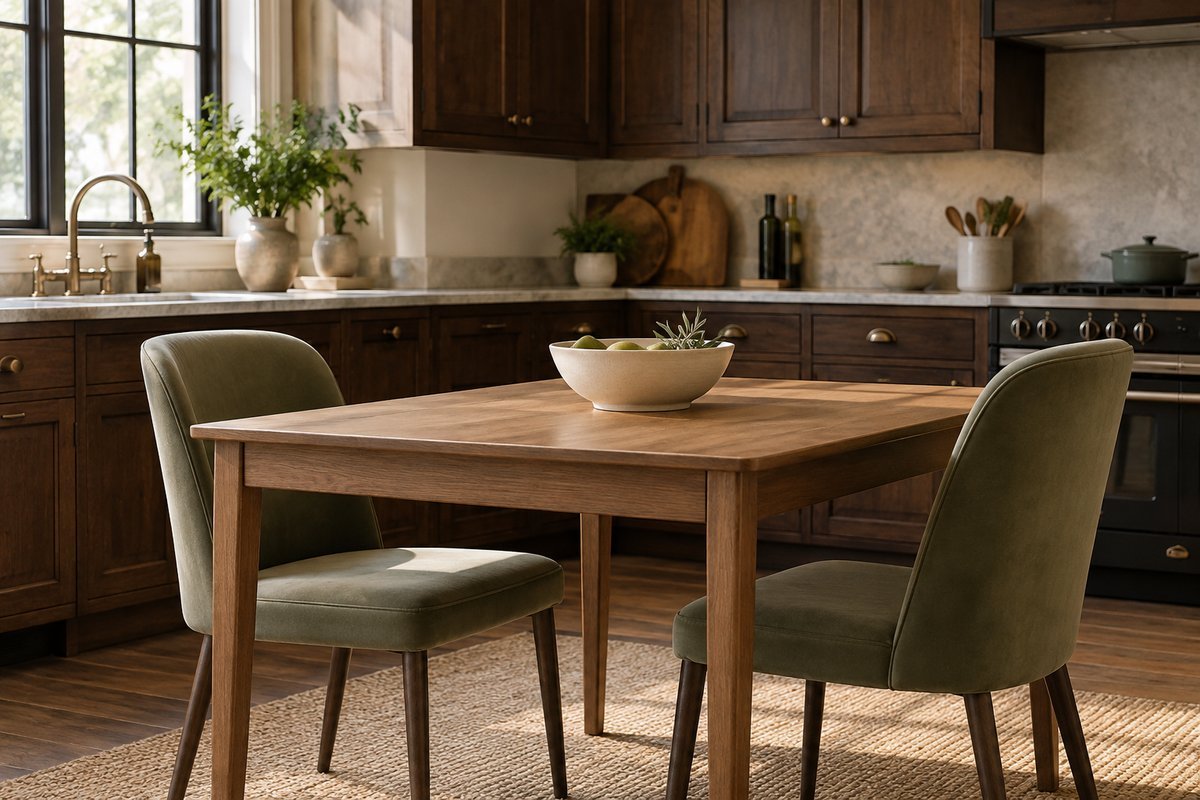
A small eating area can bring a softer color into a dark wood kitchen. Imagine two muted green chairs beside a plain table, with the brown cabinetry in the background. A cream bowl on the table keeps the scene simple. The green provides a gentle contrast without making the cabinets feel out of place.
Choose chairs that fit the table and leave enough space to pull out comfortably. Test a green fabric or paint sample in the room before changing furniture. A color that looks pale elsewhere may look quite strong next to dark wood. If you already have comfortable chairs, try removable seat pads instead. The eating area should remain useful; a lovely chair is not the right choice if it blocks a cupboard or leaves too little legroom.
5. A Clear Counter With Two Pale Ceramic Canisters
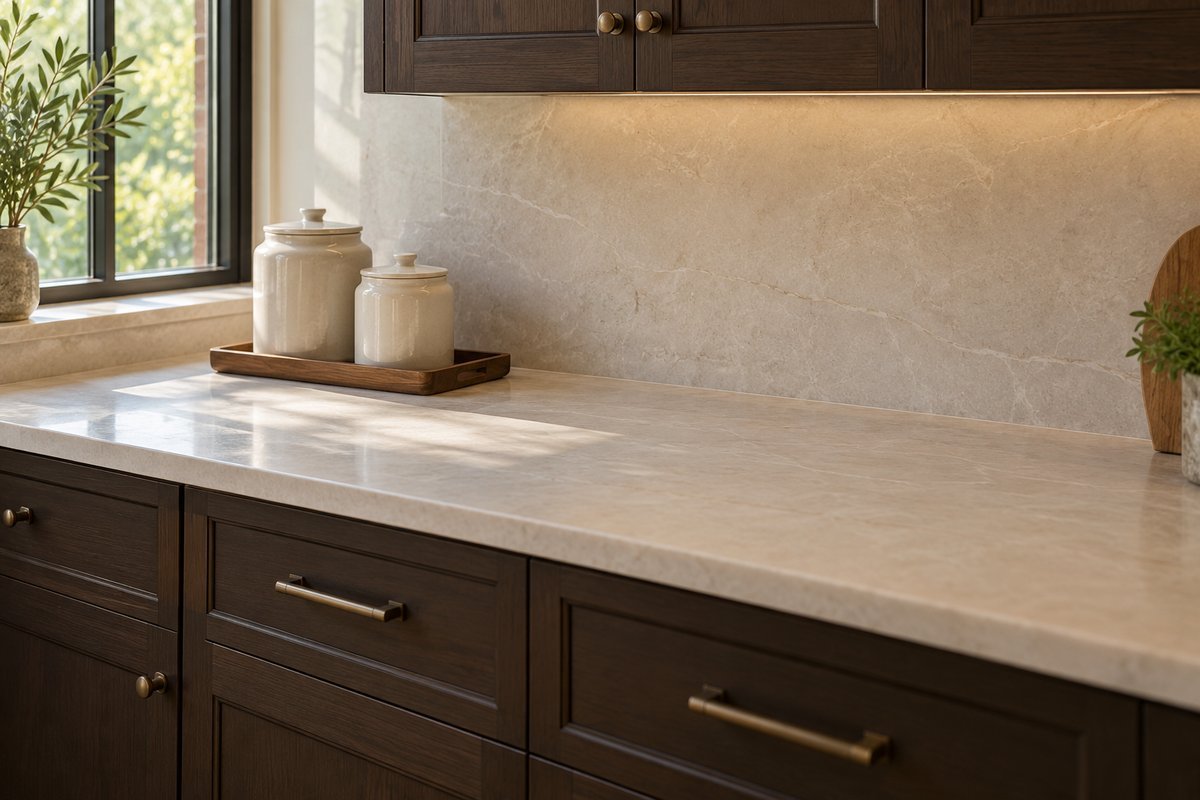
Dark cabinets can look calmer when the counter above them has a simple display. Picture two cream ceramic canisters at one end of the worktop, with a small brown tray beneath them. Keep the rest of the preparation area clear. The light shapes give the eye a resting point while the tray relates to the wood below.
Choose canisters that suit their contents and are easy to clean. Keep them away from heat and leave room to open nearby appliances. Use a tray only if it helps contain the group; it should not use more worktop than the items themselves. If the counter keeps filling with packets and small tools, sort those first. Clearing the surface may make a bigger difference than buying another light-colored accessory.
6. Dark Cabinetry With a Pale Window Blind
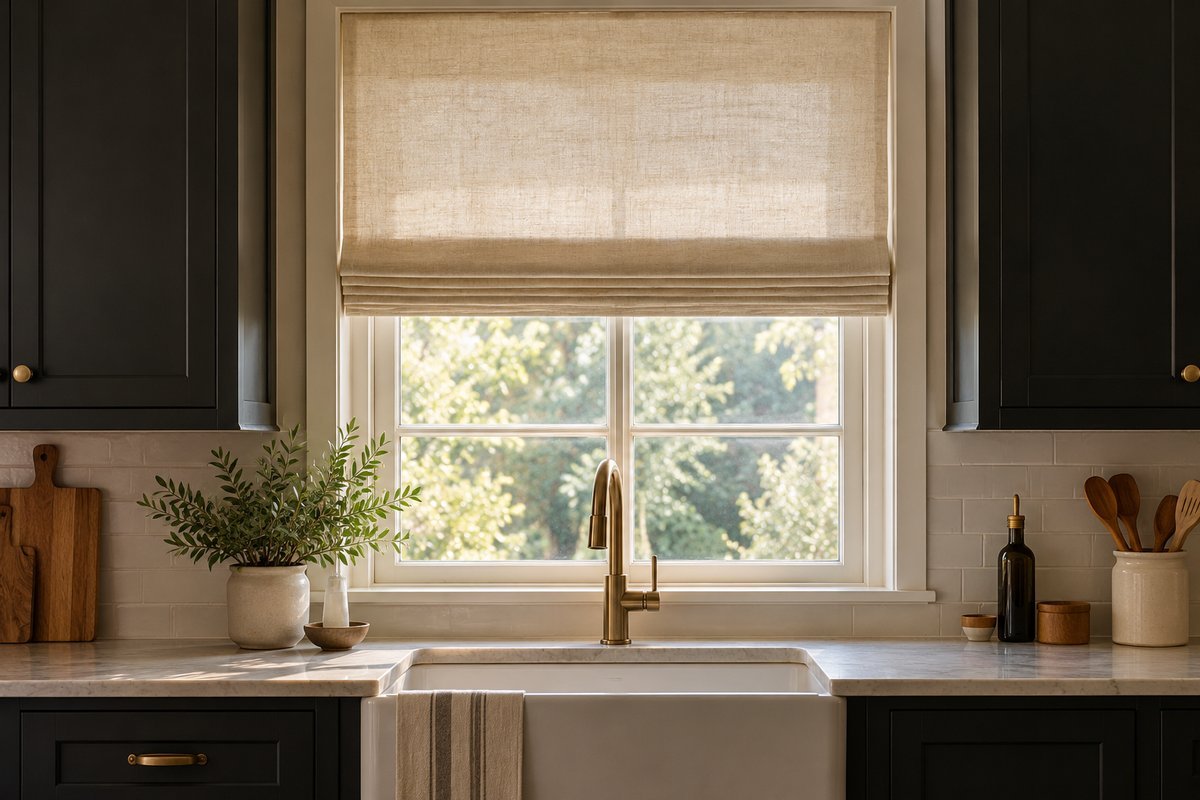
A light window treatment can soften a kitchen with dark cupboards. Imagine a plain oatmeal-colored blind above a window, with the cabinets on either side. Leave the sill mostly clear. The simple fabric-like texture provides contrast without adding a busy pattern that competes with the wood grain.
Choose a blind suitable for kitchen conditions and follow its cleaning instructions. Check clearances from cooking heat and splashes, and use appropriate child-safe controls. Make sure it can open enough to give you the light and ventilation you need. If the window already has a practical covering, try simplifying nearby objects instead of replacing it. The aim is a comfortable balance between the darker furniture and a lighter, usable window area.
7. Dark Wood Cabinets Beside a Small Oak Breakfast Table
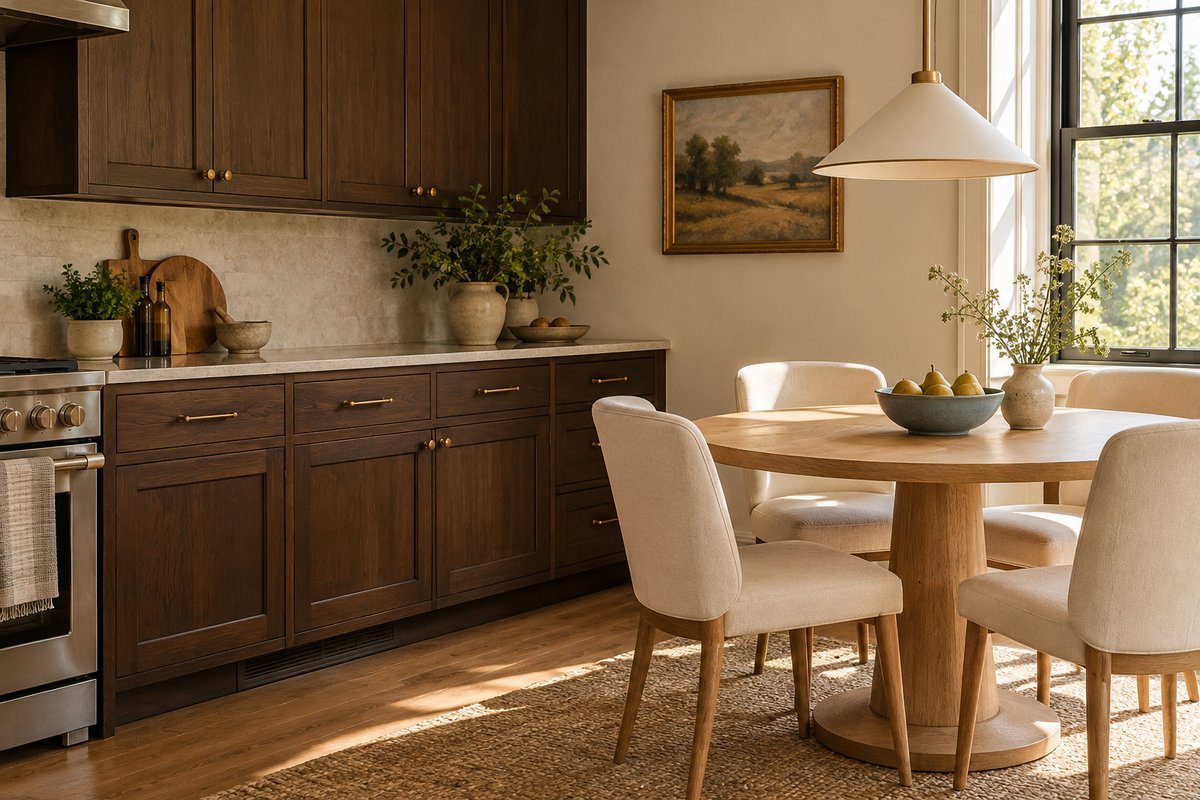
Different wood tones can work together when there is a clear difference between them. Picture dark brown cabinets with a small pale oak table nearby. Plain cream chairs sit around the table, and one muted blue bowl adds a little color. The light table keeps the dining spot from looking like an extension of the cabinet run.
Compare the tones in the actual room rather than expecting all wood to match. A small sample or an existing wooden object can help you judge the contrast. Make sure the table fits with chairs pulled out and cupboard doors open. If the wood mix feels too busy, a simple washable table runner can soften part of the table surface. You do not need to replace good furniture just because its finish is different.
8. A Dark Cabinet Wall With One Light Framed Print Nearby
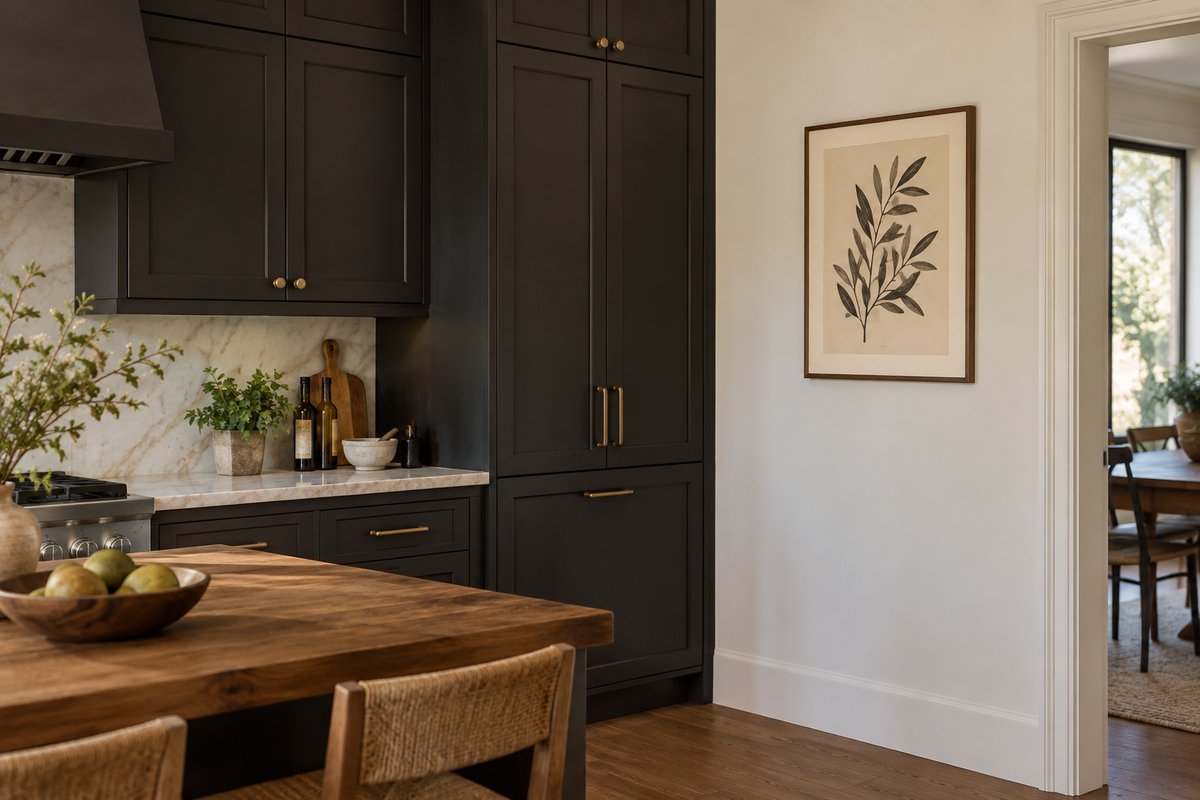
Art can help connect dark cabinets with a plain side wall. Imagine one cream-backed print in a thin brown frame beside the kitchen doorway. Its simple dark lines repeat the cabinet color, while the pale background relates to the wall. Keep the wall below clear so the artwork has room to stand out.
Place art away from direct heat, steam, and splashes. Use a suitable fixing and check that doors will not hit it. Try a paper outline to choose the size before hanging. Use original or licensed artwork rather than copying a picture from a decor blog. If the kitchen has no suitable dry wall space, place the art in the adjoining dining area where it is still visible beside the cabinets.
9. Dark Wood Doors With a Soft Blue Floor Mat
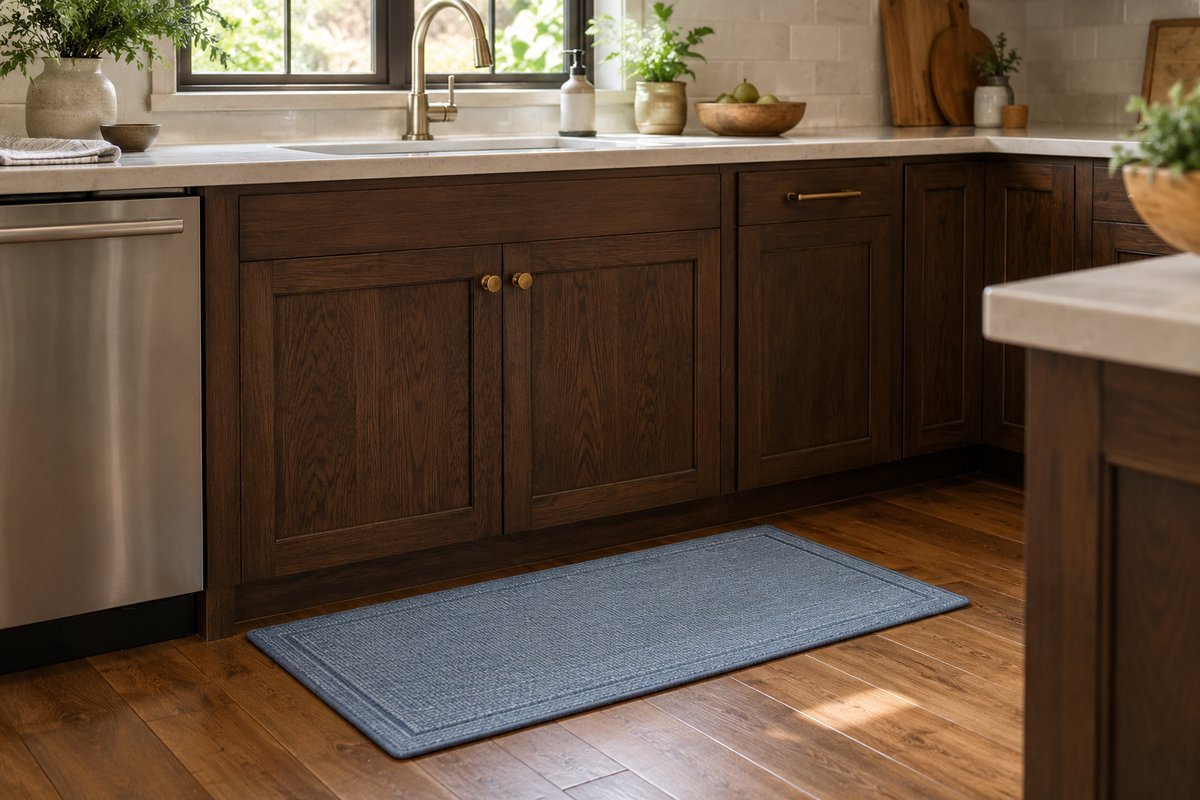
A small blue mat can add color to a dark kitchen without changing a permanent finish. Picture a muted blue low-profile mat in front of a sink, with brown doors and a pale counter above it. Keep the pattern simple. The color creates one soft point near the floor while the cabinet grain remains the main texture.
Choose a mat intended for the location and floor type, with suitable grip. It should lie flat and remain clear of doors and main walking routes. Follow washing and drying guidance so it stays easy to maintain. If it curls, slips, or catches feet, remove it and use blue in a towel or bowl instead. Adding color should not make a busy kitchen less comfortable to move through.
10. Dark Cabinets With a Small Warm-Metal Lamp in a Dry Corner
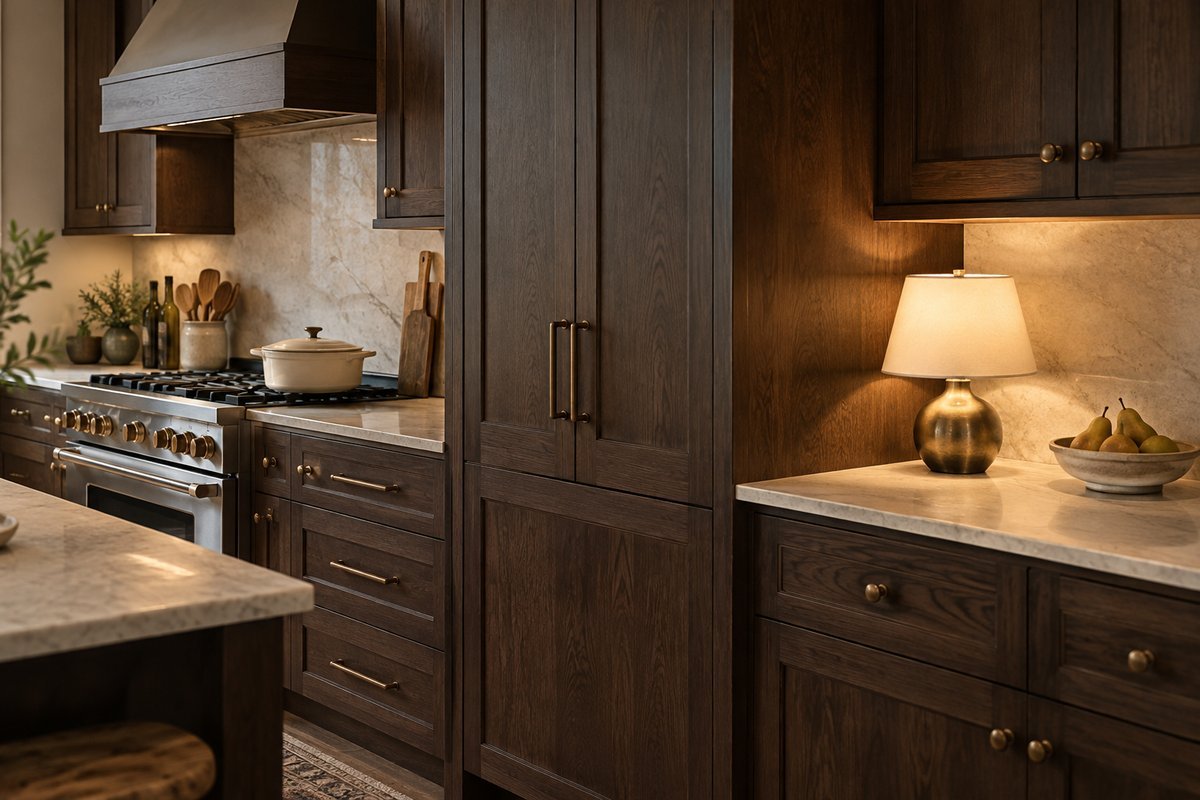
Where there is a suitable dry counter area, a compact lamp can add a warm detail. Picture a small lamp with a warm-metal base and a cream shade beside a closed pantry cabinet. The light cabinet-side scene feels separate from the cooking area. Keep the nearby surface clear except for one useful dish.
Use only a lamp suited to the location, with electrical access and clearances that meet its instructions. Keep it well away from water, cooking heat, and food preparation. Do not run a cable across a work area or walkway. If a lamp is not suitable, a small warm-metal bowl can give a similar color accent. For better working light, use properly planned kitchen lighting rather than relying on a decorative lamp.
Start With What Surrounds the Wood
Look at the cabinets beside the wall, counter, floor, and lighting. Decide which part feels too busy, too dark, or simply disconnected. Try the smallest useful change first, such as removing counter clutter or testing a lighter towel. Take a photo from the doorway to see the whole view rather than judging one corner at a time.
For permanent changes, use real samples and check them under the kitchen’s lights. Plan around care needs as well as appearance. A backsplash, handle, or floor mat still needs to do its job. You can enjoy dark wood without adding every matching detail. A few balanced choices can help the cabinets feel like a welcome part of the kitchen you already use.
Common Questions
Can I refresh dark wood cabinets without painting them?
Yes. Clear the counter, try lighter towels or ceramics, and compare the wall color beside the cabinet doors. New handles may also change the look, provided their hole spacing and dimensions fit the existing doors.
What wall colors work with dark wood kitchen cabinets?
Warm cream, soft white, and muted neutrals are useful starting points. Wood can have red, orange, or cooler undertones, so test paint samples beside an actual door in daylight and under the kitchen lights.
Should every metal finish match in a dark kitchen?
An exact match is not essential, but a simple plan helps. Start with the metal already repeated on appliances or handles, then try one small detail before changing a whole set of fittings.
More Ideas for Your Home
kitchen organization ideas · small boho kitchen ideas · warm neutral home decor ideas