
A home can show your personality through the activities that happen in it. A drawing desk, a place for music, or a small table for a puzzle can be part of the decor as well as useful space. You do not need to hide every hobby to make a room feel settled. The key is giving it a clear place and a simple way to tidy up. These home decor ideas focus on ten everyday routines. Choose one that reflects your life, use suitable furniture, and leave the room easy to move through. The most personal corner may be the one you use most often.
Start here: Choose one activity you already enjoy and a small spot where it can fit comfortably. Set out only what you need for the current session, then give supplies a nearby home so the space is easy to use and tidy.
1. A Drawing Table With a Small Paper Tray
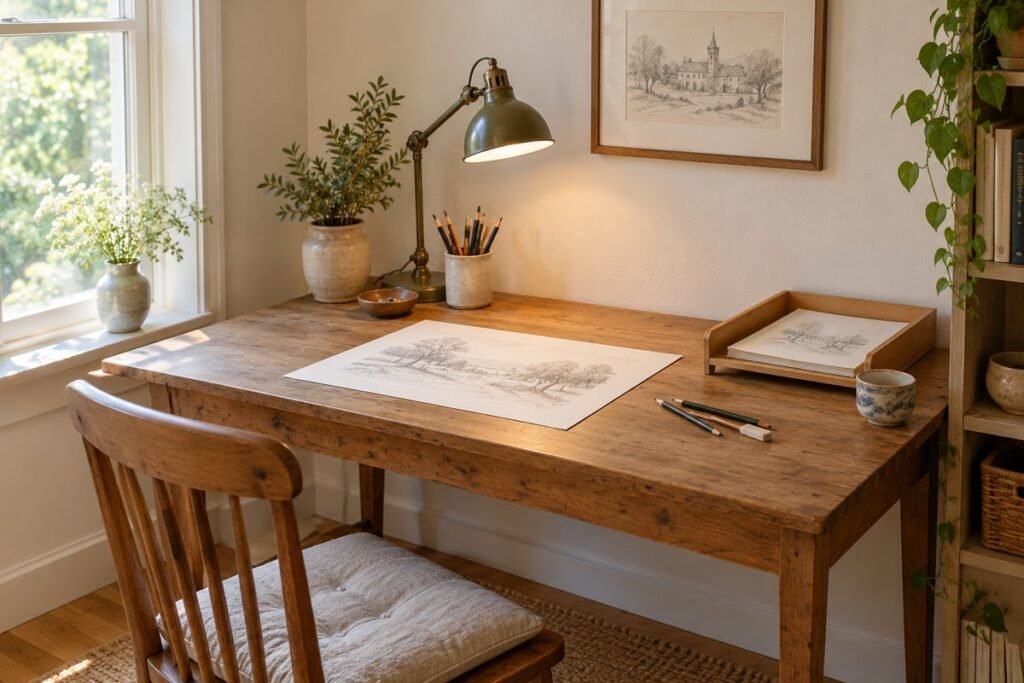
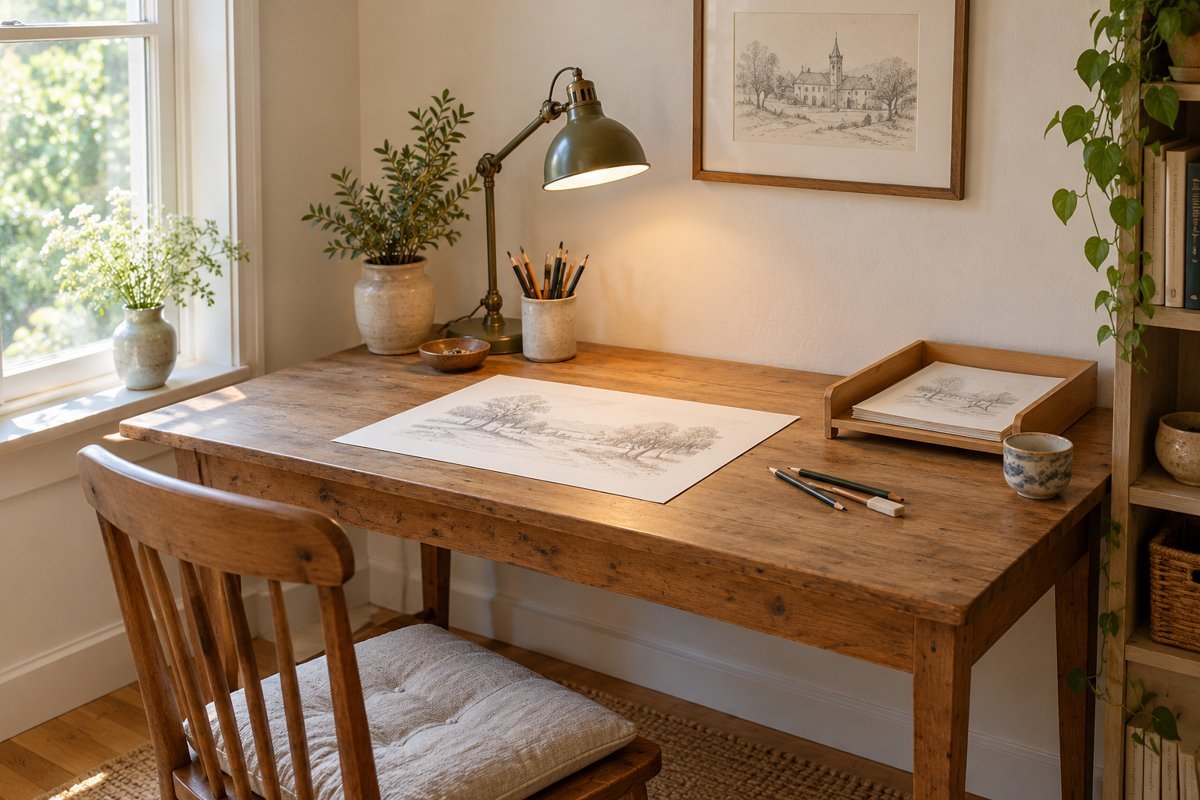
Picture a compact wooden table against a pale wall, with a plain chair, a useful lamp, and a shallow tray for current drawings. A small framed sketch above the table gives the corner a personal touch. Keep the center clear enough to spread out paper. The activity itself provides the character.
Choose a table height and chair that feel comfortable for the person using them. Keep sharp tools and small supplies stored appropriately for the household. Use one tray for the current project rather than stacking every past drawing nearby. If the table has another job, choose storage that moves easily. A corner is more enjoyable when starting takes only a moment and finishing does not mean sorting a whole pile.
2. A Music Cabinet With a Clear Listening Seat Nearby
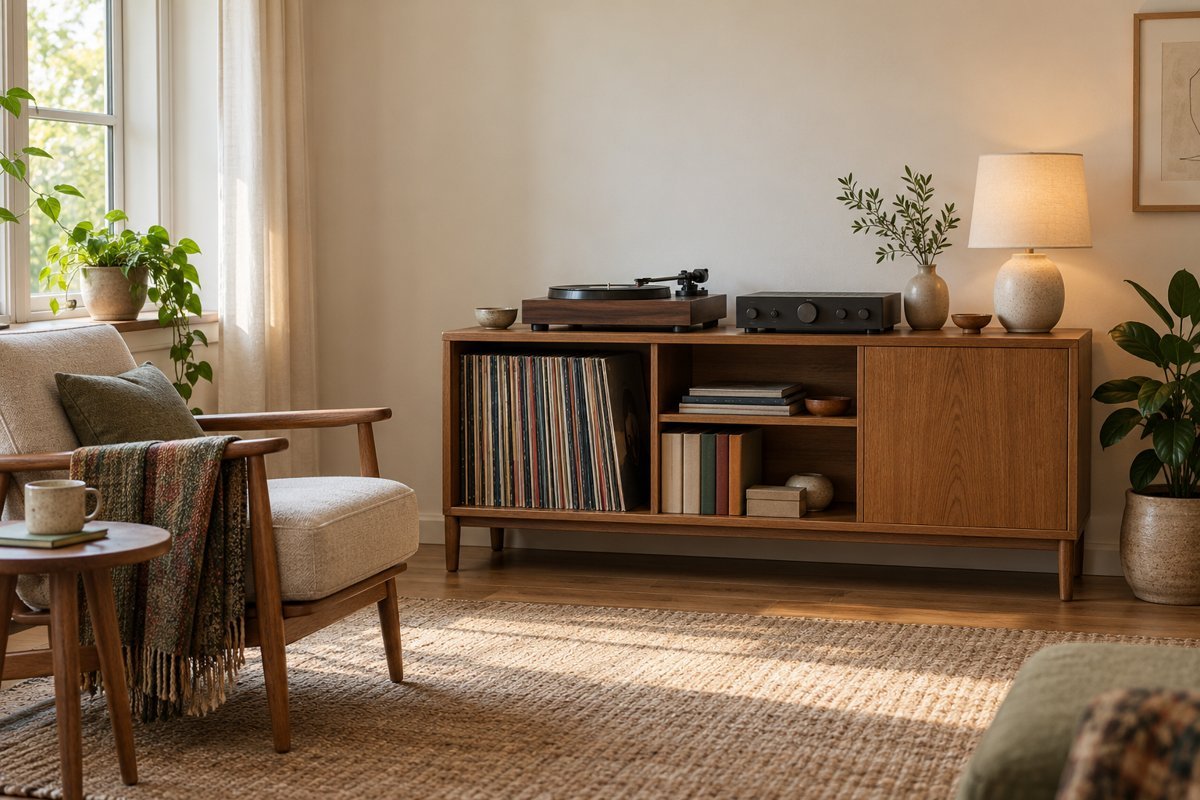
A small music setup can become a room feature without a large display. Imagine a plain cabinet holding suitable audio equipment, with a comfortable chair to one side. A few records or music books sit in proper storage below. Keep the wall above simple so the equipment and furniture have room to show.
Follow equipment guidance for ventilation, support, and cable routes. Store records or other media according to their needs, away from unsuitable heat or light. Place the chair where listening feels comfortable without blocking movement. You do not need to buy vintage equipment for the look. Use the format you enjoy and give it a practical home. The corner should reflect how you listen rather than how a music room is supposed to look.
3. A Puzzle Table With One Closed Storage Box
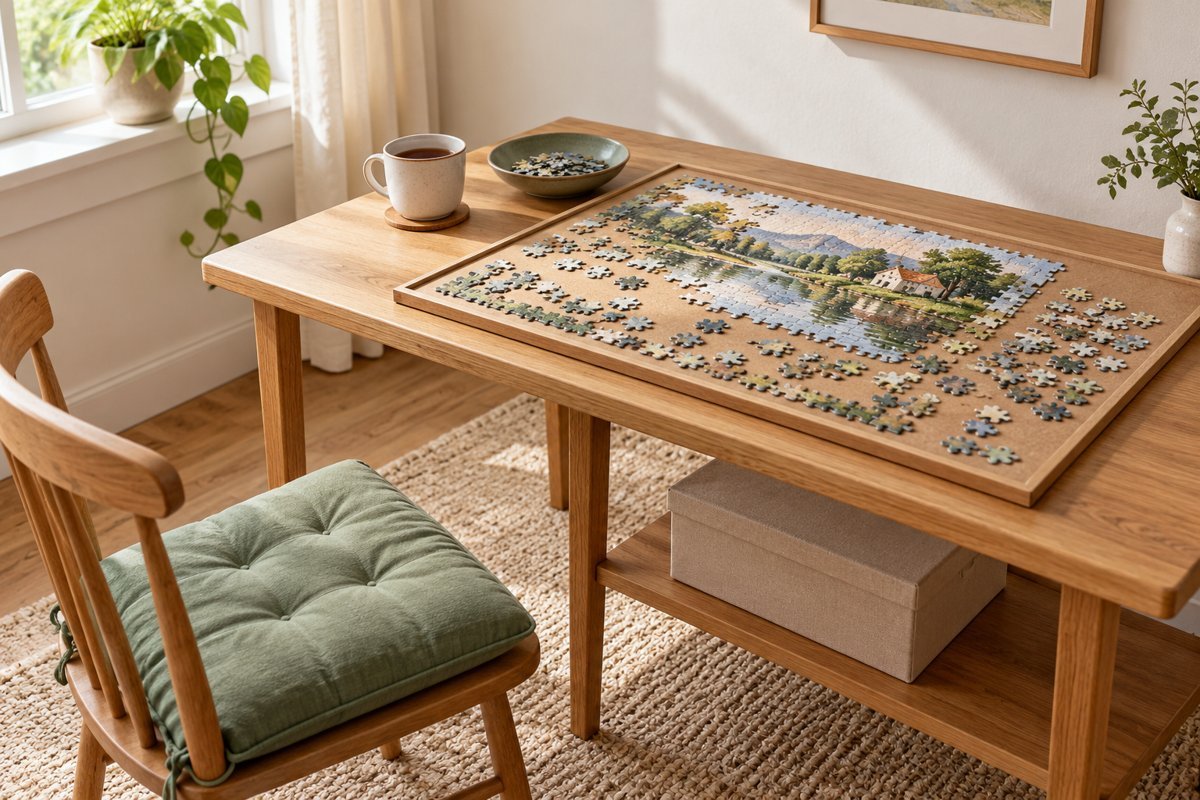
Picture a small table near a bright wall, with a puzzle in progress on a suitable board. A plain lidded box below holds spare pieces and the original picture. A soft green chair pad adds a little color. Keep the tabletop focused on the current activity rather than surrounding it with ornaments.
Check that the board fits the puzzle and table securely. If the table is shared, choose a method of moving or storing the project that works for you. Keep small pieces away from children or pets who might swallow them. A box should be easy to open and return, not so decorative that using it becomes awkward. Test the chair space with someone seated before deciding the corner can support a longer session.
4. A Tea Corner With Two Cups on a Small Tray
A simple tea corner can sit on a dry sideboard or dining shelf. Imagine two everyday cups, a small suitable teapot, and a folded cloth gathered on a plain tray. The nearby wall has one quiet print. The scene feels welcoming because the items are ready for a routine you enjoy.
Use sound food-safe pieces and keep hot water preparation in a suitable place. A decorative tray is not automatically safe for heat or heavy carrying, so check its intended use. Clear cups after use and return supplies to proper storage. There is no need to leave food out for styling. If space is tight, store the set in a cupboard and bring it out when wanted. The ritual can still have a clear home.

5. A Sewing Basket Beside a Plain Work Surface
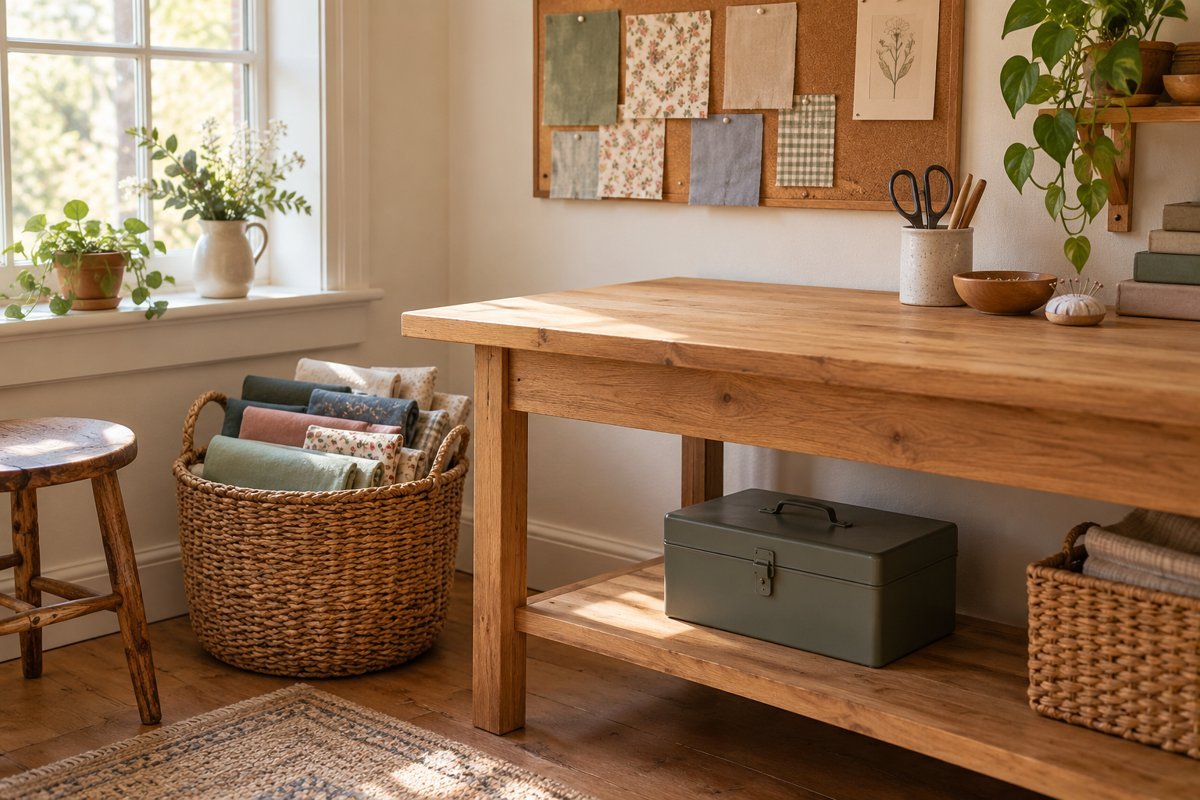
Picture a sturdy basket of folded fabric beside a simple worktable. A closed tool box sits on the lower shelf, and one small pinboard shows current fabric choices. The table itself stays mostly clear. The soft colors of the fabric give the corner detail without needing another decorative display.
Choose a work surface suited to the sewing tasks and equipment you use. Store needles, scissors, and small parts safely when finished. Keep cords clear of legs and moving furniture. A basket can hold light fabric, but tools may need a more secure container. Limit the visible materials to the current project. This helps the corner show the activity while remaining ready for actual work rather than becoming a permanent pile of supplies.
6. A Plant-Care Shelf With a Small Waterproof Work Tray
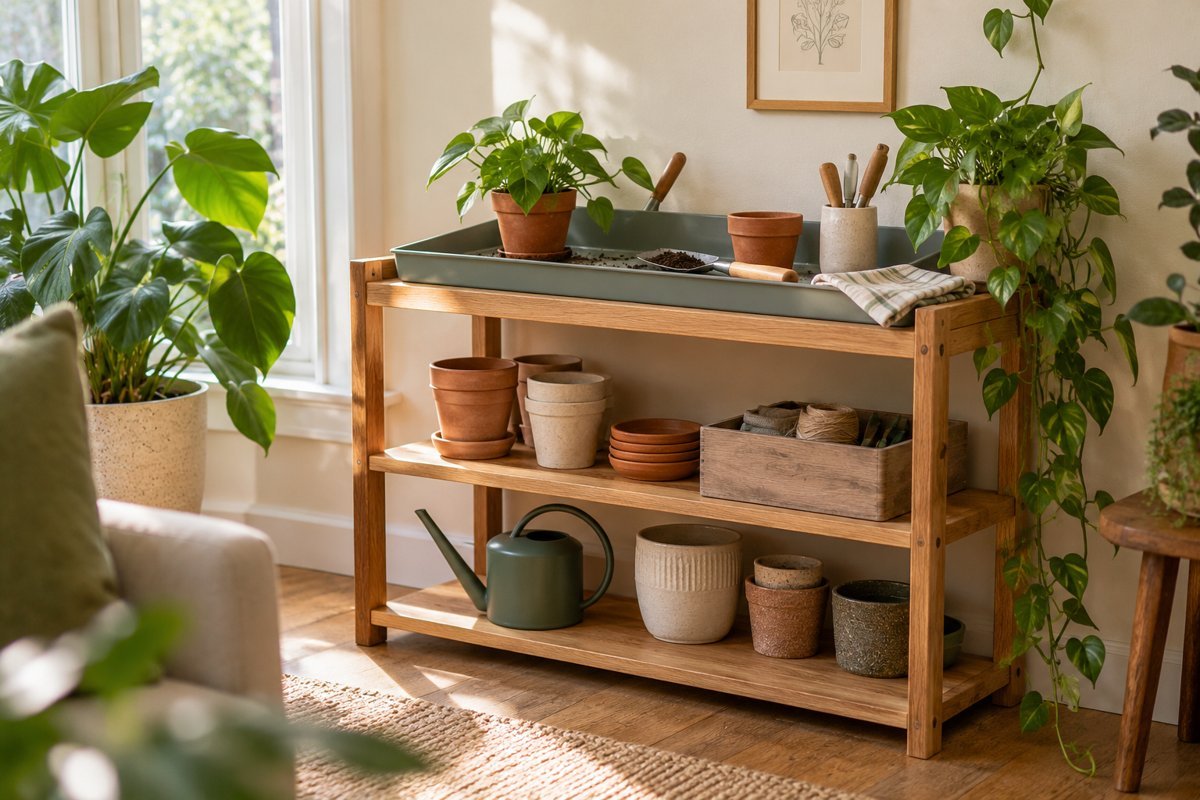
A modest plant-care spot can make a hobby easier to enjoy. Imagine a suitable low shelf holding a few spare pots, with a waterproof tray on top for small care tasks. A watering can sits below. Keep the colors simple so the plants elsewhere in the room remain the focus.
Choose materials that can handle the task and protect nearby surfaces from water and soil. Respect the shelf’s load limit and secure it as needed. Store plant-care products according to their labels, safely for the household. Do not leave standing water in the tray. If the room is not suited to messy tasks, keep supplies together and do the work in a more appropriate location. The shelf can remain a tidy storage point.
7. A Reading Seat With a Small Current-Book Shelf
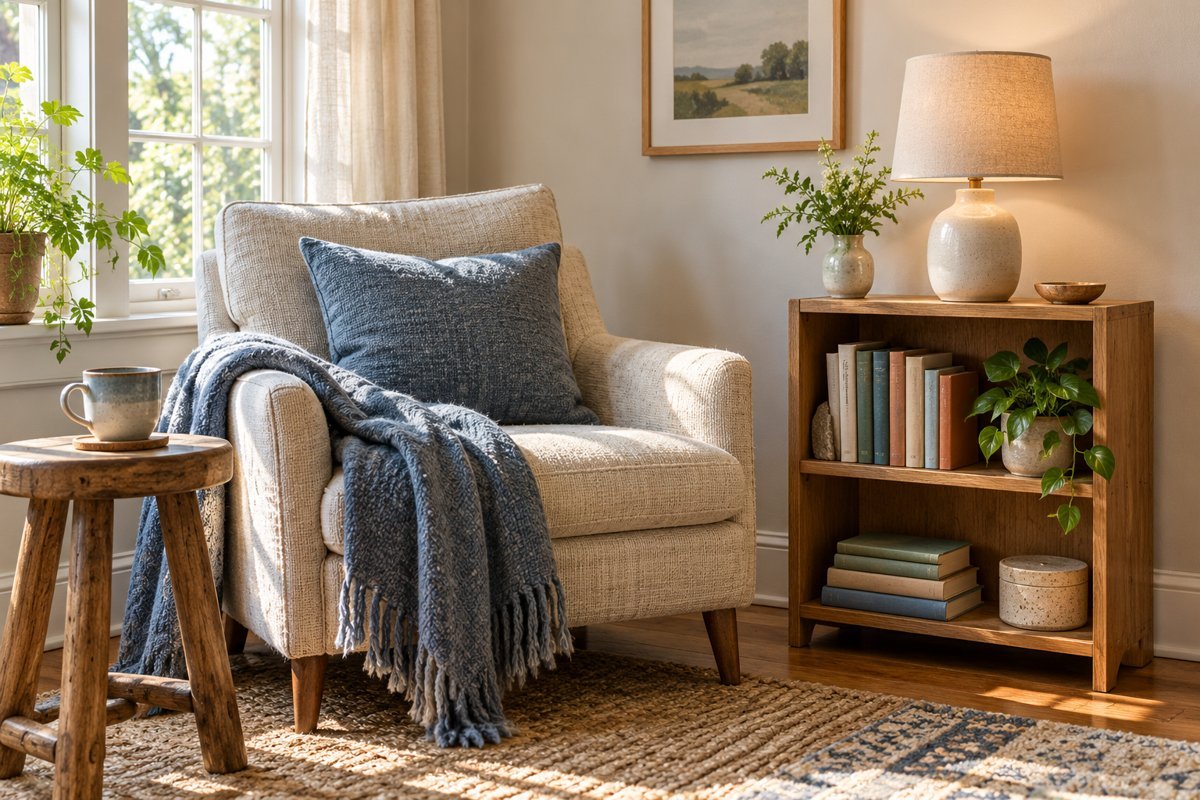
Picture a comfortable chair beside a small shelf holding only the books being read now. A useful lamp and a stable place for a drink complete the corner. A muted blue throw adds softness without covering the seat. The limited book choice makes the area feel personal rather than crowded.
Test the light from the chair and keep the lamp stable, with fabric clear according to its instructions. Put the drink on a suitable surface within easy reach. Keep the shelf from projecting into the route around the seat. Finished books can return to their main storage instead of piling up here. You do not need a full home library to make a reading corner; a comfortable place and a few chosen books can be enough.
8. A Game Shelf Beside a Clear Dining Table
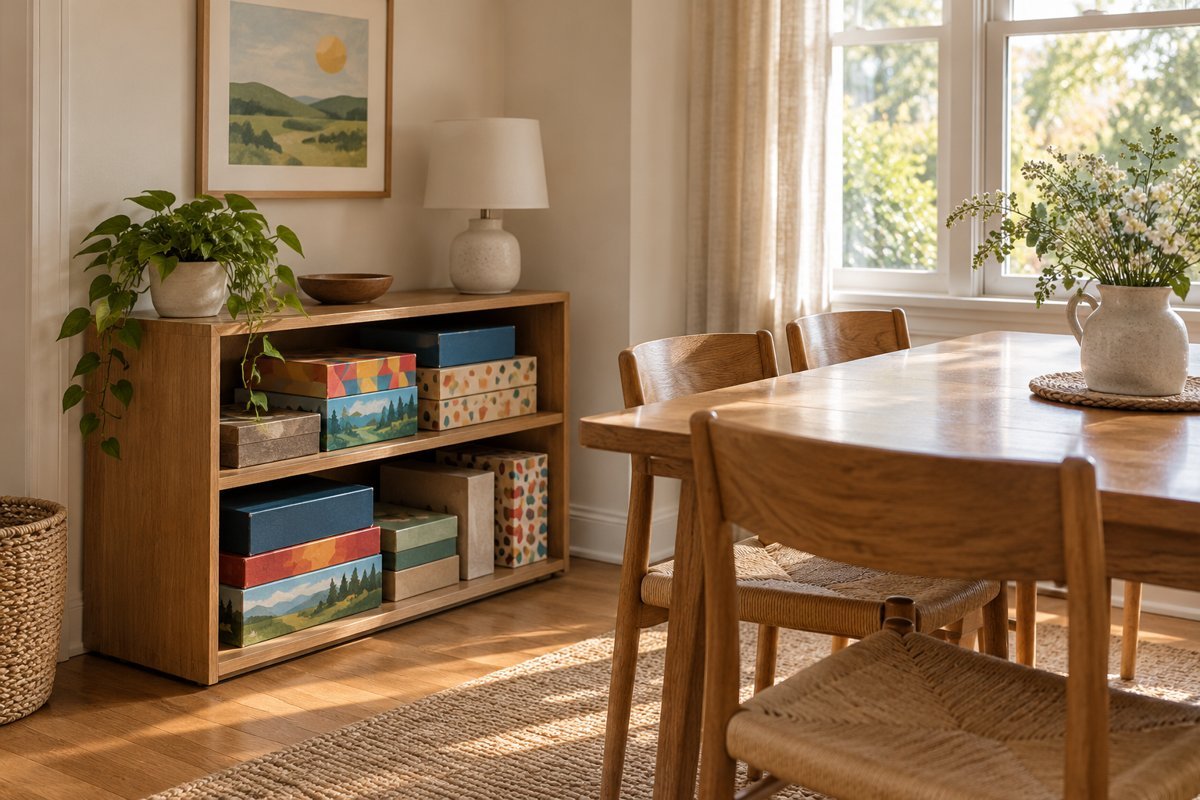
A low shelf can give family games a place close to where they are played. Imagine a plain cabinet with a few boxed games stored neatly, and a clear dining table nearby. One small print above the cabinet adds color. The game boxes can show their own bright covers without needing matching decorative containers.
Check the storage size against the actual boxes and keep heavier games low. Follow furniture loading and anchoring guidance. Make small pieces secure and suitable for the children’s ages. Keep the dining table available for its main use by returning games after play. If a game must remain in progress, choose a household plan for it rather than letting it take over every meal. The decor can support shared activity while keeping daily routines practical.
9. A Journaling Desk With One Personal Picture
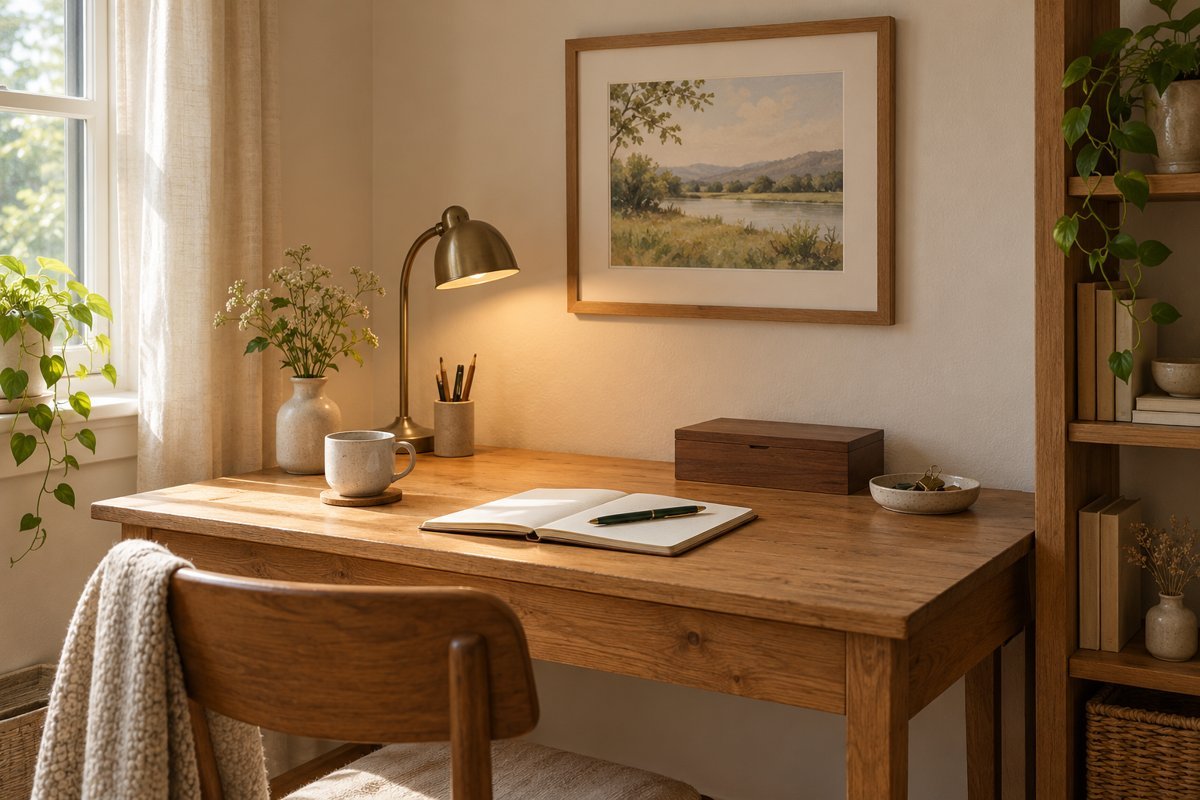
A small writing spot can feel welcoming through one meaningful image. Picture a plain desk with a notebook, pen, and simple lamp. A favorite photograph or original drawing hangs above it, while a closed box holds spare stationery. Soft cream and brown tones keep the scene quiet.
Choose a seat and desk that fit comfortably, even if you write for only a short time. Check glare and useful light at the time you expect to sit here. Store private notebooks appropriately rather than leaving them open as part of the display. Keep the surface clear enough that starting does not require moving several ornaments. A personal picture can give the corner character without promising that the room will make writing or reflection happen automatically.
10. A Craft Display Shelf With Space for the Next Finished Piece
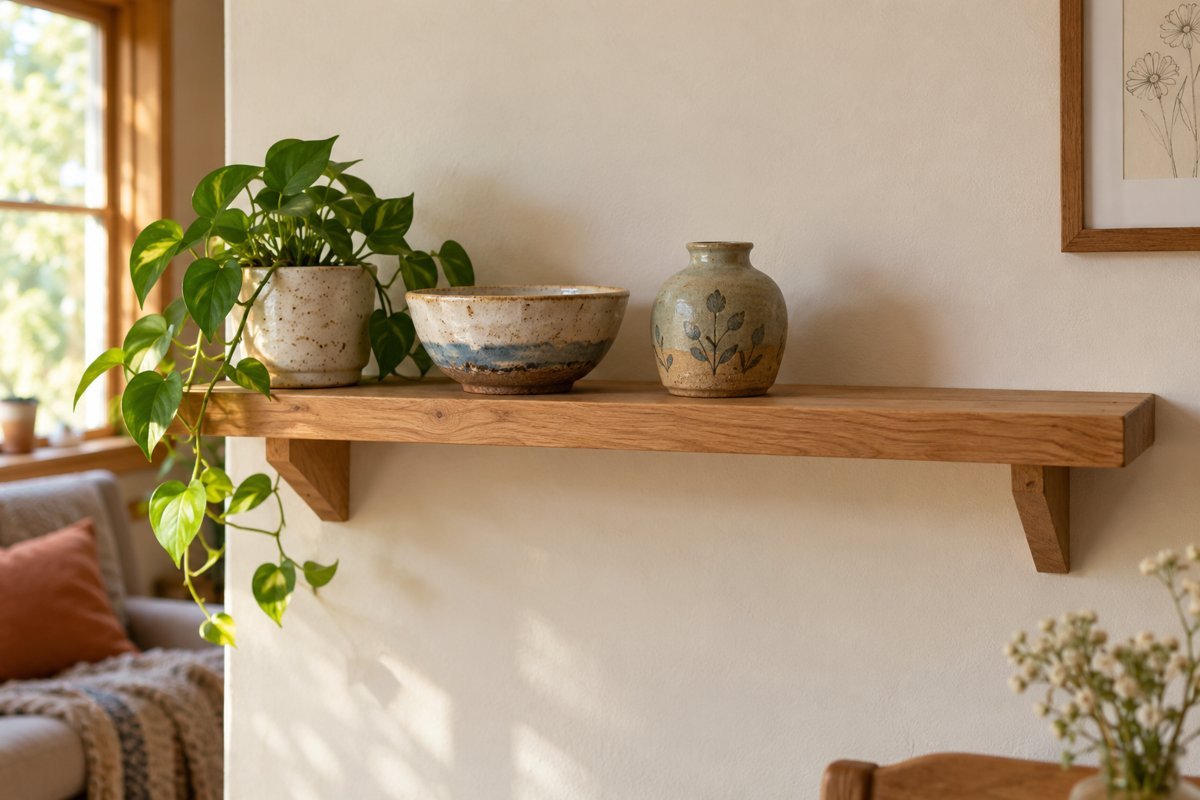
A small shelf can celebrate things made at home. Imagine two finished pottery or craft pieces on a plain wooden shelf, with a clear gap beside them. A simple wall color lets their shapes stand out. The display can change as new work is finished, rather than becoming a fixed arrangement bought all at once.
Fit the shelf appropriately and check the weight and stability of each piece. Keep fragile work away from busy reach areas. Not every project needs to be displayed; choose a few favorites and store others carefully. If the shelf fills, rotate items rather than adding more shelves automatically. Leaving a gap can be part of the scene. It makes the work easy to see and gives the display room to change with your interests.
Give the Routine a Clear Beginning and End
Choose an activity you already enjoy, then identify what you need to start it. Give those items one suitable storage spot close to the work area. Keep the surface clear enough to use and decide where the project goes when you finish. The setup should make beginning and tidying straightforward.
Try the corner during a normal week. Notice whether you use it, whether the furniture is comfortable, and whether supplies return to their places. Adjust one thing that gets in the way before adding more detail. A personal home does not need every interest visible in every room. A few well-planned corners can show what matters to you while leaving the rest of the space open for everyday life.
Common Questions
How can I make room for a hobby in a small home?
Start with one activity and measure the space it needs during use. A shared table and a portable tray or closed box may work well. Keep the walking route clear and choose a place to store the project when the table is needed again.
Do hobby supplies need to match my home decor?
Useful supplies do not need matching covers or containers. Keep current materials together, choose a simple storage piece that fits them, and let the activity add its own color and character.
How do I keep a hobby corner from becoming cluttered?
Keep only the current project visible and give spare supplies a separate storage spot. Decide where unfinished work goes before you begin, then adjust the setup after trying it during an ordinary week.
Related Ideas
For more ways to keep daily supplies close at hand, explore our everyday home organization ideas. If one room needs to support several activities, try these multifunctional furniture ideas. For a quiet place to read, see our small window corner ideas.