

The corner beside a window often has lovely light but no clear use. It may hold a spare chair, a pile of bags, or nothing at all. A small change can turn it into a spot you enjoy each day. Before you add anything, check how the window opens and where people walk. Then choose one job for the corner. These window corner ideas show different ways to make use of a bright patch of space. From a tiny desk to a place for morning tea, each scene keeps the room’s daily needs in mind, with simple details you can adapt.
1. A Round Tea Table With Two Compact Chairs
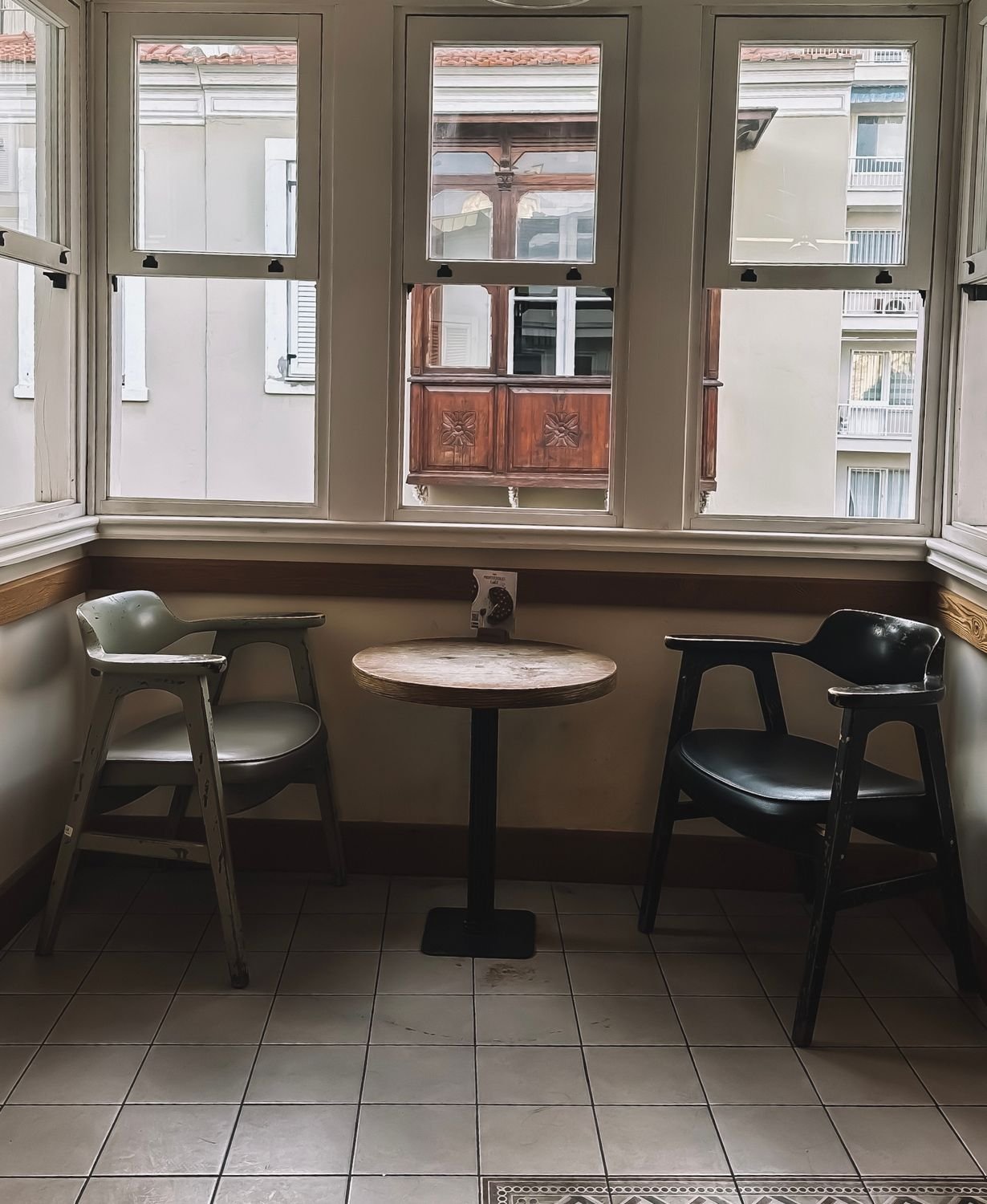
Picture a small round table tucked beside a window, with two compact chairs facing each other. A pale tabletop and a single pedestal base keep the center open. One short vase in the middle adds color without hiding the view. This is a simple scene for morning tea, a quick snack, or a chat while dinner cooks.
Pull both chairs out before deciding where the table belongs. Leave room to sit down and pass behind them. Keep the vase on a small tray so it can move when the table is needed for something else. If two chairs make the corner tight, use one and bring another over only when needed. A table that fits daily life is more useful than a crowded dining scene.
2. A Narrow Writing Desk Facing Across the Window
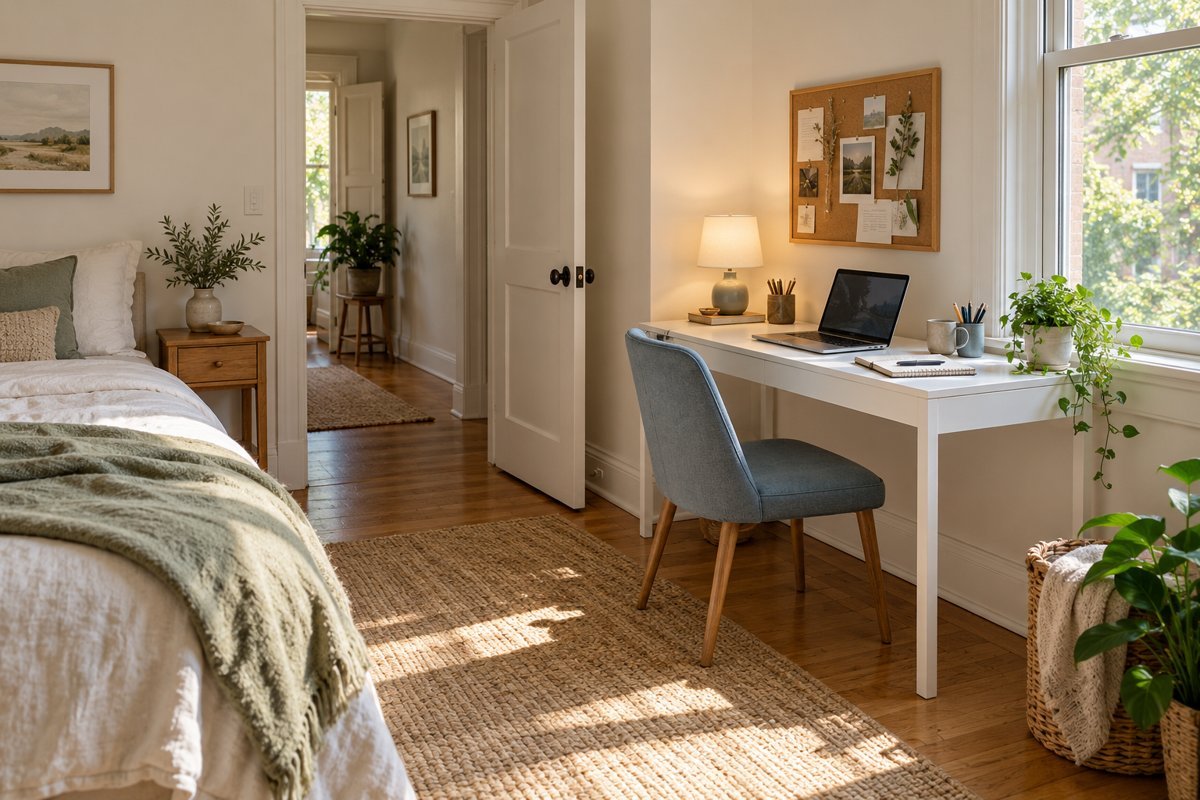
Set a slim desk at a right angle to the window so daylight comes from the side. Picture a white desk, a simple blue chair, and one small lamp. Keep the wall above plain except for a short pinboard. This layout gives the desk a clear purpose while letting the window remain visible from the rest of the room.
Sit at the desk at the time you expect to use it. Check for glare on a screen and adjust the chair or blind if needed. Make sure the desk does not cover a heater, vent, or window handle. Use a cable route that stays out of the walking space. Before choosing a shallow desk, check that it has enough depth for your work rather than only for a styled notebook.
3. A Low Plant Stand With Three Matching Pots
A low two-level stand can gather plants without filling the whole window. Imagine three plain clay pots on a light wooden stand, with leaves at different heights. Keep the tallest plant on one side so the view still feels open. A simple pale wall behind the stand makes the green leaves easy to see.
Choose plants to suit the actual light in the corner, and check care needs for the species you select. Protect the stand and floor from water with suitable saucers or liners. Take pots down to water if that makes spills easier to avoid. Keep the window usable and leave space for curtains. A few plants you can care for are a better starting point than a crowded collection.

4. A Single Lounge Chair With a Small Wall-Mounted Shelf
Picture a compact rust-colored lounge chair angled toward the window, with a small shelf on the nearby wall. The shelf holds a book and a drink, leaving the floor clear beside the chair. A plain floor lamp adds light after dark. The scene works well where there is room to sit but little space for a side table.
Choose the chair for comfort and fit before choosing its color. Sit down and test where your arm reaches; that will help set a useful shelf height. Mount the shelf with suitable fixings and follow its weight limit. Keep hot drinks away from a crowded edge. If wall mounting is not allowed, use a narrow stable table instead. There should still be room to open the window without climbing over the chair.

5. A Compact Craft Table With One Rolling Storage Cart
A bright corner can become a place to draw, sew, or make cards. Picture a small plain table with a rolling cart tucked under one side. Two shallow boxes hold paper and tools. A cream chair and a simple striped seat pad add warmth without making the work area busy. The window provides a pleasant backdrop to a real activity.
Measure the space needed for your hobby before choosing the table. Keep the cart clear of the chair’s leg space and lock its wheels when appropriate. Store sharp tools safely when you finish. If the table is shared, put one project in a tray so it can move easily. Leave a clear work surface rather than using it to display supplies that you rarely reach for.

6. A Low Storage Bench With a Plain Seat Cushion
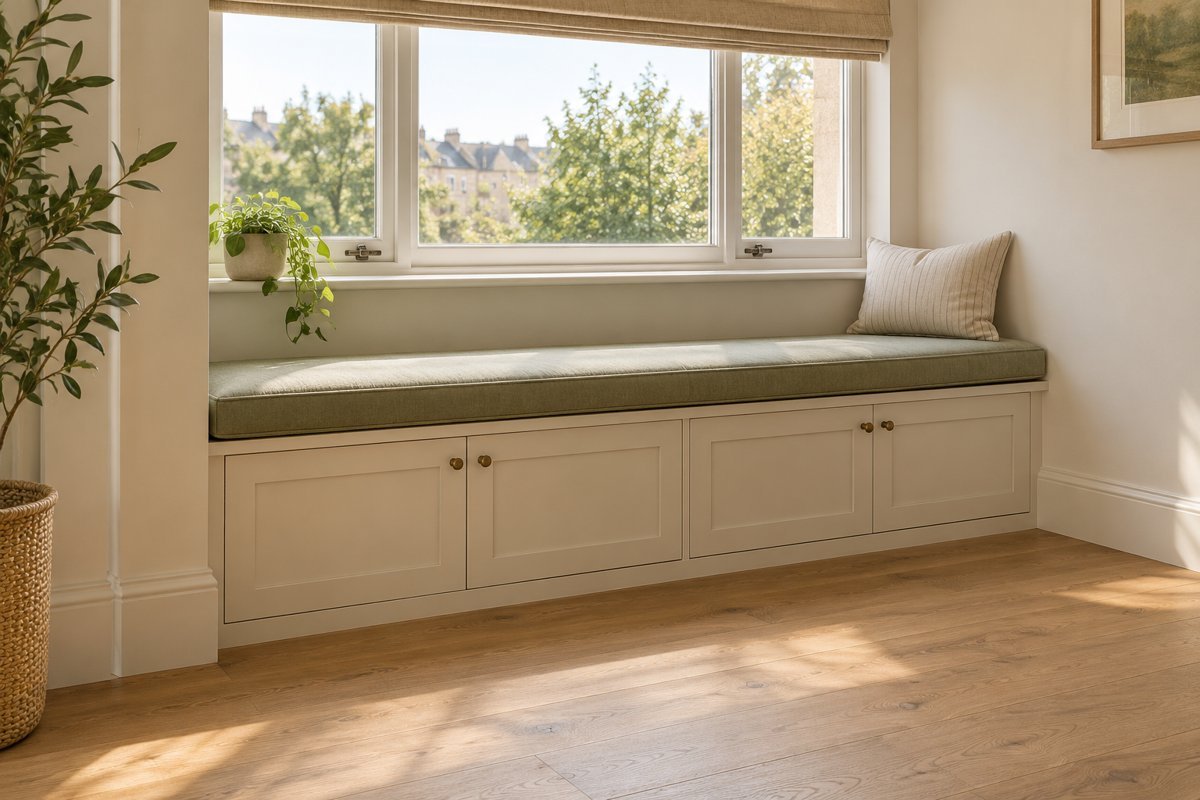
A low storage bench can give a window corner a seat and a home for spare throws. Picture a cream bench with a simple green cushion and one small pillow at the end. Its low shape leaves the window visible. Closed storage keeps the scene quieter than several open baskets.
Choose a bench designed for sitting and follow its weight and use limits. Check how its lid or drawers open before placing it near a wall. Keep it away from heaters and avoid blocking vents. In homes with children, consider whether furniture gives access to a window and use suitable window safety measures. A bench can be moved to a side wall if placing it directly beneath the glass would make the corner less suitable.
7. A Slim Console With a Small Seasonal Display
A narrow console can use a bright corner without adding a seat. Imagine a light wood table beside the window, with one framed print and a small bowl of decorative fabric fruit. Keep most of the top clear. The simple scene can change with the seasons by swapping the print or adding a different colored cloth.
Look for a console shallow enough to keep the walkway open, and secure it as directed by its maker. Check that curtains can move without catching on the display. Use decorations that suit the light; strong sun can fade fabrics and prints over time. Choose a few pieces you enjoy rather than filling the table’s full width. An empty spot is useful for setting down keys or a bag briefly.

8. A Small Music Corner With a Guitar Stand and Chair
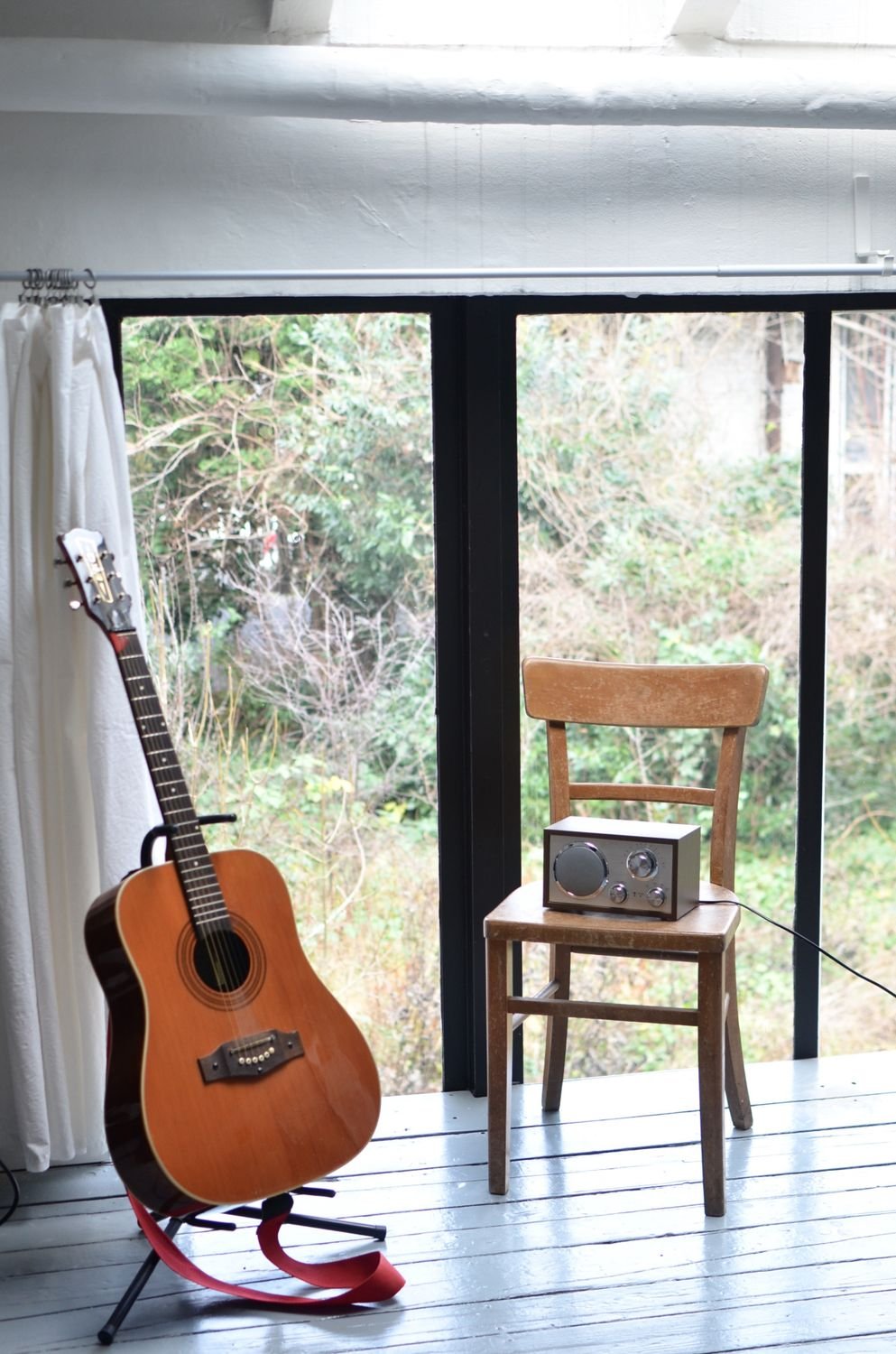
A window corner can give a hobby a proper home. Picture a guitar on a stable stand beside a simple wooden chair. A small radio can sit on the chair between practice sessions; move it to a nearby shelf before sitting down. Keep the rest of the space plain so the instrument and the warm wood form the scene. Add a music stand only if there is room.
Check the instrument maker’s guidance on heat, light, and humidity before choosing this location. Move the setup away from direct sun or drafts if needed. Leave enough room to play without bumping the window or nearby furniture. Store cables and small accessories together. If the corner’s conditions do not suit the instrument, use the space for the chair and sheet music while storing the guitar somewhere more suitable.
9. A Morning Stretch Corner With a Rolled Mat Basket
A clear patch of floor beside a window can be useful without much furniture. Picture a woven basket holding a rolled exercise mat and one folded towel. A small print hangs on the side wall, and a plain blind controls light and privacy. The open floor is the main feature of this scene.
Unroll the mat before arranging anything around it. Check that you can move comfortably without hitting furniture, glass, or a hanging light. Keep the basket where it will not tip into the mat area. A clear corner can also work for quiet sitting or a few minutes of breathing. Choose the activity that suits you, then let the space remain simple enough to use without first rearranging the room.

10. A Bedroom Window Corner With a Small Dressing Table
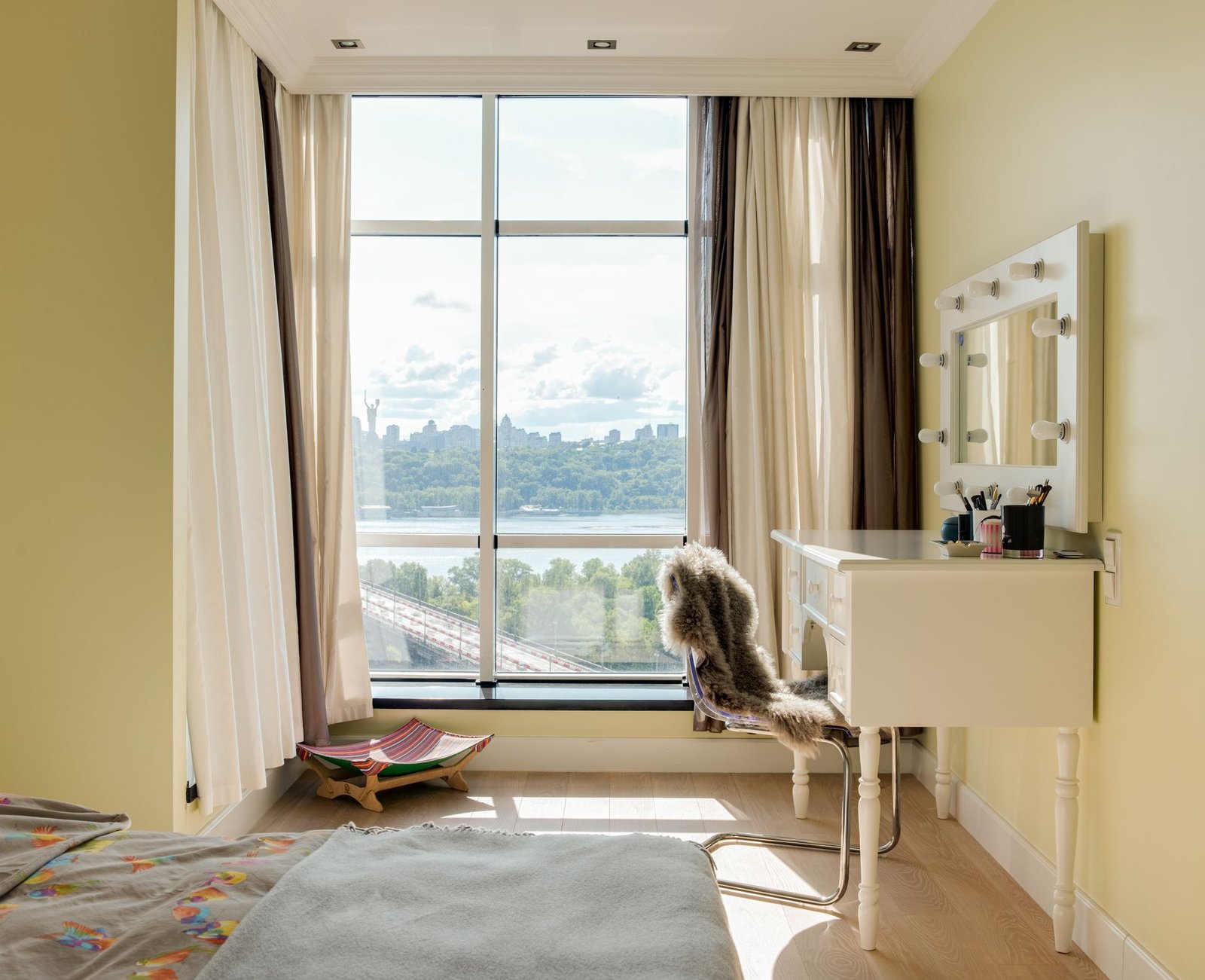
Picture a compact white dressing table beside the window, with a securely mounted mirror and a chair that slides underneath. A shallow tray or small cup holds only the items used each morning. Light furniture and a simple seat keep the scene open. The side window gives the corner character while leaving the center of the bedroom clear.
Test the mirror position from the stool and check how daylight changes across the day. Use suitable additional lighting when needed. Keep cosmetics and other items according to their storage instructions rather than leaving everything in strong sunlight. Make sure drawers open without hitting the bed or curtains. If a full table is too large, a slim wall shelf may work, provided it is fitted properly and has enough space for your needs.
Test the Corner Before You Add Furniture
Start by measuring the floor space, the window opening, and the nearby route through the room. Note heaters, vents, sockets, and anything that needs regular access. Use tape or paper to mark a table or chair footprint on the floor. Walk around it and try the activity you have in mind. A corner that looks empty may already be doing the useful job of keeping a route clear.
Watch the light for part of the day before choosing fabrics, plants, or a screen position. Keep privacy in mind after dark too. Once the main piece fits, add one useful light or small detail. Live with that setup before adding more. The best window corner gives you a place to do something you enjoy while keeping the room easy to move through.