
Decorating can feel like a big task when you have never done it before. It helps to start with a small space and a clear purpose. You might want a place for morning tea, a friendlier kitchen table, or a bedside spot that feels less bare. These beginner decor ideas show complete little scenes rather than a list of things to buy. Use what you have where possible and make changes that are easy to undo. You do not need to know a style name first. Choose one idea, test it during normal use, and learn what you enjoy before moving to another part of the room.
Start here: Choose one small area with a real purpose, such as a bedside table or entry shelf. Put the useful item in place first, add one color or texture you enjoy, and leave room for daily use. Try the arrangement for several days before buying more.
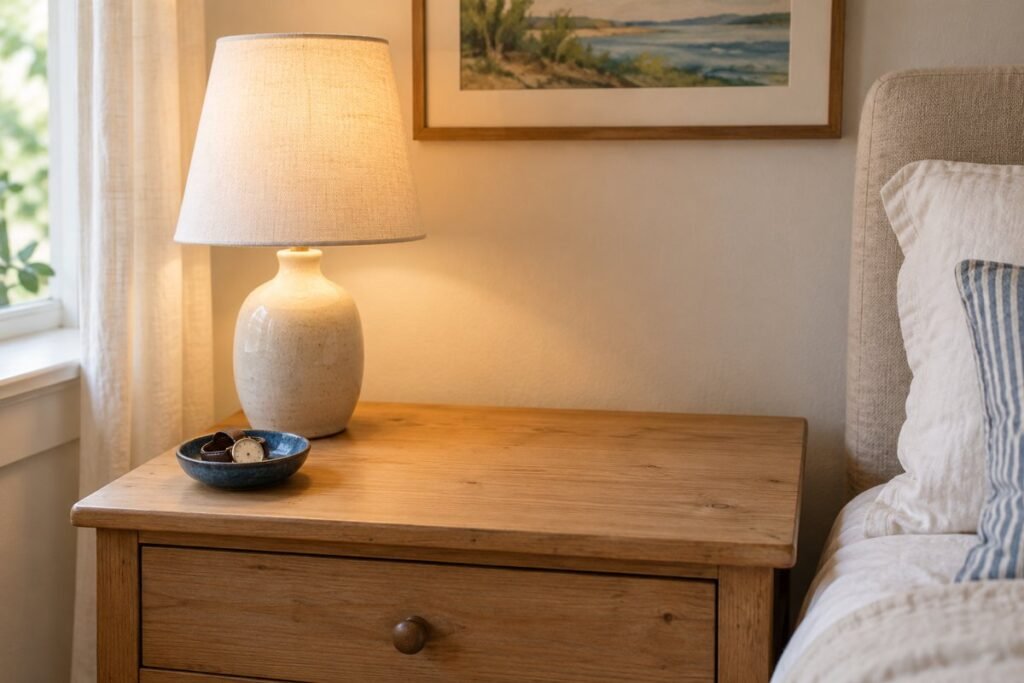
1. A Bedside Table With One Lamp and a Small Blue Dish
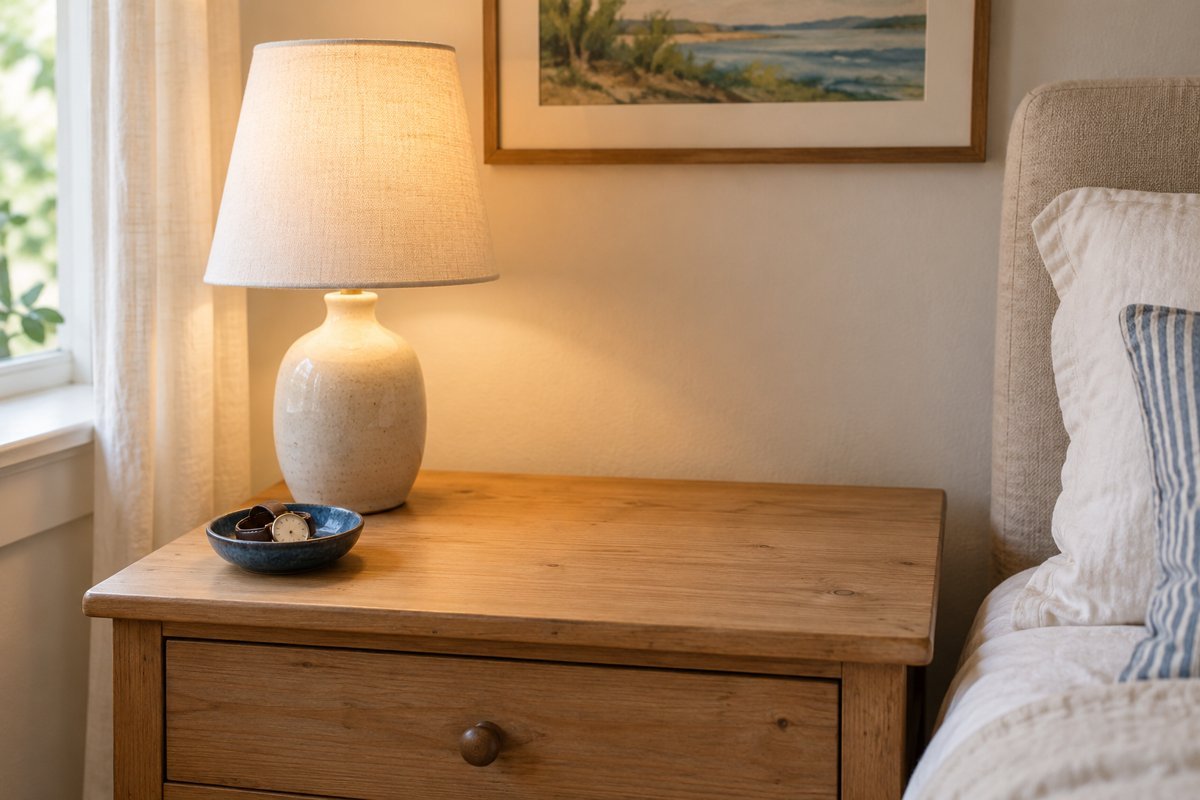
Start with a surface you see every day. Picture a plain bedside table holding a useful lamp and a small blue dish for a watch or glasses. Leave the middle clear for a glass of water. The dish adds one color, while the simple layout makes it obvious where daily items belong.
Remove everything from the top first and return only what is used there. Test the lamp switch from the bed and keep the shade clear of fabric according to its instructions. Try a dish you own before choosing anything new. If the table is very small, use the drawer for personal items and keep just the lamp above. Finishing one useful surface is a manageable first decorating task.
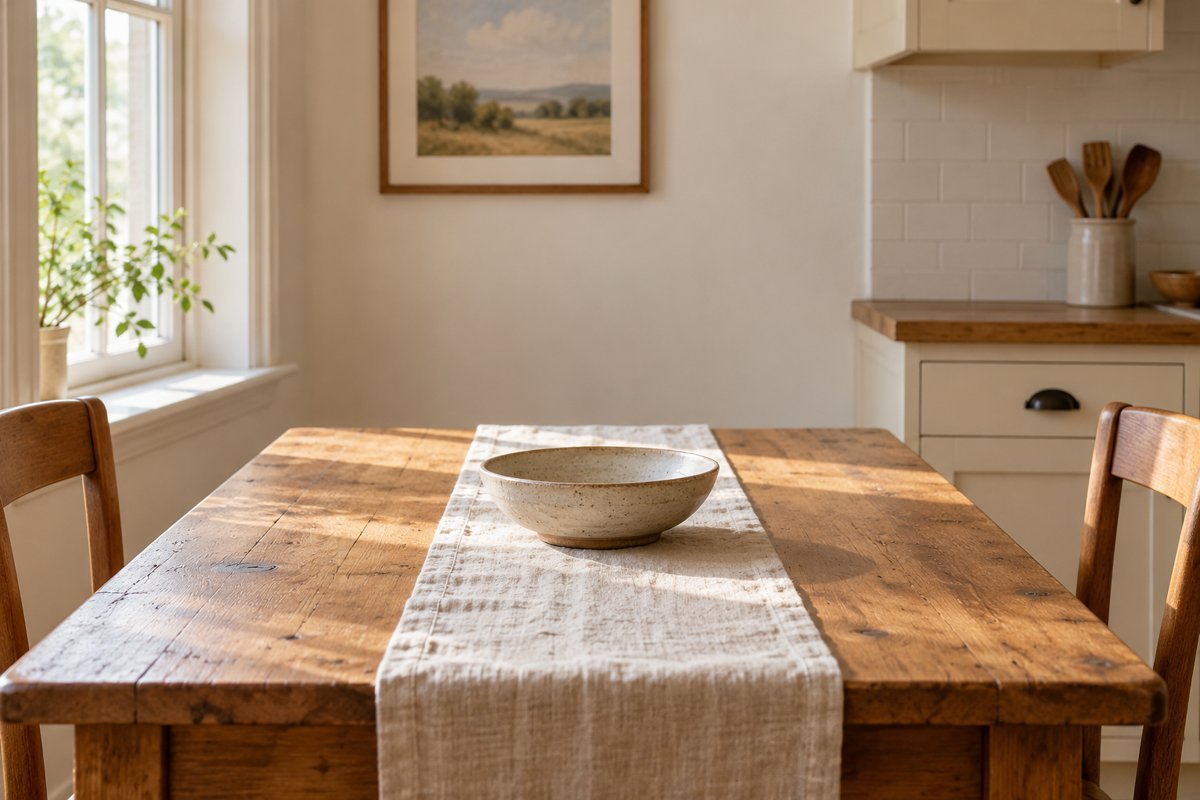
2. A Kitchen Table With a Folded Cloth and Low Bowl
Picture a small kitchen table with a plain cloth folded into a narrow strip and a low ceramic bowl in the center. The wood remains visible on both sides. The cloth brings softness, and the bowl gives the table a clear focal point without a large arrangement.
Use a washable cloth that does not catch on chairs. Check that the bowl is suitable if it will hold food. Sit down and see whether the arrangement leaves enough room for a normal meal. If it must move often, keep it simple to lift away. You can change the cloth color later without changing the furniture. This is a small way to learn how color and shape look together in your own room.
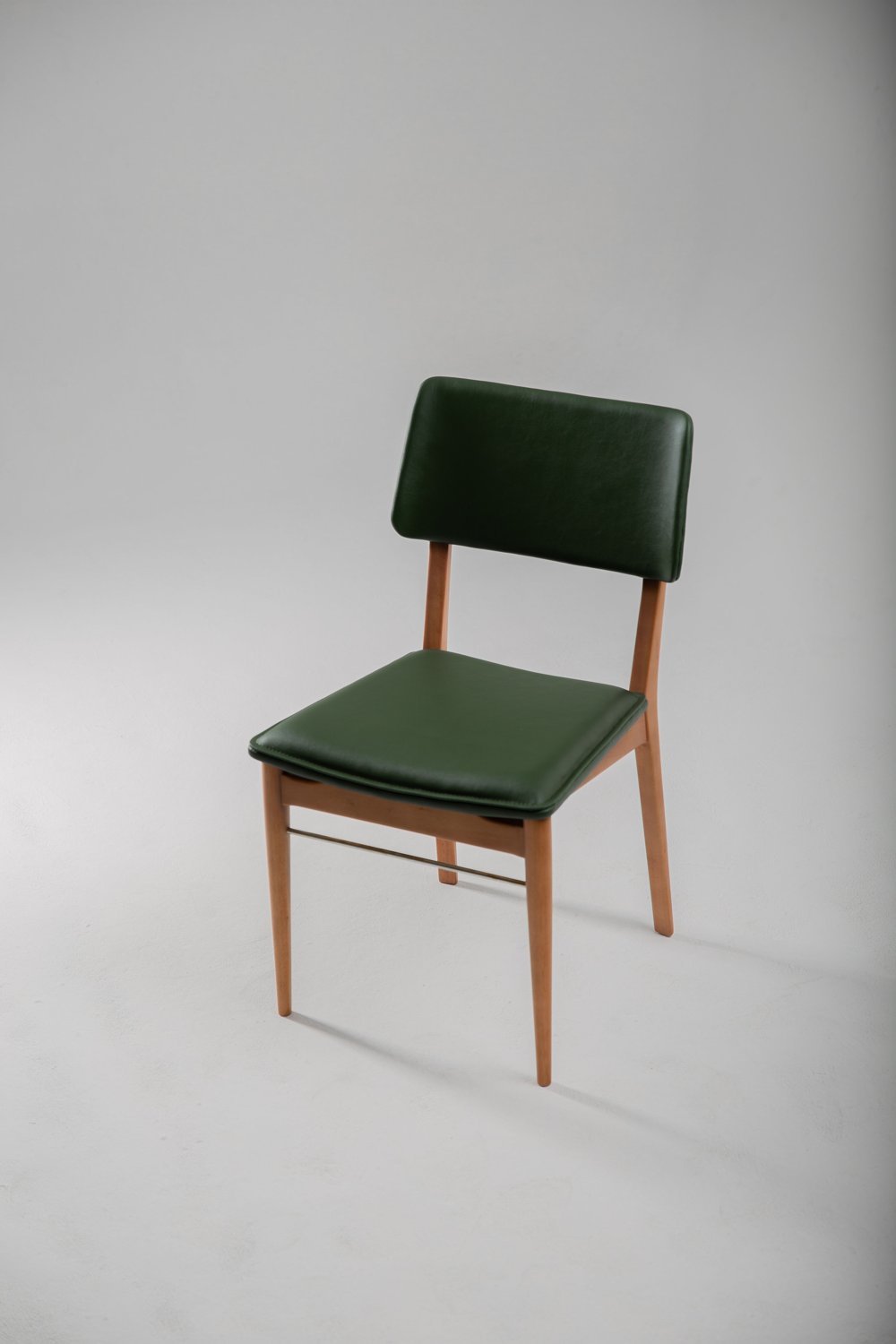
3. A Plain Chair With One Comfortable Cushion
An existing chair can become a finished corner with one cushion that fits it well. Imagine a wooden chair with a muted green cushion beside a pale wall. Keep the floor around it clear. The color adds interest, while the chair still looks ready for sitting rather than covered in decorative layers.
Choose comfort first and make sure the cushion stays in place in line with its instructions. Check the chair’s condition before using it regularly. Try the corner for a few days and notice whether you actually sit there. If it becomes a pile of clothes, give those clothes a proper storage spot. You do not need to add a lamp, rug, and basket immediately. Learn whether the chair belongs there before building a larger scene around it.
4. A Small Wall With One Favorite Framed Picture
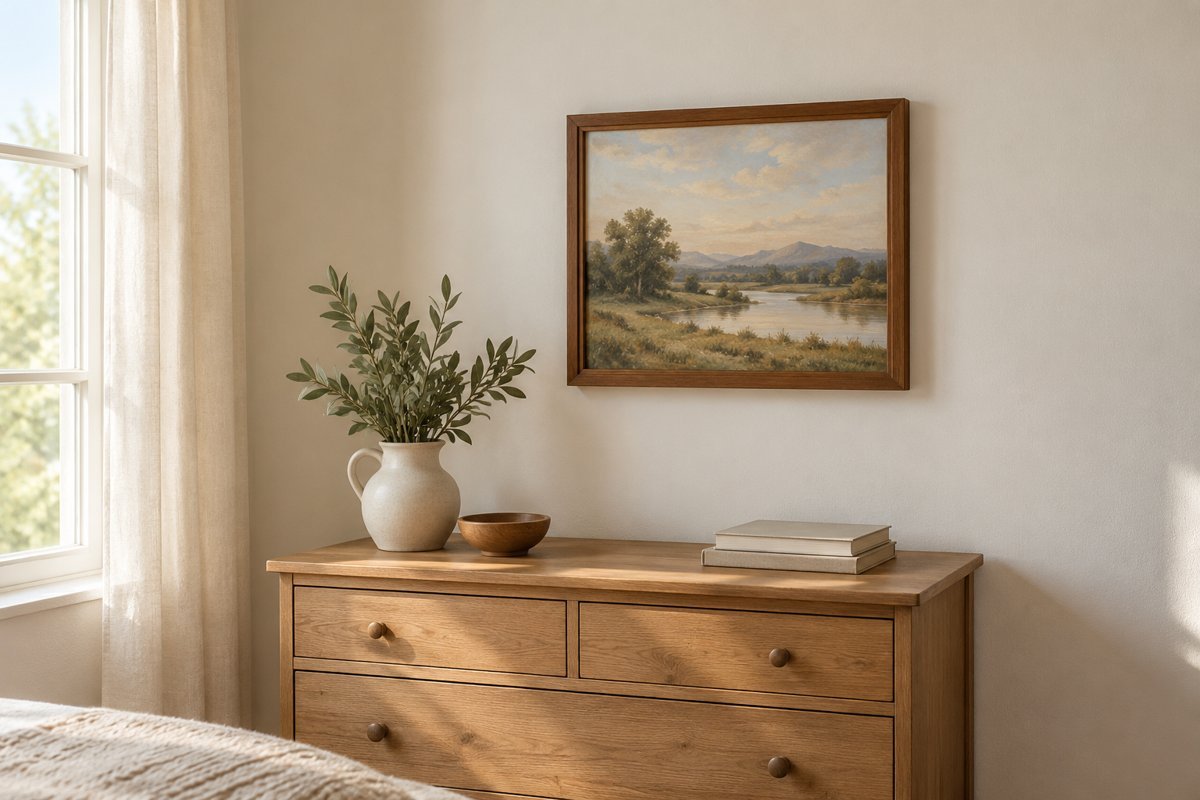
Choose one picture you enjoy and give it a clear place. Picture a simple landscape in a brown frame on a warm white wall beside a dresser. Keep nearby decorations modest. One meaningful piece can make the area feel personal without requiring a full gallery wall.
Make a paper outline of the frame and test its position before making holes. Look from the doorway and from a seat in the room. Use fittings suitable for the wall and weight, and check any rental restrictions. Keep heavy art away from sleeping positions. If the piece looks lost, try a smaller wall rather than adding several unrelated pictures around it. Choosing the right location is part of decorating, not a sign that the artwork is wrong.
5. A Bathroom Shelf With Two Folded Towels and Open Space
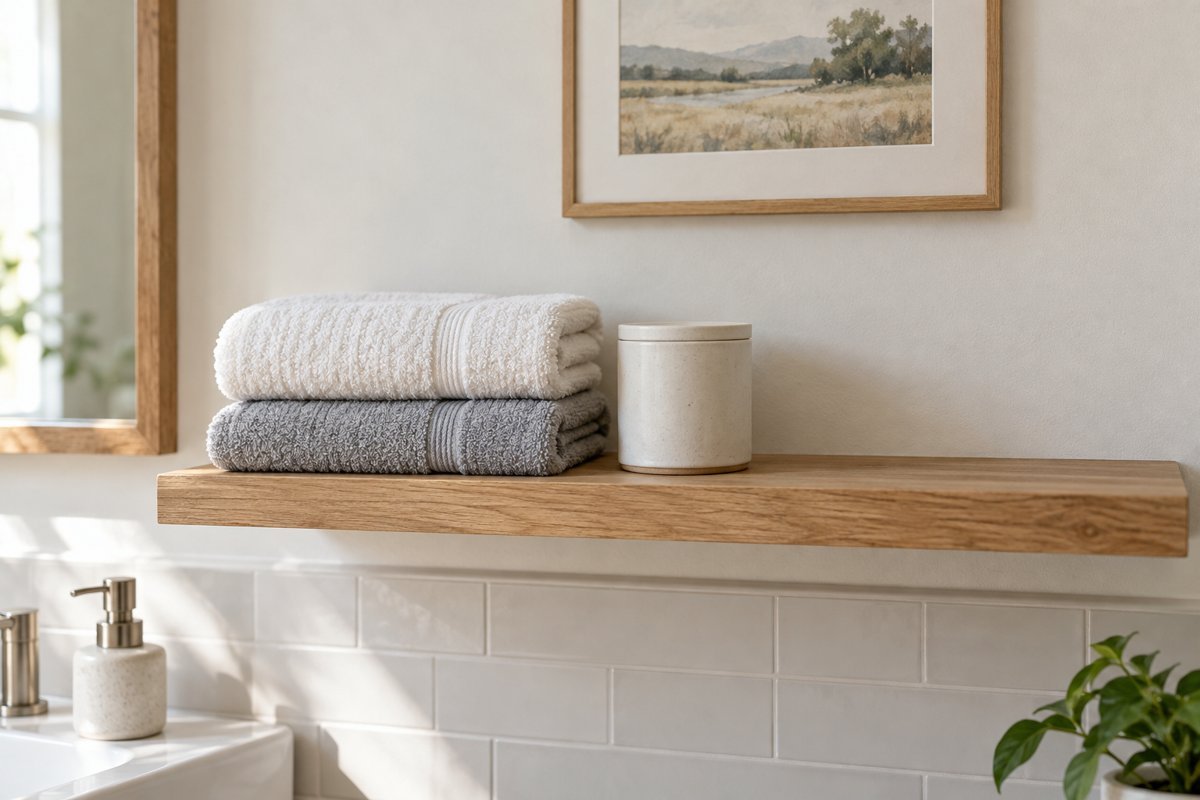
A small shelf can look settled with very few things. Imagine two clean towels folded to a similar width, with a plain washable container beside them. Leave the other end open. A soft gray and white palette keeps the scene clear, while the fabric adds texture.
Choose a shelf properly fitted for the load and suitable for the bathroom environment. Keep towels clean and dry, and avoid storing products where moisture conflicts with their labels. Do not add bottles only to make the shelf look full. Use the container for something appropriate that you need nearby. If the shelf feels crowded once daily items are returned, simplify the display. A beginner arrangement should make use easier rather than create another surface to manage.
6. A Desk Corner With a Useful Lamp and One Closed Box
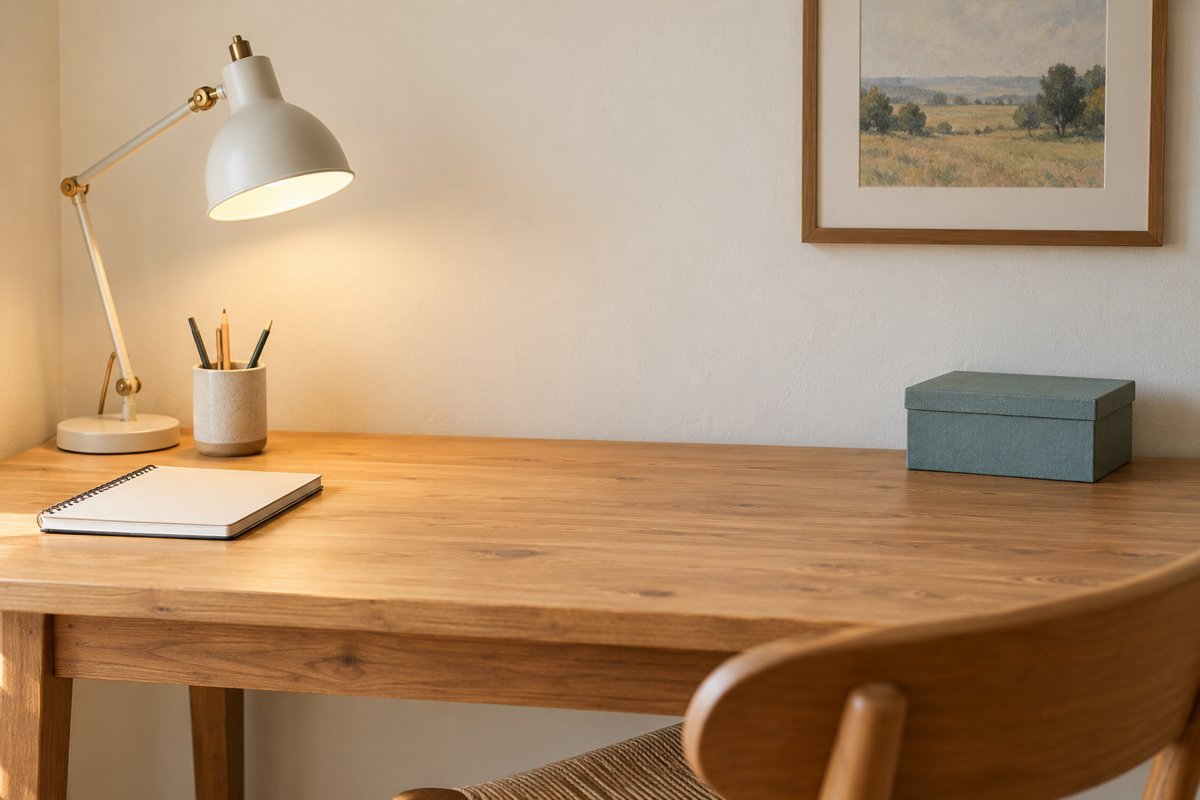
Picture a plain desk with a task lamp, a notebook, and a small closed box for spare supplies. A simple cream wall behind it gives the work area a quiet backdrop. The box can have a soft blue or green finish for one small color detail. Keep the center of the desk clear.
Test the lamp while doing the task the desk is used for. Keep cables out of the way of the chair and drawers. Choose a box that fits the supplies without hiding current work you need to see. If the desk is shared, make the storage easy to lift away. You can add a picture later if the area still feels bare. A useful first arrangement gives you a clear base to build on.
7. A Dresser Top With Two Different Heights
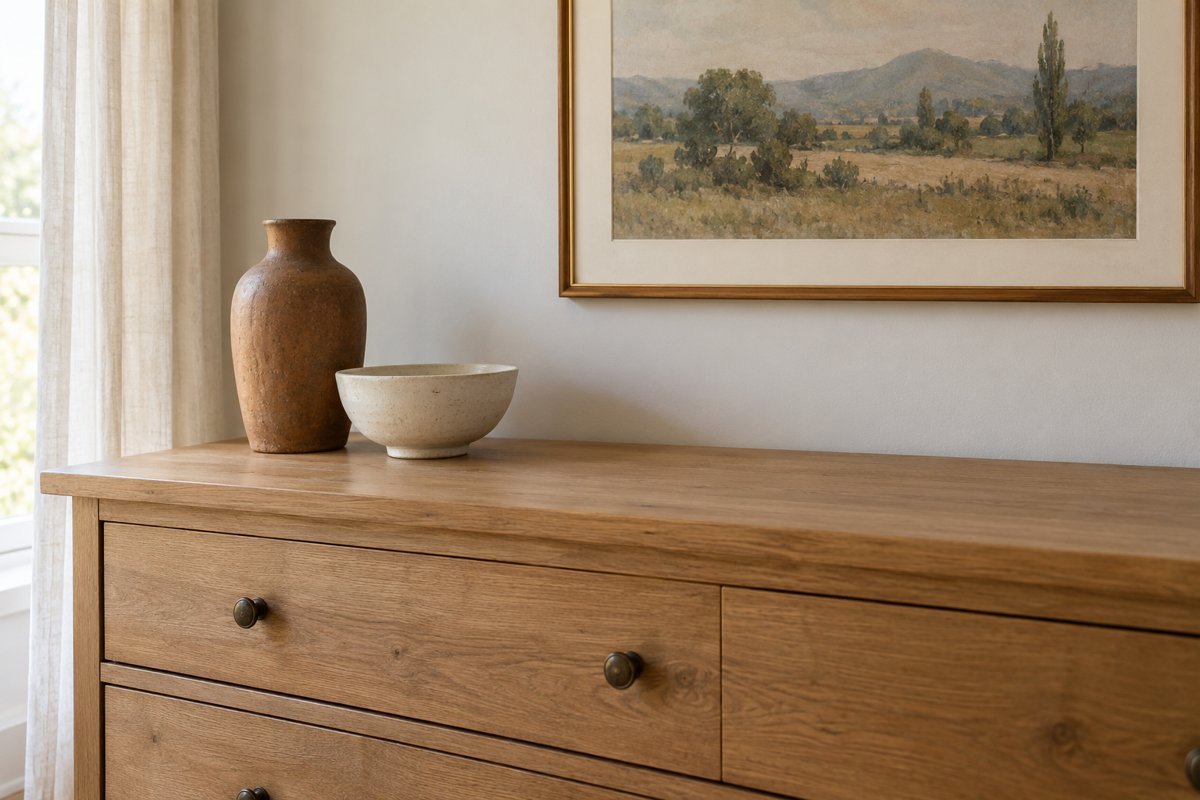
A simple height difference can make a display easier to read. Imagine a short cream bowl beside a taller brown vase on one end of a dresser. The other end stays open for daily use. Keep the vase empty at first so you can see how the two shapes work together.
Choose stable pieces and leave a visible gap between them. Check that the taller object does not hide artwork or interfere with a mirror. Keep fragile items away from the edge and follow the dresser’s stability guidance. If the pair feels too large, remove one rather than looking for a third piece to balance it. You can learn a lot by moving the same objects a little farther apart or trying them on another surface.
8. An Entry Shelf With a Single Key Dish
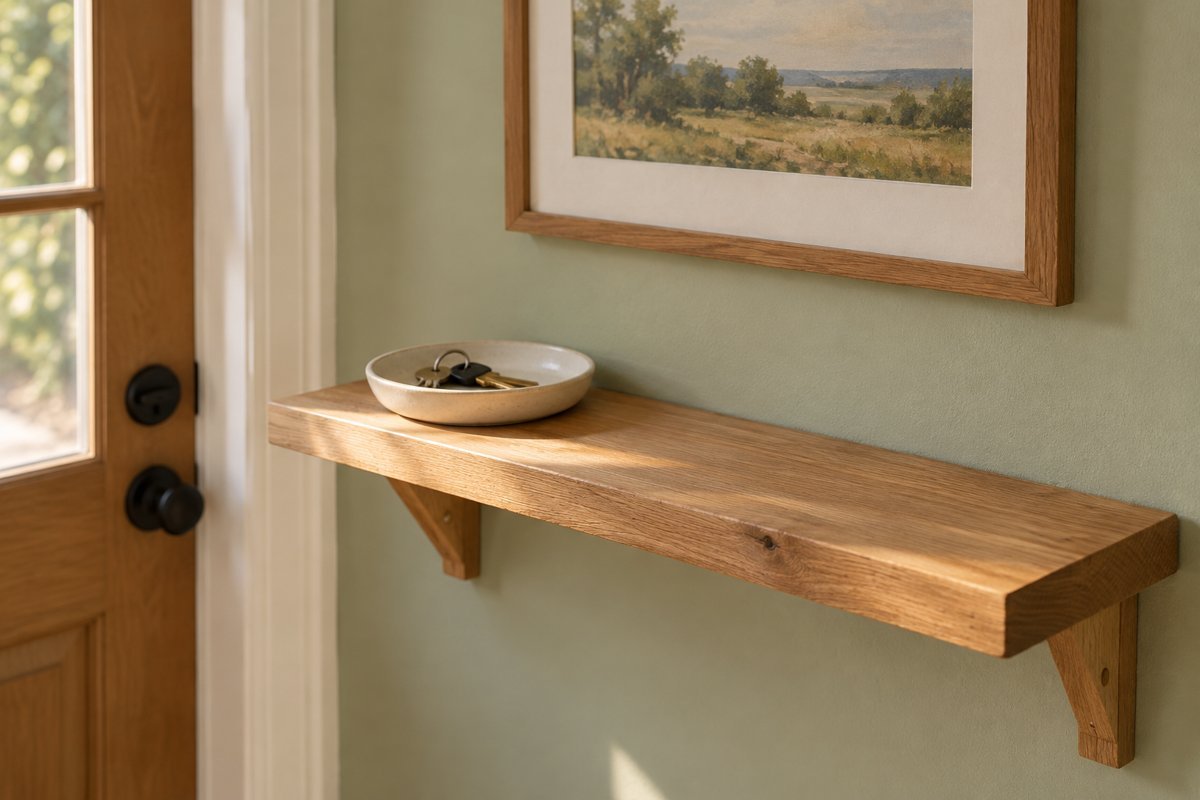
A small entry can feel more finished when one useful item has a clear home. Picture a shallow wooden shelf with a plain dish for keys, against a pale green wall. Leave the rest of the shelf clear. The natural wood and one soft color provide enough detail for the small space.
Check that the shelf does not block a door or narrow the walking route. Fit it appropriately and keep within its load limit. Use a dish that holds the keys without needing a large tray beneath it. If the surface starts gathering mail, decide where that paper should go rather than adding more containers. A useful daily habit can help the scene stay as simple as it looked when you first arranged it.
9. A Living-Room Basket With One Folded Throw
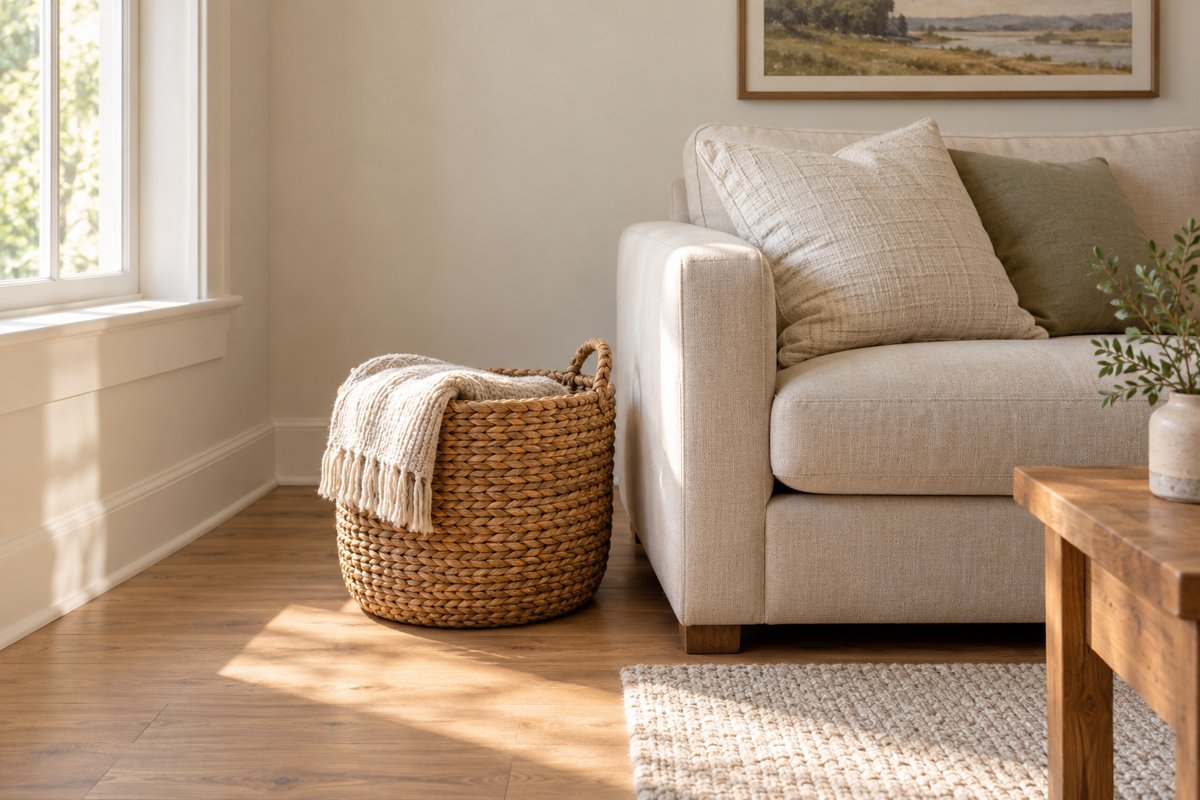
Picture a small, sturdy basket beside a sofa, holding one folded throw. The basket’s warm texture contrasts with the sofa’s plain fabric. Keep the floor around it open, with no extra magazines spilling out. The scene adds softness while providing a real home for something used in the room.
Choose a basket that fits fully beside the furniture and stays outside the main route. Check for rough edges that could snag the throw. Follow the fabric’s care guidance and store it dry. If the basket is too large or always in the way, use a drawer or cabinet instead. The look is only useful if the storage works. You can bring texture into another small object without adding a floor piece.
10. A Dining Side Wall With One Simple Color Repeat
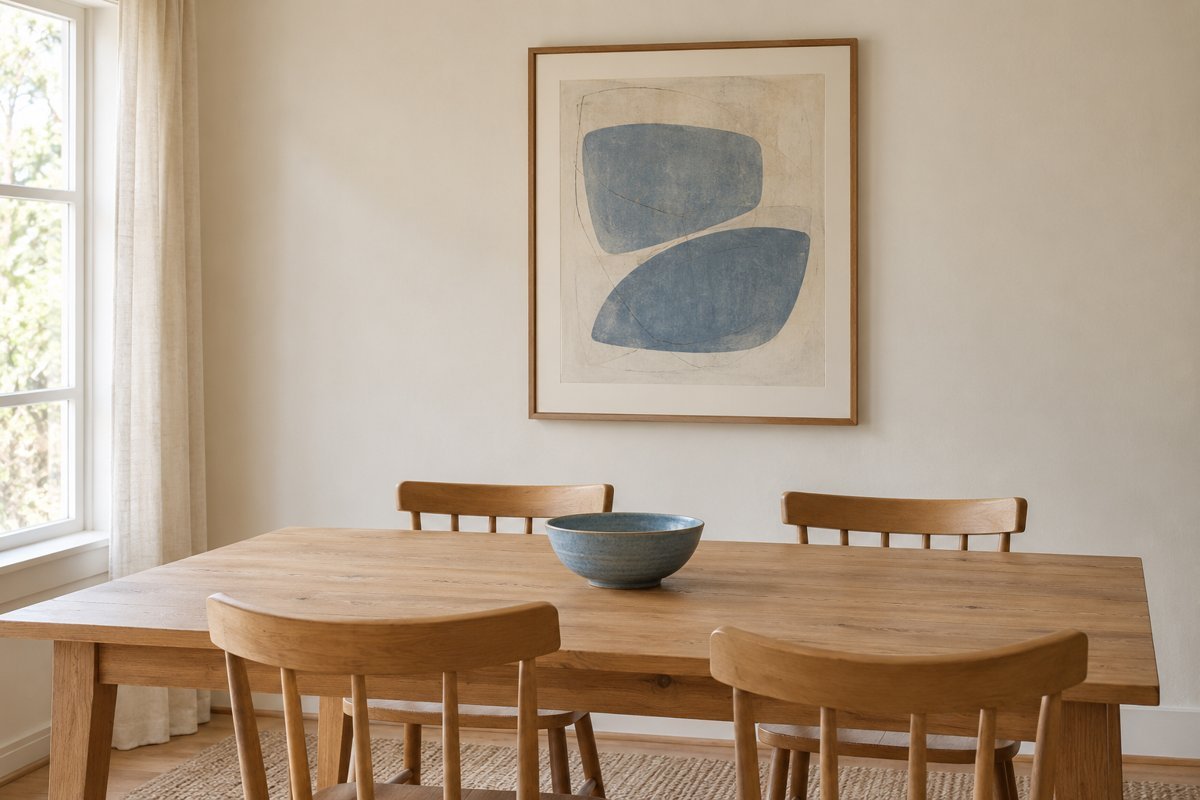
A small color repeat can connect a picture and a table. Imagine a framed print with muted blue shapes on the dining wall and one blue bowl on the table below. The rest of the setting is plain cream and wood. The two blue details give the scene a clear link without making everything match.
Use a bowl and artwork you already own if possible. Test their colors together in the room’s light before deciding they belong. Hang the picture appropriately and leave the bowl easy to move for meals. If the shades differ a little, that can still work. You do not need an exact match. Start with one simple connection and avoid adding several more blue objects until you know whether the room needs them.
Finish One Small Experiment
Choose the idea that fits a real need and gather only the pieces for that area. Clean the surface, place the useful item first, then add one detail. Take a photo from the doorway if that helps you see the arrangement as a whole. You can move things again; a first attempt does not need to be permanent.
Use the space for several days before deciding what to add. Notice which pieces stay put and which you keep moving away. Keep measurements and a few notes about colors or sizes that work. That gives you a reason for any future purchase. Decorating becomes more manageable when each small choice teaches you something about your home, rather than making you feel that every room must be finished at once.
Common Questions
Where should I start decorating if I am a beginner?
Start with one small area you use often. Clear the surface, return the useful items, and add one detail you enjoy. A bedside table, entry shelf, or chair corner gives you a manageable place to test what works.
Do I need to choose a decorating style first?
You can begin without a style label. Notice the colors, shapes, and textures you like among the pieces you already own. Try a small arrangement and use it for a few days before deciding whether to add anything.
How can I avoid buying decor that does not fit?
Measure the space and test a layout using existing pieces or paper outlines. Check how the area works during everyday use. Keep notes about the sizes and colors that work so a later purchase has a clear purpose.
Related Ideas
To start with existing belongings, explore our no-buy decor ideas. For more small surface arrangements, try these home decor finishing touches. When you are ready to compare different looks, explore our dining corner styles.