
A room does not need several bold features to feel personal. One clear detail can be enough: a curved chair, an interesting lamp, or a color you enjoy seeing each day. The rest of the room can support that choice without copying it everywhere. These home decor ideas focus on ten complete scenes with one memorable feature. They are starting points you can test around the furniture you already use. Choose the detail that fits your home and routine, then leave enough room for it to stand out. A useful, comfortable space matters more than making every corner compete for attention.
Start here: Choose one detail you want to notice first, such as a chair, artwork, or favorite object. Give it a clear setting, then check its size, comfort, and usefulness before adding anything else.
1. A Curved Green Chair Beside a Plain Cream Sofa
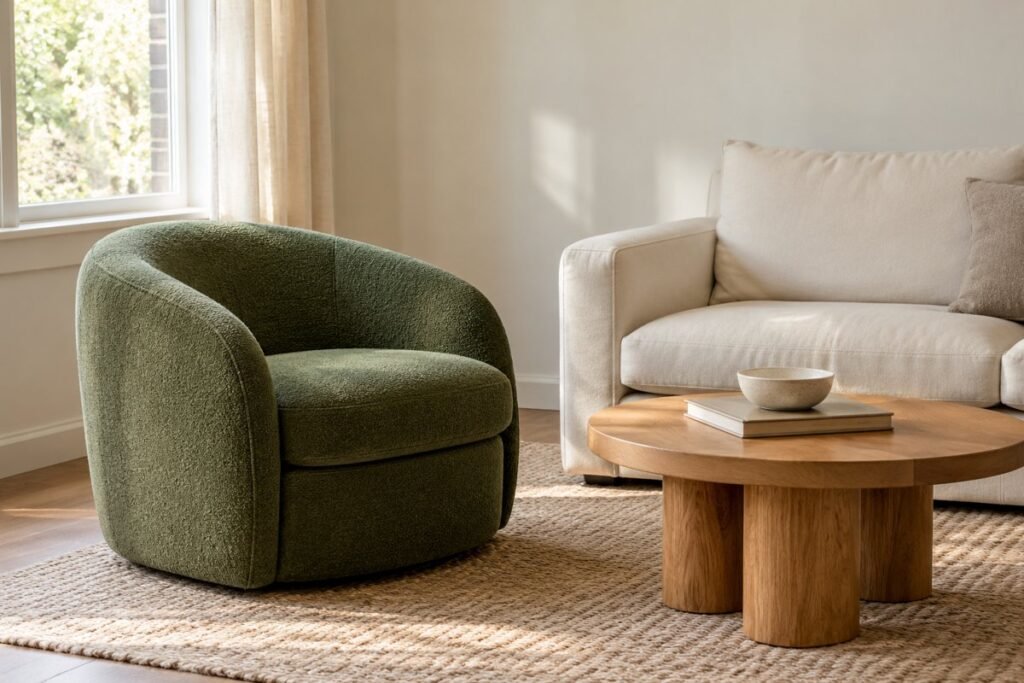
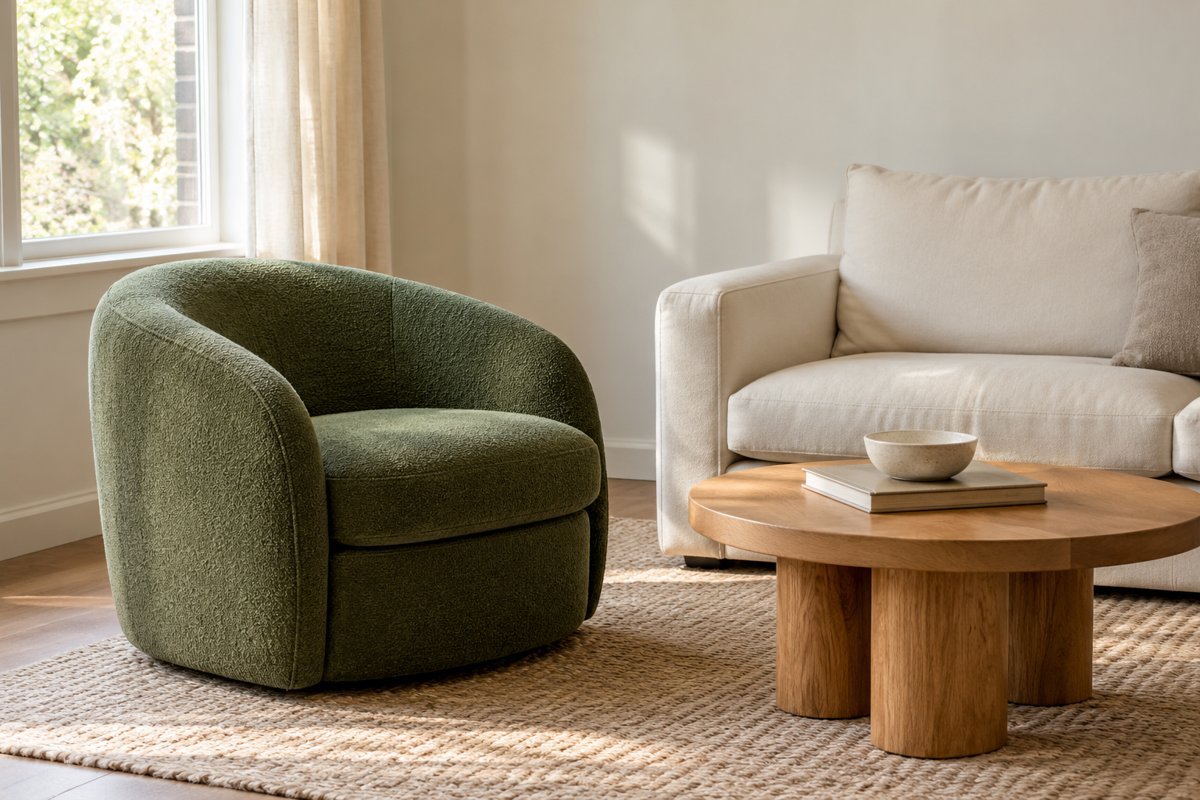
Picture a softly curved green chair beside a simple cream sofa. A plain wooden table sits between them, and the wall behind stays light. The chair’s rounded outline becomes the feature, while the sofa gives it a quiet companion. Keep extra patterns limited so the shape remains easy to see.
Choose the chair for comfort and actual fit before focusing on its silhouette. Test the footprint with space to stand and walk around it. A curved back can make a chair wider than it first appears. If you already have a chair you enjoy, a single green cushion can test the color before any larger decision. The scene does not require replacing useful seating just to introduce a rounded shape.
2. A Rounded Ceramic Lamp on a Simple Desk
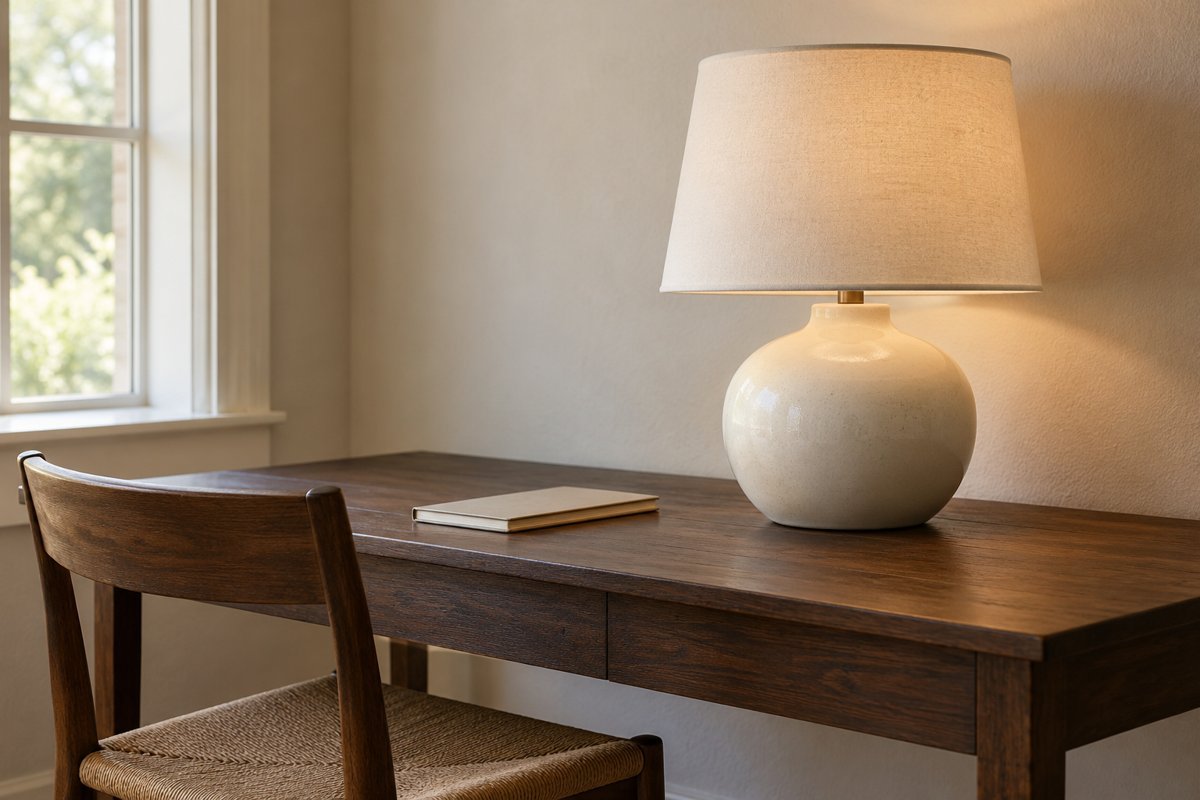
An unusual lamp shape can give a work corner character. Imagine a rounded cream ceramic base with a plain shade on a dark wooden desk. The chair and wall are simple, with one notebook on the work surface. The contrast between the lamp’s curve and the desk’s straight edges provides the detail.
Choose a lamp suitable for the task and follow its bulb, shade, and clearance guidance. Test the light while working rather than only standing in front of the desk. Keep the cable out of the chair route and leave enough surface for the work itself. If the lamp is mainly decorative and does not light the task well, use it in another location. Its shape should support a useful room rather than excuse poor lighting.
3. A Deep Blue Wall With One Plain Wood Cabinet
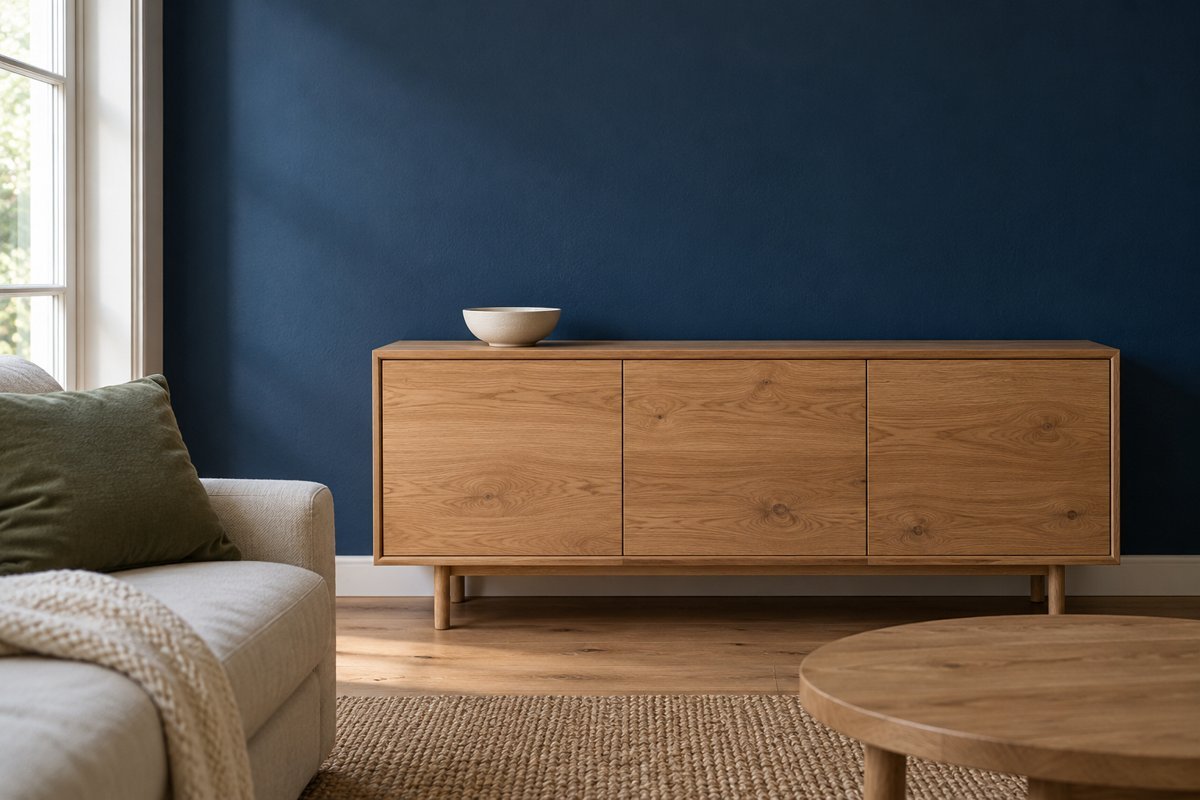
A strong wall color can make familiar furniture look different. Picture a deep blue wall behind a low natural wood cabinet. One cream bowl sits on top, and the rest of the surface remains clear. The broad color and visible wood grain form the main relationship, so the wall does not need a collection of additional objects.
Test the paint beside the cabinet in daylight and under the room’s lamps. A deep color can look very different in a small or poorly lit space. Use a finish suited to the wall and follow preparation guidance. If painting is not allowed, a large blue-toned artwork may provide a smaller version of the effect. Keep cabinet access clear and avoid adding furniture just to fill the newly colored wall.
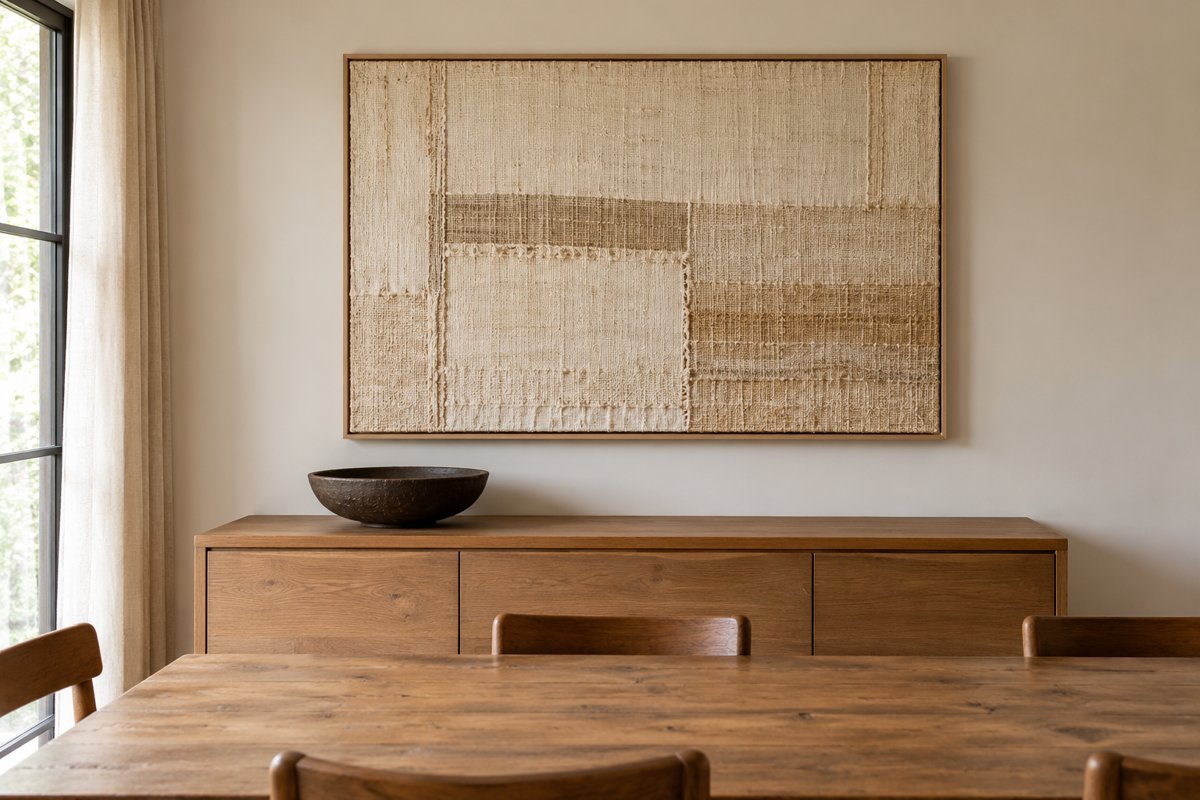
4. A Large Textured Artwork Above a Plain Dining Sideboard
Picture one broad cream-and-tan textile artwork above a simple dining sideboard. The fabric’s texture creates interest without several bright colors. A low dark bowl below adds a small contrast. Leave wall space around the frame so the piece feels like a clear choice rather than part of a crowded display.
Use an artwork and support method suited to its materials. Valuable or delicate textiles may need advice from a framer or conservator. Test the full size with paper before choosing a spot. Keep the piece away from conditions that could damage it, including moisture or strong direct light as appropriate. If the sideboard is used for serving, leave practical surface space below. A large piece should relate to the furniture without hiding how that furniture is used.
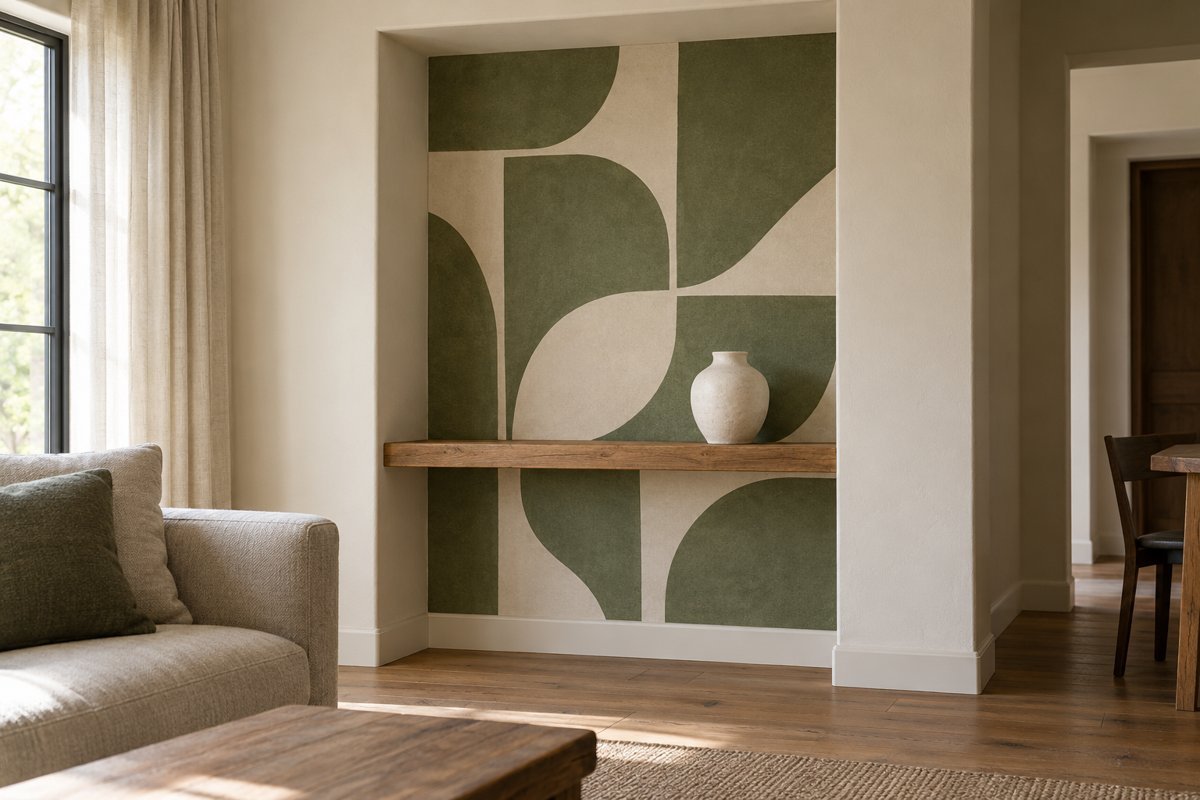
5. A Small Alcove With One Bold Patterned Back Wall
An alcove can hold a pattern in a contained area. Imagine broad muted green and cream shapes on the back wall, with a plain shelf and one simple vase. The surrounding walls stay cream. Keeping the pattern within the recess gives it a clear edge and lets the rest of the room remain quiet.
Check wall condition and product instructions before choosing paint, paper, or another finish. Test a full-size sample so the pattern scale suits the recess. Do not assume removable materials are damage-free on every surface. If the alcove holds useful storage, keep access and shelf capacity in mind. You can get a smaller version through a framed patterned print if changing the wall is unsuitable. The contained feature should still fit the room’s daily needs.
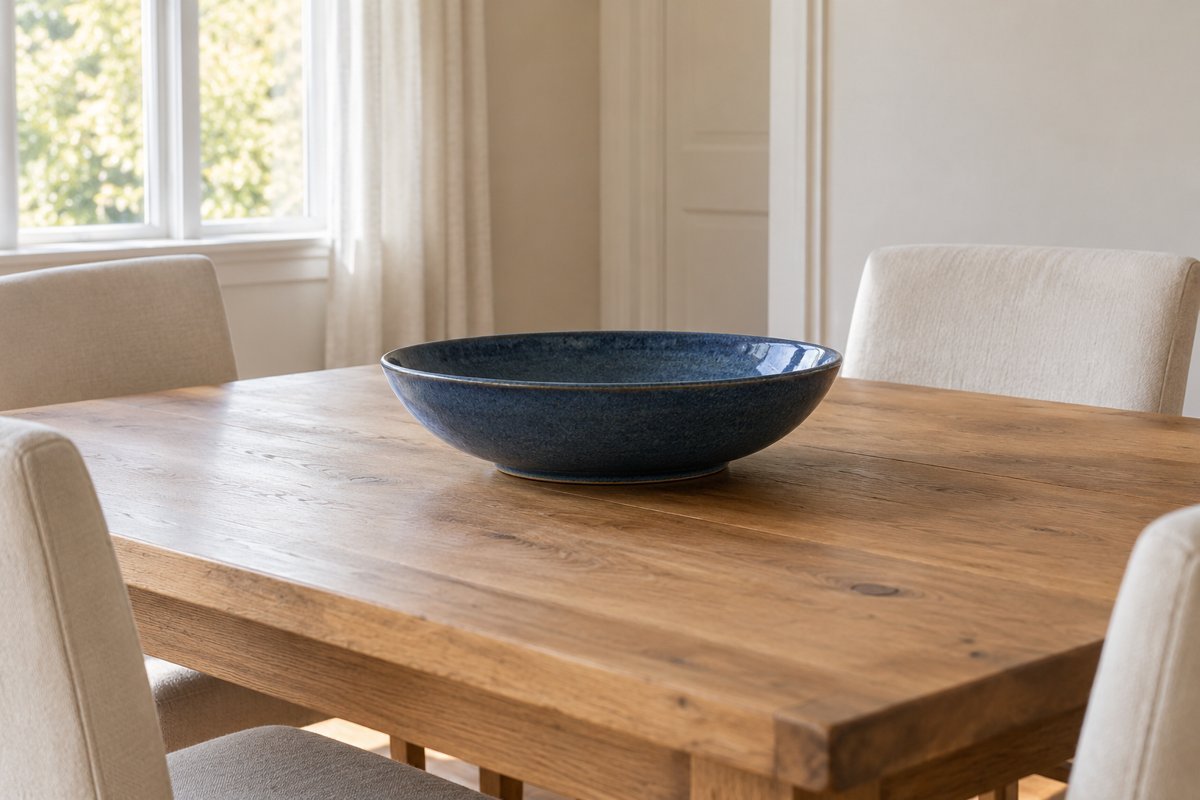
6. A Dining Table With One Distinctive Blue Bowl
A single object can carry a room detail when it has a clear shape and color. Picture a wide low blue bowl on a plain oak dining table. The chairs and wall stay cream. Leave the bowl empty or use it for a purpose it is suited to. Its broad outline is enough without adding several matching vases.
Check the base for stability and the surface for appropriate care. Use a decorative bowl for food only when it is suitable. Sit at the table and see whether the piece leaves enough room for meals and conversation. If it moves every day, make it easy to lift and give it a nearby storage spot. You do not need to keep a table permanently styled to enjoy a favorite object.
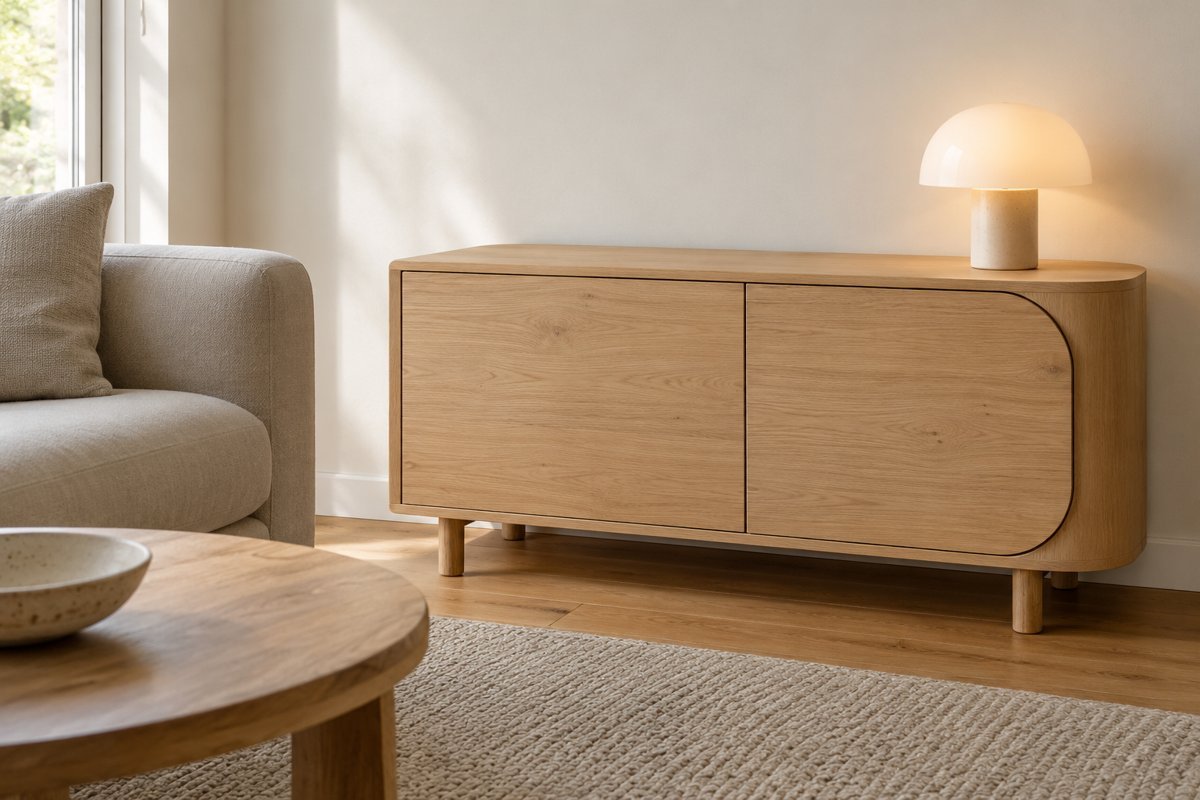
7. A Low Storage Unit With One Rounded Door Detail
A useful cabinet can be the room’s feature through a simple design detail. Imagine a pale wood storage unit with rounded door panels against a plain warm white wall. The top holds only a small lamp. The furniture’s shape provides interest while the closed storage keeps everyday supplies together.
Choose the unit for what it needs to hold and measure doors or drawers in their open position. Follow its anchoring and load guidance. A distinctive front is less useful if the inside cannot fit your belongings. Before replacing furniture, consider whether a piece you already own simply needs a clearer setting. Removing surrounding clutter may reveal details that were hidden. Let the cabinet remain a working part of the room.
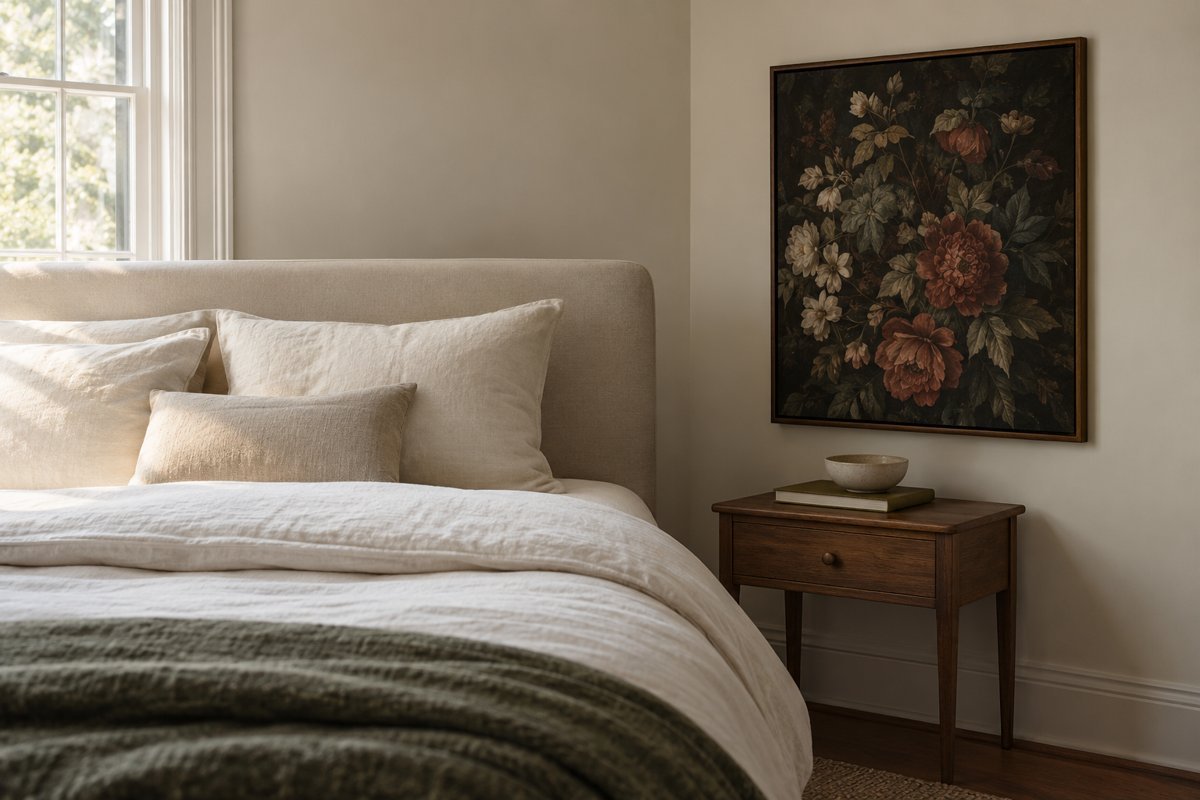
8. A Bedroom With One Dark Floral Print Beside the Bed
A dark floral print can add a rich detail to a simple bedroom. Picture it on a side wall near a plain cream bed, with a small brown table below. The artwork uses muted green and rust on a deep background. Keep the bedding mostly plain so the image has room to show.
Use original or licensed art, and test the frame size with a paper outline. Place heavy pieces where a fall would not reach a sleeping person. Use appropriate fittings and keep switches accessible. If the dark background feels too strong, try a print with more open light space rather than adding several bright accessories to counter it. One small artwork can provide a personal detail without deciding every color in the bedroom.
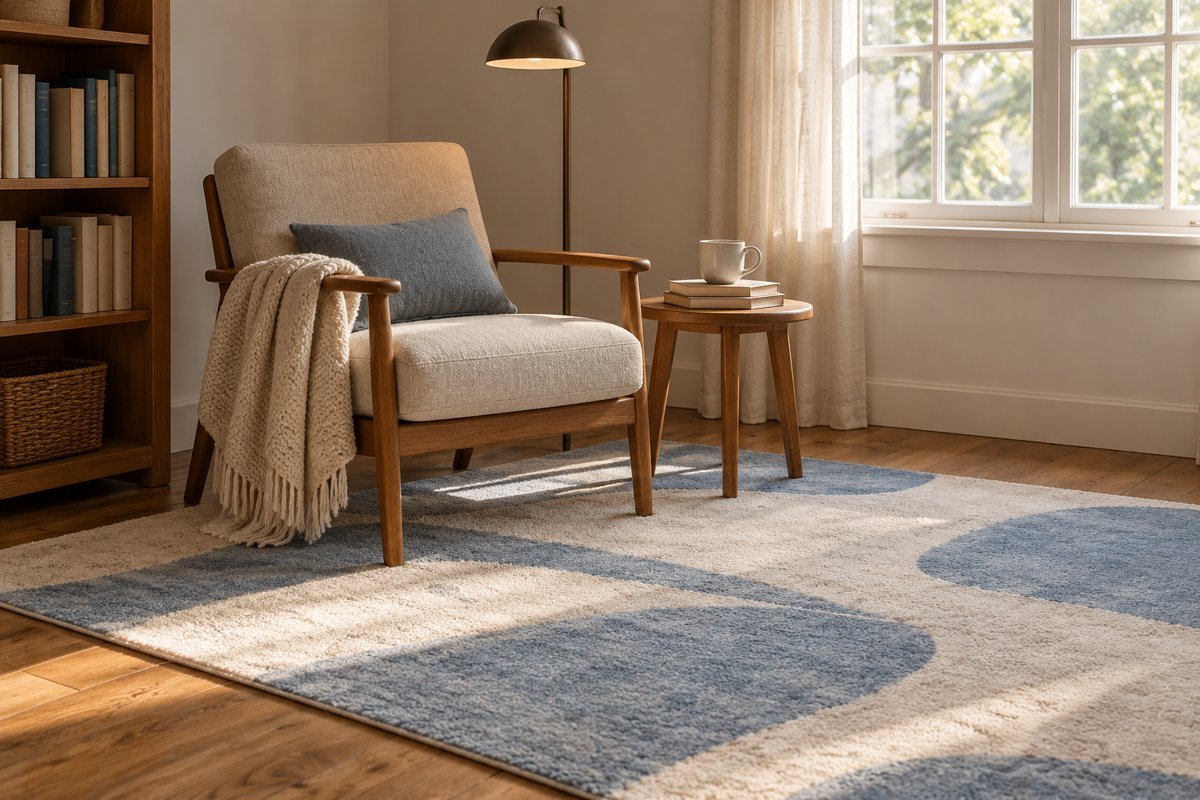
9. A Reading Corner With a Single Softly Patterned Rug
Picture a plain chair and small wooden table on a rug with broad cream and muted blue shapes. The rug becomes the main pattern in the corner. A simple reading lamp gives the group a useful purpose. Keep nearby cushions plain so the floor design remains easy to see.
Choose a rug suited to the floor and traffic, with appropriate grip and flat edges. Check the chair and table remain stable on it. Test the size with floor marks before buying; a rug should relate comfortably to the furniture rather than sit as a tiny loose patch between pieces. If the floor already has a strong pattern, a solid rug may work better. A memorable detail does not have to add another pattern.
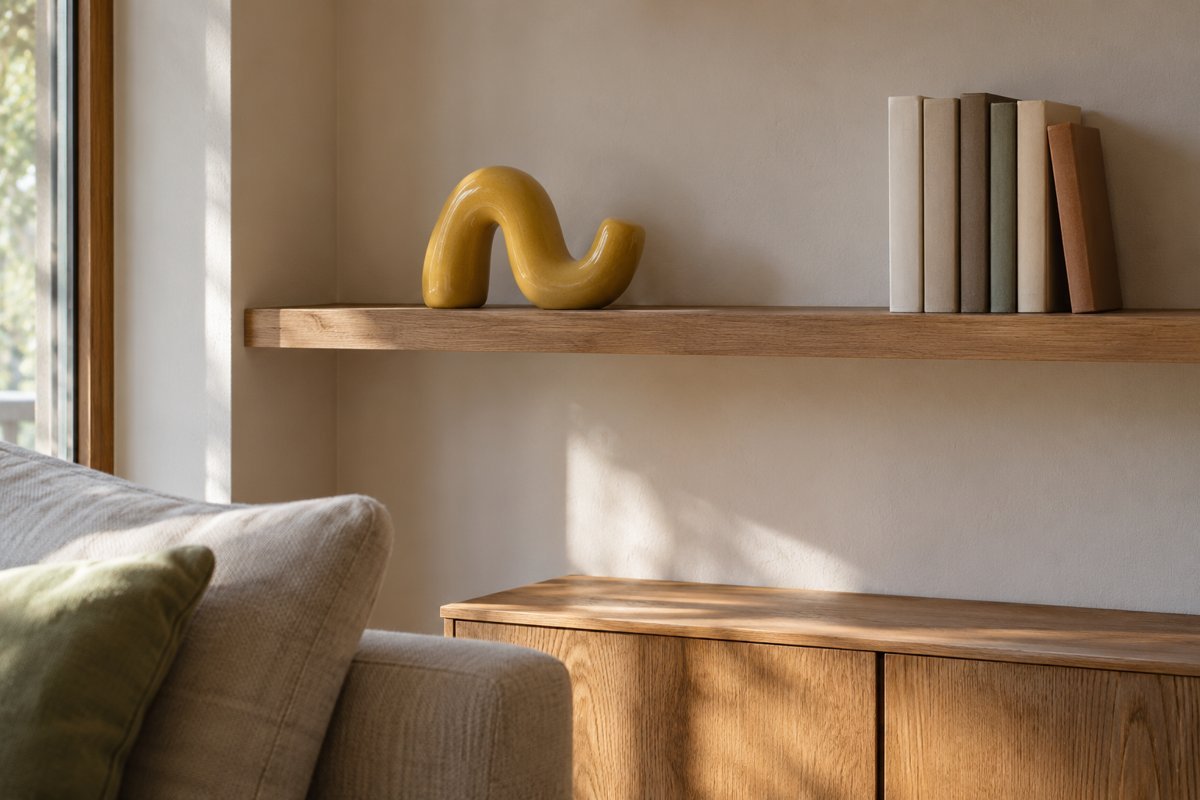
10. A Quiet Shelf With One Playful Sculptural Object
A small playful object can make a room feel personal without taking over. Imagine a simple curved ceramic sculpture in a warm yellow shade on a plain shelf. A short group of books sits farther along, with a clear gap between them. The shape provides a little surprise in an otherwise quiet setting.
Choose an object you enjoy, not only one that matches a style label. Keep it stable and within the shelf’s load limit, with suitable fixings for the shelf itself. Fragile pieces belong away from busy reach areas. If the object has projecting parts, leave enough clearance around them. There is no need to gather several equally unusual pieces beside it. A clear setting can help a small favorite stand out.
Choose What Leads the Scene
Look at the room and decide what you want to notice first. It may already have a strong feature, such as a colorful sofa, a patterned floor, or a large window. In that case, supporting it may work better than adding another focal point. Try removing a few small competing objects before choosing a new detail.
If you do add something, test its color, size, and position against the main furniture. Use samples or paper outlines for larger changes. Keep comfort, care, and clear routes part of the decision. You can change your mind after living with the arrangement. A room feels personal through choices you enjoy using and seeing, not through making every surface remarkable at once.
Common Questions
How do I choose a focal point for a room?
Look at what already draws your eye, such as a large window, colorful sofa, or artwork. Choose one feature you enjoy and simplify nearby details so it has room to stand out. Check the view from the doorway and from the seats you use.
Can a small object become a room’s memorable detail?
A small object can stand out when its shape or color differs from its surroundings. Give it a clear shelf or table setting with space around it. You do not need several matching accessories to make a favorite piece feel intentional.
How can I test a bold decor idea before committing?
Try paint or material samples in the room’s light, and use paper outlines to check artwork or furniture size. For a strong color, begin with a cushion, bowl, or print you already own. Keep everyday comfort and access part of the test.
Related Ideas
For ideas that make one picture or framed piece stand out, explore our wall art ideas. To compare colors around your chosen feature, try these modern home color pairings. For smaller surface arrangements, see our home decor finishing touches.