
A small kitchen can have warmth and personality without using every surface for decoration. A little color, a woven detail, or a few well-placed ceramics can bring a relaxed boho feel to the room. Start by protecting the space you need for chopping, washing, and moving around. Then choose details that work with that routine. These small boho kitchen ideas focus on manageable changes rather than major renovations. Each scene pairs a clear look with a useful purpose. You can borrow one idea for a shelf or table, then build from there if the kitchen still feels easy to use on a busy day.
1. Cream Cabinets With Clay-Colored Towels and One Wooden Tray
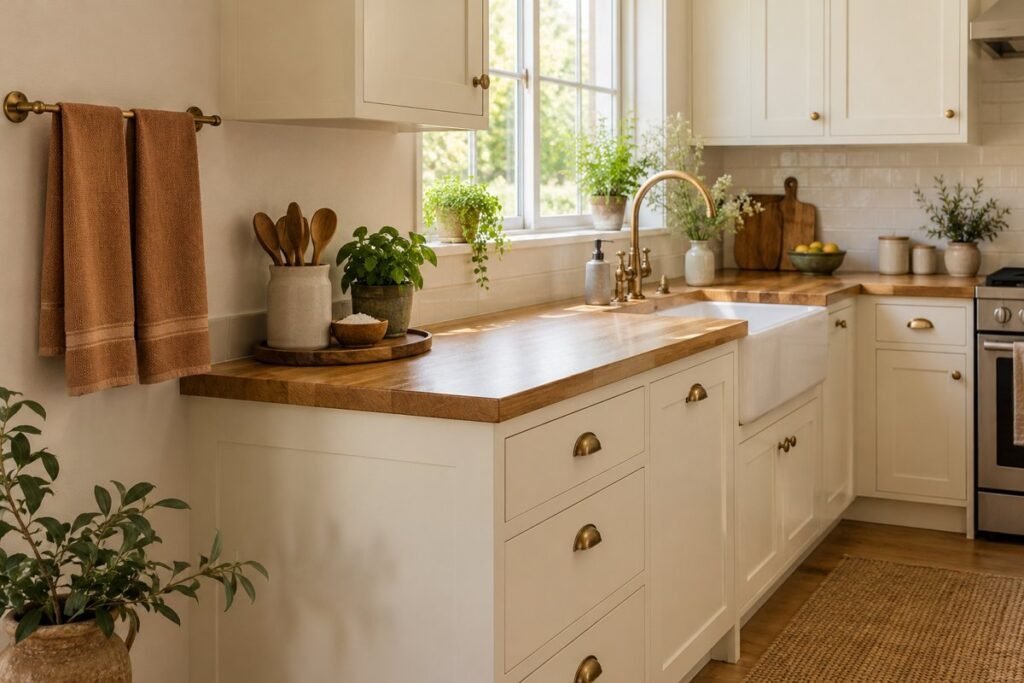
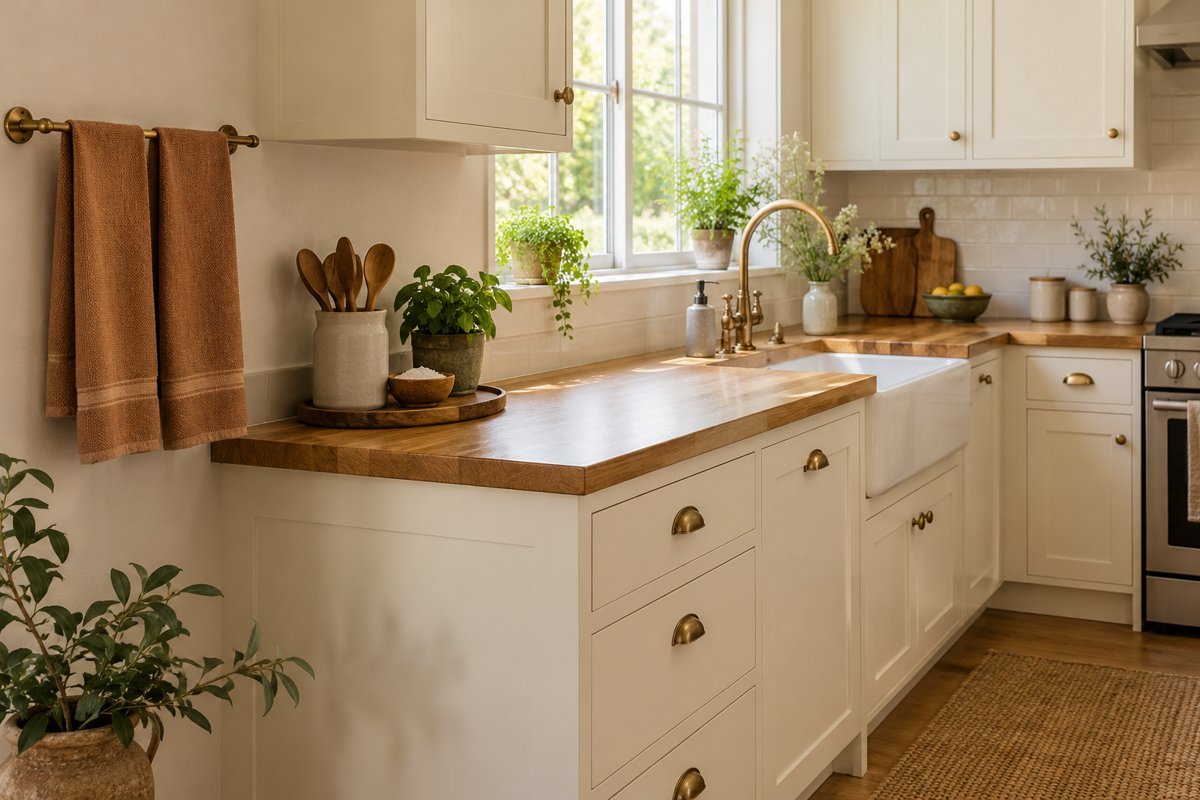
Picture cream kitchen cabinets with two clay-colored towels on a proper towel rail. A small wooden tray sits at the quiet end of the counter, holding a salt dish and a plain utensil pot. The warm color and wood texture add a relaxed feel while most of the worktop stays empty.
Choose a rail position away from cooking heat and where towels can dry. Do not drape fabric over appliance handles unless the appliance’s instructions allow it. Keep the tray out of the main chopping area and limit it to items you use. If it becomes a landing spot for loose packets, clear those away. A small group of useful things can give the kitchen character without needing extra ornaments.
2. A Compact Breakfast Table With Woven Chairs
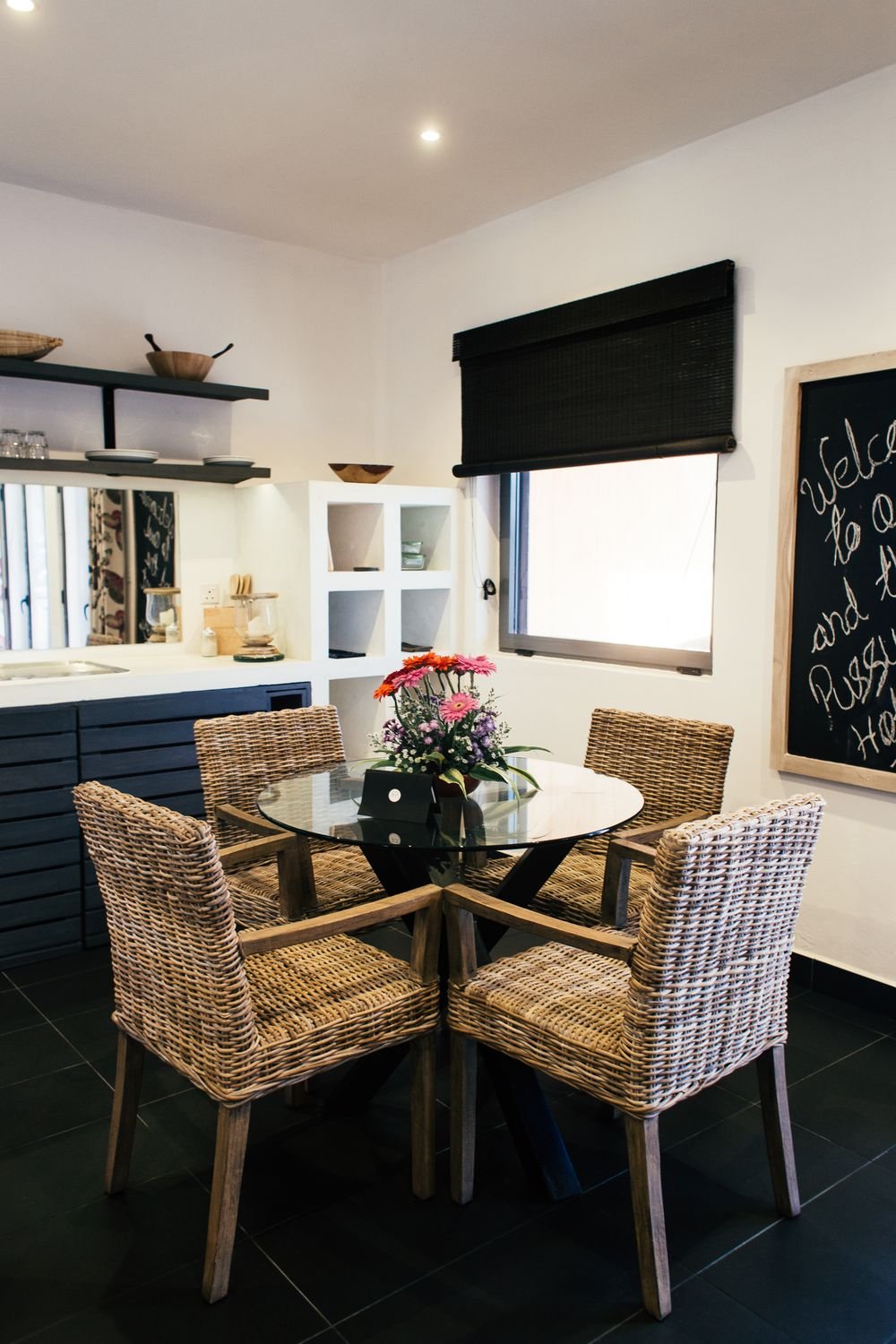
A compact table can bring soft texture into a kitchen with smooth cupboards. Imagine a compact round table near a light wall, with woven chairs. A glass top lets the chair frames remain visible, while the woven seats and backs add the detail that gives the corner a relaxed boho feel. Keep the centerpiece small and easy to move; a low fruit bowl can be a useful choice. Use only as many chairs as the space comfortably allows.
Check chair pull-out space and nearby cupboard doors before choosing a table size. Woven seating still needs to be sturdy and suited to daily use. Follow its care instructions and avoid placing delicate materials where splashes are frequent. A wall-side table can work well, but not if it blocks a route between the sink and fridge. If space is tight, one comfortable chair may be more useful than two squeezed together.
3. A Small Open Shelf With Everyday Mugs in Warm Colors
Picture a short wooden shelf above a clear stretch of counter. Four everyday mugs in cream, rust, and soft brown sit beside one small bowl. Keep the shelf simple, with room between the objects. The mix of colors adds interest without turning the whole wall into a display.
Choose a location away from cooking grease and frequent splashes. Fit the shelf properly and respect its load limit. Use mugs that are easy to lift and return rather than stacking them into a tall arrangement. If open shelving would mean too much cleaning, create the same color group inside a glass-front cabinet. You can also use a small mug tray on an existing shelf instead of adding a new one.

4. A Sage Kitchen Wall With a Plain Cork Notice Board
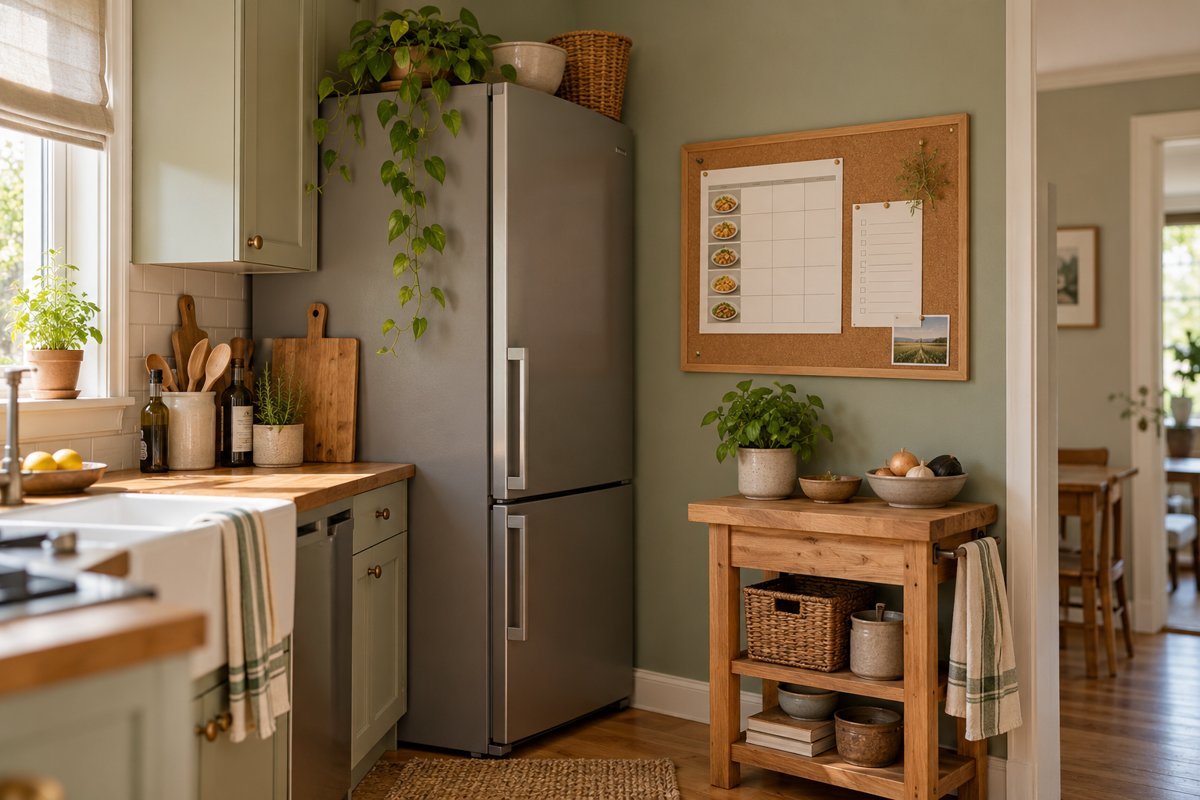
A muted sage wall can soften a small kitchen’s harder finishes. Picture a simple cork board in a wooden frame on the wall beside the fridge. It holds a meal plan and a short shopping list, with no extra paper spilling around it. The green and warm wood bring a gentle natural feel to a practical spot.
Choose a wall that stays away from direct cooking heat and steam. Keep the board outside the door swing and where someone can read it without blocking a work area. Use attachment methods appropriate for your household. Remove old notes when adding new ones. This is an easy place to repeat a color from a towel or bowl without buying a full set of matching kitchen accessories.
5. A Plain Window Blind Above a Small Herb Pot
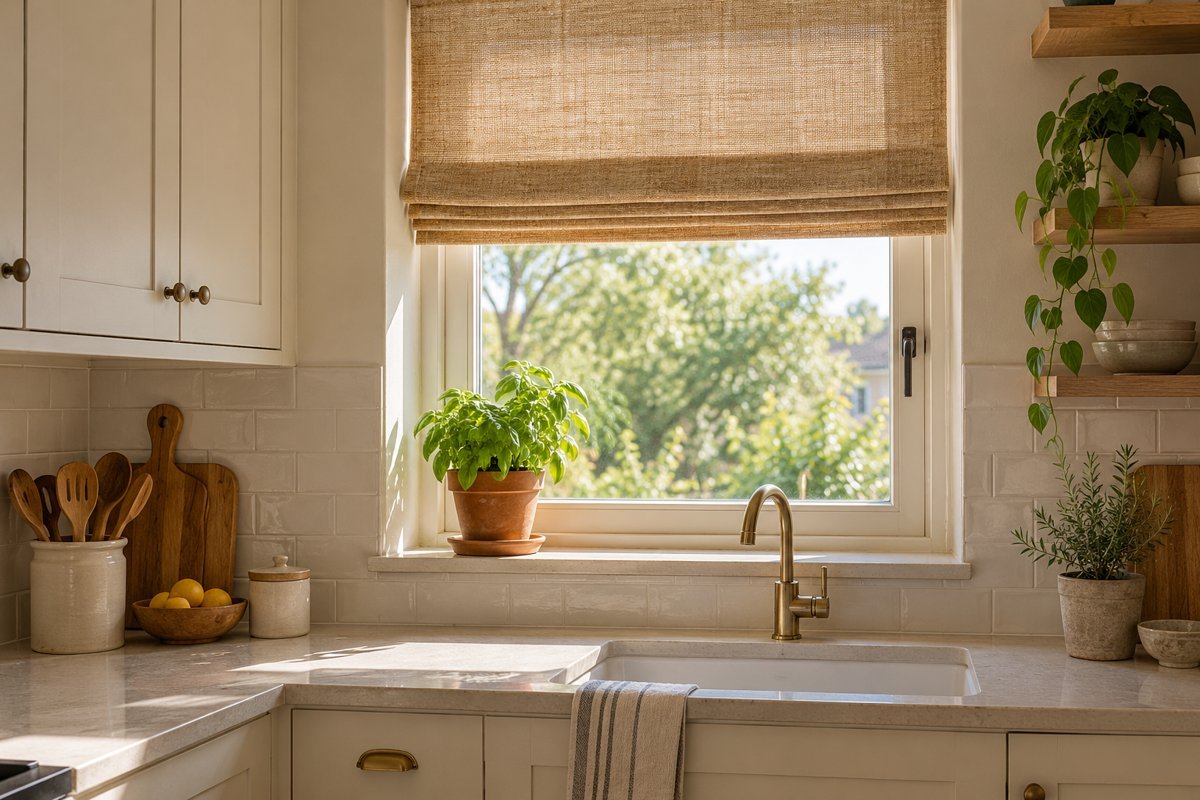
A simple woven-look blind can give a window warmth without adding more things to the counter. Picture it above a kitchen window, with one small potted herb on a suitable sill. Keep the nearby cabinets plain. The blind provides most of the texture, while the plant adds a living detail.
Choose a window treatment suited to the kitchen and follow its cleaning guidance. Use child-safe controls where needed, and keep the material away from heat and splashes. Pick the herb for the light available and its care needs. Protect the sill from water and keep the window handle clear. If the sill is too narrow or dark for a plant, leave it empty and let the blind do the visual work.
6. A Small Rolling Cart With Two Closed Storage Baskets
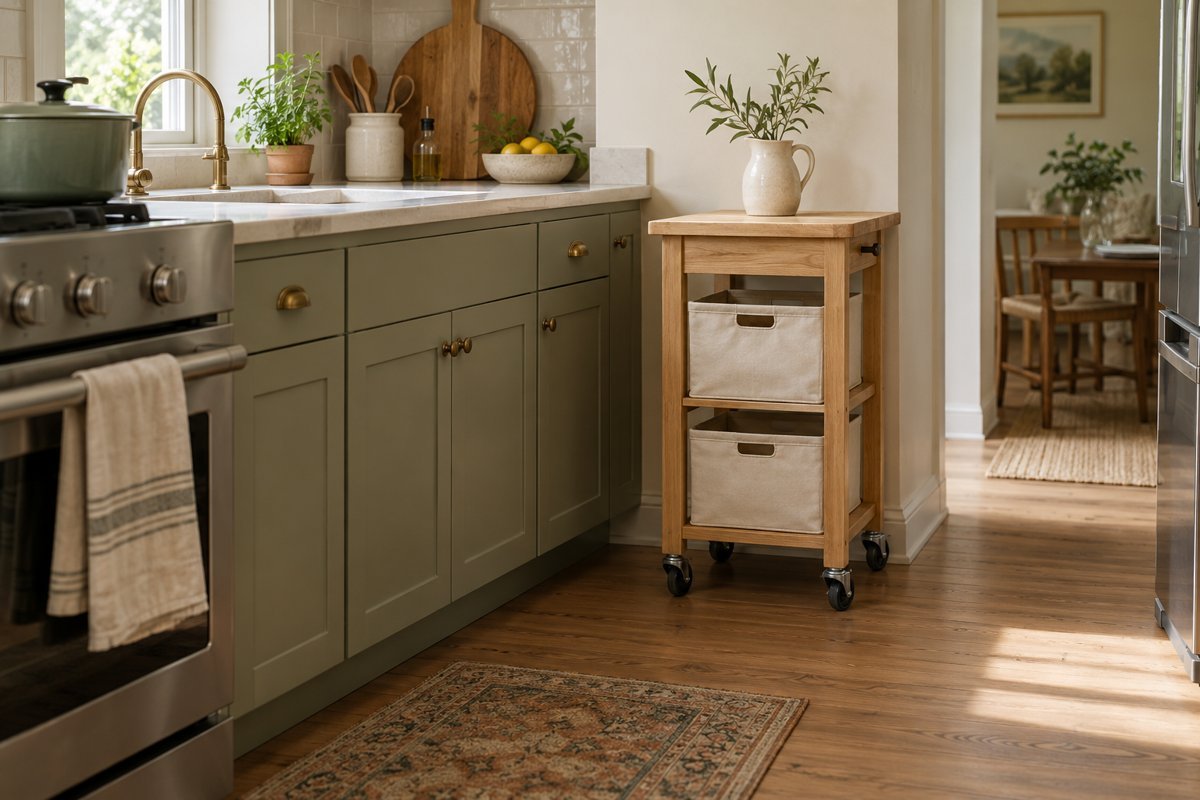
A compact cart can create a useful storage spot at the end of a kitchen run. Imagine a pale wooden cart with two washable-look storage baskets below and a plain ceramic jug on top. Keep the top mostly clear so it can be used when needed. The baskets add texture while hiding the mixed colors of small supplies.
Measure the cart in its parked position and when moved. It should not block appliance doors, ventilation, or the path through the room. Choose a cart rated for the items it will hold and use wheel locks as directed. Keep heavier items low. If a cart makes the kitchen tighter, use baskets inside an existing cupboard instead. Texture can be added without introducing another piece of furniture.
7. A Soft Rust Wall Behind a Tiny Dining Bench
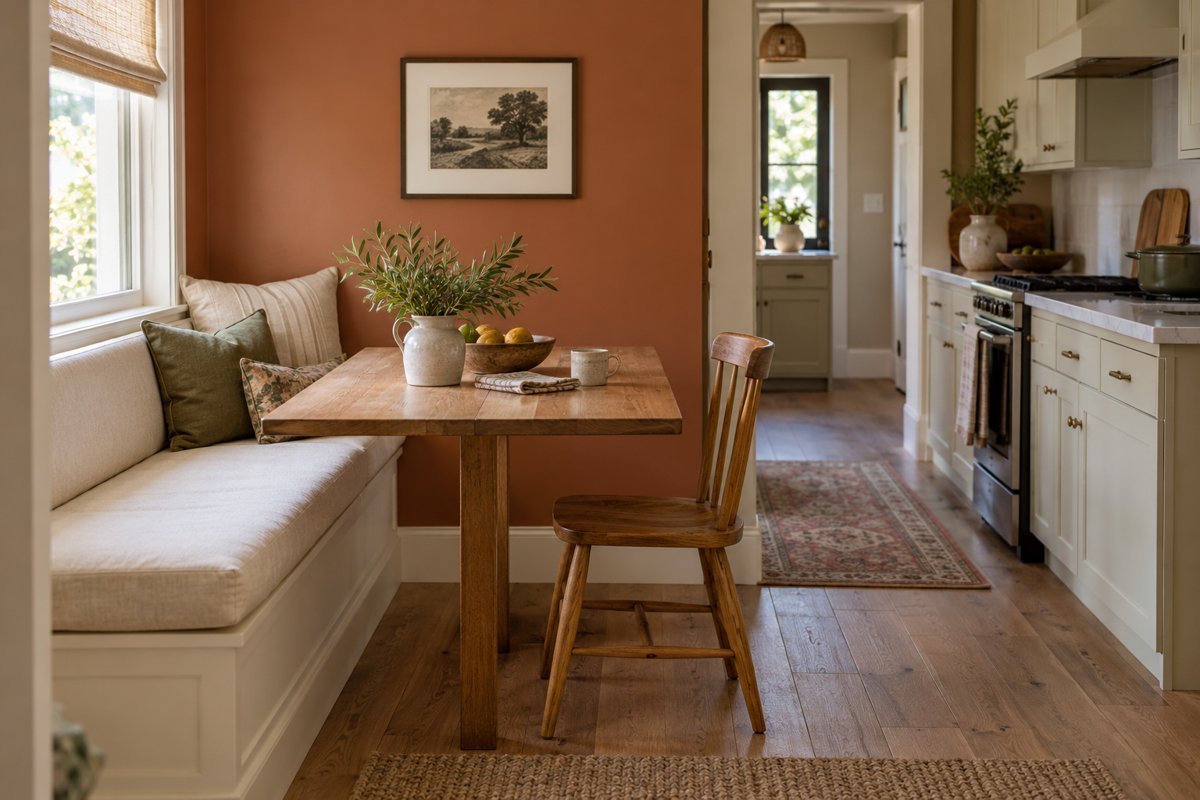
A warm rust-colored wall can define a small eating area beside the kitchen. Picture a simple cream bench against it, with a narrow wooden table and one plain chair. A small black-and-white print adds detail without competing with the wall color. The scene feels warm through a few broad shapes rather than many small decorations.
Test the paint in daylight and under the room’s lamps. Choose a finish suited to the wall’s use and follow its care directions. Make sure the bench seat is comfortable and the table leaves enough legroom. Keep the wall art clear of places where heads or shoulders may knock it. If painting is not allowed, a large rust-colored print can bring the same color into the eating corner.
8. A Dark Counter With Cream Canisters and a Small Wood Board
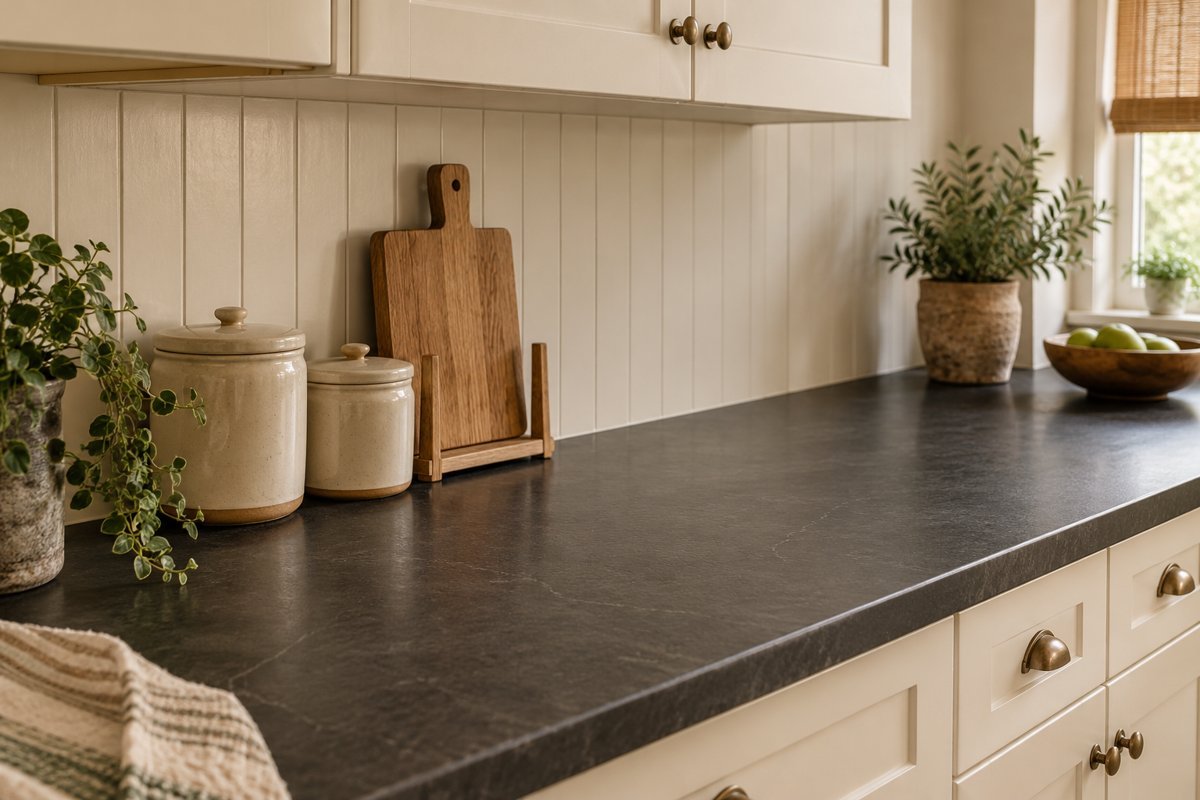
A dark countertop can look warm with a few light objects. Picture two cream canisters and a small wooden board standing in a suitable rack near the wall. The simple contrast makes the shapes clear. Keep the rest of that counter section free rather than adding plants, bottles, and several more boards.
Use canisters that suit what they store and keep them properly labeled where helpful. Follow the board’s care guidance, and let it dry before storing. Place the group away from cooking heat and leave enough counter space for the tasks done here. If the board needs the wall only for display and is never used, consider storing it elsewhere. The most convincing kitchen scene is one built around things that belong in your routine.
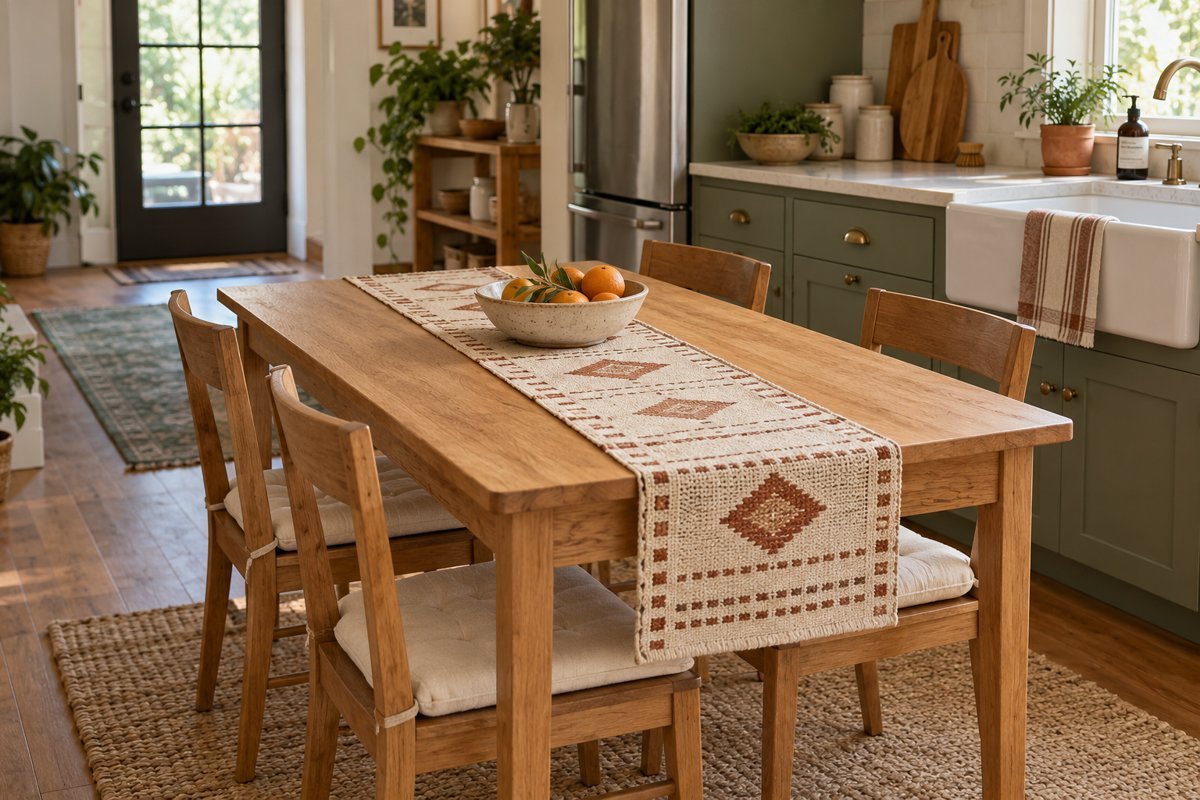
9. A Patterned Table Runner on a Plain Kitchen Table
A small patterned runner can add a boho note to a plain table. Imagine cream fabric with a simple rust and brown geometric pattern, laid along a light wood top. One low bowl sits in the middle. Keep chair cushions solid so the runner remains the main pattern in the scene.
Choose a washable fabric and a length that does not catch on chairs or trail into a walkway. Keep it away from cooking surfaces. If the table is used for food preparation, remove the runner and clean the surface properly before use. You can store the bowl and cloth together when you need a clear table. This gives the room an easy change without affecting cabinets, flooring, or the working layout.
10. A Single Textured Print on a Clear Kitchen Side Wall
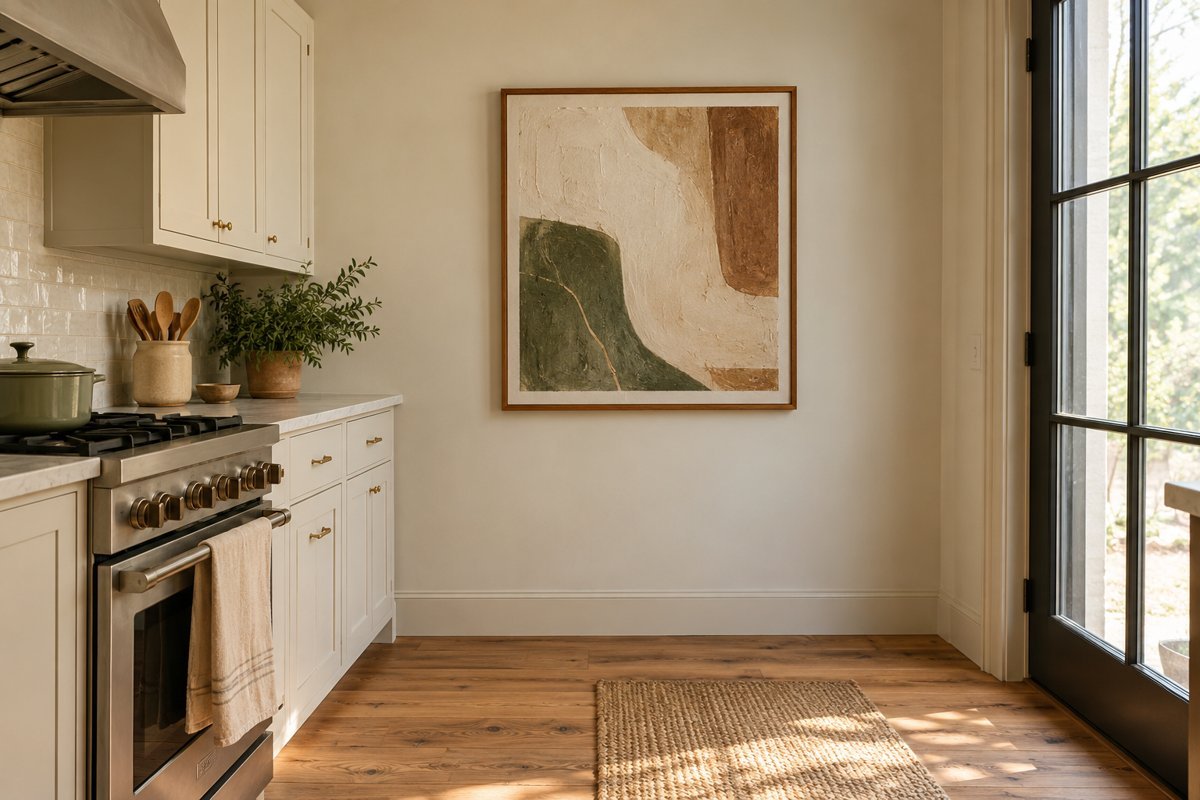
A small kitchen can use art where there is no spare counter space. Picture one framed print with broad cream, brown, and muted green shapes on a side wall. The frame is simple wood, and the wall below stays clear. The colors link to the kitchen’s useful pieces without introducing another storage unit.
Choose art suited to the location and keep it away from steam, splashes, and heat. Use appropriate fixings and make sure cupboard or pantry doors will not hit it. A paper template can help test the scale before hanging. Use a licensed print, original work, or something you make yourself rather than copying another blog’s image. One piece can provide enough texture and color when the room already has many visible everyday objects.
Keep the Working Parts First
Look at the kitchen during a normal meal, not only when it is tidy. Notice which counter space you use, which doors need room, and where towels or utensils naturally belong. Choose a decor idea that supports that pattern. Start with one warm color and one texture, such as a rust towel and a wooden tray.
Live with the change before adding more. If something has to move every time you cook, it may need another home. If a new shelf or basket makes cleaning harder, simplify it. A relaxed boho kitchen does not depend on a full collection of woven pieces or plants. A few useful details can make a small room feel personal while leaving the working space ready for daily meals.