
Small things can create a surprising amount of clutter. A charger moves between rooms, papers cover the table, and spare towels end up wherever there is space. Organizing gets easier when those items have a home close to where you use them. You do not need to sort the whole house in one day. These home organization ideas show ten small, clear setups you can build around daily routines. Start with the spot that keeps slowing you down. Gather what belongs there, remove what does not, and choose storage that is easy to reach and simple to put things back into.
Start here: Give everyday items a home close to where you use them. Start with one drawer, tray, or shelf, keep the categories clear, and test whether everyone can put things back without extra effort.
1. A Shallow Entry Tray With a Separate Mail Slot
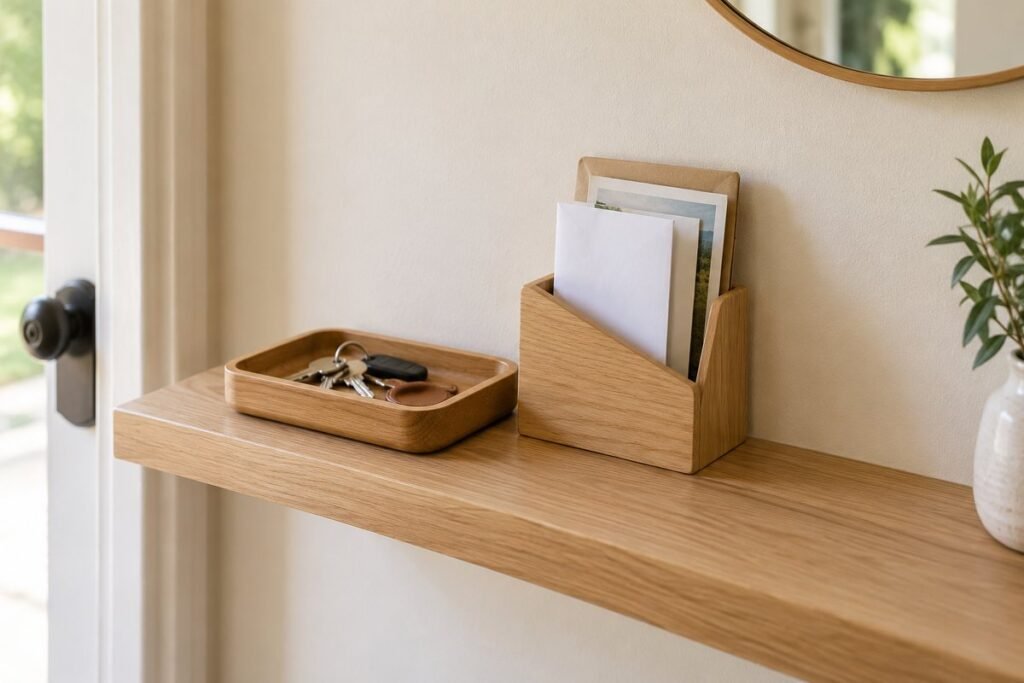
Picture a narrow entry shelf with a shallow tray for keys and a single upright mail holder beside it. The wall is plain, and the shelf has open space around both pieces. Keeping keys and paper separate gives each a clear home without turning the entrance into a general storage area.
Choose a tray that fits the items actually carried each day. Give mail a regular review time so the slot does not become a permanent pile. Keep private papers out of view when visitors pass. Check that the shelf does not project into the walking route or door swing. If there is no room near the entrance, use the nearest suitable drawer. The right place is one the household can use consistently, even if it is not beside the door.
2. A Kitchen Drawer With Simple Sections for Daily Utensils
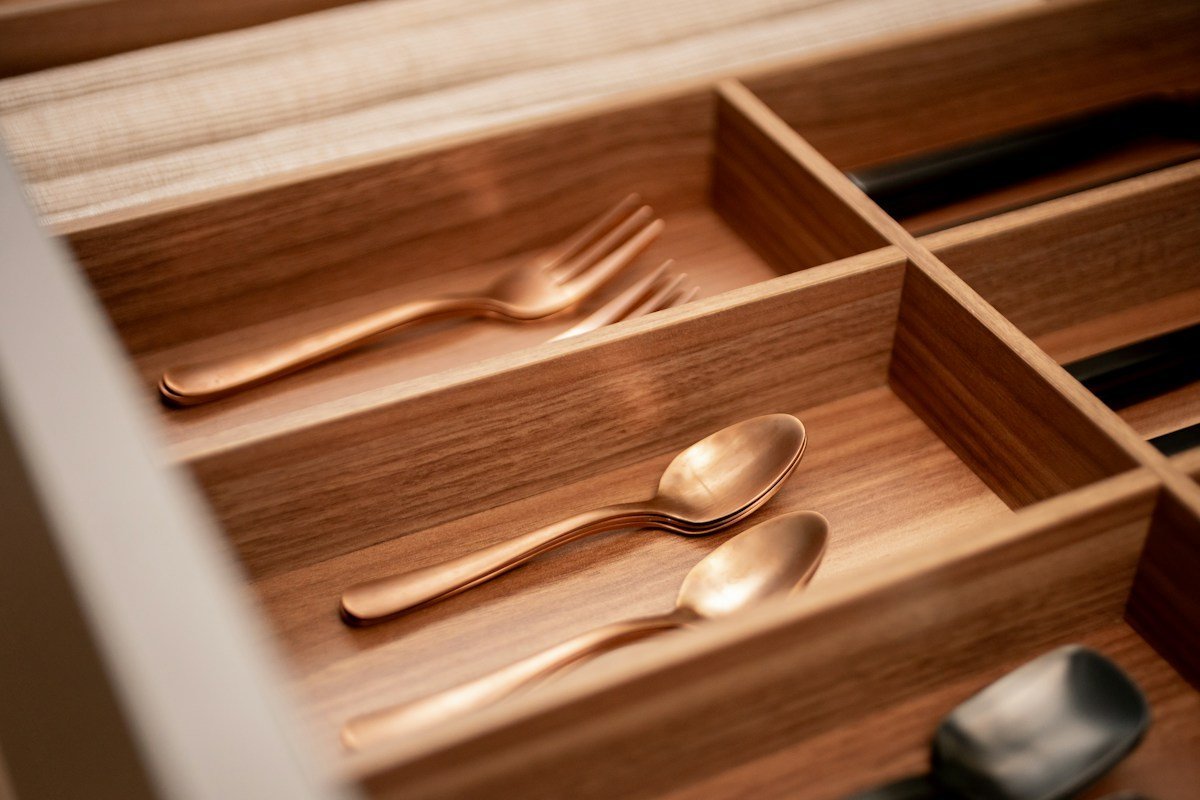
A shallow drawer can be easier to use when similar tools sit together. Imagine a plain divider holding everyday spoons, spatulas, and measuring tools in separate sections. Leave a little room in each space so handles are easy to lift. Keep the counter above clear, with only the tools that genuinely need to stand out.
Empty the drawer first and check for duplicates or items stored in the wrong room. Measure its inside width, depth, and height before choosing a divider. Test whether the drawer closes freely once tools are inside. Store knives and other sharp items in appropriate holders. You do not need a container for every single tool. A few broad categories often make putting things away simpler than a tightly packed arrangement of tiny compartments.
3. A Linen Shelf With One Basket for Washcloths
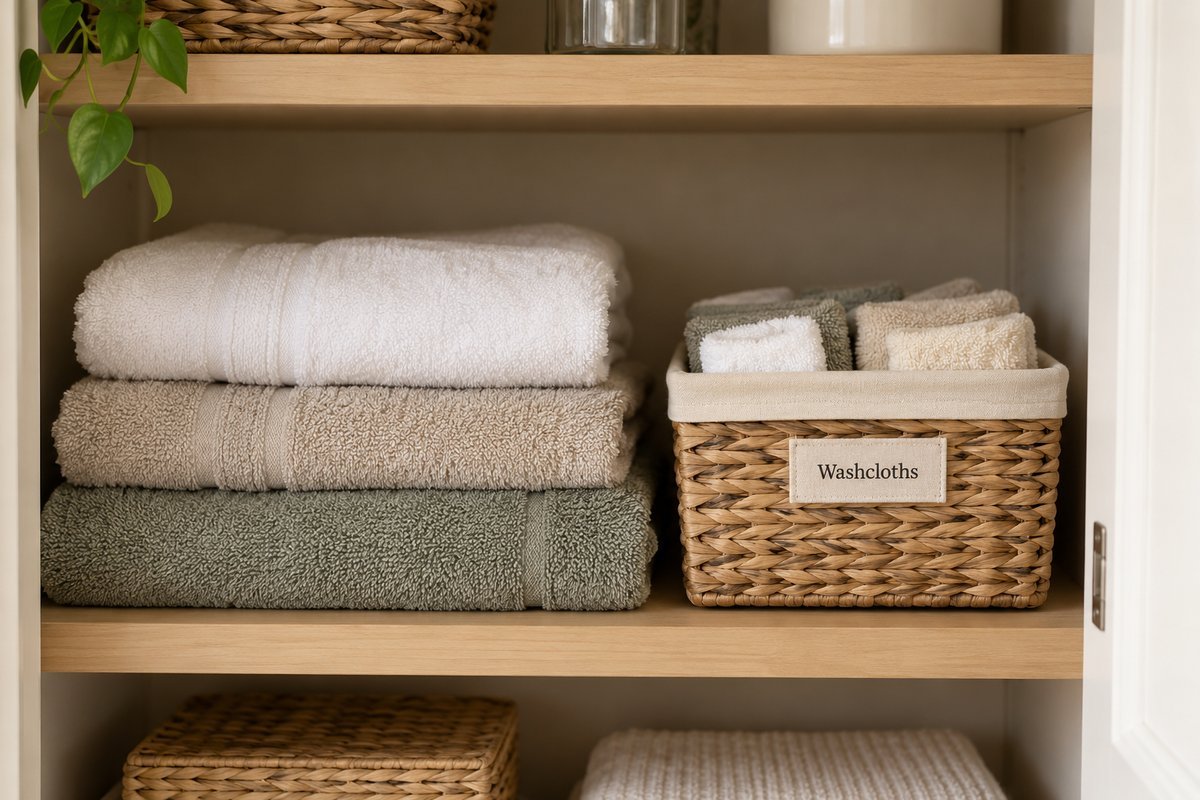
Picture a linen cupboard shelf with folded towels on one side and a small basket of washcloths on the other. A plain label on the basket makes the contents clear. Keep the stack low enough to remove a towel without disturbing the whole shelf. The setup uses one container where it helps, rather than putting every fabric inside a box.
Store linens clean and fully dry. Check that the shelf and basket suit the weight and space. Fold towels in a way that fits your shelf rather than copying a fold made for a different cupboard. Put the items used most often within comfortable reach. If the shelf is overfilled, move occasional extras to another suitable place or review what you keep. Organization cannot make an unlimited amount fit in one small space.
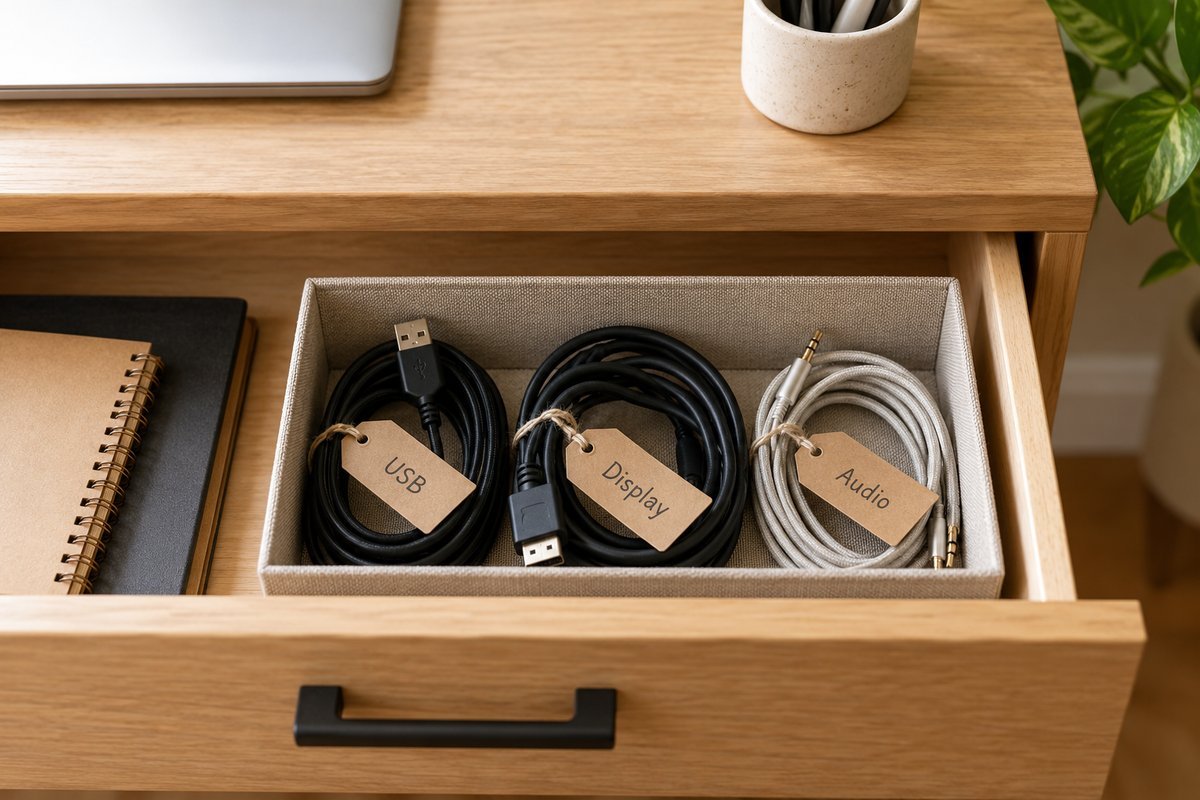
4. A Desk Drawer With a Small Box for Spare Cables
A drawer can gather spare cables without making them part of the desk display. Imagine a plain box inside the drawer, with each cable loosely grouped and labeled by its purpose. Keep the work surface above open for the equipment used now. The box holds stored accessories, not a tangled set of devices charging at once.
Check what each cable belongs to before keeping it. Avoid sharp bends and follow the maker’s storage guidance where relevant. Do not use a closed decorative box to hide active charging equipment unless it is designed for that purpose and ventilation requirements are met. Keep the current cable route clear of feet and moving drawers. A simple label can save more searching than a complicated organizer that nobody wants to use.
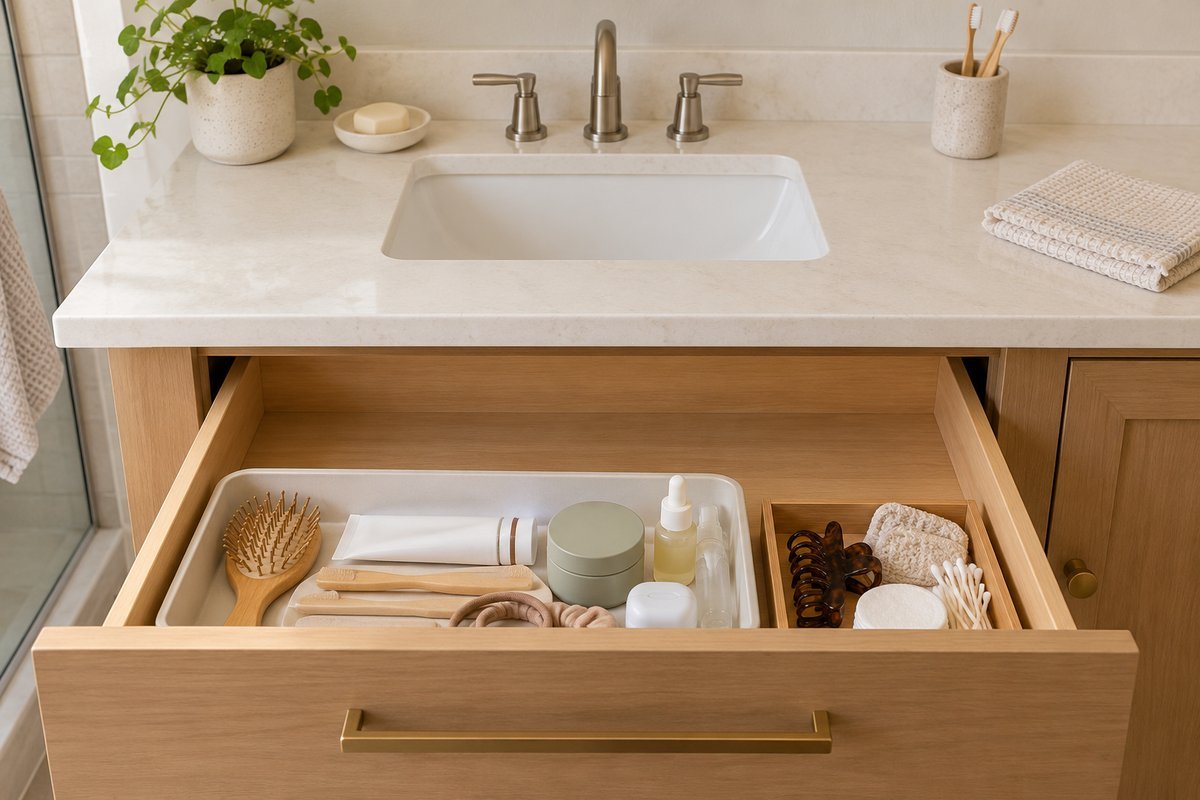
5. A Bathroom Drawer With a Small Daily-Use Tray
Picture a shallow bathroom drawer with one washable tray for the items used every morning. A second small section holds occasional items, leaving the back of the drawer visible. The counter above has room around the sink instead of a row of bottles. This keeps the daily routine contained without hiding things too far away.
Check products’ storage guidance and keep anything that needs a dry environment in a suitable place. Remove empty containers and review items according to their labels. Do not combine medicines or chemicals into unlabeled decorative containers. Choose a tray that can be lifted for cleaning and that lets the drawer close fully. If the drawer is damp or poorly suited to the products, choose another storage spot. Ease of access should work alongside proper storage.
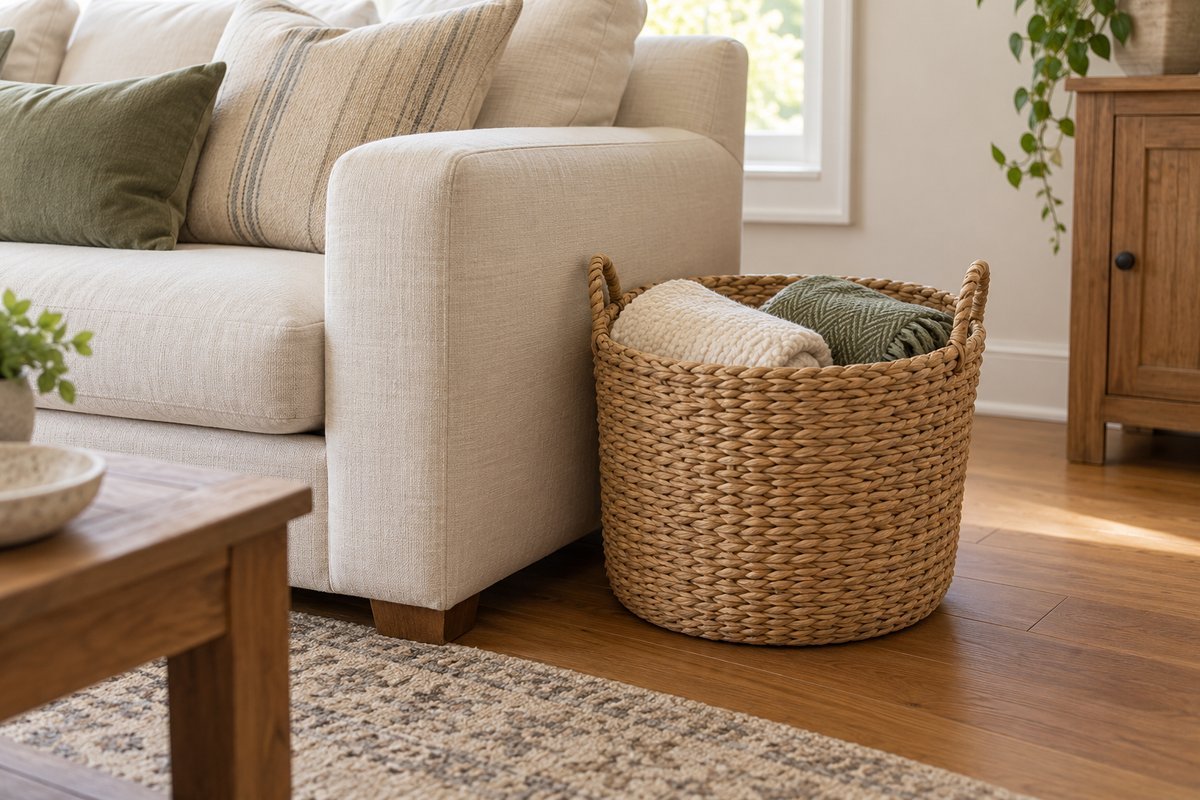
6. A Living-Room Basket With Only Current Throws
A basket beside the sofa can hold the throws used this season. Imagine two folded blankets in a plain basket, with their edges below the rim. The sofa stays ready for sitting, and the floor around the basket remains clear. Keeping the contents limited makes the basket a useful home rather than an overflow pile.
Choose a basket that fits the corner without blocking a route. Store blankets clean and dry, and follow their care labels. Put less-used bedding elsewhere instead of adding another basket. If retrieving a throw always pulls the other one onto the floor, use a larger suitable container or keep only one here. The test is how easily people can take a blanket out and return it, not how full the basket looks.
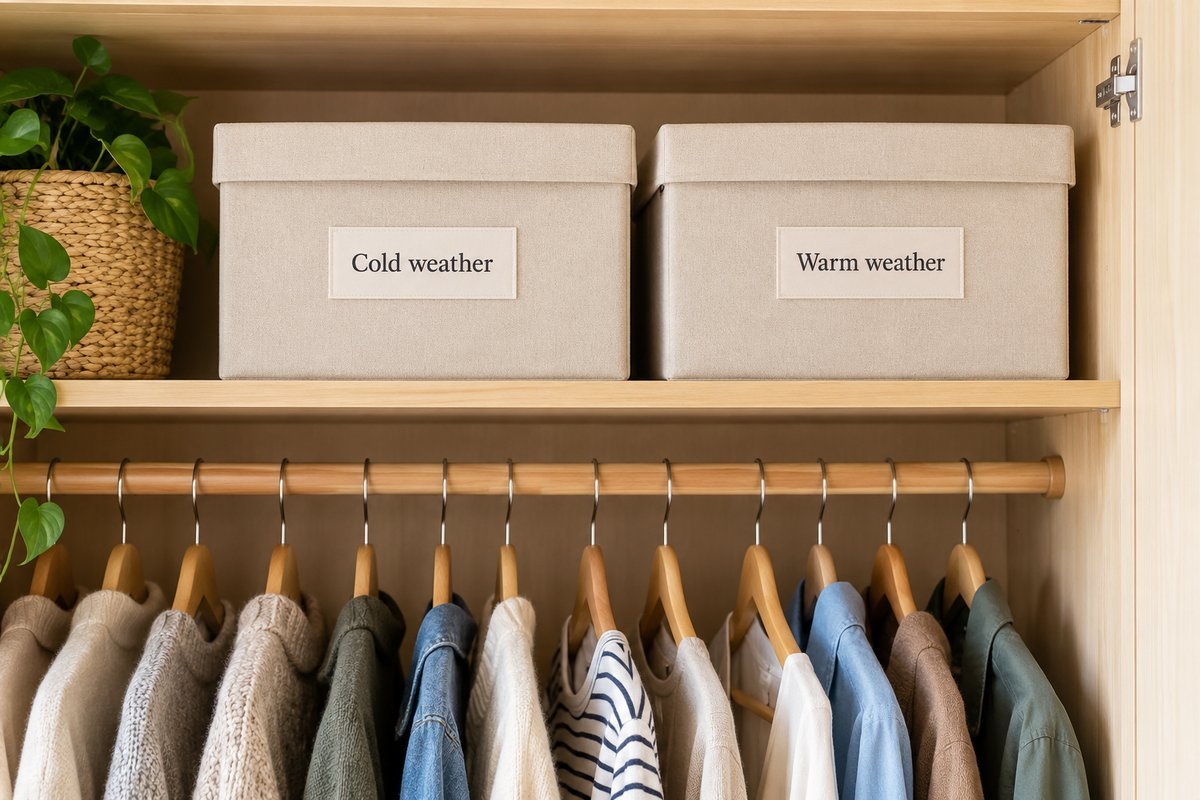
7. A Wardrobe Shelf With Two Clearly Labeled Seasonal Boxes
Picture two plain boxes on a wardrobe shelf, one for cold-weather accessories and one for warm-weather extras. The labels face forward, and the everyday hanging area below stays open. This separates occasional items from the clothes used now without requiring a different storage system for every season.
Choose boxes you can lift comfortably from the shelf. Keep heavier items lower and follow the wardrobe’s loading and anchoring guidance. Store fabrics clean and dry. Use clear category names rather than labels so broad that nobody remembers the contents. Review the boxes when the season changes. If the shelf is hard to reach safely, choose a lower storage location rather than making a routine depend on climbing onto furniture.
8. A Dining-Room File Box for Papers Waiting for Action
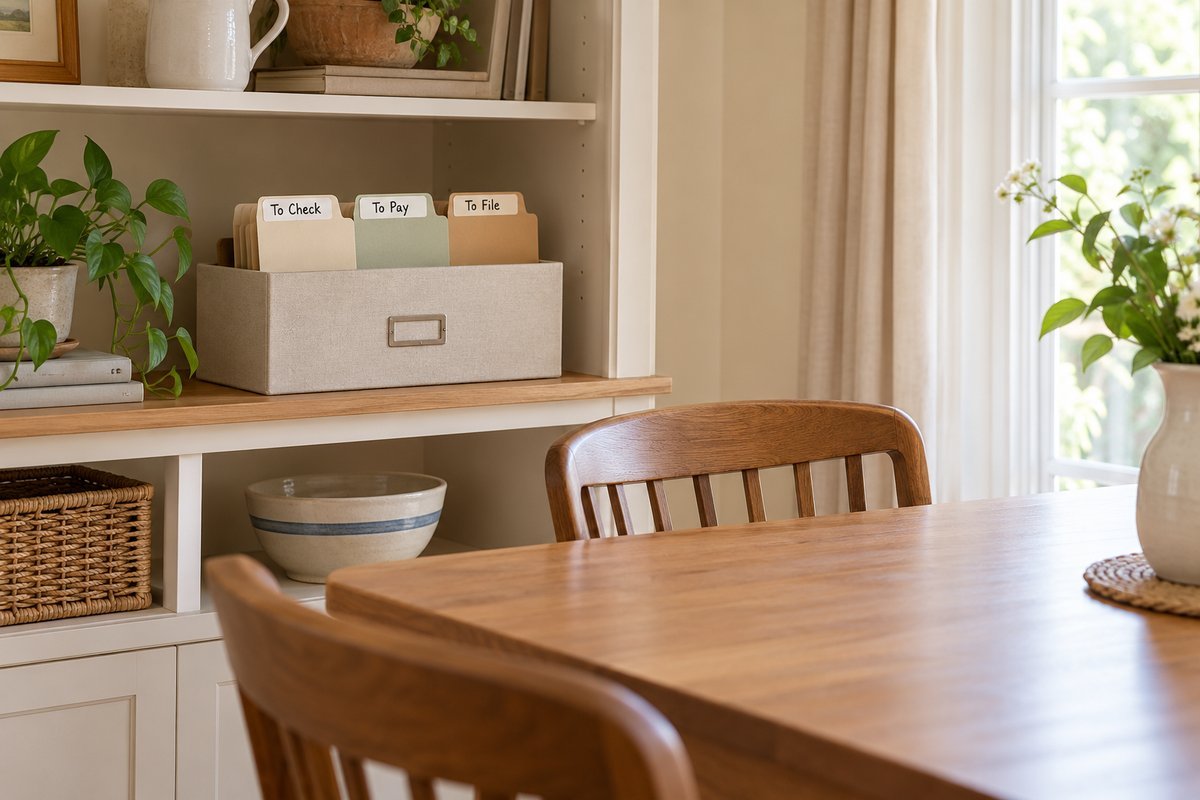
A small file box can give incoming papers a place without covering the dining table. Imagine three labeled folders inside a plain box on a nearby shelf: To Check, To Pay, and To File. Keep current papers separate from long-term records. The table stays available for meals once a short sorting session is finished.
Choose categories that match what you actually do with paper, and avoid creating more folders than you need. Keep sensitive documents appropriately secure. Set aside a regular time to work through the action folders; putting a bill in a box does not complete the task. If papers gather faster than you process them, simplify the intake routine before buying a larger box. The container supports the habit rather than replacing it.
9. A Utility Shelf With One Carry Basket for Household Cloths
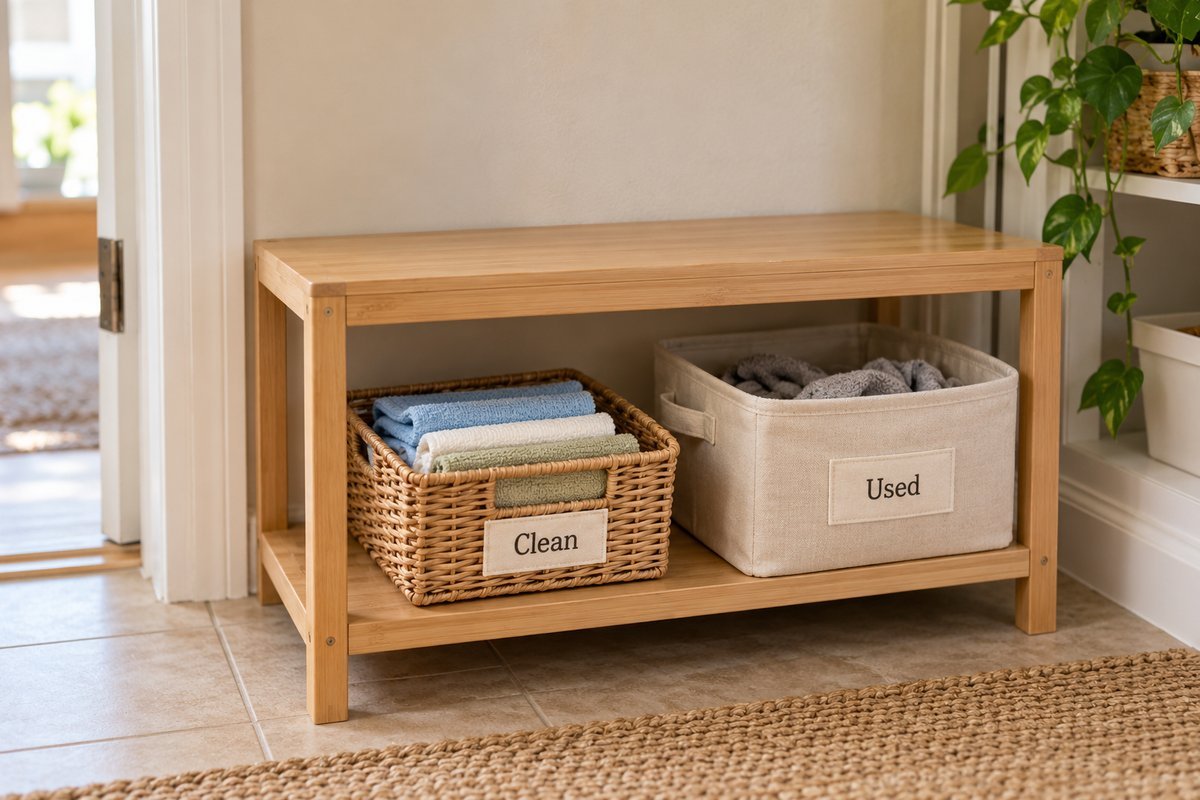
Picture a low utility shelf with a small carry basket holding clean cleaning cloths. A separate suitable container keeps used cloths apart until washing. The shelf top remains clear for sorting. This makes the next cleaning task easier without mixing fresh and used supplies in one crowded pile.
Keep cloth storage clean, dry, and suited to the materials. Store cleaning products separately according to their labels, away from children and pets as needed. Do not put chemicals into decorative unmarked bottles to make the shelf match. Choose a basket light enough to carry comfortably and easy to clean. If a carry basket is unnecessary, a simple labeled shelf section can work just as well. Use the fewest pieces that help the routine.
10. A Return Basket Beside a Frequently Used Stairway
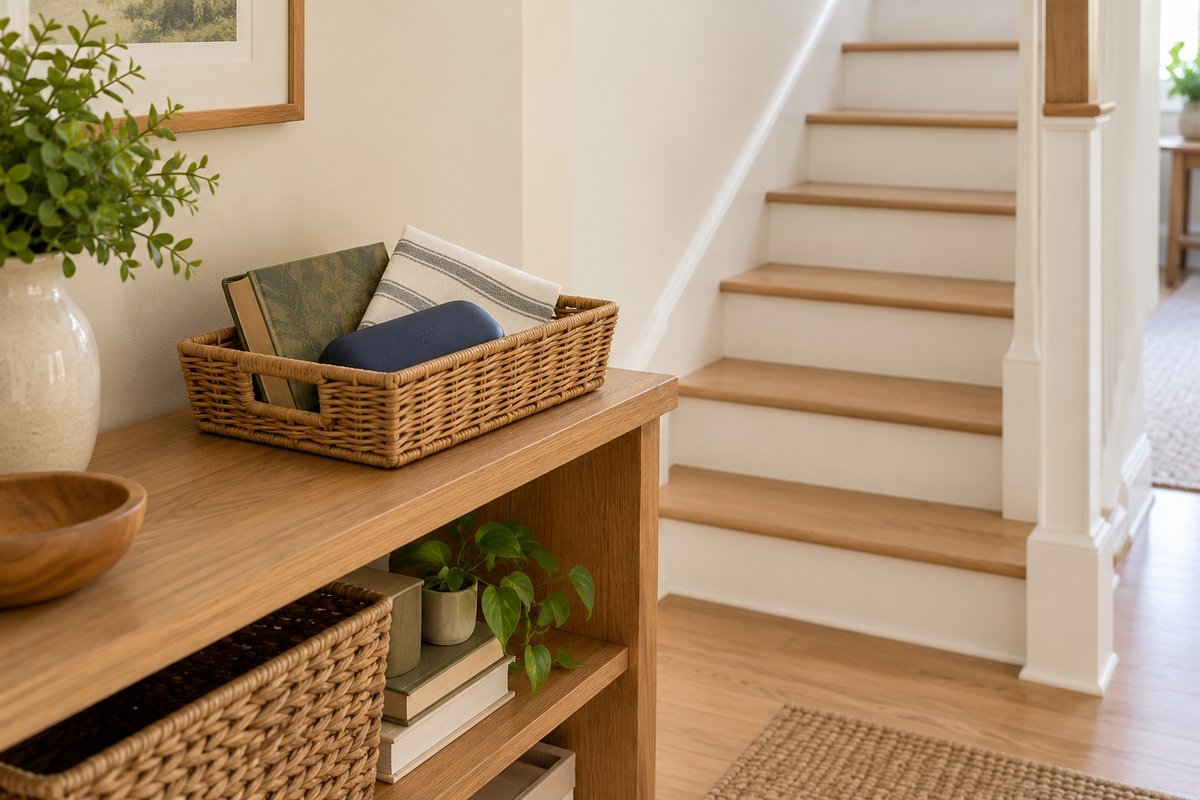
A small basket can gather a few items that belong in another part of the house. Imagine it on a suitable shelf near the stairs, rather than on a step. A book, a folded cloth, and an empty glasses case wait to be returned. The basket gives those loose items a temporary home.
Keep the basket completely outside walking and stair routes. Empty it regularly instead of letting it become another storage category. Do not use it for heavy, fragile, sharp, or hazardous items that need more careful handling. If the household keeps ignoring it, try a smaller basket or return items directly. A temporary gathering spot only helps when there is a clear next step and the contents reach their proper homes.
Organize One Routine Before Another Room
Choose a small daily problem and watch when it happens. Are keys lost while leaving, towels hard to reach, or papers left after dinner? Put storage close to that task and keep the categories clear. Try a box or tray you already own before choosing a new organizer. Measure first if a drawer or shelf needs a fitted piece.
Use the setup for a week and notice what does not return to its place. The category may be unclear, the container may be awkward, or there may simply be too much inside. Adjust that one point before adding more storage. A useful system should be easy on a busy day. Once it works, move on to another small routine rather than pulling apart the entire house at once.
Common Questions
Where should I start organizing my home?
Start with one small problem that happens often, such as missing keys or papers left on the table. Sort that area, give the items a clear home, and test the setup before moving to another space.
Do I need matching containers to organize everyday items?
No. Try a suitable tray, basket, or box you already own. Fit, easy access, and clear categories matter more than a matching set. Measure drawers and shelves before choosing fitted storage.
How can I keep a small area organized?
Keep only the items that belong there, leave room to lift them out, and give temporary storage a clear next step. If things do not return to their place, check whether the category, location, or container needs to change.
More Ideas for Your Home
kitchen organization ideas · multifunctional furniture ideas · small bedroom ideas