
A room refresh does not have to begin with a shopping list. Sometimes a favorite object is hidden in a cupboard, a useful cloth is waiting in a drawer, or a picture would work better on another wall. Looking at those things again can help you see new options. These no-buy decor ideas focus on small arrangements you can try with what you already own. They are not a reason to keep items that are damaged or no longer useful. Start with one surface or corner, choose a few sound pieces, and make a change you can easily undo if it does not suit daily life.
Start here: Refresh one small area with a few useful things you already own. Try moving a bowl, folding a throw, or swapping a picture before buying anything, and check that the room you borrowed from still works well.
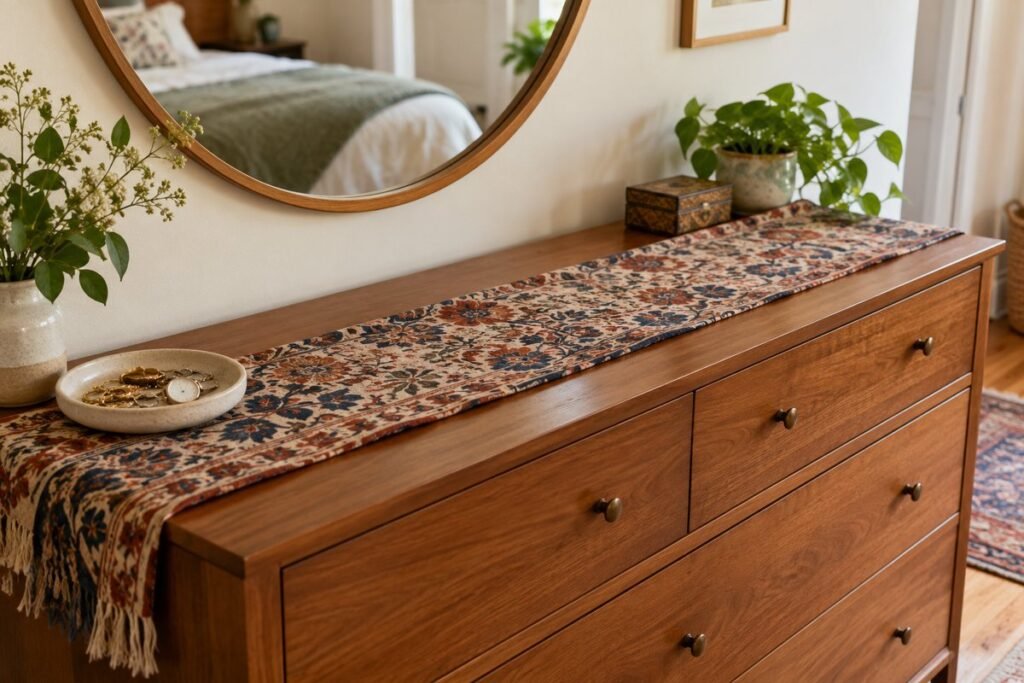
1. A Favorite Scarf Used as a Dresser Runner
Picture a long patterned scarf laid neatly across a plain bedroom dresser. A small dish at one end holds jewelry, while the middle stays clear. The scarf adds color and a soft edge without needing a new piece of fabric. Choose a pattern that you already enjoy and that sits comfortably with the room’s colors.
Use a scarf you are happy to display and check its care needs. Keep it clear of hot lamps, candles, and anything that could snag it. Do not let it cover handles or trail into drawers. If the fabric is delicate or slips too easily, fold it in a drawer instead and choose a sturdier cloth. The idea should give an unused piece a useful moment, not put a treasured item at risk.
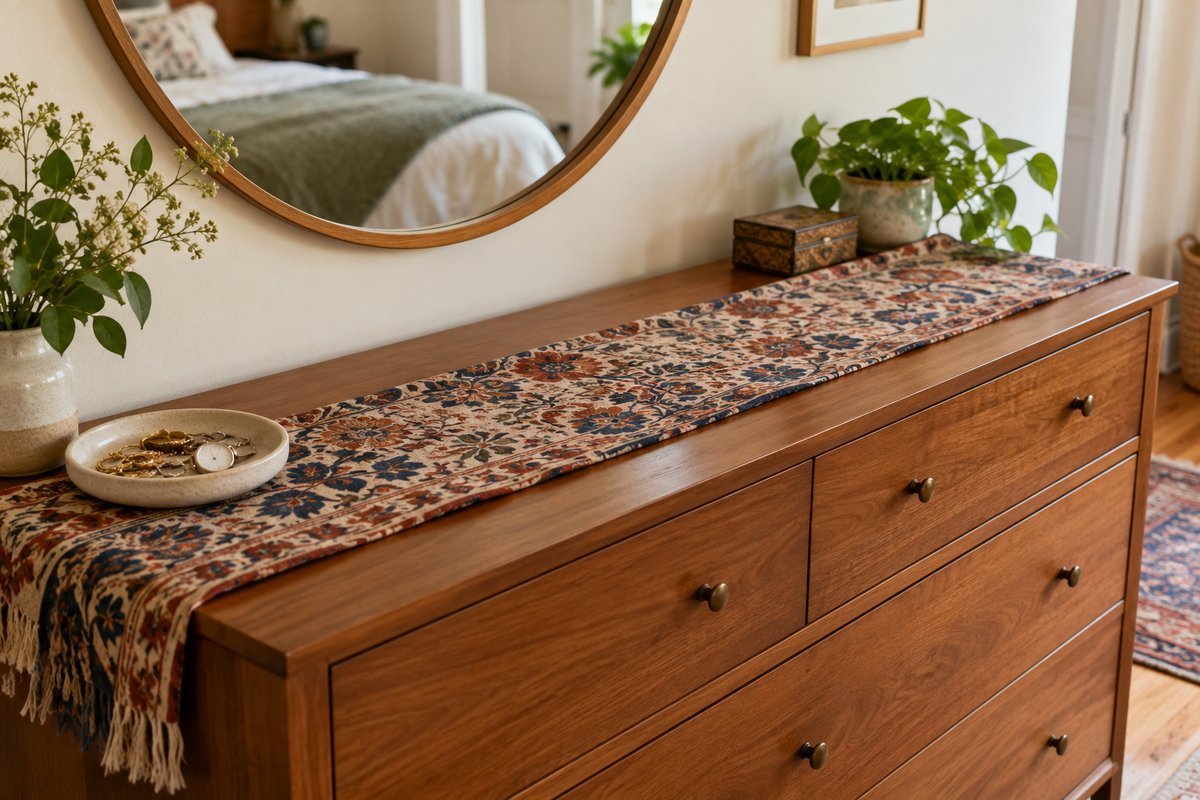
2. A Serving Bowl Given a New Place on the Dining Table
A bowl stored for special occasions can become an everyday focal point. Imagine a wooden serving bowl in the center of a wooden dining table, with no other decorations around it. Its shape and grain provide the detail. You can leave it empty or use it for a purpose it is suited to, such as holding fruit.
Choose a sound bowl and check that its base sits flat. If you use it for food, make sure it is suitable for that use. Keep it low enough that people can see across the table. Move it easily when the table is needed for work or a larger meal. There is no need to fill an attractive bowl simply because it is on display. An empty piece can still show its shape.
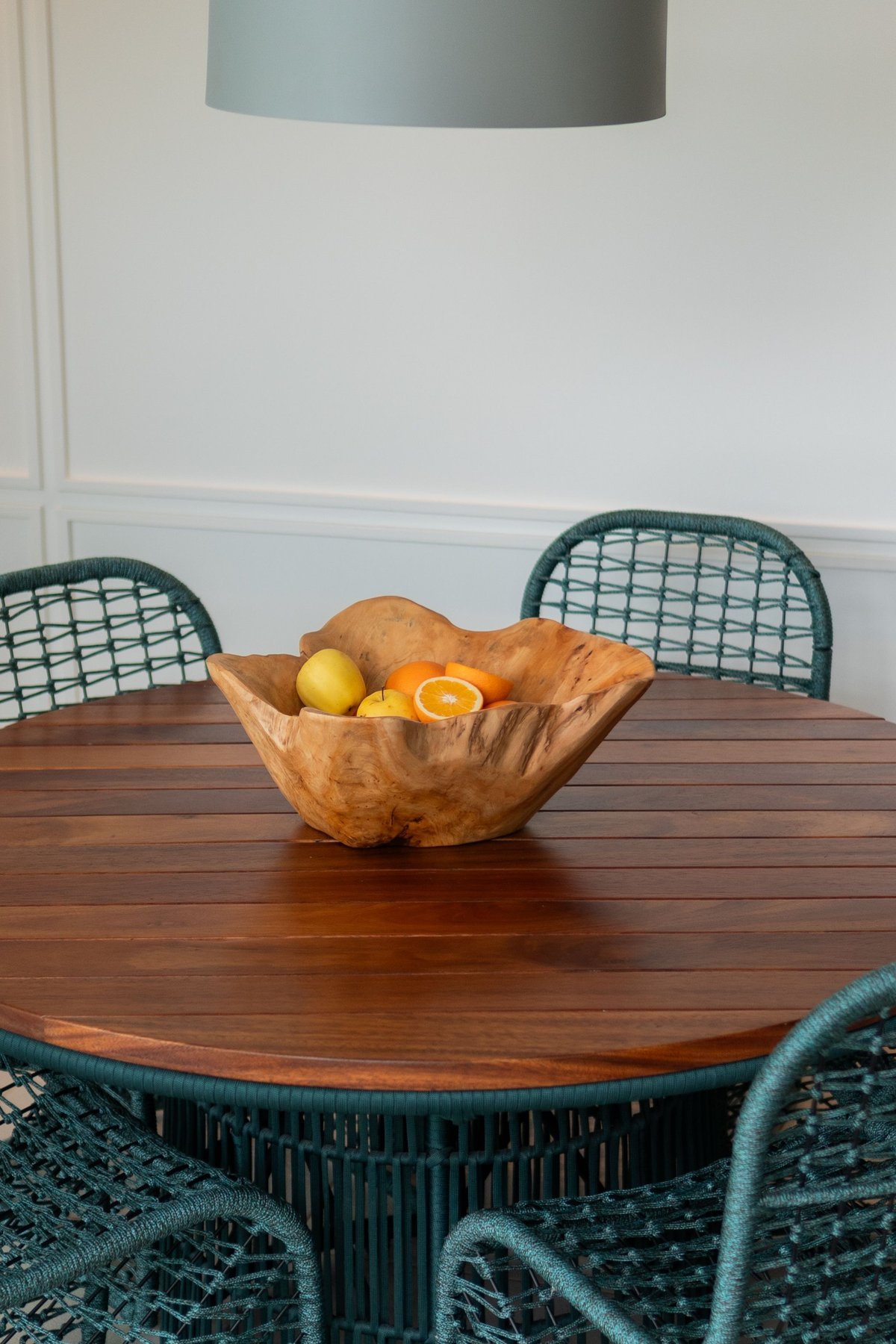
3. A Plain Basket Moved From a Cupboard to the Guest Room
A basket that once held spare supplies can gather guest-room essentials. Picture it on a low shelf with a folded towel and a small sealed box of practical items. Keep the colors simple and leave space around it. The basket becomes a welcoming detail because its contents have a clear purpose.
Clean the basket according to its material and make sure it is dry before adding fabric. Check for rough edges that could snag towels. Use only items that are appropriate and useful for the guest, rather than filling the basket to make it look full. If you borrow it from another room, make sure that room still has the storage it needs. A no-buy change should not leave a new problem behind.
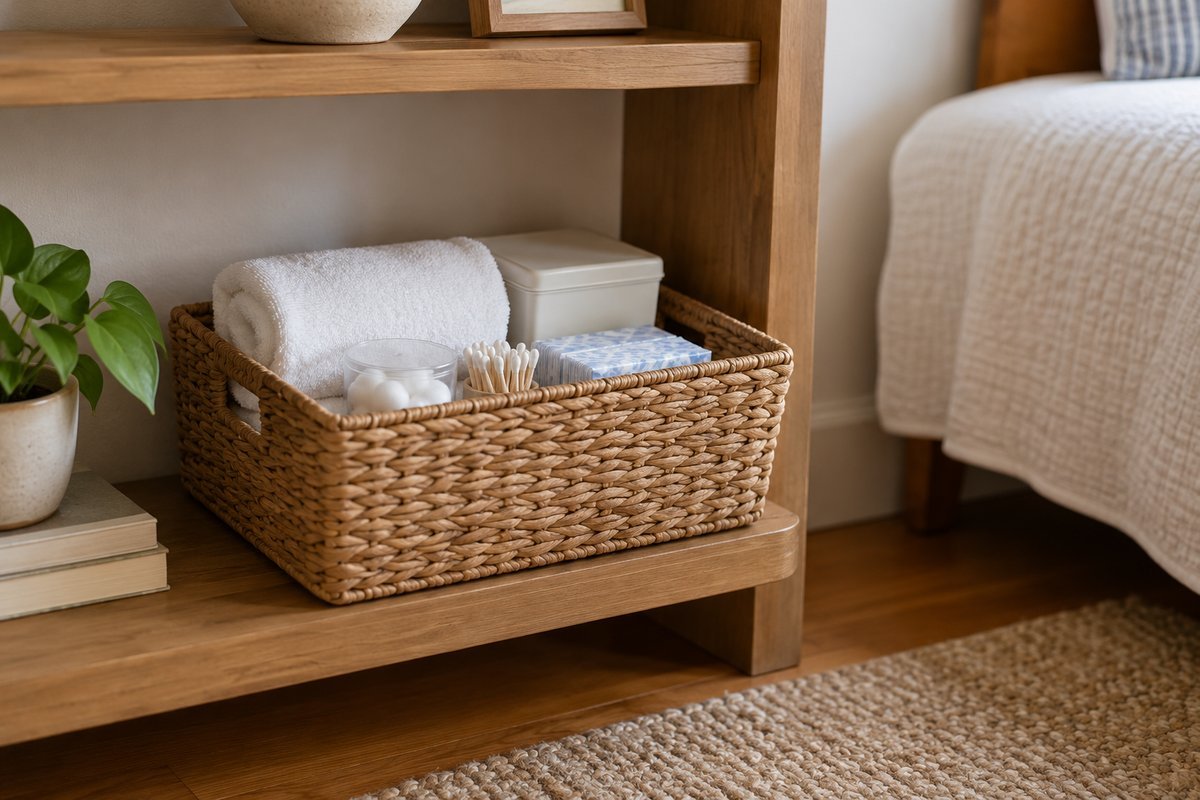
4. A Small Artwork Swapped Between Two Rooms
A picture can feel new simply because its setting changes. Imagine a blue-toned print moved from a crowded bedroom wall to a plain dining-room side wall. In its new place, the color relates to a bowl already on the table. The old wall has more open space, while the dining corner gains a clear detail.
Test the new position with a paper outline before moving fittings. Use appropriate hanging hardware for the frame and wall. Do not reuse a fixing if its condition or rating is uncertain. Check that the new location suits the artwork’s care needs and avoids moisture or strong sun where necessary. If the swap means buying several new pieces to fill the old wall, pause and see whether that wall is better left quieter.
5. A Spare Pillow Cover Brought Into the Living Room
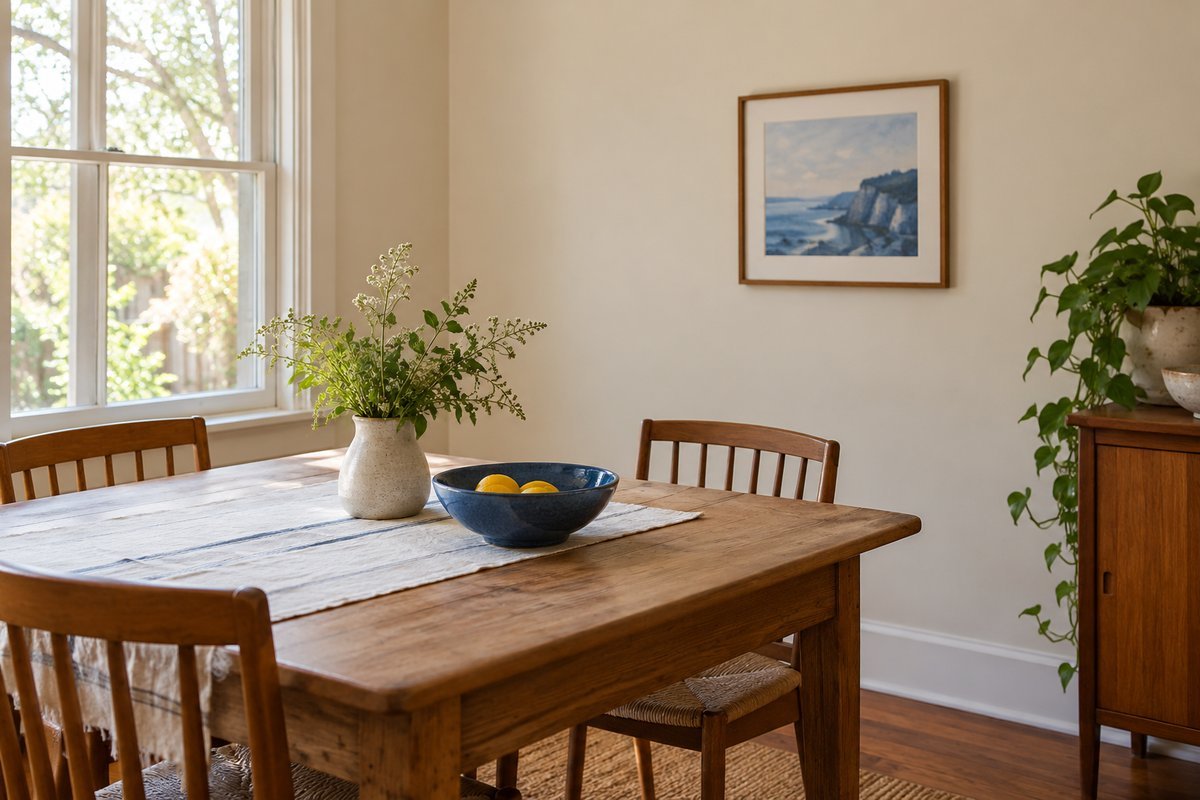
A pillow cover stored in a linen cupboard may bring just the color a sofa needs. Picture a muted green cover on one existing cushion, with a cream cushion beside it. A plain gray sofa gives both room to stand out. Keep the arrangement small enough that the sofa remains comfortable for sitting.
Check that the cover fits the insert properly and follow its cleaning guidance. Try it in the room’s daylight and evening light before deciding it works. You do not need to repeat the green in several new objects. A book cover or picture already nearby may provide enough of a link. If the cover feels wrong in the room, return it to use elsewhere. Testing a color is still useful even when you decide against it.
6. A Clear Glass Jug Used for a Simple Flower Display
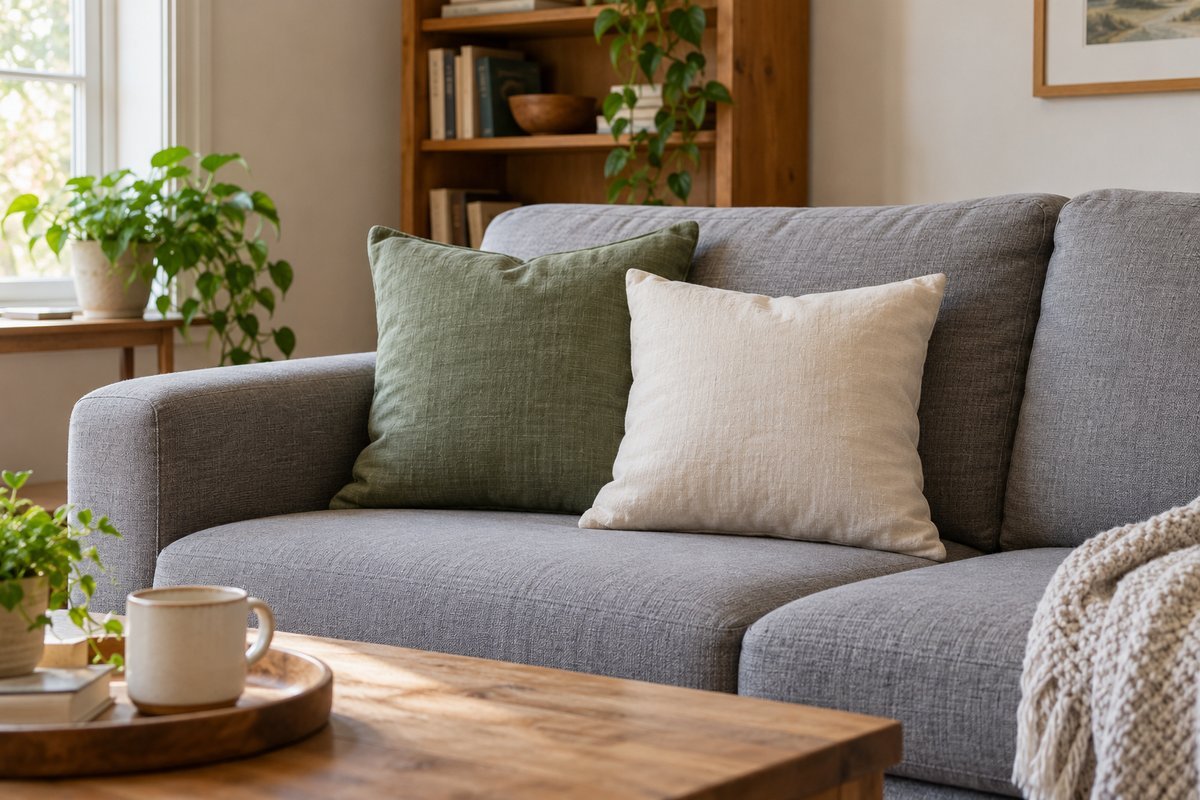
A jug can become a flower container when it is not needed for serving. Picture a clear glass jug holding a few suitable stems on a small kitchen-side table. The transparent shape keeps the display light, while the flowers add color. Leave the rest of the table clear enough to use.
Choose a stable jug in good condition and protect the surface below from moisture. Keep the display away from table edges and busy routes. Use flowers obtained appropriately, and check their suitability for children and pets in the home. Wash the jug properly before returning it to food or drink use. If you have no flowers, the empty jug may still look pleasing beside a simple bowl; there is no need to buy stems for the idea to count.
7. A Folded Throw at the End of a Guest Bed
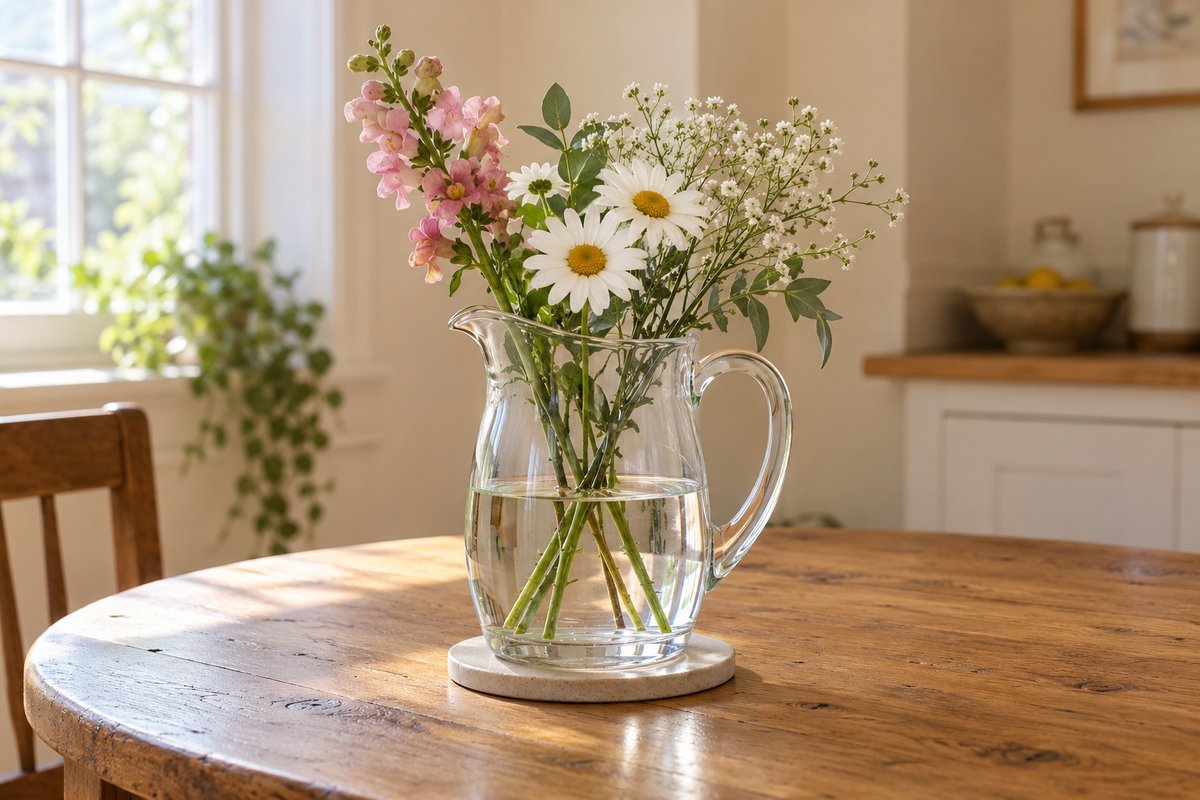
A throw from another room can give a plain guest bed a softer finish. Imagine a white or cream bed with a blue throw folded across the lower end. Keep the pillows simple so the fabric is the main color detail. The throw also gives a guest an extra layer if it is suitable and comfortable to use.
Check that the original room does not need the throw before moving it. Follow its care label and make sure it is clean and dry. Choose a fold that stays clear of the floor rather than creating a long trailing edge. You do not need to add more pillows to match it. A practical extra layer can make the bed feel considered while leaving it easy to make and use.
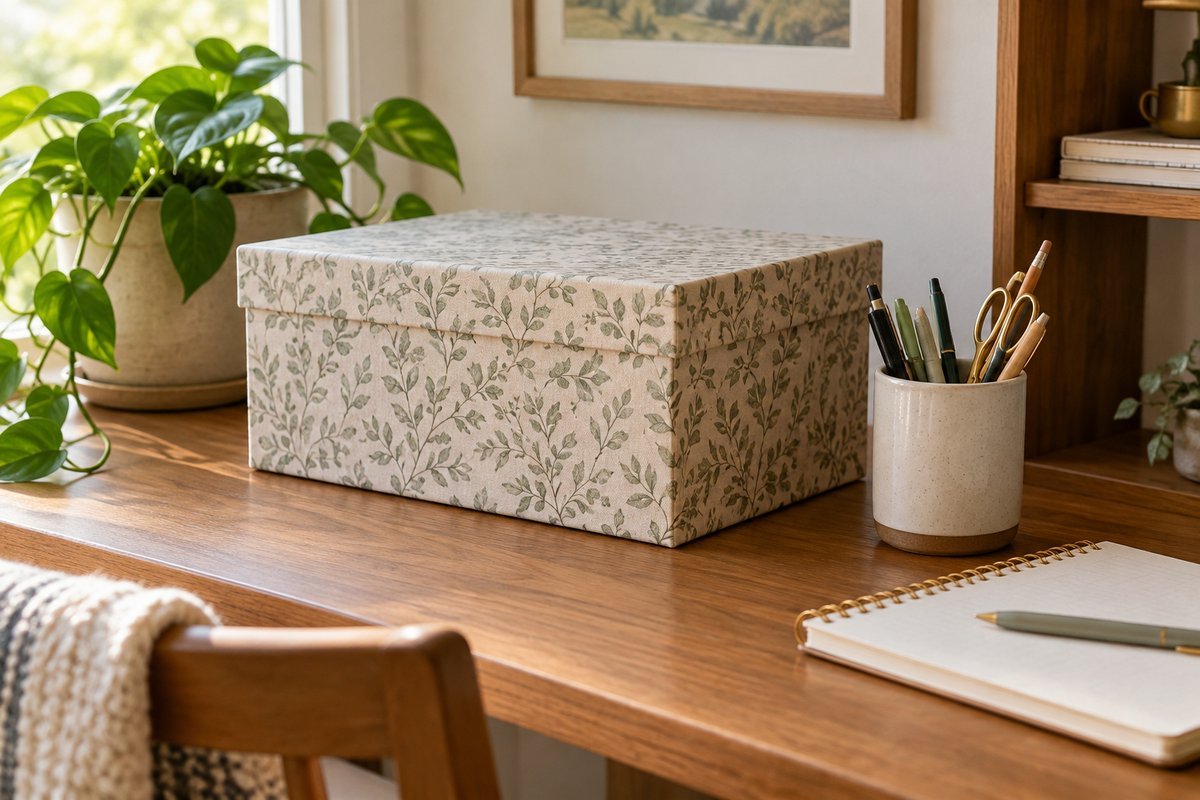
8. A Lidded Box Gathered With Everyday Desk Supplies
An unused gift box can tidy a small desk if it is sound and fits the job. Picture a plain lidded box holding spare notebooks and light paper supplies, with one pen cup beside it. The lid hides mixed colors and leaves the desk looking simpler. Choose a box that already has a finish you like.
Check that the box is clean, dry, and strong enough for its contents. Do not use a decorative cardboard box for heavy tools or damp items. Label it discreetly if that helps you remember what is inside. Keep current work out where needed rather than hiding everything for a tidy photo. If you have to open several boxes to find one notebook, reduce the number of containers. Storage is useful when it is easy to understand.
9. A Small Collection Gathered on One Existing Shelf
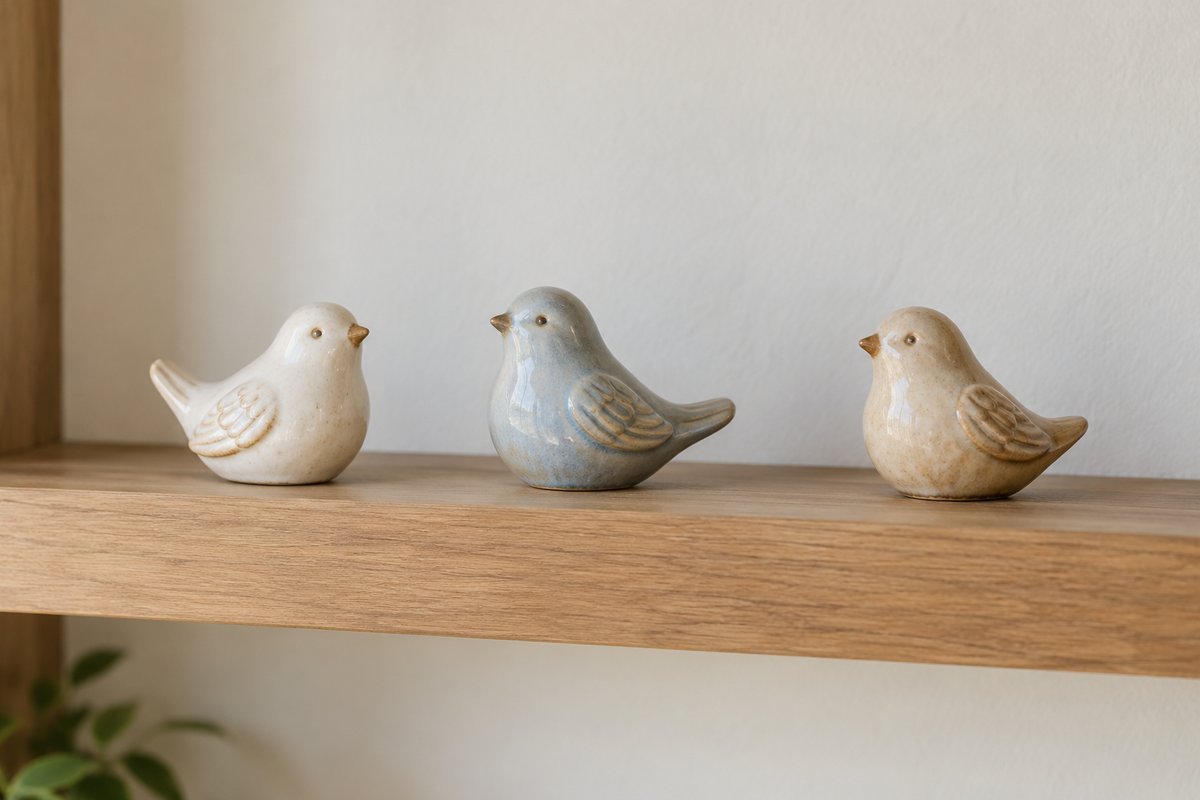
Three related objects can have more presence together than spread across several rooms. Imagine three small ceramic birds on a plain shelf, with space between them and no extra ornaments nearby. Their repeated shape gives the shelf a clear theme. The colors can differ slightly, as long as each piece is easy to see.
Choose sound objects and a shelf that can carry them safely. Keep fragile items away from an edge or busy reach area. Start with a small group and leave the rest of the collection stored carefully. You can rotate pieces later. Do not feel that every item must be displayed at once. Gathering a few favorites can help you enjoy them more than distributing them across every available surface.
10. A Tablecloth Folded Into a Smaller Console Accent
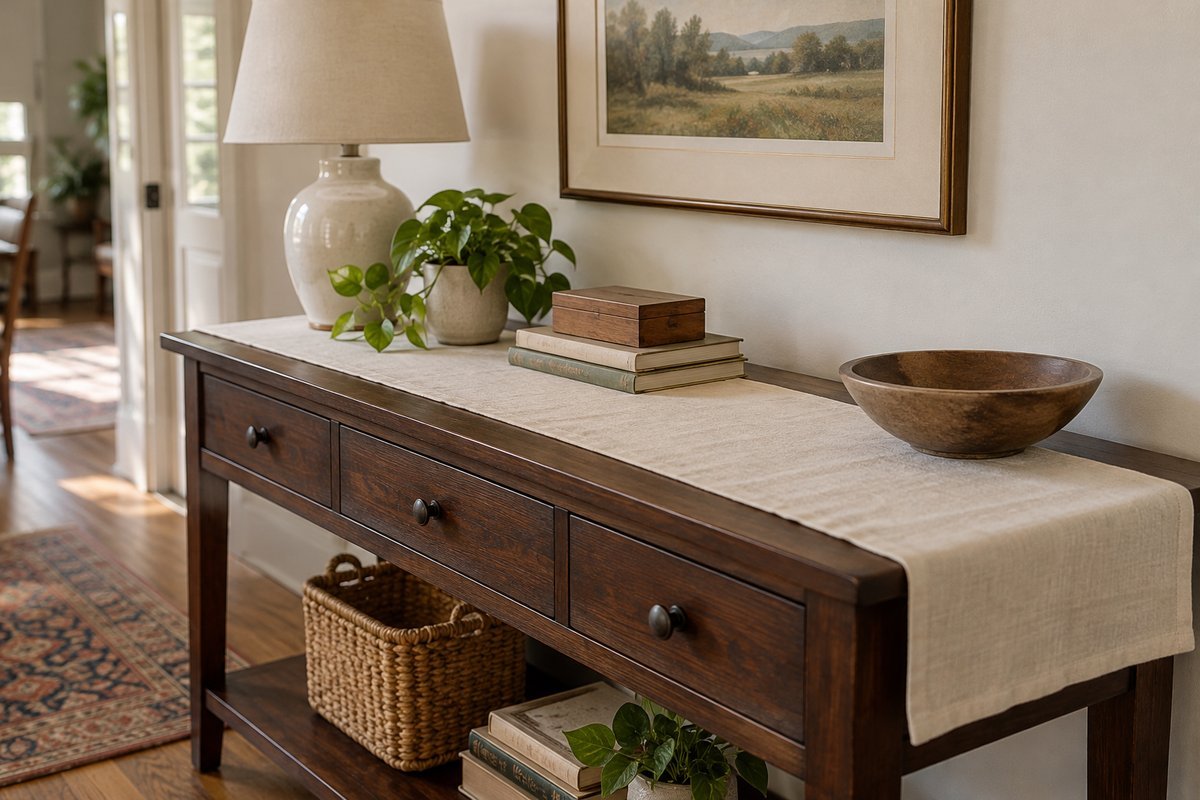
A full tablecloth can be folded into a narrower strip for a console, if its fabric and size suit the piece. Picture a plain cream cloth along a dark wooden console, with one low bowl at an end. The lighter fabric changes the contrast without paint or new furniture. Keep the rest of the top useful.
Fold the cloth neatly and check that it does not slide or hang into drawers. Keep it away from heat sources and anything that could stain or damage it. If the console is used for wet umbrellas or other damp items, choose another location. A no-buy refresh should use materials where they make sense. If the cloth looks bulky, try a smaller existing fabric or leave the wood bare instead of forcing the arrangement.
Shop Your Home Without Emptying Every Cupboard
Choose one area to improve and look for only a few items that might work there. Keep a clear place for testing them, and return anything you decide not to use. This prevents a small refresh from becoming a house-wide sorting project. Start with color, size, and purpose rather than asking how many things you can fit into the scene.
Use the area for several days. Notice what stays in place and what has to be moved every time you sit, work, or eat. Keep the changes that help and undo the ones that do not. You do not need every object to have a new role. Sometimes putting something away gives a favorite piece more room. A no-buy refresh can be a simple way to enjoy what is already useful and meaningful in your home.
Common Questions
How can I decorate my home without buying anything?
Choose one surface and try a few items from elsewhere in your home. A serving bowl, spare pillow cover, folded throw, or small framed picture can change the arrangement. Return anything that does not fit or is still needed in its original room.
What should I look for when shopping my own home?
Look for sound pieces with a useful size, color, and purpose for the new spot. Check care needs and surface protection. Avoid moving so much that another room loses the storage or comfort it needs.
How do I keep no-buy decorating from looking cluttered?
Start with a small group and leave useful space around it. Keep furniture, drawers, and walking routes easy to use. If an object gets moved out of the way every day, put it somewhere more suitable or store it.
More Ideas for Your Home
budget living room details · modern vase styling ideas · wall art ideas