
A room can feel thoughtfully finished through a few details that work well together. A clear edge, a well-placed bowl, or a simple fabric fold can help the things you own look more settled. That does not mean making your home look costly or hiding everyday life. It means paying attention to the small areas you see and use often. These home decorating ideas focus on manageable finishing scenes around the house. Try one at a time, using sound pieces you already have where possible. Keep the changes that support daily use, and leave room for the home to feel like yours.
Start here: Choose one small surface or storage spot you use every day. Give its useful items a clear place, repeat a simple fold or shape, and leave enough open space to use and clean it. Check whether a small repair would help before adding another accessory.
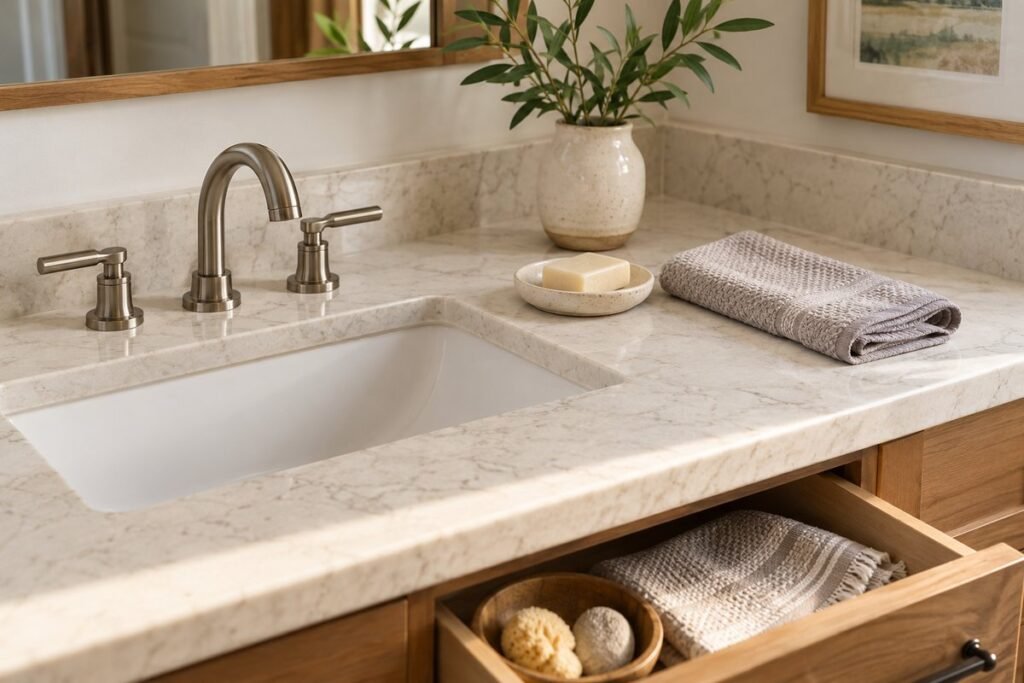
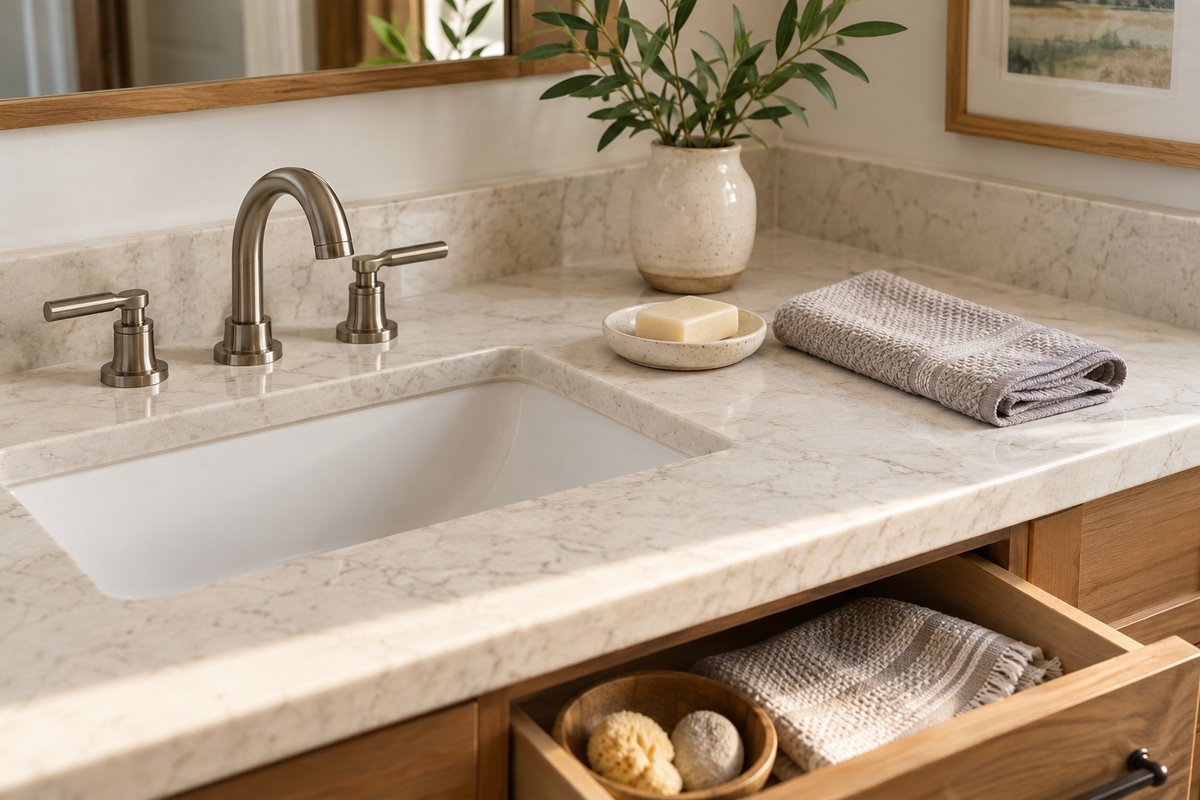
1. A Bathroom Counter With a Soap Dish and Folded Hand Towel
Picture a plain bathroom counter with a simple soap dish and one neatly folded hand towel beside it. The colors are cream and soft gray, with open space around the tap. The scene looks considered because the items have clear places, not because there are many accessories. A small practical grouping gives the counter a finished edge.
Choose a dish that drains or can be cleaned appropriately for its use. Keep towels where they stay dry until needed and provide a suitable place for used ones. Do not fill the counter with decorative bottles if they make cleaning harder. Test the arrangement while washing your hands. If water reaches the folded towel, move it or use a rail. The best finishing detail still works when the room is busy.
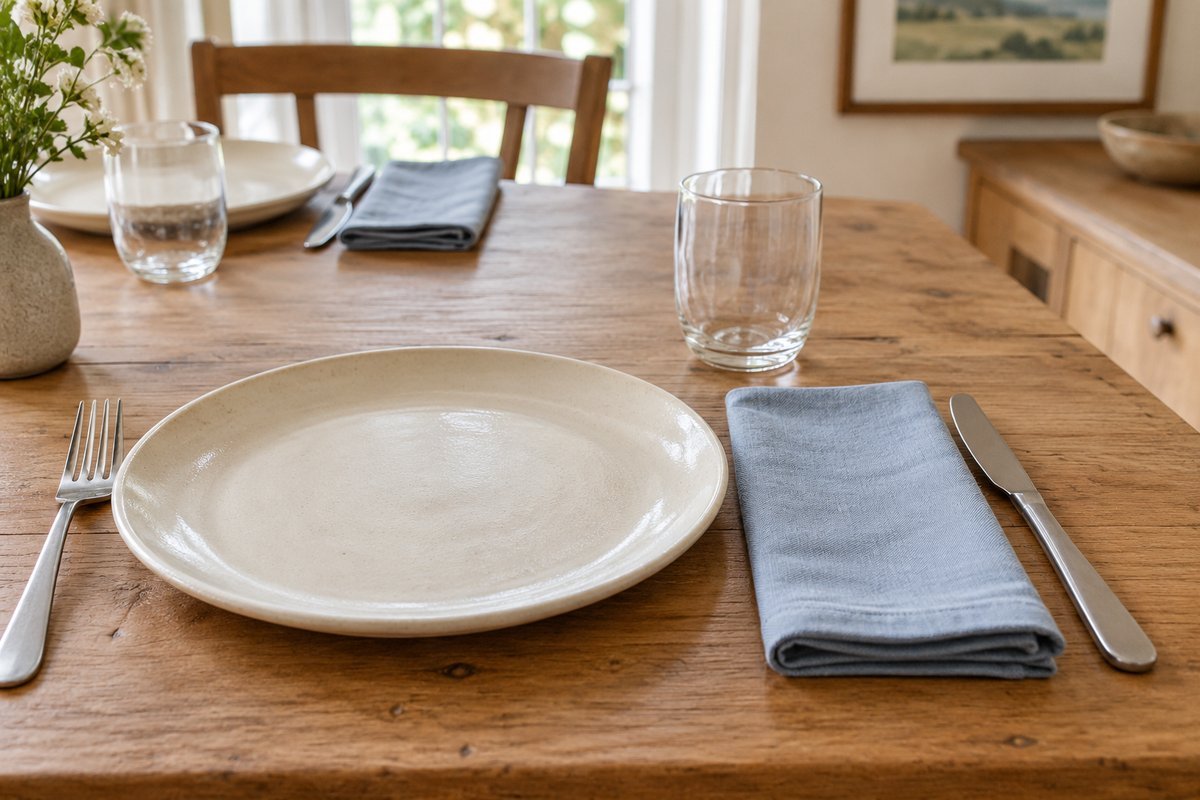
2. A Dining Place Setting With One Plain Napkin Fold
A simple napkin can make an ordinary meal setting feel cared for. Imagine a cream plate on a wooden table, with a soft blue cloth napkin folded into a rectangle beside it. Plain cutlery completes the setting. There is no large centerpiece, so the repeated napkin shape gives the table its tidy rhythm.
Use washable cloths that suit your routine rather than saving them only for a perfect occasion. Keep the fold easy to repeat and leave room for glasses and serving dishes. You do not need extra rings or decorative sprigs. If the table serves several purposes, store napkins together where they can be brought out quickly. A small consistent detail is more practical than a complicated setting that takes too long to clear.
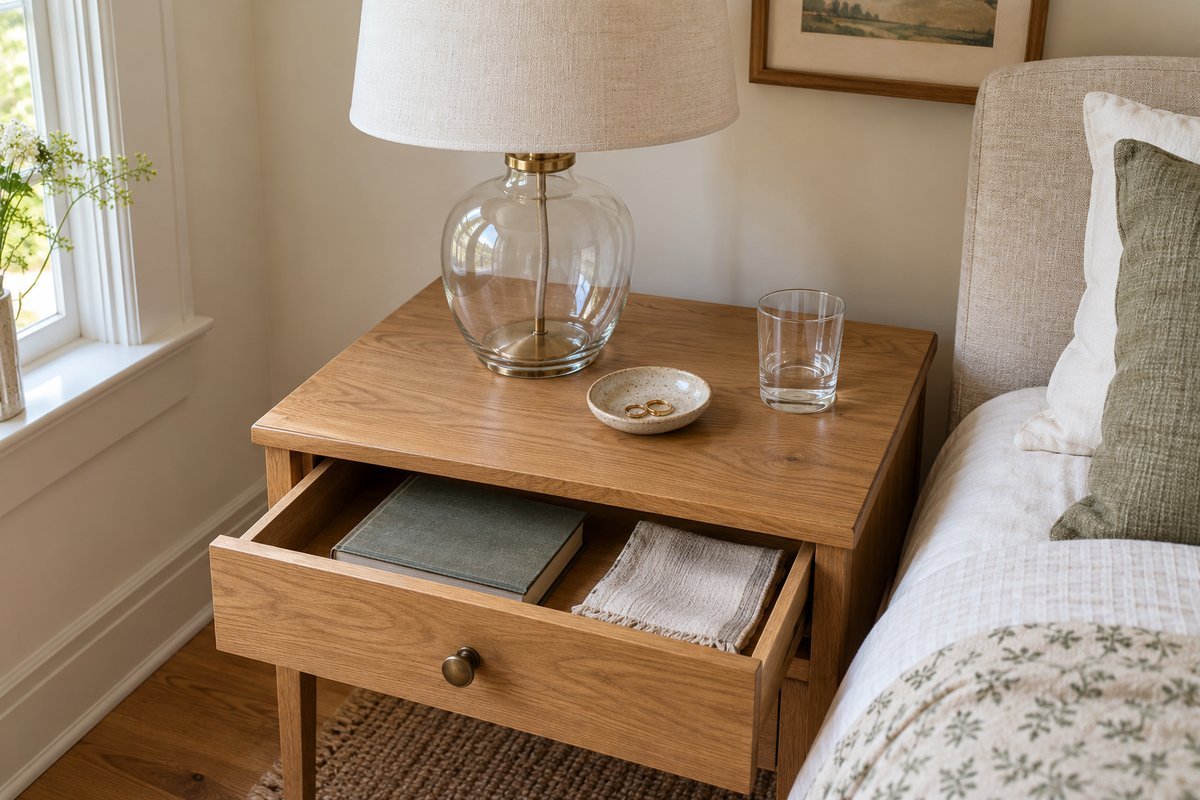
3. A Bedside Surface With a Clear Lamp Base and Small Dish
Picture a bedside table with one lamp, a small dish, and a clear space for a glass. A book sits inside the drawer rather than under several objects on top. The limited arrangement makes the lamp’s shape easy to see and leaves the useful area obvious. Keep the colors close to the room’s existing fabrics.
Choose a stable dish that is easy to lift for cleaning. Test the lamp switch from the bed and keep fabric clear of the shade in line with its instructions. Do not stack objects around the base just to create height. If the table is small, keep only the lamp and put personal items in the drawer. A clear surface can look finished because it has been arranged around actual use.
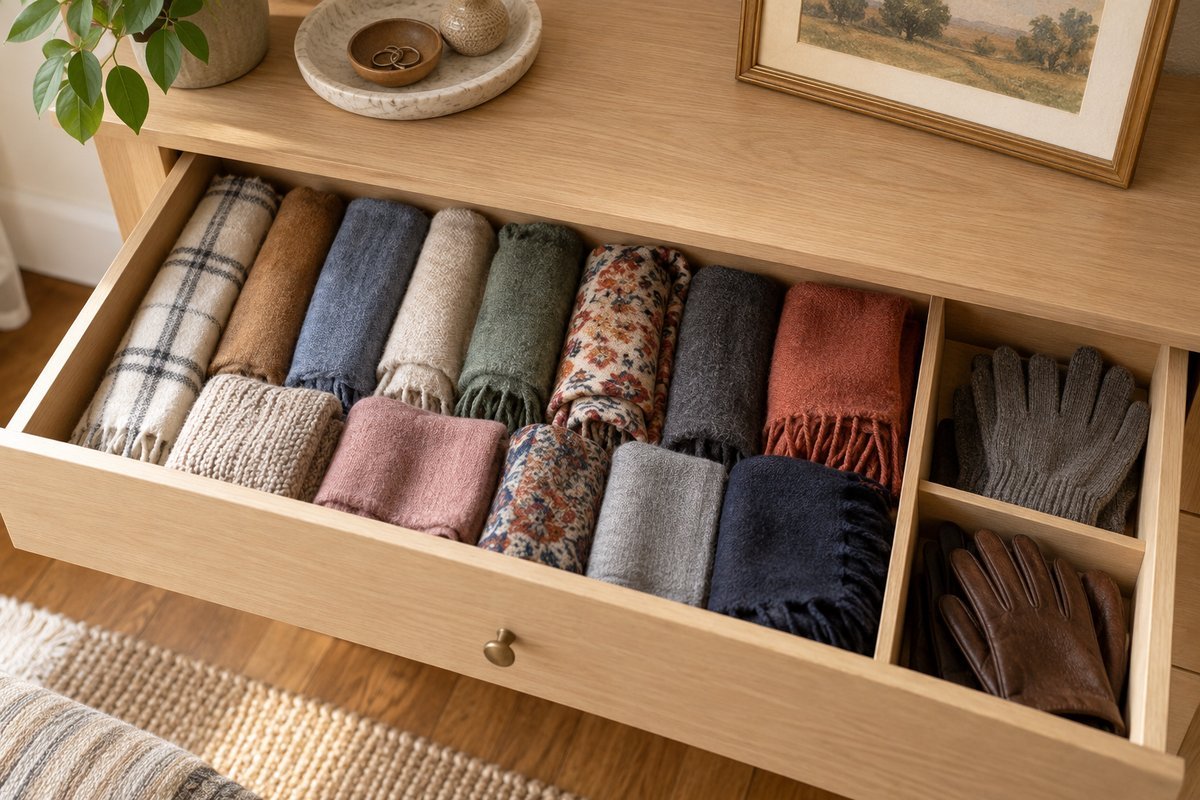
4. A Dresser Drawer With Matching Folds for Everyday Scarves
Finishing details can be inside furniture too. Imagine a shallow drawer with scarves folded to a similar width and set in loose rows. A small plain divider keeps one section for gloves. The colors can vary; the repeated fold makes the drawer easy to understand when opened.
Choose a folding method that suits the fabric and drawer rather than forcing everything into a tight shape. Follow care guidance for delicate pieces, and avoid compressing items that need different storage. Leave enough space to lift a scarf without pulling the row apart. If the drawer is too full, move seasonal extras to suitable storage. A neat view should help you find and return things, not make putting away laundry feel like a display task.
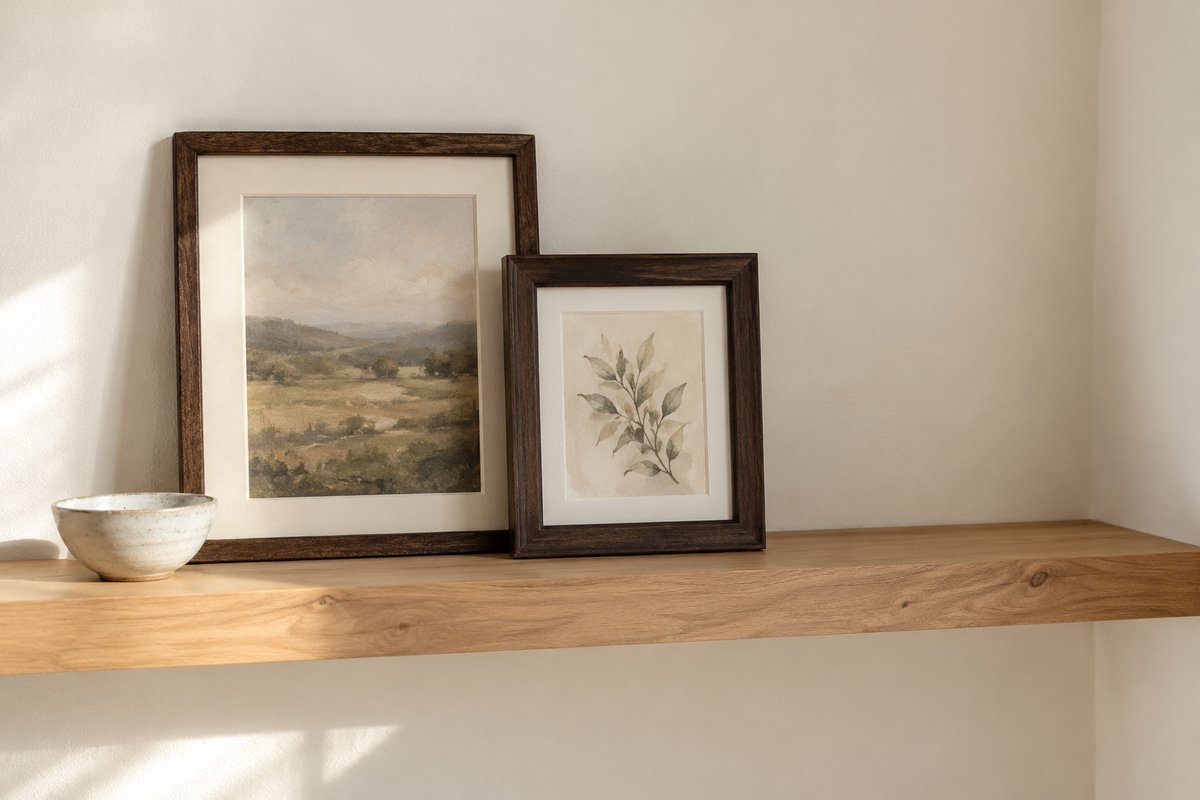
5. A Shelf With Two Related Frames and One Open Gap
Picture two simple frames on a properly fitted shelf, with one small ceramic bowl beside them and an open gap at the other end. The frames share a dark brown tone even though their shapes differ. The small number of objects lets each outline show. Keep the shelf’s backdrop plain.
Use a shelf and supports suitable for the weight, and secure displayed frames appropriately rather than leaving heavy pieces easy to knock. Check the arrangement from the doorway and a nearby seat. If the pictures overlap so much that one disappears, separate them or remove one. An open gap is useful; it does not need another object. This can be a simple way to finish a shelf that has slowly filled with unrelated items.
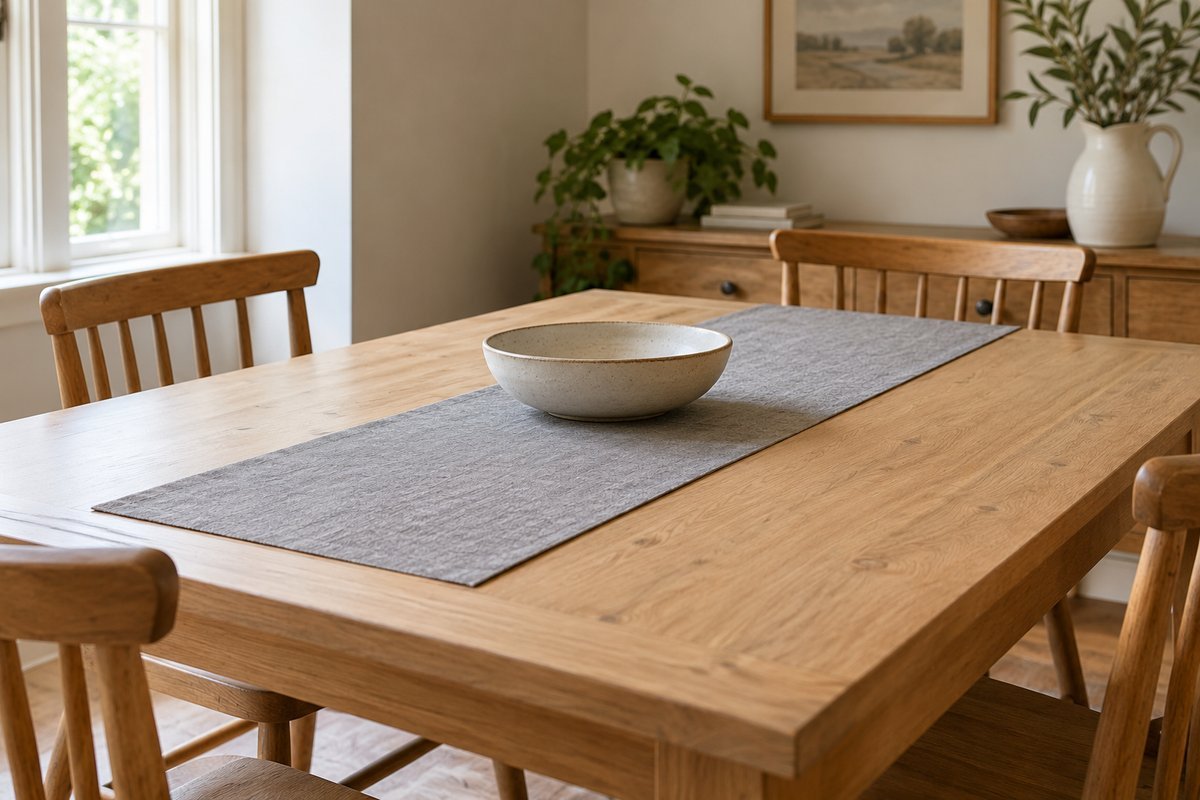
6. A Kitchen Table With One Low Bowl on a Plain Runner
A plain runner can give a table a clear line. Imagine a soft gray strip of fabric along a light wood table, with one low cream bowl at its center. The fabric ends stay clear of the chairs. The simple shapes give the table a finished look while leaving space for meals or a notebook.
Choose a washable runner and check that it does not slip or catch during normal use. Use the bowl for a purpose it is suited to, or leave it empty. Move both pieces aside for messy tasks and clean the table appropriately. If the table is very small, the bowl alone may be enough. You can create a clear center without covering most of the surface or adding layers that need moving every day.
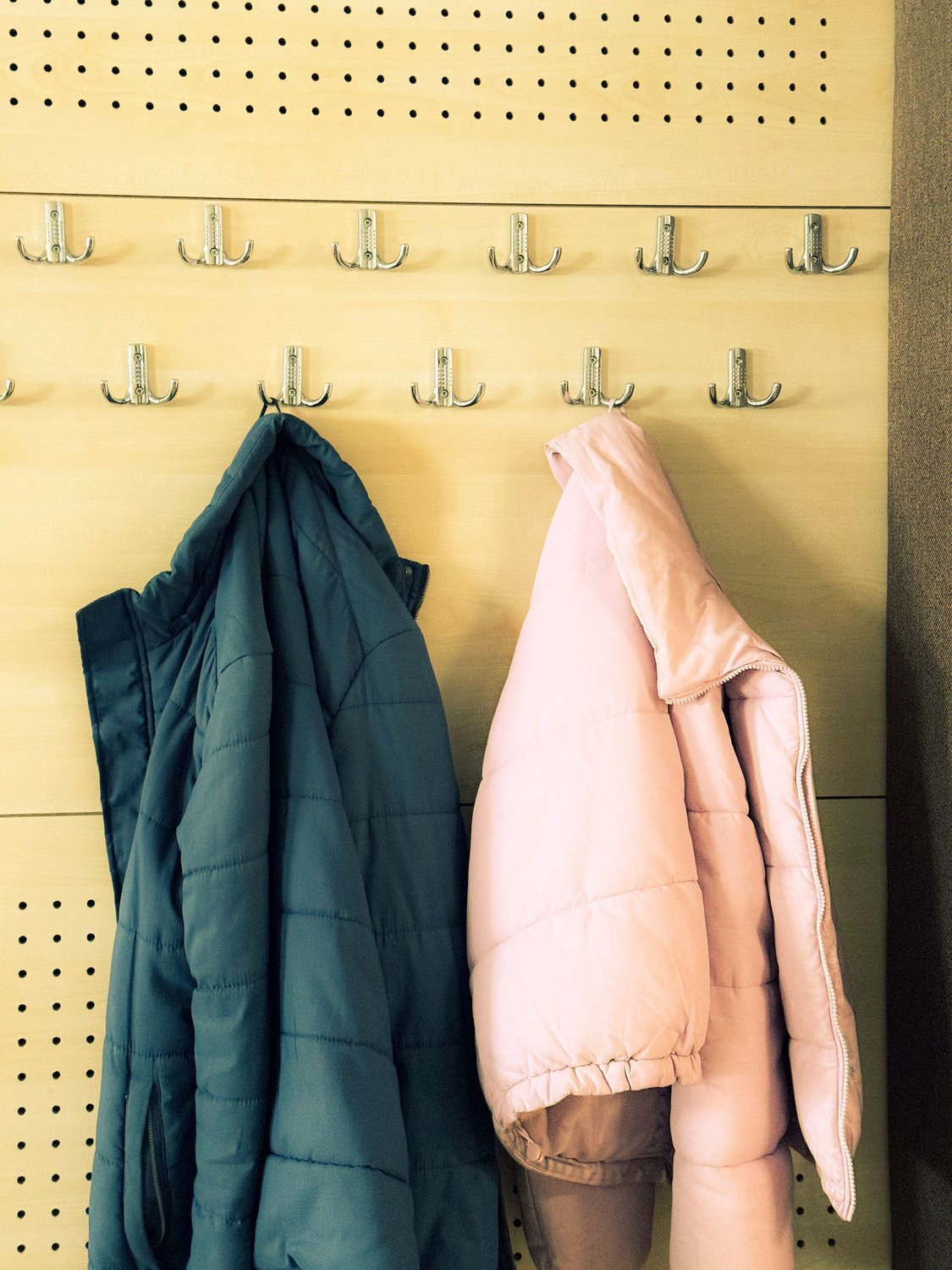
7. A Hall Hook Rail With Only Current Coats
A hook rail looks more deliberate when its contents are limited. Picture two current coats on a wooden hook panel, with the unused hooks left clear. Each coat has room to hang without covering the next. Store spare seasonal coats elsewhere and keep the floor beneath free for everyday use.
Fit the rail with suitable fixings and respect its weight limit. Check that bags and sleeves do not project into the walking route or catch on a door. Give the household a simple limit on what belongs here. If the rail regularly overflows, review nearby storage rather than adding decorative hooks to every wall. The finishing change is the clear arrangement of useful items, not making a working entrance look unused.
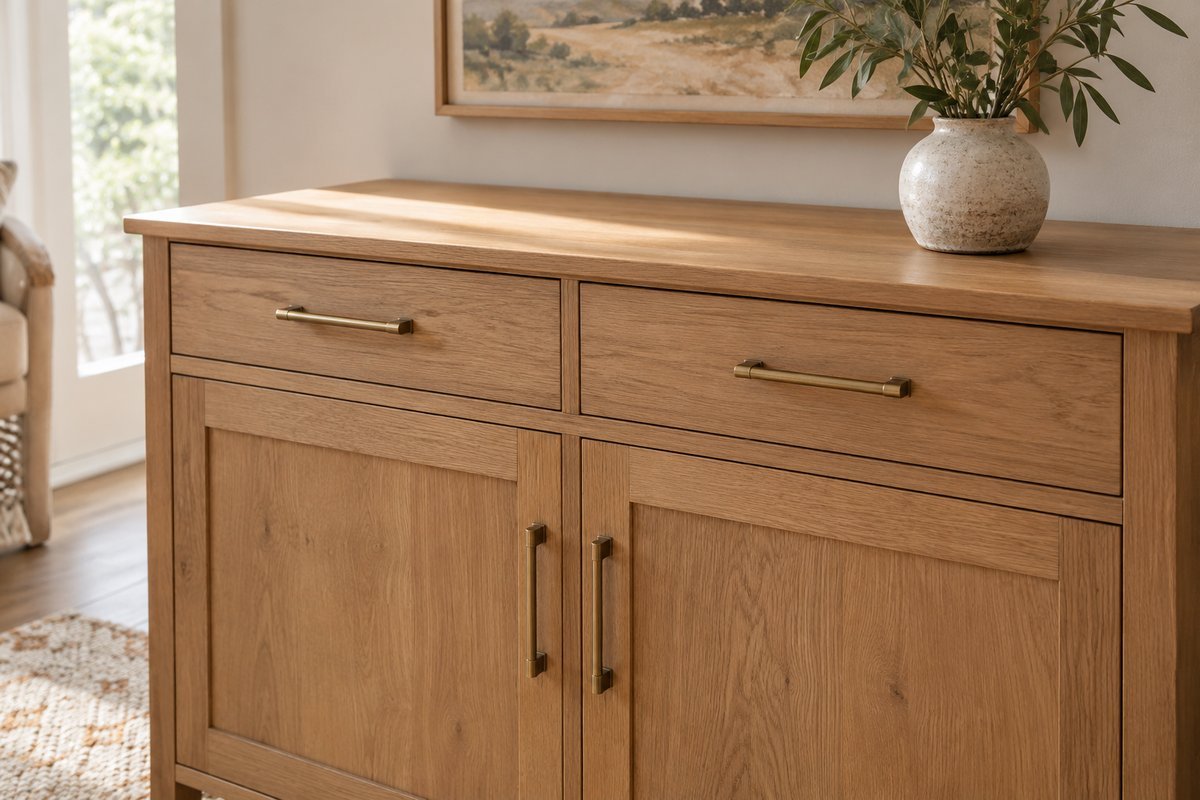
8. A Living-Room Cabinet With Handles That Sit Evenly
Sometimes the detail you notice most is hardware that feels loose or sits unevenly. Picture a plain cabinet with its existing handles securely aligned, a clean top, and one small vase. The cabinet’s shape becomes clearer when the practical parts are in good order. No new finish is needed for the scene.
Check the hardware and follow suitable fitting guidance for the furniture. Do not overtighten or force damaged parts. If a handle needs replacement, measure the hole spacing and door thickness before choosing one. Keep original parts until the repair is resolved. This is about sound maintenance rather than a promise that any handle will fit. If you are unsure about a repair, get appropriate help instead of hiding the problem with extra decoration.
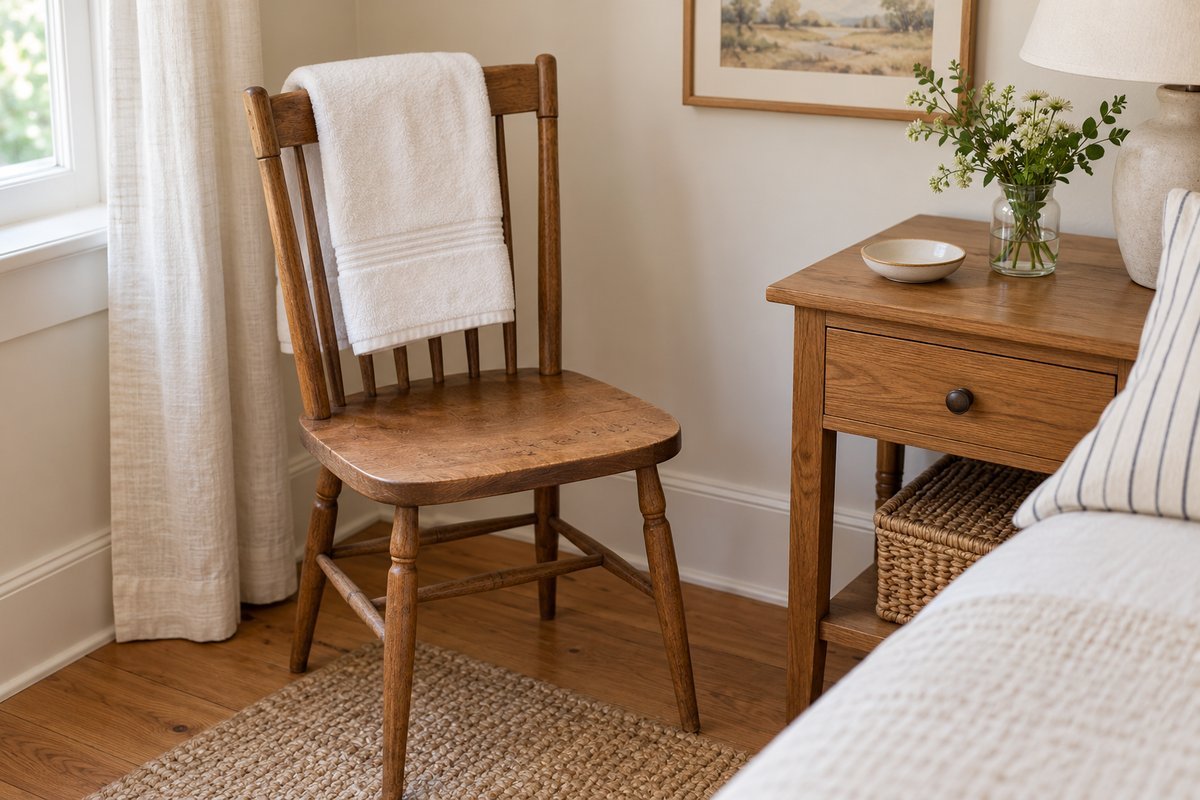
9. A Guest-Room Chair With One Folded Towel and Clear Seat Space
A guest-room chair can have a small welcoming detail without becoming storage. Imagine a plain wooden chair with a clean towel folded over its back, leaving the seat free. A nearby table holds a small empty dish for personal items. The scene is modest but gives visitors useful places to put things.
Choose a chair in good condition and keep the towel where it will stay clean and dry. Do not cover the whole seat with a decorative arrangement that guests must dismantle. Keep the table within easy reach and the route to the bed clear. If the chair is needed for luggage or clothes, place the towel on a suitable shelf instead. A thoughtful finishing detail anticipates use rather than demanding that the room stay untouched.
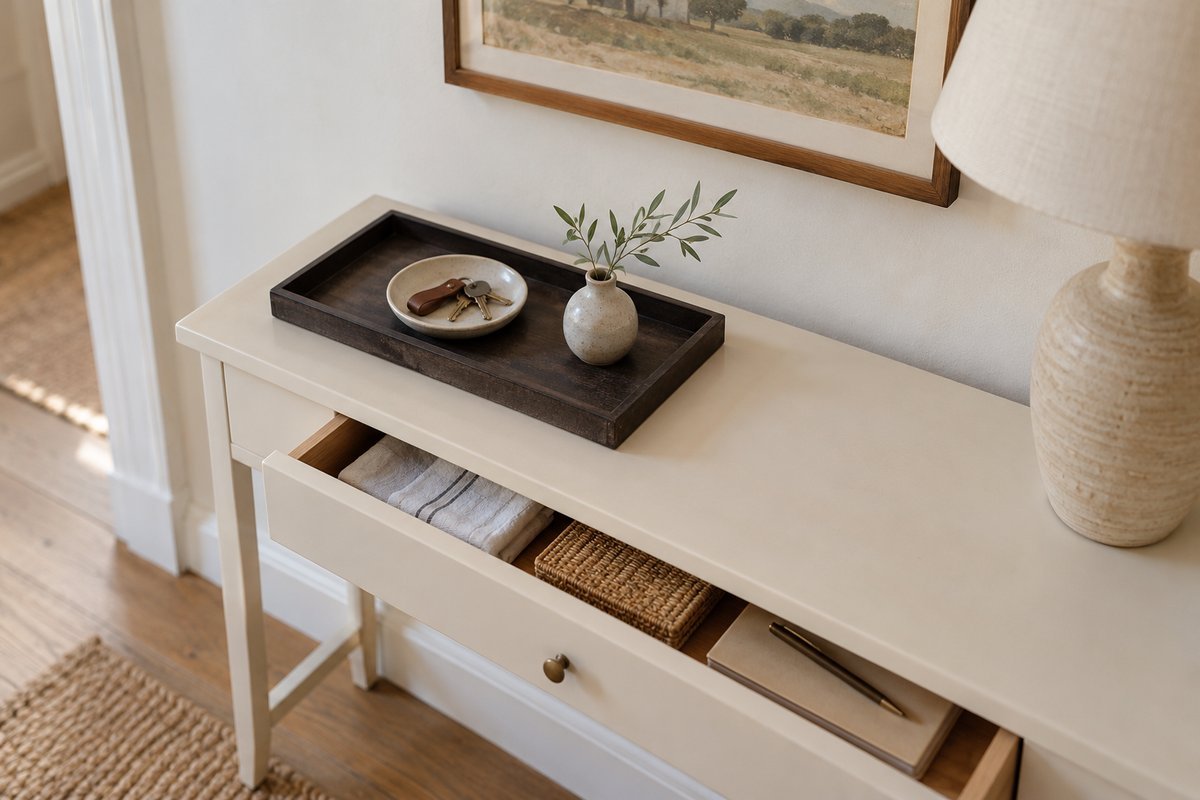
10. A Small Tray That Fits Fully on a Narrow Console
Picture a shallow dark tray on a slim cream console, with its edges fully inside the tabletop. It holds a key dish and one small everyday item, leaving open space at the side. The tray’s simple outline gives the group a clear boundary. Its scale fits the furniture instead of overwhelming it.
Measure the console before choosing a tray, and check that it lies flat. Keep contents light and avoid stacking fragile pieces near the edge. If the tray mainly gathers unrelated clutter, sort those items rather than buying a larger one. A small surface needs a small task. You can also skip the tray and use one dish if that works better. The point is a useful, clearly placed group, not following a styling formula.
Finish the Details You Already Notice
Walk through your home and choose one small area that looks unsettled or is awkward to use. It might be a crowded counter, loose handle, or table arrangement that never stays in place. Decide whether the answer is cleaning, repair, better placement, or fewer objects. Buying another accessory is only one possible response.
Try the change and use the space normally. Check whether it still works after a few days, when towels have been used and keys have been dropped. Keep the arrangement simple enough to reset without much effort. A home can feel considered through everyday care and practical choices. It does not need to look expensive, perfectly matched, or free from signs that people live there.
Common Questions
How can I make a room feel finished without buying more decor?
Start with care and placement. Fold a towel neatly, clear space around a lamp, group daily items in a suitable tray, or address loose hardware. Use the space afterward to check that the change is useful as well as pleasing to look at.
Do finishing details need to match throughout the house?
They do not all need to match. A repeated color, frame tone, or simple shape can connect nearby objects. Choose the link that fits what you already own and leave enough space for each useful item.
How do I keep styled surfaces easy to maintain?
Keep the number of objects small and give each one a purpose or a clear place. Choose washable textiles and containers that are easy to lift for cleaning. If the arrangement takes too much effort to reset, simplify it.
Related Ideas
For awkward reaches and crowded room layouts, explore our simple decorating fixes. For keys, scarves, towels, and other daily items, try these everyday home organization ideas. To refresh your displays with existing pieces, explore our no-buy decor ideas.