
Sharing a bedroom means sharing more than floor space. Two children may have different favorite colors, different toys, and different ways of winding down. A useful room plan gives them something of their own while keeping shared areas easy to use. You do not need matching everything or a large room to begin. These shared kids’ bedroom ideas focus on clear places for sleep, belongings, and everyday activities. Talk with the children about what they need, measure the space, and choose the scene that fits your home. A good starting point is one small change that makes mornings or bedtime feel less crowded.
1. Two Low Beds With Different Colored Head Walls
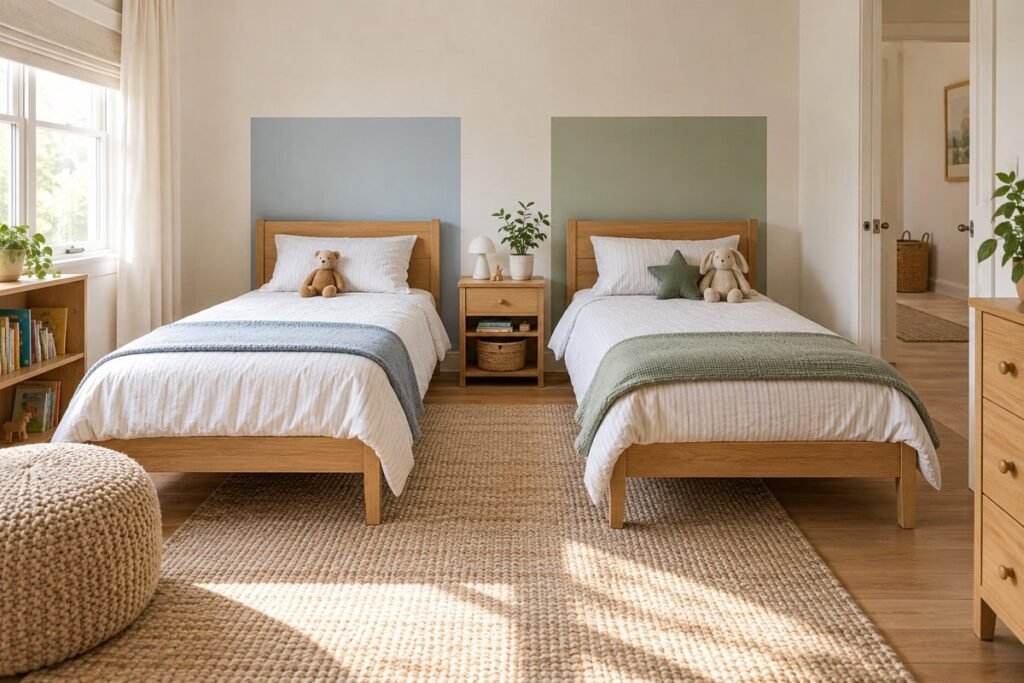
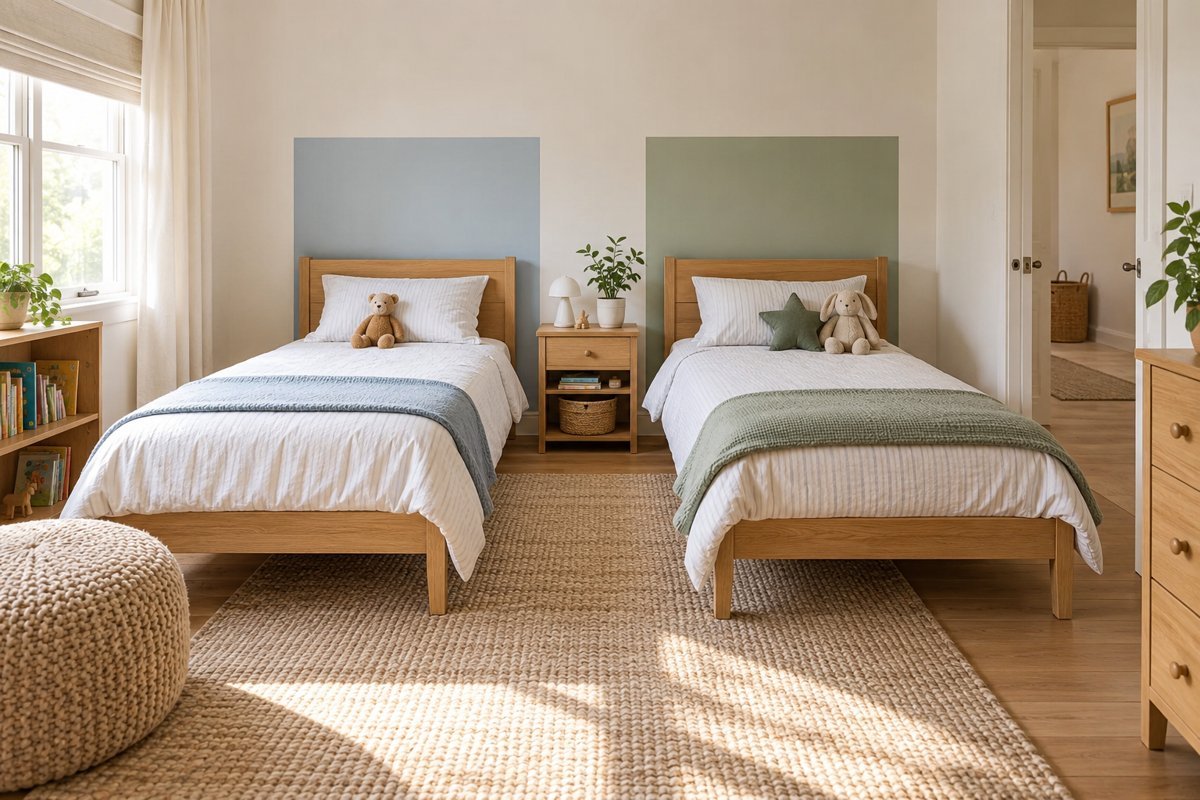
Picture two low single beds against the same long wall, with a soft blue painted rectangle behind one and a muted green rectangle behind the other. Plain white bedding links the two sides. Each child gets a clear color of their own, while the shared background keeps the room feeling connected rather than split into two different worlds.
Ask each child to choose from a small set of colors that work together. Test the painted shapes with paper first and keep nearby switches clear. Choose beds suited to the children’s ages and follow the makers’ placement guidance. Leave a usable route between beds and to the door. The colored areas are a visual cue; they do not need to match the exact width of every toy or pillow.
2. An L-Shaped Bed Layout With a Shared Open Center
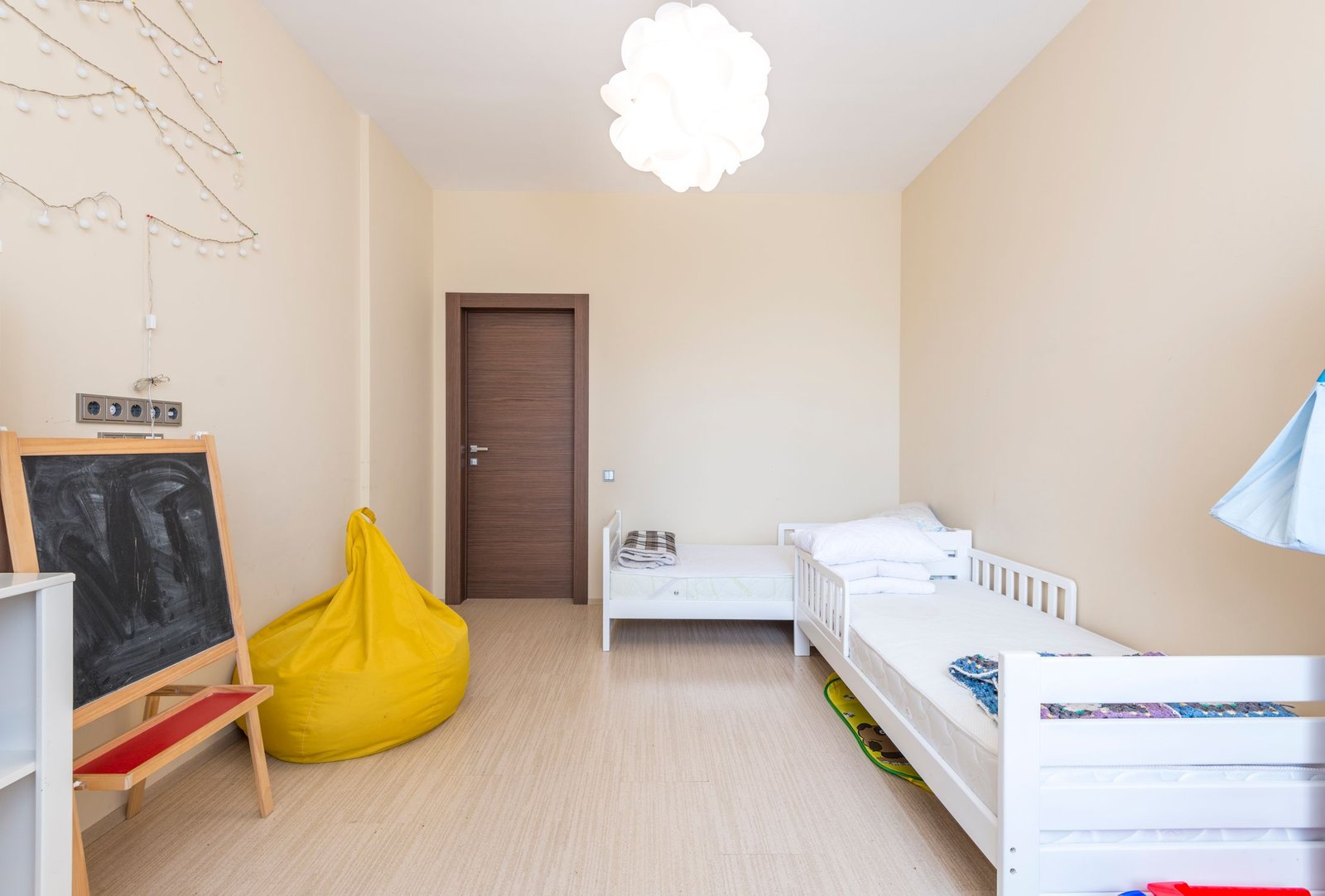
Two beds along adjoining walls can leave the middle of a room free. Imagine pale painted wooden beds making an L shape, with open floor in the middle. A small cushion in a favorite color on each bed can add personal details. A simple flat rug is an option if it fits without crowding the route. Keep the corner where the beds meet simple, without a tall divider.
Check actual bed dimensions and clearances before deciding that an L layout saves space. Make sure both children can get in and out comfortably and that bedding can be changed without moving heavy furniture. Keep windows, heaters, and doors usable. A rug should lie flat with suitable grip. If the center becomes crowded with toys, reduce what is stored here rather than pushing everything into the route around the beds.
3. Two Labeled Drawers Beneath a Shared Low Cabinet
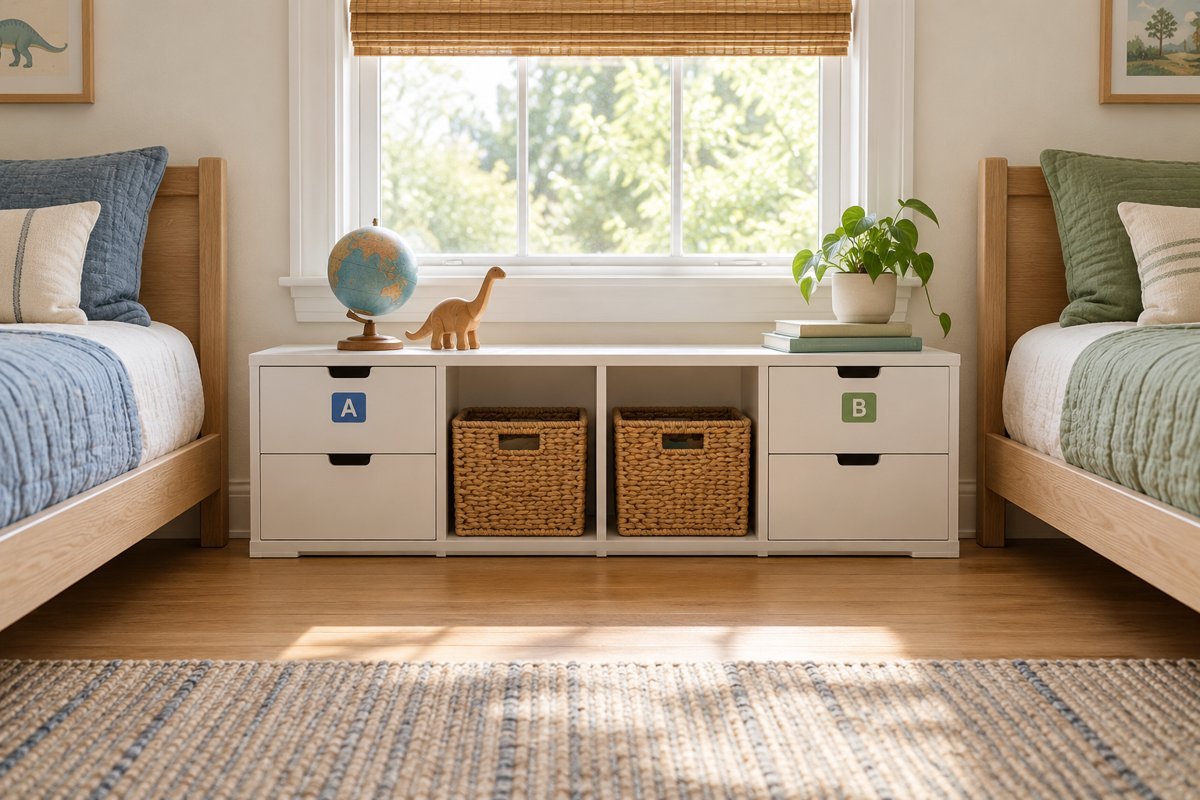
A low cabinet can hold shared supplies while giving each child a drawer. Picture a simple white unit with one blue label and one green label, plus two plain baskets in the center. The cabinet top holds a single shared lamp or display item. Keeping the labels clear is more useful than decorating every drawer differently.
Choose a unit suited to the room and anchor it as directed. Store heavier items low, and keep small parts appropriate to the children’s ages. Let each child decide how to arrange their own drawer within a simple limit. Shared items need a separate home so they do not always end up on one side. Check that doors and drawers open without hitting a bed or blocking the main path.
4. A Long Desk With Two Clear Work Spots
A long table against a plain wall can provide two small work areas. Picture two chairs with different colored seat pads and two matching desk trays. A small pinboard above each place gives room for a drawing or school note. Keep the center of the table mostly empty so neither child feels the whole surface belongs to the other.
Measure enough room for both children to sit, move their arms, and push their chairs back. A narrow table that looks tidy in a picture may not suit two people working together. Choose suitable seating and lighting for their needs. Store shared supplies in a container they can both reach. If the room cannot hold a long desk, use one shared work spot with an agreed way to take turns.

5. Two Small Picture Boards Beside the Beds
Personal wall space can matter as much as personal furniture. Imagine a small fabric-covered picture board beside each bed, with a few drawings attached. The frames match, but the contents are different. A pale wall and simple bed frames keep attention on the children’s choices rather than on a strong room theme.
Place boards where children can enjoy them without loose cords or sharp fittings within reach. Choose suitable attachment methods for their ages. Avoid hanging heavy items above pillows. Give each board a clear edge so one collection does not slowly spread into the other’s space. Change displays when the children want to, rather than keeping the room styled around interests they have outgrown. A personal area can evolve without repainting the whole room.
6. A Shared Reading Bench With Two Book Baskets
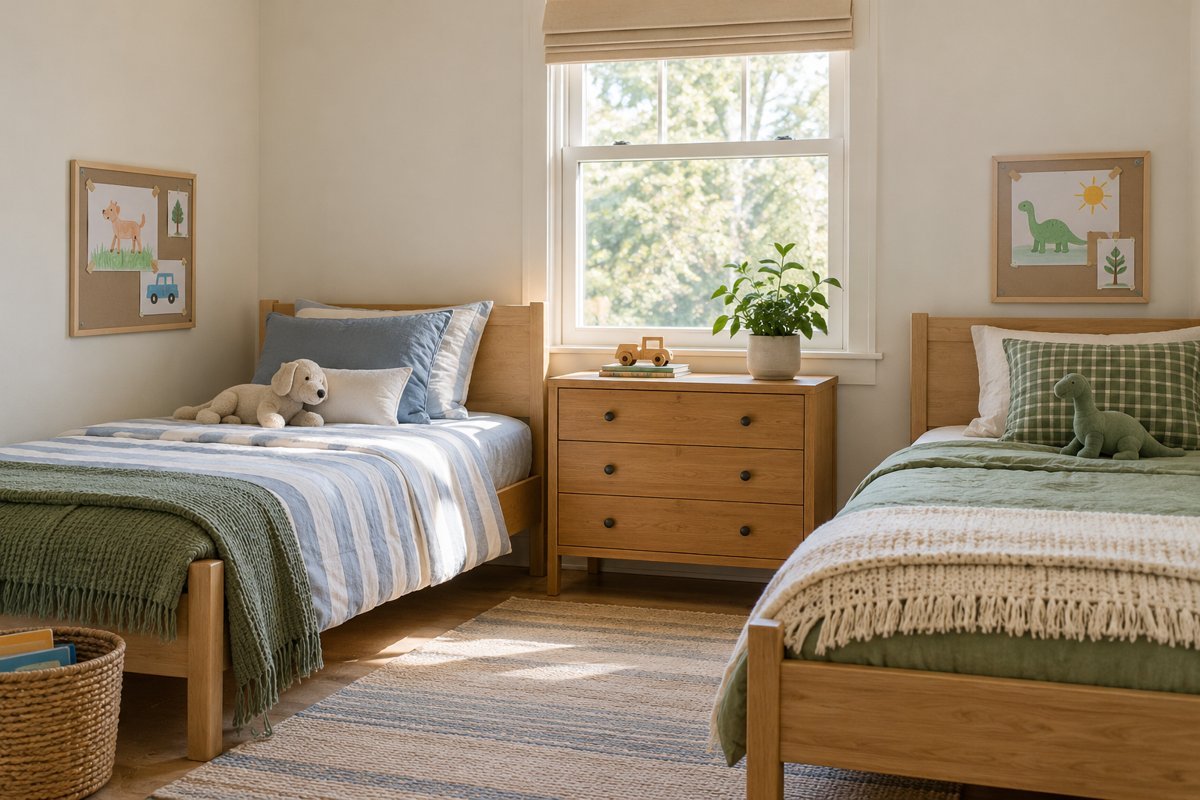
Picture a low bench against a spare wall, with two small book baskets underneath. A plain cushion covers the seat, and one soft pillow sits at each end. Each basket can hold a child’s current favorites, while the bench itself remains shared. The repeated shape of the baskets helps the corner feel orderly even when the book covers are colorful.
Use a bench designed for sitting and check that the baskets pull out easily. Keep the seat away from windows or other hazards for the children’s ages. Do not overfill the baskets; a smaller choice can be easier to browse and put away. Add useful reading light if the room needs it. If a bench would crowd the bedroom, two baskets near an existing chair can serve the same purpose.
7. A Wardrobe With One Side for Each Child
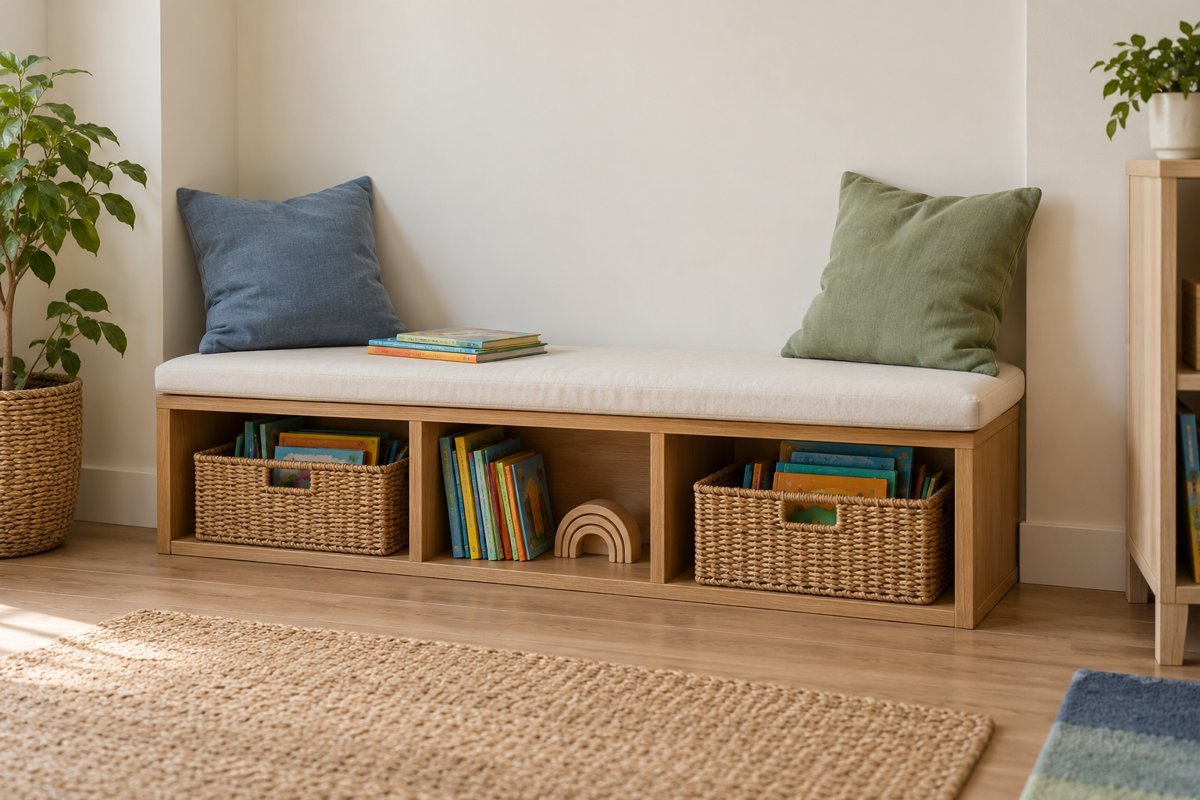
A shared wardrobe can feel fair with a clear division inside. Imagine a plain wardrobe opened to show two simple hanging sections, with blue and green storage boxes below. The outside stays calm and uncluttered. Each child gets a defined place for clothes, while a top shelf can hold shared or out-of-season items.
Arrange the inside for what the children can safely reach and use. Follow the wardrobe’s anchoring and loading instructions. Do not place tempting everyday items high enough to encourage climbing. Labels can help when children are still learning where things belong. Review the space when clothes sizes or storage needs change. Equal space does not always mean identical space, but the arrangement should be clear and agreed rather than based only on who has more things.
8. Two Beds Linked by a Quiet Striped Wall
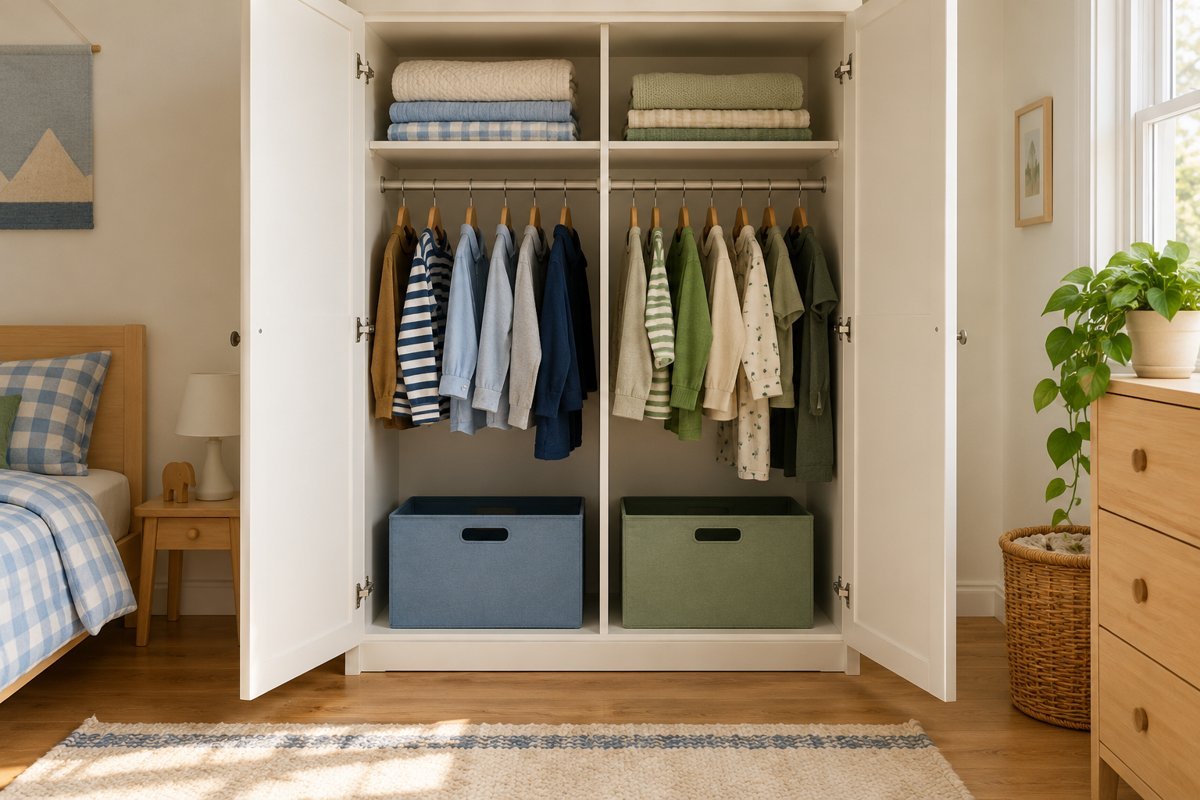
A muted striped wall can connect two different bed frames. Picture wide cream and pale gray stripes behind a white bed and a natural wood bed. Keep bedding simple, with one favorite color on each side. The wall gives the room a shared backdrop without requiring replacement furniture.
Test stripe width and color with samples before painting or choosing wallpaper. Avoid a pattern so busy that personal pictures and bedding feel lost against it. Check product directions and any rental restrictions before changing the wall. Arrange the beds for access first, then place the pattern around the actual layout. This is a useful approach when furniture came from different rooms or was chosen at different times and you want it to feel comfortable together.

9. A Shared Play Rug Between Two Separate Toy Bins
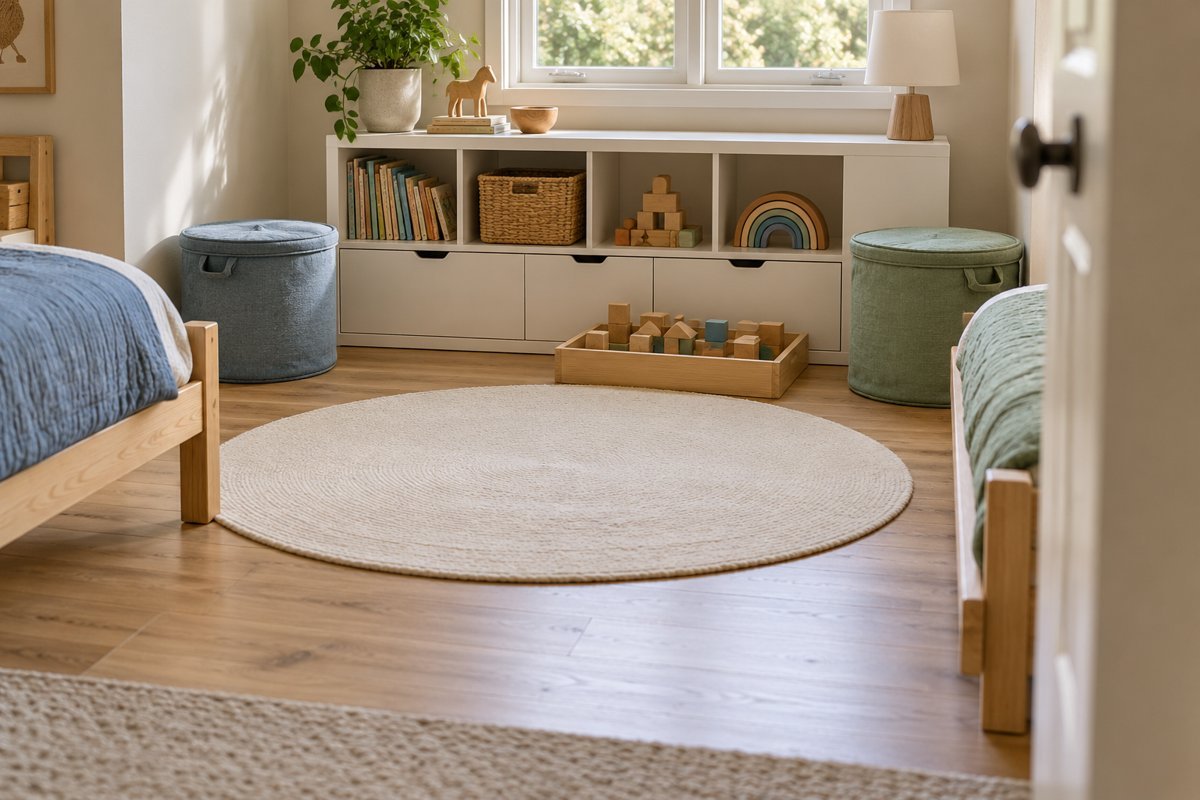
A small play area can sit between two personal storage spots. Imagine a plain round rug with one lidded toy bin on each side of a low cabinet. A few shared building toys are gathered in a separate open tray. The room has a clear middle for playing without treating every belonging as shared.
Choose age-suitable bins and follow any lid or hinge guidance. Keep the rug flat and clear of door swings. Talk about which toys belong to each child and which are shared; storage labels cannot settle that decision on their own. Leave enough floor space to use the toys, then put them away before bedtime. If the bins take over the room, rotate less-used items to another suitable storage area.
10. Two Bedside Pockets With Personal Nighttime Essentials
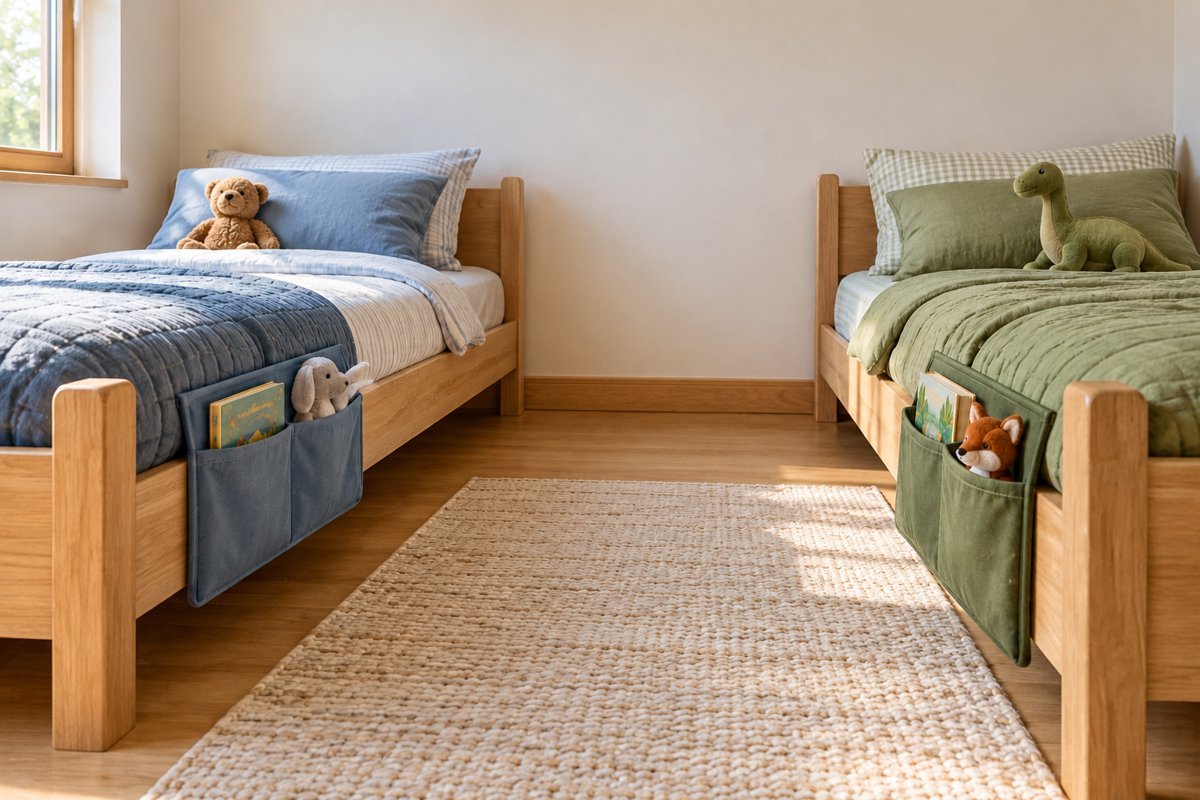
Where bedside tables will not fit, suitable bed pockets can give each child a small place for a book or soft toy. Picture two low beds with simple fabric pockets in different colors. The floor between them stays clear, and the wall behind is plain. A shared room can feel more personal through this small detail rather than through another piece of furniture.
Use a product suited to the bed and the child’s age, fitted according to its instructions. Avoid loose cords and overfilled pockets that sag into the sleeping space. Keep only light, appropriate items inside. If pockets are not suitable, a small nearby basket may work better. Bedside storage should help each child reach what they need without creating clutter or encouraging them to climb over furniture to retrieve something.
Plan for Two Real People
Start by asking each child what they want to keep close and what gets in their way. Draw the room with doors, windows, beds, and storage in place before moving furniture. Focus on clear routes and useful access rather than making the two sides perfectly equal in a photograph. Children of different ages may need different arrangements.
Try one change at a time and see how it works through a normal week. Notice whether items return to their places, whether both children can use the shared parts, and whether the layout still feels comfortable at bedtime. Adjust storage as interests change. A shared bedroom works best when each child has a clear place for personal things and the room remains easy for both to use.