

A retro accent wall can give a plain room a playful focal point. You might like a warm orange paint color, a small geometric pattern, or the simple shape of a painted circle. The trick is to let that wall lead while the rest of the room supports it. You do not need to turn every corner into a different decade. These retro accent wall ideas show ten clear scenes you can adapt to your furniture and space. Start with a color you already enjoy, test the scale of the design, and choose a finish that suits the wall and your home.
1. A Terracotta Lower Wall Behind a Cream Sofa
Picture the lower part of a living room wall painted terracotta, with warm cream above it. A plain cream sofa sits in front, and a small dark wood table repeats the warmth below. The straight color line gives the room a gentle retro feel without needing a detailed mural. Keep cushions in just one or two solid colors.
Test the line height with removable tape before painting, following the tape maker’s guidance for your surface. View it from the sofa and the doorway. A line that cuts awkwardly through nearby switches or frames may need adjusting. Use paint suited to the wall and follow preparation directions. If painting is not possible, a large terracotta artwork can bring a similar block of color to the same spot.

2. A Large Olive Circle Behind a Small Desk
A single olive green circle can give a compact desk a clear place in a room. Imagine the circle on a pale wall, with a simple oak desk centered in front of it. A cream chair and a dark task lamp keep the shapes easy to read. The rounded paint shape adds character without using the floor space needed for work.
Make a full-size paper outline before deciding on the circle’s width. It should relate to the desk rather than float like a small spot above it. Check the view when the chair is pulled out. Keep the desktop useful instead of adding several matching decorations. If you use a wall decal, test compatibility and removal guidance first; removable products can still affect some paint finishes.

3. A Narrow Mustard Stripe Beside a Bedroom Door
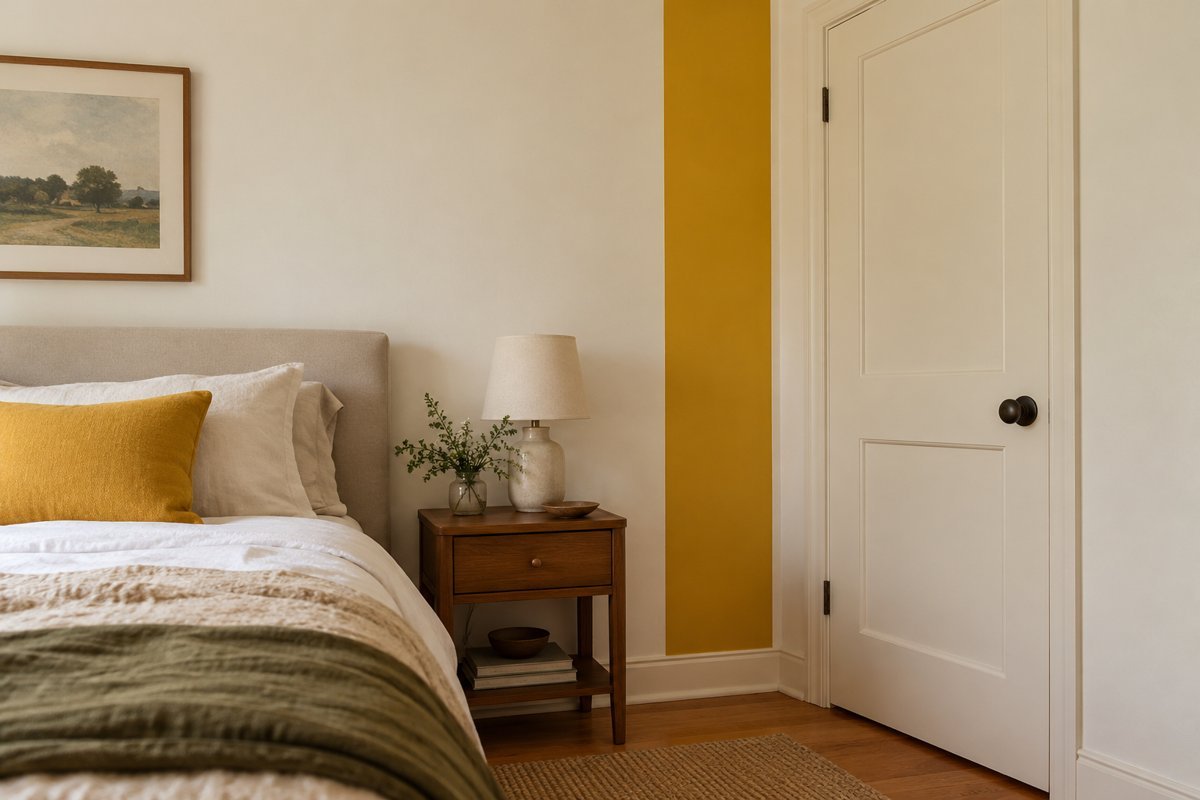
One vertical mustard stripe can turn a spare strip of bedroom wall into a feature. Picture it beside a plain cream door, with a small walnut-colored bedside table nearby. The stripe runs from the skirting to the ceiling, while the rest of the wall stays light. This gives a small room a bold detail without covering the main bed wall.
Try different stripe widths with paper before painting. Leave the door frame clearly defined so the color looks deliberate rather than like unfinished trim. Repeat the yellow only once, perhaps in a small pillow, so the room does not become too matched. Check the color in the evening as well as daylight. A warm yellow that looks soft in a sample can feel much stronger across a tall strip.
4. A Blue Geometric Wallpaper Panel Behind a Sideboard
A framed-looking panel of blue and cream geometric wallpaper can add pattern to a dining room. Imagine a plain sideboard beneath a wide rectangle of repeating squares and circles. Leave pale wall visible around the panel. The limited area gives the pattern a clear edge and makes the scene easier to balance with simple furniture.
Measure the panel against the sideboard and mark its edges before ordering material. Account for pattern repeats when working out how much you need. Follow the wallpaper maker’s preparation and hanging instructions, and check whether the wall is suitable. A separate properly supported decorative panel may offer another route where appropriate. Do not assume adhesive paper is safe for every rental wall. Keep the sideboard top mostly clear so the pattern remains the focus.

5. A Rust-Colored Wall With Three Cream Ceramic Plates
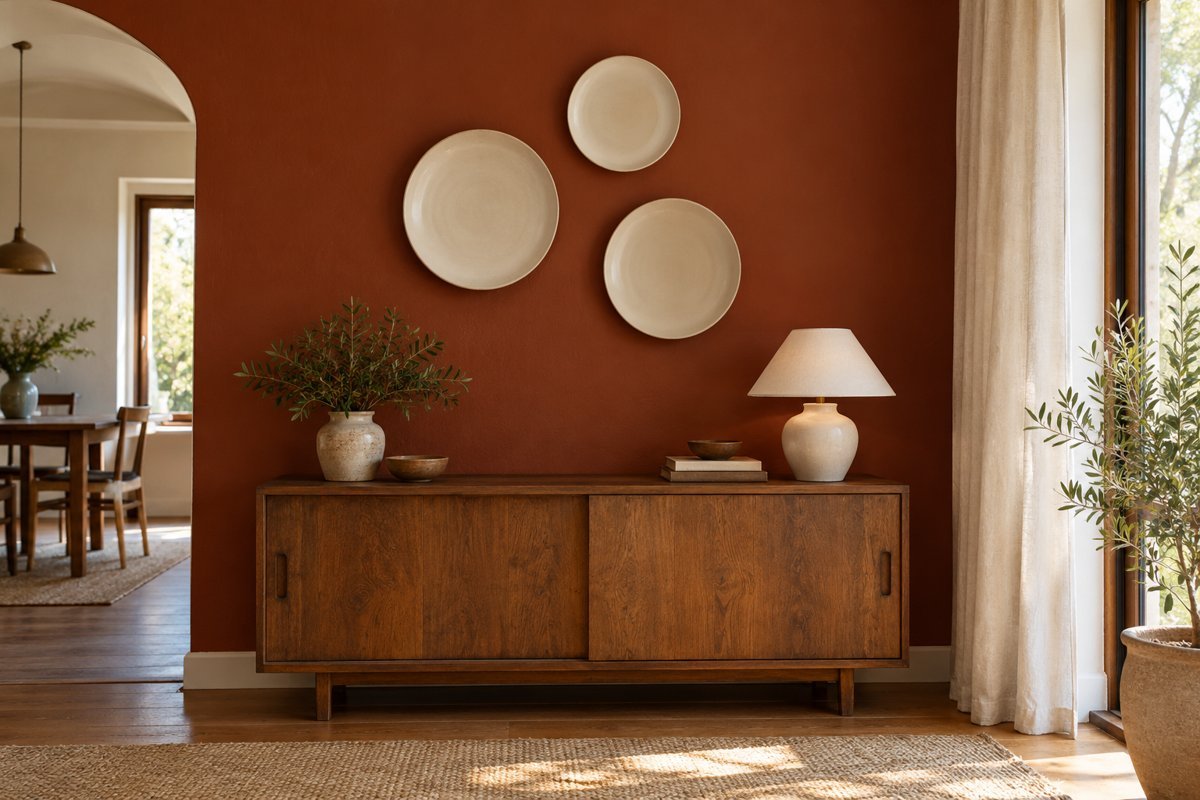
A deep rust wall can form a backdrop for three plain cream decorative plates. Picture the plates in a loose triangle above a low wooden cabinet. Their simple round shapes bring a retro rhythm without needing a busy print. A small cream lamp on the cabinet links the wall display to the furniture below.
Use proper plate hangers or fittings made for each piece, and keep the plates away from spots where they could be knocked. Test the layout with paper circles before making holes. Choose pieces in good condition and avoid placing heavy objects above seating. If plates are not practical, lightweight round artworks can create the same arrangement. The contrast between the dark wall and pale shapes does most of the work.
6. A Wide Dusty Pink Band Across a Reading Corner
A horizontal dusty pink band can wrap just one wall behind a reading chair. Picture a brown chair and a slim cream floor lamp in front of the band, with the wall above and below left pale. The soft color and straight edges give the corner a graphic feel. One dark frame on the adjacent wall adds a simple link.
Check where the band begins and ends in relation to windows, shelves, and the chair back. Mark it out and live with the outline briefly before painting. Keep the lamp useful for reading and leave room to walk around the chair. The painted feature should not lead you to squeeze extra furniture into the corner. If the pink feels too strong, try a more muted shade or a narrower band.

7. A Cream Wall With One Oversized Orange Abstract Print
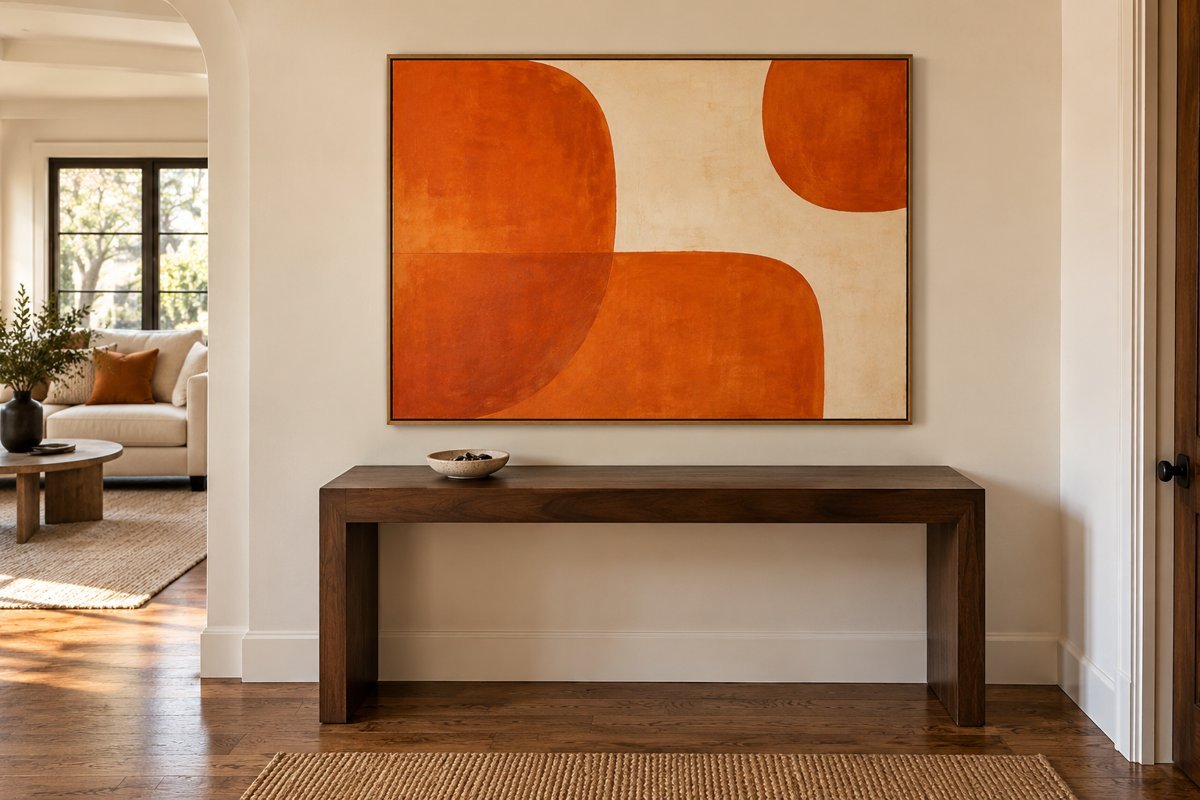
You can make an accent wall with artwork rather than paint. Imagine one large orange and cream abstract print over a plain dark wood console. The image uses broad rounded shapes instead of small details. Leave the wall around it clear. This gives the room a retro focal point that can move with you if your layout changes.
Choose an original work, a licensed print, or art you make yourself. Do not copy an image from another person’s blog. Test the frame size with paper and use suitable hanging fittings. Keep the console practical, with space for daily items. A larger single piece can be easier to arrange than a collection, but it still needs to suit the wall and the furniture below rather than fill every available inch.
8. A Deep Teal Wall Behind a Low Record Cabinet
Picture a low record cabinet against a deep teal wall, with a cream turntable and one small amber-colored lamp. The rich color sets off the cabinet’s wood grain. Keep the wall above free from extra shelves so the furniture and music setup become the scene. A plain rug can soften the room without introducing another strong pattern.
Give audio equipment the clearances and ventilation its maker requires. Keep records away from heat and direct sun, and store them in a suitable upright position. Plan cable routes before finalizing the cabinet location. If you do not play records, a simple low storage unit can give the same color-and-wood pairing. The scene should suit your life rather than require buying a collection just to complete a look.

9. A Small Checkerboard Feature Inside an Alcove
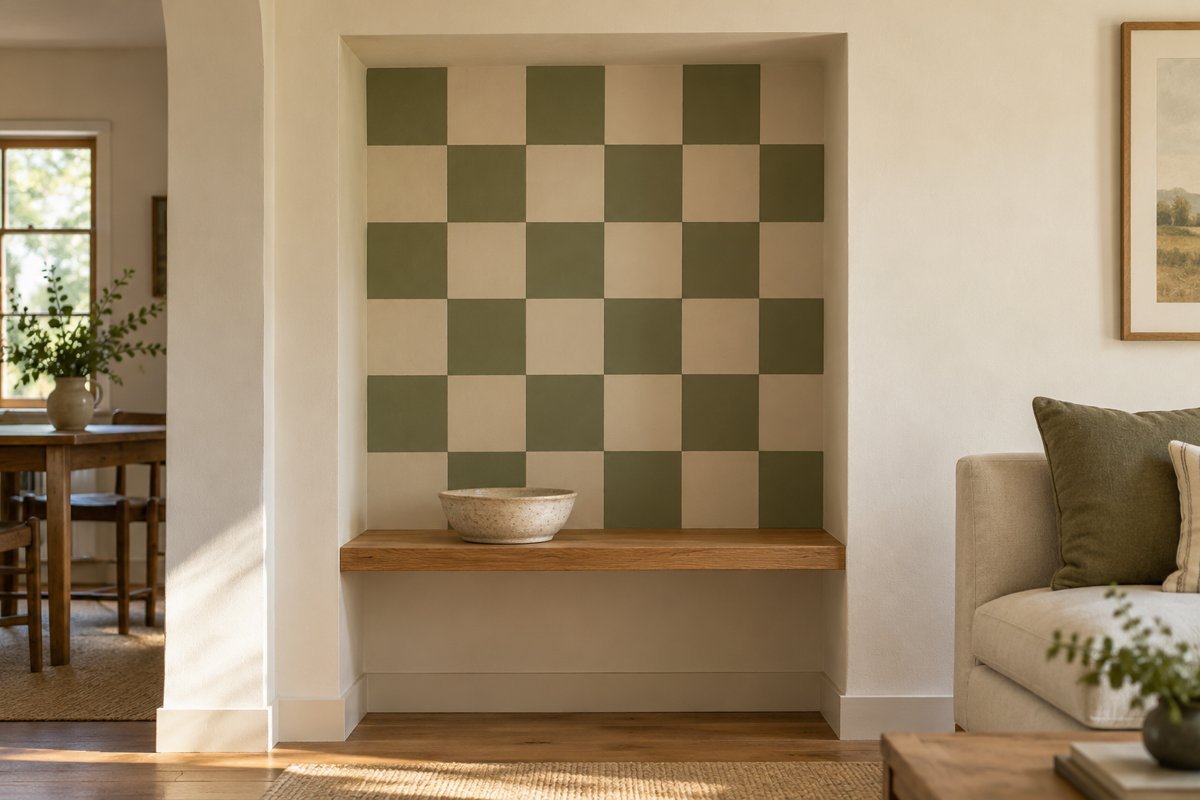
A small alcove can hold a bold checkerboard pattern without covering the whole room. Picture muted green and cream squares on the back wall of a shallow recess, with a plain wooden shelf below. One ceramic bowl is enough on the shelf. The surrounding cream walls give the pattern space and help the alcove feel like a clear feature.
Map the square size on paper first. Tiny squares can look busy from across the room, while very large ones may end awkwardly at the alcove edges. Plan the layout before choosing paint or wallpaper. Follow suitable surface preparation rather than painting over loose or damaged finishes. If there is no alcove, a framed checkerboard artwork offers a smaller version. Keep nearby fabrics plain to avoid competing patterns.
10. A Plum Entry Wall With a Pale Pink Round Mirror
A plum-colored entry wall can feel bold and welcoming with one round mirror in a pale pink frame. Picture a small wood shelf below it holding a single key dish. The rounded frame adds a playful note, while the deep wall makes the pale shape stand out. Keep the floor clear so the color is the main change.
Try both colors together in the entry’s own light before committing. Deep shades can look very different in a hall with little daylight. Mount the mirror securely with appropriate fittings and keep it clear of the door swing. Choose a shelf depth that leaves the route comfortable. If a shelf would project too far, use the mirror alone and put keys in nearby storage. The wall can be expressive while the entry remains easy to use.

Test the Bold Part Before Changing Everything Else
Choose one main feature: a color field, a painted shape, a pattern, or a large artwork. Then look for a color already present in your furniture or fabrics that can connect with it. Mark the proposed design at full size, or pin up a sample where you will see it. Check the room from its usual sitting and standing positions.
Follow the chosen product’s directions and check any rental restrictions before making changes. Do not treat peel-and-stick finishes as a promise of damage-free removal. Once the wall is finished, put back the main furniture before deciding what else it needs. You may find that a plain cushion or small lamp is enough. A bold wall is easier to enjoy when the surrounding room still gives your eyes somewhere to rest.