
Before you throw away a chipped plant pot or a sturdy old tray, take a second look. Some things can find a useful new place in the garden with very little work. The key is to choose items that can handle their new job, then give each one room to stand out. These reused garden decor ideas focus on simple displays rather than tricky building projects. You can start with one corner of a patio, porch, or small yard. Check each item for damage, choose a color or theme, and make a scene that is easy to care for after the first photo.
1. A Low Tray Grouping Three Mismatched Plant Pots
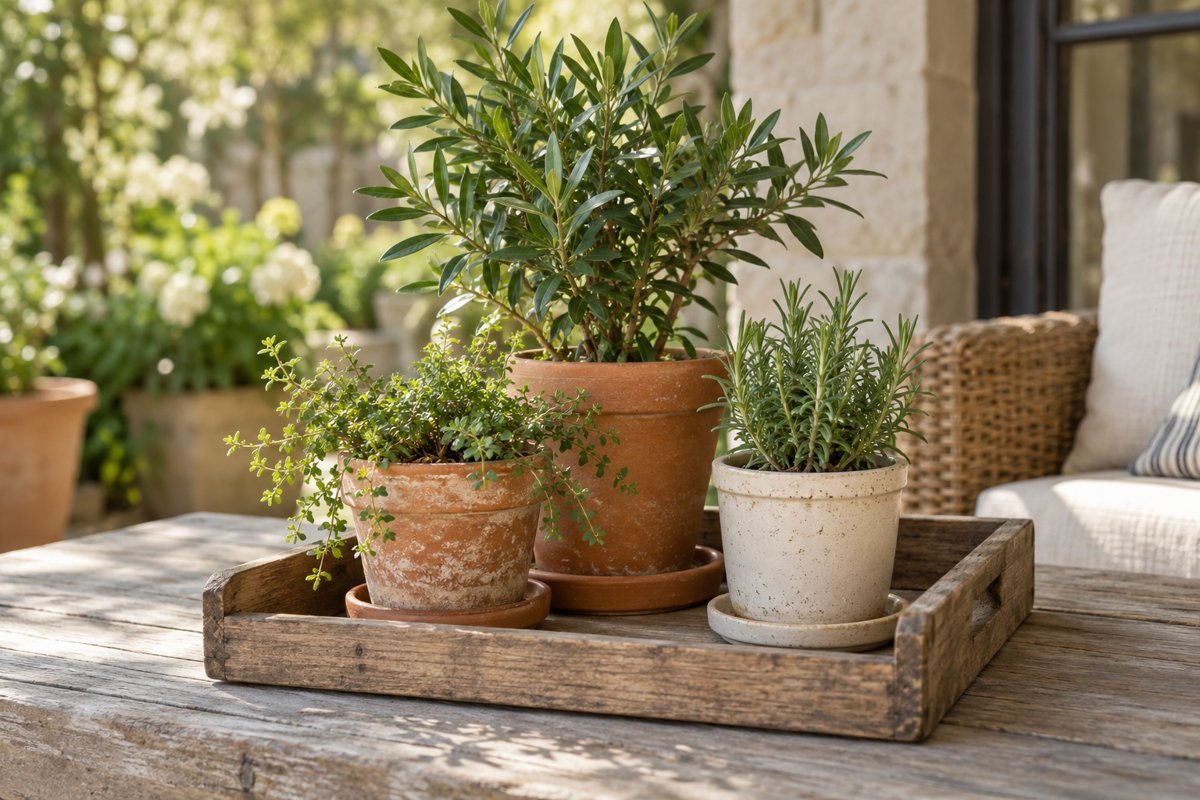
Picture a sturdy old serving tray on a sheltered patio table, holding three small plant pots. The pots can be different shapes, but a shared clay or cream color helps them feel connected. Place the tallest plant toward the back and leave the front edge open. The tray turns separate pieces into one clear display that is easy to move.
Use a tray that can hold the combined weight without bending. Each pot still needs its own suitable drainage and saucer; do not let water collect in the tray. Keep the display small enough to lift safely, or move the pots separately. If the tray is not weatherproof, bring it inside after use. A worn surface can add character, but loose flakes and sharp edges mean it needs a different plan.
2. A Cracked Clay Pot Used as a Decorative Garden Marker
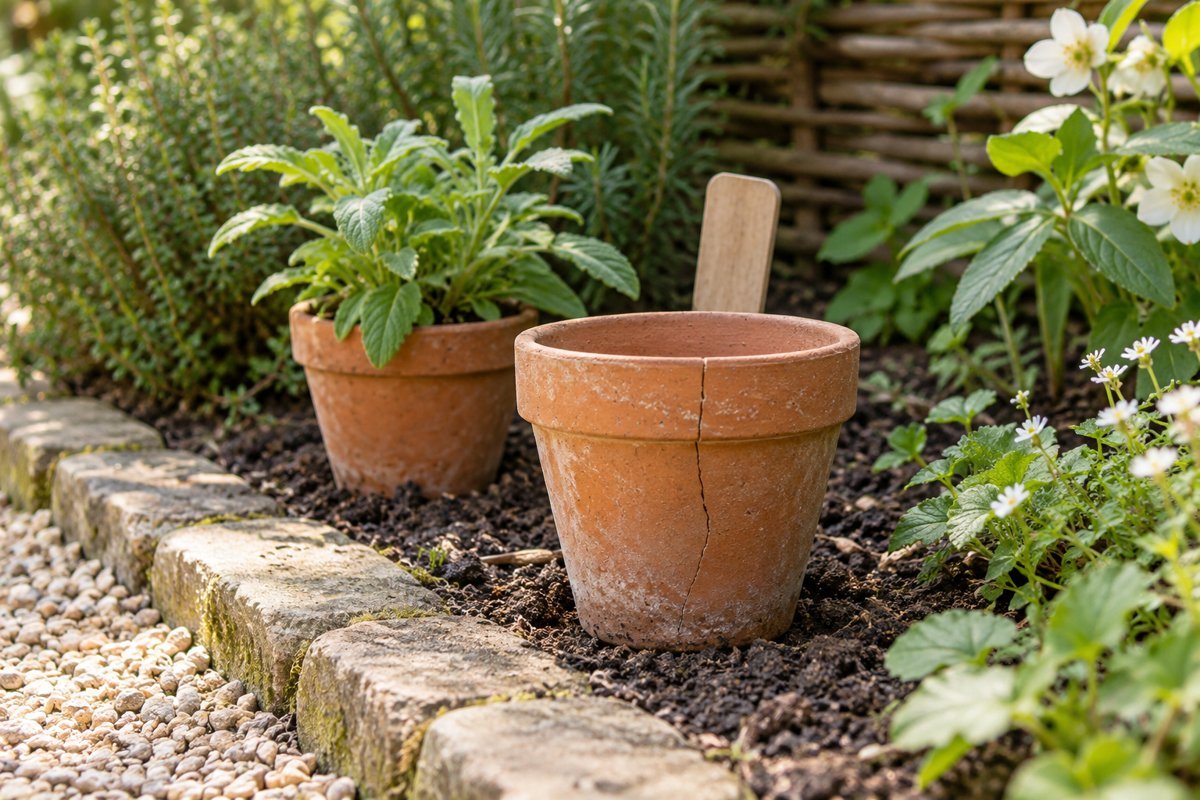
A clay pot with a small crack may be better as a marker than a planter. Picture it sitting upright beside a flower bed, with a simple wooden plant label in the soil behind it. A smaller intact pot nearby repeats its color. The two shapes make a modest feature without asking a weak container to carry wet soil.
Use only a piece that remains stable and has no exposed sharp edges. Do not break a pot on purpose to copy the look. If it is crumbling or unsafe to handle, recycle or dispose of it through a suitable local route instead. Place the marker off the path where feet and tools will not hit it. Keep the plant label readable so the scene has a useful job as well as a pleasing shape.
3. An Old Enamel Basin Holding Removable Nursery Pots
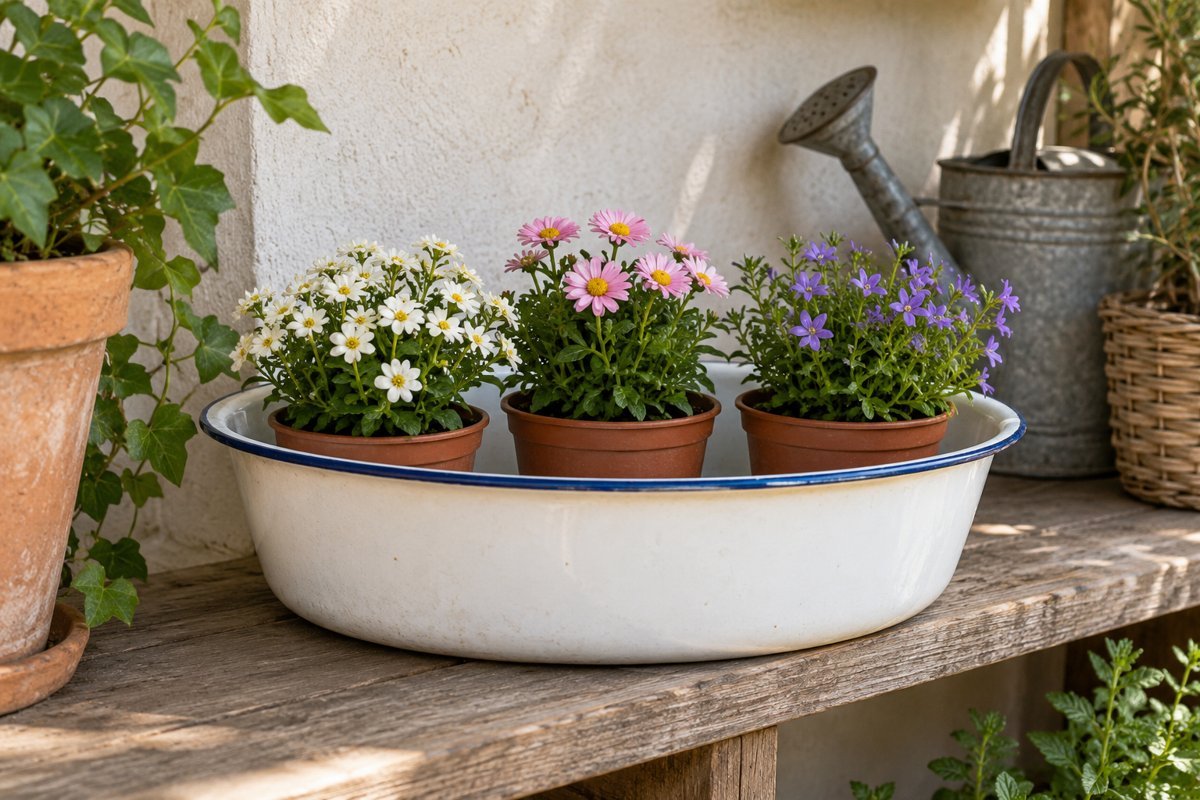
A sound enamel basin can become a colorful outer display for a few nursery pots. Imagine a white basin with a blue rim on a low patio shelf, holding small flowering plants. Keep the plant pots separate inside it so each can be removed for watering. The basin adds a vintage touch while the flowers provide most of the color.
Choose a basin with a stable base and no dangerous chips or rusted edges. Take the pots out to water and let them drain before returning them. Empty rainwater promptly if the basin is outdoors. A sheltered position makes the display easier to manage. This is a decorative container idea, not a reason to skip plant care. If the basin is large, leave enough space around the pots to reach them without pulling on the stems.
4. A Painted Garden Stool Beside a Plain Flower Pot
A small old stool can bring a cheerful color to a patio corner. Picture a faded blue stool beside a large plain pot of flowers. The stool holds only a light empty decorative bowl, while the plant stays on the ground. This gives the scene two heights without making the stool carry a heavy container.
Inspect joints and legs before using old furniture outdoors. A decorative stool is not automatically safe for sitting or standing on. Choose paint and preparation suited to the material and exposure, following product directions. If the finish is old and unknown, get suitable advice before sanding it. Set the stool on level ground and keep it out of the walkway. You can enjoy the shape even if it no longer has its original job.

5. A Pair of Reused Clay Saucers on an Outdoor Table
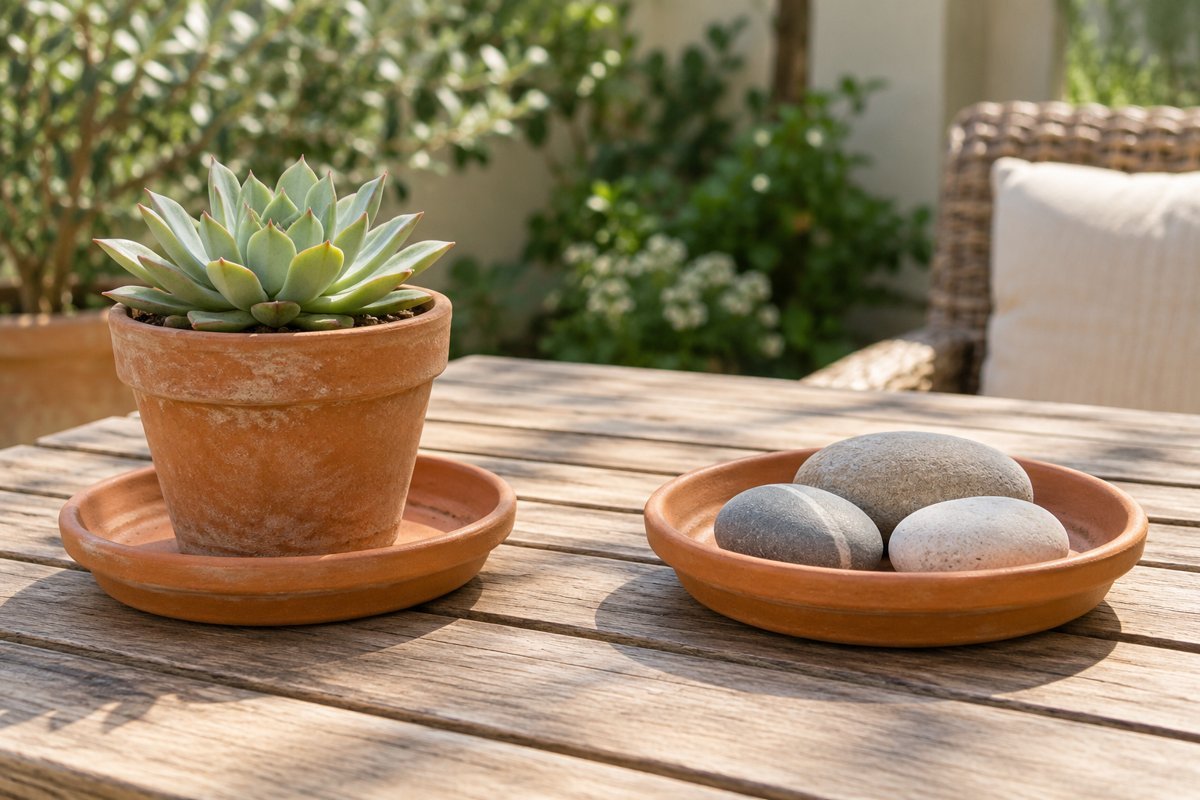
Two clean clay saucers can make a simple table scene. Picture one holding a small potted succulent and the other holding a few smooth decorative stones. Set them on a plain wooden table with space between them. Their repeated shape links the pieces, while the different contents keep the display from feeling too matched.
Make sure the saucer under the plant suits its pot and care needs. Keep the decorative saucer dry rather than letting it fill with rainwater. Choose stones large enough for the setting, especially if young children share the space. These are decorative pieces, not food dishes. If the table is used for meals, place both saucers on a tray so they can move away together when you need a clear surface.
6. A Sturdy Old Shelf With a Small Potting Display
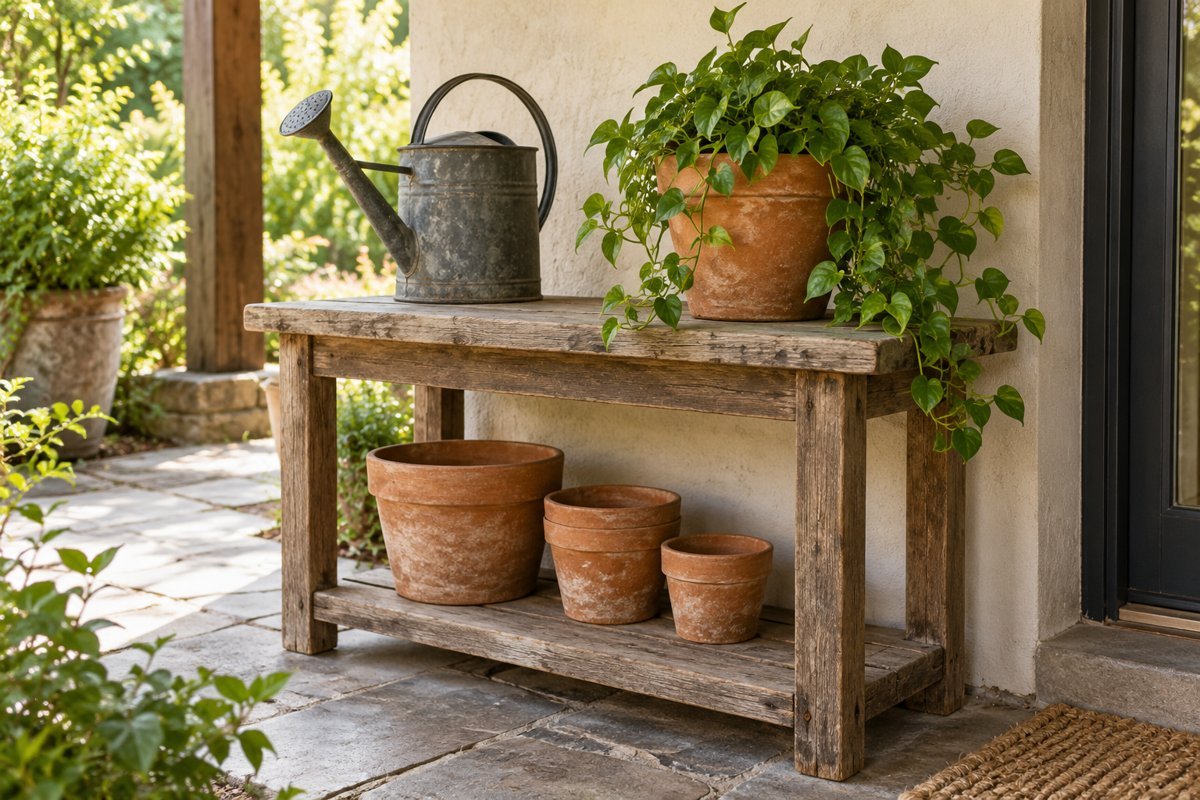
A low shelf that is suitable for outdoor use can give spare pots a tidy home. Imagine three empty clay pots grouped on the bottom shelf, with a watering can and a plant on top. Keep the colors simple: clay, green, and a little dark metal. The display looks purposeful because it holds things you actually use.
Check the shelf’s condition and load limits, and secure it as needed. Keep heavier pots low and leave enough room to lift them without catching the shelf above. Do not take indoor furniture outside and expect it to last through rain. A sheltered area may help, but materials still need to suit the conditions. Remove broken pots and unused clutter so the shelf stays a working part of the garden.
7. A Spare Paving Slab Beneath a Single Statement Pot
A leftover paving slab can give one plant pot a clear place on a gravel area. Picture a square gray slab with a round terracotta pot in its center. A small patch of low greenery nearby softens the hard shapes. The scene uses contrast rather than extra decorations: square and round, gray and warm clay.
Use a sound slab on a properly prepared stable surface. Do not leave it rocking or raised where someone could trip. A heavy slab may need help to move safely. Keep the pot’s drainage clear and check that water can escape without collecting below it. If the slab would interrupt a main path, choose another location. One well-placed pot often makes a stronger feature than several small pieces spread across the ground.

8. A Retired Watering Can Beside Patio Flower Pots
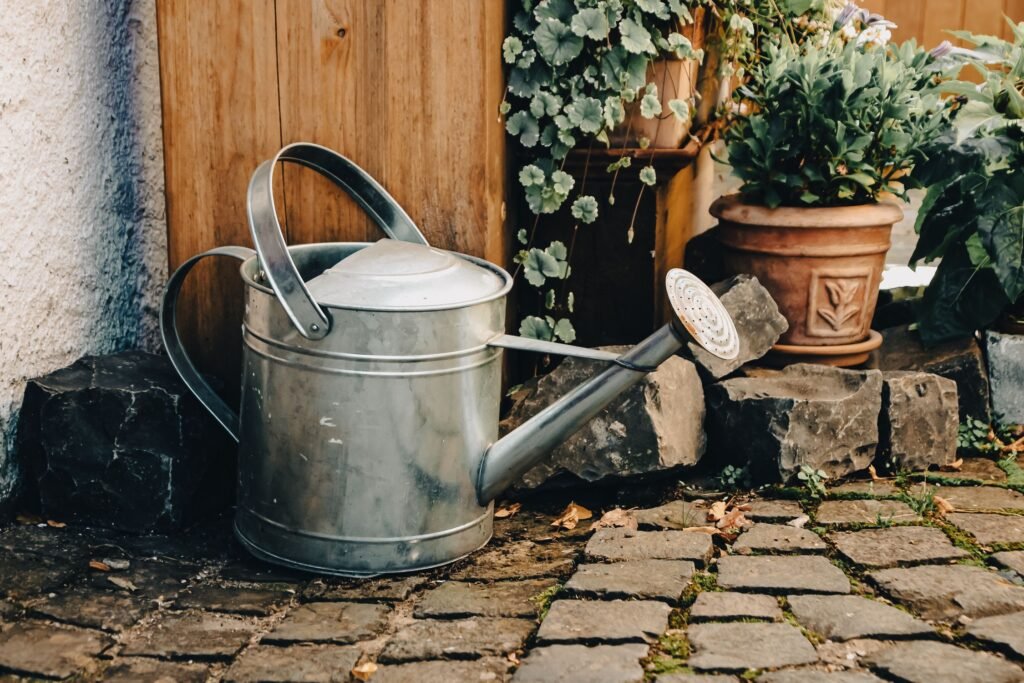
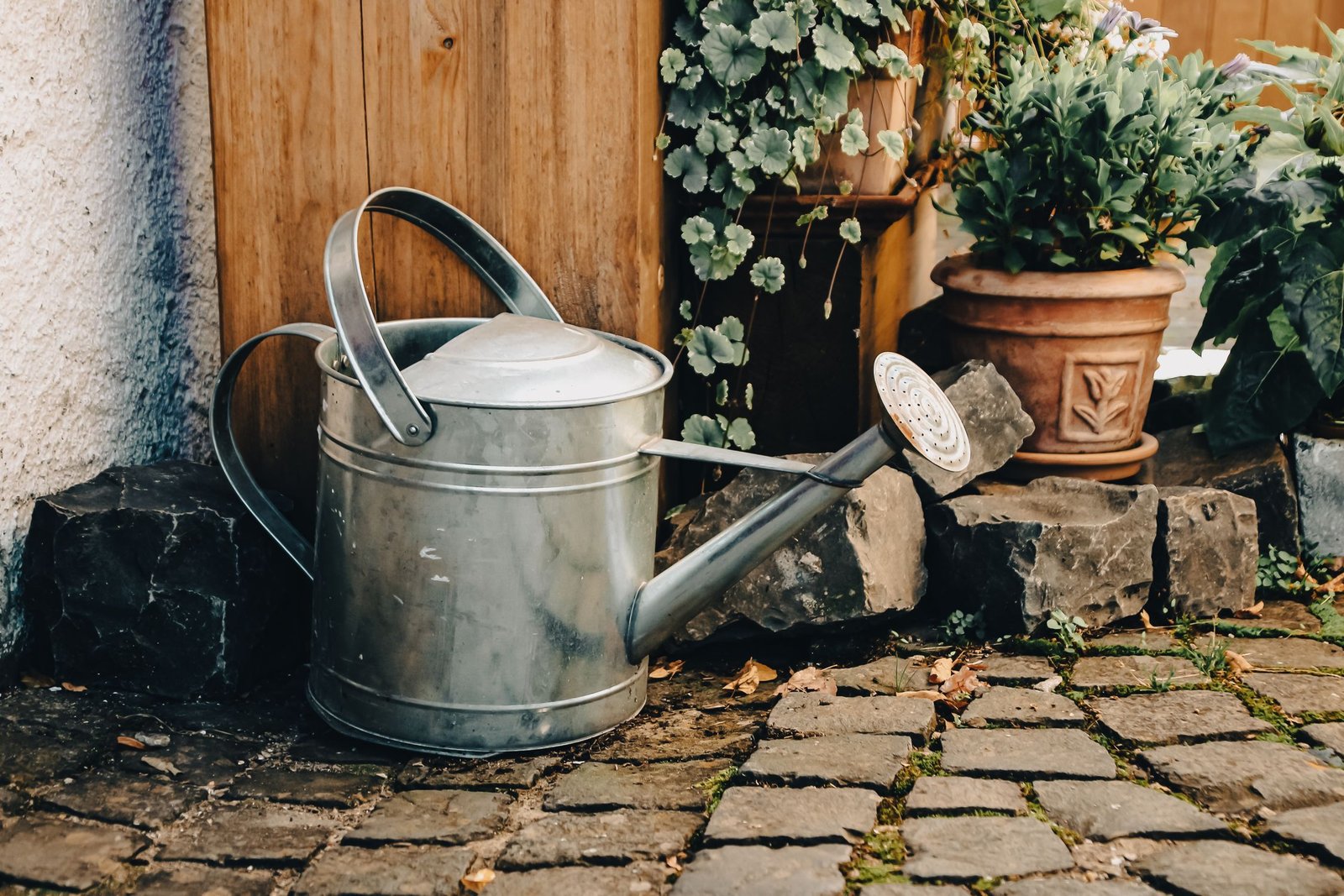
An old watering can can remain part of a garden even after it stops working well. Picture a pale metal can placed beside terracotta flower pots in a sheltered patio corner. Keep it empty, with its handle easy to reach. The flowers stay in their proper pots, so the can provides shape and a hint of garden history.
Check for rust, rough edges, and loose parts before displaying it. Keep the can where it cannot collect rainwater or block a door. If it is too fragile, let it go rather than trying to make it last outdoors. Choose one worn item for the scene and keep nearby pieces simple. This helps the display feel cared for instead of turning the porch into a place for things that no longer work.
9. A Wide Basket Used for Dry Garden Supplies Under Cover
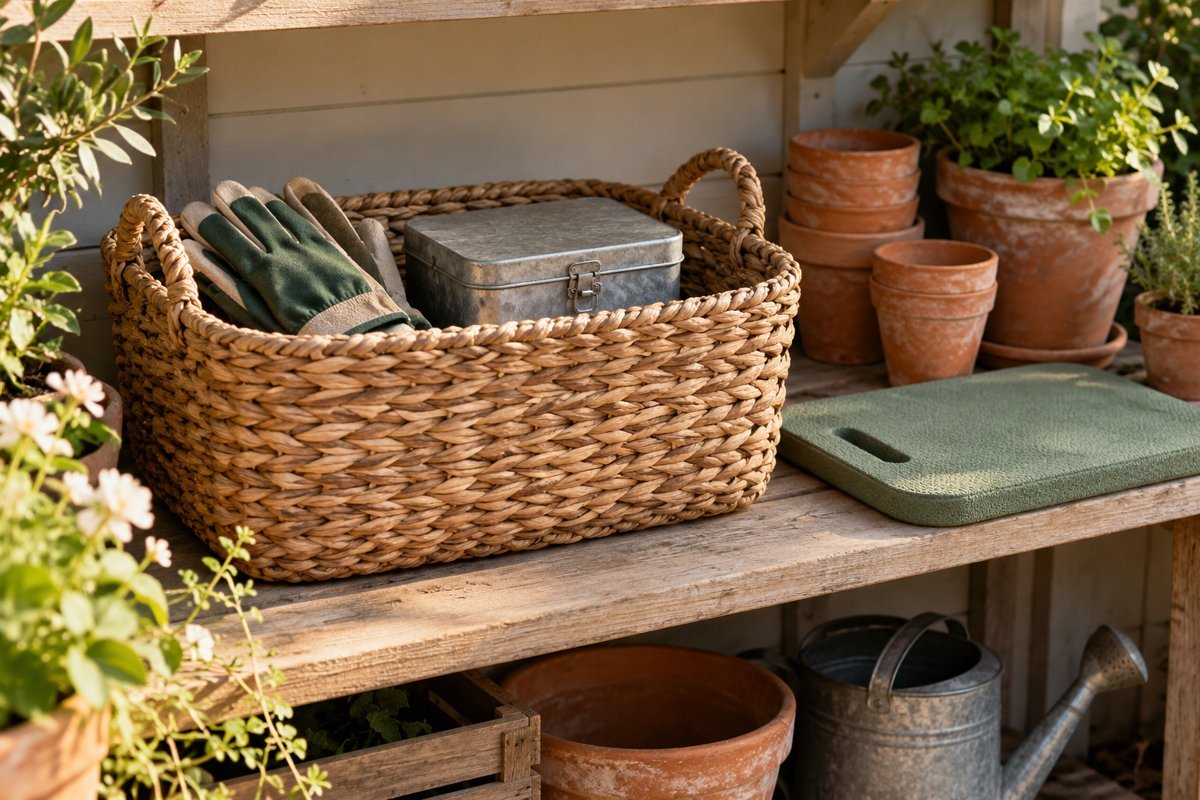
A sturdy basket can tidy a covered potting area. Picture it on a dry shelf with folded garden gloves, empty seed envelopes kept inside a closed box, and a small kneeling pad beside it. The woven texture adds warmth next to plain pots. Use the basket for light items so it is easy to bring indoors.
Keep it away from damp soil and rain, since many household baskets are not made for outdoor weather. Store seeds according to their requirements in a suitable dry location; the basket is only a way to gather the box and tools. Let gloves dry before putting them away. If the basket sags, sheds, or grows mold, choose a more suitable container. Reuse works best when the material still fits its new job.
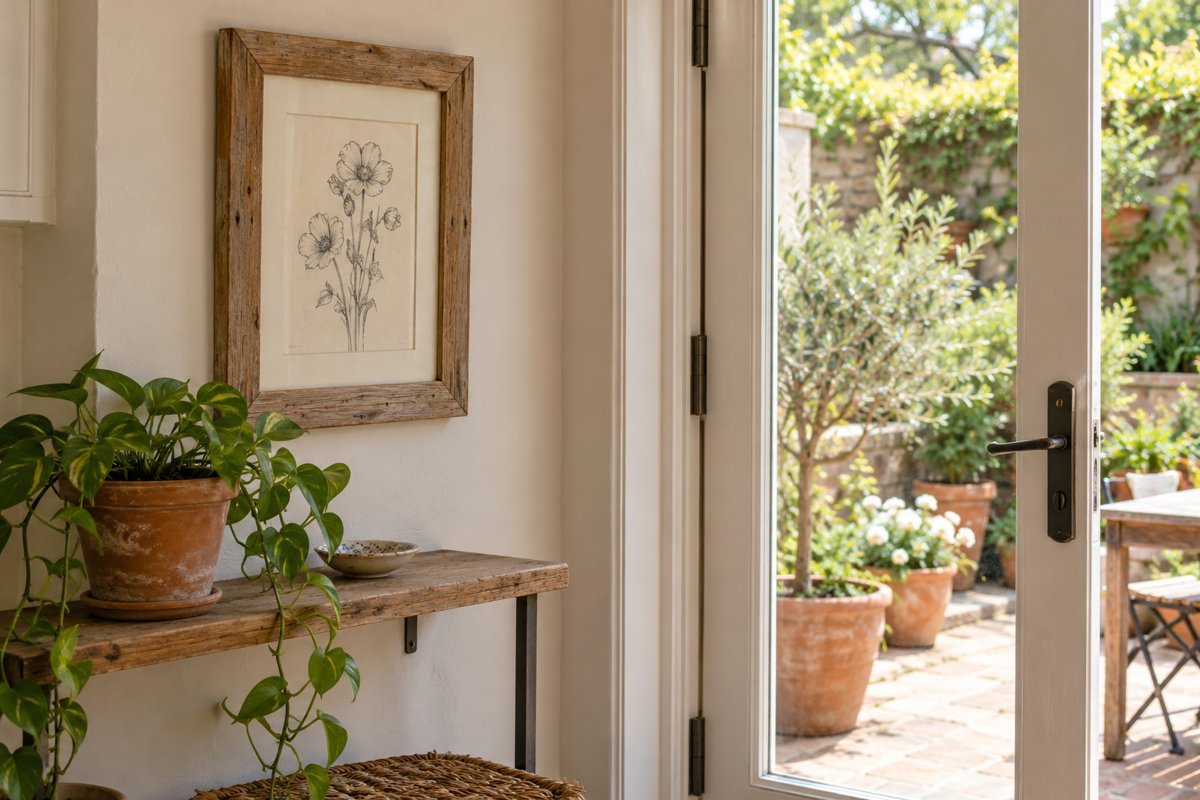
10. A Reused Picture Frame Showing a Garden Sketch Indoors by the Patio
You can bring the garden theme to the doorway without leaving delicate objects in the weather. Picture an old wooden frame with a simple flower sketch on the indoor wall beside the patio door. A nearby shelf holds one small plant. The frame’s warm wood links the indoor corner to the pots visible outside.
Check the frame’s backing, glazing, and hanging fittings before using it. Replace damaged parts appropriately or choose another frame. Keep it away from direct splashes and leave the door’s full swing clear. A drawing made by someone in the household can make the scene feel personal. There is no need to copy a picture from another blog. This is a useful option when your outdoor space is too small or exposed for extra decor.
Choose the New Job Before You Start
Gather just a few items and decide what each will do. Is it a plant container, an outer display, a storage basket, or simply a decorative shape? The job determines how strong, clean, and weather-resistant it needs to be. Avoid containers with unknown chemical histories for planting, and do not assume that every household item belongs outside.
Try one display first and watch what happens after watering or rain. Check for standing water, wobbling furniture, peeling surfaces, and anything that makes care harder. Move or remove items that do not work. Reusing a piece can be satisfying, but it should not create a new maintenance problem. A simple arrangement made from sound materials is easier to enjoy through the season.