
A hallway has a busy job. It connects rooms, carries bags and shoes, and gives visitors a first look at your home. That can make it tricky to decorate, especially when the space is narrow. The best starting point is the route through it. Keep that route comfortable, then add details that suit the walls and corners you have left. These hallway decor ideas show ten different scenes, from a simple painted end wall to a small place for keys. You do not need to use them all. Choose one that solves a real need and makes the hall more pleasant to pass through.
1. A Soft Blue End Wall With One Framed Print
An end wall can give a long hallway something clear to lead toward. Picture a soft blue wall with one wide landscape print in a plain oak frame. Keep the side walls warm white. The color marks the end of the route without using any floor space, which makes it useful when a console or bench would feel cramped.
View the wall from the entrance before choosing the print size. A very small frame can disappear at the far end of a hall, while a large one may crowd door trim. Test a paper outline first. Try a paint sample under the hall’s own lighting, too. If painting is not an option, one larger blue-toned picture can give a smaller version of the same effect.

2. A Slim Key Shelf Beneath a Small Round Mirror
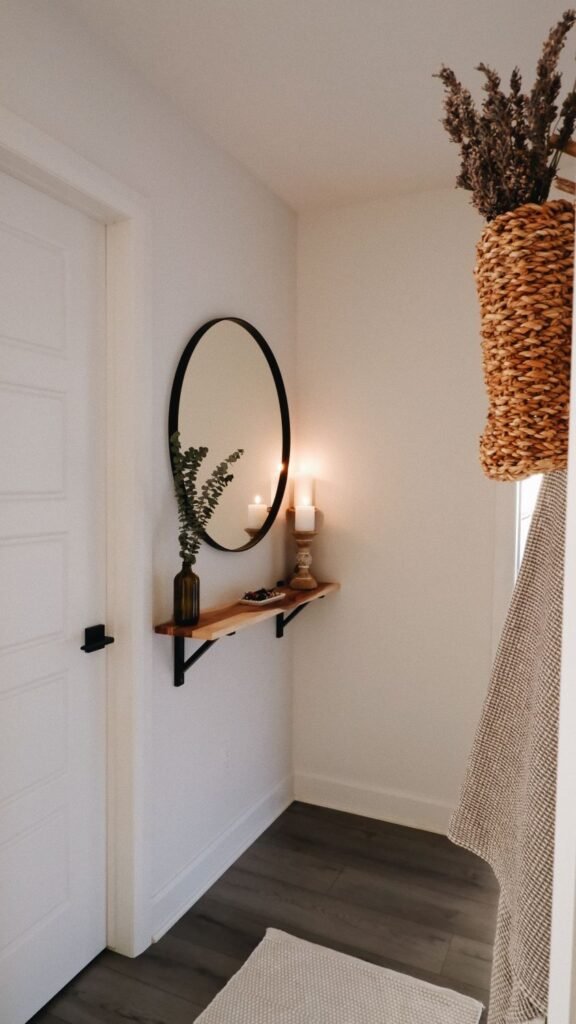
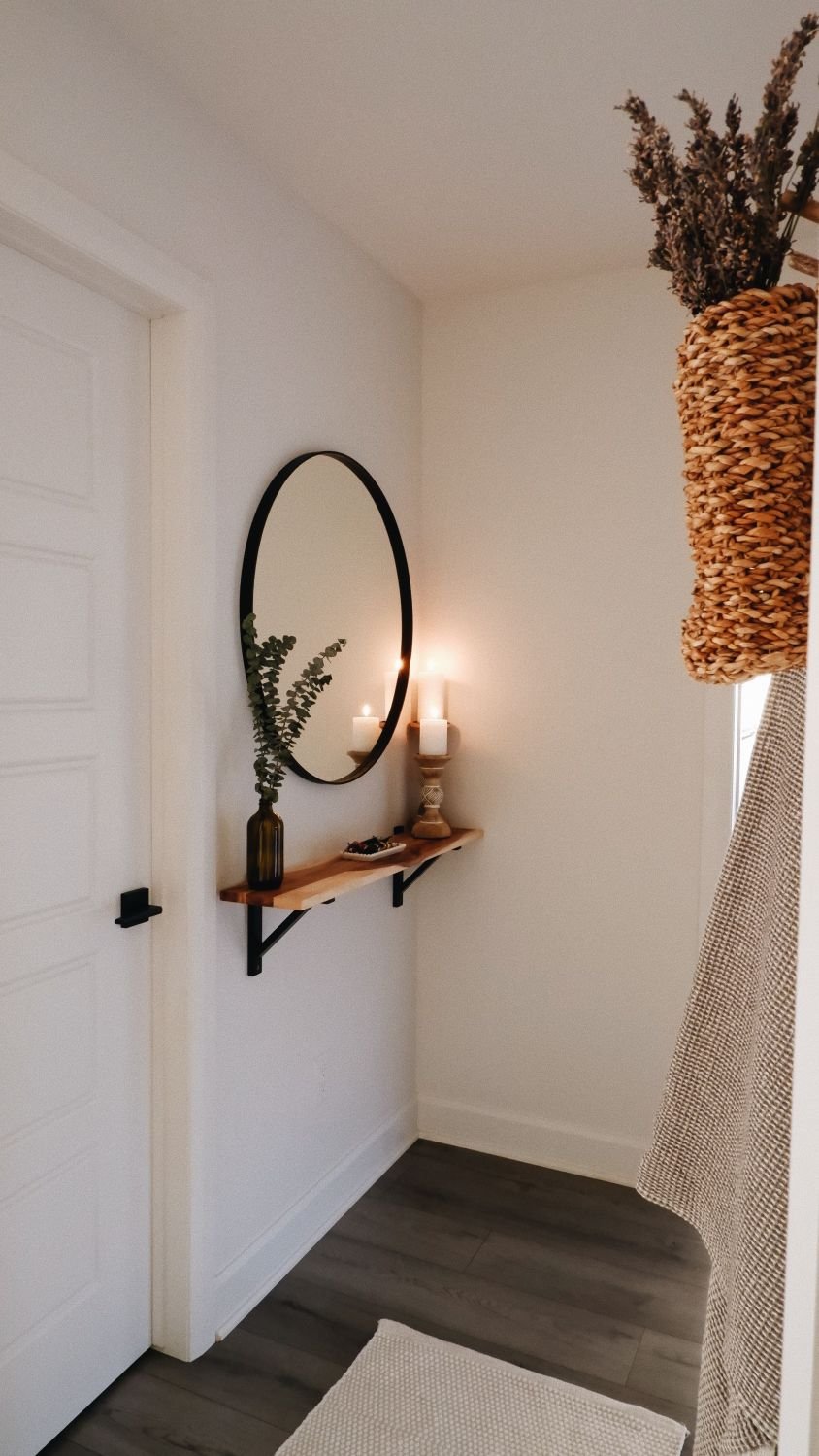
Picture a shallow wooden shelf with a small round mirror above it. A small dish or a clear spot on the shelf holds keys. A narrow vase can add a little greenery; choose a closed box instead if you need somewhere for spare change. The shelf sits on a short wall near the door, away from the main walking line. This creates a useful landing spot without bringing a full table into a narrow hall.
Choose shelf depth by the space available, not by how many objects you want to display. Check the door swing and the place where bags naturally pass. Mount the shelf and mirror with fittings suited to the wall and their weight. Keep the dish small enough to lift with one hand. Sort mail elsewhere rather than letting this tiny surface become a pile that reaches beyond its edge.
3. A Muted Stripe Runner Along a Plain Corridor
A low-profile striped runner can link the length of a hall. Imagine narrow cream and rust stripes between pale walls and simple wooden doors. The warm color adds interest while the rest of the scene stays quiet. Leave a visible strip of floor on both sides so the runner feels placed rather than squeezed in.
Use a runner suited to the floor and foot traffic, with an appropriate non-slip backing or underlay. Check every door over it before settling on the position. The edges should lie flat, and the length should not create an awkward stopping point at a threshold. If a rug keeps catching or sliding, remove it and use color on a wall instead. A clear, steady walking surface matters more than adding softness.

4. A Narrow Shoe Cabinet With a Single Ceramic Bowl
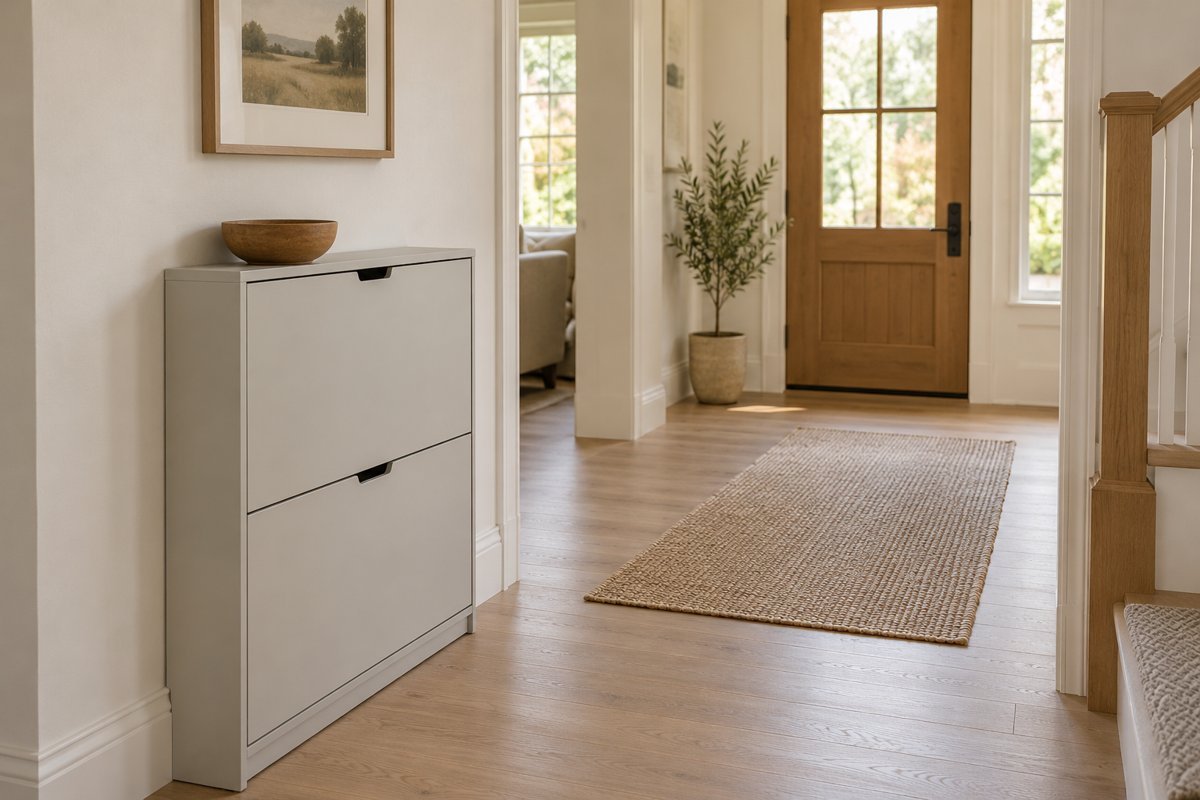
A slim closed shoe cabinet can make an entrance feel calmer. Picture a pale gray cabinet against a white wall, with one warm brown bowl on top. A simple print hangs above, leaving the cabinet’s surface mostly clear. Closed fronts make the scene feel tidier than several pairs of shoes lined up along the floor.
Check that the cabinet suits the shoe sizes you use and can open fully in the hall. Follow its anchoring instructions, especially for tall or shallow designs. Keep only the pairs used most often here, and store the rest elsewhere. A decorative bowl should not block opening flaps or drawers. If the cabinet would narrow the route too much, use storage in a nearby room and keep the hallway free.
5. A Short Peg Rail Above a Washable Wall Panel
A peg rail can give daily bags a home without filling the whole wall with hooks. Imagine a short wooden rail above a muted green lower wall, with one tote and a light jacket hanging from it. The upper wall stays cream. This simple color split makes the area feel planned, while the rail adds a useful task.
Choose fixings that can carry the items you plan to hang, and set a limit on how many belong here. Check that bags do not hit people passing or trail across a seat below. A washable wall finish can help where coats rub, but follow the paint maker’s care guidance. If hooks are near a door, test the full swing. Keep seasonal extras in the main wardrobe rather than adding another row.

6. A Low Bench in a Wide Hall Recess
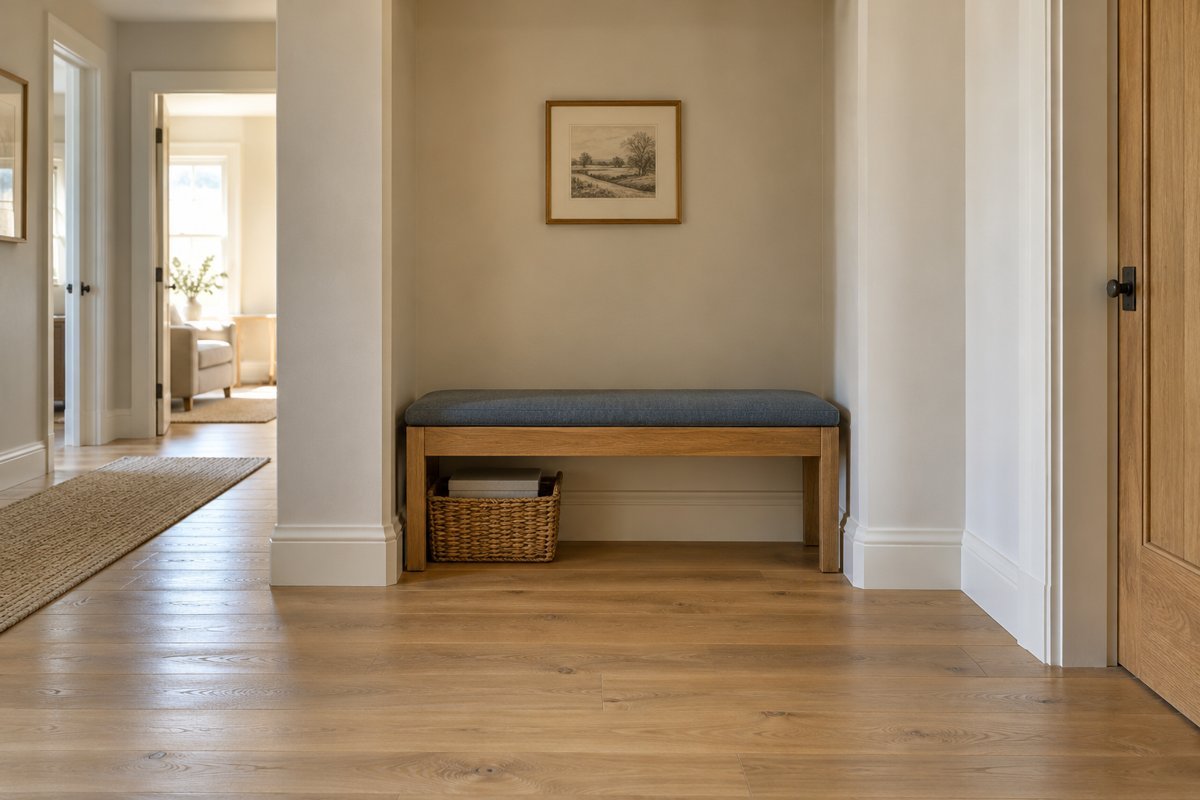
A recess can hold a seat without pushing furniture into the main route. Picture a simple oak bench with a plain blue cushion, set fully inside an alcove. One basket beneath it holds shoe-care items in a closed box. A small framed drawing on the back wall finishes the scene without needing more objects on the seat.
Measure the recess and check skirting, sockets, and door trim before choosing a bench. Leave enough room to sit and stand comfortably. Use a bench made for seating and a cushion that stays in place. Keep the basket from sticking beyond the front legs. If the recess is too shallow, make it a wall-art spot instead. The bench should make putting shoes on easier, not turn the hall into an obstacle course.
7. A Pair of Simple Prints on a Stair-Side Wall
Two related prints can bring interest to the wall beside the foot of a staircase. Picture soft black line drawings in matching cream frames, hung side by side on a pale wall. Keep them on the flat, easily reached section rather than stretching a display up the entire stairwell. A small repeated color gives the pair a clear link.
Make paper templates and check the view from the door and the bottom step. Keep frames out of the space needed for hands and shoulders. Use proper picture fittings and avoid placing fragile pieces where bags or carried laundry may knock them. There is no need to fill every part of a stair wall. Two carefully placed pictures can give you a personal detail while leaving the route visually calm.

8. A Warm Ceiling Light Above a Clear Hallway
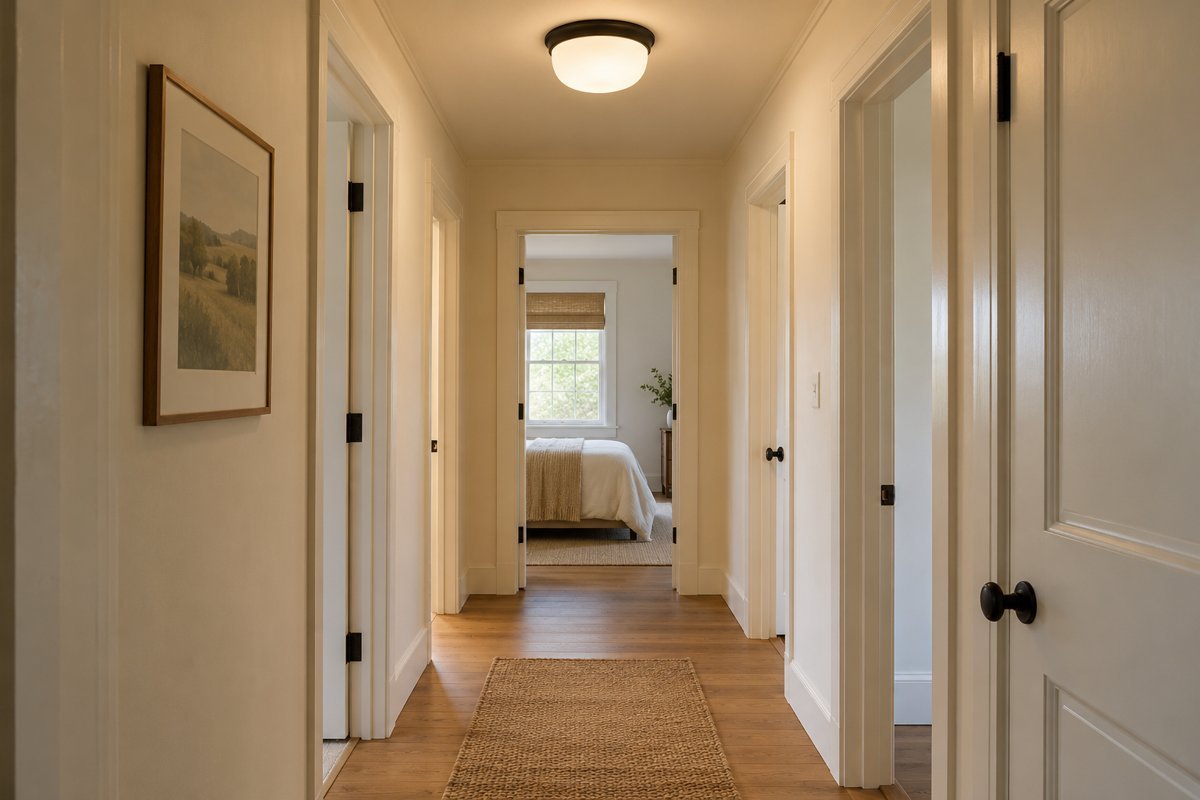
In a hall with little wall space, the light itself can be the main detail. Picture a compact flush ceiling fitting with a simple opal shade, warm white walls, and dark door handles. The repeated dark accents give the room shape. With no extra furniture, the hall feels finished through a few connected choices.
Choose the fitting for useful light and suitable ceiling clearance first. A low ceiling may call for a close-fitting design rather than a hanging pendant. Any fixed electrical work should be handled by a suitably qualified person. Check how the light reaches doorways and changes of level. A decorative fixture should still help people see clearly. Keep the floor and nearby switches easy to use rather than adding pieces simply to match the light.
9. A Small Notice Board Beside the Kitchen Door
A hallway can help a household stay organized without looking like an office. Picture a narrow cork notice board in an oak frame beside the kitchen door. It holds a weekly plan and two small notes. A pale yellow wall gives the scene a friendly feel, while the limited board size keeps papers from spreading across the hall.
Give the board a clear purpose, such as the coming week’s plans. Remove old papers when you add new ones. Keep private information away from public view if visitors pass this spot. Use safe, suitable ways to attach notes for your household. Place the board where someone can read it without blocking a busy doorway. This makes the hall useful while keeping information in one contained place.

10. A Tall Mirror on a Clear Side Wall
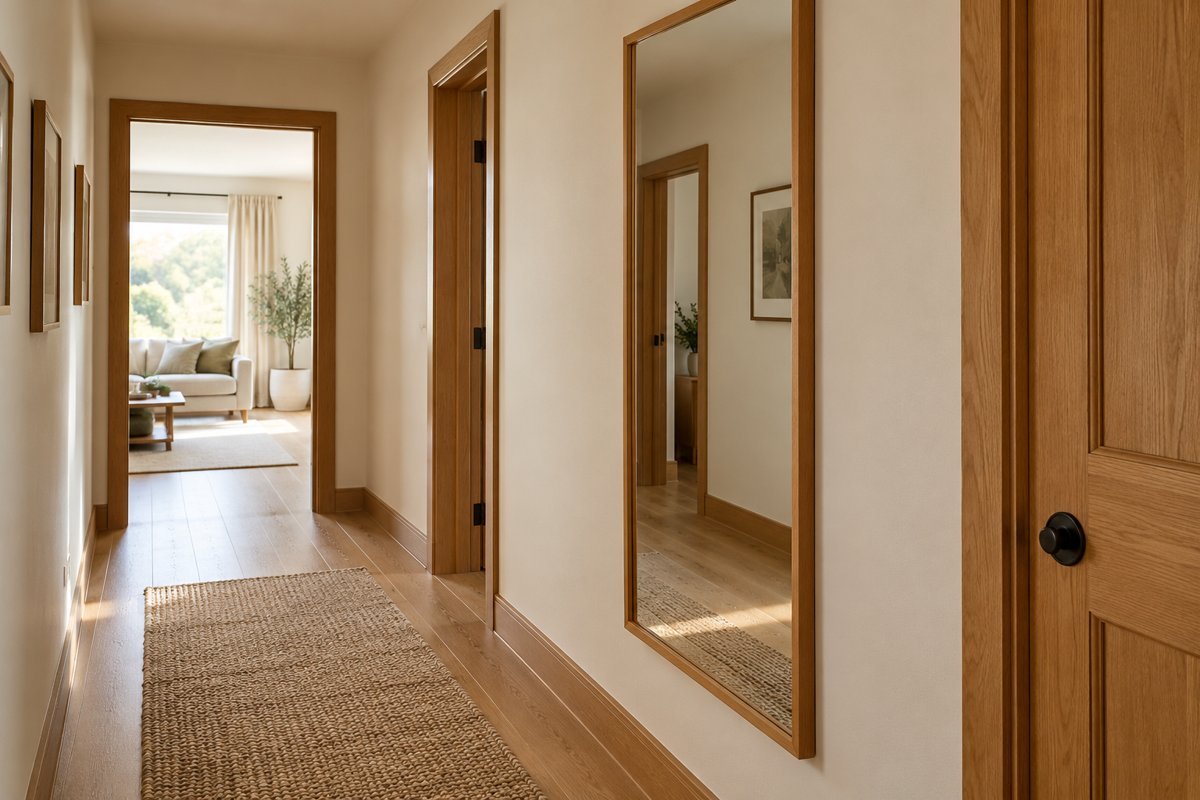
A full-length mirror can make a hall useful for a quick check before leaving. Picture a simple wood-framed mirror on a side wall, with no table below it. The frame repeats the tone of the doors. A clear floor lets the mirror’s long shape stand out and gives someone room to step back.
Use a mirror suited to the location and secure it in line with its fitting guidance. Do not leave a heavy mirror resting loosely where it can be knocked. Check its reflection from the entrance; it may show a pleasant view or a storage area you would rather not highlight. Keep it clear of door swings. If there is no room to stand back, a smaller mirror near the exit may serve the same need.
Choose One Useful Change
Walk through the hall carrying what you usually bring home. Notice where a bag catches, shoes gather, or keys get lost. That gives you a better starting point than choosing furniture from a photo. Mark out any proposed piece on the floor, open nearby doors, and try the route again before buying or moving anything heavy.
If there is little spare floor space, work with wall color, art, or suitable lighting. In a wider area, one storage piece may solve more than several small decorations. Keep the surfaces easy to clear and the floor easy to clean. After a week, remove anything that keeps getting in the way. A welcoming hallway should make moving through your home feel straightforward.