

A vase does not always need a large bunch of flowers to make a room feel finished. Sometimes its outline, color, or texture is the detail worth showing. The challenge is giving it a place where it can be seen without filling a useful surface. These modern vase styling ideas pair different shapes with simple settings around the home. They are decor concepts rather than recommendations for particular products. Start with a sound vase you already enjoy, check its size and stability, and try one clear arrangement. Leave enough room around it for daily use and let the shape do some of the work.
1. A Short Black Vase on a Pale Wooden Console
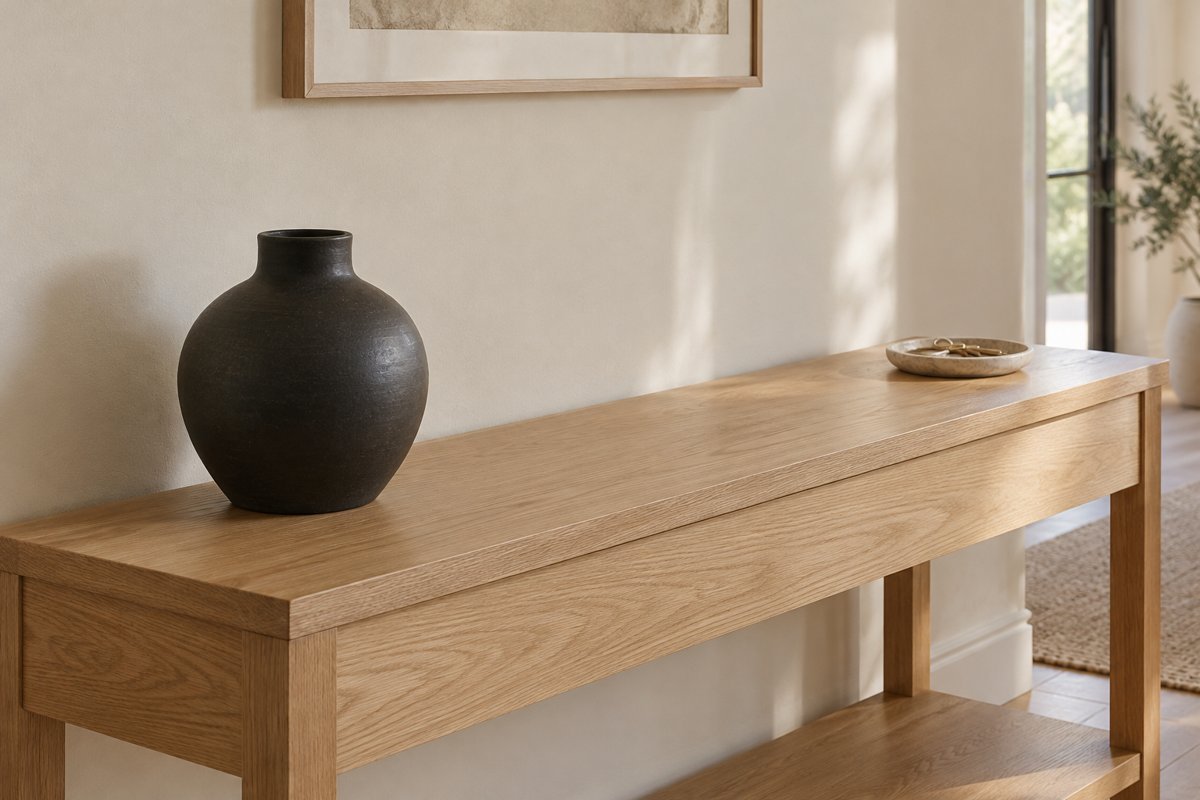
Picture a short matte black vase at one end of a pale wooden console. Its rounded body has a simple narrow opening, and the wall behind is warm cream. Leave the vase empty so its dark outline is easy to see. A small flat key dish can sit farther along the console without crowding the display.
Choose a stable piece that fits fully on the surface. Check the view from the doorway and remove nearby dark objects if they blend into one group. An empty vase is a good option when flowers would block a mirror or picture. Keep fragile pieces away from busy edges. If the console is used for bags, move the vase to a quieter shelf rather than asking everyone to avoid a delicate object each day.
2. A Tall Cream Cylinder Beside a Low Brown Bowl
A simple height contrast can make two plain pieces interesting. Imagine a tall cream cylindrical vase beside a low brown bowl on a sideboard. Keep a clear gap between them. The light and dark colors define each shape, while the sideboard’s plain top gives them a calm setting.
Test the full height against any artwork above. A tall piece should not hide the lower part of a picture or interfere with a lamp. Use an empty vase or a few suitable stems if the container is intended for them. Do not add a third object simply to meet a styling rule. Two pieces can be enough when their shapes and scale relate comfortably to the surface below.

3. A Blue Glass Bud Vase on a Small Dining Table
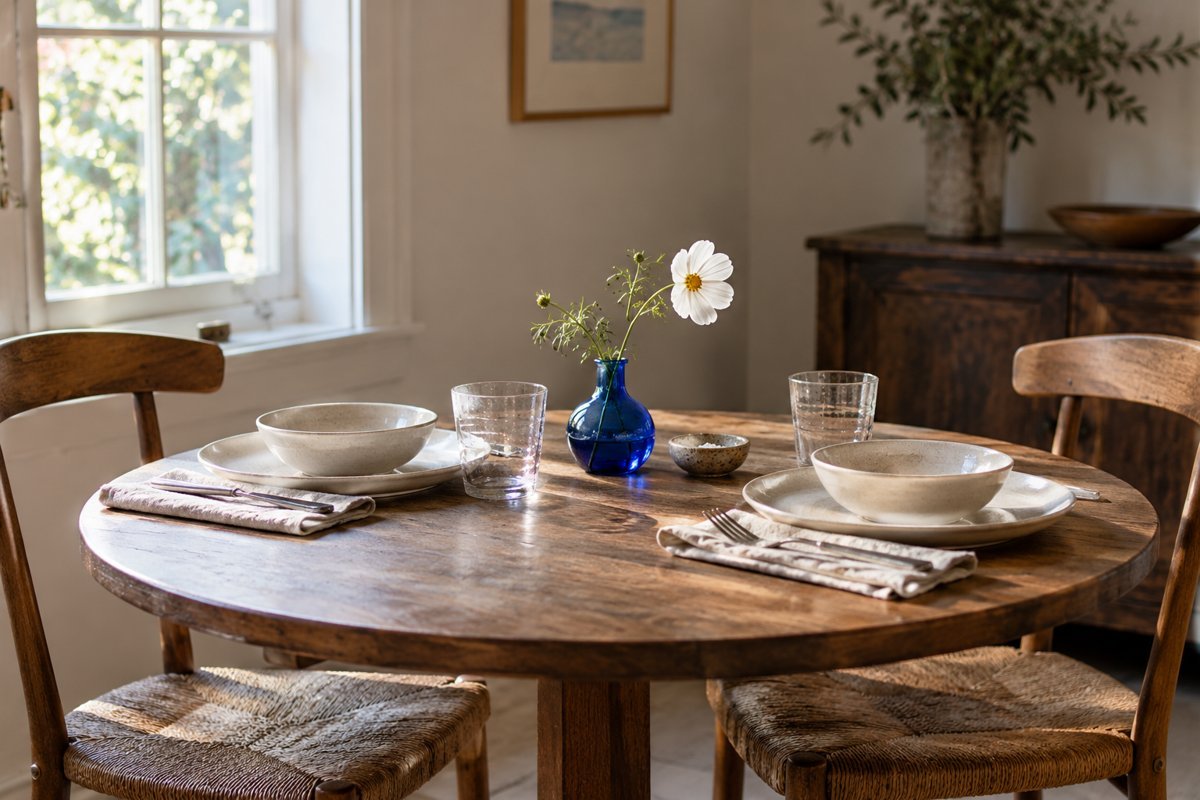
Picture a small blue glass bud vase at the center of a compact wooden table. One suitable flower or stem gives it a clear vertical line. The surrounding place settings are plain cream. The colored glass provides interest without needing a large centerpiece that takes over the table.
Check that the vase sits flat and is low enough for people to see across it. Use it for water only if it is designed to be watertight. Protect the table underneath and keep the arrangement away from reaching elbows. A single flower can be easier to move than a full bouquet. If the table is used for homework or food preparation, keep the display simple enough to lift away as one small piece.
4. A Wide Rust Vase on a Low Cabinet
A broad vase can give a low cabinet a clear focal point. Imagine a rounded rust-colored vessel with a wide shoulder, set against a pale gray wall. Leave the top around it open. The warm color provides most of the scene, while the cabinet’s straight lines make the curved shape noticeable.
Measure the vase’s base as well as its widest point before choosing the spot. A piece can sit on a surface yet still project too far over its edge. Check that doors and drawers remain usable. Keep tall stems out if they would make the arrangement top-heavy or hide the wall above. A broad empty vessel can have enough presence on its own, especially in a room that already contains several patterns.

5. A Small Textured White Vase Inside a Dark Bookcase
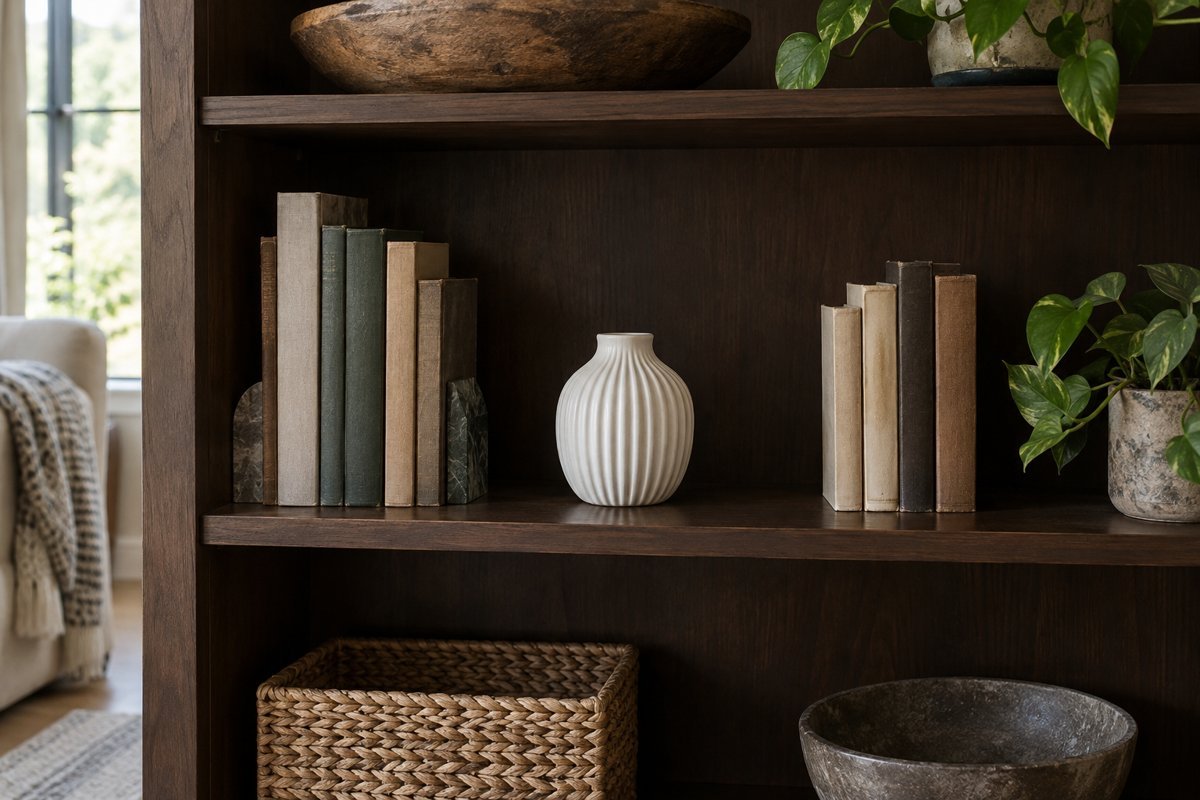
Picture a small white vase on a dark wood shelf between two modest groups of books. Its surface has a simple ribbed texture, and there is clear space above it. The contrast makes both the white shape and the raised lines visible. Keep other ornaments off that shelf so the vase does not disappear among them.
Choose a shelf with enough depth and suitable support for the piece. Follow the furniture’s loading and anchoring guidance. Place the vase where taking out books will not knock it. A dry empty display may be easier to manage than water near books. If white blends into your bookcase, use another quiet contrast, such as a dark vase on a pale shelf. The idea is a clear outline, not a required color.
6. Two Small Vases in Different Green Shades
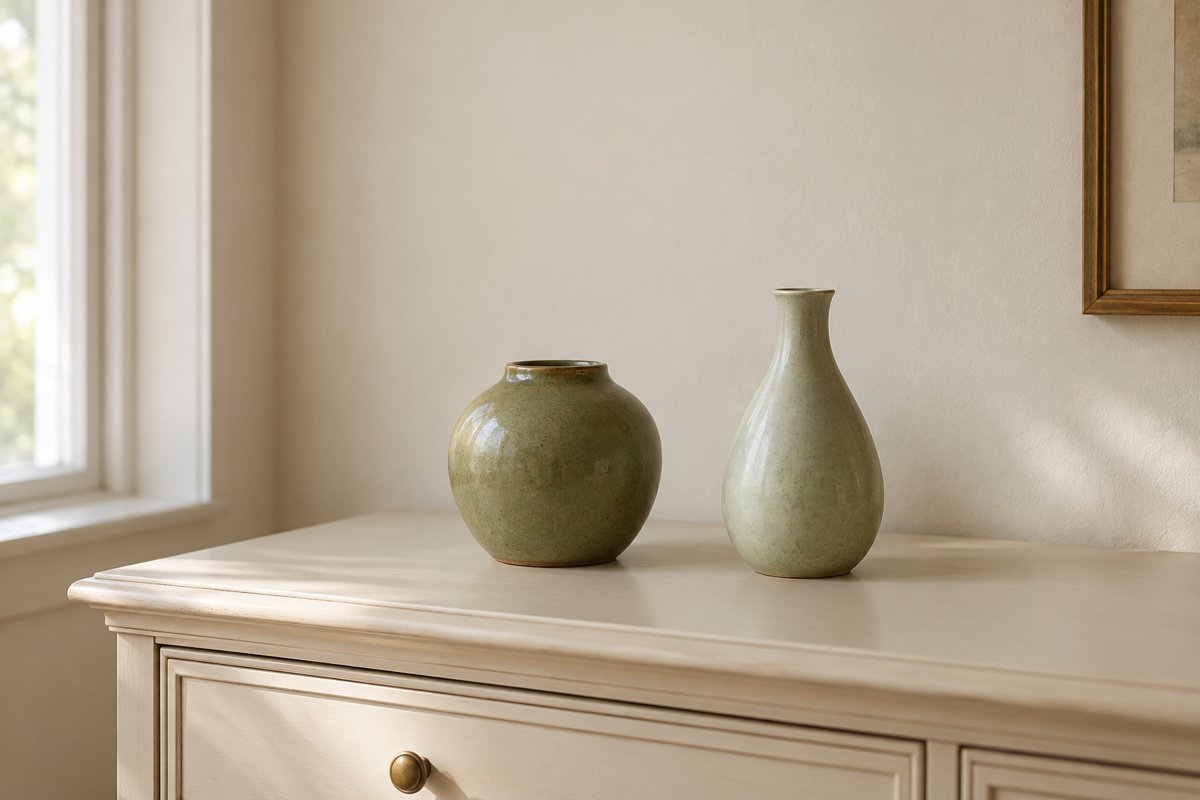
A pair of small green vases can look connected without being identical. Imagine one muted olive vessel and one pale green bud vase on a cream dresser. Their heights differ slightly, and both stay empty. The close colors create a gentle relationship while the different shapes keep the pair from looking like duplicates.
Compare the colors in the room before deciding they work together. A shade that seems soft elsewhere may look bright beside the wall or bedding. Give both pieces enough space to show their outlines. Keep the dresser’s daily-use area clear and avoid putting fragile objects near drawer handles. If the pair feels busy, use one and store the other carefully. You can rotate them rather than keeping every favorite vase out at once.
7. A Footed Ceramic Vessel on a Plain Side Table
Picture a low footed ceramic vessel on a simple round side table. Its cream body sits on a short broad base, giving the shape a small lift. A dark blue chair nearby provides contrast. Keep the vessel empty and leave room on the table for a coaster or book.
Check the base carefully for stability. A raised shape may be more easily knocked than a flat, wide-bottomed piece. If the table is used often, place the vessel on a less busy cabinet instead. Do not use a decorative bowl or vase for food unless it is suitable for that purpose. The footed outline is the visual detail; it does not need extra objects stacked underneath or a tall arrangement to make it feel important.

8. A Slim Cream Vase Beside a Framed Picture
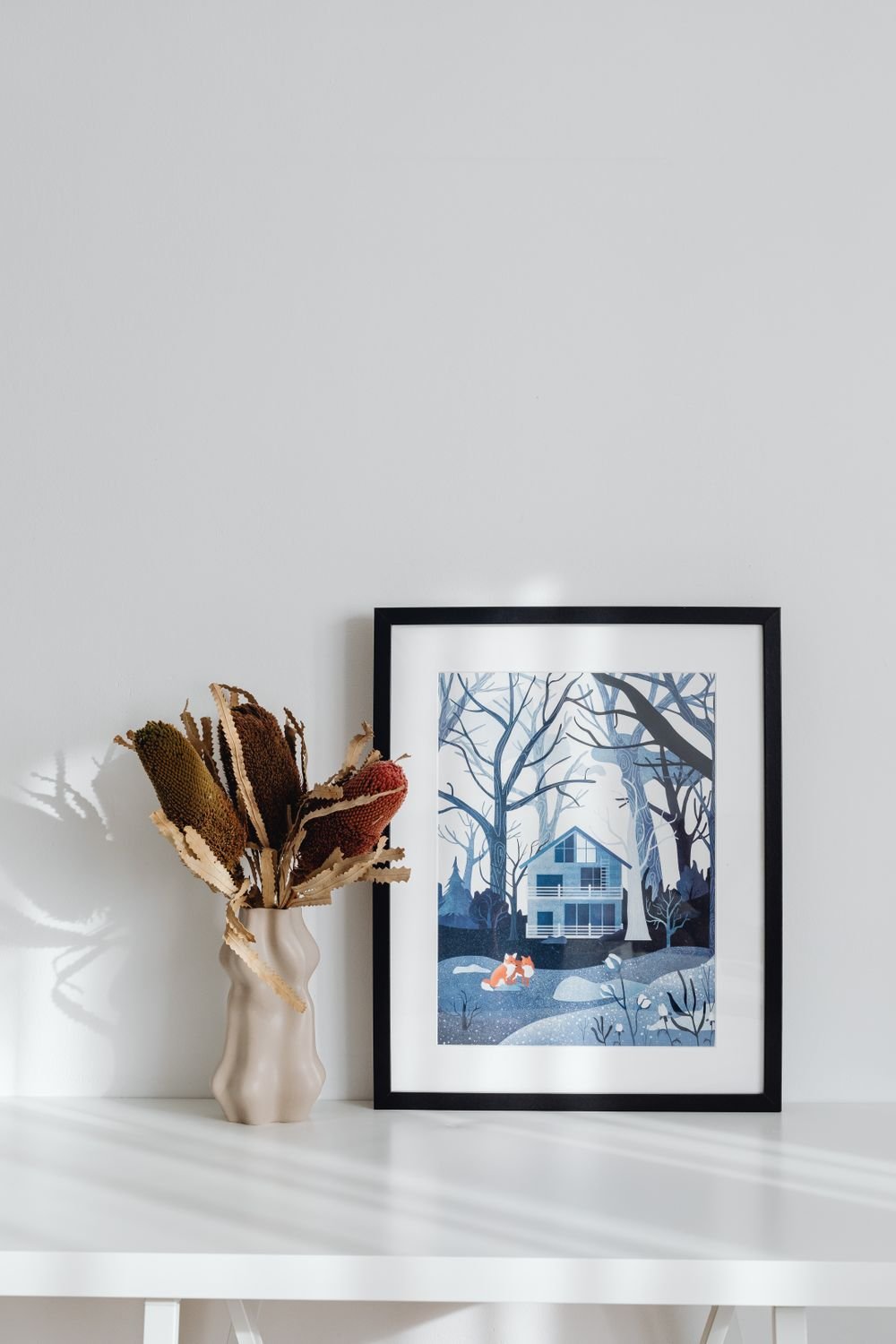
A slim vase can sit beside a framed picture without covering it. Imagine a softly shaped cream vessel on a pale console, with a simple framed print standing beside it. A few short dry decorative stems add a light line, while the rest of the wall stays clear.
Check the full stem height against the picture and choose materials suited to the room and household. Keep dry stems clear of flames, heaters, and hot lamps. Use only a vase that supports the arrangement steadily. If the stems keep catching or shedding, display the empty vessel instead. The relationship between a slim vase and a broad frame can provide enough interest without adding another delicate element.
9. A Glass Vase Against a Colored Wall
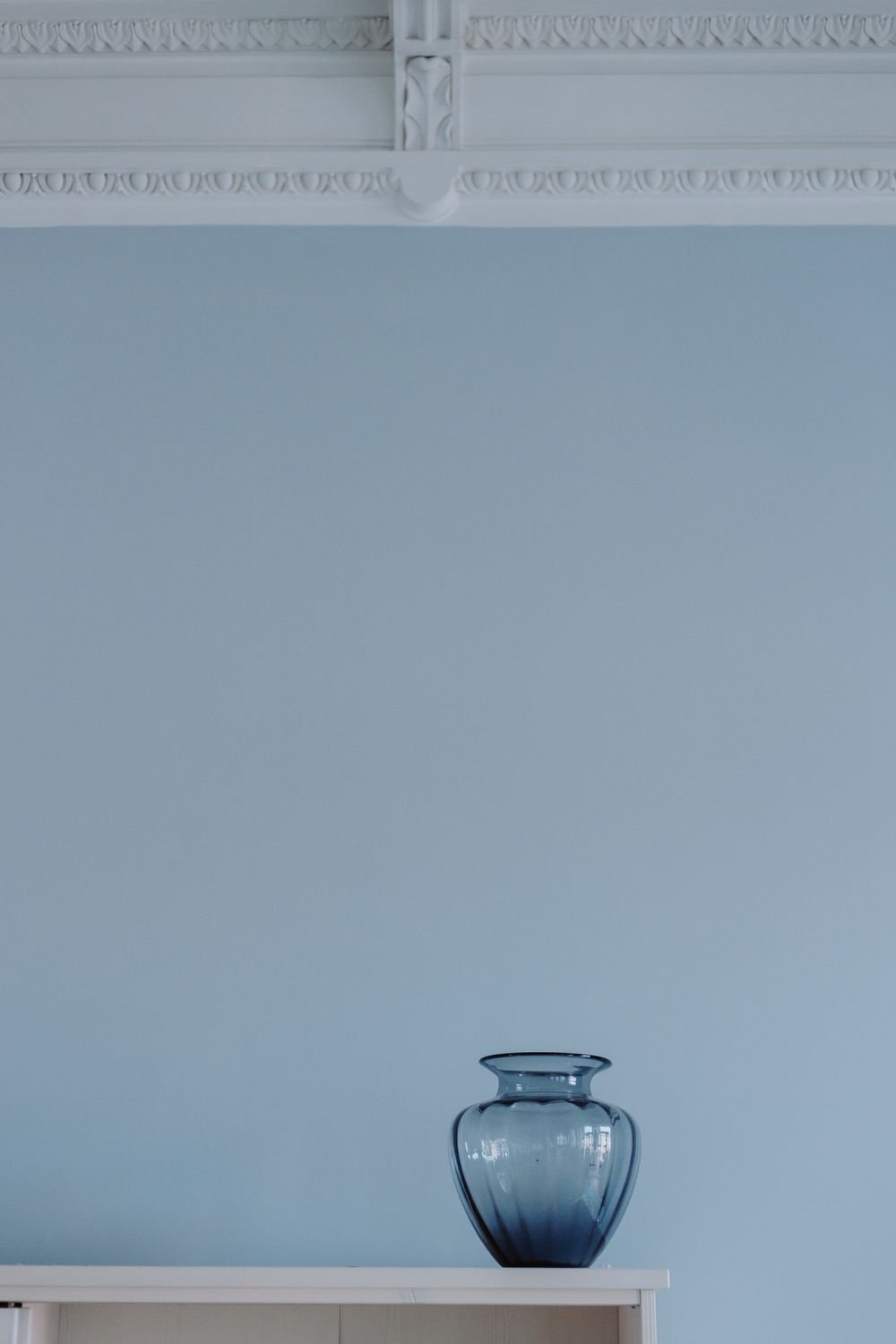
Transparent glass can show its shape against a colored background. Picture a simple blue-tinted glass vase on a pale shelf against a muted blue wall. Its rounded body catches light along the edges. Keep the shelf free of several other glass pieces so the outline remains easy to read.
Use a properly fitted shelf rated for the weight and place the vase where it cannot be brushed while passing. If you use real flowers, protect the shelf and check the container for leaks. Strong direct sun and glass arrangements can create unwanted reflections, so choose the position thoughtfully. If the vase disappears against the background, try another location rather than filling it with more objects just to make it visible.
10. A Small Sculptural Vase on a Quiet Bedroom Shelf
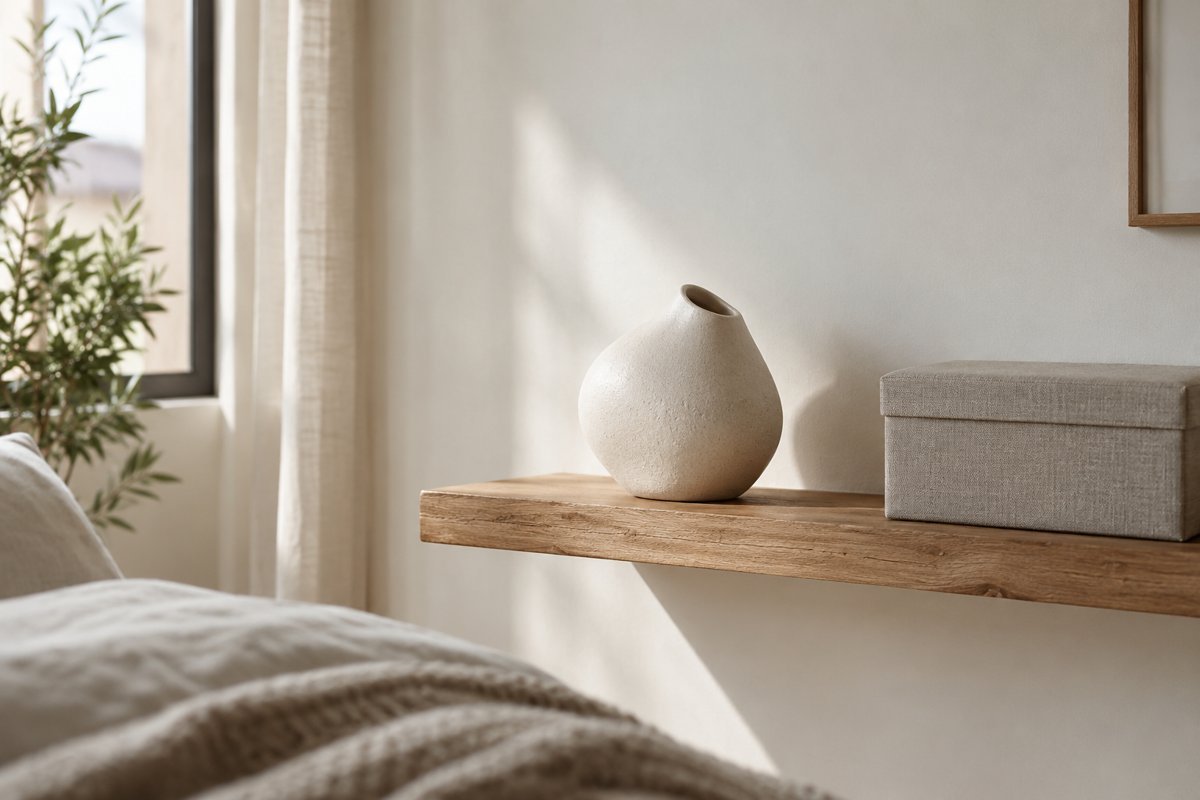
Picture a small cream sculptural vase with an off-center opening on a bedroom shelf. A plain wall and one closed storage box give it a simple setting. The unusual outline becomes the feature. Leave it empty so viewers can see the opening and the balance of the shape.
A sculptural vessel may be designed mainly for display, so check its intended use before adding water. Choose a stable piece and keep it away from places where clothing or bags may catch it. Measure its full height and width, including any projecting handles. If the shelf is crowded, remove something before adding the vase. A distinctive shape usually benefits from room around it rather than a group of equally detailed ornaments.
Choose the Spot Before Adding Flowers
Look at the surface and decide how much space is truly available. Include the room needed for hands, books, drinks, drawers, and anything else used there. Try the vase empty first and view it from the doorway and a nearby seat. You may find that its shape already provides all the detail you want.
If adding flowers or stems, check the vase’s intended use, watertightness, and stability. Protect the surface underneath and choose plant material suitable for the household. Follow care guidance for the vessel’s finish. There is no need to keep every vase on display. A few well-placed pieces, rotated when you feel like a change, can be easier to enjoy than a crowded collection across every surface.