
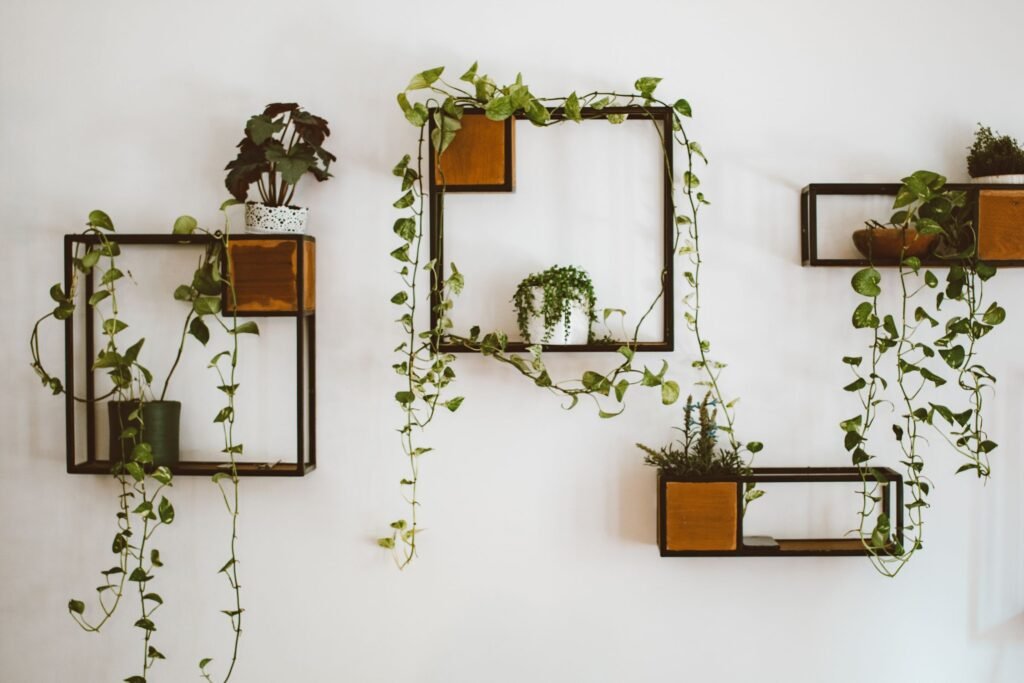
A green wall does not have to mean covering a whole room with plants. A few well-placed pots can bring the same idea into a small home. The key is finding a display you can care for without moving half the furniture. These indoor plant wall ideas use clear shapes, simple containers, and space around the leaves. Some suit a shelf beside a window. Others work as a small feature above a cabinet. Choose plants for the light you have, then plan the display around them. A good-looking arrangement should stay easy to water, clean, and enjoy every day.
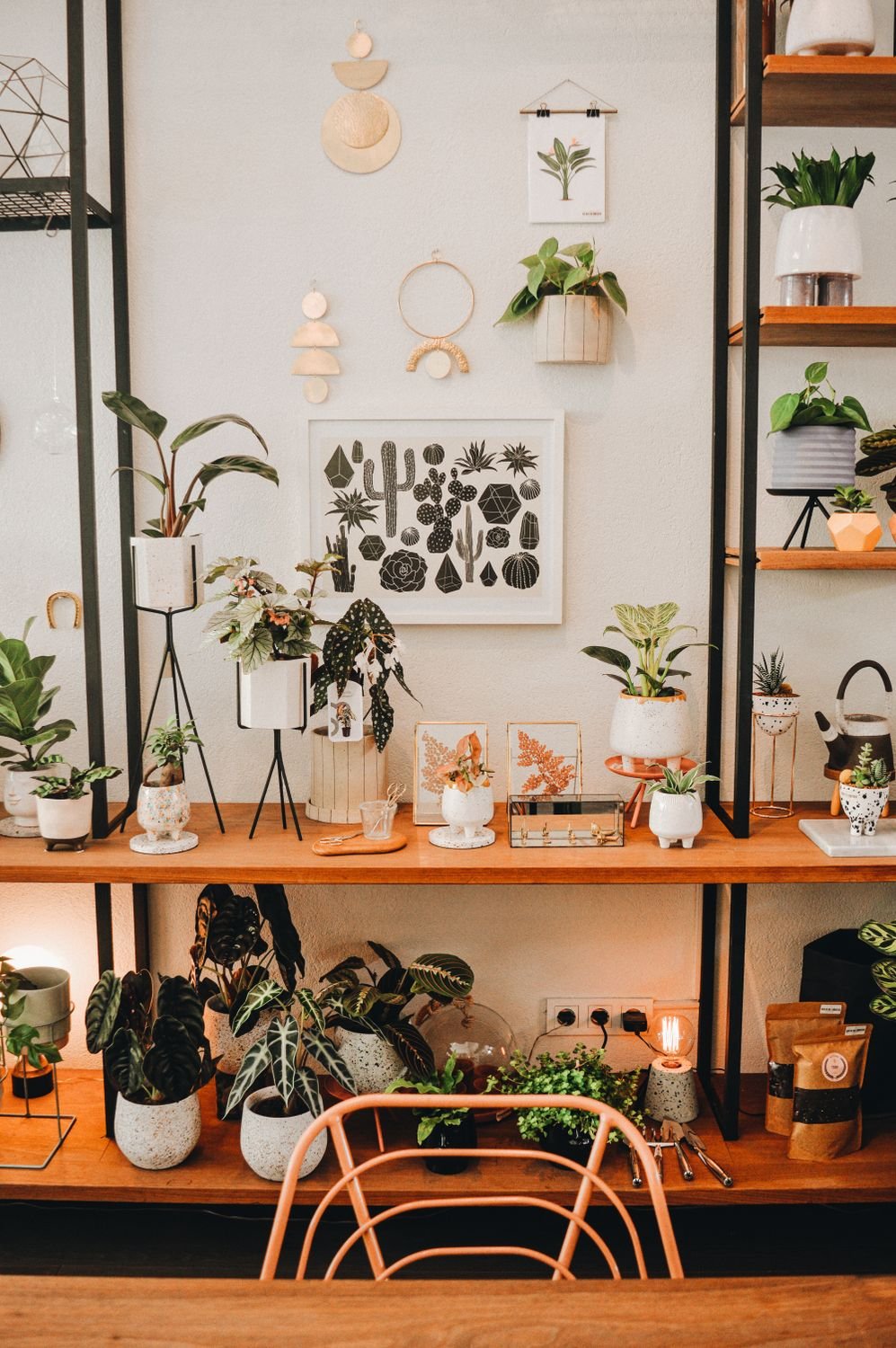
1. Wood and Metal Shelves with Small Green Plants
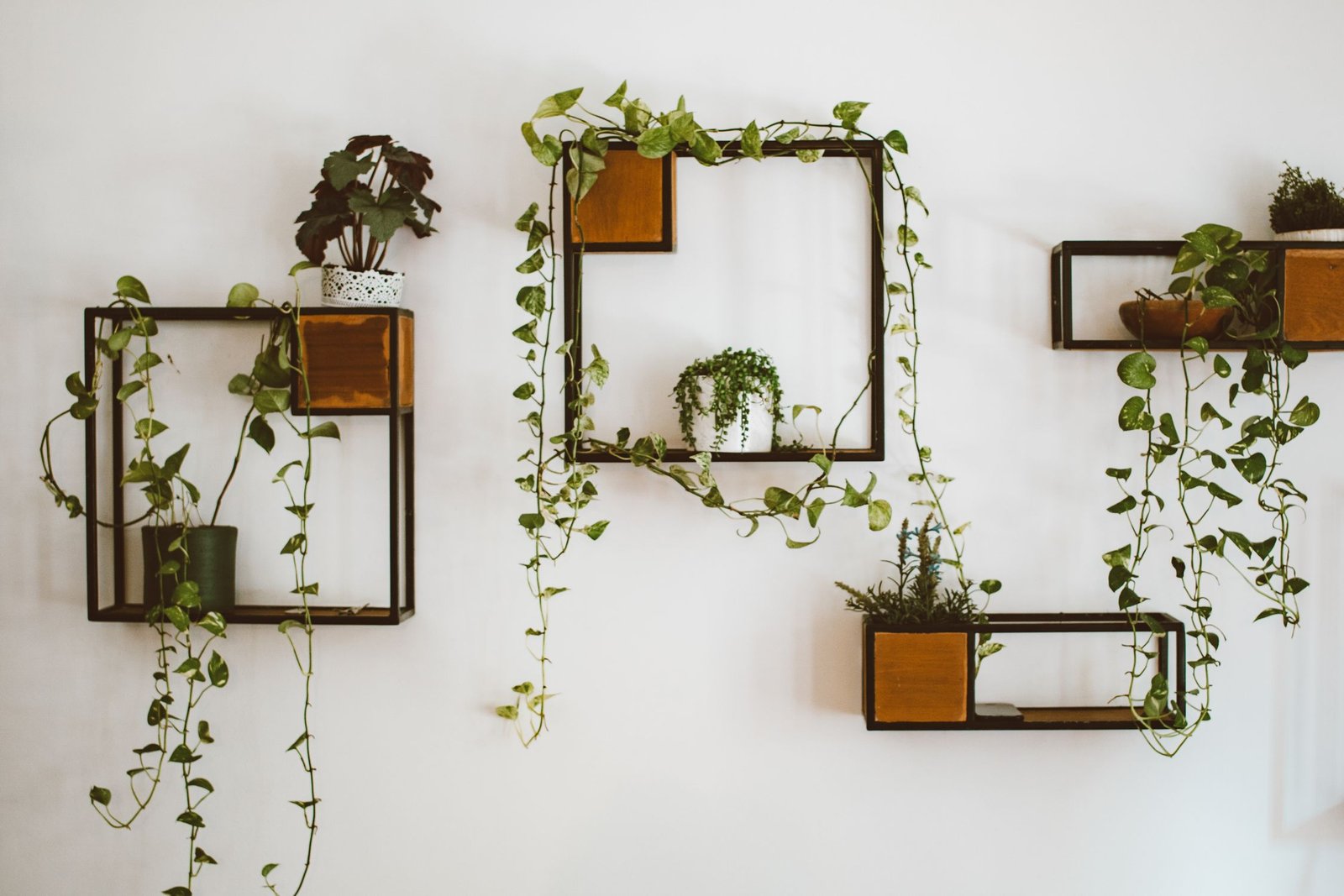
Place a compact group of wood and metal shelves on a light wall, with only a few pots on each level. Let some leaves trail while others stay upright. Leave gaps between pots so the shelf lines remain visible.
Use shelves and fixings suited to the full weight of watered pots. Arrange the plants at heights you can reach comfortably. Keep the lower shelf clear of furniture that prevents easy access. Before putting plants in place, test how you will lift each one for care. A display that needs a ladder for routine watering may be more work than you want.
2. A White Grid with Matching Wall Planters
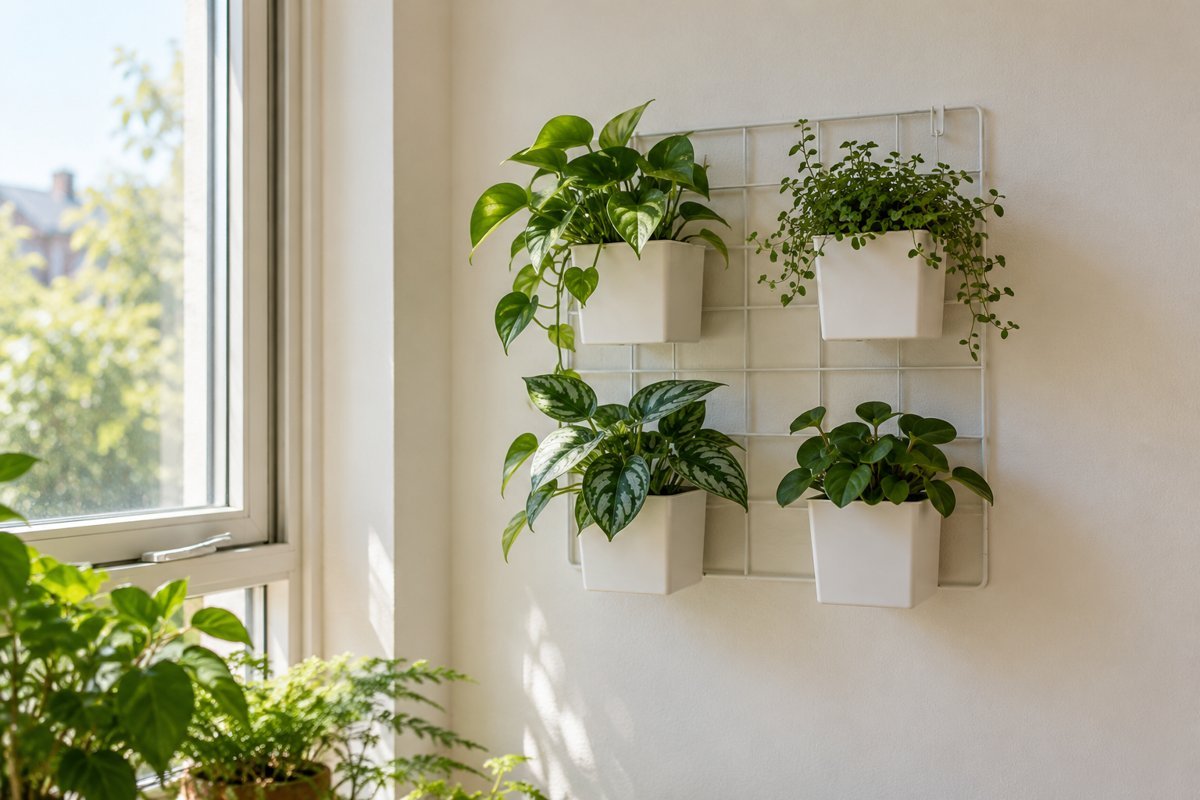
Use a white wall grid with a small set of matching planters. Keep the shape compact rather than stretching pots across every square. The repeated containers help the green leaves look like one display.
Choose a system designed to support planters, and follow its fitting and load guidance. Think about drainage before the first watering. A bare wall is not protected from drips simply because the pot is mounted. Use suitable inner containers and take plants down for care when needed. Keep the grid away from outlets and surfaces that could be damaged by water.
3. A Tall Plant Stand Against a Plain Wall
A tall stand can create a plant-wall effect without attaching many pots to the wall itself. Use a stable piece with several levels, placing the plants so each can receive light. Let the wall behind stay quiet.
Check the stand’s instructions and secure it as advised. Do not assume it can hold every heavy ceramic pot you own. A few lighter containers may be enough. Keep leaves from covering the lower plants completely. The display should be pleasant from the front, but you also need space to check the pots at the back.

4. Two Hanging Pots Beside a Window
Hang two suitable planters beside a window at different heights. Keep the leaves within the wall area rather than across the opening. Plain cords and matching containers let the plants be the main feature.
The ceiling or wall fittings must support the total weight, including water. Get suitable help if you are unsure about the surface. Make sure you can take down each pot without stretching over furniture. Check that window coverings still move freely. This idea should frame the light, not block a useful window or put plants in a place they cannot thrive.

5. A Short Plant Shelf Above a Low Cabinet
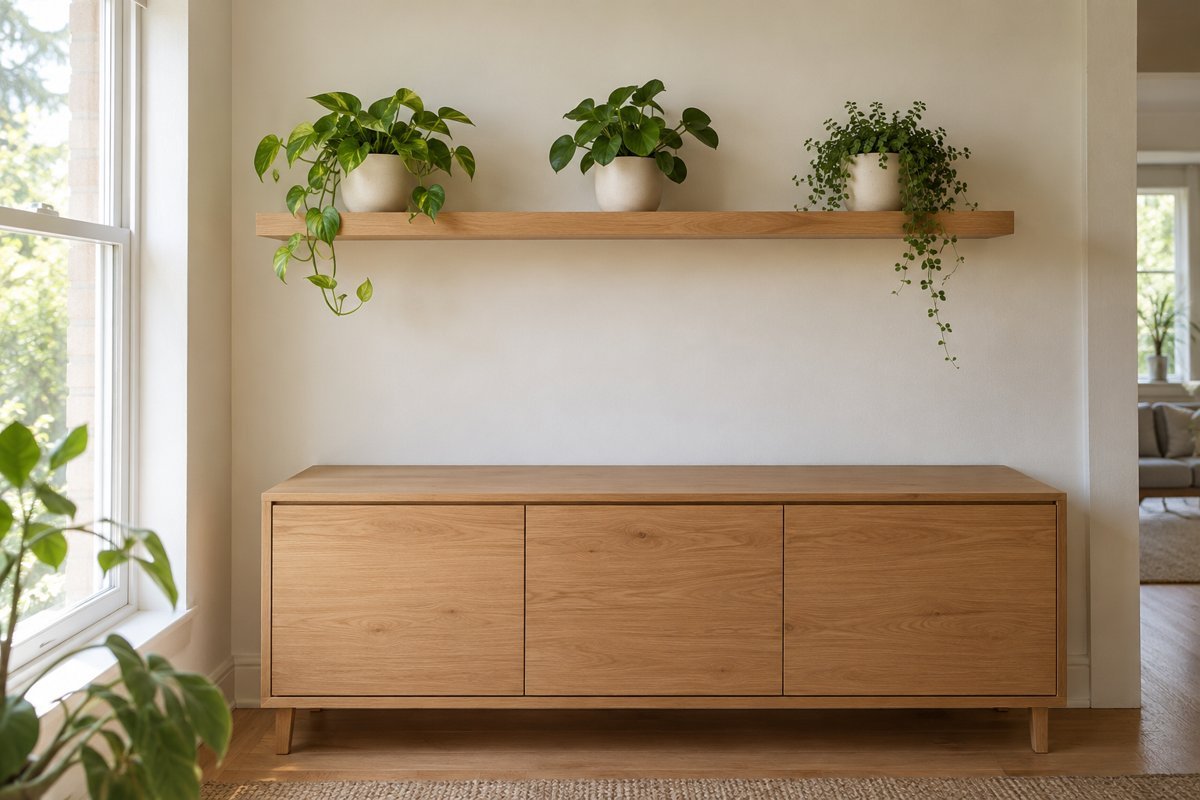
Put a short plant shelf above a low cabinet and keep the area below fairly plain. A few pots with clear space between them can create a green feature without filling the wall. Choose one container finish to connect the group.
Keep enough room between shelf and cabinet to handle the pots. Avoid storing fragile objects directly below a place that needs regular watering. Lift the plants down to a suitable surface for care, then let them drain before returning them. If the shelf is hard to reach, use the cabinet top as the main plant display instead.
6. A Narrow Green Display in a Bright Corner
Use a slim stand or a few small shelves in a bright corner. Keep the plants inside one clear vertical shape. This can add interest to a narrow wall without taking over the whole room.
Check the corner’s actual light, not only how bright the room feels at the doorway. Plants have different needs, and the top and bottom of a display may not receive the same light. Choose species for those conditions. Leave access to the floor and wall behind the stand. A narrow display still needs space for cleaning and everyday care.

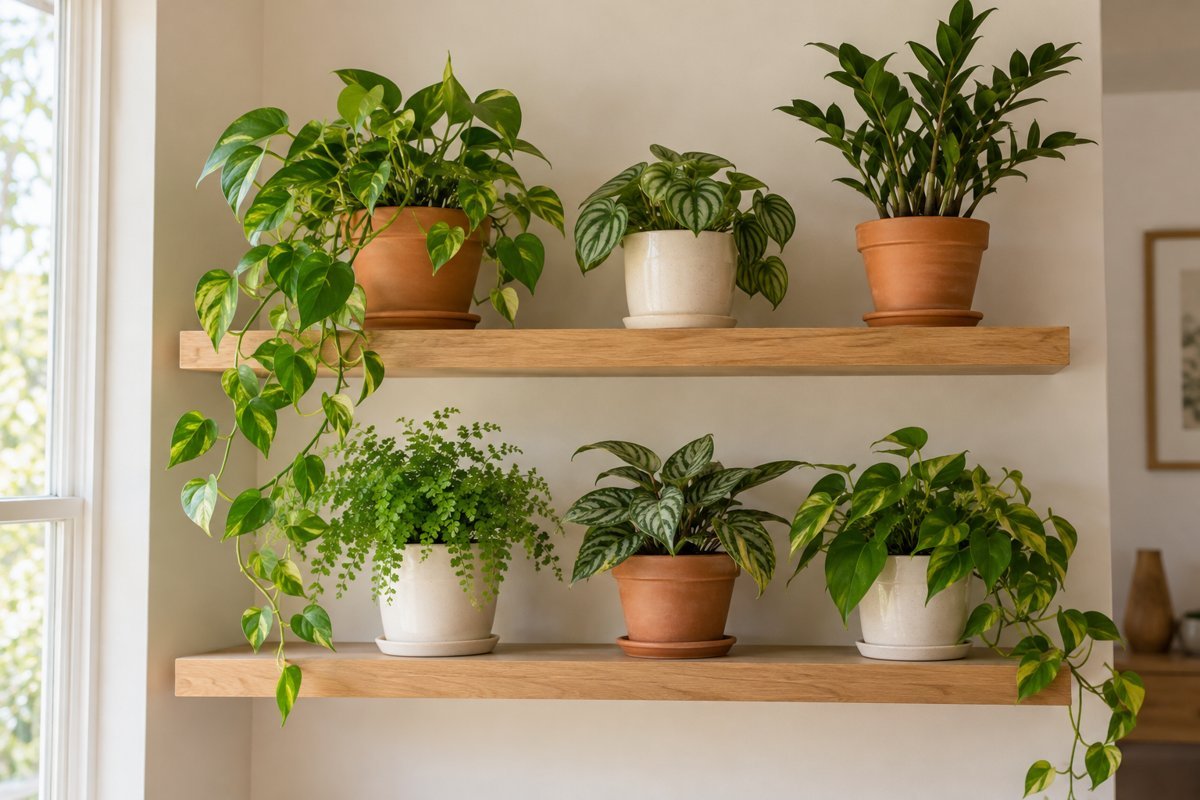
7. A Plant Wall with Terracotta and Cream Pots
Mix terracotta and cream containers on simple wall shelves. Repeat each finish in more than one spot so the group looks planned. Keep the plant shapes varied while the pot colors stay limited.
Use containers that work with the way you water. Decorative covers can hold nursery pots, but collected water must not be left standing around the roots. Label plants discreetly if their care needs differ. You can keep the labels out of the main view while still making them easy to find. A pretty color mix should not make plant care confusing.
8. A Low Plant Display Beneath Framed Botanical Art
Combine a low row of plants with one or two botanical prints above. The artwork gives the wall a green theme even when the live plants are small. This is a useful option when you do not want high shelves.
Keep the pots stable and the pictures safely fixed. Leave space to remove plants without knocking a frame. You can use fewer live plants and still get a full-looking scene through the mix of leaves and artwork. Choose art you own or have permission to use. The display does not need to imitate a complete living wall to feel finished.
9. A Green Shelf Divider with Open Space Between Pots
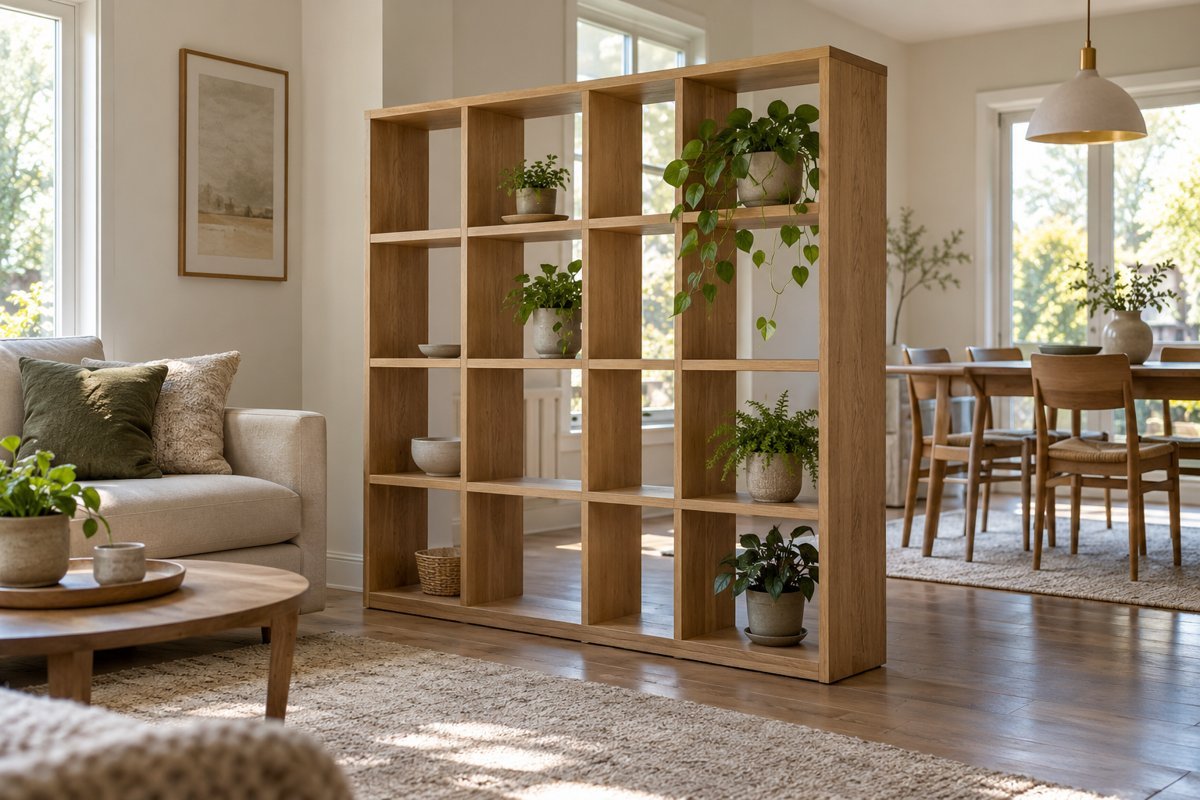
Place a suitable open shelf near a wall between two areas of a room. Add plants on selected levels and leave some openings clear. The leaves can suggest a green boundary while the gaps keep the space open.
This arrangement needs light on the plant side as well as a clear walking route. Follow the shelf maker’s stability instructions and keep heavy pots within its limits. Do not place a damp pot above books or electrical equipment. A plant shelf is a visual divider; it does not provide full privacy or stop sound from moving through the room.
10. A Small Plant Wall Beside a Craft or Work Area
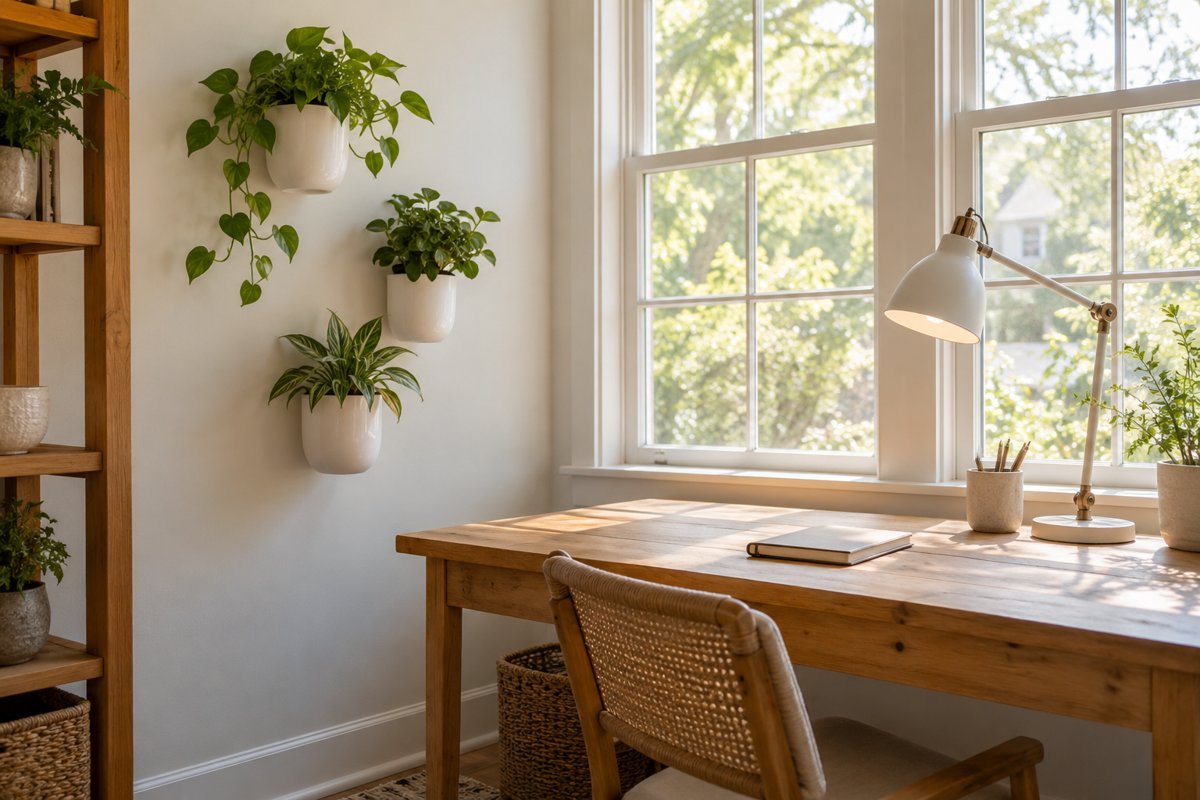
Use a small group of wall planters beside a work surface, rather than directly above the equipment you use. Choose a neat shape with only a few pots. The greenery can frame the corner without using up desk space.
Keep water away from cables, papers, and tools. Leave room for task lighting and storage that you actually need. If the area lacks suitable light, use botanical art or another nonliving feature instead. A working corner should remain useful after the plants are added. You should not have to clear the entire desk each time you need to inspect a leaf.
Keep the Display Manageable
Start with the plants you can care for now. It is easy to plan a large green wall and forget that every pot needs attention. Choose the position first, check the light, and ask a reliable nursery about suitable plants. Do not mix species solely because their leaves look good together.
Protect the wall and furniture from dampness. Check pots, trays, and fittings regularly. Keep access to doors, switches, and vents clear. A decorative plant system is not a way to hide water damage or a damp wall; deal with those problems before adding anything.
Consider everyone who uses the room. Some houseplants are unsuitable around pets or young children who may chew them. Check each species before choosing it, and do not rely on height alone to keep curious pets away.
A small display can be easier to enjoy than a crowded one. Leave room for plants to grow and for you to reach them. Remove or move a pot if it blocks another plant’s light. The best plant wall is one that still works after the first day of styling.