
A corner shelf can help a child’s room feel more organized without taking over the floor. It can hold a few books, show a favorite toy, or give small keepsakes a clear home. The best setup depends on the child’s age and how the room is used. These ideas focus on simple colors and useful displays that are easy to change. They are not a reason to put every toy on show. Leave room for play, keep everyday things within a suitable reach, and follow the furniture maker’s safety advice. A tidy corner should make the room easier to use.
1. Low Wood Shelves with Front-Facing Picture Books
Use a low shelf to show a small set of picture books with their covers facing out. Keep the shelves plain wood so the bright covers provide most of the color. Leave enough space to take out one book without pulling down the rest.
Choose furniture suited to the child’s age and follow its anchoring guidance. Check how the books sit rather than stacking them above the shelf edge. Keep the display small and rotate the titles when needed. This gives each cover room to show and makes putting books away a simpler task.
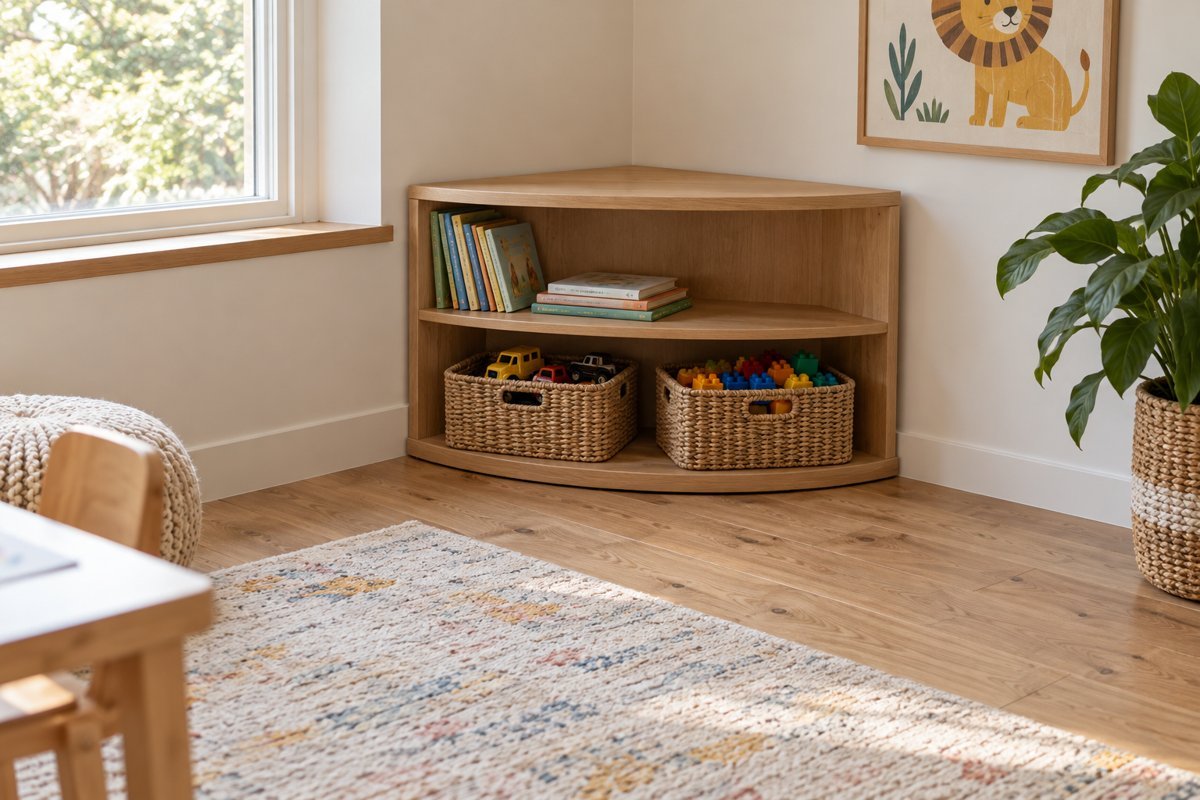
2. A Wood Corner Shelf with Two Toy Baskets
Place matching baskets on the lower part of a wood corner shelf. Use them for clear groups, such as toy vehicles in one and small building pieces in the other, when those toys suit the child’s age. Keep the shelf above lightly styled.
Choose baskets that slide out without catching or tipping. Check for sharp edges and loose parts. Avoid heavy bins high above a child’s reach. The shelf should not become a climbing route to a favorite toy. Put the things used most often in an appropriate, easy-to-access place, and store display-only objects elsewhere.
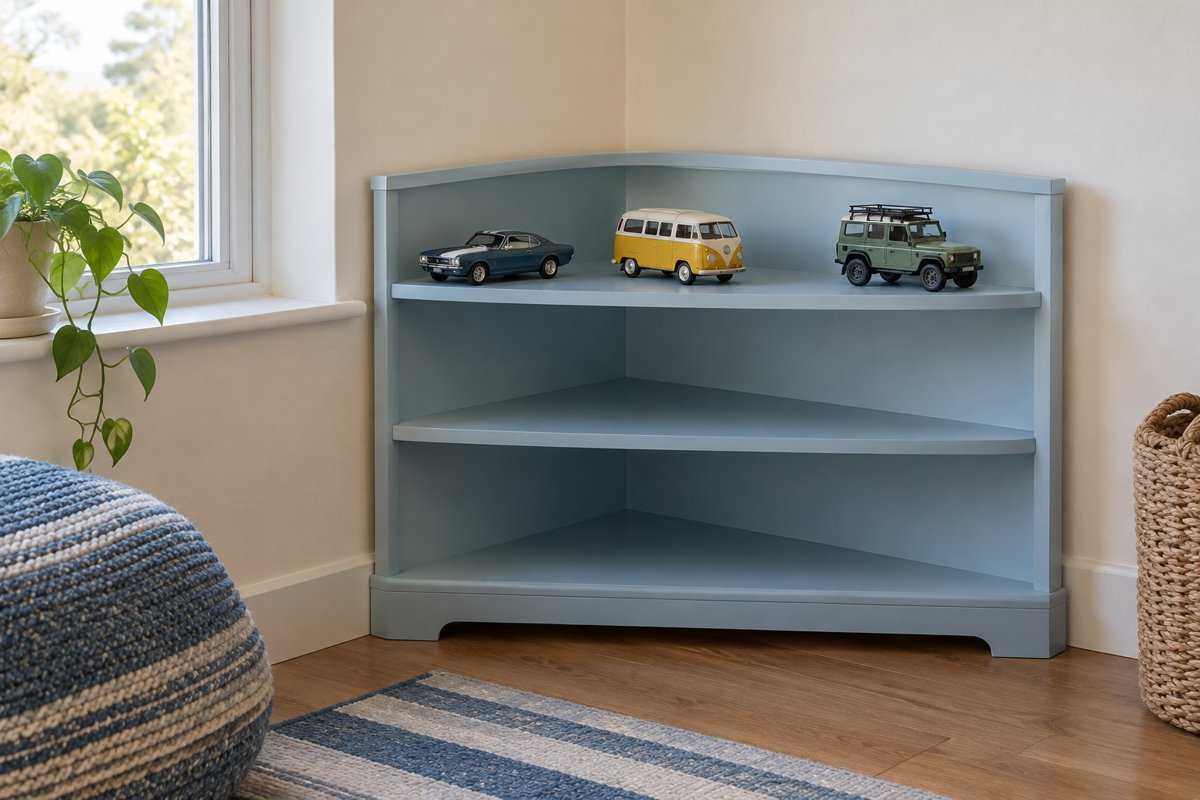
3. Pale Blue Shelves with a Small Model Collection
A pale blue shelf can give an older child’s model collection a clear place. Leave a little gap around each piece so the shapes remain easy to see. Keep the wall behind plain to avoid competing with small details.
Use this as a display for age-appropriate objects, not a storage plan for a younger child who may put small parts in their mouth. Check shelf depth against the longest model. Leave the front edge clear and follow load limits. If the collection grows, rotate the display rather than balancing extra pieces on the edges.
4. A Reading Corner with One Shelf and a Floor Cushion
Place a short book shelf near a comfortable reading spot. A washable cushion on the floor can make the corner feel inviting without adding a large chair. Keep the space around it clear so the child can sit and stand easily.
Choose the seat for the child’s age and needs. Keep cords and long hanging decorations out of the area. The lamp, if used, should be stable and suitable for the room. A few books within reach are enough to show the purpose of the corner. You do not need a full wall of shelves to make it useful.

5. A Soft Green Shelf with Framed Drawings
Use a soft green corner shelf to show a small set of drawings in suitable frames. Keep heavier or breakable display pieces away from places a young child can reach. A plain storage box below can hold extra artwork.
Choose a few drawings rather than filling every level. Leave room to change the display when new work comes home. Consider lightweight, age-appropriate ways to show the art. This can be a shared task: let the child choose which pieces stay out. The corner then becomes a place for their work, not only a styled scene chosen by an adult.
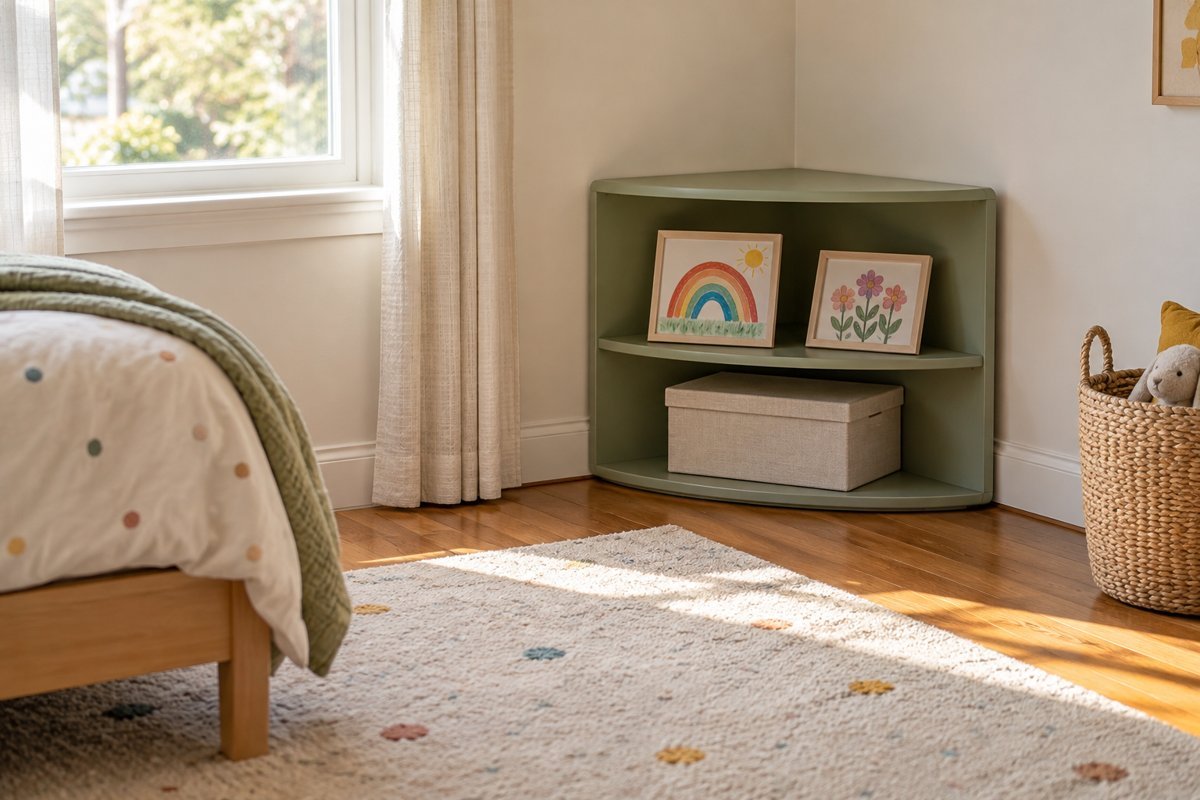
6. A Corner Unit with One Storage Box per Child
In a shared room, give each child a clearly defined box on a low shelf. Use different colors or simple picture labels suited to their age. Keep the boxes alike in size so neither side takes over the corner.
Try the arrangement with the children using it. A box that is too deep or heavy may make tidying harder. Keep shared items in a separate spot so the system is easy to understand. Follow the furniture maker’s fitting advice and avoid putting tempting objects on top. A fair layout can be simple without making the whole room match.
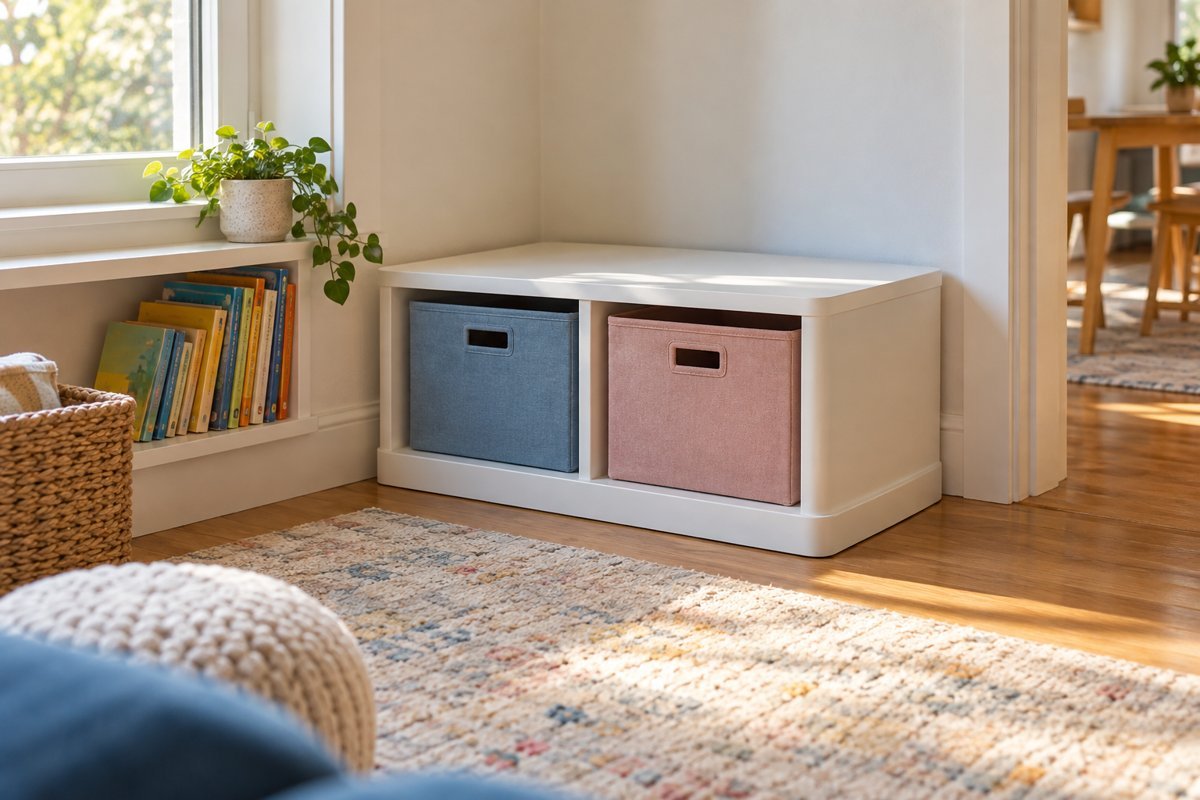
7. A Short Shelf with a Favorite Soft Toy Display
Arrange a few favorite soft toys on a short shelf, with space between them. Use the wall color to keep the look quiet, or choose a gentle contrast that makes the toys easy to see. Leave most of the collection in useful storage.
Keep shelves out of places where items could fall onto a sleeping child. Do not add this display over a crib or use it to keep comfort items out of reach. Check the placement for the child’s age and room use. The shelf can show a few toys without becoming a high pile that needs constant rearranging.
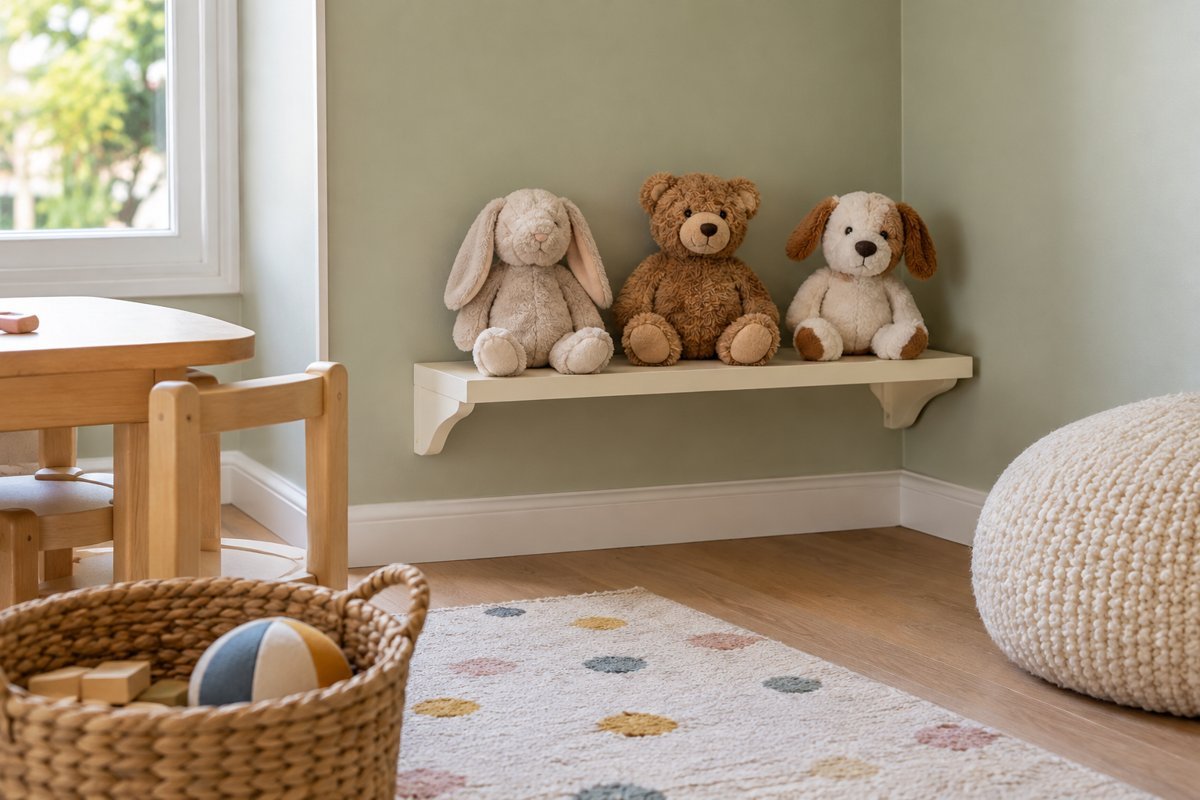
8. A Craft Corner Shelf with Closed Supply Boxes
Use a corner shelf beside a craft table, with supplies in closed containers. Keep the colors limited so the area feels clear even when the materials inside are bright. Place a finished drawing on the top level if the shelf safely allows it.
Store tools, glue, and small parts according to age and supervision needs. A tidy display does not make supplies safe for unsupervised use. Keep the table free enough for an actual project. Choose boxes the child can manage when appropriate, and let the storage do most of the work. Open jars of tiny items may look pretty but be less practical.
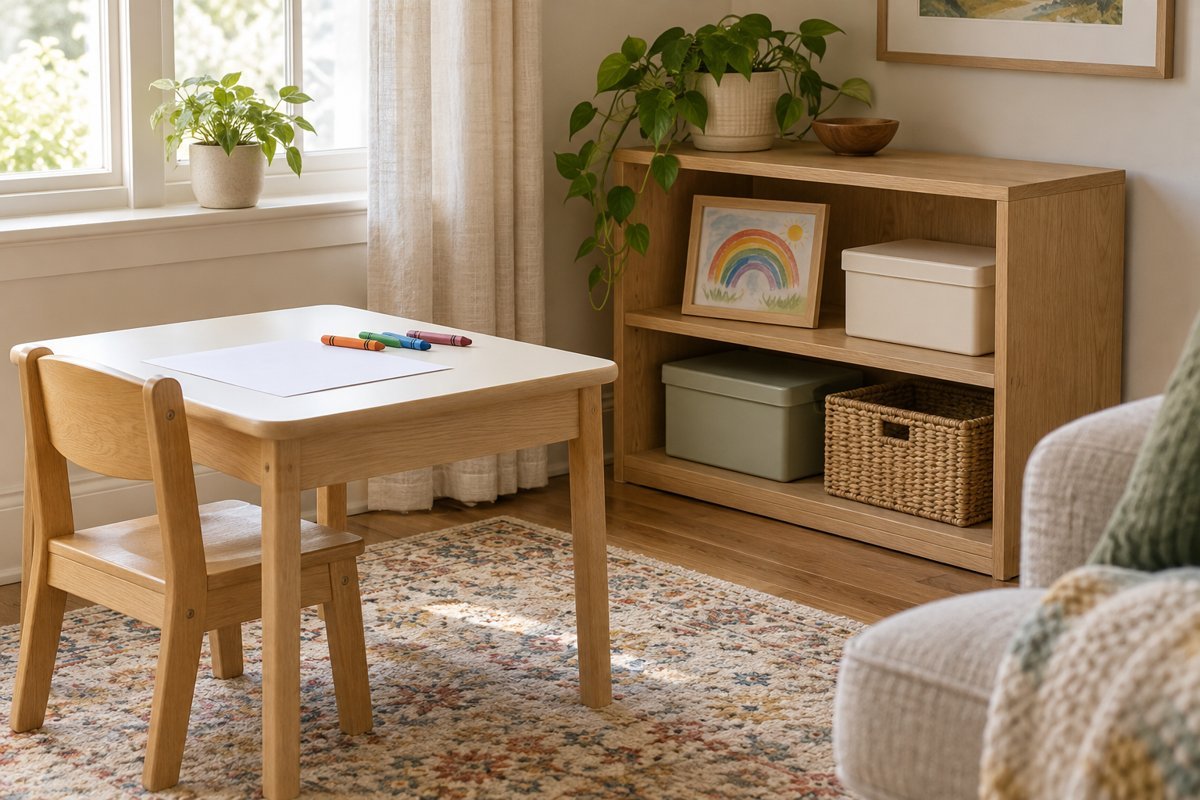
9. A Bedside Corner Shelf for an Older Child
A small corner shelf can hold an older child’s current book and a few daily items. Keep the setup plain, with only what is needed close to the bed. Avoid filling the shelf with fragile decorations.
Check the location carefully so the child will not hit it while getting in and out of bed. Keep electrical cords and lamp placement appropriate to the room. Follow fixing and load guidance, and choose another option if the wall is not suitable. A bedside shelf should improve access, not add a hard edge where there was useful clear space.
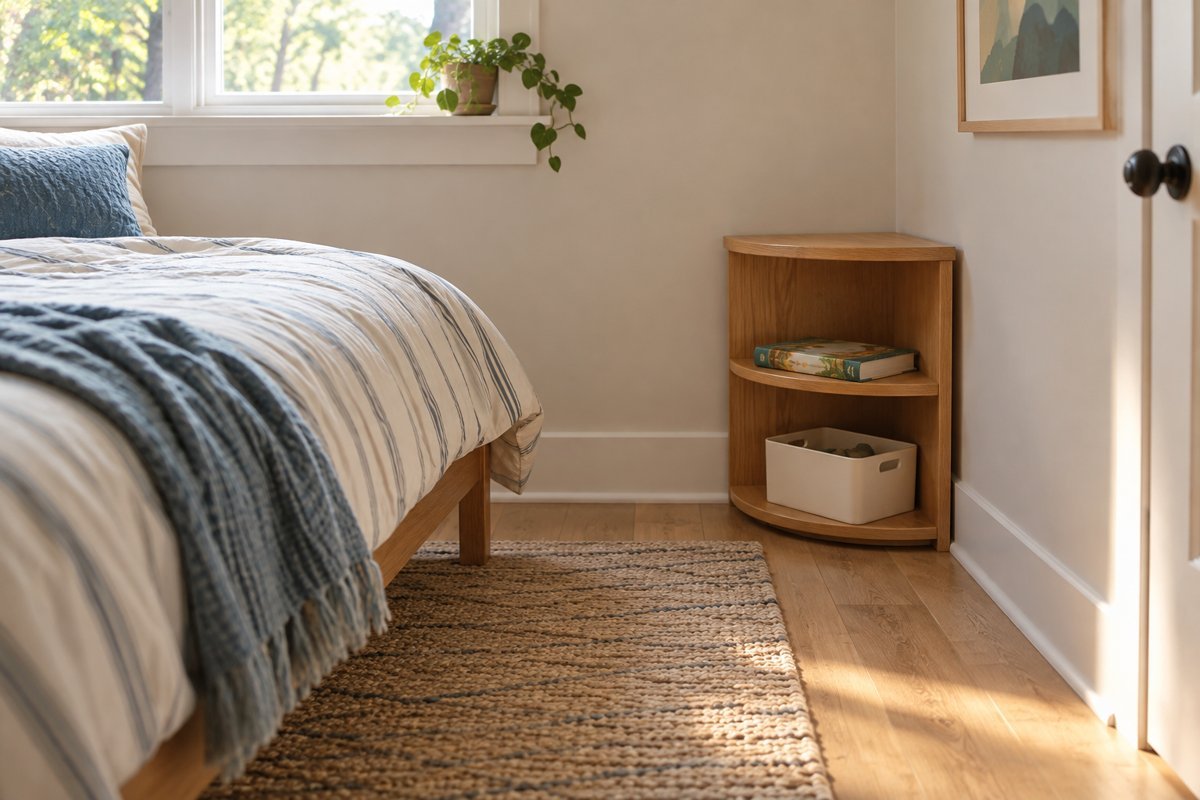
10. A Neutral Shelf That Can Change with the Room
Choose a simple wood, white, or cream corner unit if you want the display to change as the child grows. Books, art, and age-appropriate hobbies can take turns on the shelves while the furniture stays the same.
Begin with fewer objects and let the child help decide what belongs there. Leave room for new interests rather than planning every shelf around one theme. Check the furniture regularly and keep following its safety guidance as its use changes. A unit that once held baskets may later hold larger books, which can change the total weight.

Keep Safety and Daily Use Ahead of Styling
Before choosing a shelf, measure the corner and check the wall or floor beneath it. Follow the maker’s instructions for fitting and anchoring. A tall piece should not be treated as stable simply because it feels heavy. Get suitable help when you are unsure about the wall or fixings.
For more information on securing furniture and avoiding climbing temptations, see the CPSC’s Anchor It! guidance.
Think about how the child will reach the things they want. Do not put favorite toys high up in a way that encourages climbing. Keep heavy and breakable pieces away from accessible edges. Avoid long cords, loops, and small loose decorations where they may be unsafe.
Use the room as the final test. Open doors and drawers, make the bed, and sit in the reading spot. Check that the shelf does not block movement or leave an awkward edge beside a busy route. A narrow room may work better with fewer pieces.
The aim is not a perfect shelf that stays untouched. It is a corner that helps the child find things, enjoy them, and put them away. Keep the display small enough to manage, adjust it as needs change, and leave plenty of room for the rest of childhood.