
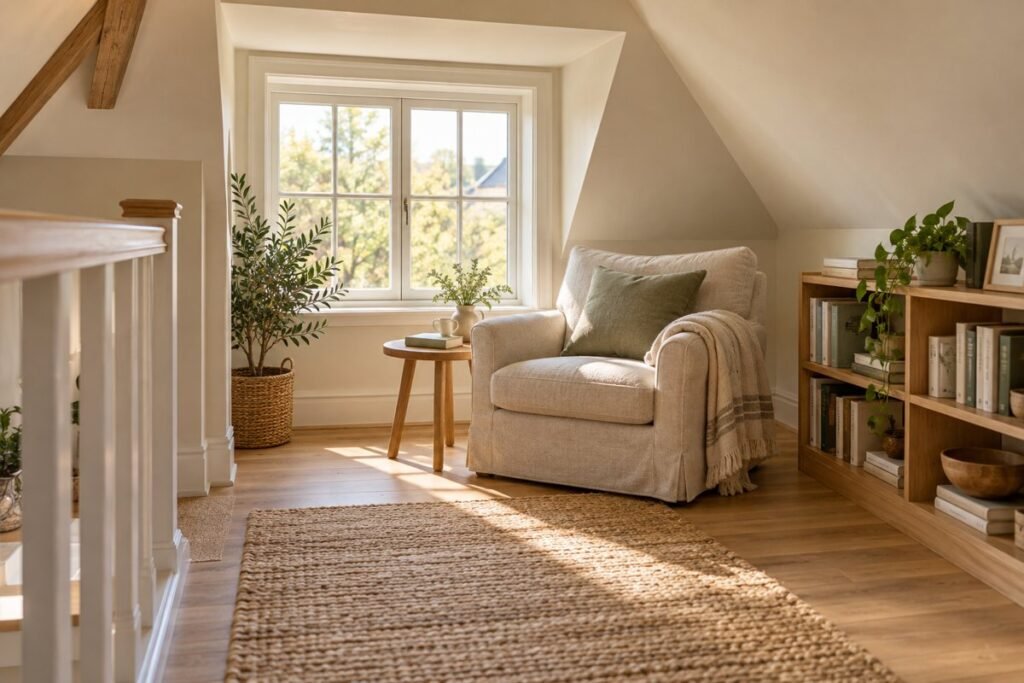
An attic reading nook can turn an overlooked upstairs corner into a place you actually want to spend time. The challenge is making it comfortable beneath sloping ceilings without filling every available surface. A supportive chair, useful lighting, and a sensible spot for books often matter more than an elaborate renovation. These attic reading nook ideas focus on choices you can adapt to a finished attic, from arranging furniture around low walls to choosing colors and keeping everyday clutter contained. Start with the space you have, then build a quiet reading corner that suits your home and your daily routine.
1. A Window-Side Reading Chair with a Clear Walkway

Place a compact armchair beside an attic window, with open floor space leading back to the stairs. Keep the chair where you can stand up without meeting the sloped ceiling.
Before choosing a chair, walk through the attic and notice where you can stand, turn, and move comfortably. A corner might look spacious in a photograph but feel awkward when you try to get up beneath the roof slope. Mark a possible chair position on the floor with removable tape, including space for your feet and a small table. Test the route from the stairs to the seat. Keep that route clear rather than treating it as extra storage. This simple layout check can help you avoid buying furniture that fits the room on paper but does not work in everyday use.
2. A Cream Reading Chair Beneath a Sloped Ceiling

Try a cream armchair against a low attic wall, with one soft cushion and a plain throw. Keep the space above the seat clear and let the chair be the main feature.
You do not need a matching furniture set to establish a reading area. Begin with one chair that feels comfortable when you sit with a book for a while. Consider the seat depth, the position of the arms, and whether your feet rest comfortably. A chair you already own is a useful starting point because you can test the layout before spending more. Place a small cushion behind you only if it improves the fit. Once the chair works, add the surrounding pieces slowly. This approach keeps the nook focused on reading instead of collecting furniture.
3. A Reading Chair with a Small Round Side Table
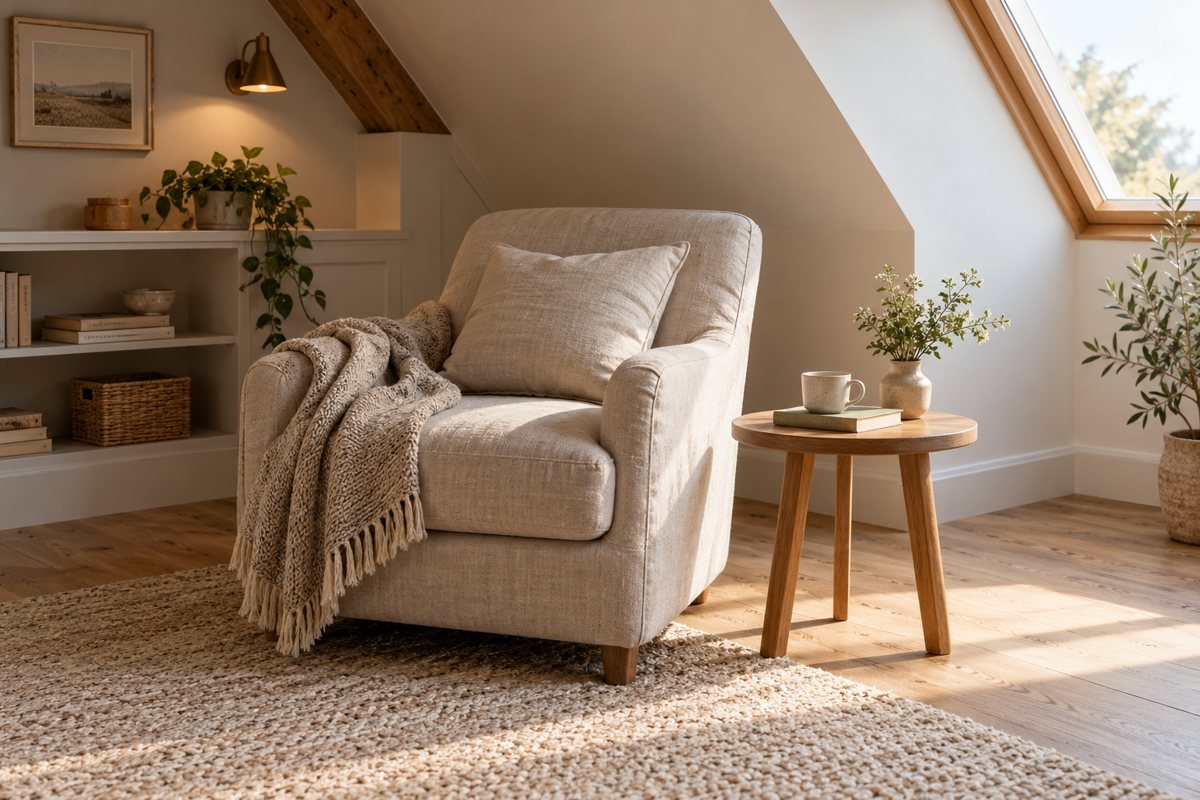
Pair a comfortable chair with a small round table for your book and drink. A simple table keeps the corner useful without taking over the floor.
A reading corner becomes more useful when you have somewhere to put down a book without balancing it on your knee. Choose a compact side table, a sturdy stool intended for that use, or another stable surface beside the chair. Check that it is easy to reach from your usual sitting position. Keep the top large enough for your actual essentials, such as glasses, a mug, and the book you are reading. If the area feels cramped, remove decorative objects before replacing the table with something larger. Practical space should come first.
4. Low Wood Bookcases Along an Attic Wall

Line a low wall with short wood bookcases and place a reading seat nearby. Leave the taller part of the room open for standing and walking.
Instead of moving every book upstairs immediately, start with a manageable selection. Keep your current reading, a few favorites, and a small number of books you plan to open next. This gives you a better sense of the storage you need. A low bookcase may suit one wall, while a narrow freestanding unit might work elsewhere. Check furniture dimensions and follow the manufacturer’s anchoring instructions where applicable. Store books where you can reach them comfortably. A reading nook should not require you to climb on a chair whenever you want a different title.
5. A Bookcase with Separate Shelves for Current Reads

Give current books their own easy-to-reach shelf beside the reading chair. Use the other shelves for favorite books, with a little empty space between groups.
A beautiful shelf is only helpful if you can find what you want. Try grouping books by author, subject, or whether you have already read them. Choose the method you are most likely to maintain rather than the one that looks best in a photograph. Give borrowed books a separate place so they do not disappear into the collection. Leave a little free space for new arrivals instead of packing each shelf tightly. A simple system makes putting books away easier, which helps the nook stay inviting after the initial decorating is finished.
6. A Bright Attic Nook Beside a Window

Set a pale upholstered chair beside an existing window, with a light curtain to soften strong sun when needed. Keep the window easy to open.
If your finished attic has a window, experiment with a seat nearby before deciding on a permanent arrangement. Check the light at the times you normally read. Direct sunshine may feel pleasant for a few minutes but become uncomfortable over a longer session. You may prefer sitting beside the window rather than facing straight into it. Use a suitable blind or curtain if glare is a problem, keeping fittings clear of opening parts. Plan around existing windows first. Adding or altering a window is a separate building project, not a necessary step in decorating a nook.
7. An Attic Reading Chair with an Adjustable Floor Lamp
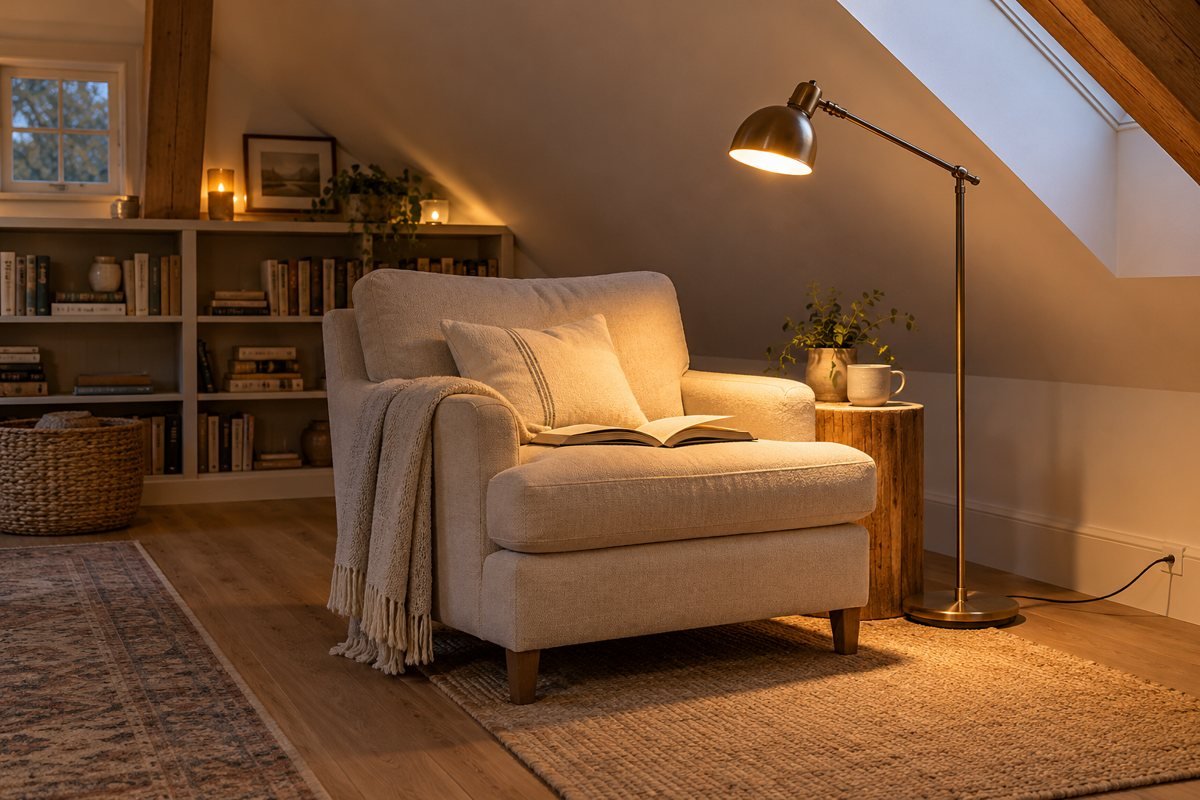
Place an adjustable floor lamp beside a deep reading chair so its light reaches the book. Keep the base steady and the cord clear of the walking route.
Daylight alone will not cover every reading session. Look for a lamp that lets you direct light toward the page without shining into your eyes. Test its position while sitting normally, including whether your shoulder casts a shadow over the book. A floor lamp can work beside an armchair, while a table lamp needs a stable surface with enough room around it. Follow the lamp’s instructions and keep cords away from walking routes. If you need additional outlets or fixed lighting, ask a qualified electrician to handle the work rather than improvising a permanent solution.
8. A Cream and Olive Attic Reading Corner
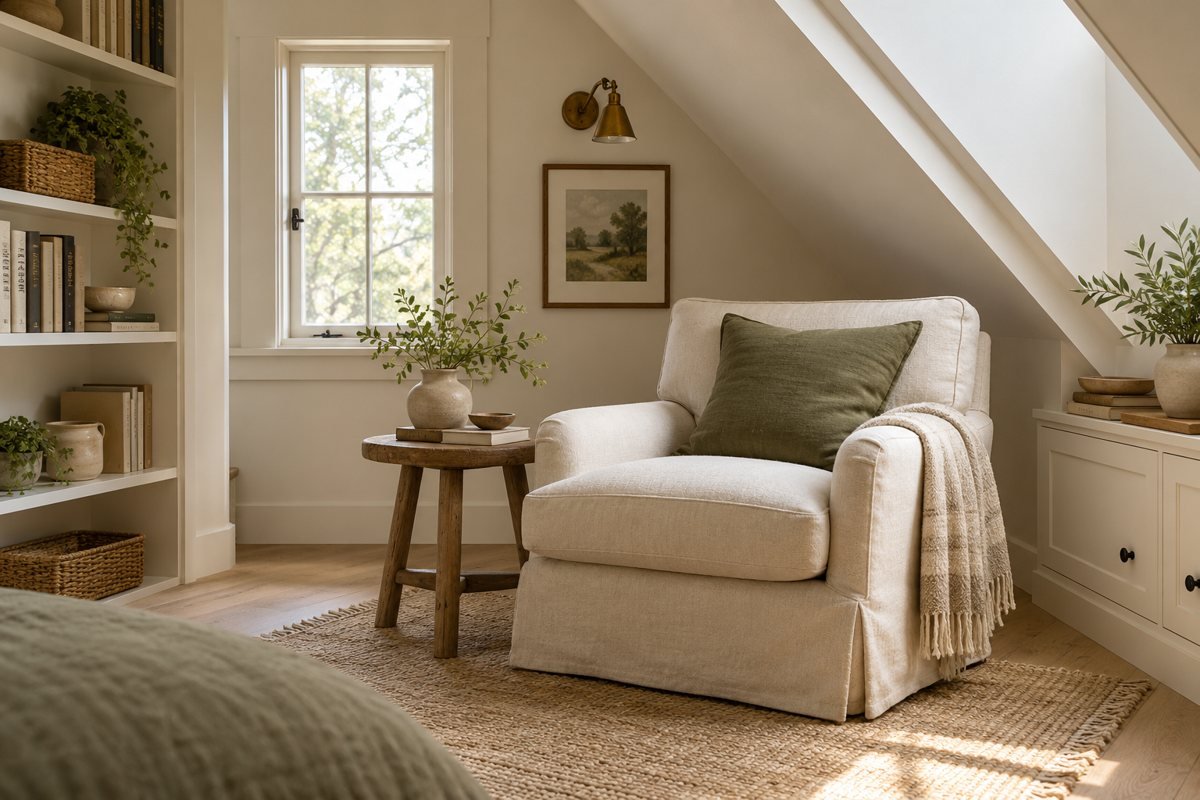
Combine a cream chair, an olive cushion, and a simple wood side table. Repeat those colors in small touches rather than filling every surface.
Choose a few colors before buying cushions, rugs, or accessories. One main neutral, a supporting shade, and a small accent can give the nook a consistent look without requiring everything to match. For example, warm white walls, an oatmeal chair, and muted blue fabric create one direction; cream, dark wood, and olive offer another. Use samples in the actual attic because the light can change how colors appear. If the room already has a strong floor or wall color, work with it first. You may only need to change the smaller pieces.
9. A Reading Seat with a Soft Throw and Blanket Basket
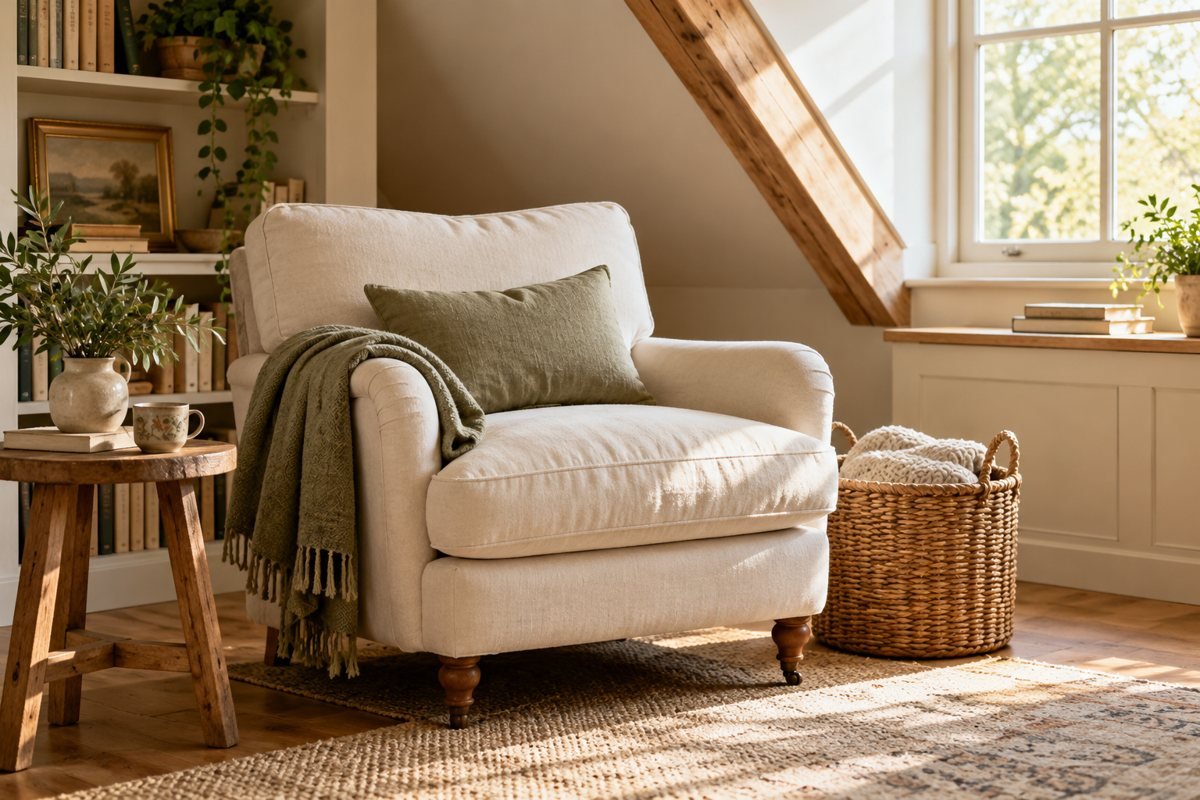
Drape one washable throw over the chair and keep a spare blanket in a basket beside it. Choose a basket that fits outside the walking route.
Soft furnishings should make the seat more comfortable, not make it difficult to use. Start with a throw that suits the room’s temperature and one cushion that supports your preferred position. Check care labels before choosing pale fabrics or heavily textured materials. Removable, washable covers may be more practical than delicate fabrics in a room used by children or pets. Keep an extra blanket in a nearby basket if needed rather than covering every seat with several layers. You can create a cozy impression with a small number of pieces that are easy to care for.
10. A Reading Nook on a Simple Woven Rug

Use a flat woven rug to connect the chair, side table, and lamp. Choose a size that suits the furniture and keeps the route through the attic clear.
A rug can visually connect the chair, lamp, and side table, especially in an attic that serves more than one purpose. Measure the proposed arrangement before choosing a size. The rug should relate to the furniture rather than sit like an isolated mat in the middle of the floor. Consider door clearance, uneven surfaces, and the route to the stairs. Use a suitable rug pad where needed, and deal with edges that curl. If a rug makes the area less stable or more awkward to clean, a clear floor can be the better choice.
11. A Quiet Reading Corner Beneath Exposed Roof Beams

Let existing roof beams frame a simple chair and low shelf below. Keep added decor light so the shape of the attic remains easy to see.
Sloping ceilings already give an attic a noticeable shape, so you do not need to decorate every angle. Keep taller objects in areas with enough clearance and use lower zones for appropriately sized furnishings. A single picture on a vertical wall may feel calmer than a busy arrangement competing with several rooflines. Existing beams or unusual windows can act as visual features without extra accessories. Avoid attaching heavy shelves or hanging furniture to an unknown surface. When you are unsure what a wall or beam can support, get appropriate professional advice before installing anything.
12. An Attic Bookcase with Framed Art and Personal Details

Place a small framed print and a keepsake among a few books near the chair. Leave open space so each piece can be seen without crowding the shelf.
Choose details that connect with how you want to use the nook. A framed print, a favorite bookmark in a small dish, or a photograph can make the corner feel personal without taking over the useful surfaces. Try placing one object at a time, then look at the arrangement from the doorway and from the chair. Remove anything that blocks the lamp or crowds the book storage. You do not need to buy accessories to fill a shelf. Space between objects can make the pieces you keep easier to notice and enjoy.
13. A Reading Corner Beside a Tidy Attic Desk

Turn a reading chair away from a nearby desk to give each area its own feel. Use closed storage for work supplies and keep the floor between them open.
If the attic also holds a desk, hobby supplies, or household storage, give the reading corner a clear boundary through furniture placement. A chair facing away from a work surface can help distinguish the two areas. Use closed containers for items that do not belong to the reading setup, and leave access to them unobstructed. Avoid putting a screen or tall unit where it interferes with movement or light. The goal is a usable corner within the room, not a division that creates narrow passages or makes the rest of the attic difficult to reach.
14. A Reading Chair with a Compact Footstool

Pair an armchair with a small footstool and place a table within reach. Test the extra space needed before adding the stool to a narrow attic.
Spend several ordinary reading sessions in the nook before deciding it needs another piece of furniture. Notice what interrupts you. Perhaps the lamp switch is difficult to reach, the table is on the wrong side, or there is nowhere to put your feet. Fix that specific issue first. Move existing pieces around before shopping for replacements. You might discover that a different chair angle solves the problem without costing anything. Taking photographs can help you compare arrangements, but judge the final layout by how it feels to use, not only how it appears on a screen.
15. A Simple Attic Nook with One Shelf and a Basket
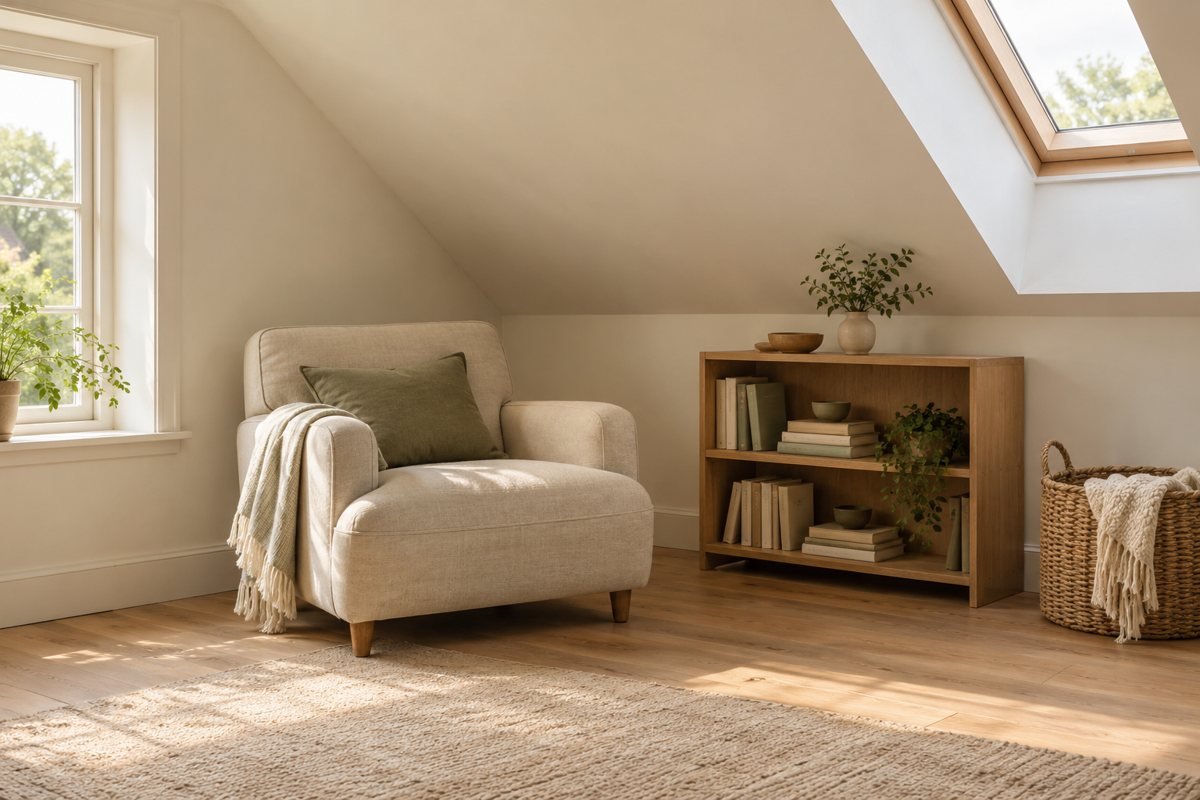
Keep the final look simple: one comfortable chair, a low book shelf, and a basket for a throw. Leave spare floor space around the setup so it is easy to tidy.
Give yourself a quick way to reset the area after reading. Return the current book to its shelf, take mugs downstairs, and fold the throw back over the chair. Keep a small basket for items waiting to go elsewhere, then empty it regularly. This is a decorating guide for an attic already suitable for regular use. An unfinished or unassessed attic needs appropriate professional checks before becoming occupied space, particularly when adding heavy book storage. For a finished room, start with a comfortable seat, reachable lighting, and a clear route. Add further details only when they make the corner more useful.