
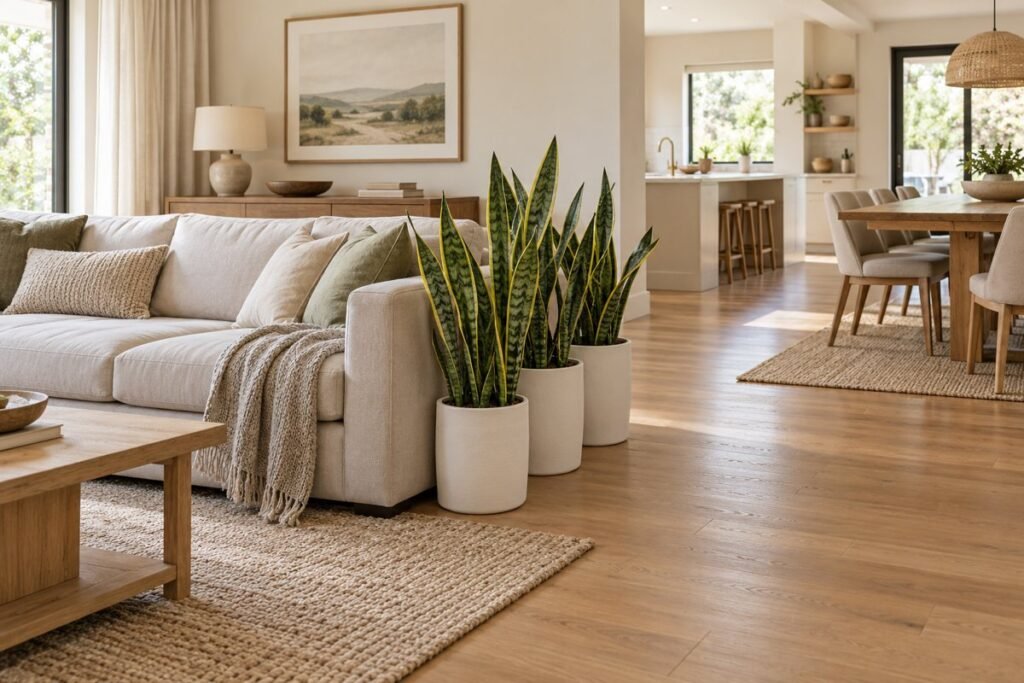
An open room can feel wonderfully spacious until your desk, dining table, and sofa seem to share the same corner. Snake plant room divider ideas offer a simple way to give each area a clearer purpose without adding a solid wall. Their upright leaves bring shape to a display, while the spaces between pots keep the arrangement visually open. The trick is choosing a setup that fits your room and remains easy to care for. Below, you’ll find practical layouts for apartments, living rooms, and work corners, plus tips for planning a divider you can comfortably live with every day.
Before You Choose a Divider, Decide What It Needs to Do
Start with the view you want to change. Are you trying to define the dining area, make a desk feel separate, or give an entrance a little structure? A plant arrangement can mark a boundary, but it will not provide the privacy of a solid partition. Sit in the places you use most and look across the room before settling on a position. Then measure the available floor space and leave a comfortable walking route. You may find that a short arrangement does enough. A divider does not have to stretch across the entire room to be useful.
1. Snake Plants in White Pots Beside a Living Room Sofa
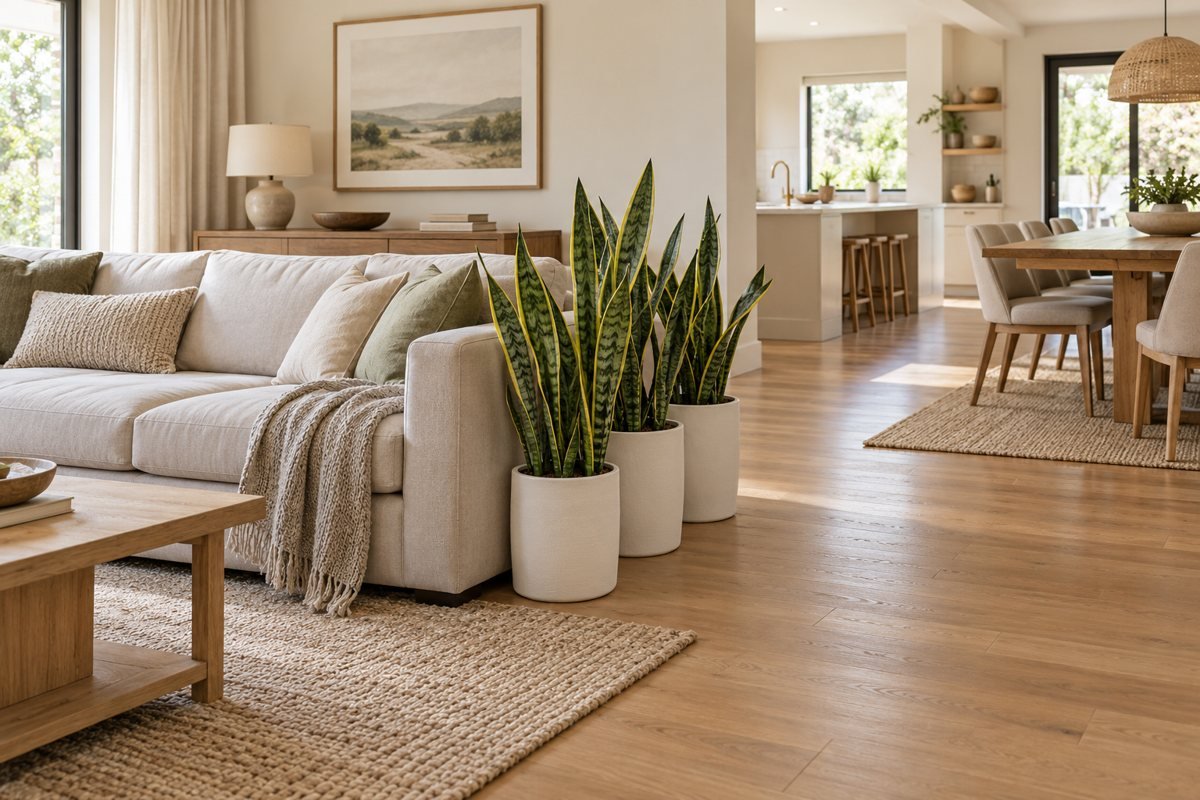
Place a short row of snake plants in white pots near the end of a sofa. Leave a clear route around the display so the living area feels defined but open.
Place a short line of snake plants near the outside edge of your seating arrangement. Think of it as a visual stopping point for the living area rather than a barrier across the room. Start with a few pots and check the view from the sofa and the doorway. Leave enough space to walk around the arrangement without brushing the leaves. This works especially well when furniture seems to float in an open room. Keep the pots within the same general color family so the display reads as one thoughtful feature instead of several unrelated plants.
2. Snake Plants in Dark Pots Along a Home Office Edge
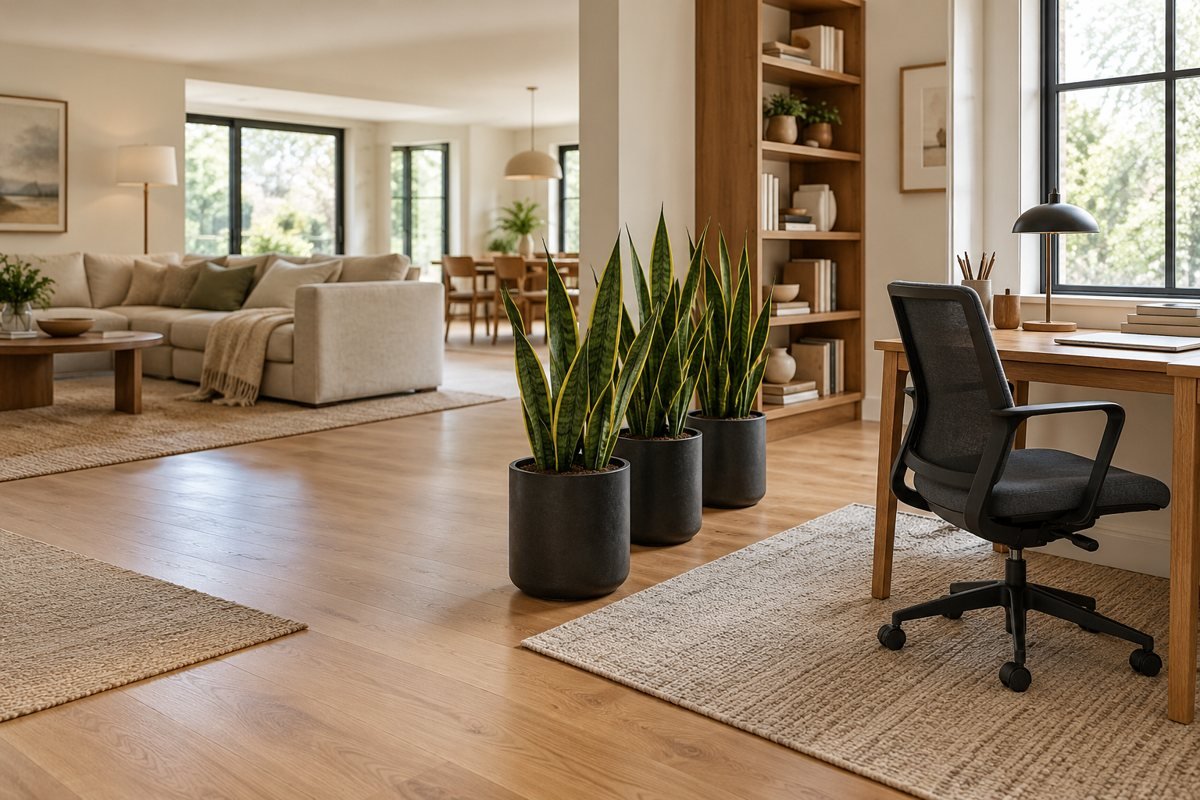
Use a small row of dark pots beside a desk to mark the edge of the work area. Keep the chair space and nearby window clear.
A desk in the living room can make work feel constantly on display. Try placing a small plant grouping to one side of the workspace, where it marks the transition without blocking your chair or hiding the window. Check that you can pull the chair back fully and reach drawers, cables, and outlets. The aim is to frame the work area, not squeeze it into a leafy enclosure. Choose a position where the plants receive suitable light throughout the day. If the desk corner is too dark, a nonliving divider may be a better fit.
3. A Snake Plant Pair Beside a Studio Entry Table
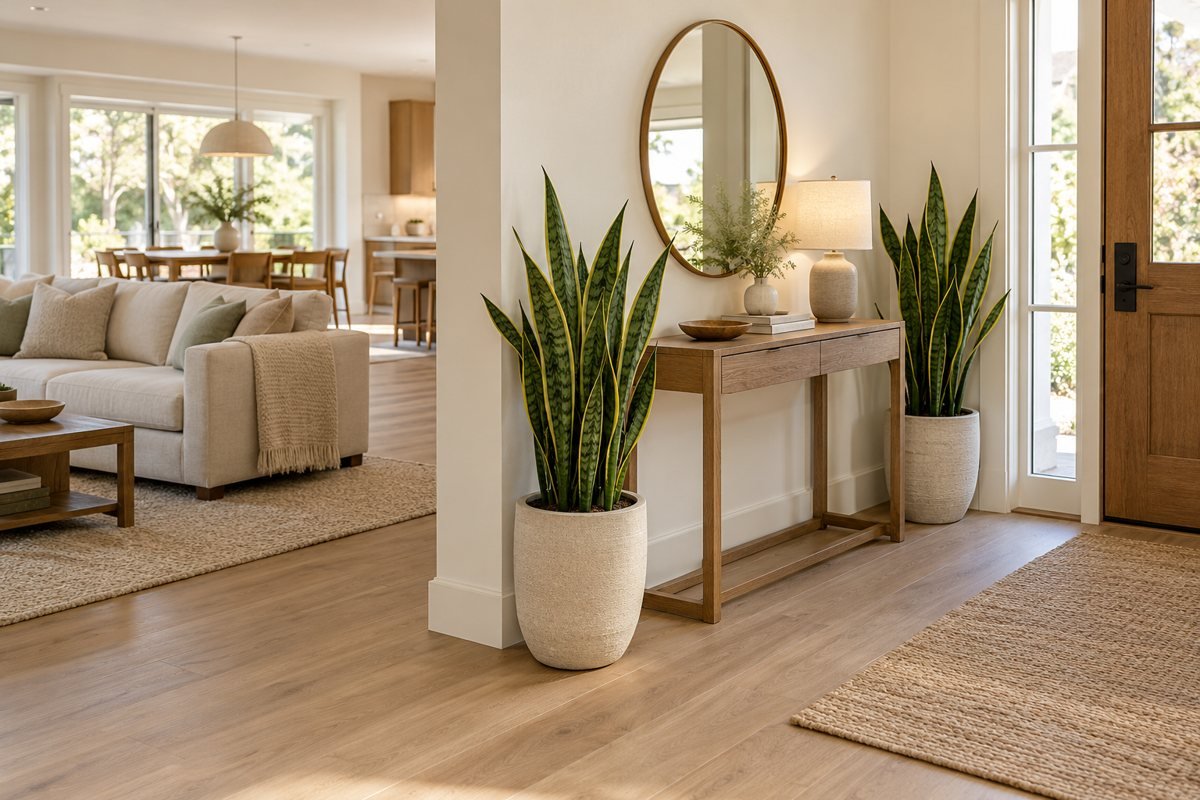
Set two stable floor pots beside a narrow entry table. The plants suggest a small entrance area without standing in the door’s path.
When the front door opens straight into the main room, a compact plant display can suggest an entrance area. Position it beside an existing console or along the edge of the space rather than in the door’s path. Open the door fully while testing the layout, and check that bags and coats will not knock the pots. A clear surface for keys can remain the useful focus, with the plants providing a softer boundary nearby. You do not need a tall arrangement here. Even a modest grouping can make the entrance feel more deliberate.
4. A Low Snake Plant Display Between Dining and Living Areas
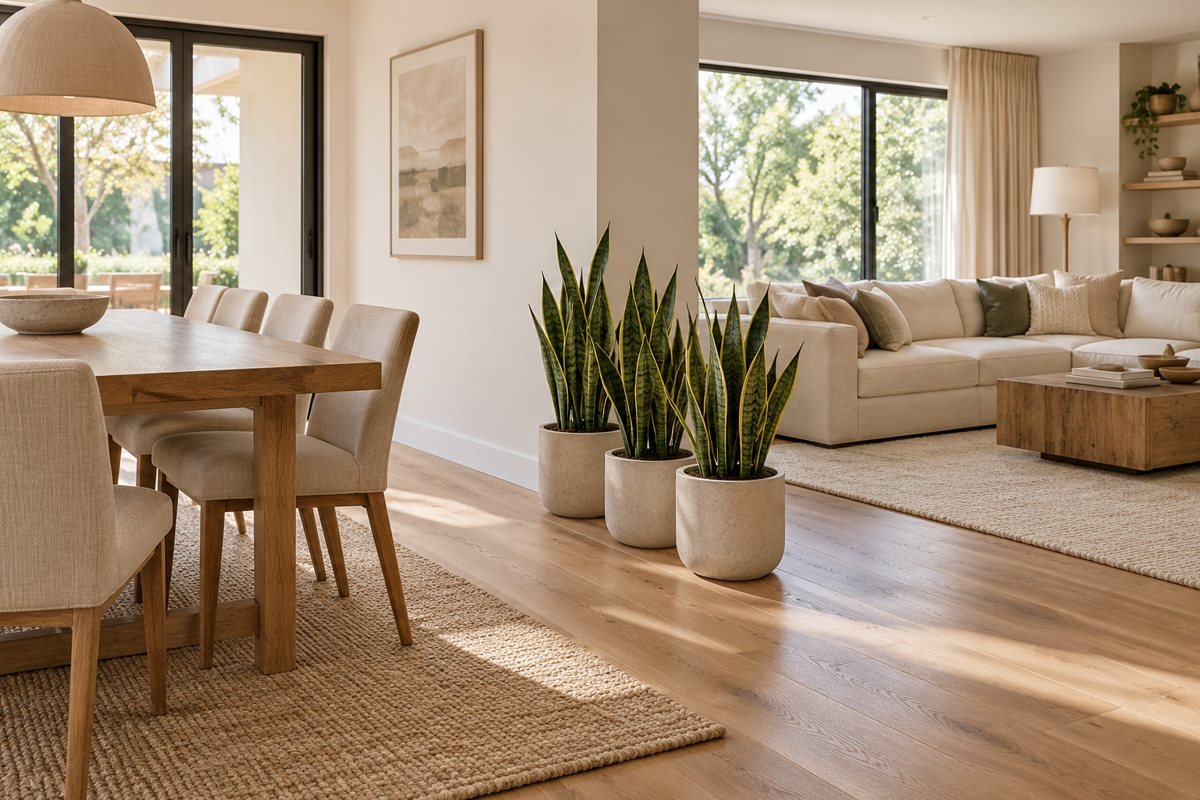
Arrange a short group of plants in low matching containers where the dining area meets the lounge. Leave room for dining chairs to slide out.
In a combined living and dining room, place plants near the point where one furniture group ends and the next begins. Keep them away from the space needed to pull out dining chairs. A short display is often easier to work around than a continuous row, especially when you have visitors. Repeat a finish already used nearby, such as warm terracotta or a muted ceramic color, to connect both areas. Before buying pots, use empty containers to test the footprint. Look at the arrangement from a seated position as well as while standing.
5. A Snake Plant Cluster Beside a Reading Chair
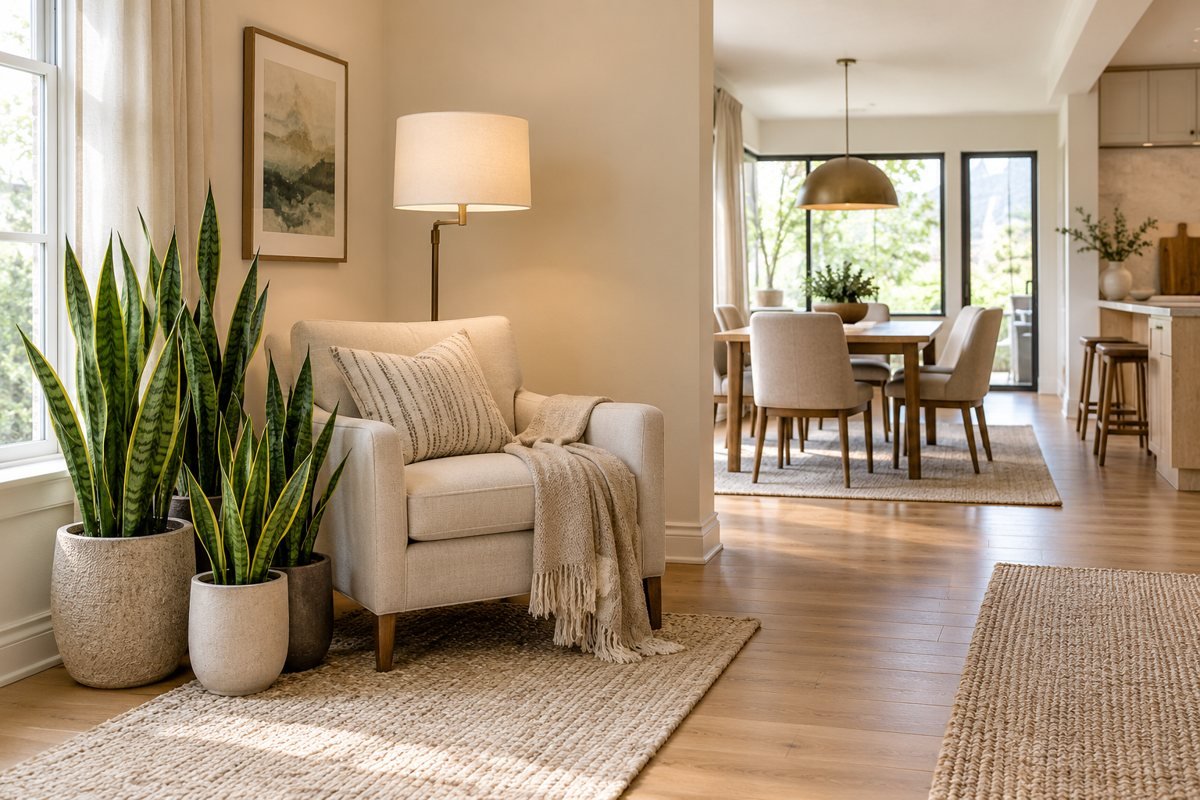
Group a few snake plants beside a reading chair and lamp. Keep them outside the space used by the side table and your feet.
A reading chair does not always need a screen behind it to feel like a separate corner. A small grouping of snake plants beside the chair can provide a visual edge while leaving the room open. Keep the side table and lamp easy to reach, and avoid putting pots where your feet naturally land. Choose different plant heights only if they still look balanced together. The tallest leaves should help frame the scene rather than block the reading light. Finish with one comfortable throw, then resist adding more accessories until you have used the corner.
6. An Even Row of Snake Plants in Matching Gray Pots
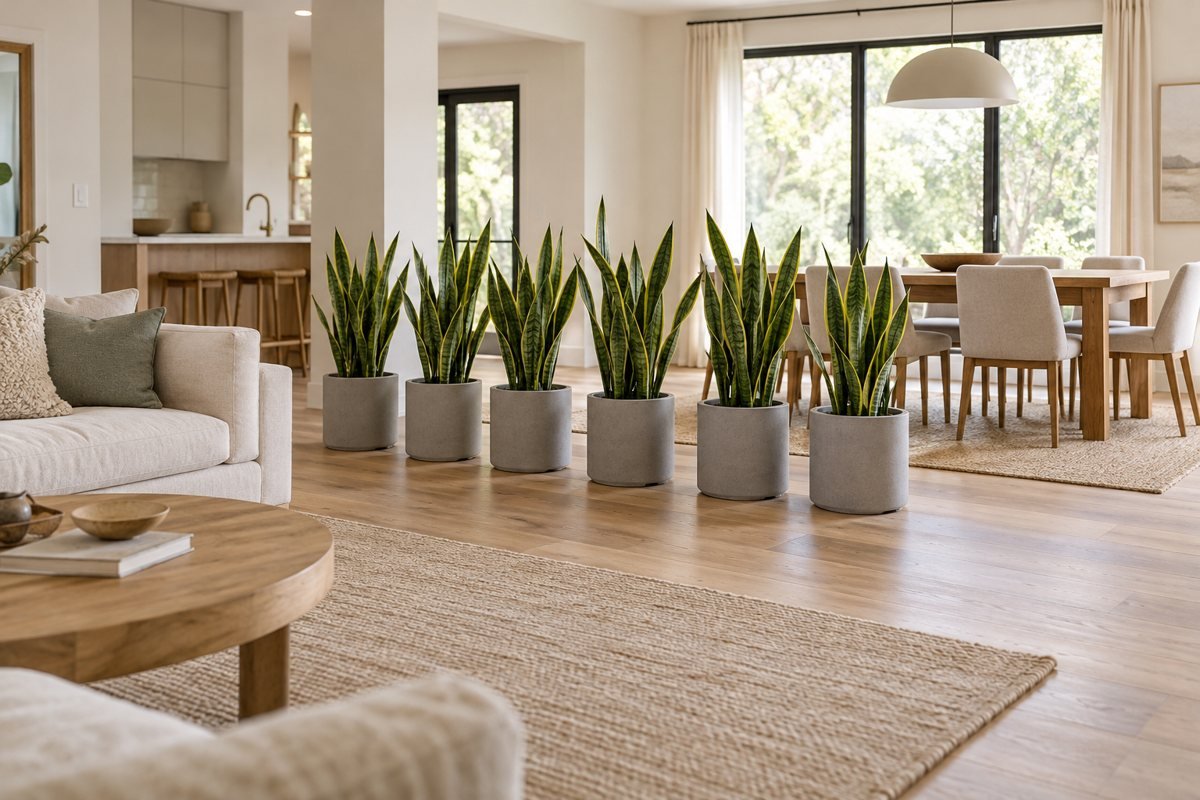
Use the same gray container shape in an even row for a simple divider. Leave small gaps so each pot stays easy to reach.
If you prefer a clean look, repetition can do much of the styling work. Use the same container shape in a small sequence, with enough space between each pot to make cleaning manageable. Matching containers do not require identical plants; slight differences in leaf height can keep the display from feeling rigid. Check the width at the base as well as at the rim, because some decorative pots take up more floor space than expected. Start with fewer containers than you think you need. It is easier to extend the arrangement later than live with a crowded passage.
7. Snake Plants in Terracotta Pots of Different Sizes
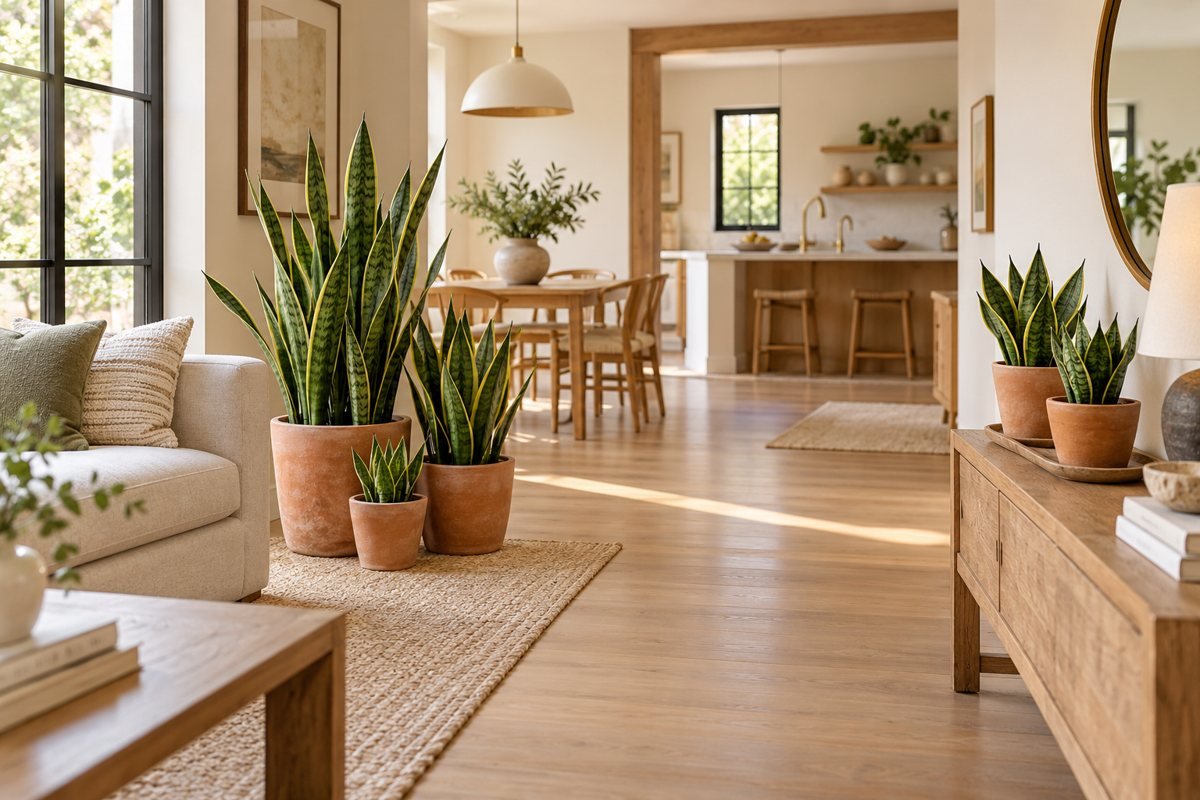
Group terracotta pots in a few sizes to create a relaxed boundary. Keep the smaller containers within the display rather than along a walking route.
For a softer arrangement, keep the color consistent while varying the pot sizes slightly. This gives you a collected look without introducing several competing finishes. Place the group where it defines the end of a zone, then check that smaller pots do not disappear into a walking route. A low container tucked behind a taller one may look attractive from one direction but become awkward from another. Walk around the whole display before deciding it is finished. Each plant should remain accessible for inspection and care rather than being hidden inside the arrangement.
8. Small Snake Plants on a Sturdy Wood Console
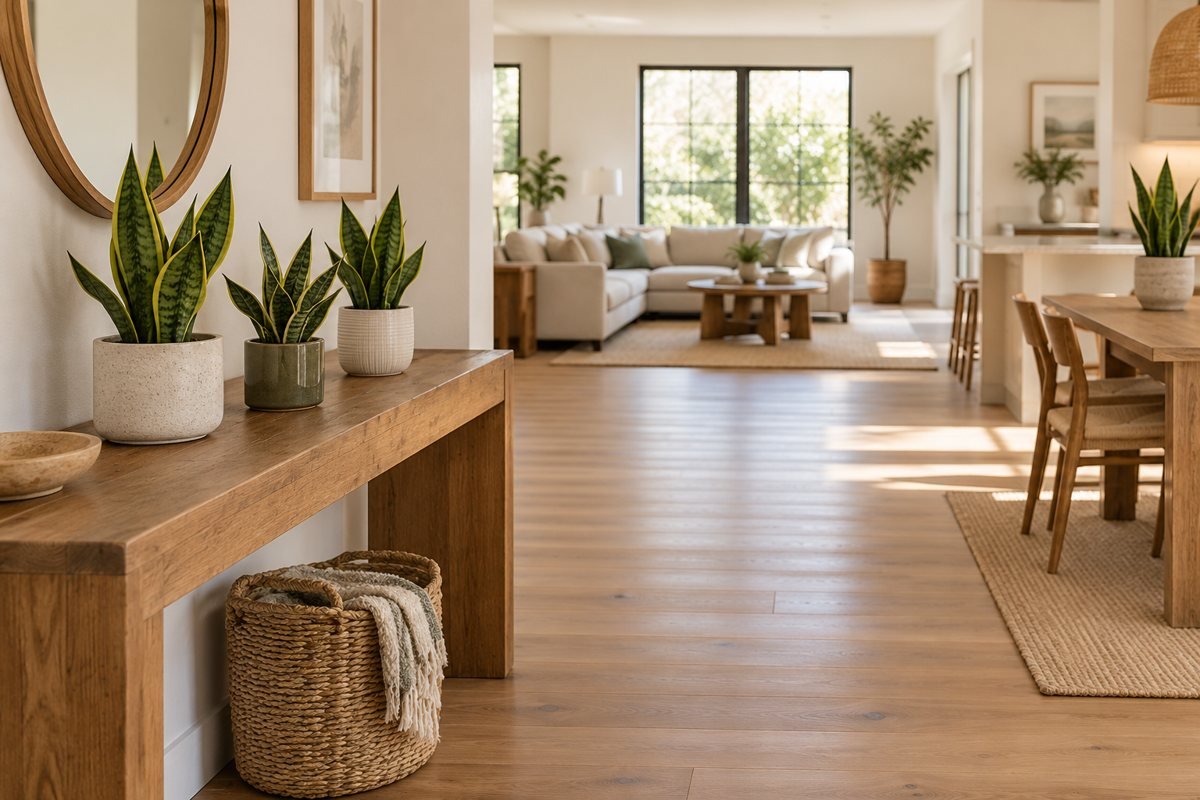
Use a sturdy wood console with a few small pots across the top. Keep the containers back from the edges and protect the surface from water.
A stable console can help establish a boundary between two areas, with a few appropriately sized plants adding greenery. Check the furniture’s load guidance and protect its surface from water. Keep pots well back from edges and avoid narrow, easily tipped furniture. A console display is most practical when it remains simple enough to maintain without lifting several objects out of the way. You can keep the plants in individual nursery pots inside decorative containers for easier handling. If the furniture does not feel steady or cannot safely support the display, use floor containers instead.
9. A Snake Plant Row Along the Short Edge of a Rug
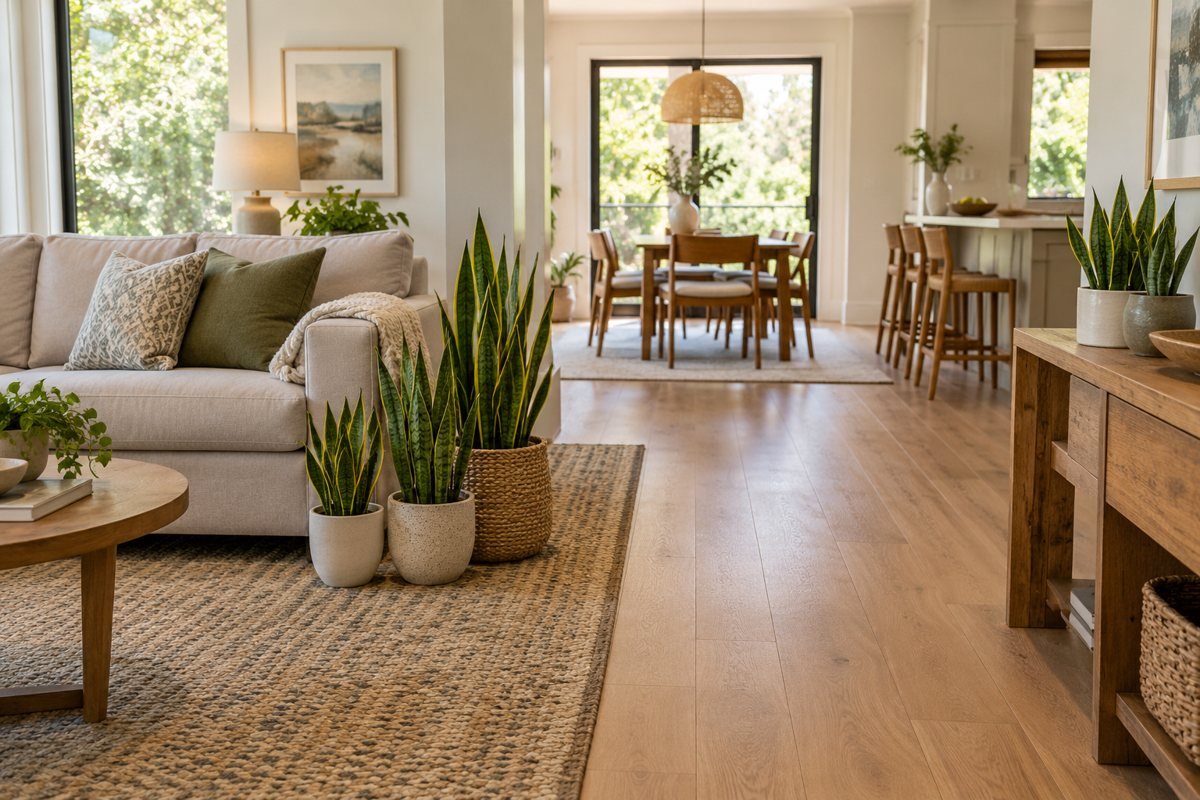
Follow the short edge of a living room rug with a compact plant display. This makes the room’s zones clear without adding a new angle.
Rather than introducing a new angle, let the arrangement follow a line already in the room. A plant display aligned with the end of a rug or the side of a sofa can make the layout feel more organized. It does not need to touch the furniture to relate to it. Leave room to vacuum, adjust cushions, and reach anything stored nearby. Check how the leaves spread beyond the containers, since the plant’s footprint can be wider than the pot. The best position should make sense during normal use, not only when everything is freshly arranged.
10. An Offset Snake Plant Group in Cream Pots
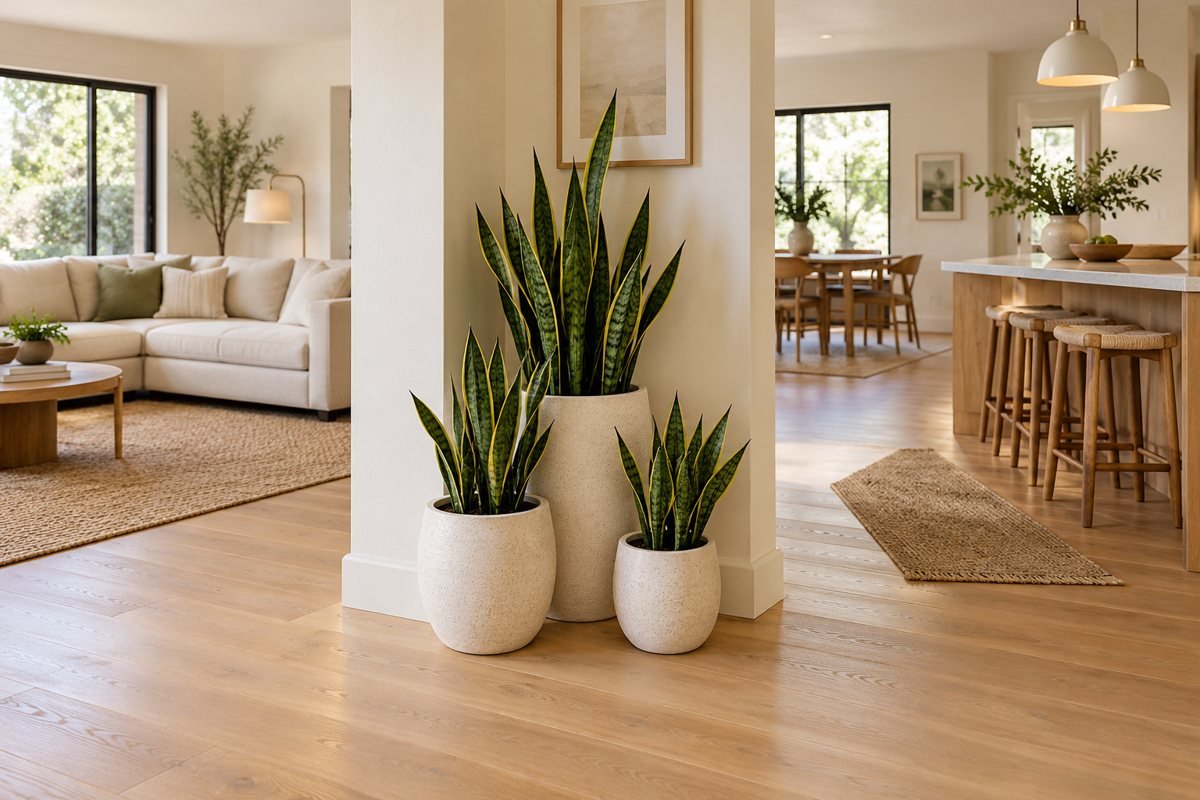
Set cream pots in a small offset group at the meeting point of two areas. Keep the shape compact so the route around it remains obvious.
A perfectly straight divider can feel too formal in a relaxed room. Try a small offset grouping at the meeting point of two zones instead. Keep the containers close enough to look connected, but do not stagger them so far that the display becomes an obstacle course. View the arrangement from both sides and leave a clearly defined route past it. This approach is useful when you only need to suggest separation. It can also be easier to adjust as your furniture changes, because you are arranging individual pieces rather than committing to one large fixture.
11. Two Matching Snake Plant Groups with an Open Path
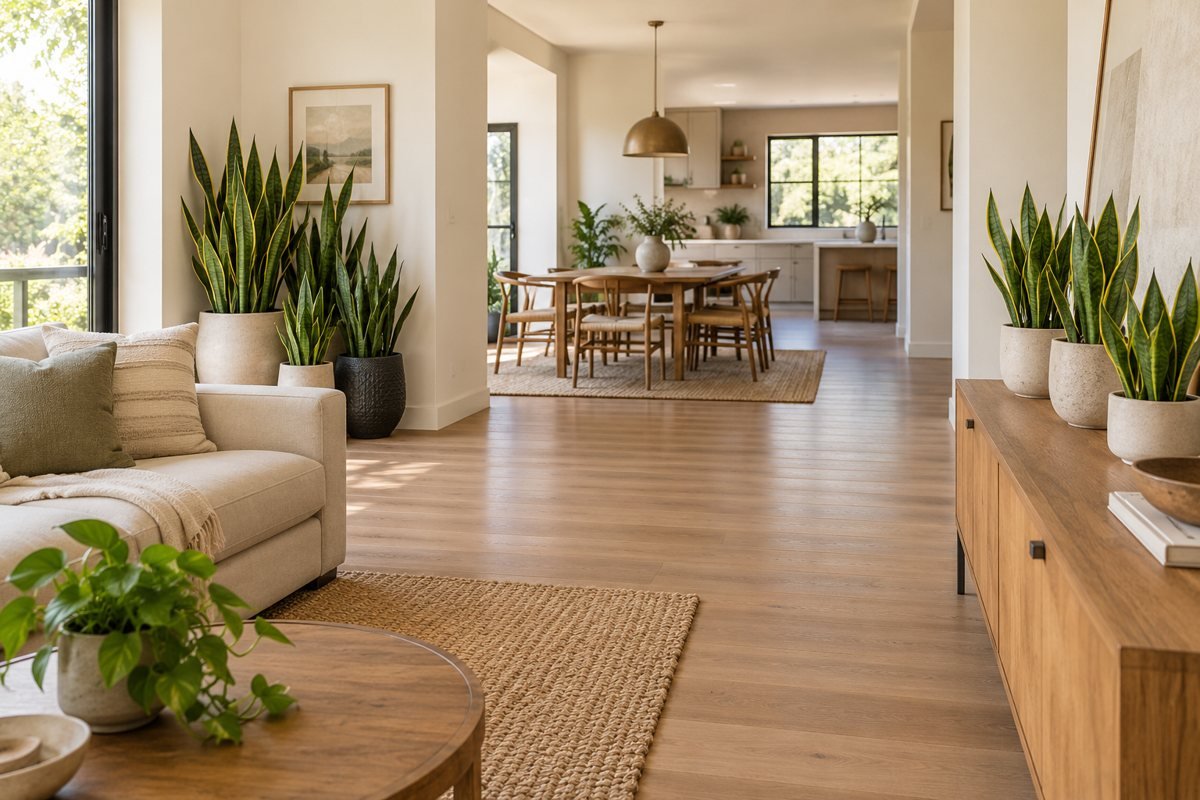
Place two matching groups at opposite ends of a shared living space. Leave the route between them open instead of making one long plant wall.
In a larger space, two separate groupings may work better than one long barrier. One could sit near the dining area and another beside the seating zone, with an open route between them. Repeat a container color or shape to make the groups feel related. Avoid assuming that more plants will automatically create a better result. Test a smaller display first and watch how people move through the room. Keep the plants in positions that suit their care needs, even if that means changing the spacing or choosing a different location for one group.
12. A Movable Snake Plant Divider in Individual Pots
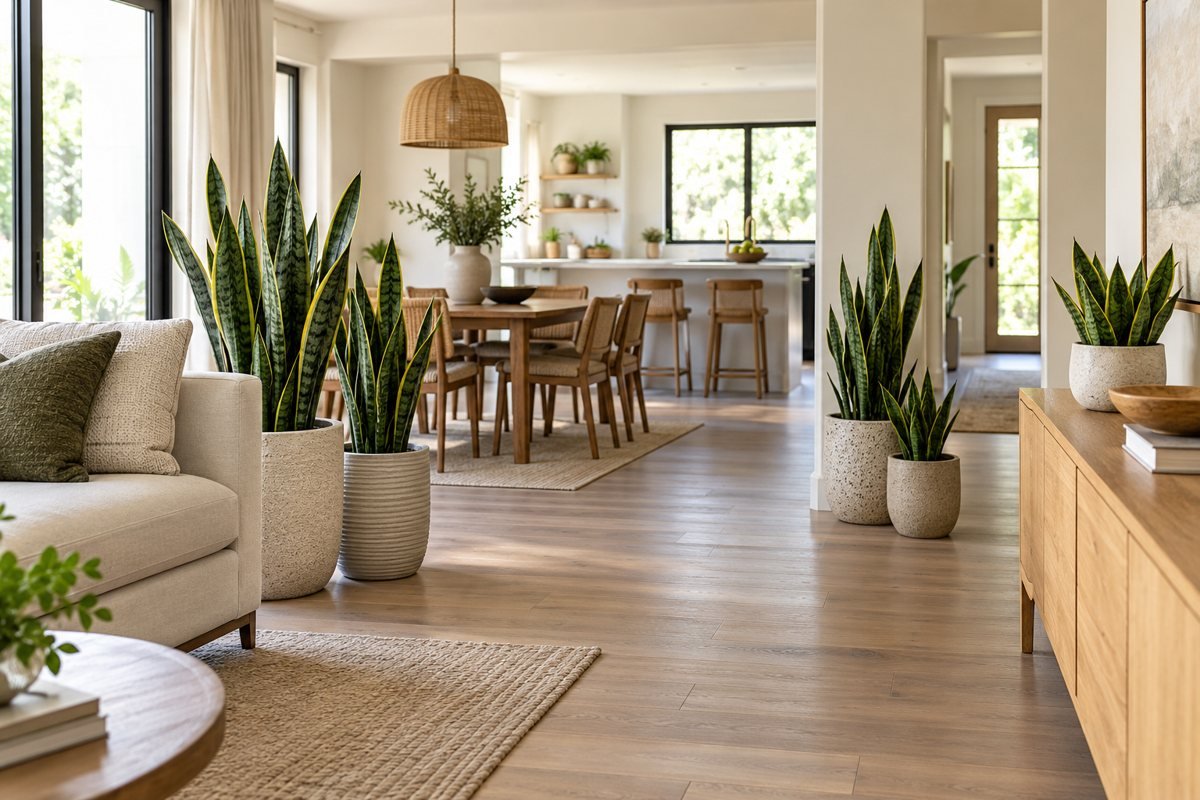
Use a few manageable pots to mark a boundary that can change with the room. Choose stable containers you can move safely when you need more space.
If your room regularly switches between work, meals, and entertaining, use manageable individual containers instead of a permanent built-in divider. Place them where they can stay most of the time, then plan an alternative position before a gathering. Check the full weight of a planted pot before choosing anything you expect to move. Do not drag heavy containers across delicate flooring or lift them by the leaves. A flexible setup should make life easier, not create another difficult chore. Sometimes two well-placed plants are more useful than a large display that needs constant rearranging.
Keep the Plants Healthy and the Setup Practical
Snake plants can cope with lower light, but the Royal Horticultural Society notes that they generally grow better in brighter positions. Do not treat an unlit corner as a permanent home simply because it needs decoration. The RHS also recommends letting the compost dry out between waterings rather than watering by habit. Use containers with suitable drainage and do not leave the nursery pots sitting in collected water inside decorative covers.
The ASPCA lists snake plants as toxic to cats and dogs. If pets can reach or chew the plants, choose a suitable alternative instead of relying on a divider arrangement to keep them away. For households with children, keep plants and loose decorative materials out of reach and make stability a priority. Avoid claiming that a plant divider provides soundproofing or replaces proper ventilation; its main purpose here is decorative zoning.
Once the practical details are settled, start small. Set out the containers, use the room for a few days, and notice whether the display improves the layout. Adjust anything that crowds a chair, blocks useful light, or makes cleaning difficult. A good snake plant divider should help each part of the room feel more intentional while leaving you free to move, relax, and enjoy the space.