
A bedside table collects small things quickly. A book arrives, then a cable, then a glass, and soon there is nowhere to put your glasses. More decoration will not solve that. A better starting point is deciding what you reach for at night and giving it a clear home. The table can still look warm and personal. Useful objects bring their own shapes and colors when they have enough space. These ten scenes suit different habits and furniture types. Try the one that solves your most common bedside problem, then keep only the details that make your evening easier.
Start Here
Choose the few things you reach for at bedtime, then give each an easy-to-use home. Check the arrangement while sitting or lying in bed, keep the route out clear, and separate drinks from phones and electrical equipment.
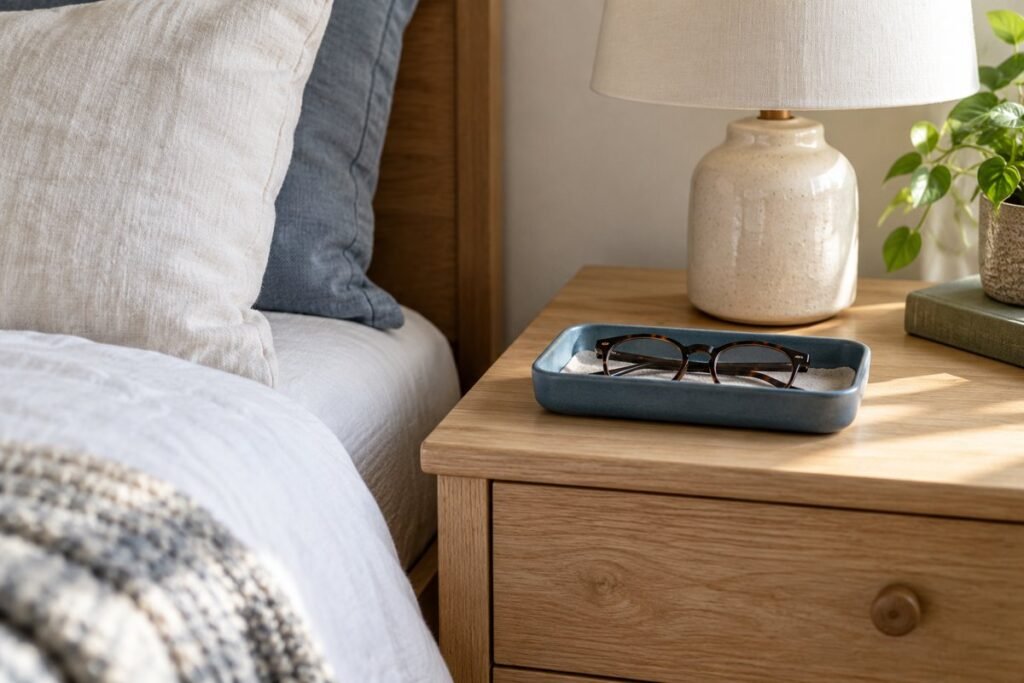
1. Give Your Glasses a Small Open Tray
A shallow blue tray on a pale wooden nightstand can give your glasses a clear place to land. Keep the tray close to the bed, with a plain lamp farther back. The color adds a small visual focus while the open shape makes the glasses easy to find. There is no lid to manage when you are tired.
Choose a tray wide enough for the glasses to sit without bending or hanging over the edge. A soft suitable lining may help protect them, but keep it clean. Test the reach while sitting and lying in your usual position. You should not have to stretch across a drink or knock the lamp. Avoid adding coins, clips, and jewellery until the tray becomes crowded. One clear purpose helps this little storage spot keep working.
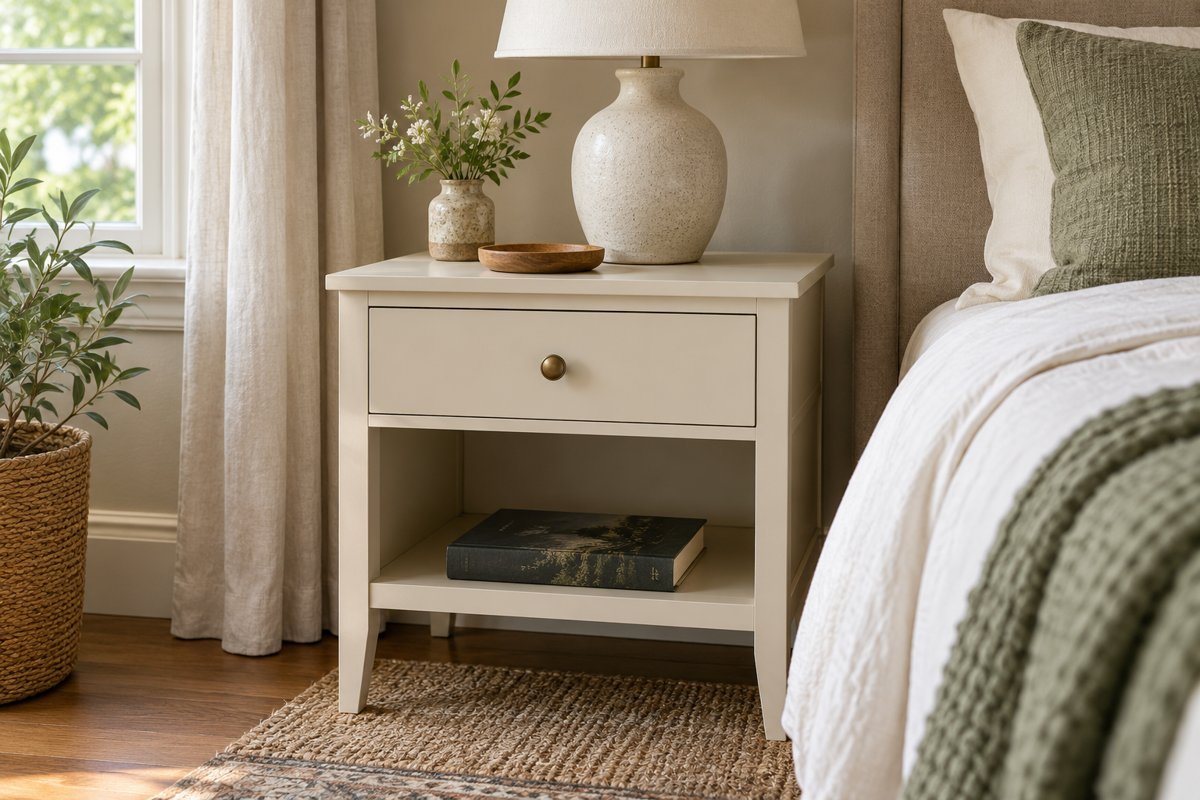
2. Keep One Current Book on the Lower Shelf
On a nightstand with an open lower shelf, place one current book flat with its spine facing out. A cream table and a dark book cover make a simple scene. Leave the top ready for your light and other essentials. The book adds personality without turning the surface into a leaning stack.
Choose a shelf you can reach comfortably. If bending for a book is awkward, keep it on top and move another item instead. Return finished books to their usual shelf rather than letting them gather here. A small bedside collection can grow into a pile before you notice it. Keep drinks on a separate stable spot so spills are less likely to reach paper. The most useful arrangement is the one that supports your actual reading habit.
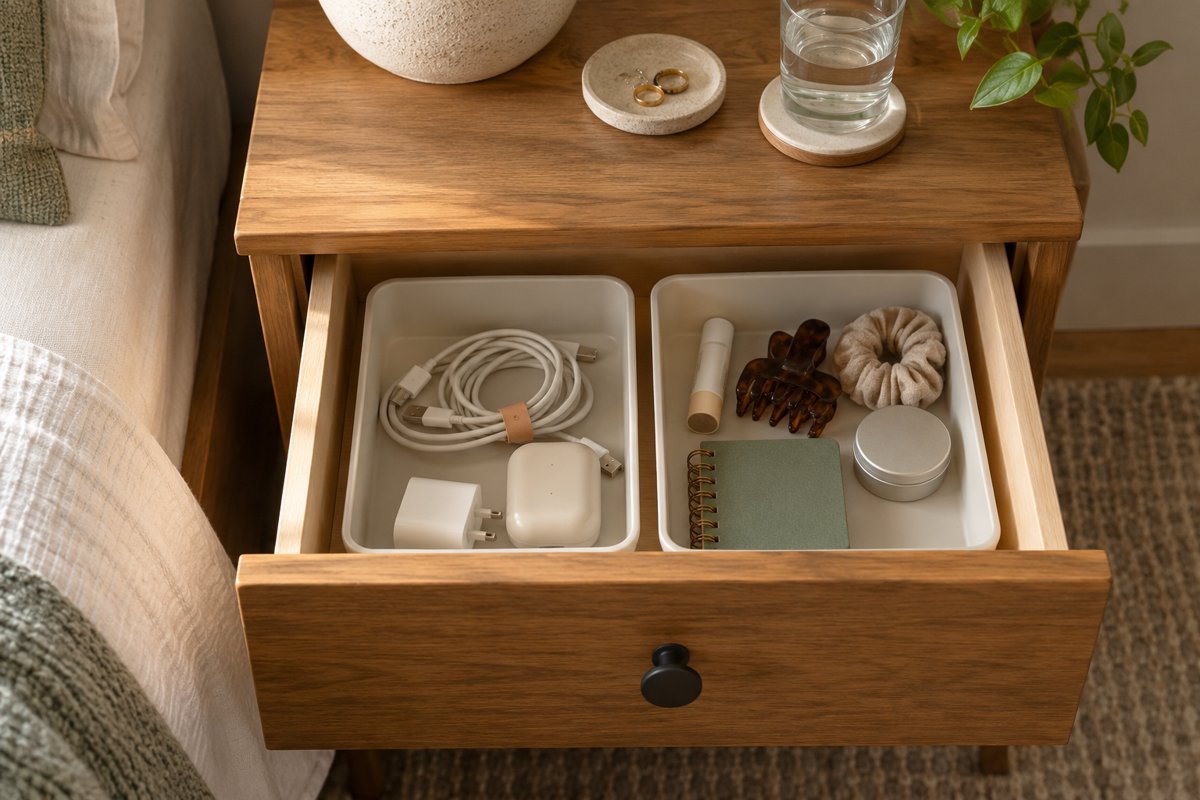
3. Divide a Drawer into Two Simple Areas
A drawer with two shallow organizers can separate cables from small personal items. Picture pale organizers inside a wooden drawer, with space around each so it opens smoothly. From outside, the closed drawer gives the nightstand a calm front. Inside, you can see what belongs where without searching through a heap.
Measure the drawer’s internal size and clearance before choosing inserts. Use containers you already own if they fit and stay steady. Do not pack the sections so tightly that items catch above them. Keep medicines and anything that needs secure storage in an appropriate place according to their labels and household needs. A bedside drawer is not automatically suitable for every small item. Check it regularly and remove things that belong in another room.
4. Make a Phone Spot Away from the Water
A small plain phone stand at the back corner of a nightstand can keep the screen visible without lying across the whole surface. Put a drink on the opposite side on a suitable coaster, leaving space between them. A dark stand against a light table creates a clear useful shape.
Follow the device and charger instructions, including ventilation and surface guidance. Keep cables clear of walking routes and do not trap them beneath furniture. Avoid charging under bedding or hiding a working charger inside a closed box unless the product is designed for that use. If the table is too small to separate water and electronics comfortably, choose another safe place for one of them. The arrangement should make your routine simpler rather than fit every item into a tiny space.
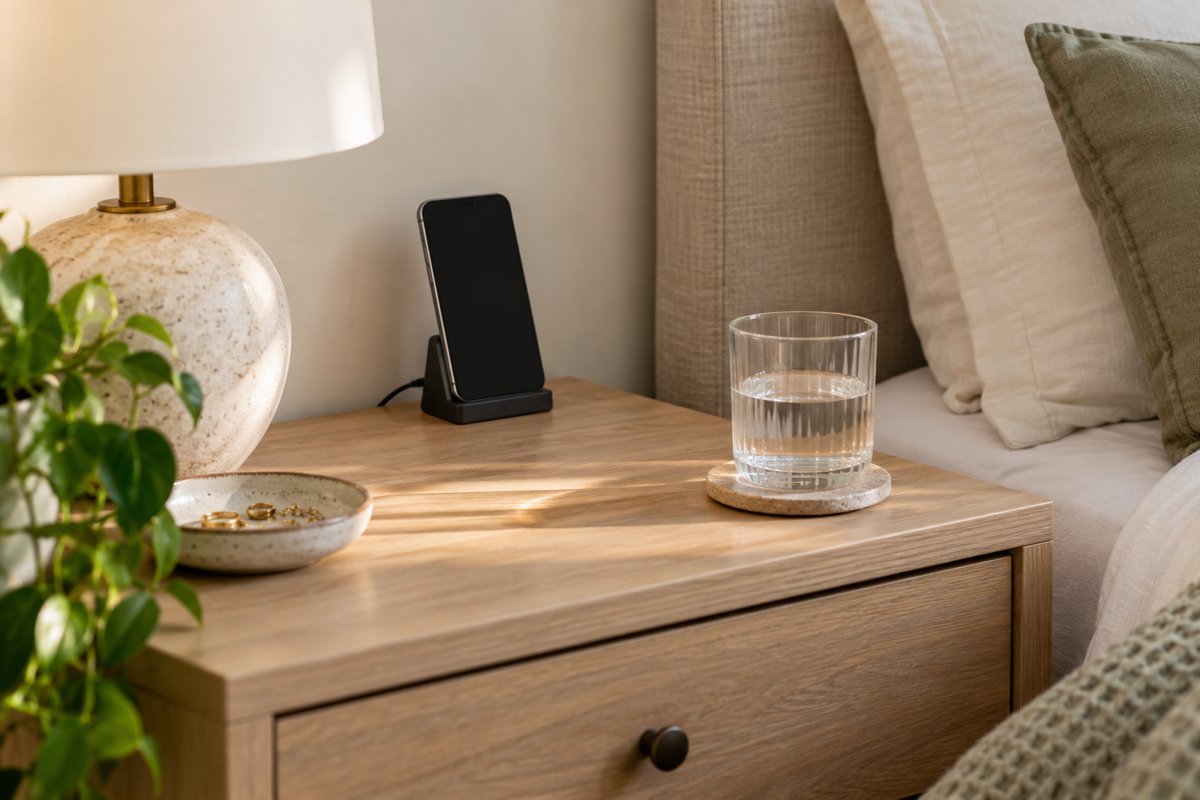
5. Use a Soft Basket for a Lower Open Cubby
A small fabric basket can fit inside a nightstand’s lower cubby and hold spare reading items or a sleep mask. Choose a muted green basket against a cream cabinet for a gentle color detail. Keep the basket’s front clear so it slides out easily. The contained shape makes the open cubby look less busy.
Measure the opening and leave room for your fingers around the handle. A basket that wedges tightly into place will be annoying to use. Keep only light, suitable items inside and avoid mixing in things that need special storage. If the basket sits on the floor beneath a table, make sure it does not catch feet when getting out of bed. Closed-looking storage can be helpful, but only when you can still reach the contents without effort.
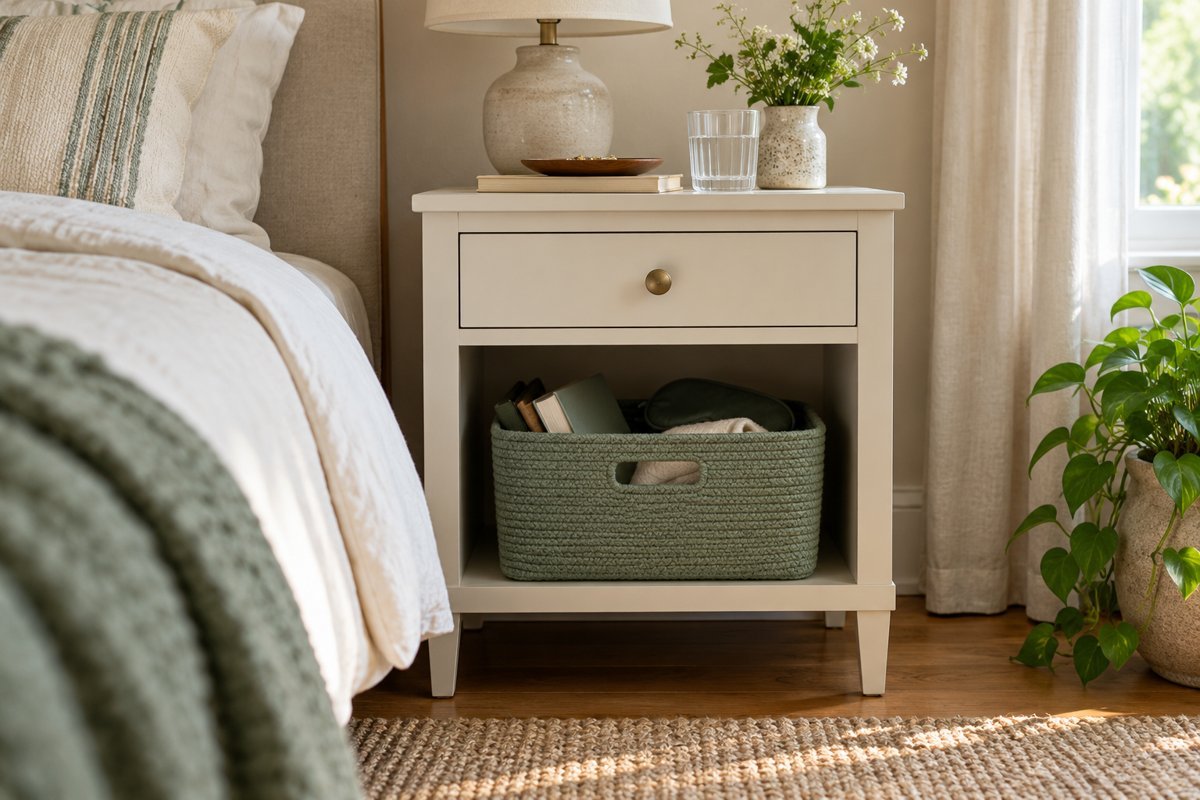
6. Put a Small Notebook Beside a Simple Pen Holder
For people who like to write before bed, a slim notebook and one pen can have a clear place on the table. Picture a warm brown notebook on a pale surface, with the pen in a small stable holder behind it. The paper adds texture while keeping the setup useful.
Leave enough open table to place the notebook flat when you use it. If writing in bed is uncomfortable, keep the notebook here only as a reminder and use a better work surface elsewhere. Avoid collecting several journals and loose sheets in the same spot. Put completed notes away during the day. A single current notebook is easy to see and return. The scene stays personal without becoming an extra desk beside your pillow.
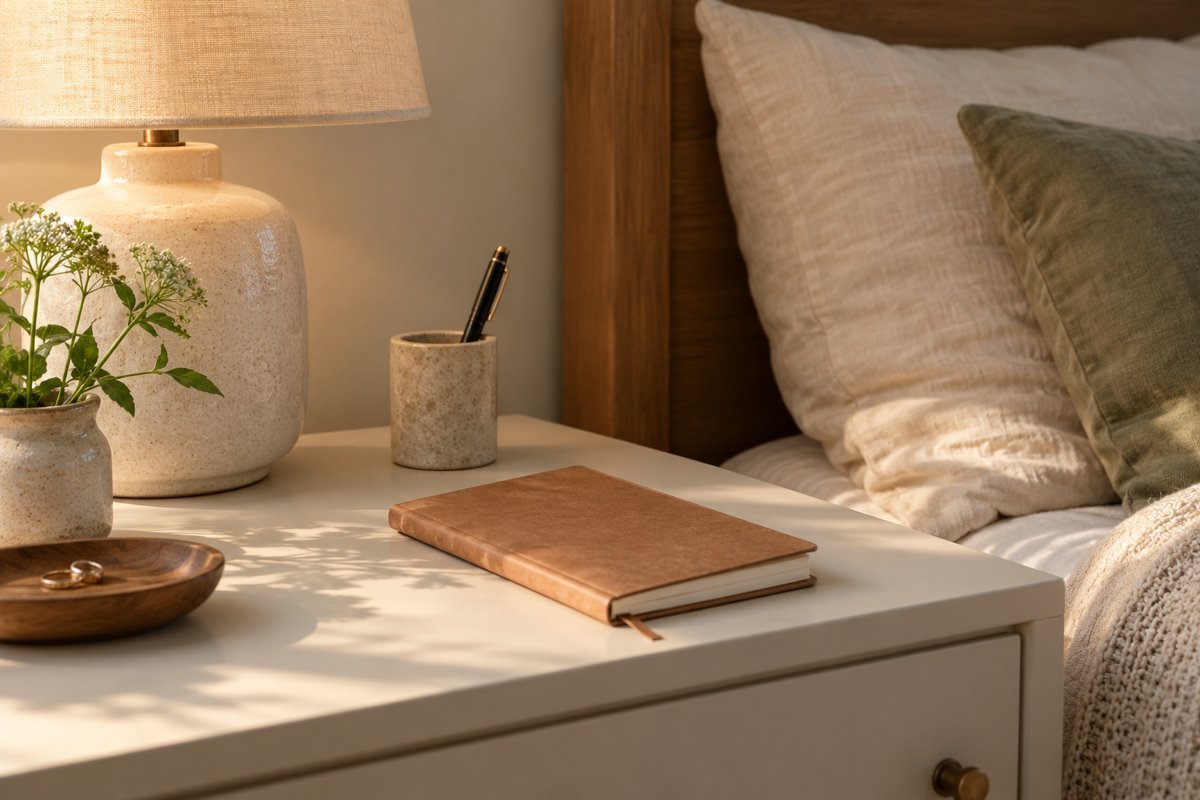
7. Choose a Lidded Box for Occasional Small Items
A low cream box can hold items you use only now and then, leaving everyday essentials outside. Set it toward the back of a dark wooden nightstand so the light shape stands out. The lid creates a calm surface and keeps small objects together. Leave space around it rather than stacking more pieces above.
Choose a lid that opens without hitting the lamp or wall. If you have to lift three decorations before reaching the contents, the box is in the wrong place. Keep frequently used items in an easier spot. Label the inside if several people share the storage. Check the contents from time to time so the box does not become a home for forgotten clutter. A small container works best when it has a clear limit and purpose.
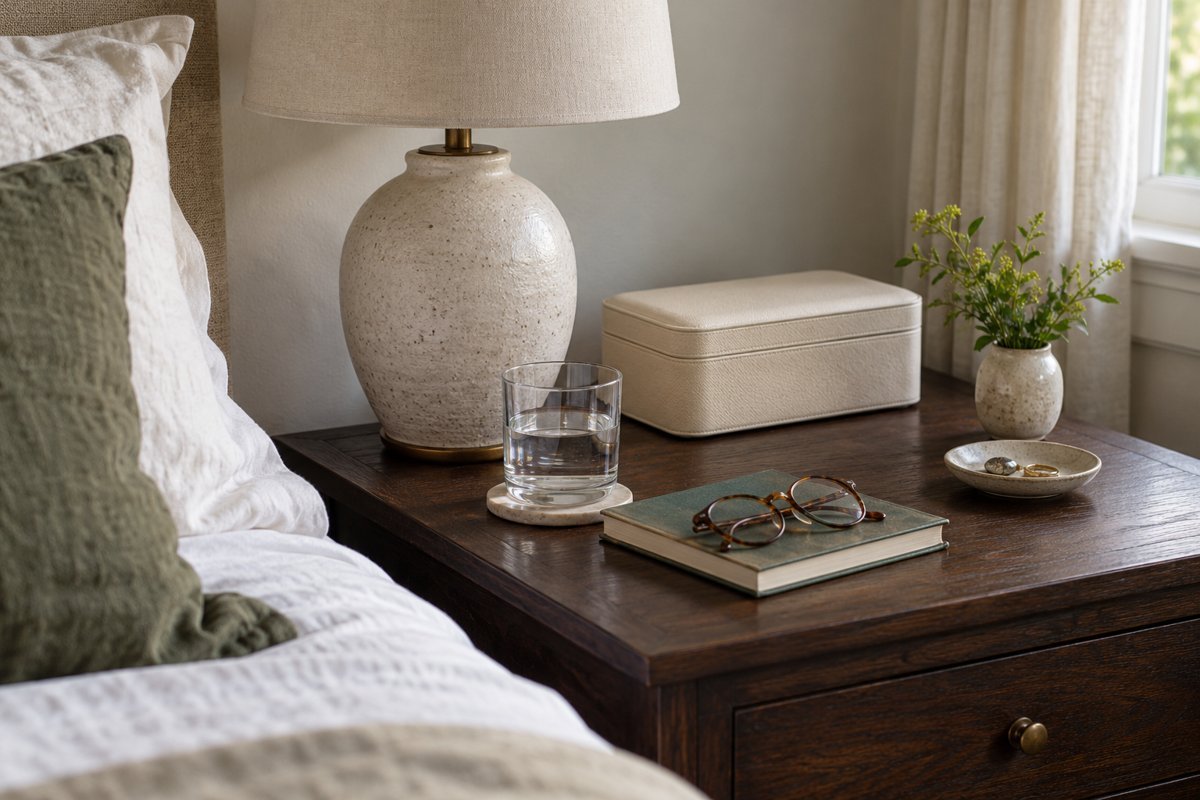
8. Keep a Wall Light Above an Open Bedside Surface
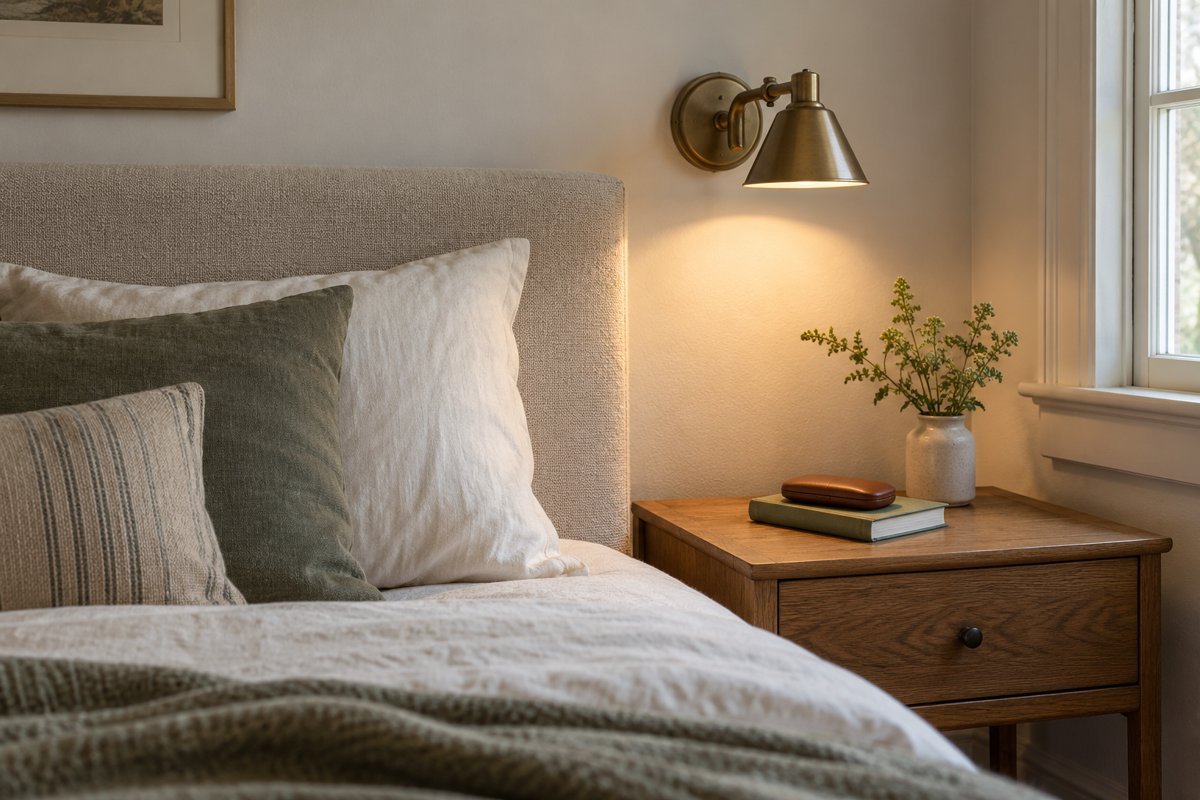
Where a suitable wall light is already installed, let the nightstand top stay mostly clear. A single glasses case and a closed book can be enough. The wall light gives height to the scene while the table provides a useful landing place. This suits a narrow nightstand that would feel crowded with a lamp.
Check that the switch is easy to reach and the light works for your normal needs. New electrical work should follow local requirements and be handled by an appropriate professional. For plug-in lights, follow mounting and cable guidance and keep cords out of the route beside the bed. Do not add a tall object just to replace the visual height of a lamp. Empty space is useful when you need to set something down at night.
9. Use Different Storage on Each Side of a Shared Bed
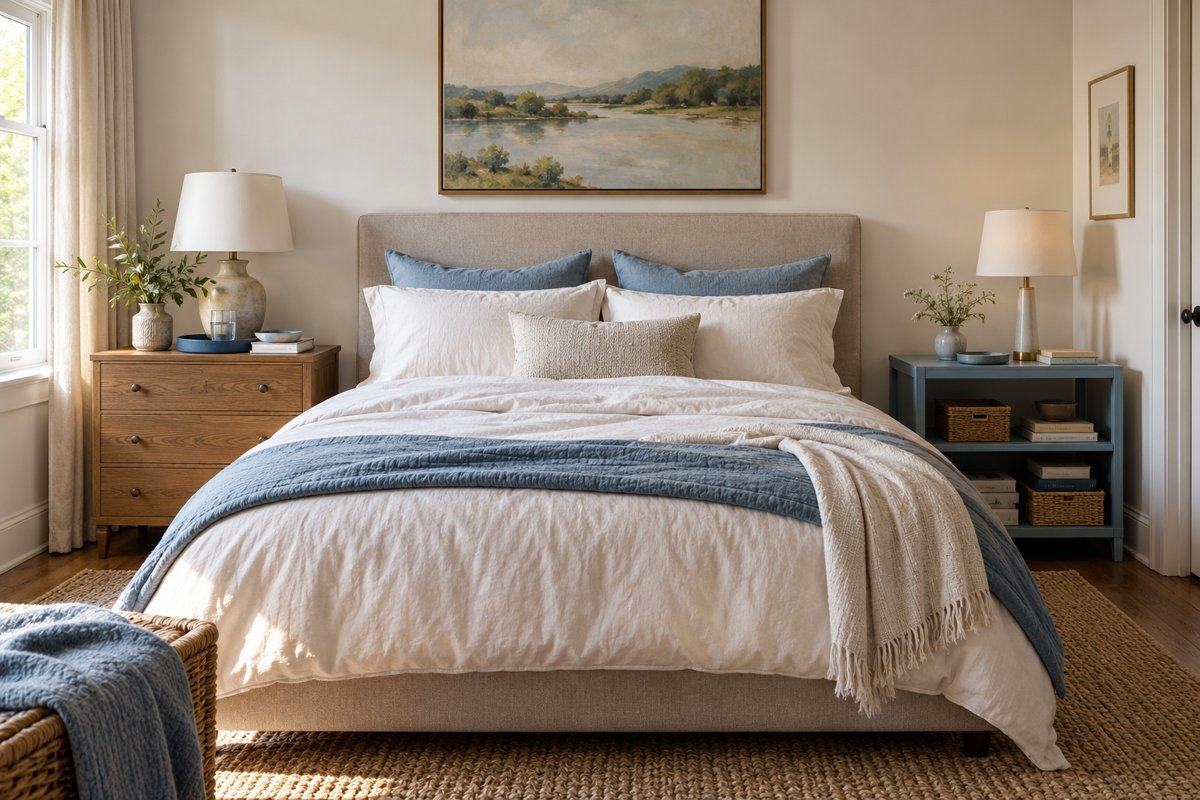
One side of a shared bed might have a drawer cabinet, while the other has an open shelf table. Link them with similar plain trays or one shared color, such as soft blue. The scene feels connected while allowing each person to keep what they need nearby. Matching every object is optional.
Choose furniture heights and positions that each person can use comfortably. Check door openings and the route around the bed. A drawer needs room to pull out without hitting the frame or bedding. Talk about what belongs on each surface rather than copying the same display twice. One person may need space for a book, while the other prefers a clear top. A shared room feels calmer when the storage supports both routines.
10. Make a Guest Nightstand Simple to Understand
A guest nightstand can hold a plain lamp, a small open tray, and a clear patch for personal belongings. A cream tray on a warm wood surface feels welcoming without many extra objects. Leave the drawer mostly empty so visitors have somewhere to put their things. The useful space is part of the welcome.
Test the lamp and make its control easy to find. Keep spare household clutter out of the guest drawer. If you leave a welcome note, make it short and place it where it can be moved easily. Avoid strong scents or fragile ornaments beside the bed. Guests may bring glasses, chargers, or a book, and they need room for those items. A thoughtful scene makes the furniture’s purpose clear instead of asking visitors to rearrange your decorations.
Try the Arrangement at Bedtime
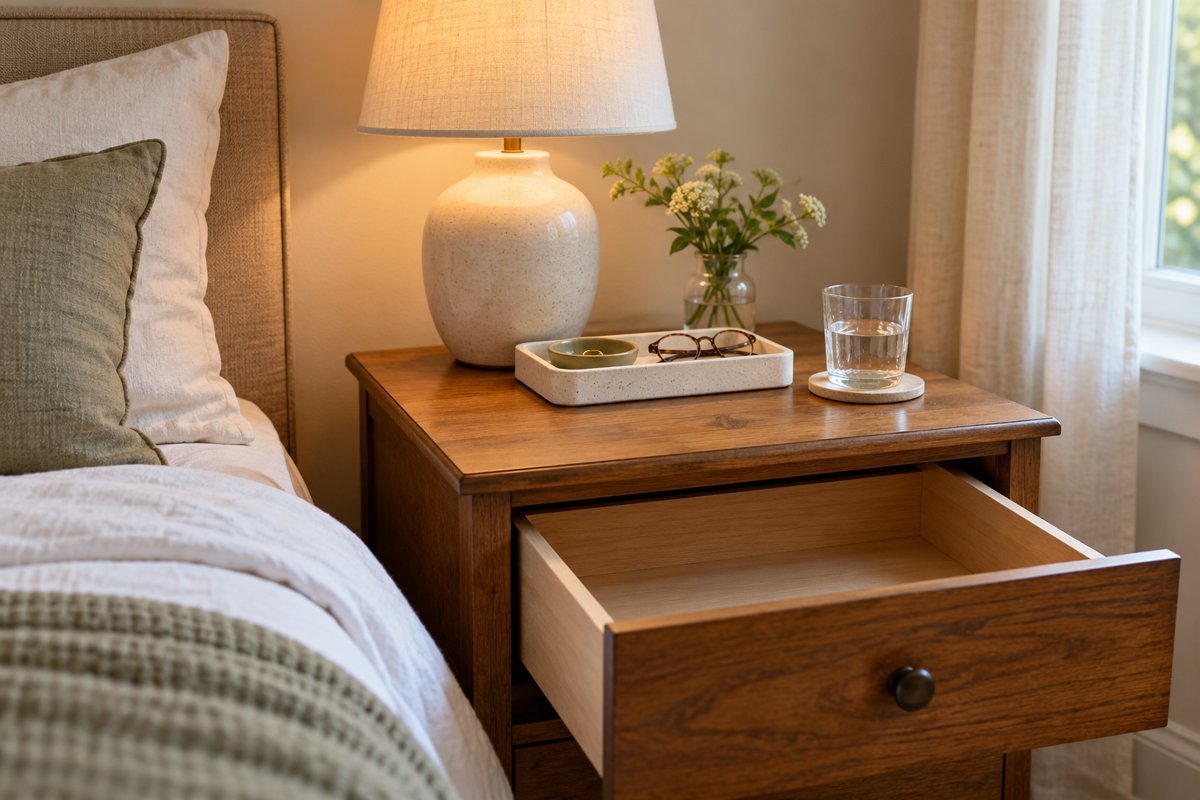
Style the table during the day, then test it at night using the light you normally have. Reach for your glasses, open the drawer, and get out of bed. Anything that catches a cable or needs an awkward stretch should move. The best-looking arrangement is less useful if it makes simple actions harder.
Reset the table when you make the bed or put laundry away. Return cups to the kitchen and finished books to their shelf. Keep one small space clear for something unexpected. A bedside table does not have to look empty, but it should feel ready. Clear homes for a few useful objects can make the corner look considered and keep your evening routine easy.
Common Questions
What belongs on a bedside table?
Keep the essentials you actually reach for, such as a light, glasses, or one current book. Use a small tray for loose items and leave a clear landing spot. Store occasional items in a suitable drawer, basket, or box.
How can I organize a small nightstand?
Use its existing drawer, shelf, or cubby before adding containers to the top. Keep one current book instead of a stack and choose organizers that fit without catching. A suitable already-installed wall light can free surface space.
Do nightstands on both sides of a bed need to match?
No. Each person can use the storage that suits their routine. Similar trays or one repeated color can connect different pieces while leaving room for individual needs.
Related Ideas
For a calmer bedroom beyond the nightstand, explore our small bedroom ideas and multifunctional furniture ideas.