
Putting Christmas ornaments away can take more patience than hanging them. Round baubles fit one tray, a favorite glass bird needs a different space, and the boxes somehow have to share a closet with everything else. The goal is to protect what matters without creating a storage system that takes over your home.
These Christmas ornament storage ideas start with your collection and the space available. You can combine original packaging, divided containers, and smaller boxes rather than buying one organizer for everything. Choose a manageable approach now, and next season can begin with less searching, untangling, and wondering what is inside each box.
1. Sort by care needs before sorting by color
Bring a small group of ornaments to a clear table and separate delicate pieces from sturdier ones. Then group them in a way that matches how you decorate: by tree, room, family collection, or color. A coordinated set is easier to find when it stays together, but its fragile pieces may still need their own protection.
Work in batches if you do not have room to spread out the entire collection. Keep anything damaged in a separate, clearly marked place while you decide what to do with it, rather than burying it in next year’s decorations. You can also set aside usable pieces you no longer want. Reducing the collection is optional; the useful first step is knowing what you are actually packing. Leave yourself a clear working area instead of balancing ornaments on the edge of the table.
2. Measure the storage space and the wrapped ornaments
Check the closet opening, shelf depth, and available height before choosing a container. Include the lid and handles, which can make a box wider than its base. If it must slide under a bed, measure the lowest clearance and check that you can pull it out without moving heavy furniture.
Next, measure a few representative ornaments, including the tallest cap, widest detail, and any padding they need. A listing that promises room for dozens of ornaments may assume they are all the same small round size. The useful measurements are the actual compartment dimensions and usable tray height. Write those down beside your storage-space measurements. Before committing to a new organizer, compare them with a real ornament instead of relying on the advertised capacity. A box that fits the collection but cannot fit through the closet opening solves only half the problem.

3. Keep original packaging when it does a useful job
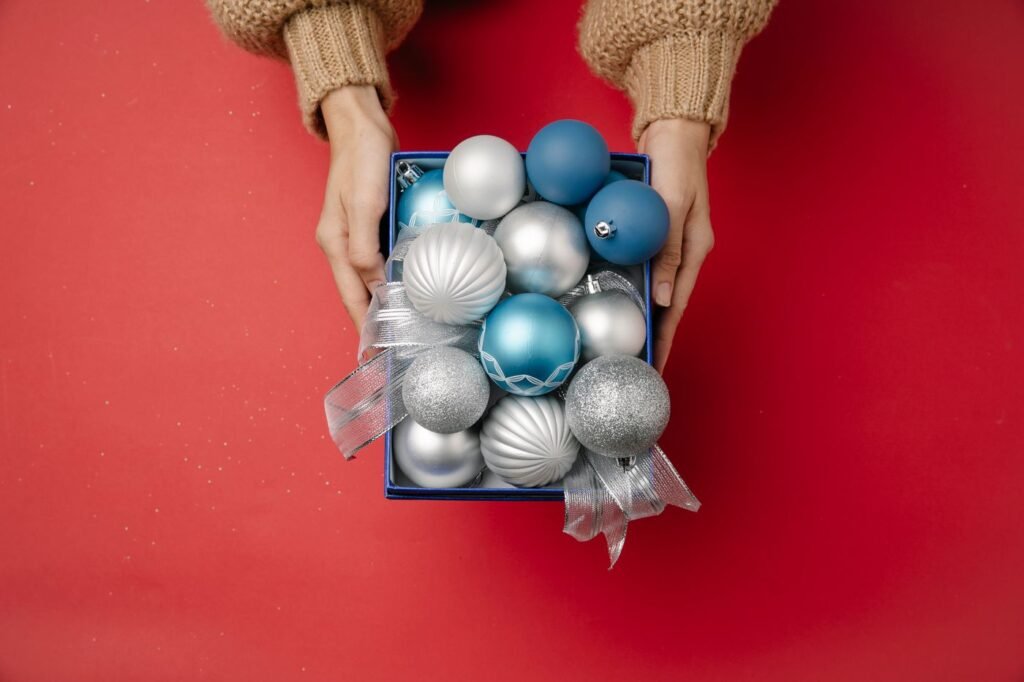
Original packaging is worth keeping when its fitted insert supports an awkward shape or its label helps identify a collectible. Put the ornament back in the correct insert rather than assuming any similar box will fit. Check that the packaging is sound and that the lid closes without pressing on the piece.
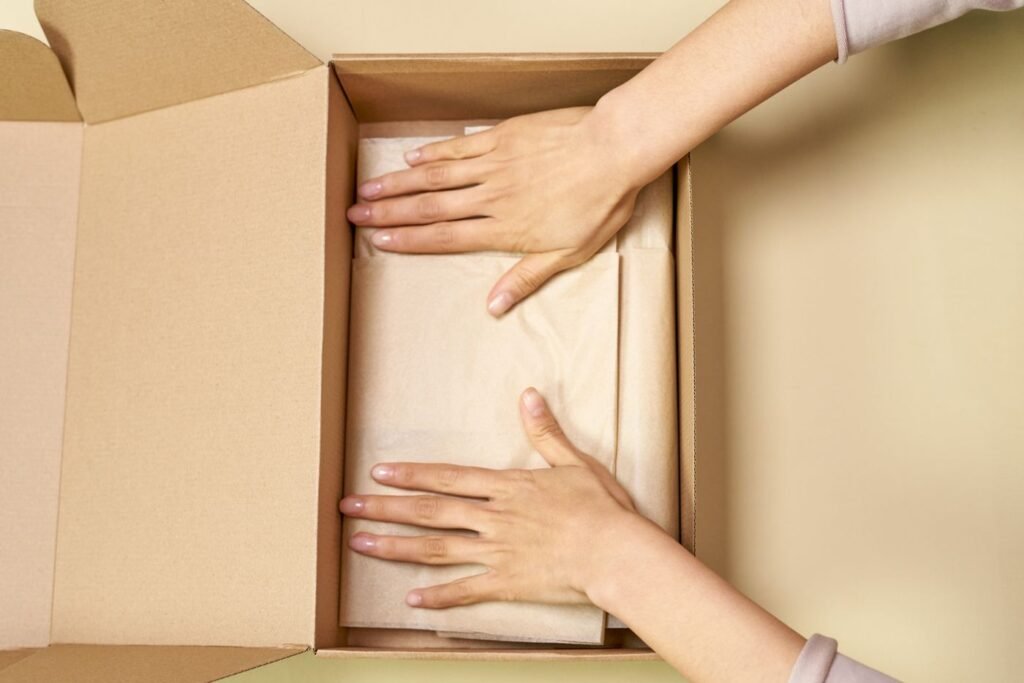
If you are short on space, review packaging individually instead of keeping or discarding every box automatically. An oversized outer shopping box may be unnecessary, while the small fitted box inside it is useful. Keep care instructions, product information, and the ornament’s identifying details together. For some collections, retaining the packaging is part of how you want to keep them, even if a different system would be smaller. Make that choice deliberately. Ordinary tissue-lined boxes can organize a collection, too, but delicate pieces still need suitable support and separation inside.
4. Give fragile keepsakes their own protected places
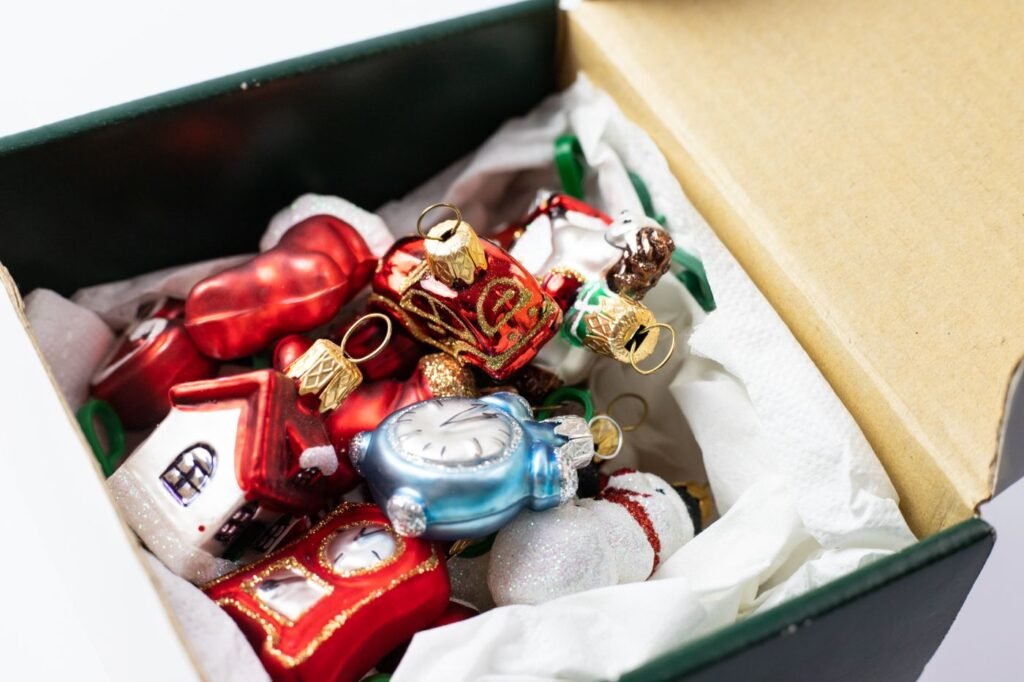
A favorite glass bell or delicate figurine deserves a place where another ornament cannot roll against it. Follow the maker’s care directions when choosing wrapping and support. For many fragile glass ornaments, acid-free tissue is a useful packing material; avoid treating colored gift tissue or newspaper as an equivalent.
Use enough space for the ornament’s full shape, with gentle support around vulnerable details rather than tight wrapping that presses on them. Put a small identification note outside the wrapping so you can find the piece without repeatedly uncovering it. Set aside ornaments with loose parts or flaking finishes for advice specific to their condition. Do not try an unfamiliar washing or polishing method while packing. A separate keepsake section also makes it easier to unpack these pieces carefully before anyone begins carrying trays around the room.

5. Choose adjustable compartments for a mixed collection
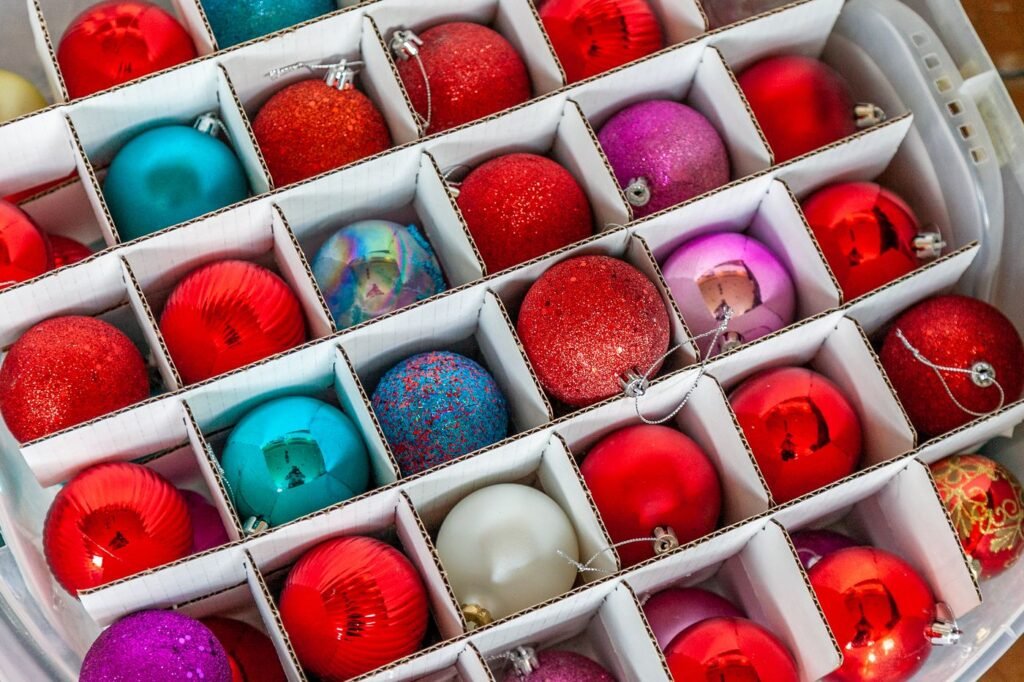
Divided trays can make round ornaments easier to see and keep apart. Adjustable dividers are especially useful if your collection includes both small baubles and longer shapes. Check how the sections connect and whether the base remains supported when a divider is moved.
Fit the compartments around the ornaments you own. Removing a divider may create a wider space, but it does not increase the height between trays. Caps, loops, and projecting details must remain clear of the tray above. Cardboard inserts and sturdier removable trays offer different handling experiences, so look beyond the photograph to how you will lift and carry them. Do not assume a soft divider alone will cushion fragile glass. If you reuse a divided box, replace bent or unstable pieces and add protection appropriate to the ornaments. Keep the tray level while packing and moving it.
6. Reserve a separate box for stars and unusual shapes
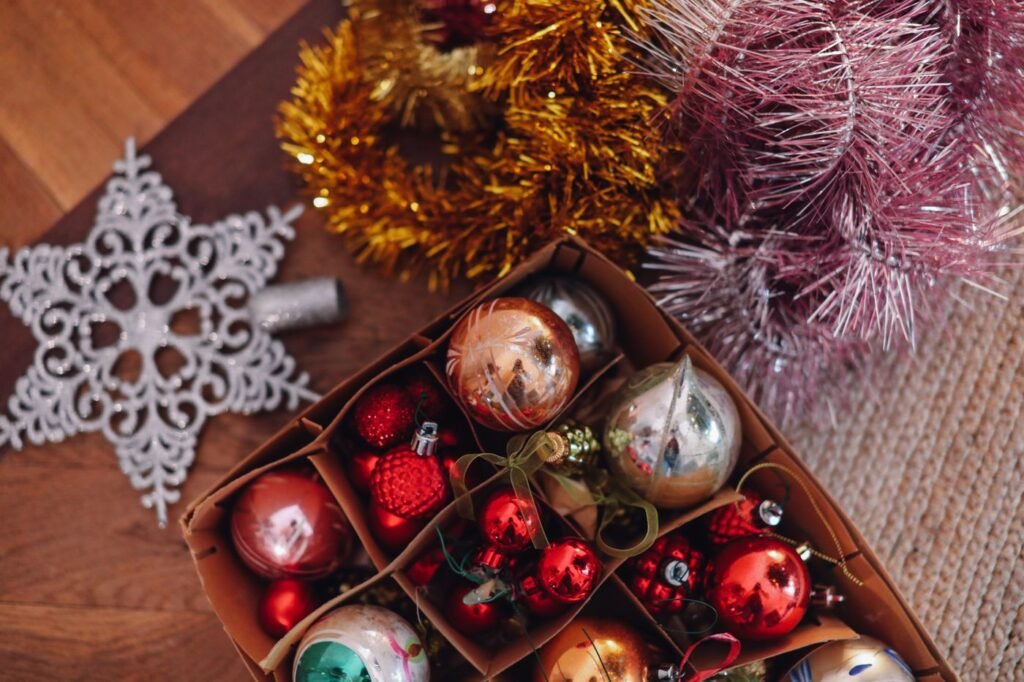
Tree toppers, long icicles, birds, and ornaments with projecting points do not need to squeeze into the same grid as round baubles. A separate box with a suitable internal support may be a better use of space than buying an enormous organizer just to accommodate one piece.
Plan the space around the widest part of the object, including its stand or attachment if that remains connected. Put identification on the box so the unusual piece does not become the mystery package you open every December. Keep heavy items from resting on its points or decorative details. If the manufacturer supplies a fitted insert, use it as directed. Otherwise, choose support that holds the main body without crushing the shape. You may end up with a few different box sizes, and that is reasonable when it helps the collection fit safely.

7. Store flat ornaments in a shallow section
Wooden cutouts, flat metal shapes, and handmade decorations can disappear beneath larger ornaments in a deep tub. Give them a shallow box or a dedicated section where you can see what is there. Keep delicate cut edges and attached decorations from catching on neighboring pieces.
Separate ornaments that need different care rather than putting every flat item into one compressed stack. A sturdy wooden star and a child’s paper decoration may share a shape but need different protection. Avoid bending paper pieces or flattening raised craft details to close the lid. For handmade ornaments, note any material-specific instructions you have and make sure everything is dry before packing. A small exterior label such as ‘wooden cutouts’ or ‘paper keepsakes’ can be enough to identify the group. The container should protect the collection without requiring you to press it flat.
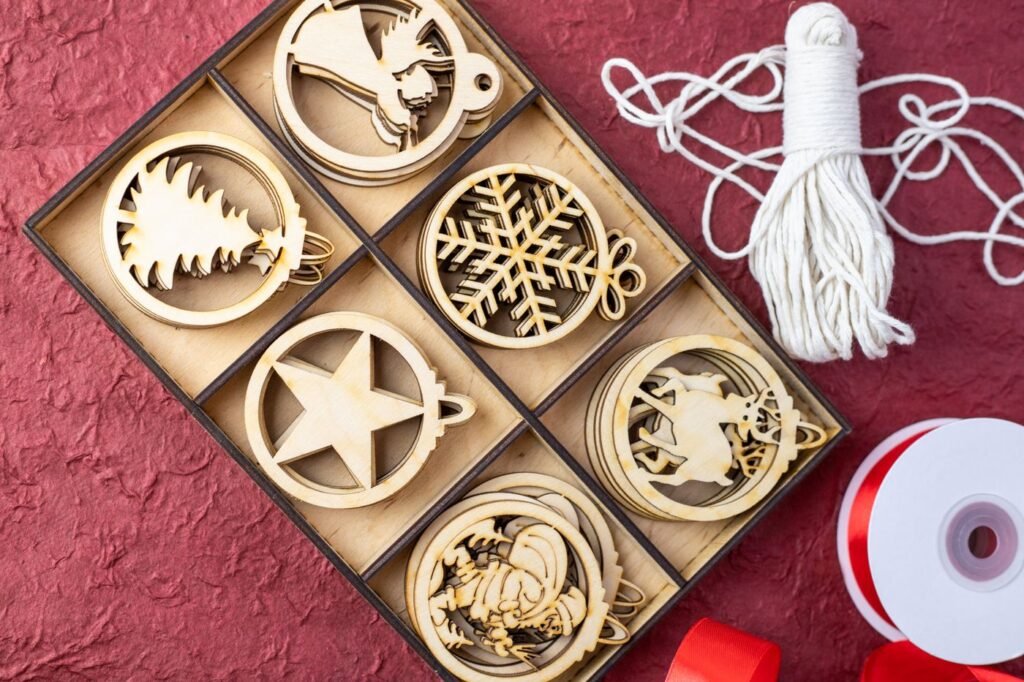
8. Keep hooks and hanging ribbons from tangling with the ornaments
Loose metal hooks can catch on wrapping and scratch nearby finishes. Remove detachable tree hooks as appropriate for the ornament and place them in a small closed container. Leave permanently attached fittings alone rather than pulling at a delicate cap or loop.
Coil reusable ribbon loosely or wind it around a suitable card so next year’s decorating does not begin with a knot. Keep any accessory container beside the ornaments that use it, with a short label if it is not obvious. Small hooks and other loose parts should be stored securely away from children and pets. If an ornament has removable batteries or a power accessory, follow its instructions for seasonal storage and keep the instructions with it. A separate accessory space takes little room and prevents these small pieces from becoming hidden among the decorations.

9. Use smaller boxes to divide a deep container
A deep tote can become easier to manage when smaller boxes organize its contents. Assign one to miniature ornaments, one to a room’s decorations, or one to a set that needs its own packing. You can bring out just the group you want instead of emptying the whole tote onto the floor.
Choose clean, sturdy boxes with lids, and leave room for the protective packing each group requires. An open decorative tray can help with sorting at the table, but it still needs an appropriate enclosure for storage. Do not balance one box on exposed ornaments or wedge containers together so tightly that removing one takes force. Check how you will support the smaller boxes when lifting them out. A collection of existing boxes can work well when the fit is sensible; matching containers are a convenience, not a requirement.
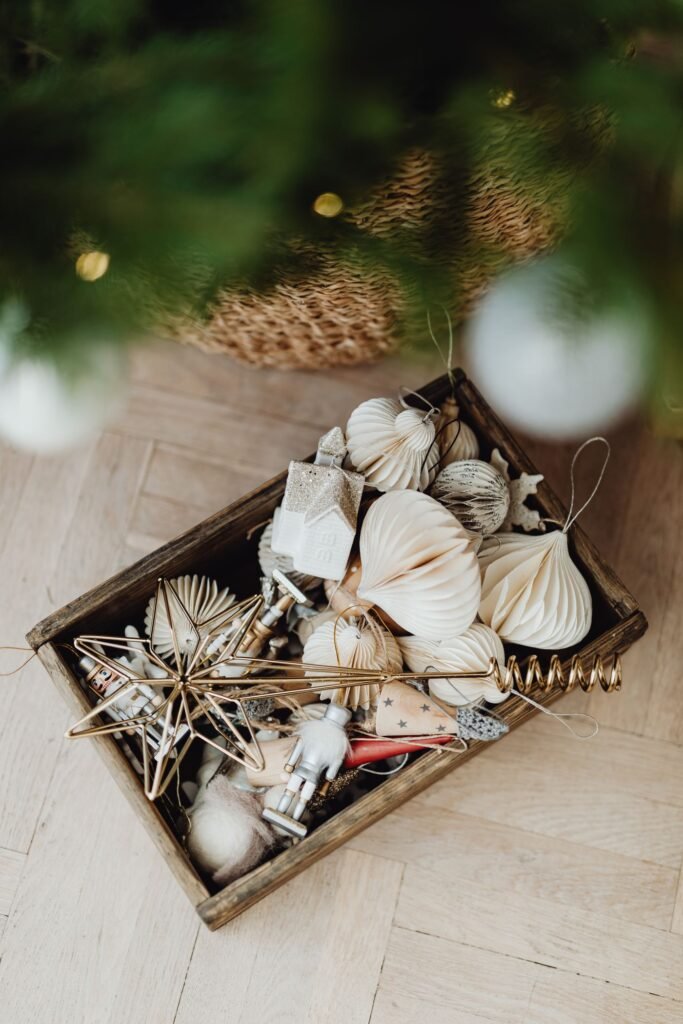
10. Keep the contents supported without stuffing the box
Once the ornaments have their places, check for empty gaps that would let the contents shift during ordinary handling. Add appropriate padding where it provides support, while keeping pressure off fragile surfaces. A full-looking box is not necessarily a well-packed one, and squeezing in the last few pieces can undo careful work.
Close the lid gently. If it only shuts when you push down, remove something and reconsider the layout. Do not shake a packed box to test it. Instead, inspect the arrangement as you work and support the base when you move it. Keep the loaded container light enough for you to handle comfortably. Two manageable boxes may be more practical than one large tote, especially if you have stairs or a narrow closet. Store anything heavy separately from fragile ornaments rather than making them share the bottom layer.
11. Label the visible side and keep a simple photo record
Label the side you will see when the container is stored, not only the top. Use a description that will still make sense next year: ‘living room tree, glass ornaments’ tells you more than ‘Christmas 2.’ Add a clear fragile label where useful, and update old wording when the contents change.
Take a photo of each completed tray before closing it, then keep the photos together in a named phone album. This gives you a quick inventory without opening every box. If you use several containers, add matching numbers to the labels and photo descriptions. You can also photograph a care sheet or tuck a short contents list beneath the lid. Keep the record simple enough that you will actually update it. For related packing supplies, our gift wrapping organization ideas can help you keep spare ribbon and labels accessible.

12. Choose an indoor location you can reach comfortably
Look for a stable indoor storage spot away from direct sunlight, moisture, and strong temperature swings. A closet shelf or enclosed storage area within the home may be more suitable for delicate ornaments than a hot attic or damp garage. The right location depends on your home and the materials in the collection.
Keep fragile containers where you can retrieve them without overreaching, and avoid placing heavy boxes on top unless the storage system is designed to carry that load. Leave labels visible and the access path clear. Check the containers occasionally for moisture or damaged packaging, particularly if the storage area’s conditions change. If you are also reconsidering what earns a place in a small home, our Christmas decorating ideas for limited storage can help you plan a collection that is enjoyable to use and realistic to keep.
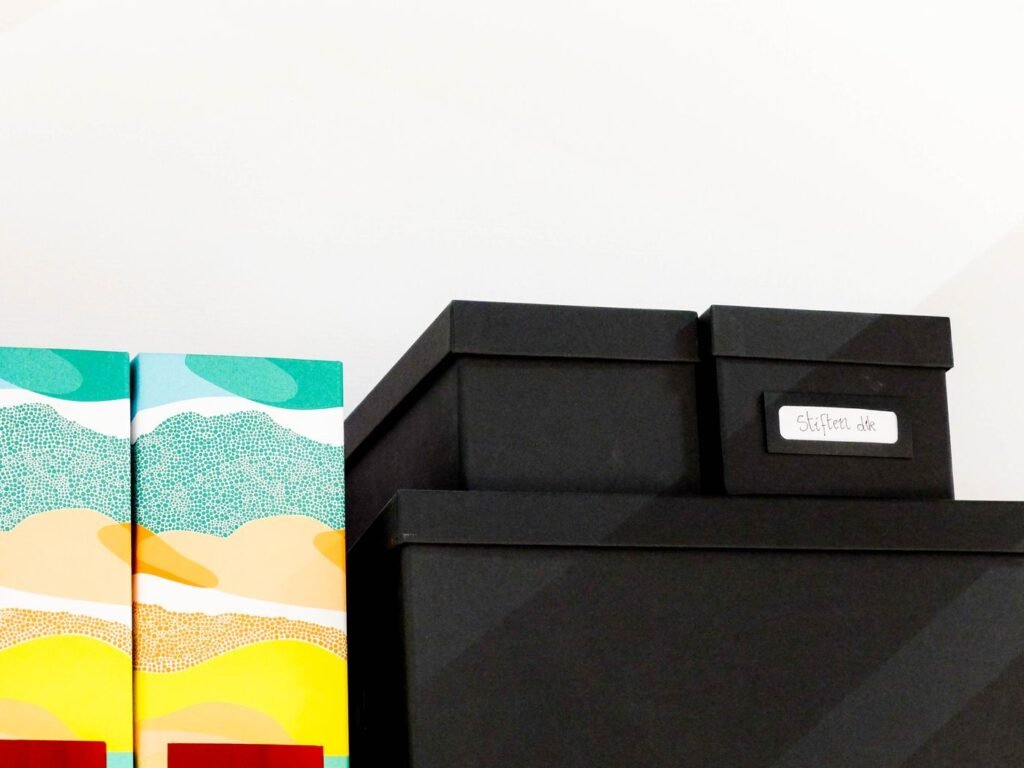
Make next year’s unpacking easier
You do not need one perfect ornament organizer. You need a system that gives delicate pieces suitable protection, accommodates unusual shapes, and fits somewhere you can reach. Start by improving the part that frustrated you most this year, whether that was tangled hooks, hidden keepsakes, or a box too large to lift comfortably.
Before putting the last container away, check its label and make sure the lid closes easily. Keep your tray photos and a short note of anything you need to replace. Those small finishing steps can save a surprising amount of guesswork when it is time to decorate again.