
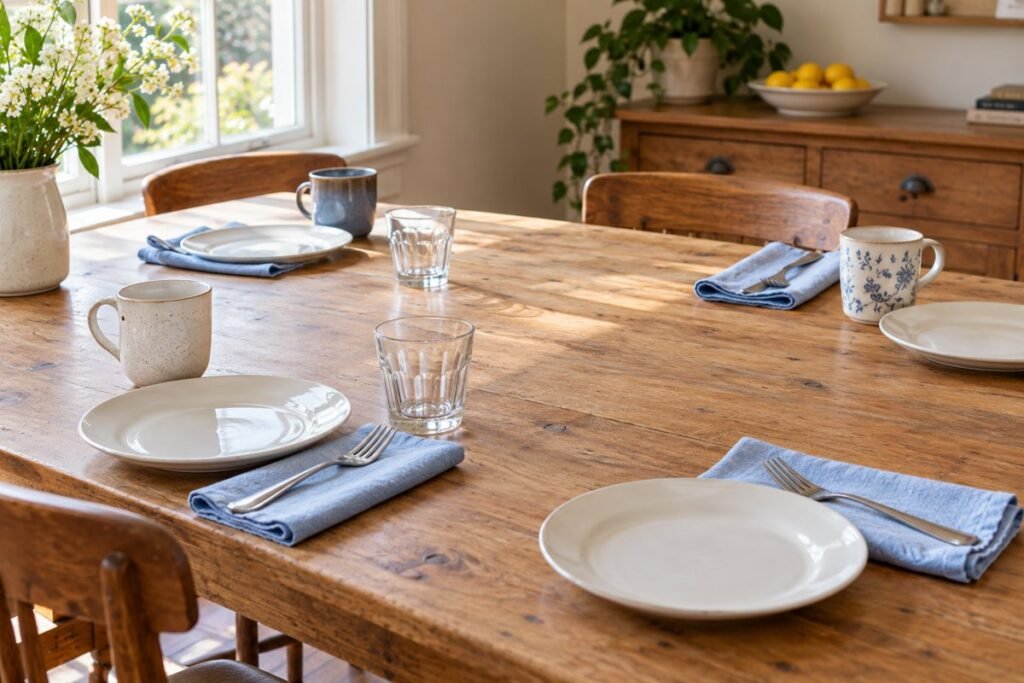
A spring table can feel fresh without a full set of new dishes. You might bring out a lighter cloth, use a cheerful napkin, or put a few flowers where you can see them over breakfast. The aim is to enjoy the table while you eat, not spend the meal moving decorations aside. These ten scenes work for different kinds of everyday meals and small gatherings. Each starts with one clear color or useful object. Choose the one that suits what you already own. A simple change can make an ordinary lunch feel like a welcome pause in the day.
Start Here
Set out the dishes, glasses, and serving pieces the meal actually needs. Choose one spring detail, such as a soft-colored napkin or a small flower group, then check that everyone can see across the table and reach their food.
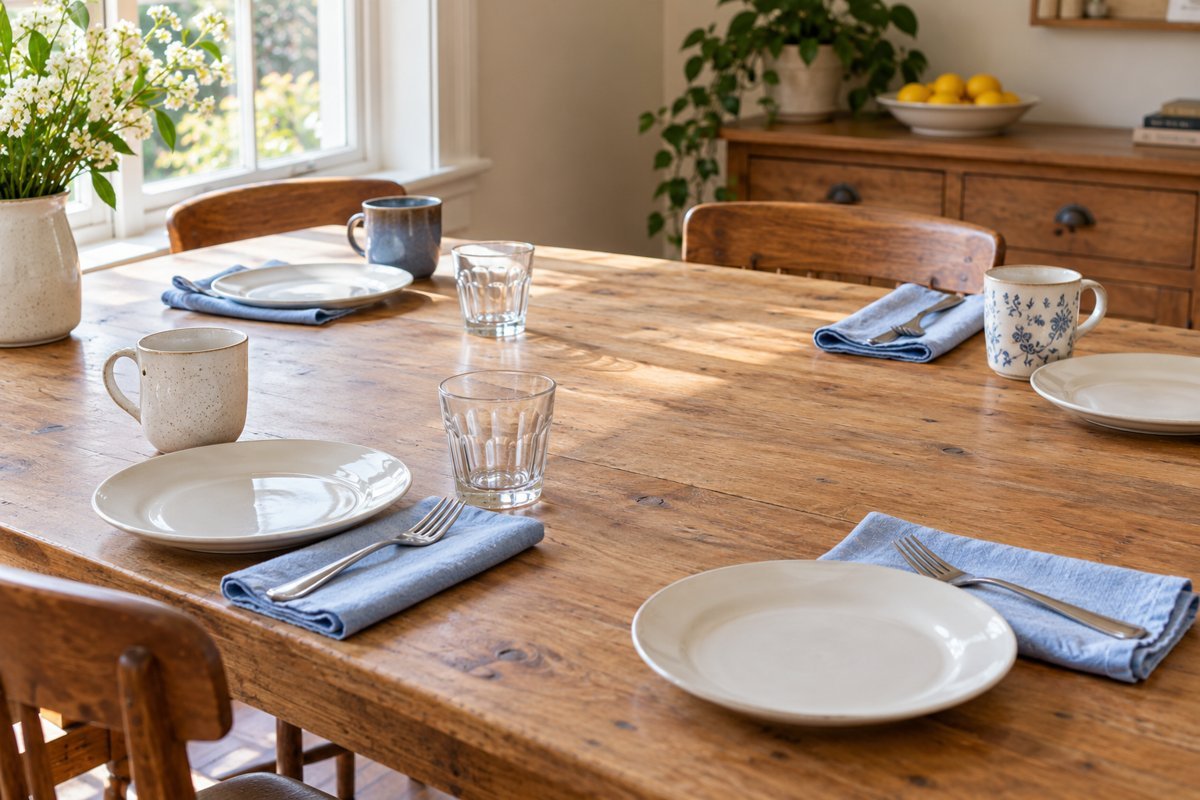
1. Set a Blue-and-White Breakfast Table
Place pale blue napkins beside white plates on a bare wooden table. Add clear glasses and your everyday mugs. The soft blue feels fresh while the wood keeps the scene warm. Leave the centre ready for toast, fruit, or whatever breakfast usually looks like in your home.
Use a simple fold that is easy to repeat after washing. You do not need matching mugs if their colors sit comfortably together. Before adding any extra detail, set down the serving dishes to see how much space remains. A small table may already feel complete. The repeated napkins give each person a clear place and make the scene look planned. Put them away after the meal if the table also serves as a work area during the day.
2. Make Yellow the Accent for a Casual Lunch
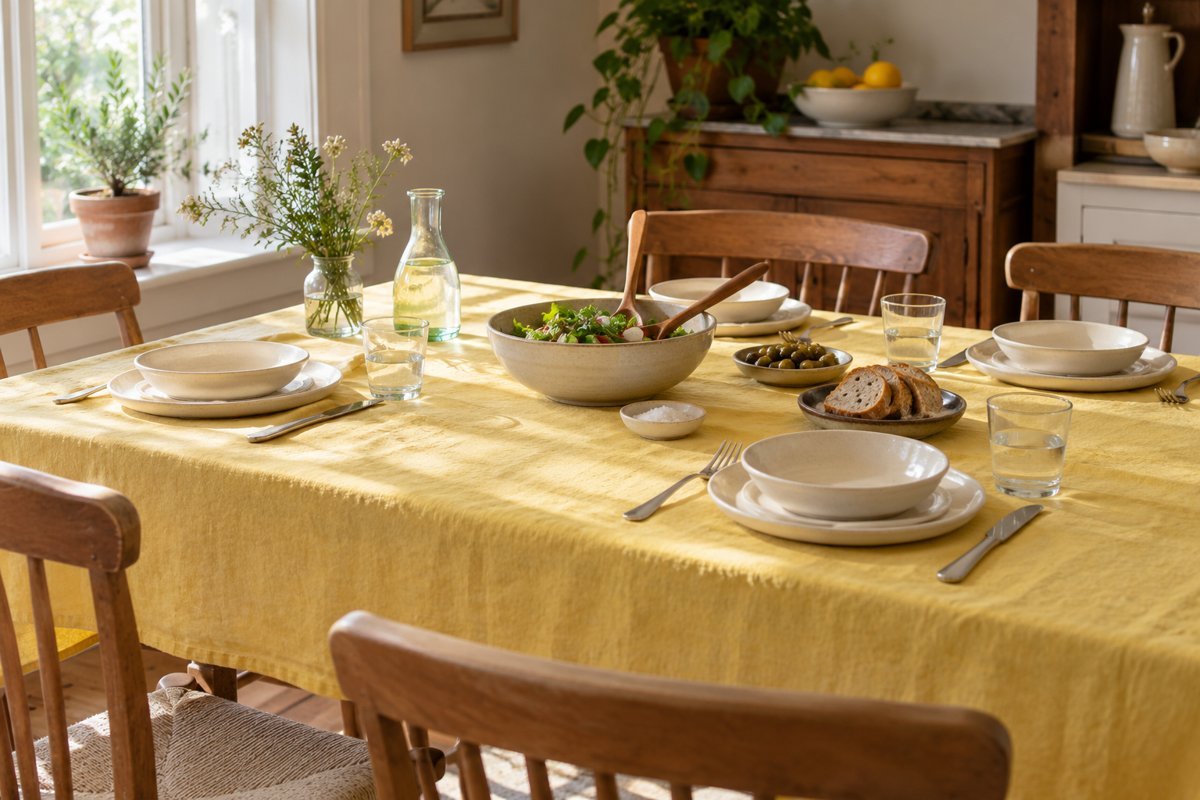
A soft yellow cloth can brighten a plain lunch table. Pair it with cream dishes and plain cutlery. Keep the middle open, or set one low serving bowl there when the food arrives. The cloth provides most of the color, so you do not need yellow flowers, yellow glasses, and yellow napkins too.
Check that the cloth lies flat and does not trail into chairs or along the floor. Follow its washing instructions so it remains useful beyond one meal. If a full cloth is not practical, use a small yellow square under the central serving bowl. Try the fabric in daylight before deciding how much color to use. A little yellow may be enough in a room that already has warm walls or a patterned floor.
3. Gather Three Short Flower Vases on a Tray
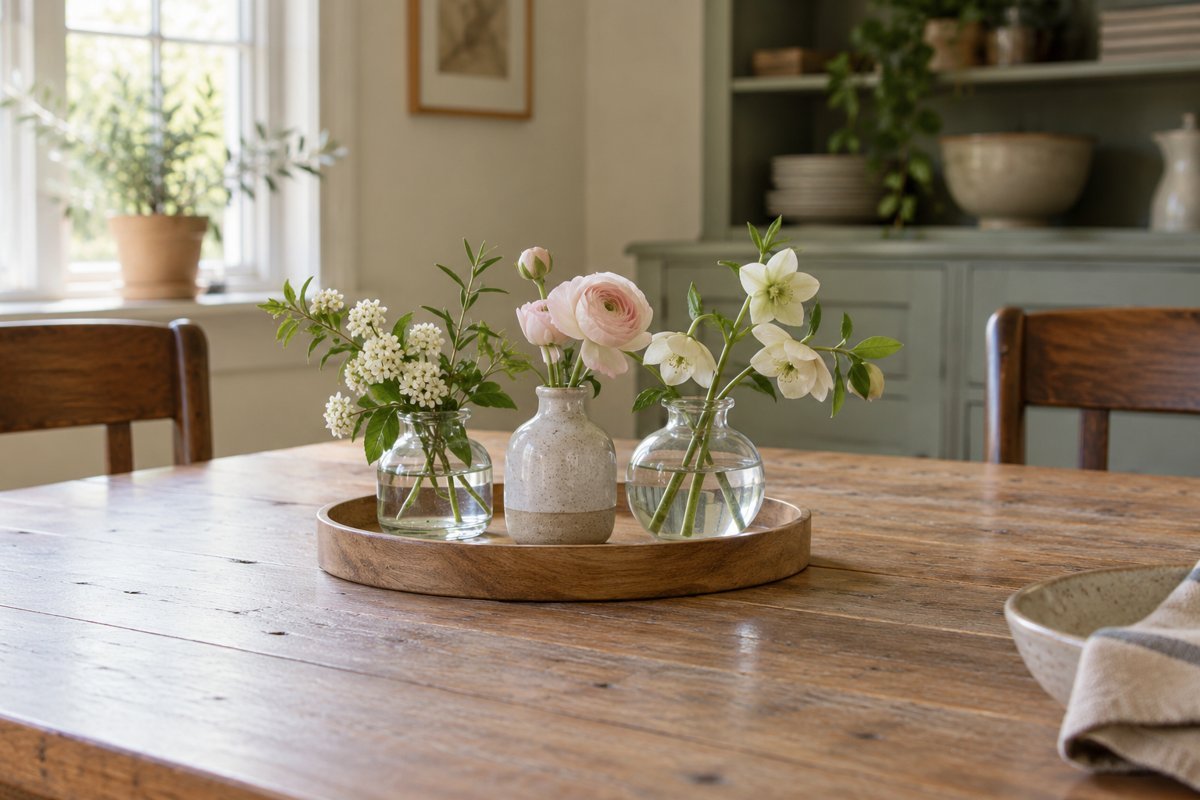
For a table with spare central space, group three short vases on one small tray. Use just a few pale flowers in each, with gaps between the stems. The group looks light and easy rather than like a large formal bouquet. A plain table surface helps the small shapes show.
Choose stable, watertight vases and fill them away from the set table. Keep the flowers low enough for people to see one another. Consider allergies and pets when selecting plants, and keep all plant material separate from food. The tray gives you one thing to lift away if dinner needs more room. Decide where it will go before the meal. Change the water and remove fading stems as needed rather than leaving the group out simply because it looks pretty.
4. Pair Green Checks with Plain White Bowls
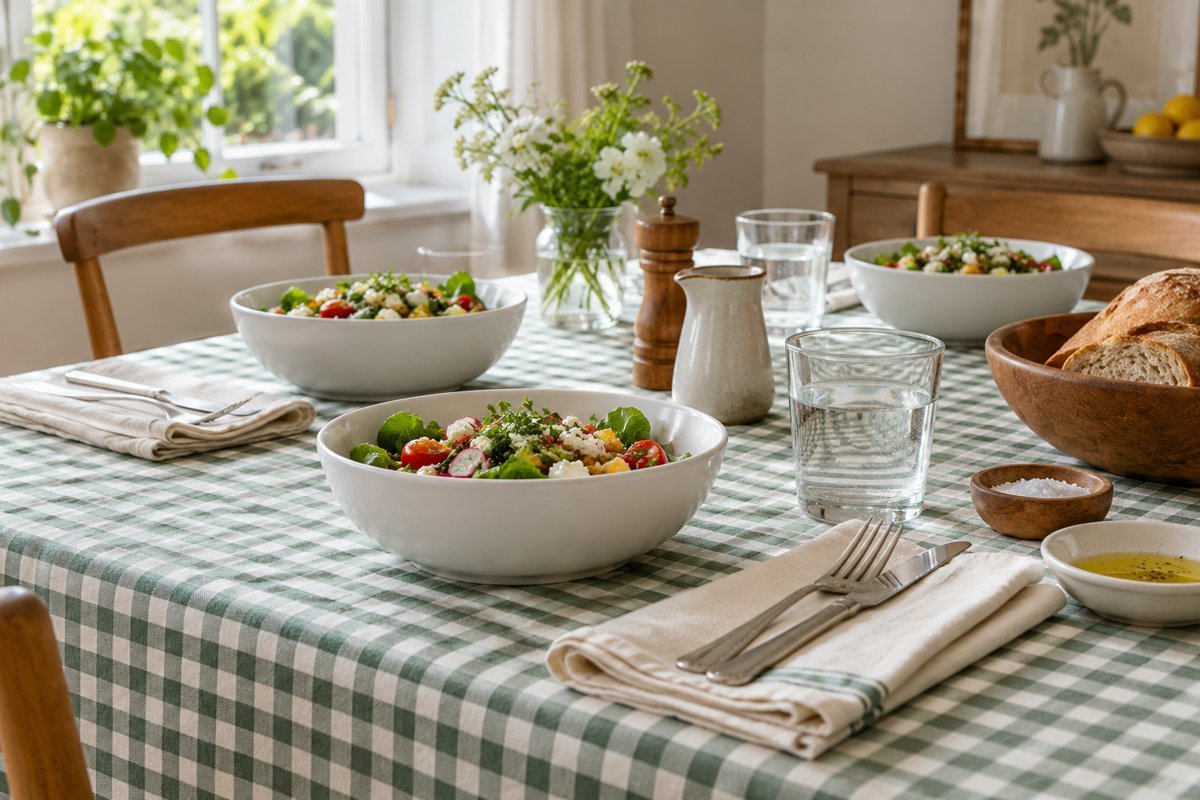
A small green checked cloth can give a soup or salad lunch a relaxed garden feel. Set plain white bowls on it, with clear glasses and cream napkins. The pattern brings interest while the dishes stay simple. This scene works well when the meal itself has plenty of color.
Choose a check size that suits the table. A very large pattern may look broken up beneath several small bowls. Lay out a place first to judge the effect before covering the whole table. Keep the cloth smooth so glasses sit steadily. If you already own patterned bowls, try a plain green cloth instead. One strong pattern is usually easier to enjoy than several competing ones, especially when food and serving dishes will soon join the scene.
5. Use Pink Napkins for an Afternoon Tea Pause
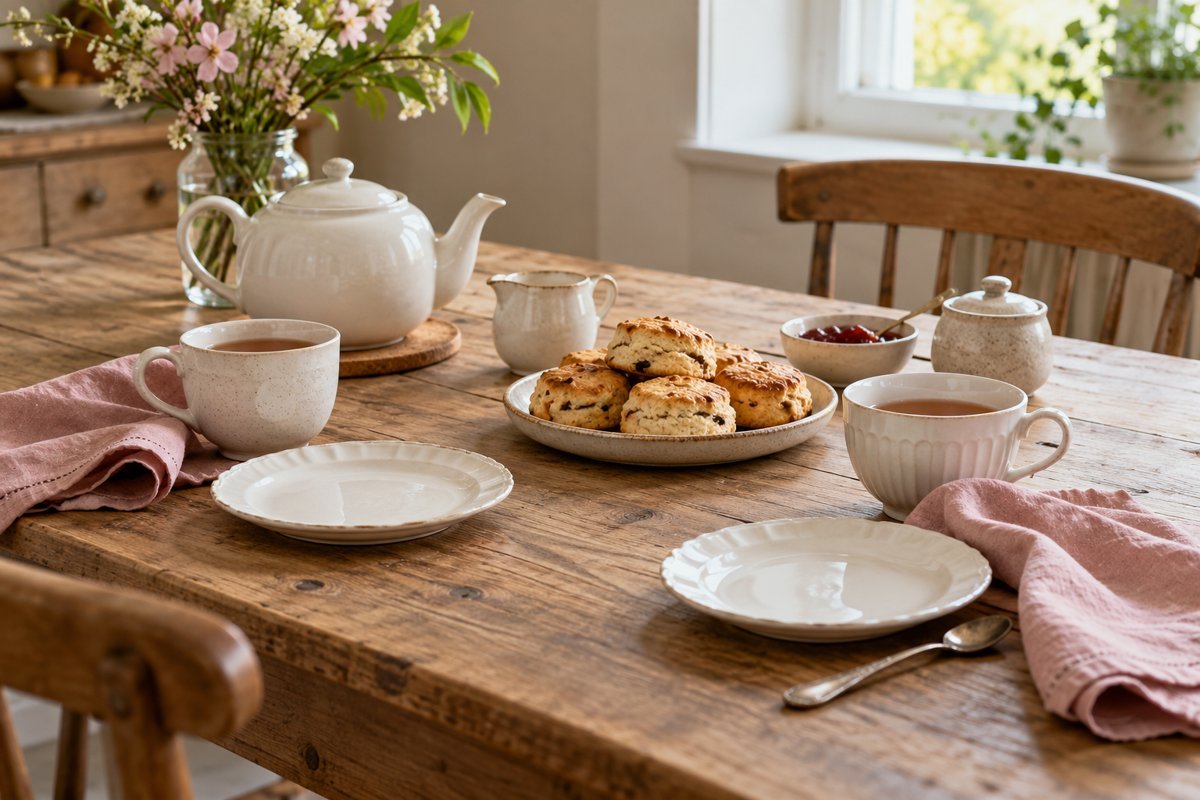
Set dusty pink napkins beside plain cups and small white plates. A low plate of biscuits can sit in the middle. The pink adds a soft seasonal touch without a centrepiece. This is an easy scene for two people as well as a small group, since each place carries the main color.
Use cups that are comfortable to hold and plates large enough for what you are serving. Place the teapot on a suitable heat-resistant surface, with room to pour safely. Keep any decorative paper away from spills and food. A spring table does not need to look formal. Slightly different cup shapes can feel welcoming when the napkins link them. Put the spare dishes away so the table has only what the gathering actually needs.
6. Let a Fruit Bowl Add Orange and Green
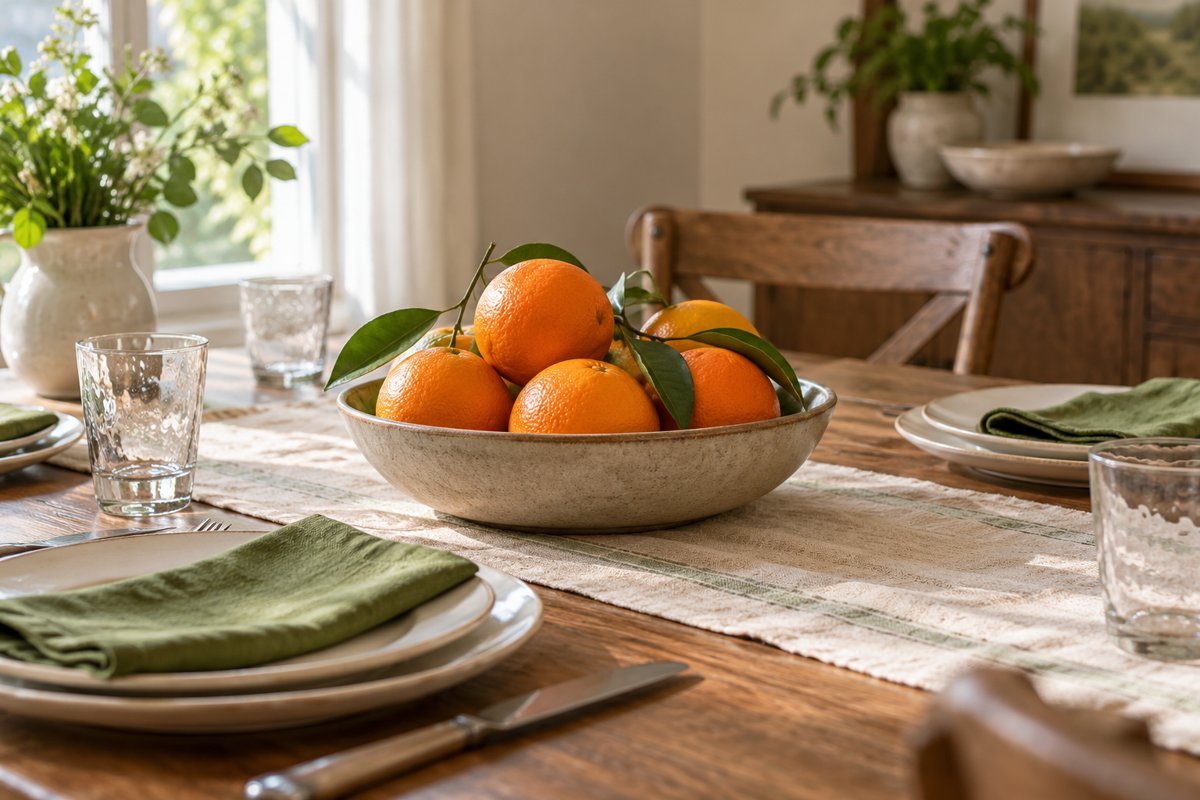
A shallow food-safe bowl holding clean, intact oranges can add a bright centre to a spring table. Pair it with green napkins and plain dishes. The fruit supplies color that you can enjoy and eat, while the low bowl leaves sight lines open. Keep the group small enough that it fits comfortably.
Choose fruit in good condition and check it regularly. Do not mix artificial fruit into a bowl that people will eat from. Avoid applying decorative coatings or glitter to anything intended as food. Move the bowl to a counter if the main course needs the centre of the table. A useful display should be easy to change during the meal. You can use a bowl you already own; the color of the fruit does most of the decorating work.
7. Create a Quiet Oatmeal-and-Lilac Setting
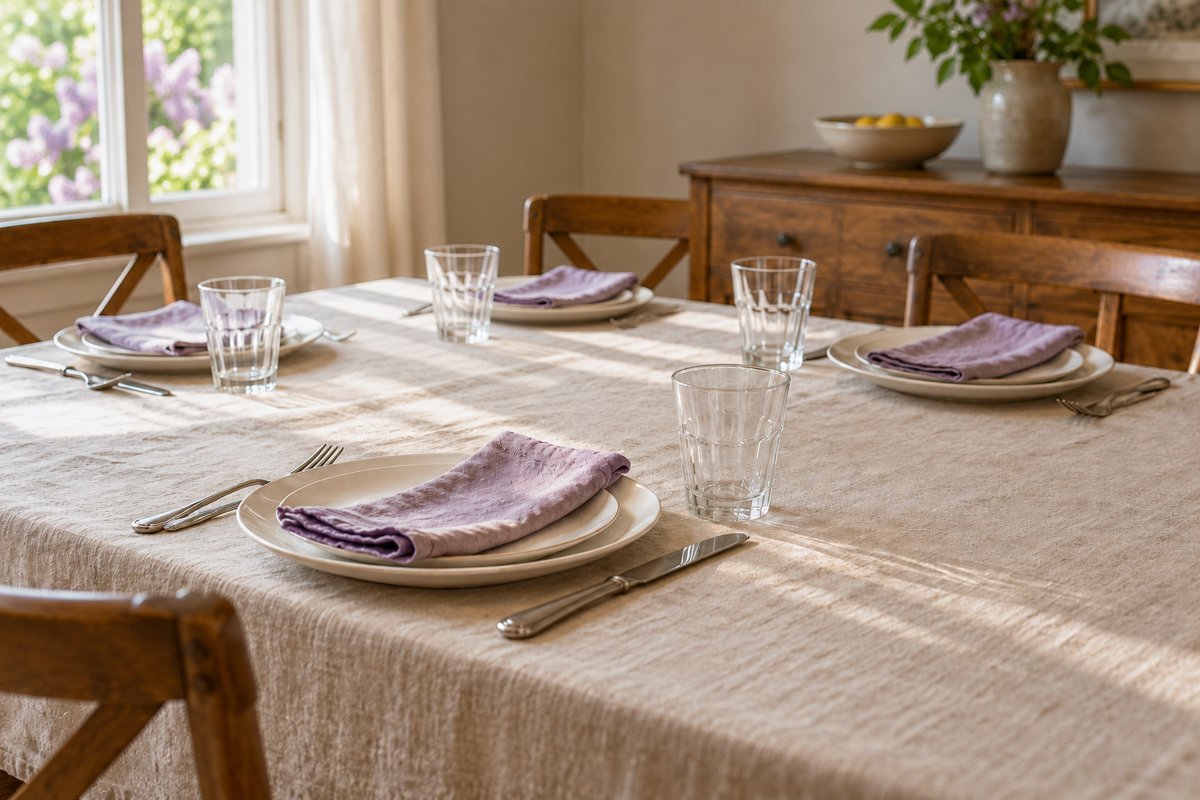
Place soft lilac napkins on an oatmeal-colored cloth, then add white plates. The muted pair feels gentle and fresh without being very bright. Keep glasses clear and the centre mostly empty. A single smooth serving bowl in a pale color can complete the scene when you need one.
Compare the fabrics together before setting the table. Some lilacs look pink, while others look blue, and either can work if you enjoy the mix. You do not need to match the wall color exactly. Use washable pieces suited to real meals. If the cloth is delicate or difficult to clean, save it for a different purpose and use a practical neutral one. The scene should invite people to eat comfortably rather than worry about every crumb.
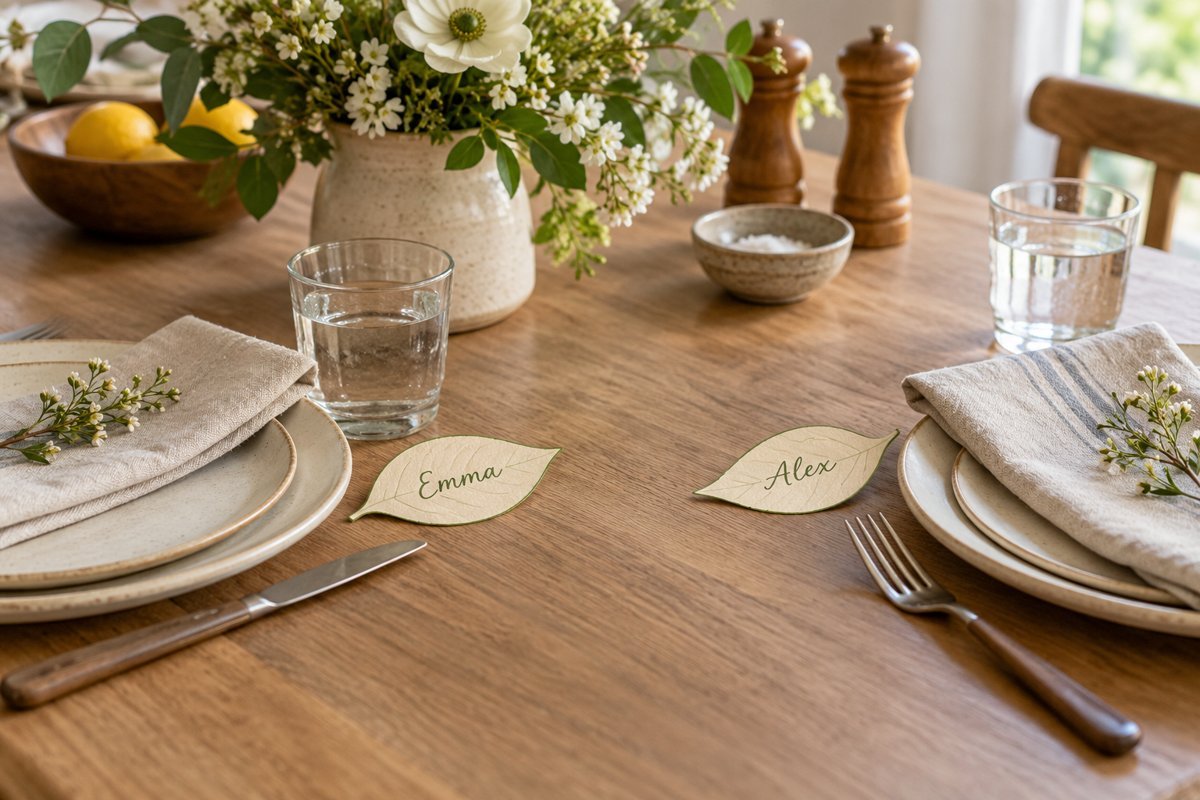
8. Make a Simple Paper Leaf Place Card
Draw a leaf shape on clean cream card and write a guest’s name in green. Place one card beside each plate on a plain table. The small leaf detail suggests spring without bringing loose greenery into the place setting. Pair it with neutral napkins so the handwritten shapes stand out.
Keep the cards away from food and avoid shedding craft materials. A broad simple leaf is easier to cut and read than a very detailed shape. If you are not assigning seats, write a short greeting instead of names. Prepare the cards in advance and put scissors away before the table is set. Guests can take them home or leave them in a small collection dish. A personal detail does not have to take up much space to feel thoughtful.
9. Use a Striped Runner for a Weekend Brunch
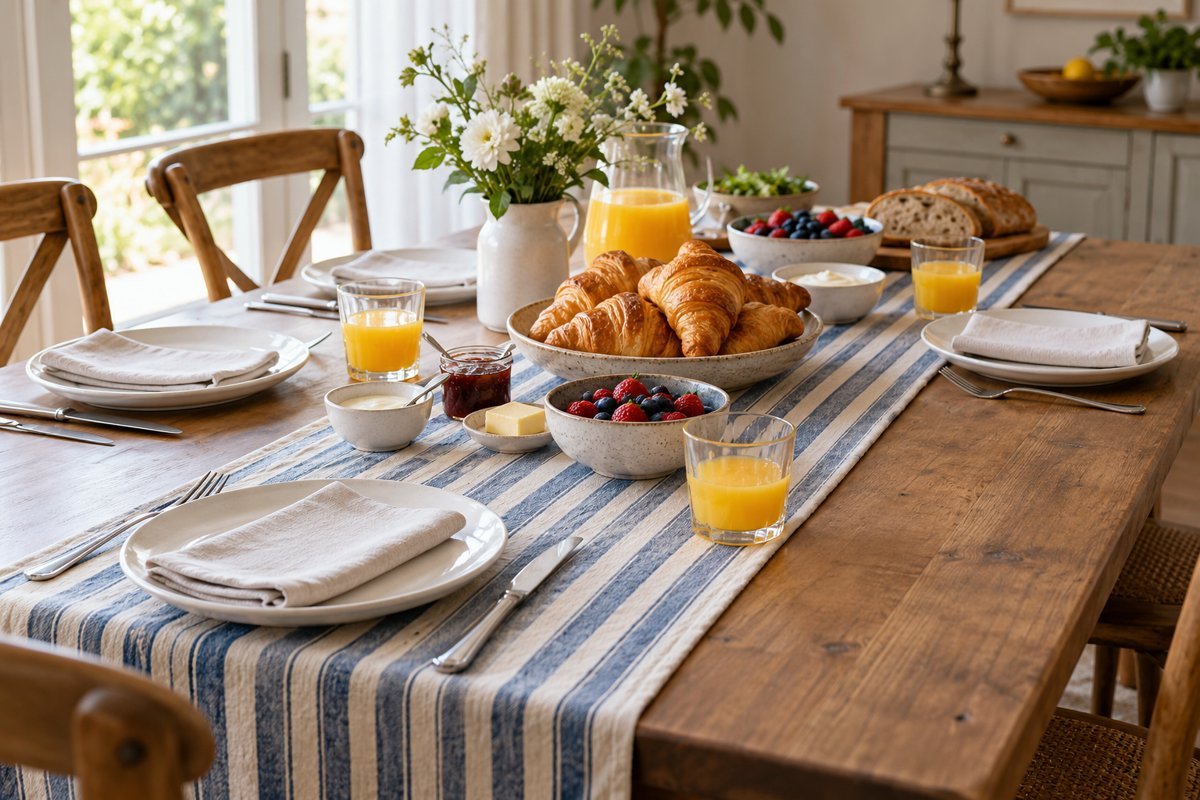
A narrow blue-and-cream striped runner can guide the eye along a rectangular table. Place white plates on either side and leave the runner clear for shared food. The lines make a simple brunch look fresh without many extra pieces. Keep napkins plain so the stripe remains the main pattern.
Check the runner’s length against the table and chairs. Fold it neatly if long ends would catch or trail. Set your largest serving dish down before adding smaller items, since a narrow runner does not guarantee a roomy table. Keep hot dishes on suitable protection rather than directly on fabric. If the table is round, try a small square cloth instead. The goal is a useful base that suits the shape you have, not a rule you must follow.
10. Style a Bare Table with Mixed Pastel Plates
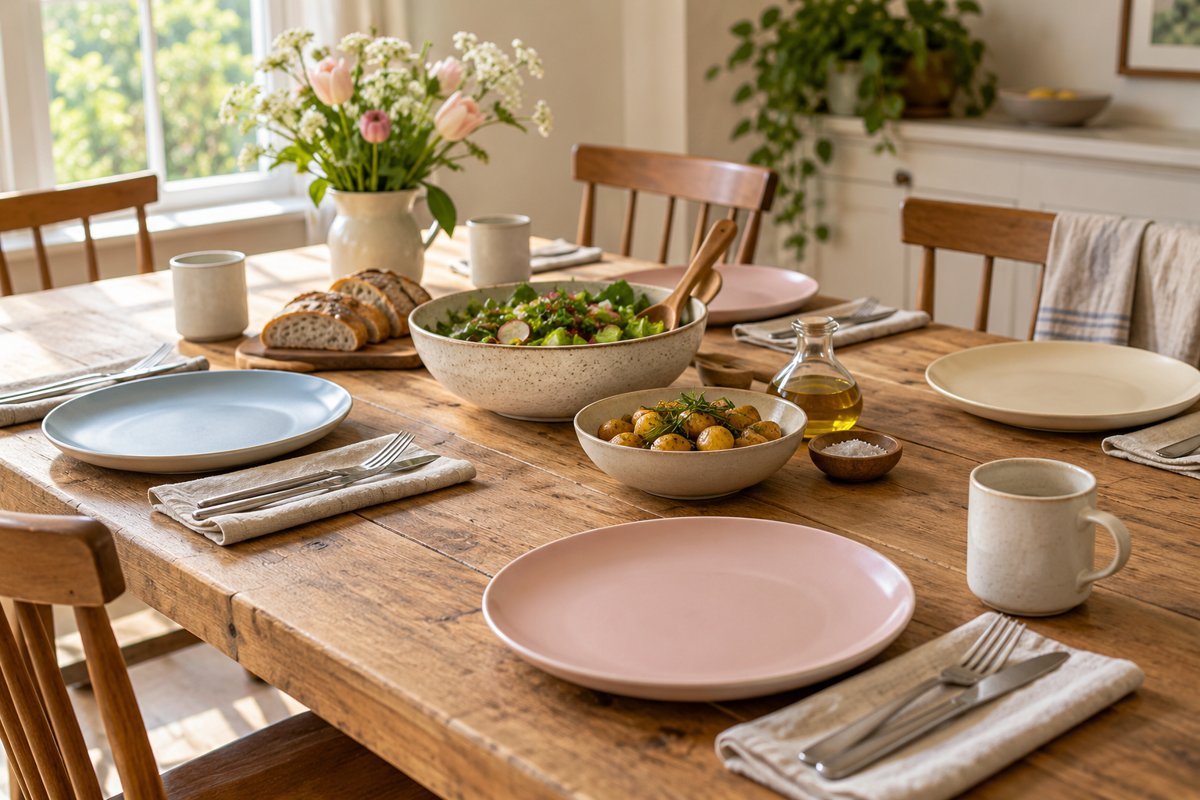
A bare wooden table can feel spring-ready with a few pastel plates. Try pale blue, soft pink, and cream around the table, keeping the cups and napkins plain. The gentle mix creates color at each seat without a separate display. This scene is useful when you have dishes from different sets.
Check that the plates are intact and suitable for the food you plan to serve. Their colors do not need to match perfectly, but similar levels of softness help them sit together. Avoid adding every pastel you own at once. Start with two colors and a neutral, then look at the whole table. You may find that a small group feels calmer. Use the dishes rather than saving them only for photos, and let the meal become part of the scene.
Keep Spring Styling Easy to Live With
Choose one main idea, then set the table with the dishes and food you actually need. Sit down and check that you can reach your glass and see the person opposite. If a display gets in the way, move it before the meal starts. A seasonal table can be simple and still feel special.
After eating, wash fabrics and dishes as their care guidance allows. Put away anything that does not need to stay out. A clear table gives you a fresh starting point for the next meal. You can repeat the same scene all spring or change one color when you feel like it. There is no need to build a new arrangement every time you sit down.
Common Questions
How can I decorate a spring table on a small budget?
Use everyday plates and add one detail you already own, such as blue napkins, a checked cloth, or a shallow fruit bowl. Mixed pastel dishes can look intentional when the rest of the setting stays simple.
What colors work well for a spring table?
Soft blue and white, green checks with cream, dusty pink, and oatmeal with lilac are gentle starting points. Choose one main color or pattern so the dishes and meal still have room to stand out.
How do I keep a spring centerpiece practical?
Use a low arrangement that leaves sight lines open, keep water and flowers away from food, and leave room for shared dishes. Move the centerpiece before serving if it makes the table awkward to use.
Related Ideas
For more ways to refresh the dining area, explore our dining corner styles and easy seasonal decorating ideas.