
A powder room is a small place where color can make a clear difference. You see the walls close up, often beside a white basin and a mirror. That makes the mix of paint, light, and fittings matter more than a tiny color square suggests. You do not have to change the whole room to try a fresh look. These ten scenes show color families paired with simple details, from soft blue walls to warm clay tones. Use them as starting points, then test samples in your own room. The right shade is one you enjoy in the light you actually have.
Start Here
Look at the floor, tiles, basin, and fittings that will stay. Choose a color family you enjoy, then test generous samples in the room’s normal lighting before buying paint. Photos offer inspiration, while your own finishes determine the final choice.
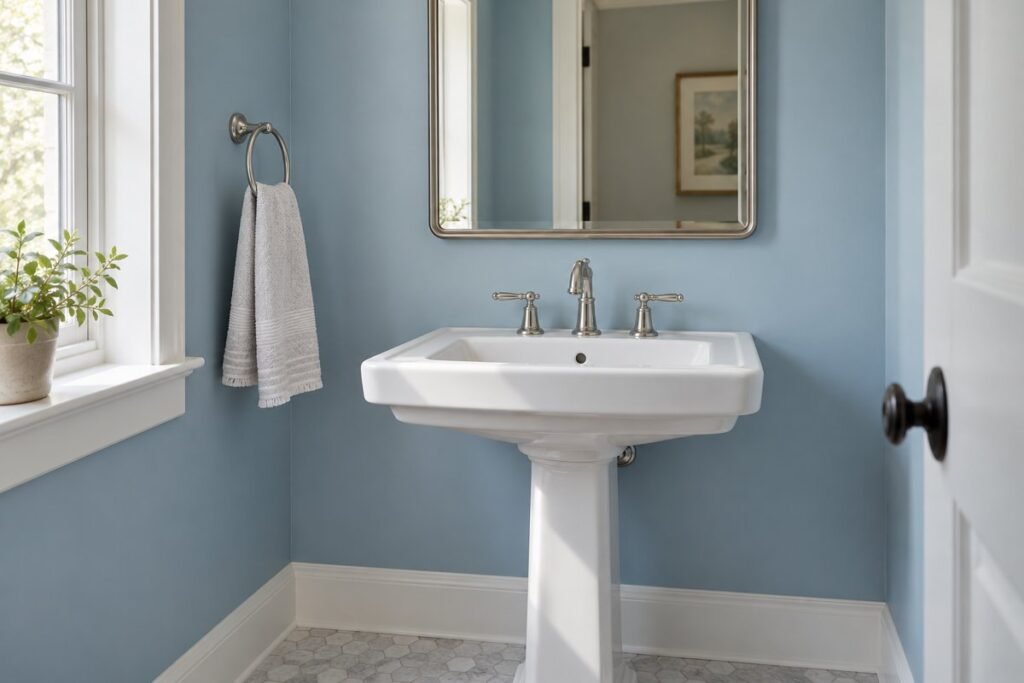
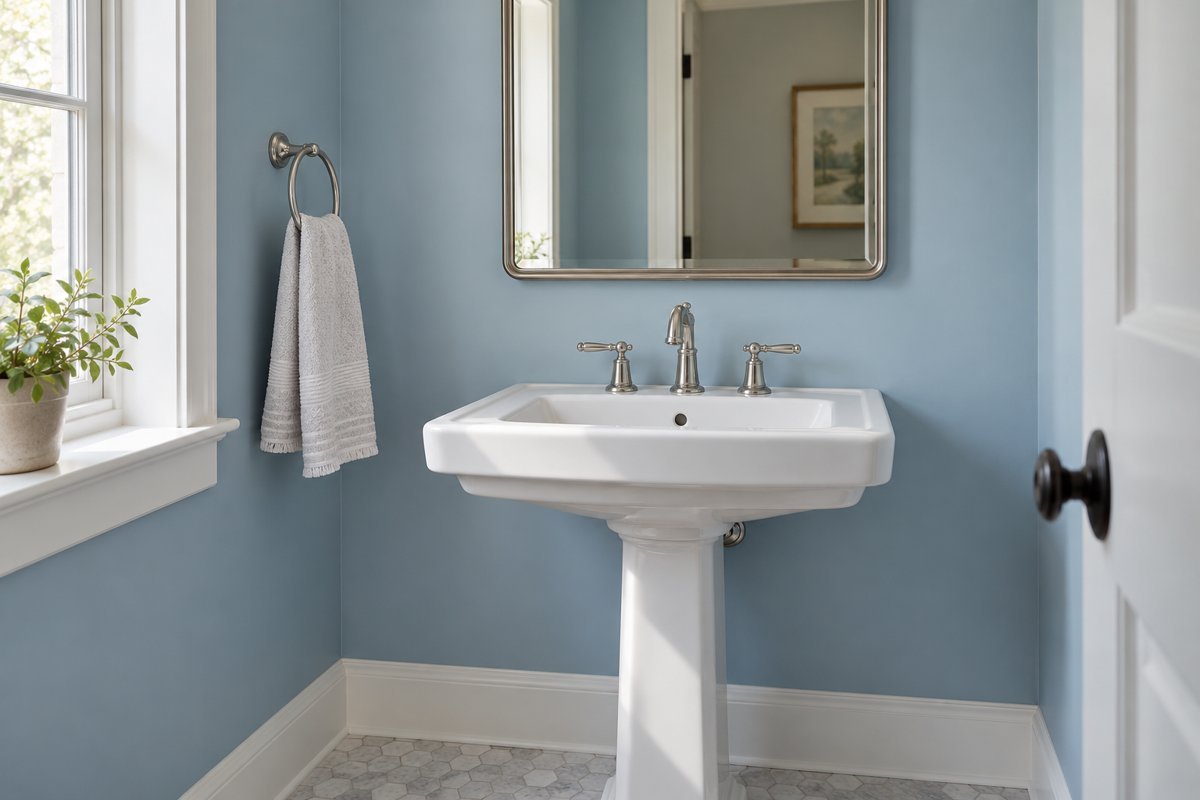
1. Pair Soft Blue Walls with a White Basin
Picture soft blue walls around a plain white basin, with a simple silver-colored tap and a clean mirror. The blue gives the room color while the white keeps the fixtures easy to see. Add one pale hand towel and leave the counter clear. This scene feels gentle without needing several decorative objects.
Test a few blues beside the actual basin and floor. Some shades may look gray or slightly green under your lights. View samples in the morning and evening, with the door both open and closed. Choose paint suited to the surface and room conditions. You do not need an exact match to a photo. A shade that works with your existing fittings will usually feel more settled than one chosen without checking the whole room.
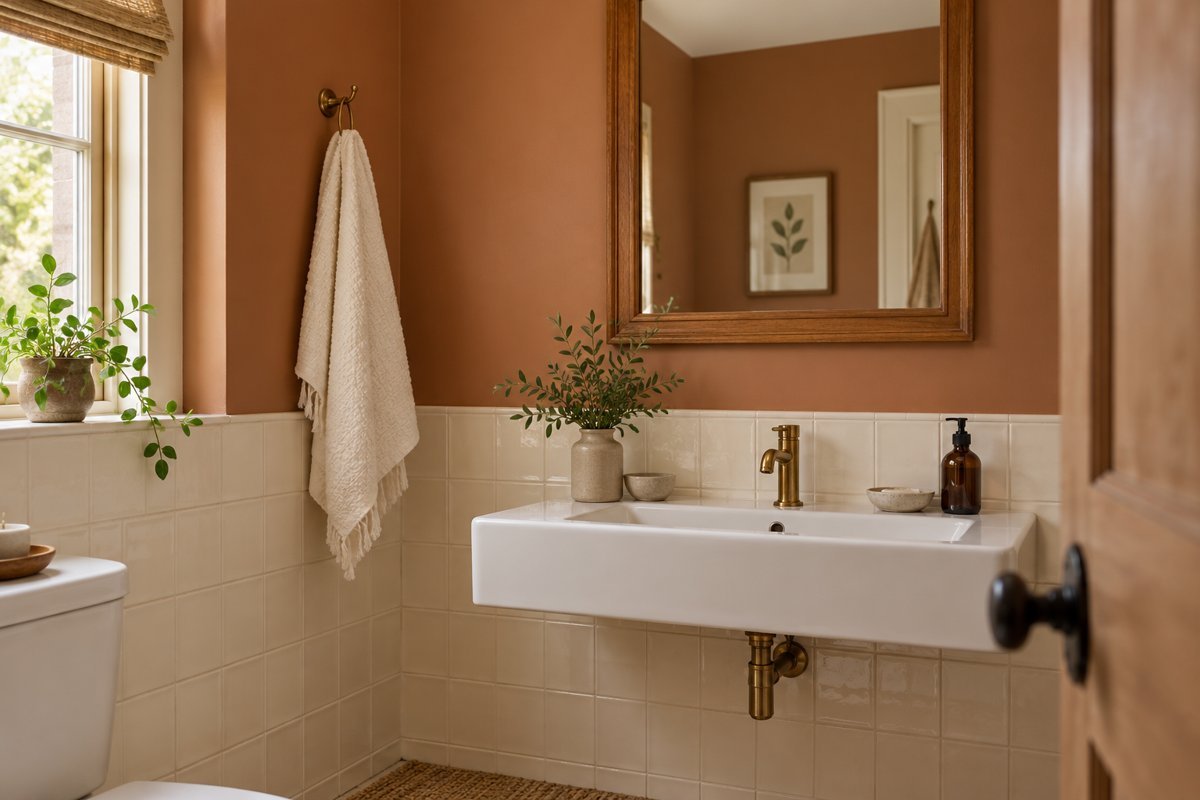
2. Use Warm Clay Above Plain Cream Tiles
Warm clay walls can sit comfortably above simple cream tiles. Imagine the earthy color on the upper wall, with the lower tiles left as they are. A plain wooden mirror frame links the warm tones. Keep towels cream so the color story remains easy to read.
Hold samples beside the tiles rather than judging them against white paper alone. Cream tile can have yellow, pink, or gray notes that change how the paint looks. You do not have to repaint tile to get this effect. Work with the existing surface if it is in good condition. Use the correct paint system for the wall material, and follow preparation guidance. A clean line where paint meets tile helps the two finishes look intentional.
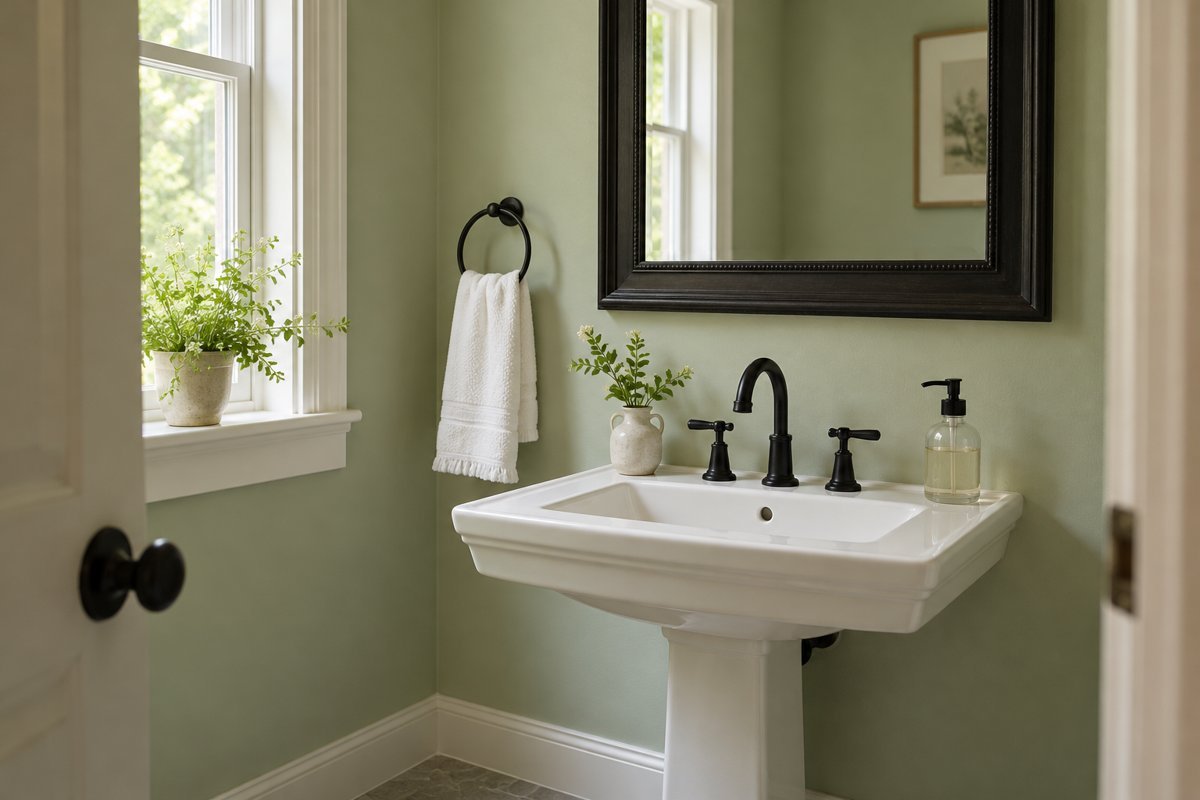
3. Make Pale Green the Background for Dark Details
A pale green wall can soften a powder room with a dark mirror frame or black tap. The contrast gives the fittings a clear outline without making the whole room dark. Add a white hand towel and one useful soap dispenser. The scene stays simple because the wall color does most of the work.
Choose the green by looking at the room’s fixed finishes. A cool gray floor may suit a different green from a warm brown floor. Test samples near both the mirror and the doorway, where the light can differ. Do not add more dark accessories just to match the tap. A few existing dark details may be enough. Leaving the basin area open helps the pale wall feel calm rather than turning the small room into a busy display.
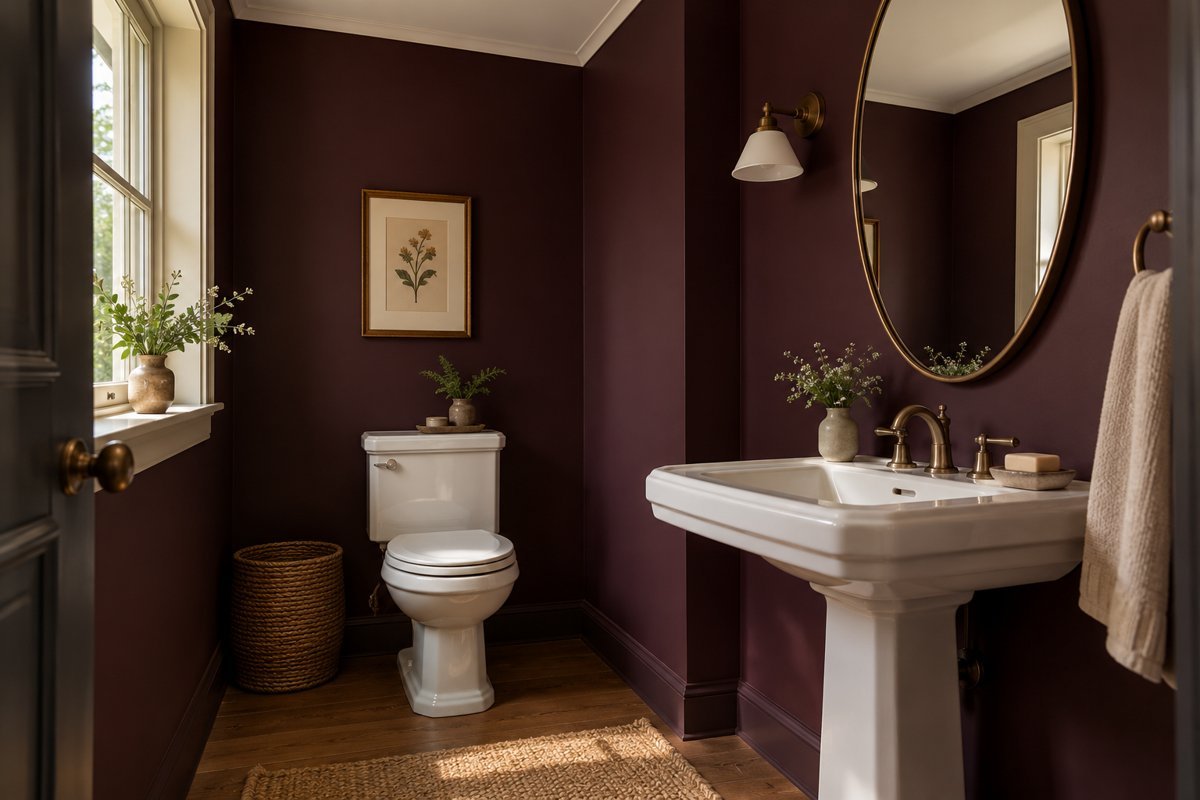
4. Try Deep Plum with a Plain Light Ceiling
Deep plum walls can give a small powder room a rich, quiet feel. Pair them with a light ceiling and a white basin so the room keeps some clear contrast. A simple oval mirror adds a softer shape. Use plain towels instead of a strong pattern, letting the wall color remain the main feature.
Dark paint will not look the same on every wall or under every bulb. Test a large enough sample to see how the color behaves away from the brightest spot. Make sure the room’s normal lighting still works for washing and using the mirror. Do not rely on candles as task lighting. If four dark walls feel too much, try a suitable painted cupboard or one wall as a smaller first step.
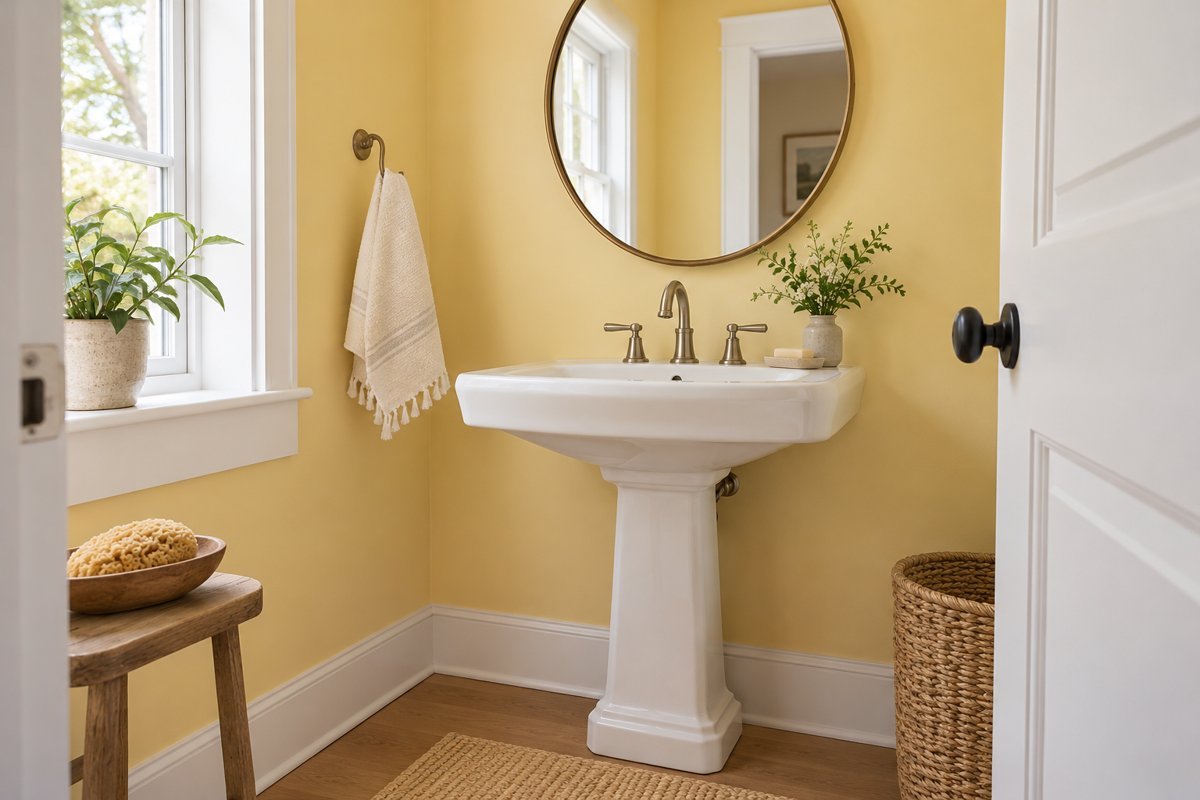
5. Put Soft Yellow Beside White Trim
A soft yellow wall with white door trim can make a powder room feel cheerful. Picture a plain white basin, a small round mirror, and a cream hand towel. The yellow supplies warmth without a row of bright accessories. This scene works best when the other surfaces are fairly simple.
Test yellow carefully under your actual lights. A small sample may seem gentle but feel much stronger across a whole wall. Compare a few muted versions before deciding. Check how the yellow looks beside the floor, since warm and cool surfaces can pull it in different directions. Keep the paint finish suited to the wall and cleaning needs. You can add personality through color while leaving the useful parts of the room plain and easy to maintain.
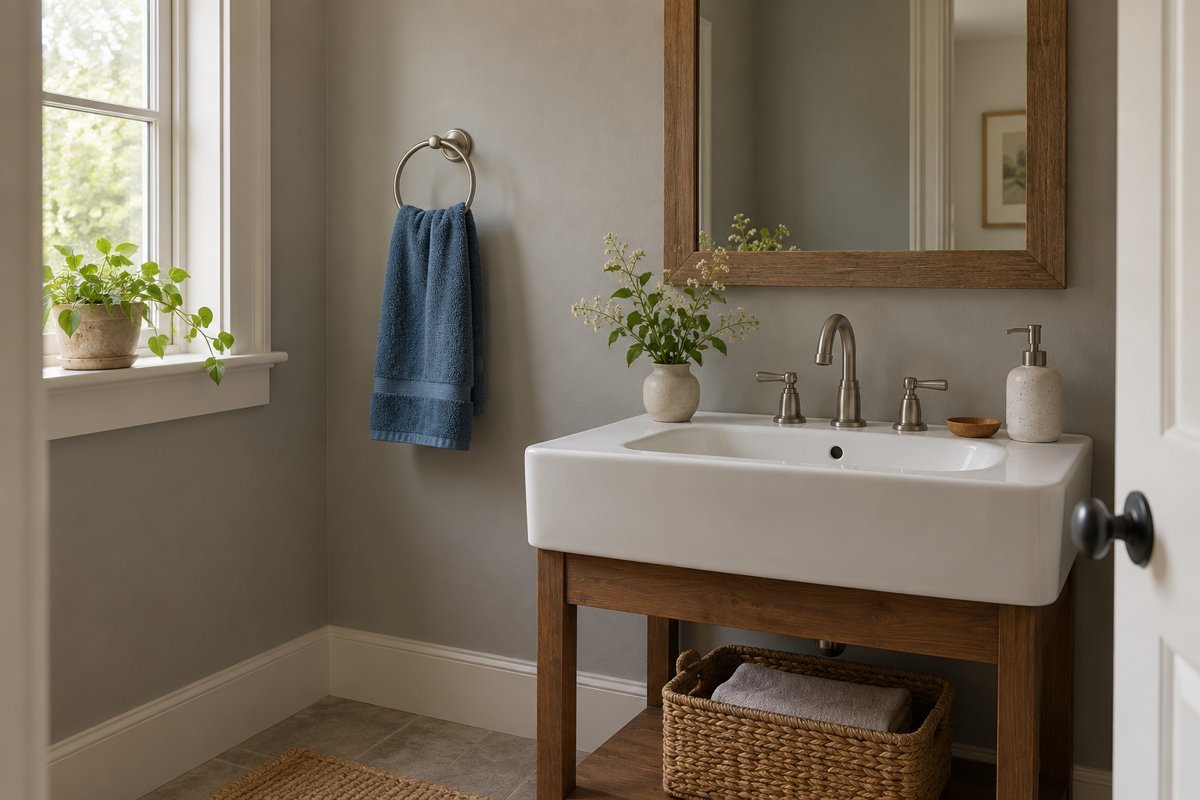
6. Build a Warm Gray Room with One Blue Towel
Warm gray walls can provide a quiet base for a blue hand towel and a white basin. A simple wood-toned mirror adds a little warmth. The towel gives the room a color point you can change easily, while the walls stay neutral. This is useful if you like color but do not want a strong painted room.
Compare gray samples with the existing floor and any stone surfaces. Gray can look purple, green, or blue depending on the light and nearby materials. A shade called warm may still look cool in your room, so trust the sample rather than the name. Keep the towel rail clear enough for the fabric to dry. One well-chosen textile can do more for the scene than several small accessories lined up around the basin.
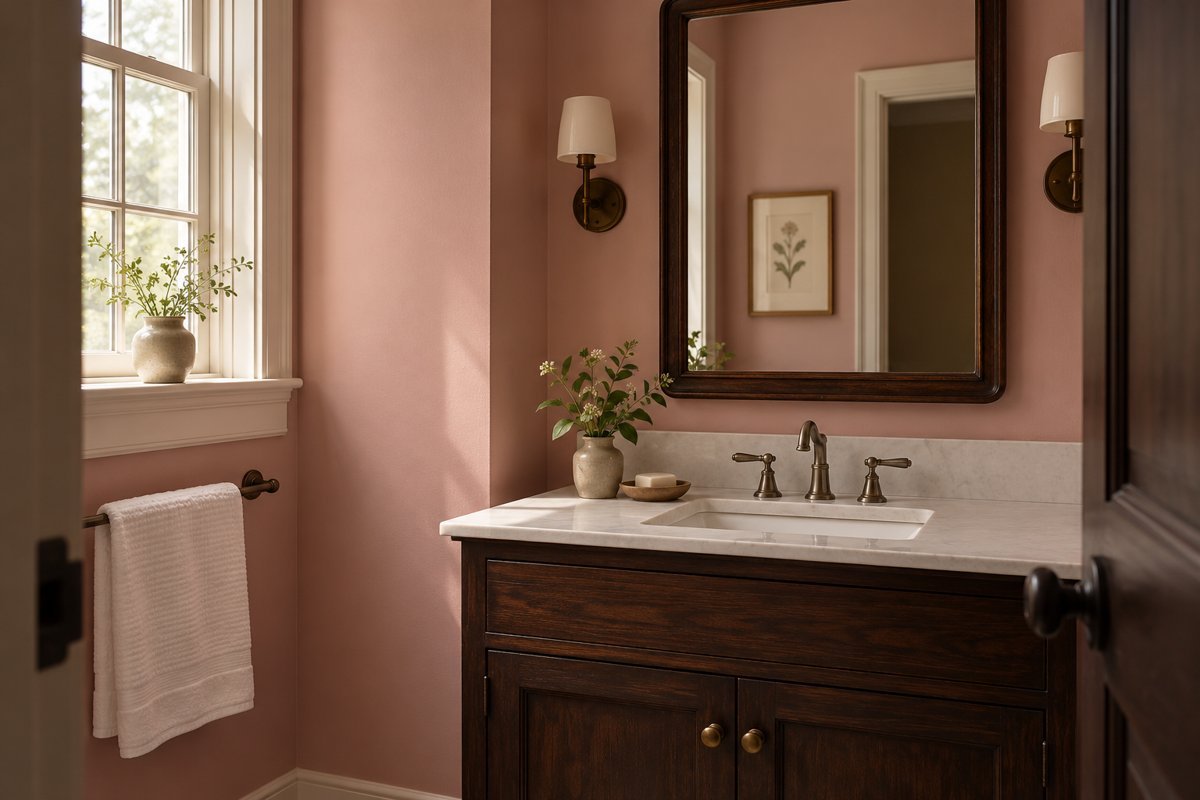
7. Pair Dusty Pink with Dark Brown Wood
Dusty pink walls can look warm beside a dark brown vanity or mirror. The muted pink softens the darker furniture without making the room feel overly sweet. Add a plain white towel and keep the basin top simple. The two main colors create a complete scene on their own.
Try samples next to the wood finish. Red-toned wood and nearly black wood can make the same pink look very different. Look for a shade you enjoy under the room’s normal light, rather than trying to make every surface match. If the vanity is in good condition, let its existing color stay. Painting the walls may be enough. Keep any new accessories small in number so the warm pairing remains easy to see.
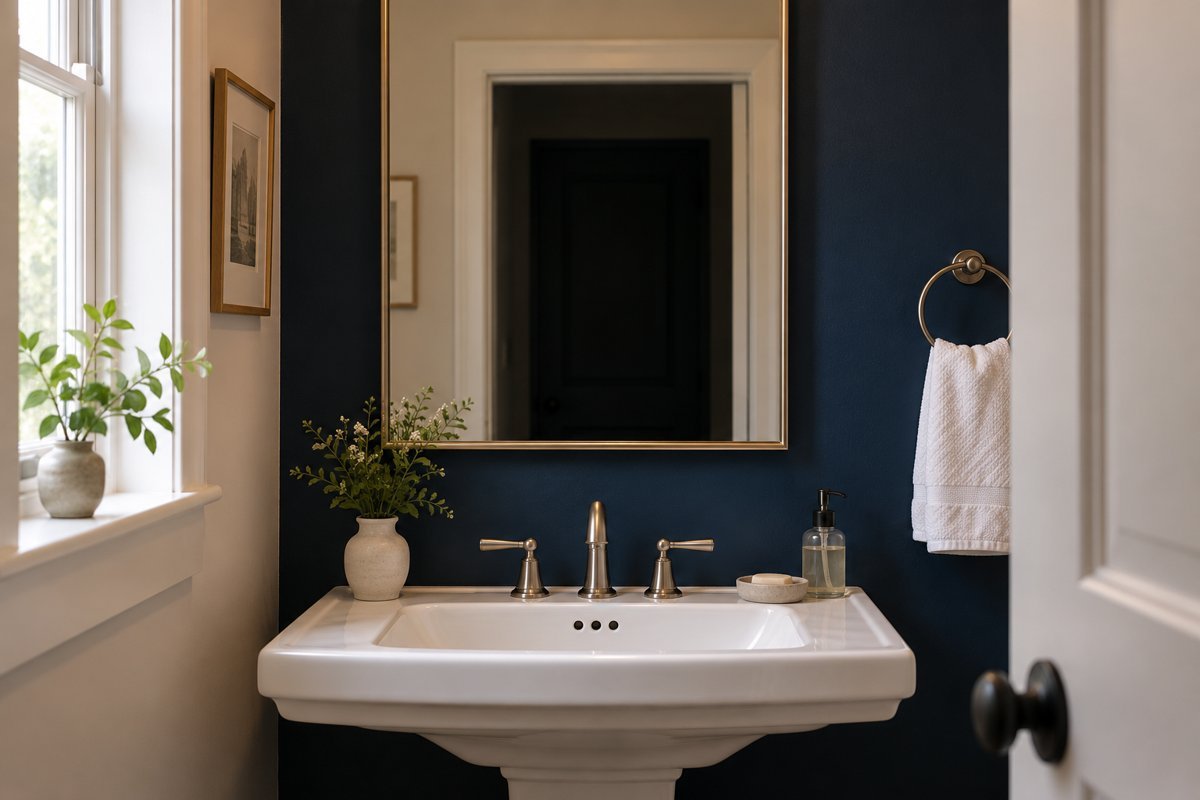
8. Use Navy on a Wall with a Simple Mirror
A deep navy wall behind a plain mirror can become the room’s main feature. Keep the basin and surrounding walls light if you want a clear contrast. A small white towel below the mirror repeats the pale color. This scene gives you a strong color area without needing a large art display.
Check where the paint will start and stop before you begin. Natural corners usually give a clearer boundary than an arbitrary stripe across a wall. Test the navy beside the mirror frame and tap finish. Use normal task lighting while judging it. If the mirror reflects a dark doorway, the scene may feel different from what you expected. Looking through the mirror is part of choosing the wall color, since the reflection becomes part of the room.
9. Let Cream Walls Support a Green Vanity
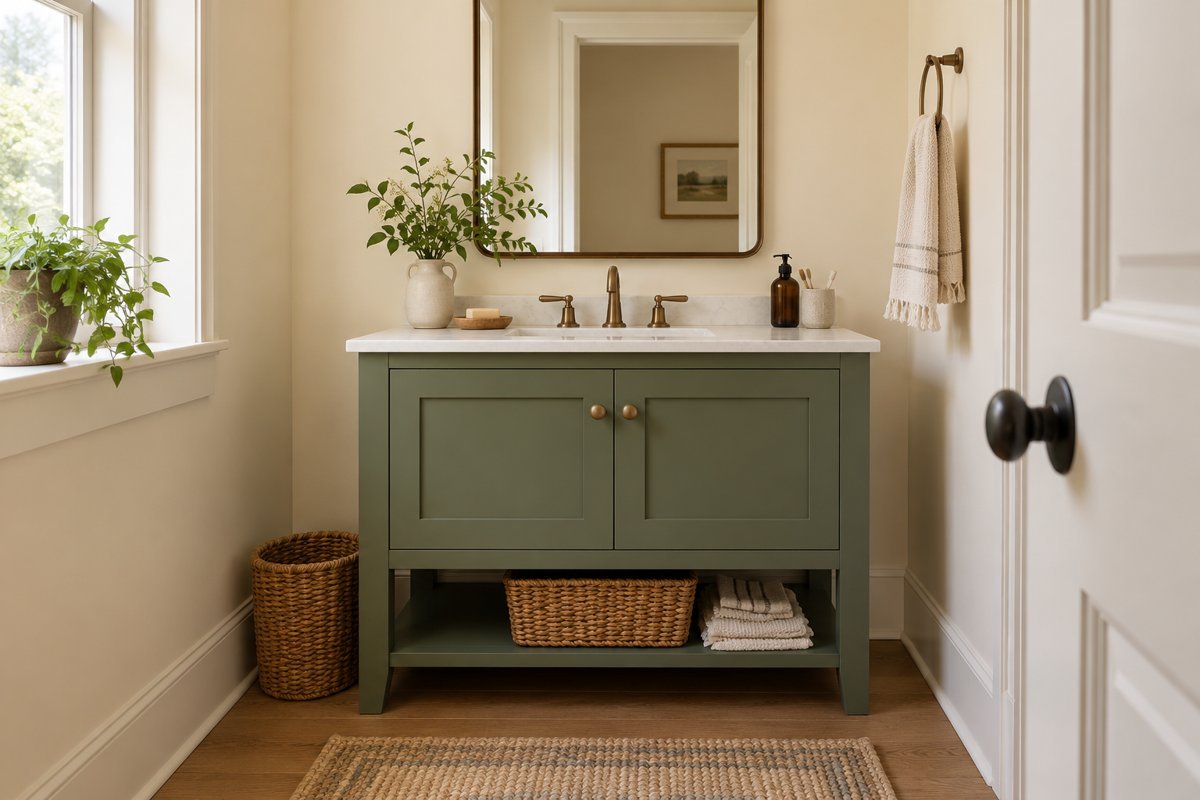
If the walls are already a warm cream, a muted green vanity can provide the color. Picture the green cabinet below a white basin, with the upper wall left simple. The colored furniture anchors the lower part of the room. A plain mirror keeps attention on the useful cabinet shape.
If you plan to paint existing furniture, check its material and use the preparation and coating system suited to it. Cabinet surfaces need different care from ordinary walls. Follow drying and curing instructions before returning the vanity to use. You can also use this scene when choosing a replacement cabinet, but measure first. A beautiful color does not make up for a door that cannot open fully or storage that does not suit your needs.
10. Create a Charcoal-and-White Room with Soft Fabric
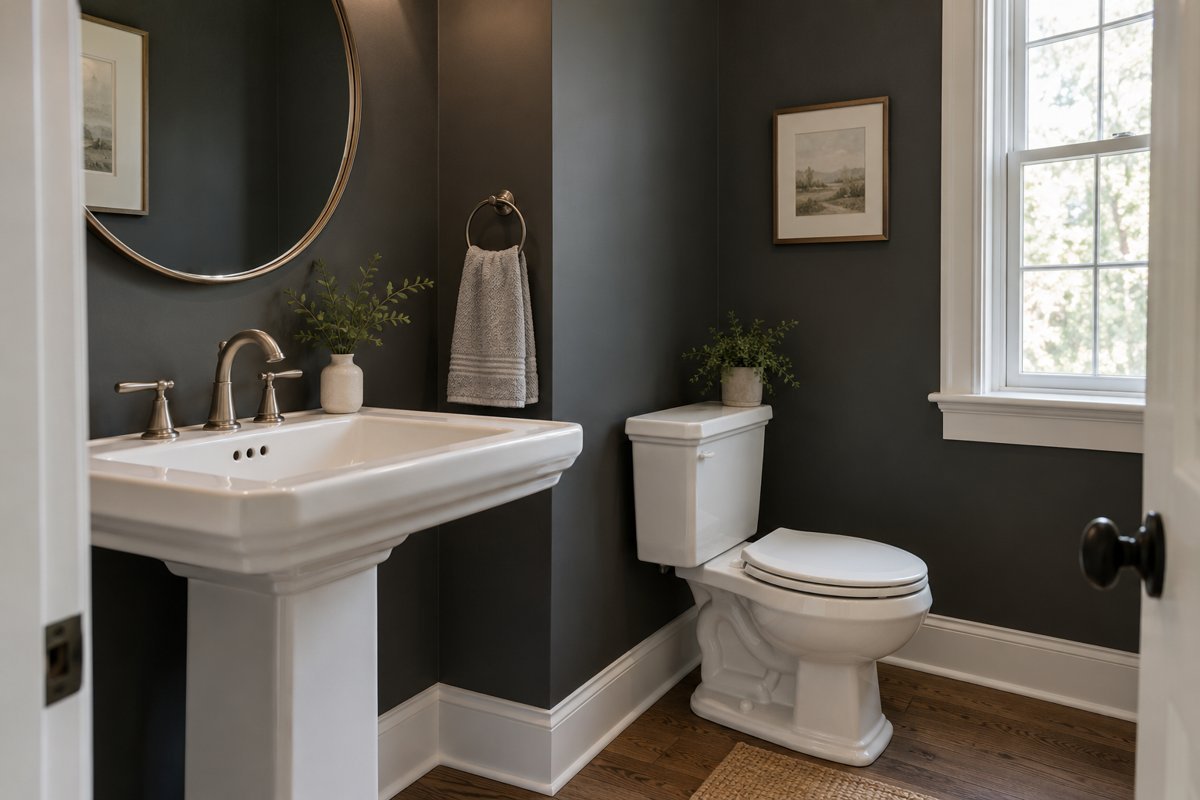
Charcoal walls beside white fittings can make a clear, bold scene. Soften the contrast with a light gray hand towel and a simple rounded mirror. Leave the counter mostly empty. The strong wall color means the room needs very little added decoration to feel finished.
Sample charcoal rather than assuming all dark grays are alike. Some look brown, blue, or green under indoor lights. Check the shade beside the floor and basin in several parts of the room. Choose a suitable finish and follow the paint maker’s cleaning advice after the coating has cured. If you are unsure about a full dark room, start with a smaller area or use charcoal in a towel and frame before committing to paint.
Choose Samples in the Room You Have
Start with the surfaces that will stay: floor, tiles, basin, taps, and furniture. Bring several samples into the room and look at them under the lights you normally use. Follow the sampling product’s instructions and view a generous area where possible. A color seen online is a starting point, not a promise of the result.
Once you choose a shade, plan the preparation and finish carefully. Keep paint away from fittings and ventilation openings, and follow the product’s safety, drying, and care guidance. Then add only the details the room needs. A useful towel, clear mirror, and easy-to-clean basin area can complete the scene. The goal is a powder room that feels pleasant to enter and simple to use.
Common Questions
What is a good paint color for a small powder room?
Soft blue, pale green, warm cream, and muted clay are useful starting points. Deeper plum, navy, or charcoal can also work if you enjoy richer color and have suitable lighting. Test each option beside the room’s fixed finishes.
Can a small powder room have dark walls?
Yes, if you like the result in your own room. Pairing deep walls with a light ceiling and white fittings creates contrast. Test a large sample and check that normal lighting remains comfortable for washing and using the mirror.
How should I test powder room paint colors?
View samples beside the actual tile, floor, and basin, with the door open and closed. Check them at different times under the lights you normally use. Follow the sampling and paint product’s preparation, finish, drying, and care guidance.
Related Ideas
To explore color combinations further, see our modern home color pairings and warm neutral home decor ideas.