
A home often comes together one piece at a time. You may have an old wooden dresser, a newer sofa, and a chair that came from another room. Those pieces do not have to match to look comfortable together. A clear link in color, shape, or size can help them feel like they belong. These interior styling ideas show ten ways to combine different pieces without replacing everything. Start with something you already enjoy, then give it a useful place beside the rest. The goal is a room that reflects your life and works well, rather than a set of furniture bought all at once.
Start here: Choose one older piece you enjoy, then connect it to a newer piece through a shared color, similar wood tone, or repeated shape. Keep the surrounding details simple and check that the arrangement still feels comfortable to use.
1. An Older Wood Dresser With a Plain Modern Mirror
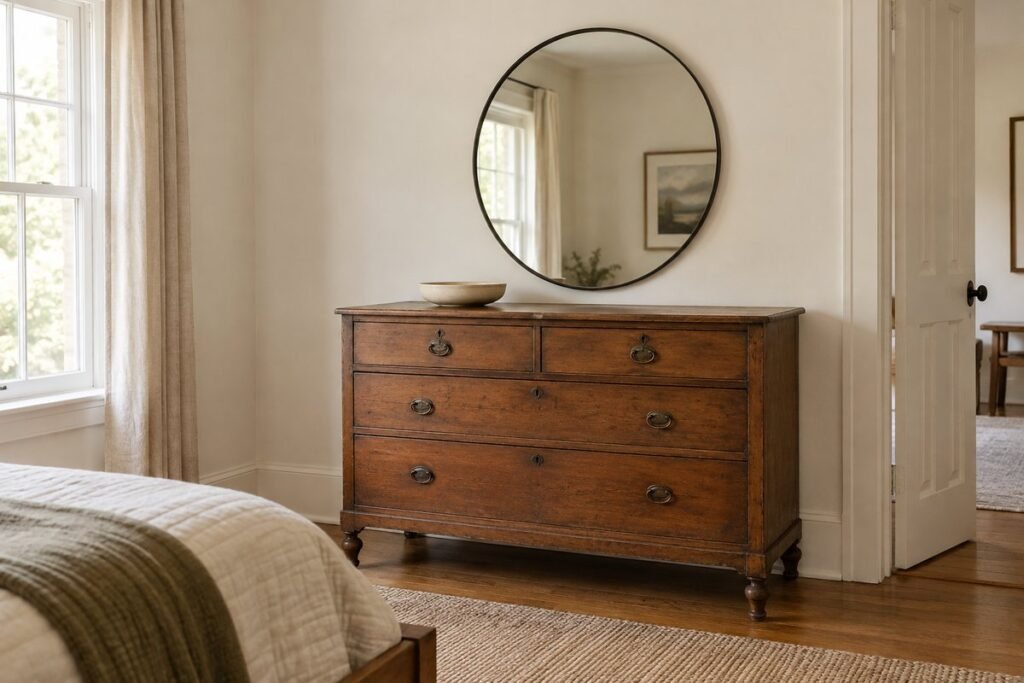
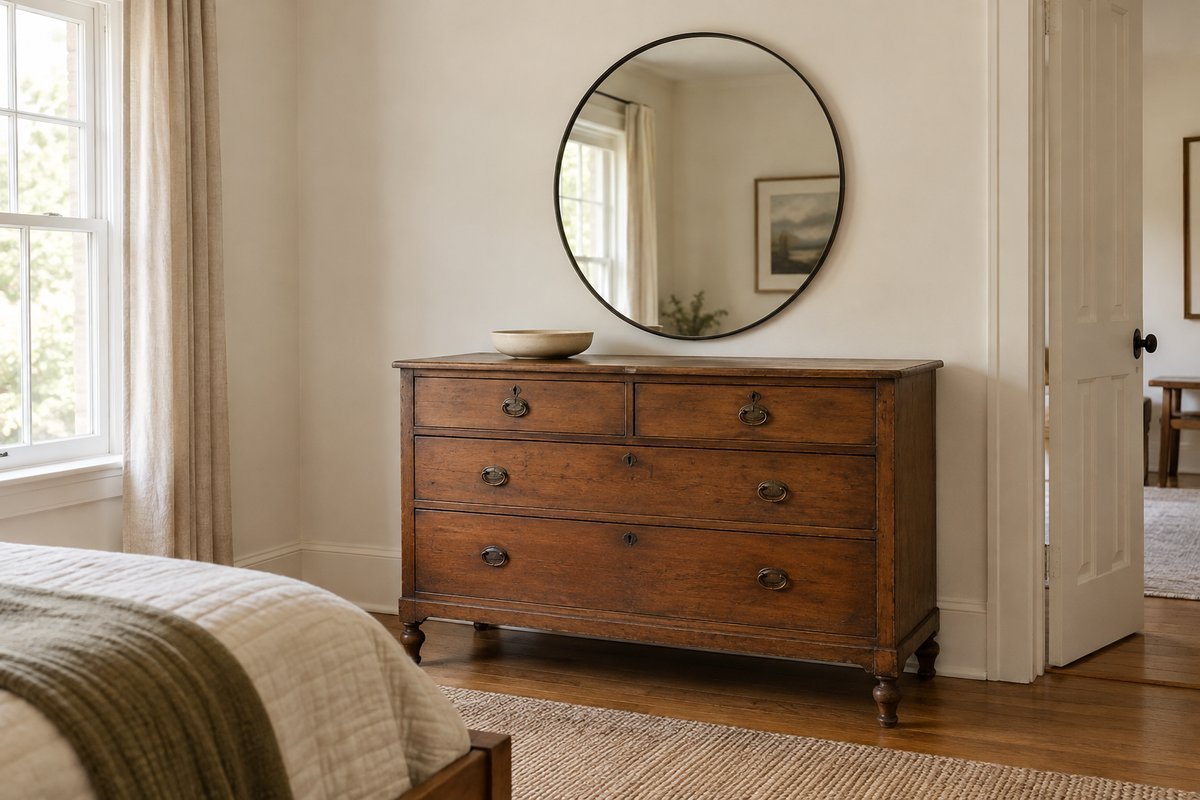
Picture a worn medium-brown dresser beneath a simple round mirror with a thin dark frame. The wall is warm white, and one cream dish sits on the dresser. The furniture’s detailed drawers contrast with the mirror’s clean outline. Keeping the top quiet lets both pieces show their character without competing.
Check the dresser’s condition and secure it as appropriate before focusing on styling. Mount the mirror properly for its weight and wall type. Compare the mirror’s width with the dresser using a paper template. It need not be centered on the full wall if it relates clearly to the furniture below. Leave useful space on the top for daily items. The mix feels more natural when the dresser still does the job you need from it.
2. A Simple Sofa Beside a Vintage-Looking Patterned Chair
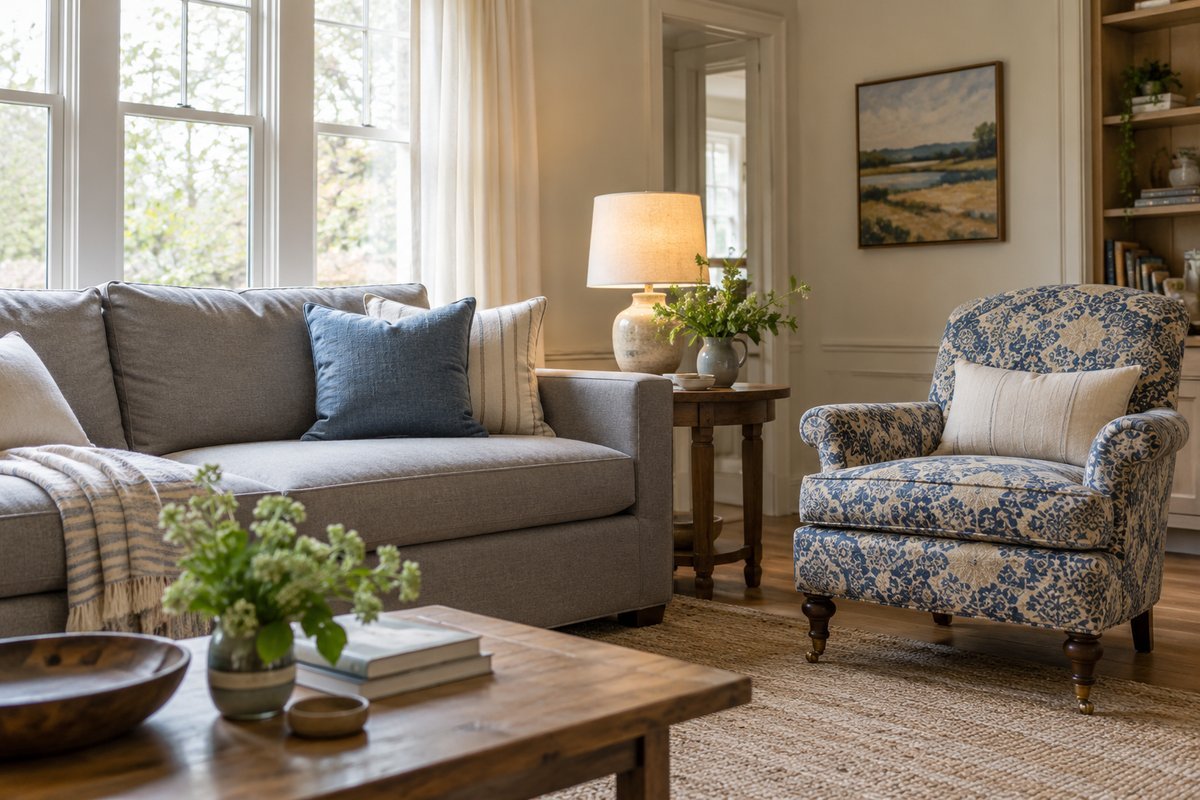
A patterned chair can give a plain sofa a personal companion. Imagine a gray sofa with one older chair in a muted blue and cream print. A plain wooden side table sits between them. The blue appears once more in a small sofa cushion, creating a link without requiring the seats to share a shape.
Try the chair in the room before deciding whether its pattern is too busy. Look at the existing rug and curtains as part of the same view. Keep the chair comfortable and in sound condition; a decorative shape is not enough if the seat is awkward. If the fabrics compete, remove a patterned cushion or simplify a nearby throw before changing larger pieces. Sometimes reducing one detail helps the mix settle.
3. A Modern Dining Table With Different Wooden Chairs
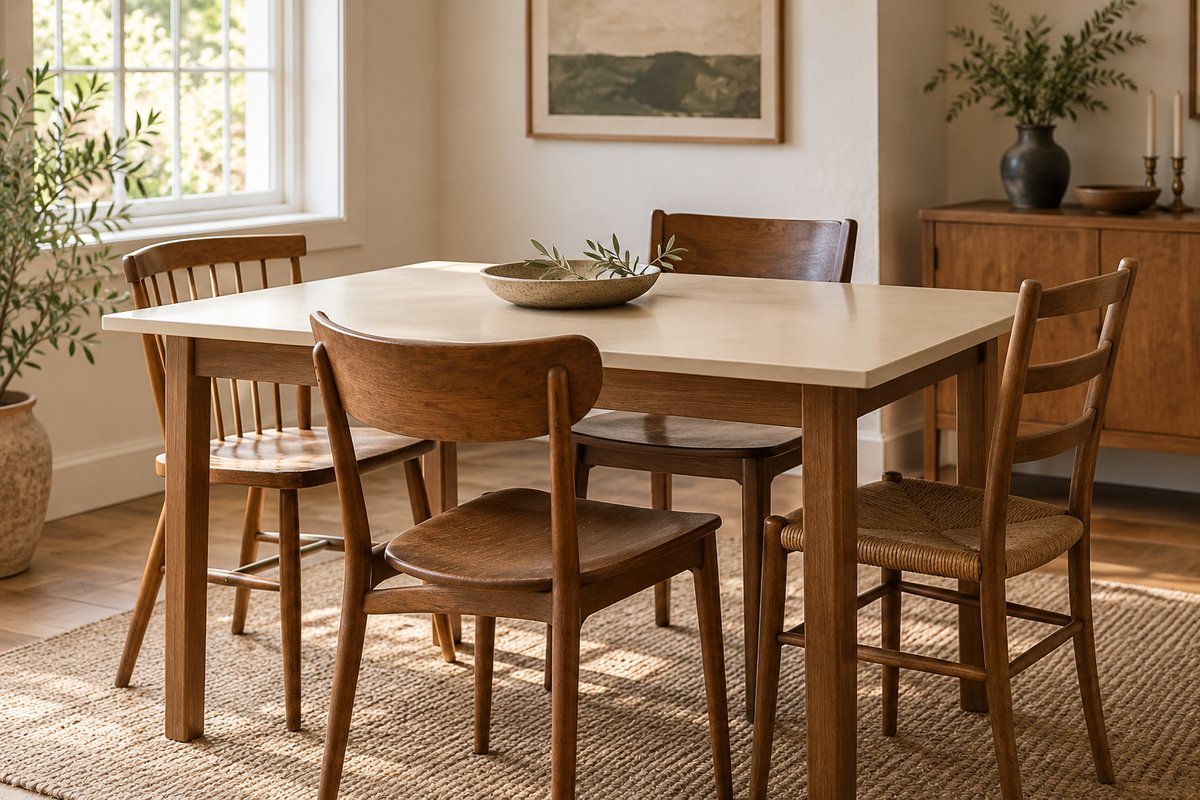
A plain rectangular table can bring together chairs collected at different times. Picture four wooden chairs with simple shapes around a cream-topped table. Their wood shades are close, but the backs differ. Keep the table setting simple, with one low bowl, so the furniture itself provides the interest.
Check seat heights, comfort, and how each chair fits beneath the table. Different shapes still need to work at the same meal. Avoid using a chair with loose joints or damage simply to complete the set. A shared seat-pad color can help if the wood tones feel disconnected, but it is not required. Give the arrangement enough space for chairs to pull out comfortably rather than squeezing in extra seating for appearance.
4. An Old Framed Landscape Above a Plain New Cabinet
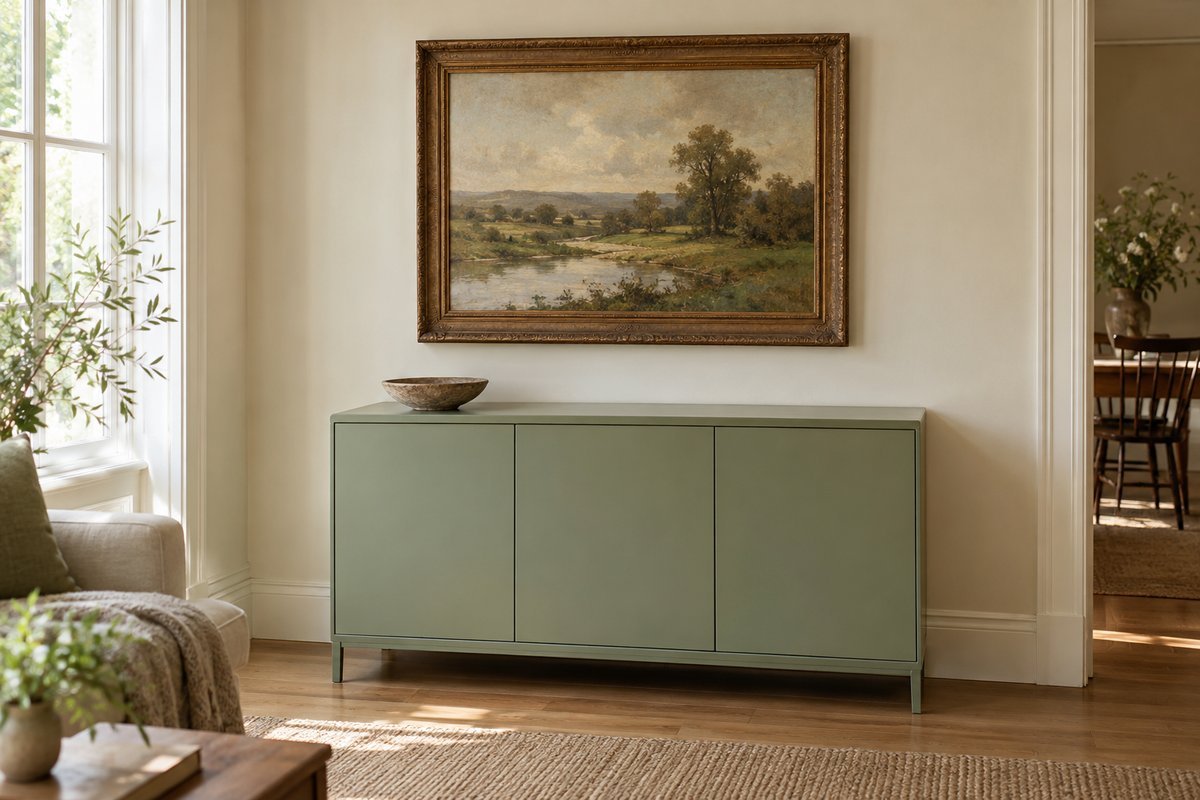
An older landscape painting can sit comfortably above a simple modern cabinet. Imagine a detailed brown frame over a smooth pale green unit. The painting includes a little green that links to the cabinet, while the rest of the wall stays cream. One small bowl on top keeps the scene from feeling crowded.
Choose the artwork because you enjoy it, then test how its size relates to the cabinet. Use appropriate hanging fittings and follow care advice for valuable or delicate work. Keep cabinet doors and drawers accessible. If the frame and cabinet colors clash, try the artwork on another wall before changing either piece. You do not have to make every favorite object fit into the first arrangement you try.
5. A Plain Bed With a Colorful Inherited Quilt Nearby
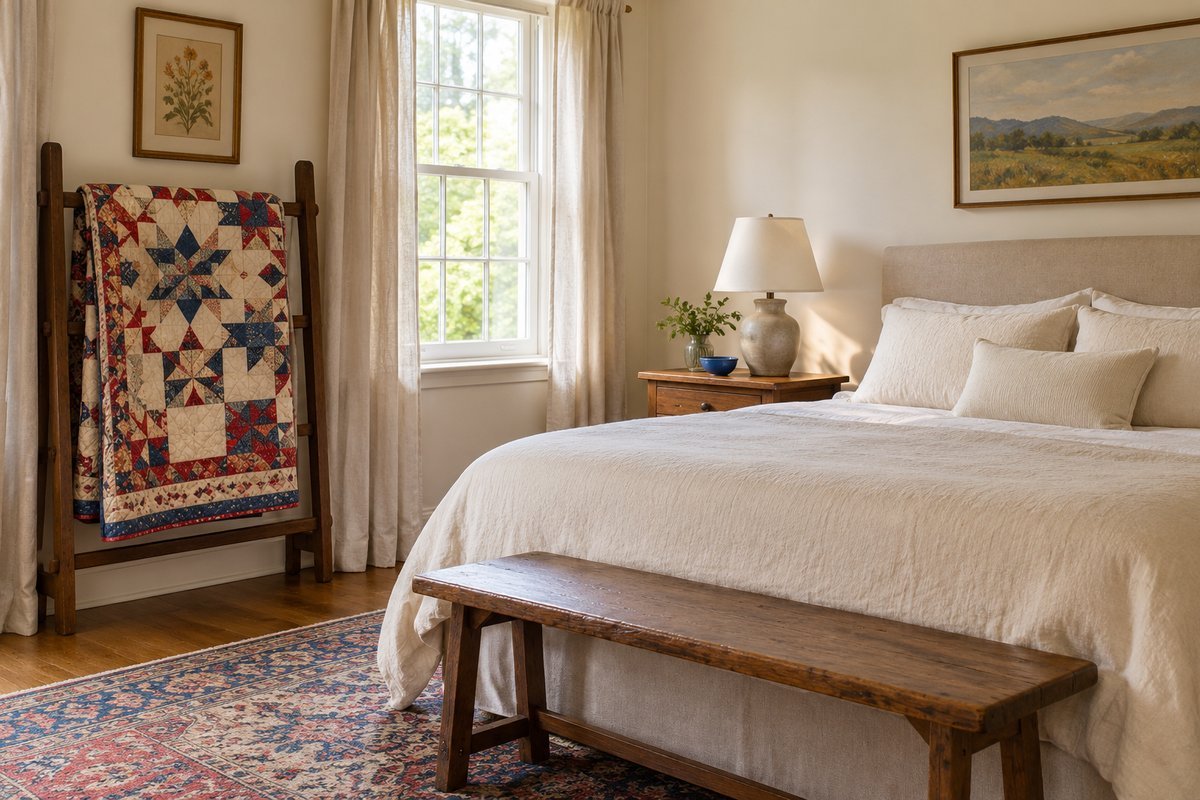
A colorful quilt can bring history into a bedroom with a simple bed frame. Picture the quilt folded on a suitable display rail along a side wall, while the bed uses plain cream fabric. The quilt’s red and blue pieces become the room’s main pattern. A small blue dish on the bedside table provides one quiet repeat.
Check the quilt’s condition and care needs before choosing how to display it. A delicate textile may need professional advice on support and light exposure. Do not assume it can take the same use as a new washable throw. Keep its display clear of heat and passing objects that might snag it. If it is suitable for everyday use, you can fold it over the bed instead; the plain surroundings still help the pattern stand out.
6. A Modern Desk With a Small Older Ceramic Lamp
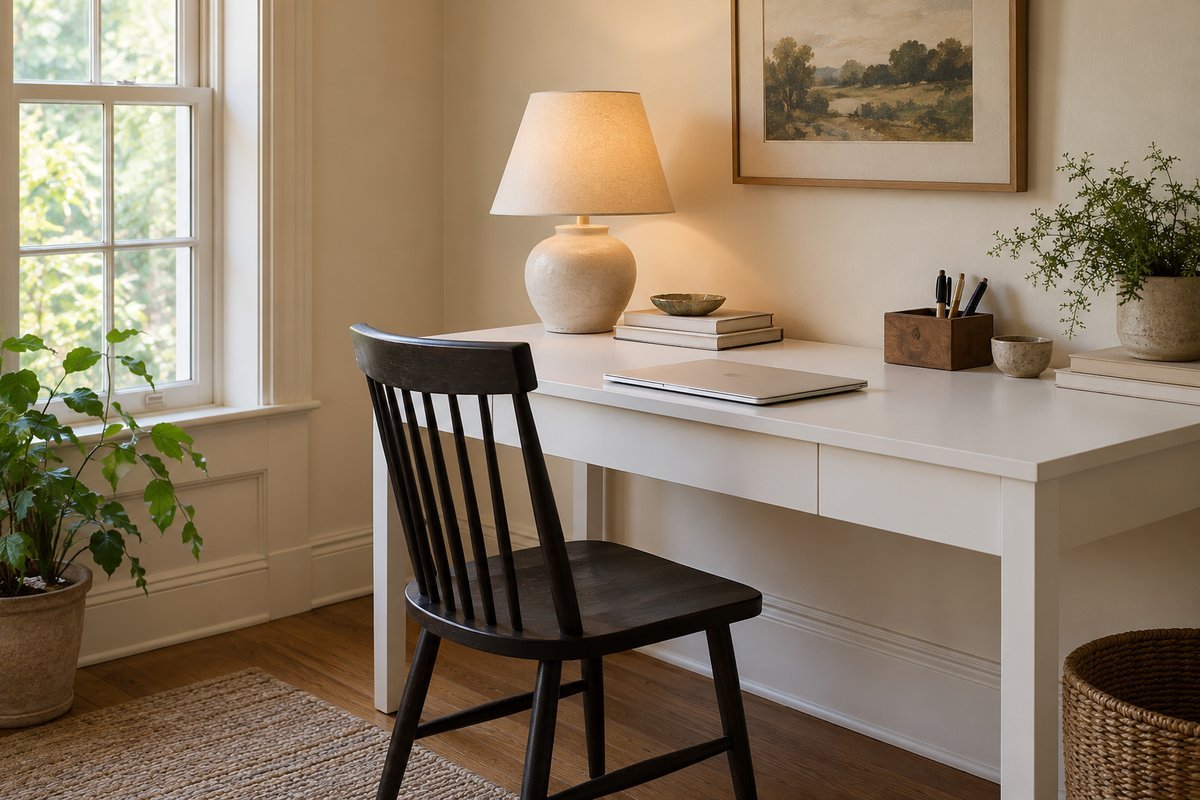
A compact ceramic lamp can soften the lines of a plain desk. Imagine a white desk, a simple dark chair, and a rounded cream lamp with a plain shade. A small wooden box holds spare pens. The contrast between the desk’s straight edges and the lamp’s curved body gives the corner enough detail.
Use an older electrical item only when its condition and safety are appropriate; have concerns checked by a suitably qualified person. Choose a bulb and shade arrangement that meets the lamp’s instructions. Test whether the light suits the desk task, not only the room’s look. If it is decorative rather than useful for work, put it elsewhere and choose proper task lighting. A good mix still needs each piece to perform its intended job.
7. A Weathered Side Table Beside a Smooth Upholstered Chair
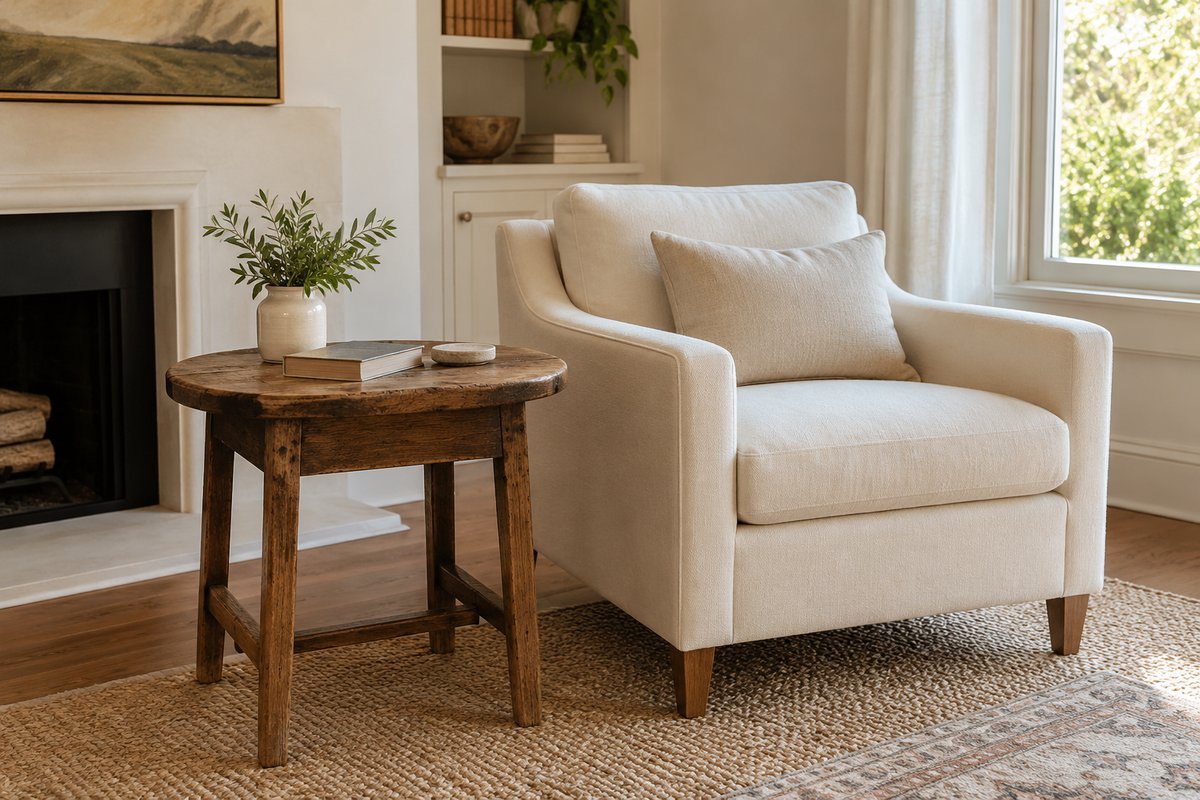
A slightly worn table can add texture beside a plain upholstered chair. Picture a small brown table with visible grain and a cream chair with simple legs. One book and a coaster are enough on top. The contrast comes from the surfaces rather than from adding several colors or patterned fabrics.
Check that the table is stable and its surface suits the way you use it. Protect it from moisture and heat as appropriate. Do not sand an unknown old finish without suitable advice. If the table is too low or too far from the chair, it may work better elsewhere. Try the height while seated before deciding the pairing is right. A useful reach makes the scene feel more comfortable than an exact visual match.
8. A Plain Shelf With One Small Family Collection
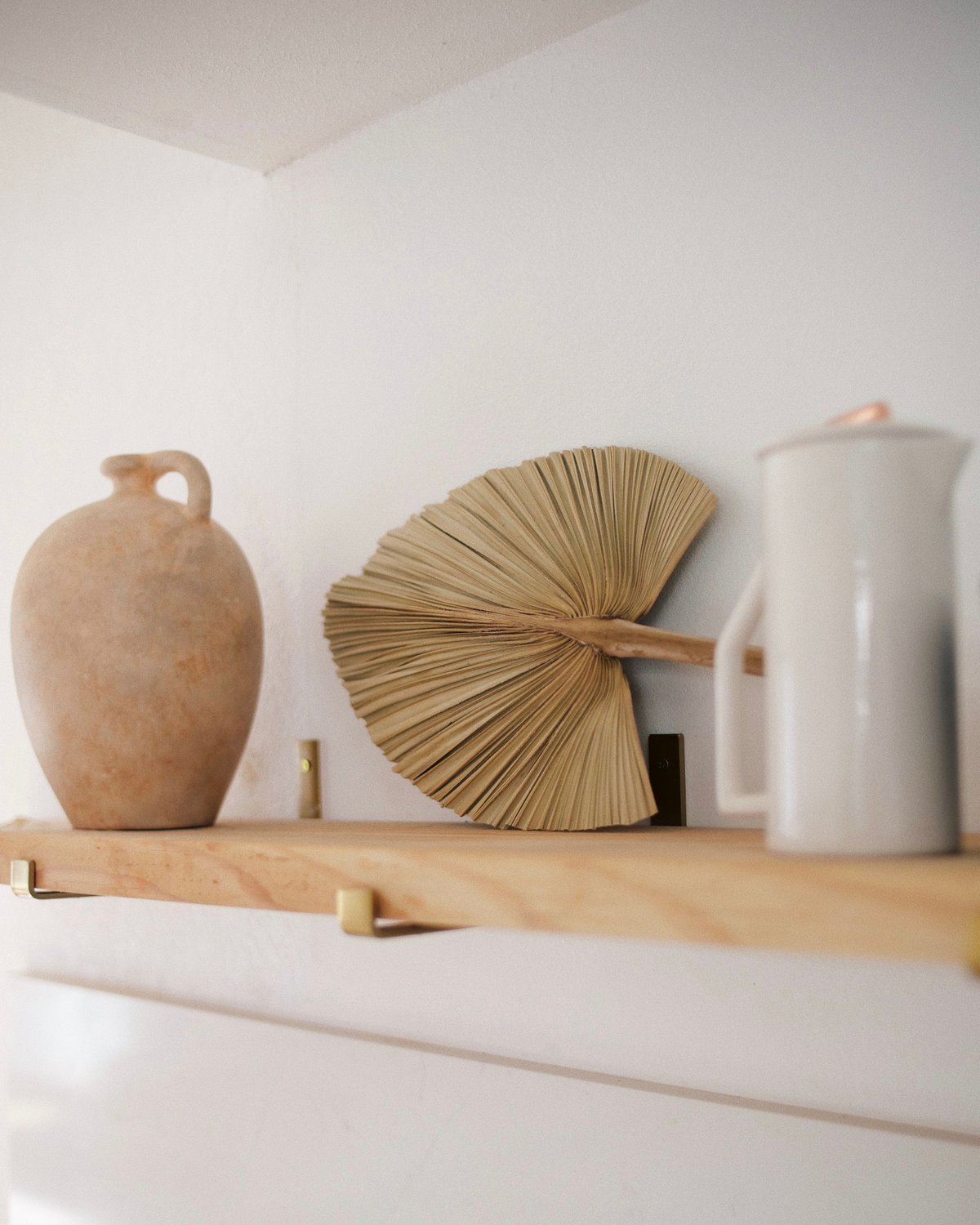
A modern shelf can give older objects a clear setting. Try a small group of pottery pieces on one pale wooden shelf, with empty space around them. A dried palm can add a different shape without introducing a busy pattern. A cream wall lets the collection stand out, while the simple shelf keeps the display feeling light.
Choose sound pieces and keep fragile objects away from busy edges. Fit the shelf appropriately and respect its load limit. If the collection is large, rotate a few pieces rather than displaying everything at once. You do not need objects of equal size, but each should be easy to see. A plain background can help older details feel fresh while leaving room for the room’s other uses.
9. A Simple Hall Cabinet With an Older Woven Basket
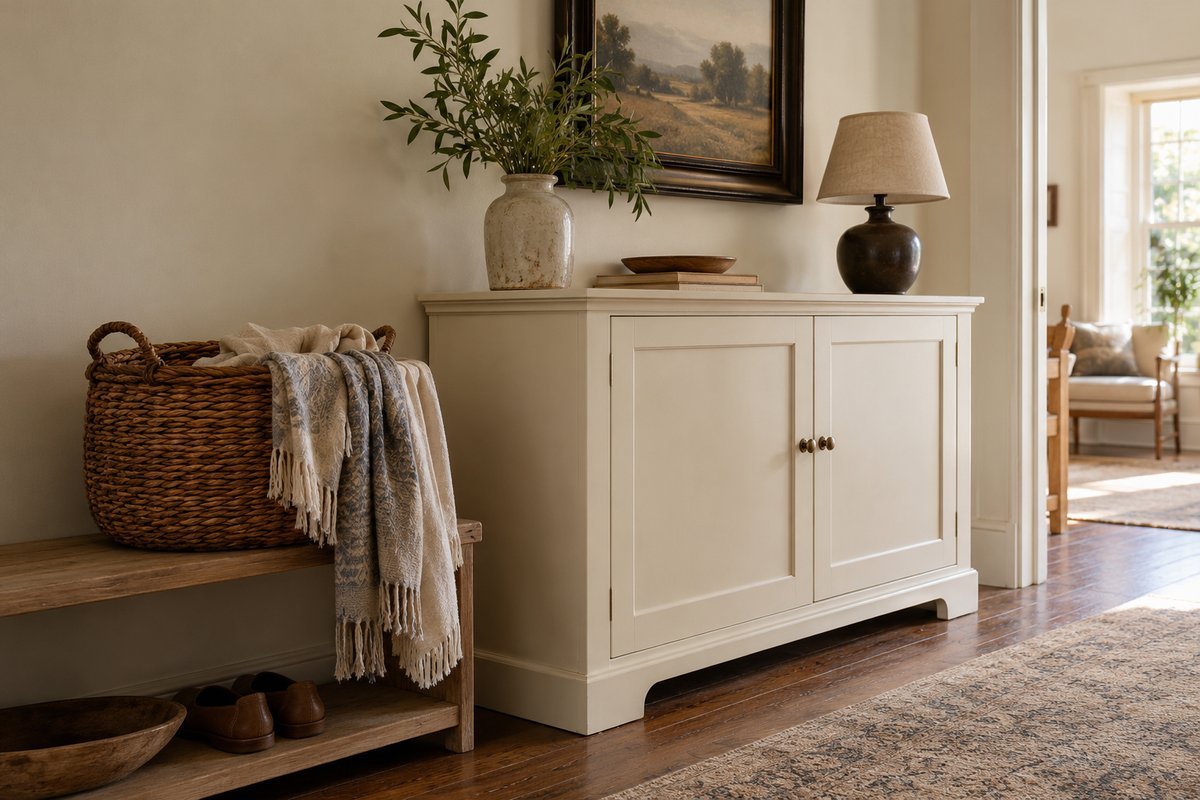
A basket with a little character can soften a plain hall cabinet. Picture a smooth cream cabinet with a sturdy brown basket on a nearby shelf, holding a few light scarves. The basket’s texture contrasts with the closed doors. A small dark frame above provides a clear edge to the scene.
Check the basket for rough parts, weak handles, or anything that could damage fabric. Keep it within its shelf rather than letting it project into the route. Follow the cabinet’s stability guidance and allow doors to open fully. The basket should hold items used here, not simply fill an empty spot. If it is too delicate for storage, choose a safer display location and use a more suitable container for everyday accessories.
10. A Modern Room With One Personal Travel Print
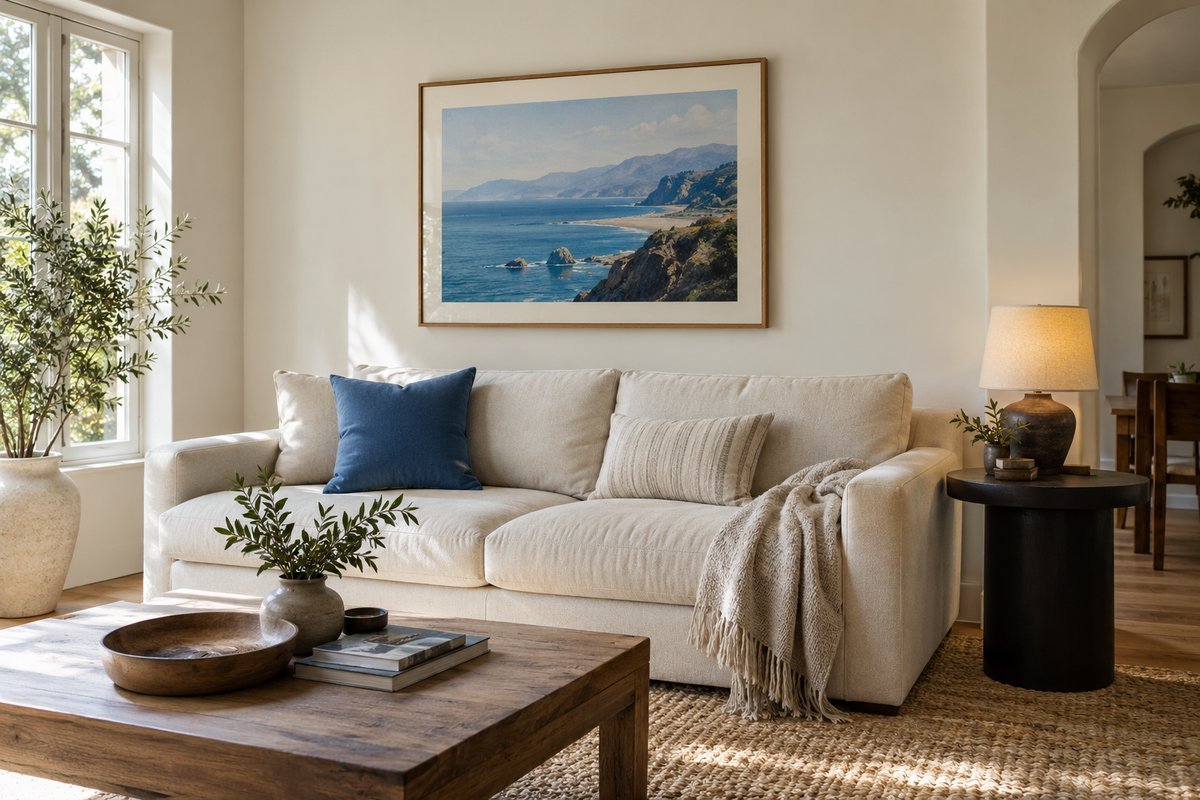
A travel print can give a room a story without determining all its furniture. Imagine a simple cream sofa and dark side table, with one blue-toned print from a meaningful trip on the wall. A plain blue cushion links it to the seating. The room remains modern through its clear shapes, while the artwork adds something personal.
Use artwork you own or have permission to reproduce. Choose a frame that supports the piece and fits the wall rather than trying to imitate the rest of the furniture exactly. Test the size with paper before hanging and keep the fitting suitable for the weight. If the print is small, place it where it can be enjoyed close up. Its meaning matters more than making it the largest object in the room.
Look for One Clear Link
Choose the favorite piece you want to keep, then look for a simple connection with the room around it. That might be a shared color, a similar wood tone, or a repeated rounded shape. You do not need all three. Give detailed pieces quieter neighbors so their features remain easy to see.
Move things in small steps and use the room before deciding the mix is finished. Check comfort, access, care needs, and whether the display still leaves useful surfaces open. Some pieces may belong in another room, and that is fine. A home can hold different periods and styles without every corner explaining the same theme. A few thoughtful links help the pieces feel at ease together.
Common Questions
How do you mix old and new furniture without making a room feel busy?
Start with one detailed older piece and give it a simpler neighbor. Repeat one color or material, then leave some clear surfaces around the pairing. View the rug, curtains, and cushions together before adding another pattern.
Do wood tones need to match when mixing furniture?
They can vary. Similar warmth or one repeated wood shade can help different pieces sit comfortably together. Try the arrangement in daylight and check the scale of the pieces as well as their color.
How can I include inherited objects in a modern room?
Choose a few objects you enjoy seeing and give them space on a plain shelf, cabinet, or wall. Rotate a larger collection rather than displaying it all at once. Check the condition and care needs of delicate textiles, artwork, and older electrical items before using them.
Related Ideas
For more ways to combine existing pieces, try our no-buy decor ideas. For the artwork and bedroom pairings in this article, explore wall art ideas and farmhouse bedroom furniture ideas.