
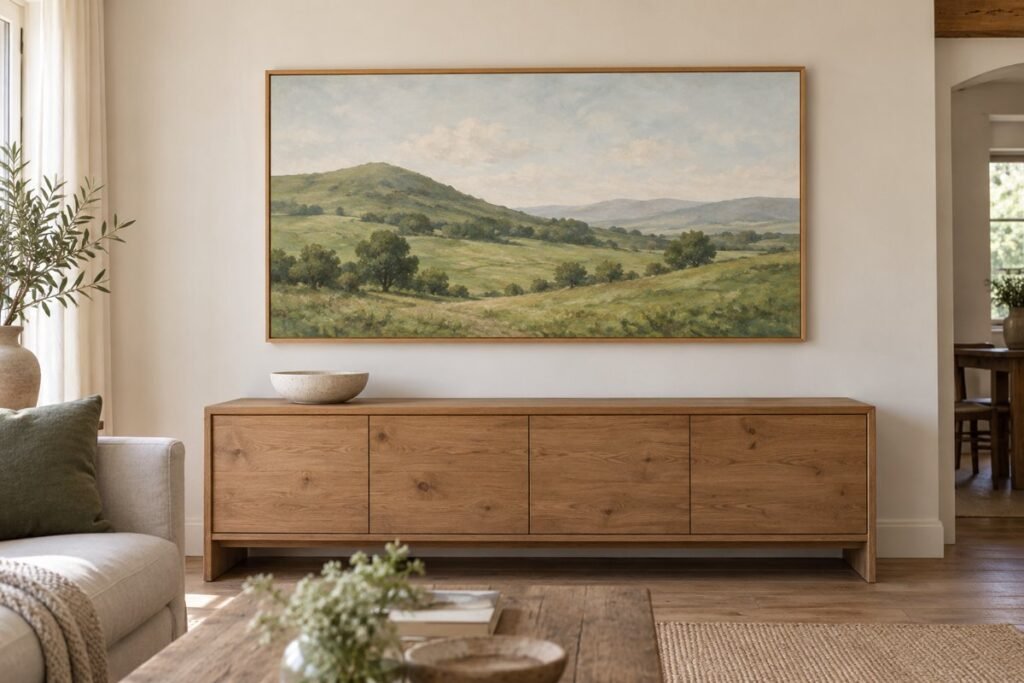
Choosing wall art can be harder than finding a picture you like. A piece may look lovely on its own but feel too small, too busy, or lost once it is on the wall. Start by looking at the space around it. The furniture, wall color, and view from the doorway all help you decide what belongs there. These wall art ideas focus on ten simple arrangements you can adapt. Some use one large piece, while others bring texture through fabric or paper. You do not need to fill every empty patch. Choose one clear focal point and give it room to be seen.
Start here: Start with the wall, viewing distance, and nearby furniture before choosing art. One clear focal point can be more useful than filling every gap; a paper outline lets you test the size before making holes.
1. One Wide Landscape Print Above a Low Sideboard
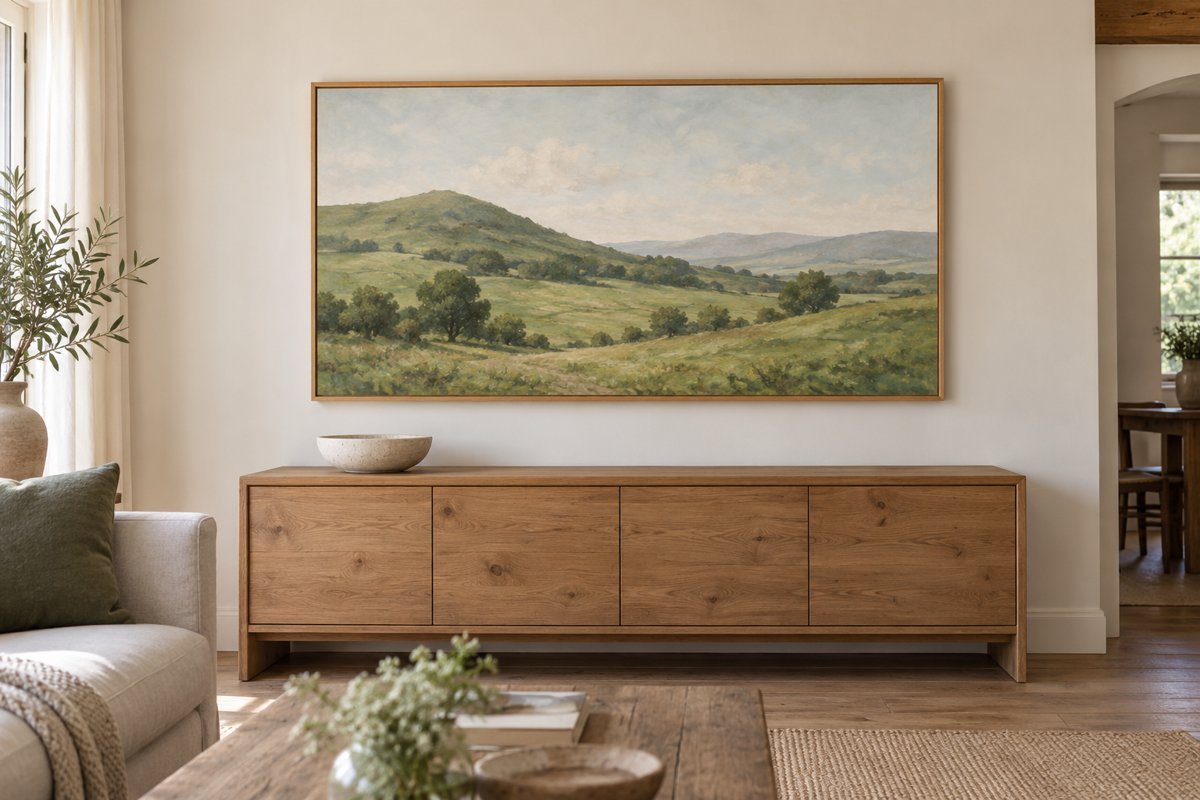
Picture a broad landscape print above a plain wooden sideboard. The image has soft green hills and a pale sky, with a simple oak frame around it. Keep the sideboard top mostly clear except for one low bowl. The wide picture relates to the furniture below and gives the wall a clear center.
Test the frame size with a paper outline before hanging. View it from the doorway and from the seats nearby. Leave enough space between the sideboard and frame so objects can sit below without hiding the artwork. Use fittings suited to the wall and the piece’s weight. A landscape does not have to match every room color; one shared shade can be enough to help it feel at home.
2. A Textured Fabric Square in a Deep Frame
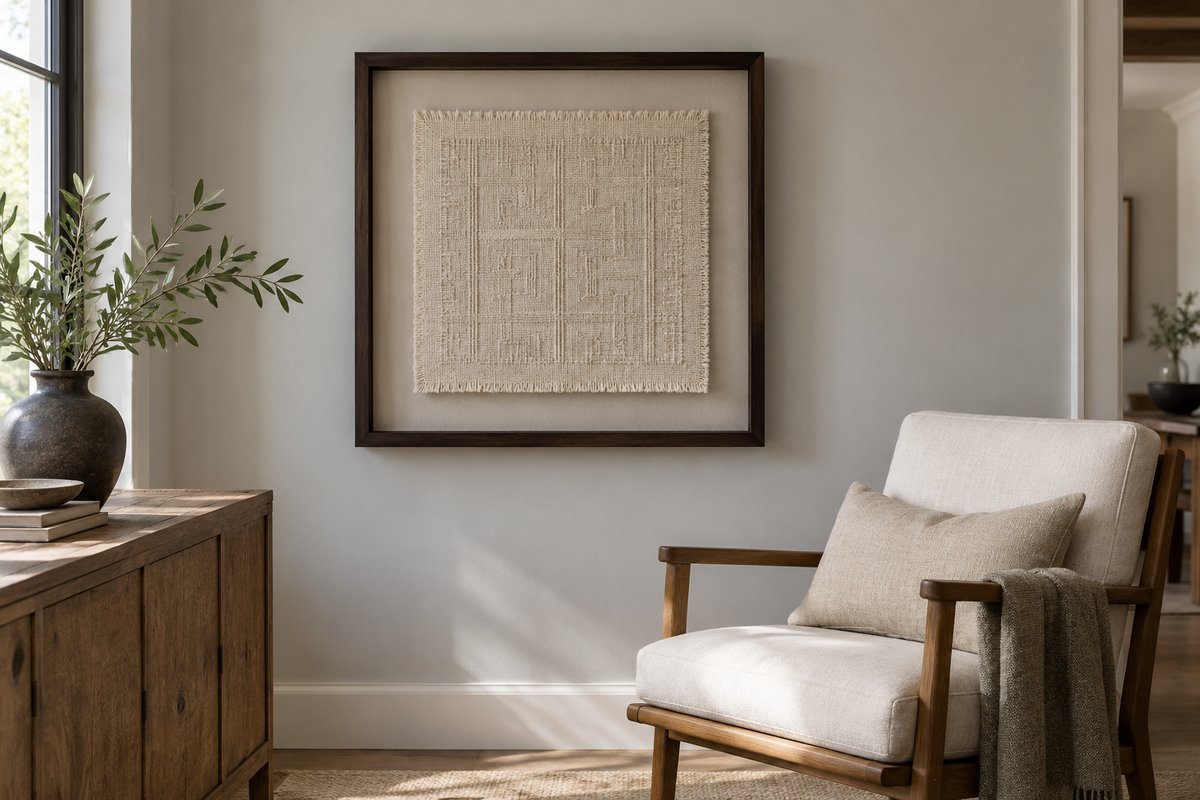
A piece of fabric can make wall art through texture rather than a detailed image. Imagine a cream woven square in a deep dark wood frame, hung on a pale gray wall. The cloth has a simple raised pattern, with open space around its edges. A nearby plain chair lets the fabric remain the main detail.
Choose a frame and support method suited to the textile, especially if it is delicate or valuable. Ask a framer about appropriate mounting rather than stretching or gluing it without advice. Allow enough depth so raised threads are not pressed flat. Keep the piece away from damp areas and strong sun where possible. This is a good way to enjoy a small textile without needing it to cover an entire wall.
3. A Tall Abstract Print Beside a Compact Desk
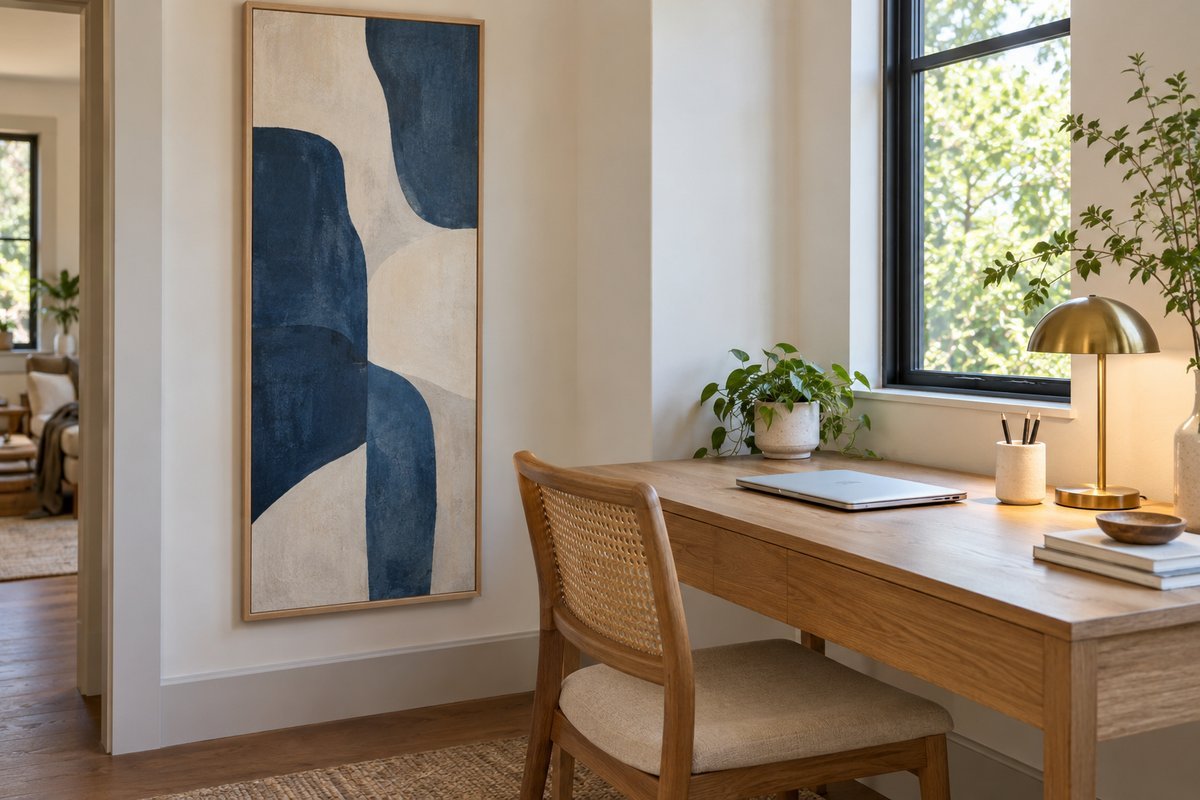
A narrow wall beside a desk can hold one tall abstract print. Picture broad blue and cream shapes in a plain light wood frame, with the desk turned toward the adjacent wall. The picture’s vertical shape uses the wall well without adding another shelf. Keep the desk accessories simple and useful.
Measure the available wall with the desk chair pulled out. The frame should not sit where someone will brush it while moving. Make a paper template and check its relation to the desk and door trim. Use an original or licensed print, or create your own simple artwork. A few broad shapes can be easier to read from across the room than a tiny detailed design in a large frame.
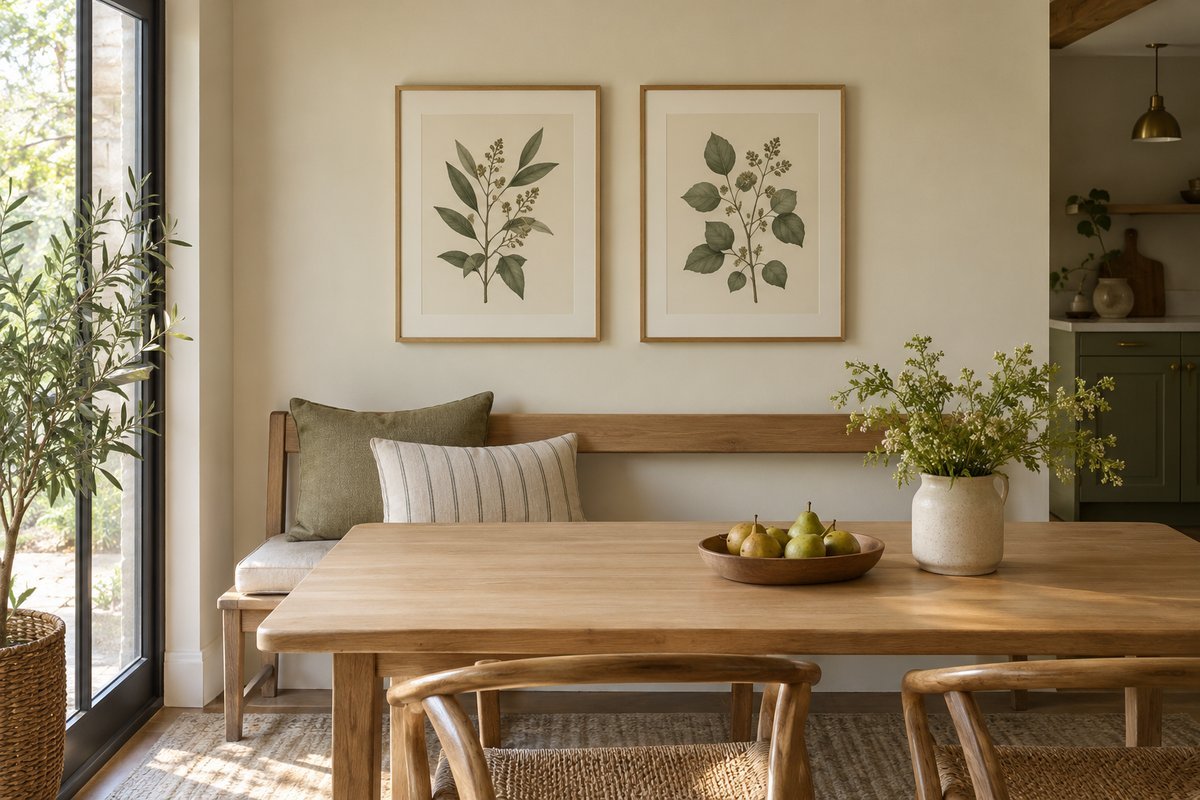
4. A Pair of Botanical Drawings Above a Dining Bench
Two simple botanical drawings can give a dining corner a gentle rhythm. Imagine matching cream frames with green leaf sketches, placed side by side above a plain bench. The gap between them is even, and the whole pair sits within the visual width of the bench. A light wooden table keeps the scene calm.
Treat the pair as one group when testing its size and position. Cut paper outlines for both frames and look at them while seated. Keep the artwork high enough to avoid being knocked by heads or shoulders. Choose a location away from frequent food splashes. The drawings can be different, but similar backgrounds and frame sizes help them feel connected without needing several more pictures around them.
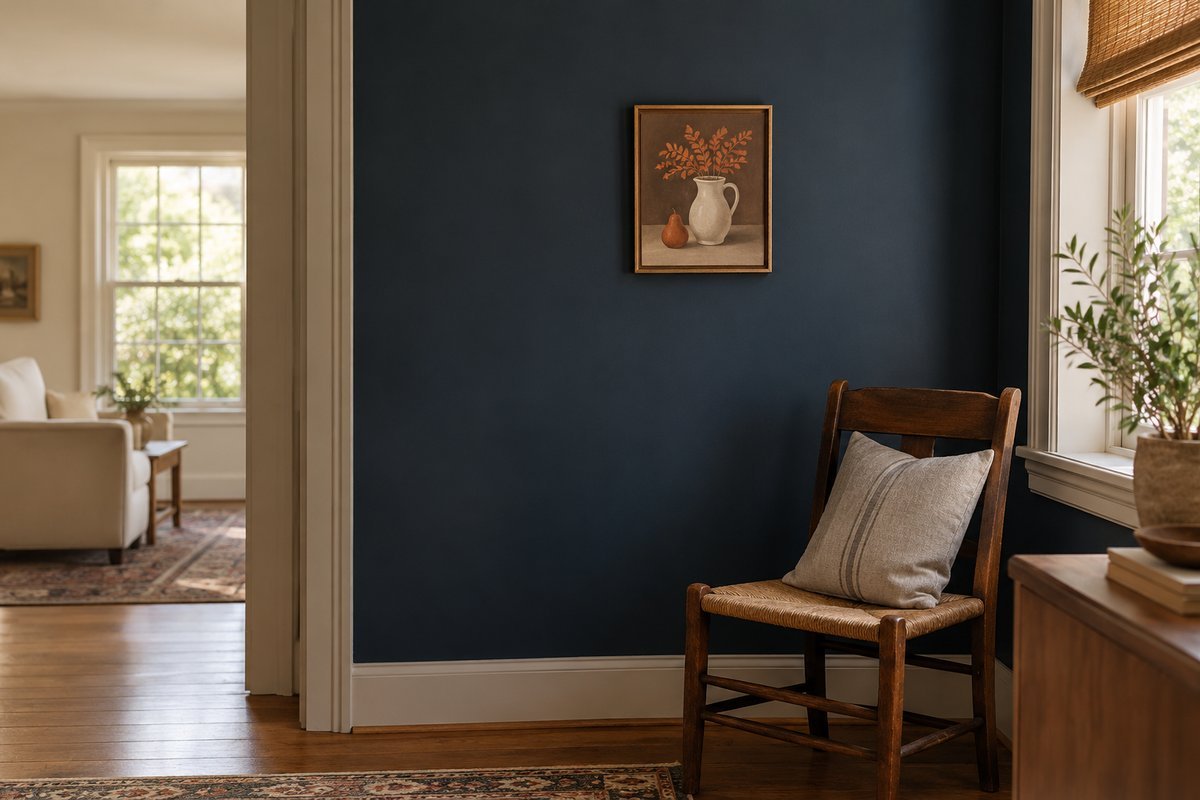
5. A Small Original Painting on a Dark Side Wall
A small painting can stand out when the wall gives it enough contrast. Picture a warm cream and rust still life in a simple frame on a deep blue wall. Leave the area around it clear. A small chair nearby gives the wall a human scale without making the painting part of a crowded furniture group.
A small piece works best where someone can get close enough to enjoy it. Do not put a detailed painting at the far end of a large room and expect it to carry the whole wall. Check light and care guidance for the artwork. Avoid aiming hot lamps close to it. If you are unsure about placement for a valuable piece, ask an appropriate art or framing professional for advice.
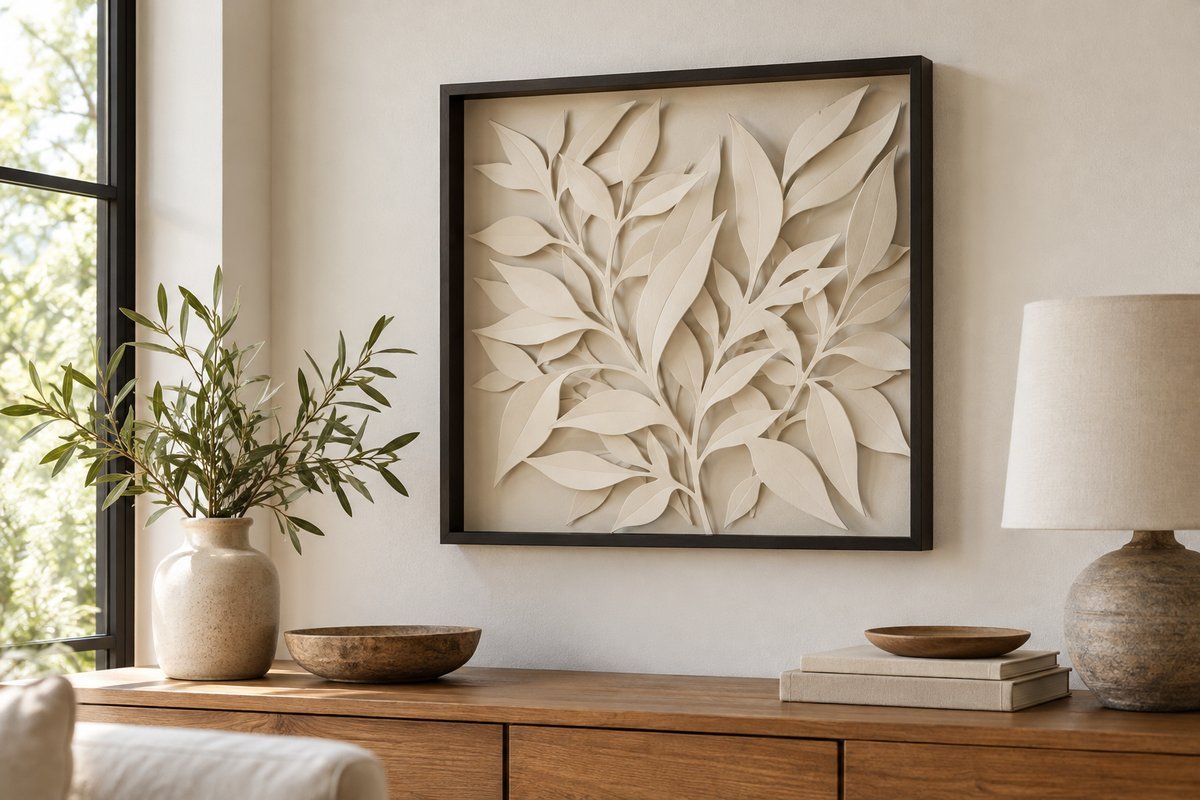
6. A Large Paper-Cut Design in a Plain Shadow Box
A paper-cut artwork can bring soft shadows to a wall. Imagine a cream layered leaf design inside a shallow dark frame, with a plain warm white wall behind it. The cut shapes overlap lightly, leaving open areas. Keep nearby decorations smooth and simple so the paper’s depth is easy to notice.
Use original work or a design you have permission to make and display. A styling image from another blog is not a free pattern to copy. Choose a box with enough depth and a suitable mounting method for the paper. Keep it away from moisture and strong direct light where possible. If you want to make your own, start with a real tutorial and materials appropriate to the design rather than assuming the scene shows tested construction.
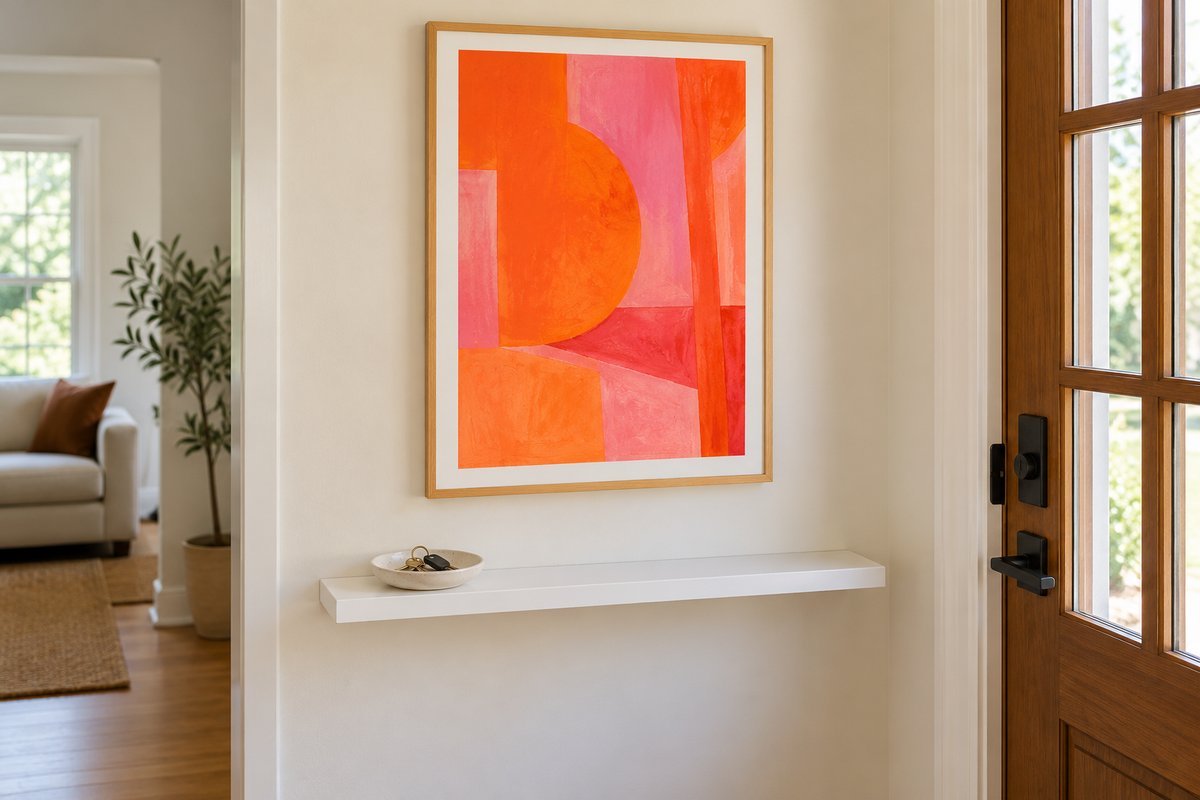
7. A Bold Color Print Above a Plain Entry Shelf
A bright print can make a small entry feel personal. Picture one orange and pink abstract image above a slim white shelf. A small key dish is the only item below it. The clear shelf and pale wall allow the artwork to provide most of the color without making the entrance feel crowded.
Check the door swing before choosing the frame’s position. Use suitable fixings and keep the shelf shallow enough for the route through the hall. Test the print’s size from the entrance and the room beyond. If the colors feel too strong, choose a smaller area of color within the artwork rather than adding several more accessories to balance it. One lively piece can be enough for a busy arrival spot.
8. A Framed Handwritten Recipe Near the Dining Area
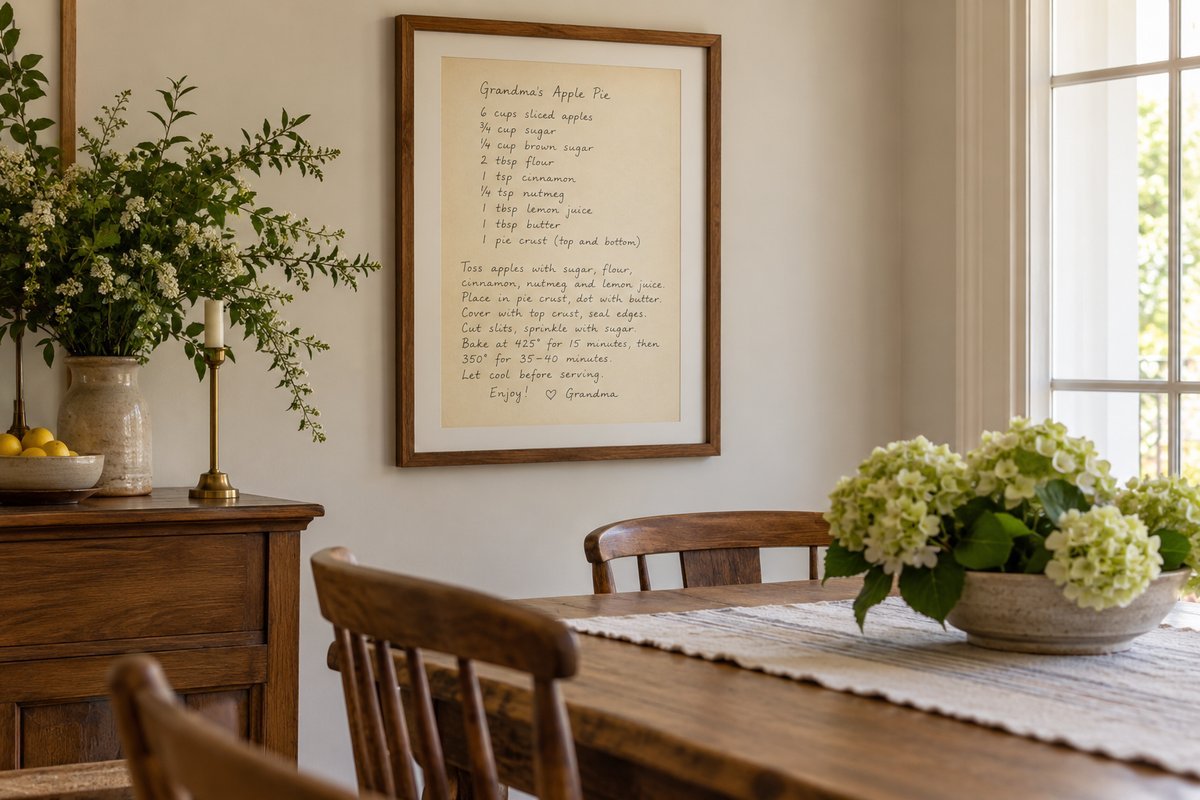
A family recipe can become meaningful wall art without a large display. Imagine a clear copy of a handwritten recipe on cream paper, framed in medium brown wood beside the dining table. A plain wall gives the handwriting space. The personal story provides the interest, so the arrangement can stay simple.
Use a copy when the original is fragile or important to preserve. Check that you have permission to display personal information or someone else’s work where relevant. Choose a dry spot away from cooking steam, heat, and splashes. Make sure the text is large enough to enjoy at a normal distance. It does not need to fill the frame edge to edge; a simple border can help the handwriting stand out.
9. A Round Textile Artwork Above a Low Cabinet
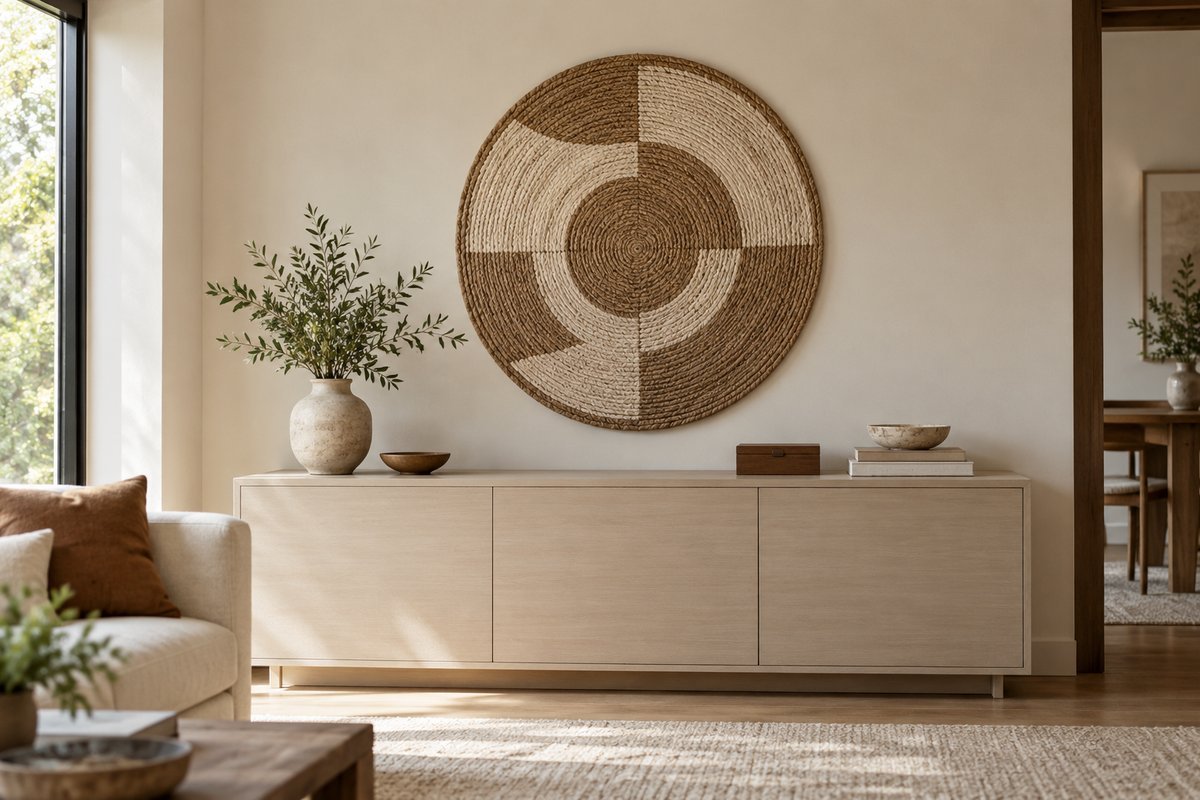
A round textile piece can soften a room full of straight lines. Picture a flat woven circle in muted brown and cream above a simple pale cabinet. The pattern is broad, with no long fringe. A small rectangular box on the cabinet creates a quiet contrast between round and square shapes.
Check how the textile is designed to hang and use appropriate fittings. Do not assume a loose thread can safely support the whole piece. Keep it where doors, bags, and curtains will not catch the edge. Test its size with a paper circle before hanging. If the cabinet already has several objects on top, reduce them first. The circular outline works best when it is easy to see without competing with tall items below.
10. A Single Oversized Line Drawing in a Quiet Bedroom Corner
A large line drawing can give a bedroom wall detail without many colors. Imagine a simple dark outline on a warm cream background, in a thin dark frame beside a dresser. The image uses plenty of empty paper. A small ceramic lamp on the dresser repeats the cream tone, while the rest of the surface stays useful.
Choose a drawing you enjoy rather than only a size that fills the wall. Test the scale from the bed and doorway before making holes. Keep heavy artwork away from places where a fall could reach a sleeping person. Hang it securely and leave access to switches and drawers. A quiet piece does not need matching cushions or another picture beside it. Let the open space in the drawing echo the clear wall around it.

Choose Size and Placement Together
Pick the wall first, then look at the furniture and routes around it. Decide whether the art will be seen mainly from across the room or from close up. A broad simple image may work at a distance, while small detailed pieces need a place where people can pause. Use paper shapes to compare sizes before committing.
Choose original artwork, licensed prints, or pieces you have permission to reproduce. Respect the care needs of paper, fabric, paint, and frames. Check the wall type and use suitable fittings rather than choosing a fixing only because it is easy to hide. Once the piece is up, live with it before adding more. One artwork that you enjoy can give a room a clear focal point without turning every wall into a display.
Common Questions
How do I choose wall art size above furniture?
Use paper outlines and compare the artwork with the full width of the furniture. View the outline from the doorway and nearby seats, allowing room for objects below and for people to move comfortably.
Can fabric or a handwritten recipe work as wall art?
Yes. A small textile can provide texture, while a recipe copy can bring personal meaning. Choose a frame and support suited to the material, and use a copy if the original is fragile or important to preserve.
Does wall art need to match the sofa?
No. One shared shade, frame tone, or material can create a connection. Choose work you enjoy and check how it looks in the room before replacing other things to match it.
More Ideas for Your Home
living room gallery wall ideas · basket wall decor ideas · floral crochet wall decor ideas