
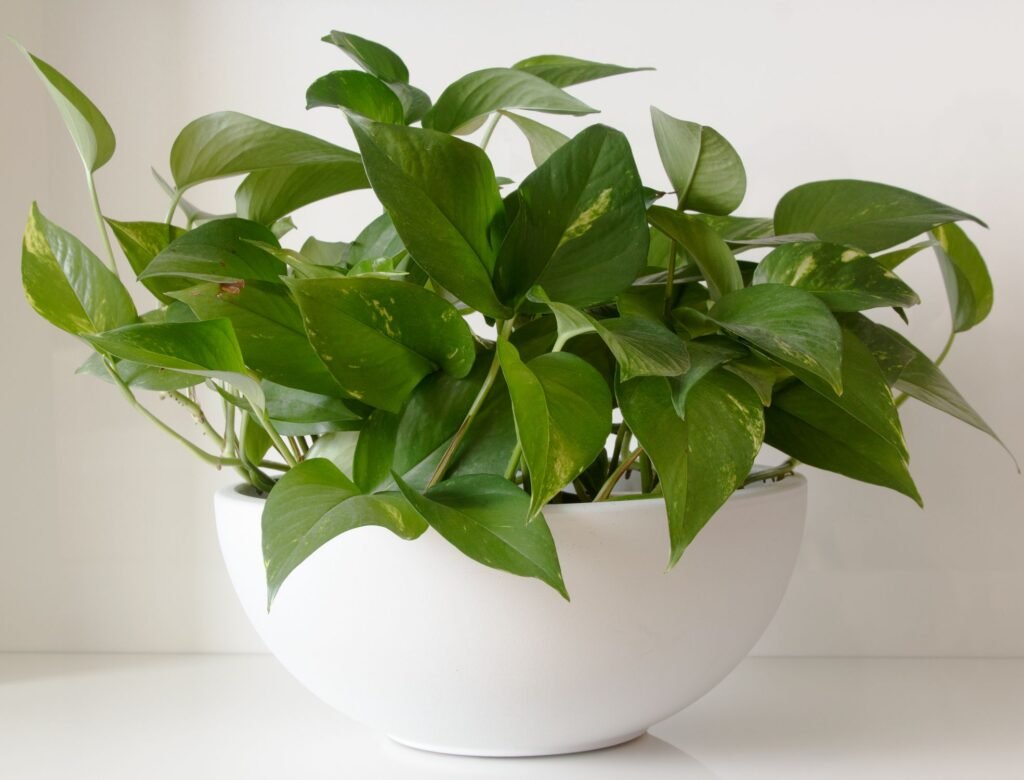
A pothos plant can bring life to a plain shelf or a quiet corner. Its trailing stems give you plenty of ways to shape a display without filling the room with pots. The best spot still needs to suit the plant, not only the photo you want to create. These ideas show how to use shelves, stands, and simple supports while keeping the leaves easy to enjoy. They are styling ideas for a plant you already have, with basic care notes below. There is no promise of giant leaves or fast growth, and you do not need kitchen-scrap plant hacks.
1. A Pothos in a White Pot on a Side Table
Place a pothos in a white pot on a side table. Let a few stems fall over one side, leaving the other side free for a book. The pale pot gives the green leaves a clear edge.
Choose a table that feels steady with the plant in place. Check that the pot is easy to lift for watering. A plant tucked behind a lamp may look nice but become hard to inspect. Use a waterproof surface protector if needed, and empty collected water from the outer pot. Keep the leaves away from a hot lamp.

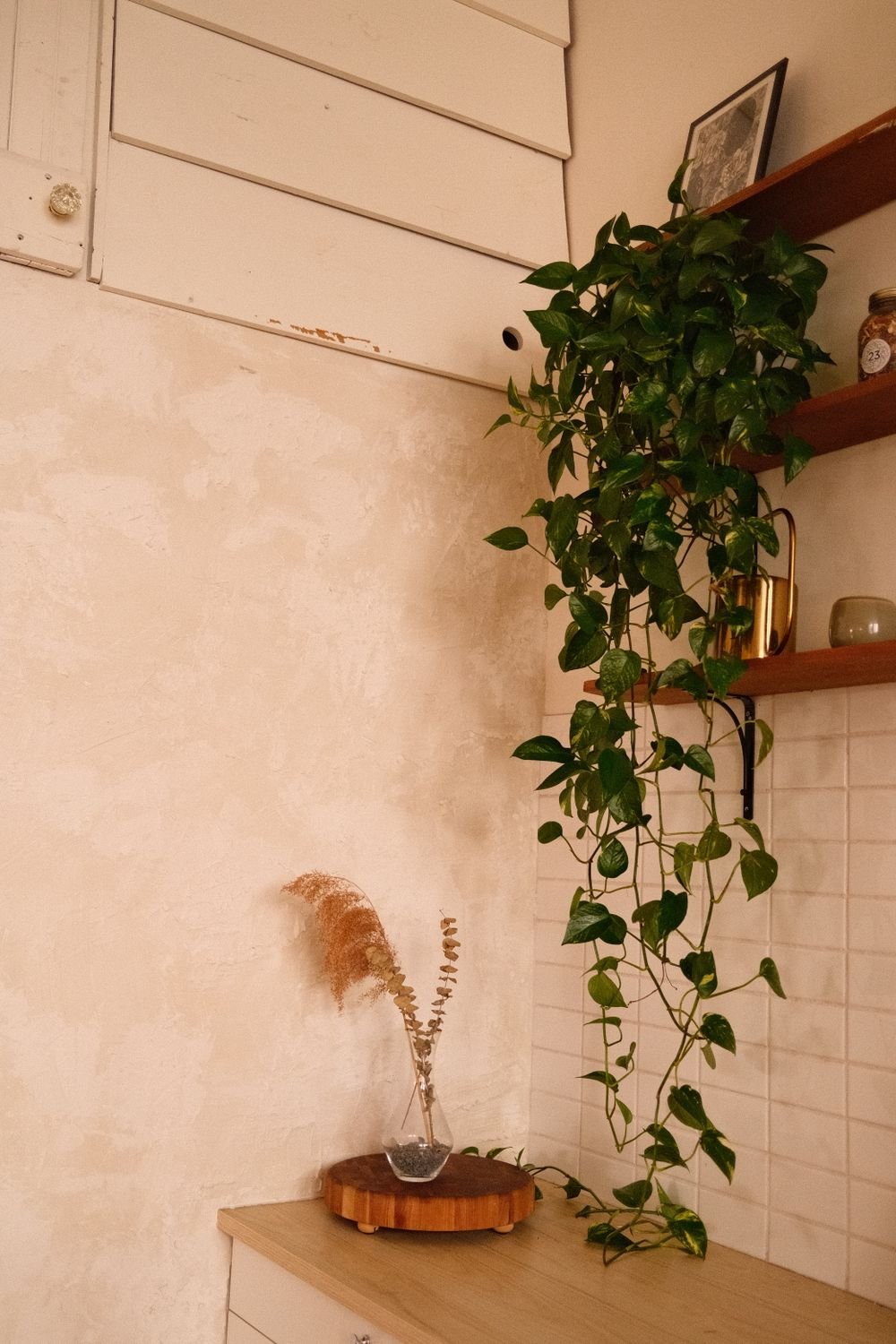
2. A Trailing Pothos on Open Shelving
Give one shelf to a pothos and let the stems fall down a clear side of the shelving. Keep books away from the path of the stems so the shape is easy to see. You can leave the shelf below partly empty.
Light matters more than shelf height. A deep shelf at the back of a dark room may not suit the plant. Try a brighter location with indirect light, and check that the leaves are not pressed against the wall. Keep watering separate from the books by taking the pot to a suitable place, letting it drain, and returning it.
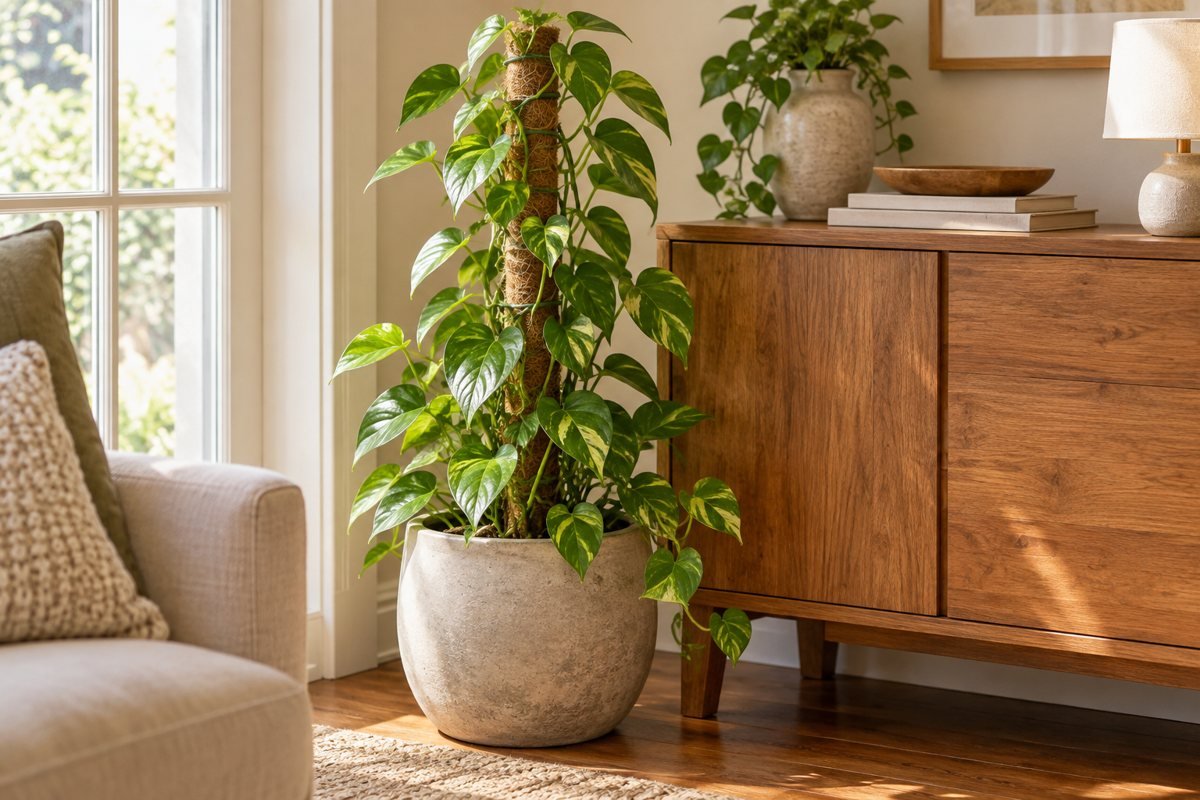
3. A Pothos Climbing a Simple Support in a Floor Pot
An upright pothos can make a green feature beside a cabinet. Use a suitable plant support inside the pot and gently guide existing stems along it. Keep the arrangement stable rather than choosing a narrow pot just for its look.
Do not expect an instant wall of large leaves. A young plant needs time to develop, and its growth depends on care and conditions. Ask a nursery for advice on the support and ties that suit your plant. Leave room to reach the soil and check the stems. A clear floor around the pot helps the tall shape stand out.
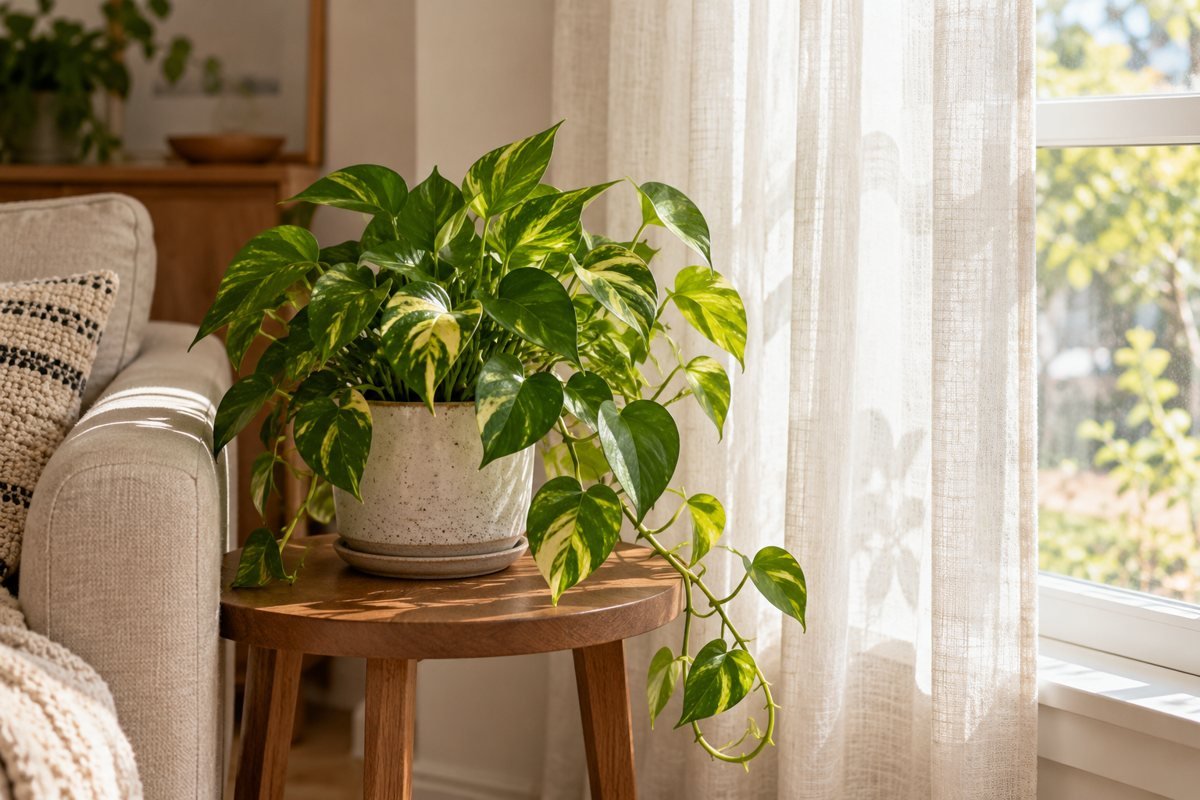
4. A Pothos Beside a Window with a Light Curtain
Set the plant on a small table near a window, with a light curtain between it and harsh sun where needed. The leaves can frame the edge of the view without covering the glass. Keep the curtain free to move.
Watch the spot at different times of day before making it permanent. A window can be bright in the morning but hot later on. Do not use the plant to hide a window latch or block a vent. Turn the table or pot only as needed for a balanced display, and leave enough space to inspect the leaves.
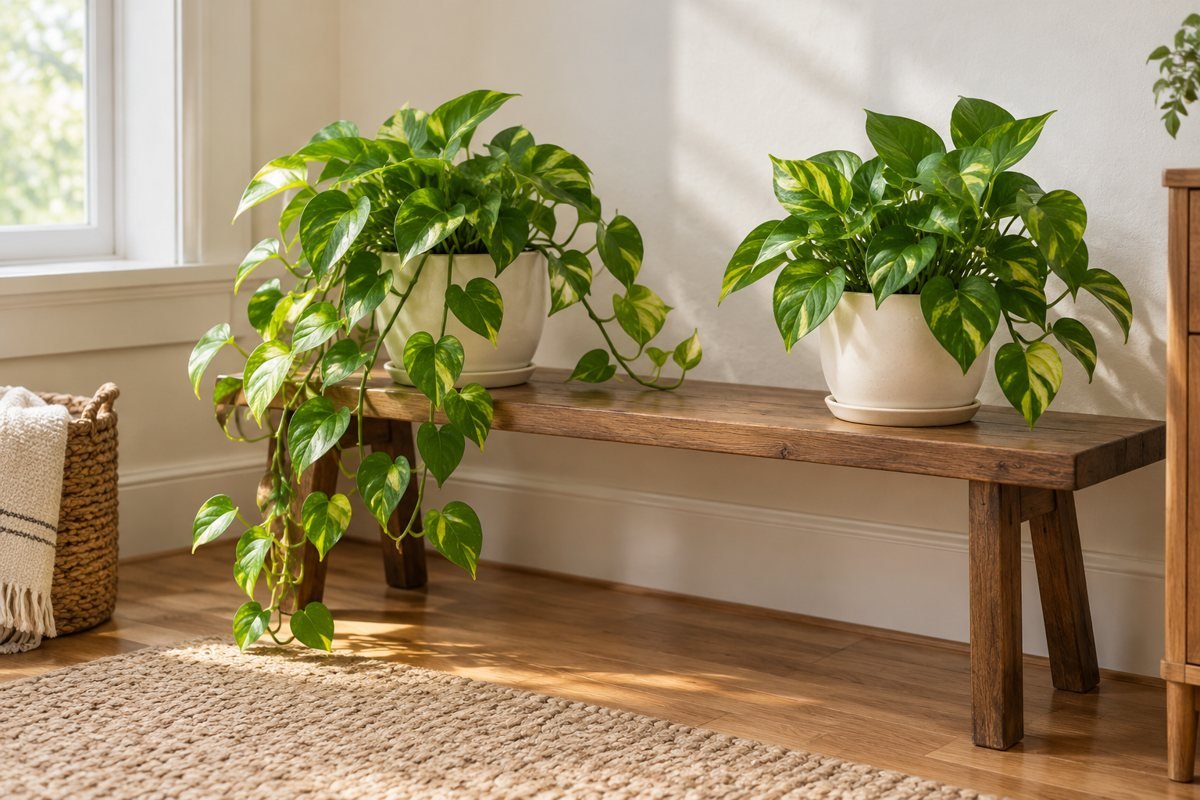
5. Two Pothos Pots on a Low Bench
Place two pothos plants on a low, sturdy bench, with a gap between their pots. Use containers in the same color but let the plants keep their own shapes. One can trail toward the end while the other stays more compact.
This is a display for a bench that is not needed as a seat. Make that purpose clear so no one has to move the pots every day. Keep them away from a busy doorway. Check each plant on its own before watering; matching pots do not mean the soil dries at the same pace.
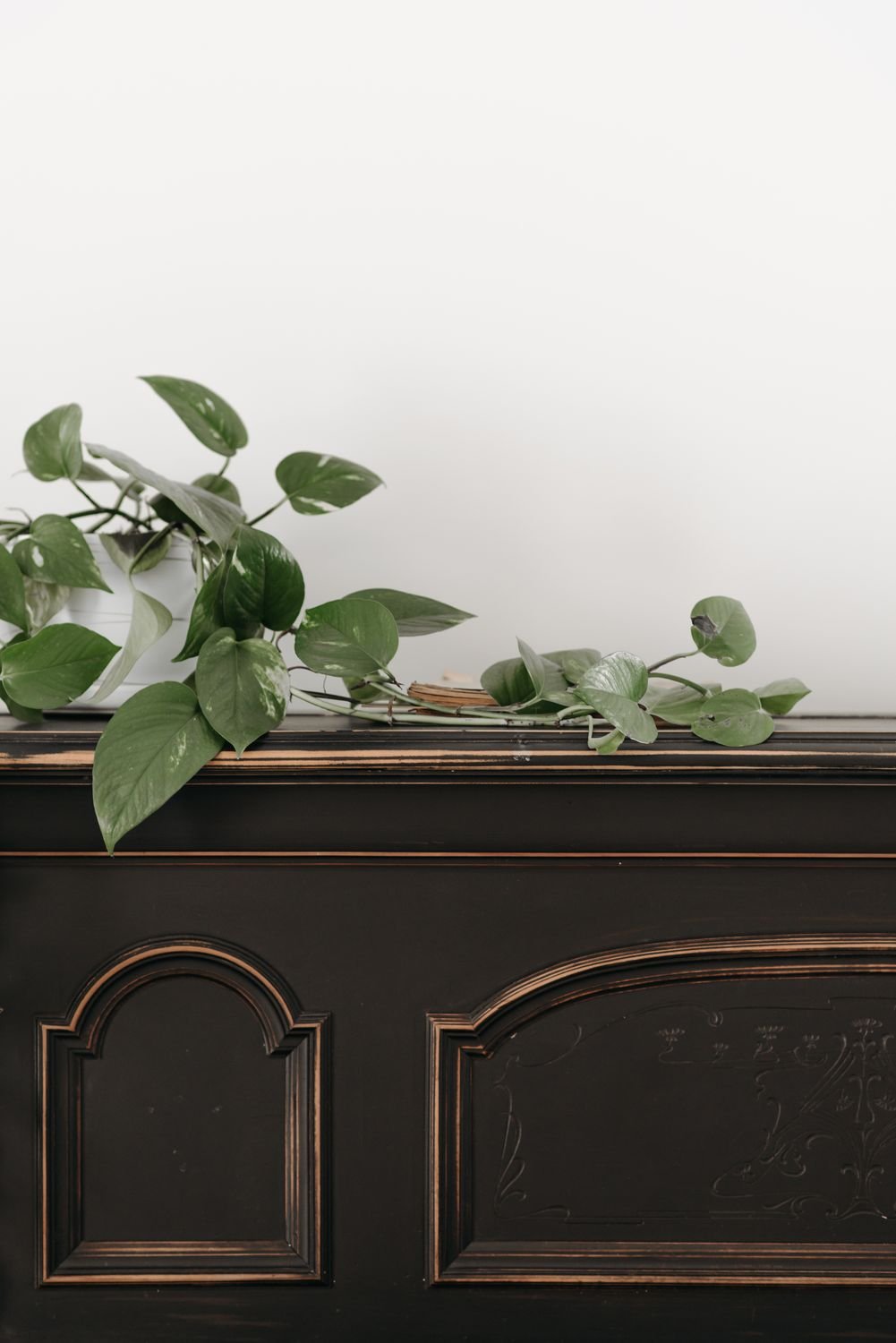
6. A Pothos on Top of a Cabinet
A short cabinet gives trailing stems a place to hang without putting the plant out of reach. Set the pot back from the edge, then guide the stems toward one side. Leave the cabinet doors clear.
Check the cabinet’s surface and protect it from damp pots. Open every door and drawer during the layout test, especially if stems could catch in handles. Avoid putting the pot where someone must stretch over furniture to reach it. The plant should remain easy to lift and check. A simple container can keep the scene calm if the cabinet already has a strong color.
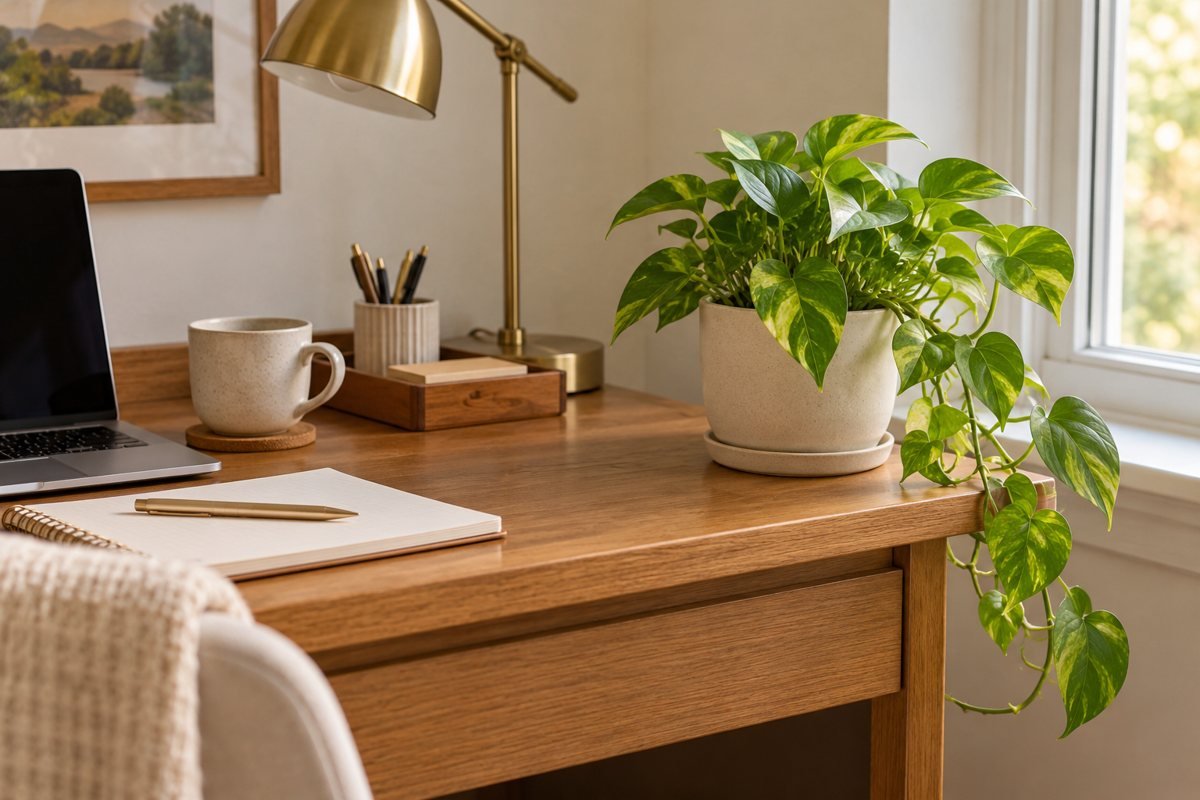
7. A Compact Pothos in a Quiet Desk Corner
Place a smaller pothos at the outer corner of a desk, away from the keyboard and papers. Let a short stem fall beside the desk rather than across your work area. A plain pot can link to your desk lamp or storage tray.
Check that the leaves will not be pulled by a chair or bag. Water away from electrical items and return the pot only after it has drained. Leave plenty of room to work. If the desk does not receive enough light for the plant, choose another position instead of forcing the look. A useful work surface comes first.
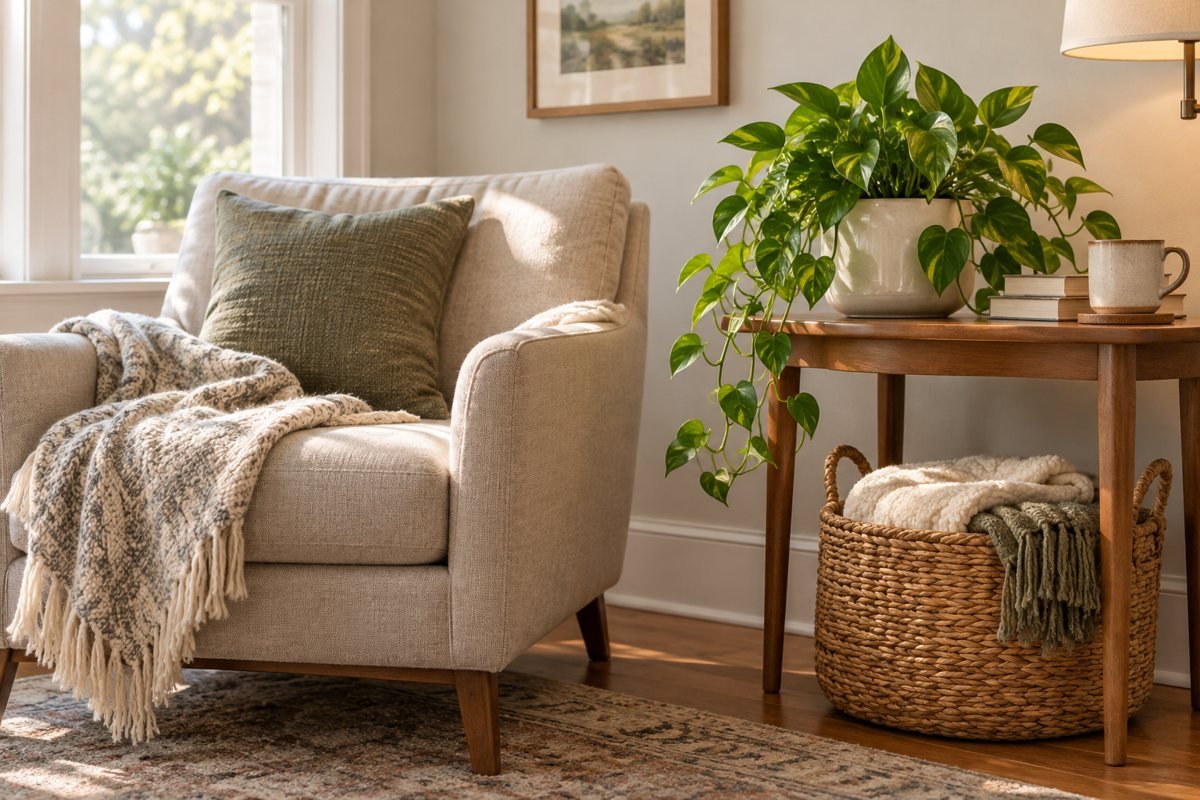
8. A Pothos Above a Low Basket of Blankets
Create a soft reading corner with a pothos on a stable table and a blanket basket below. Keep the plant high enough that the leaves do not become caught when you take out a throw. The two textures can make the corner feel relaxed.
Use a waterproof outer container rather than resting a damp nursery pot on woven furniture. Leave room to pull the basket out without moving the table. This arrangement should be easy to clean beneath. Keep the number of objects small: a plant, a chair, and a useful basket often give the scene enough detail.
9. A Pothos with One Framed Print on a Console
Set a pothos beside a framed print on a console. Use a small green detail in the artwork if you want a link between them. Let the stems hang away from the frame so both pieces remain clear.
The plant and picture do not need to be the same height. Try the frame on one side and the pot on the other, then view the group from the doorway. Keep a landing spot for keys if this is an entry console. Use suitable fixings for wall art, and keep the pot far enough from the edge that a passing bag will not knock it.
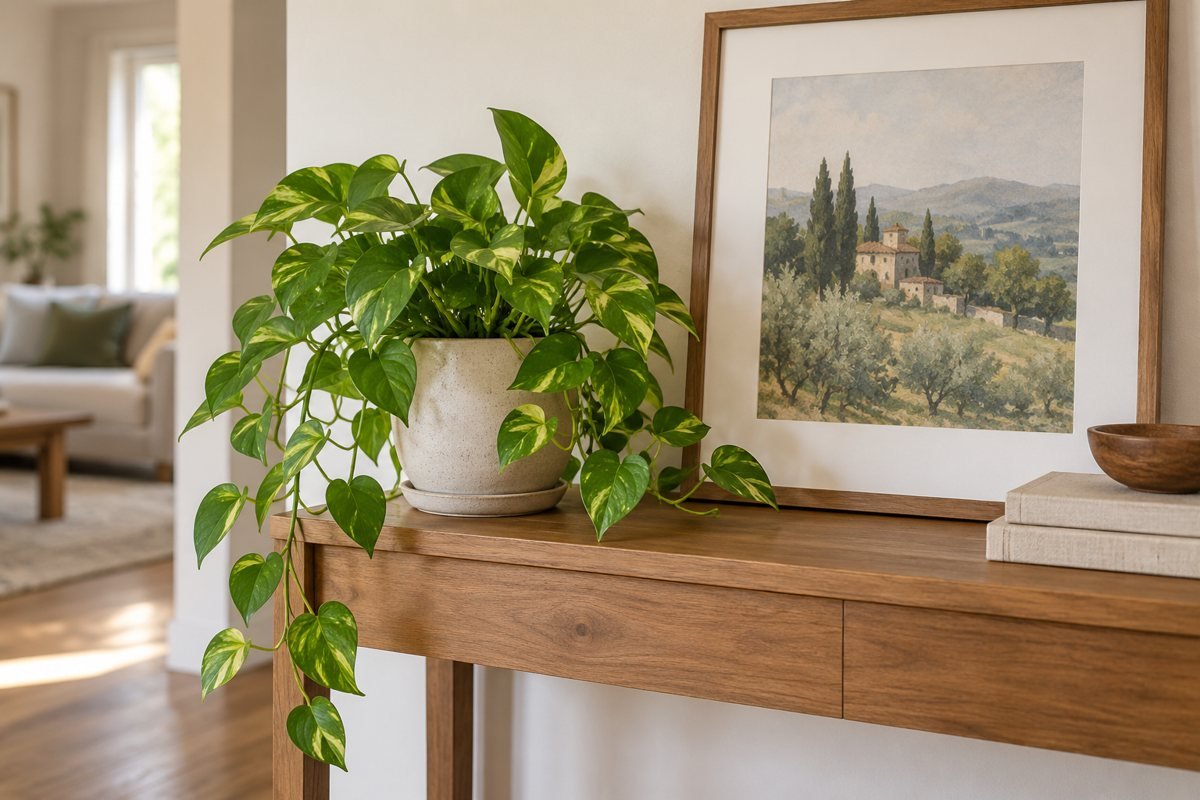
10. A Small Pothos Group with Clear Space Between Pots
Group a few established plants where each has room for its own leaves. Use different heights to show the shapes, but keep the pot finishes simple. The goal is a fuller-looking display, not crowded roots in one container.
Start with the plants you already own and avoid adding extras just to fill gaps. Check that every pot can be lifted without tangling the stems. Look behind the display during care, where damaged leaves can be easy to miss. If the group makes cleaning difficult, remove one pot and see whether the smaller arrangement works better.
Care Comes Before the Display
The Royal Horticultural Society recommends bright, indirect light for pothos and warns against keeping the compost too wet. Check the plant and soil rather than following a fixed calendar. Let excess water drain, and do not leave the pot standing in water.
A fuller display does not prove that a plant is growing well. Long stems and large leaves depend on the plant, its conditions, and its care. Do not replace proper feeding advice with random scraps from the kitchen. Follow a trusted growing guide or ask a nursery about your plant’s needs.
Pothos is listed by the ASPCA as toxic to cats and dogs. Choose another plant if pets may chew the leaves, and keep plants away from children who might put parts in their mouths. Pick a display that fits your household as well as your room.
Start with one suitable position and watch the plant over time. A simple setup with easy access is often more useful than an elaborate green wall. Keep the care notes with the plant, and change the arrangement if it makes everyday care harder.