

A plain living room wall can feel hard to finish, even when the furniture is in place. Wall paneling adds lines and texture that help the room feel more settled. You can keep the look light with white panels or choose wood tones for a warmer feel. These living room wall paneling ideas show clear looks you can adapt to your own space. Each one includes simple styling tips, so you can picture the whole room before making changes. Start with one wall, think about the furniture you have, and choose a design you will enjoy seeing every single day.
1. White Rectangle Wall Trim Behind a Beige Sofa
Use slim white trim to form a row of large rectangles behind a beige sofa. Paint the trim and wall the same white so the lines add detail without a strong color change. A plain wood coffee table and soft cream cushions can keep the room relaxed.
Plan the whole wall before choosing the size of each rectangle. Look at where the sofa sits, along with any doors or outlets. Small, crowded shapes may feel busy behind a large seat. Use paper or a drawing to test the spacing before you arrange for the trim to be fitted.

2. Light Wood Slats Beside a Cream Reading Chair
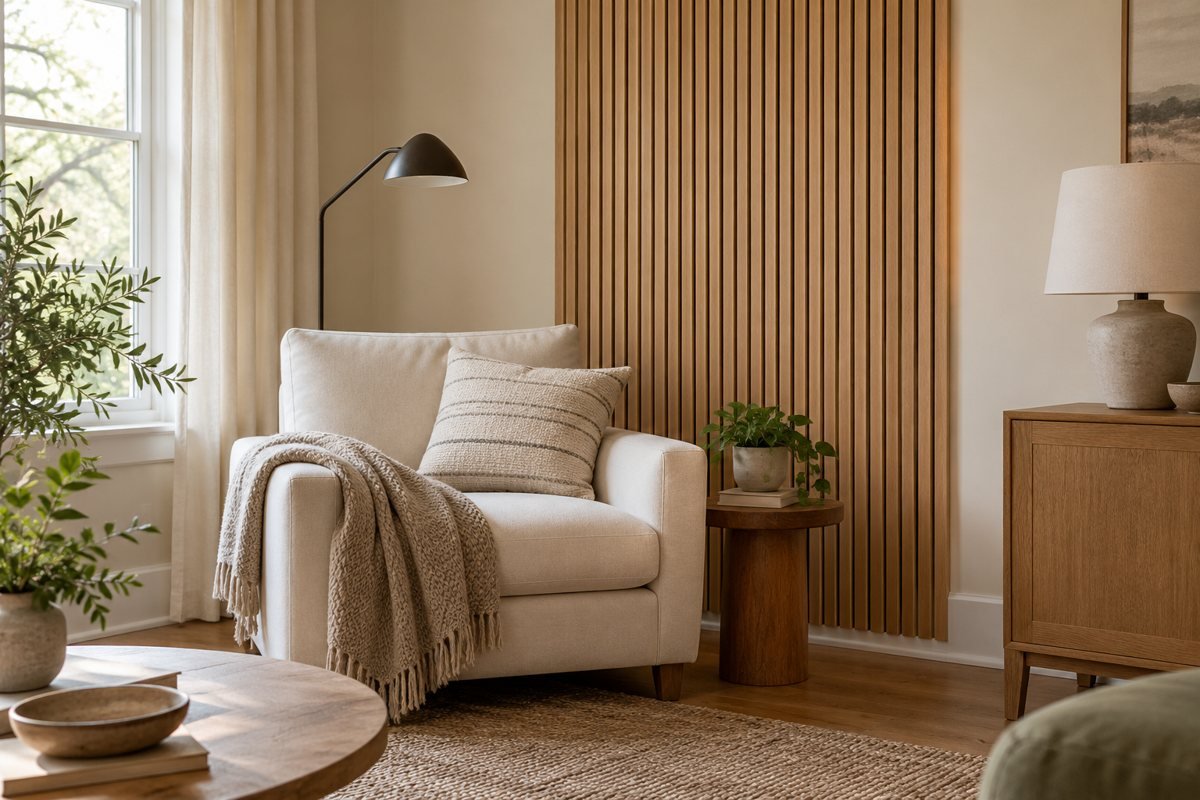
Cover a small section of wall with light wood slats and place a cream reading chair nearby. Slats are narrow strips set side by side. Their repeated lines give the corner a clear feature without adding shelves or lots of wall art.
Keep the chair, lamp, and small table simple so the wood stays easy to see. Try a sample beside your floor and other wood furniture first. Two wood tones can work together, but seeing them in the room helps you choose. Check the finish in daylight and with your evening lamps on.
3. Soft Green Lower Panels with a White Wall Above
Try soft green panels on the lower part of the wall, with plain white paint above. The green gives the room color while the white leaves space for a light, open look. Pair this with a pale sofa and a small amount of warm wood.
Choose the panel height with the furniture in mind. Check where it meets the back of the sofa and any window edges. You do not need the line to match every feature, but it should feel planned. Keep the upper wall fairly quiet if the room already has patterned curtains or a busy rug.

4. Wide Blue Panels Behind a Light Gray Sofa
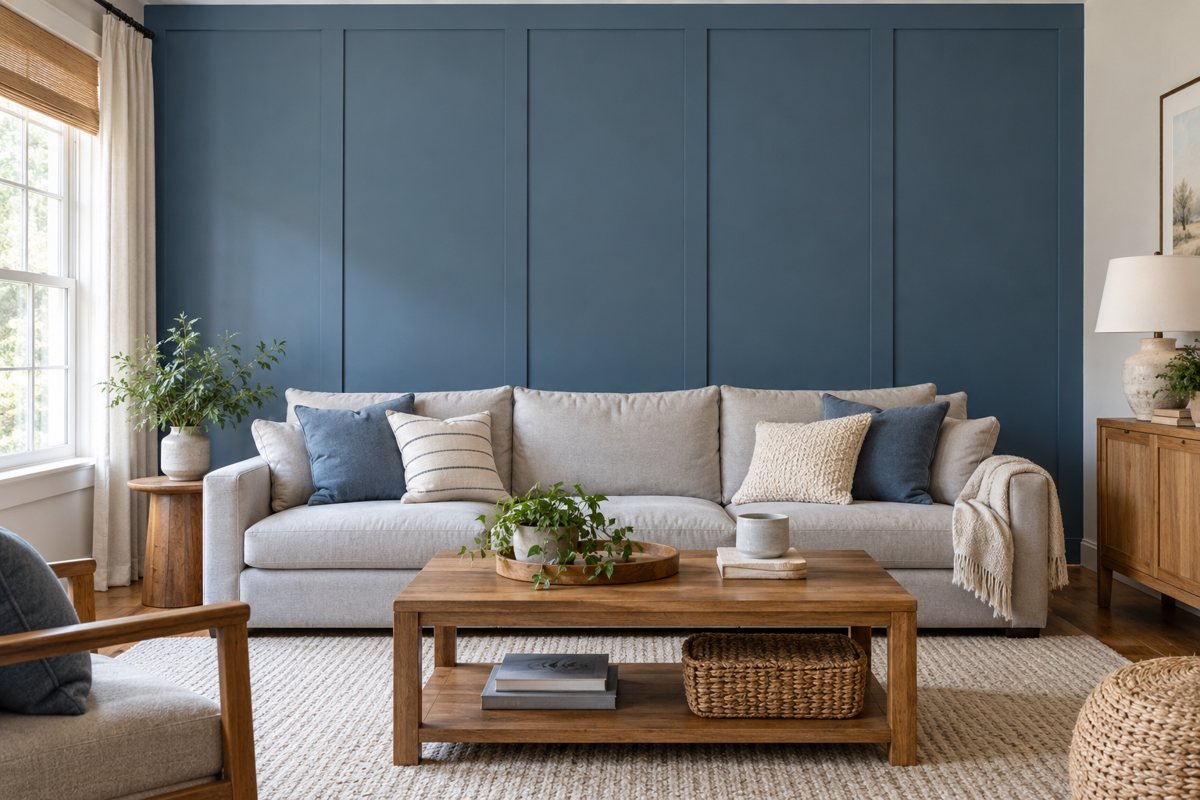
Use wide, flat blue panels behind a light gray sofa for a calm block of color. Keep the blue soft if you want a gentle look, or choose a deeper shade for more contrast. Plain cushions can repeat the wall color in a small way.
Look at a large paint sample before making the choice. A shade can appear different beside gray fabric than it does on a white card. Keep a little space between the sofa and wall where needed for normal use. Avoid filling the whole wall with art if you want the panel lines to show.
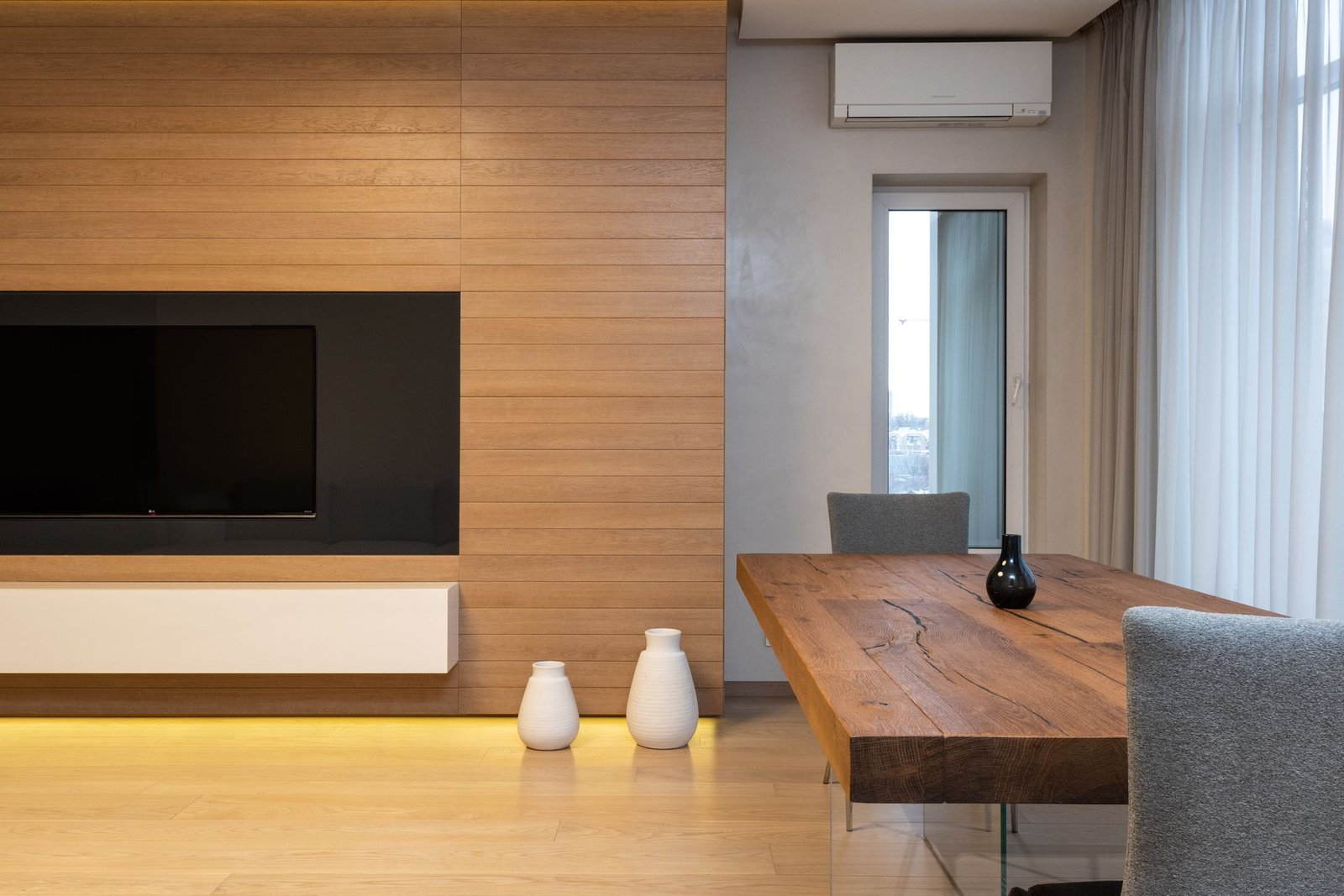
5. Warm Wood Panels with a Simple White Cabinet
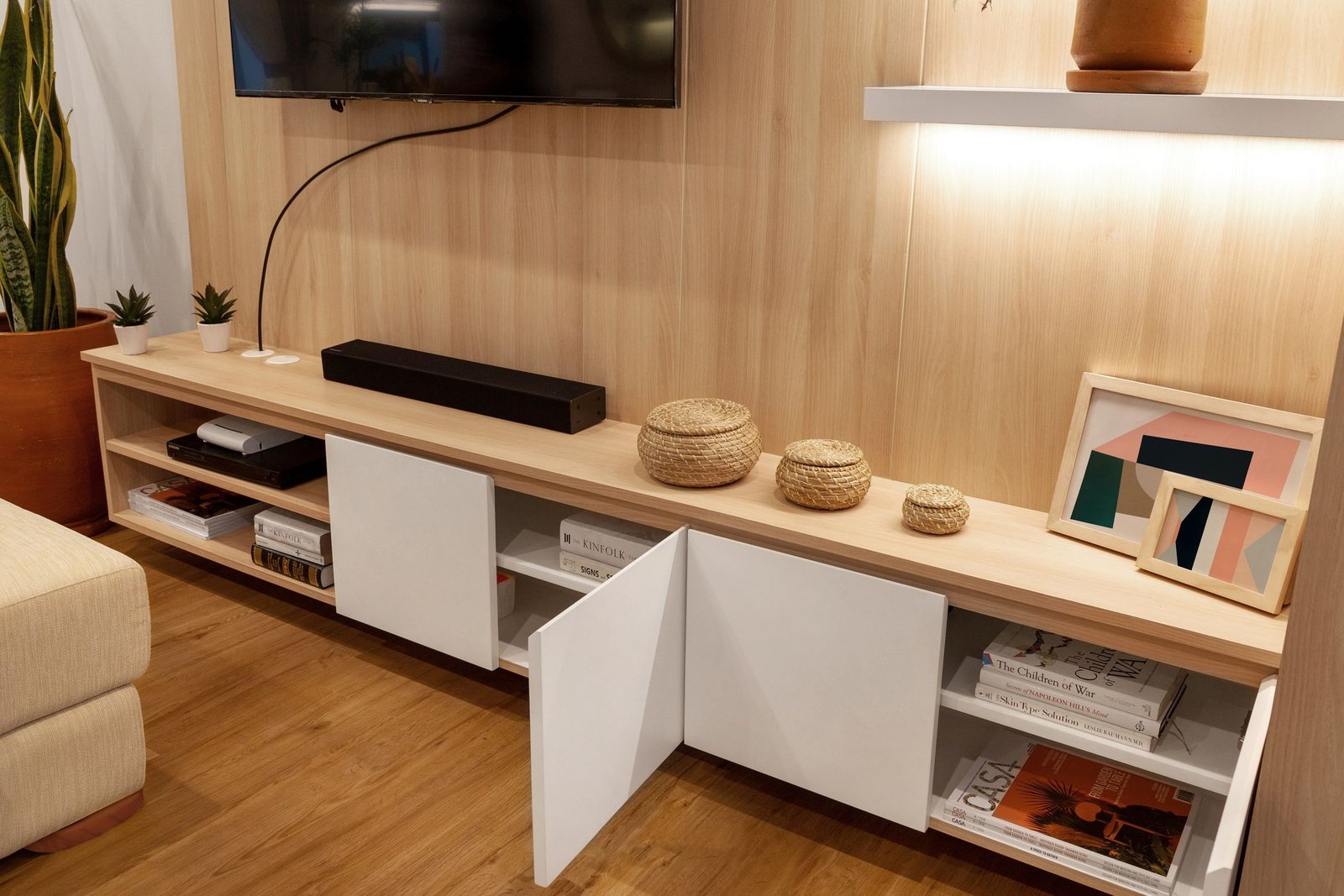
Pair warm wood wall panels with a low white cabinet. The plain cabinet gives the wood a clear backdrop, while the contrast makes both parts easy to see. A small bowl or one framed picture on top can be enough to finish the area.
Think about what you need to store before choosing the cabinet size. The wall should support the room’s daily use rather than force you to squeeze in furniture. Try the wood sample beside the white finish and the floor. Keep other large wood pieces in view while you compare, so the room feels connected.
6. Cream Square Panels Above a Small Loveseat
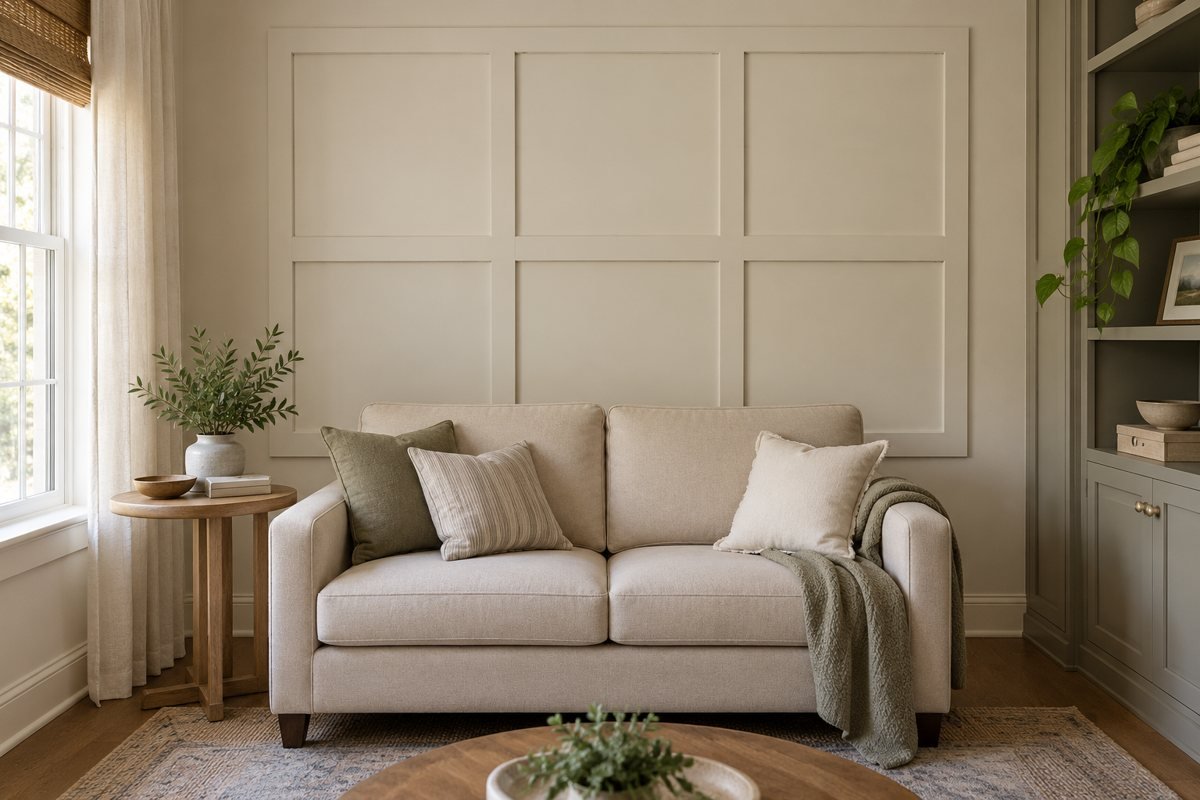
A grid of cream square panels can give a small seating area a neat, steady pattern. Place a plain loveseat in front and use a round side table to soften the straight lines. Keep the colors close together for a gentle look.
Count how many squares will fit before deciding on their size. Very small squares can make a short wall feel crowded. A simple sketch can show whether larger shapes would work better. Plan around the wall’s edges and fixed features rather than stopping a square halfway without a clear reason. Keep the cushions plain if the grid is the main detail.
7. Slim Vertical Panels Around a Living Room Window
Frame an existing window with slim vertical panels in a light shade. Keep the window trim clear and let the panels sit on the wall sections beside it. A simple curtain or blind can leave the lines visible.
Check that the window opens fully and that curtains can move without catching. Think about how the panel edges will meet the window frame, baseboard, and ceiling. Those joins can affect the finished look as much as the main surface. Use a clear drawing when discussing the idea with an installer, especially if the wall sections on each side are different widths.

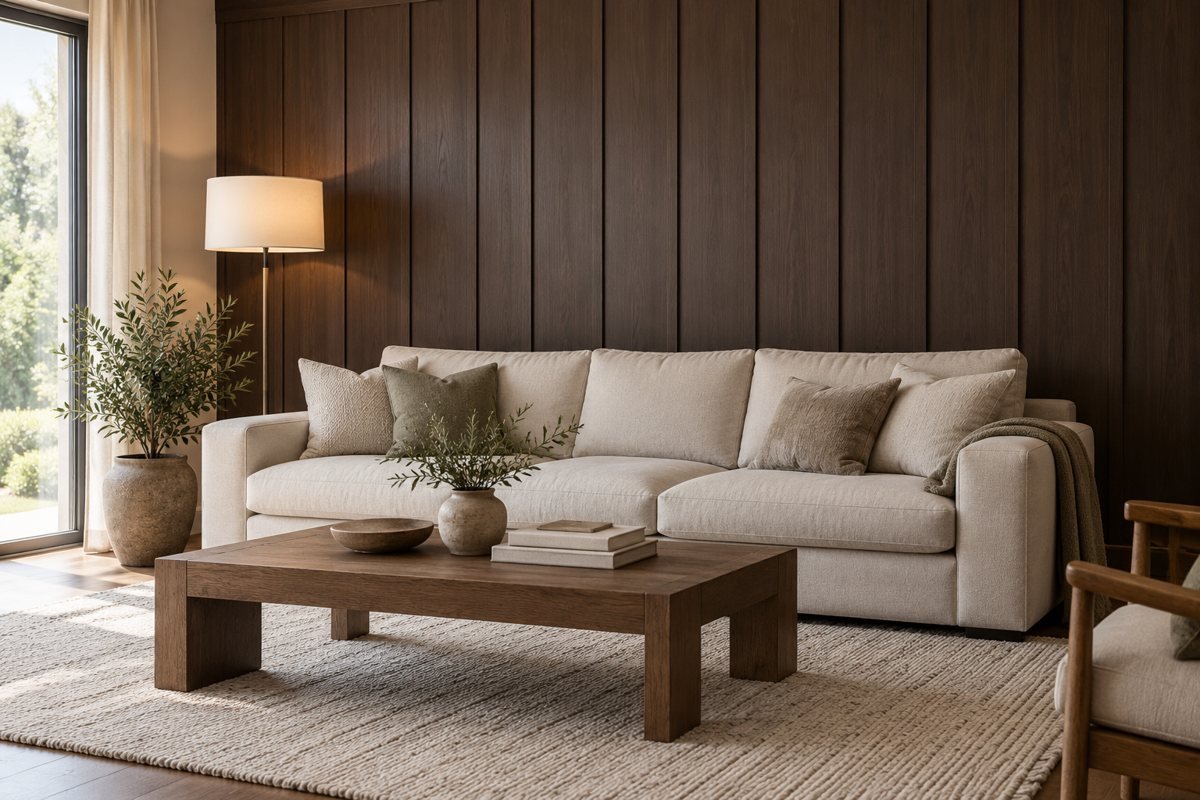
8. Dark Brown Panels with a Pale Sofa and Rug
Dark brown panels can create a strong backdrop for a pale sofa. Add a light rug and a simple lamp so the room has a mix of dark and light areas. Keep the wall as one feature rather than adding several bold surfaces.
Test a dark sample across the day. Check whether you still enjoy the shade when the lamps are on and the room feels quieter. If a full wall seems too much, try the look on a smaller section first. Cushions in cream or soft tan can link the sofa to the brown without making every item match.
9. Pale Pink Wall Trim with a Gray Armchair
Use plain rectangle trim in a pale pink shade behind a gray armchair. Paint the trim and wall together for a soft finish. A small white side table and a simple print can keep the corner light.
Choose a pink that sits well with the chair fabric. A cool gray and a warm pink may look different in your room than they do in a photo. Lay samples side by side before making a choice. Keep the trim shapes large enough to see around the chair, and leave some open wall rather than filling each rectangle with another object.

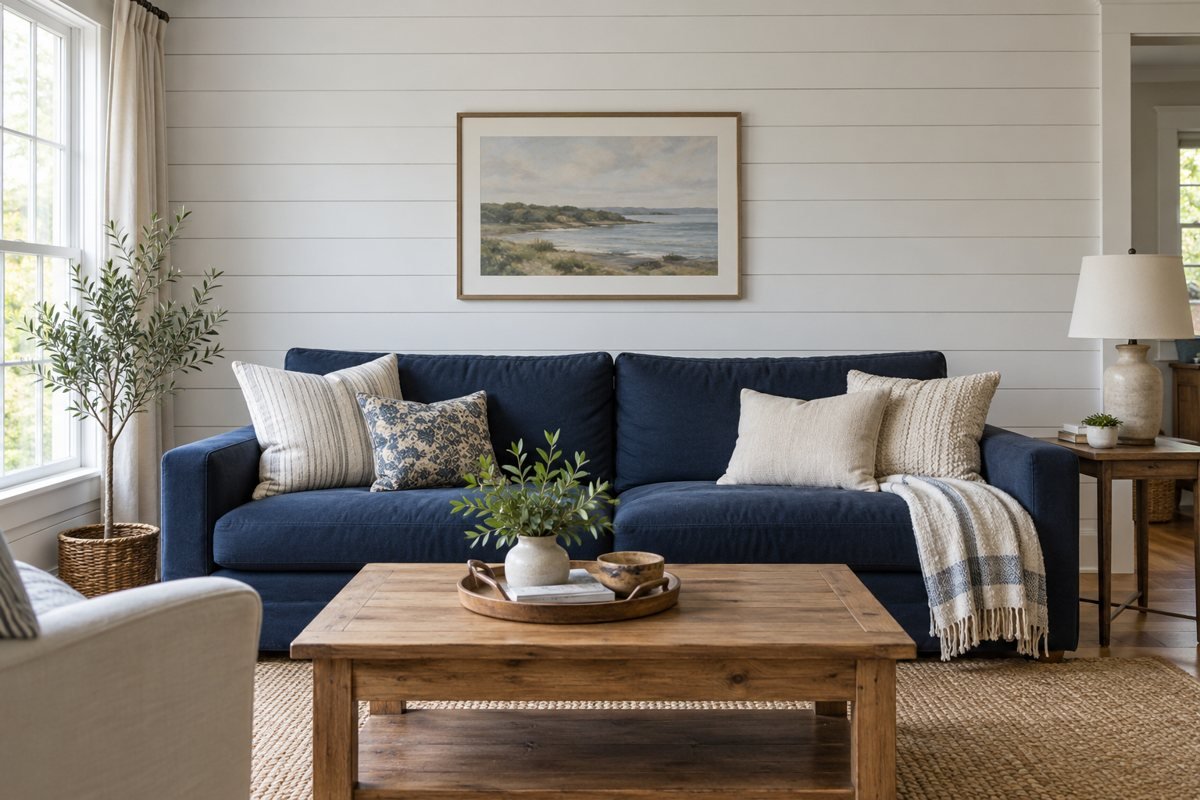
10. White Horizontal Panels with a Navy Sofa
Try wide white horizontal panels behind a navy sofa. The pale wall sets off the dark seat, and the repeated lines add detail without a second bold color. A natural wood table can bring a warm touch to the mix.
Think about where panel joins will fall before the work begins. Check the visible wall above the sofa as well as the parts beside it. A sample section or drawing can help you decide on the board width. Keep wall art simple and give it enough room to stand out from the lines. You may find one picture is all the wall needs.
11. A Narrow Wood Panel Section Behind the TV
Use a narrow wood panel section behind a wall-mounted TV, with plain walls on either side. A low cabinet below can connect the screen to the rest of the room. Keep the panel wide enough to look planned around the TV rather than like a small patch.
Discuss the screen mount, cables, outlets, and access needs before fitting the panels. Decorative paneling is not a substitute for suitable support. Follow the TV and mount instructions, and get help where needed. The finished look should leave equipment easy to use and service, without loose cables across the floor.
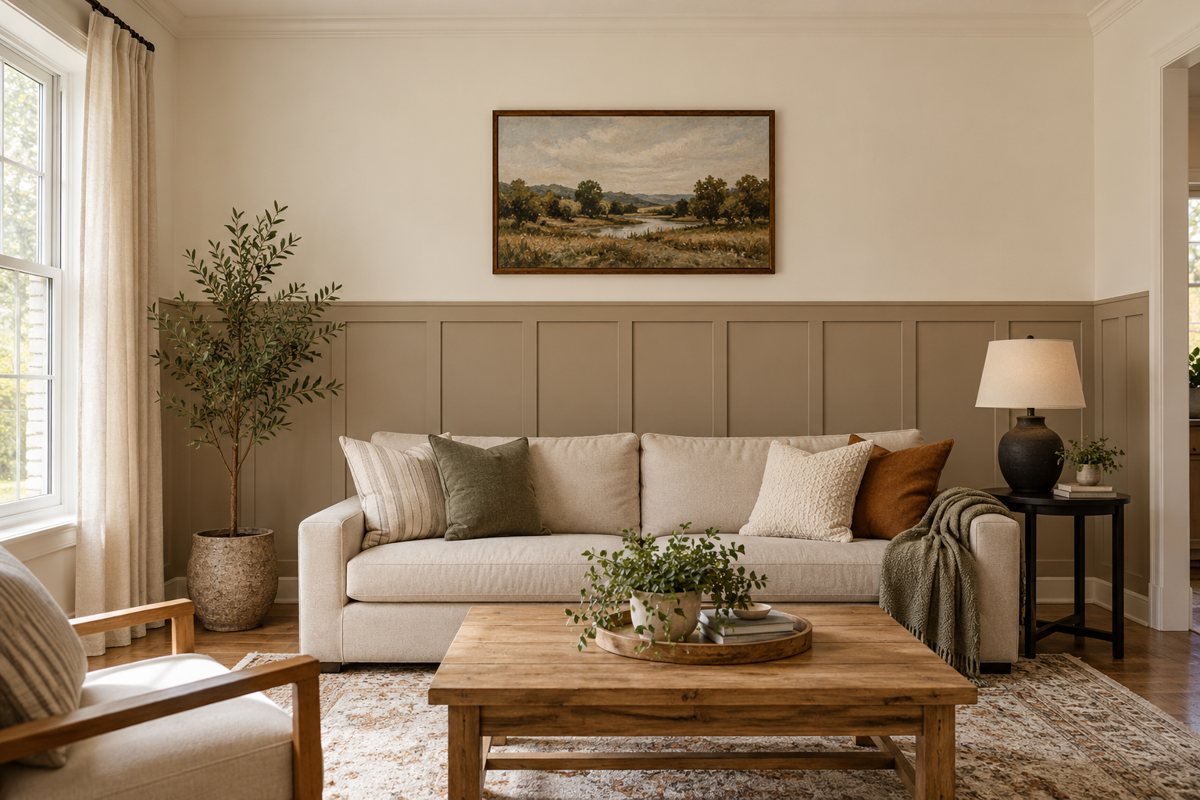
12. Two-Tone Panels with a Warm White Upper Wall
Use muted tan on the lower panels and warm white above for a simple two-color wall. Keep the furniture in soft neutral shades, then add a small dark accent through a lamp or picture frame. The color break gives the wall a clear shape.
Try the shades together on a large sample. Two pale colors can look almost the same from across the room, so check whether the change is as clear as you want. Look at the wall from the doorway and sofa. Repeat one shade in a nearby fabric to connect the space without buying a full matching set.
13. Plain Wood Panels Behind a Wall Art Display
Choose a simple wood panel wall and hang a small group of pictures in front of it. Keep the panel pattern quiet so it does not fight with the frames. Black frames and plain picture borders can help the art stand out.
Plan how the pictures will be supported before hanging them. Fixings must suit the wall and the weight of the frames. Do not assume the decorative surface alone can hold them. Lay out the art first and check that important panel joins will not look awkward behind a frame edge. Leave some wood visible around the display so both features have room.

14. Soft Gray Panels in a Small Living Room Corner
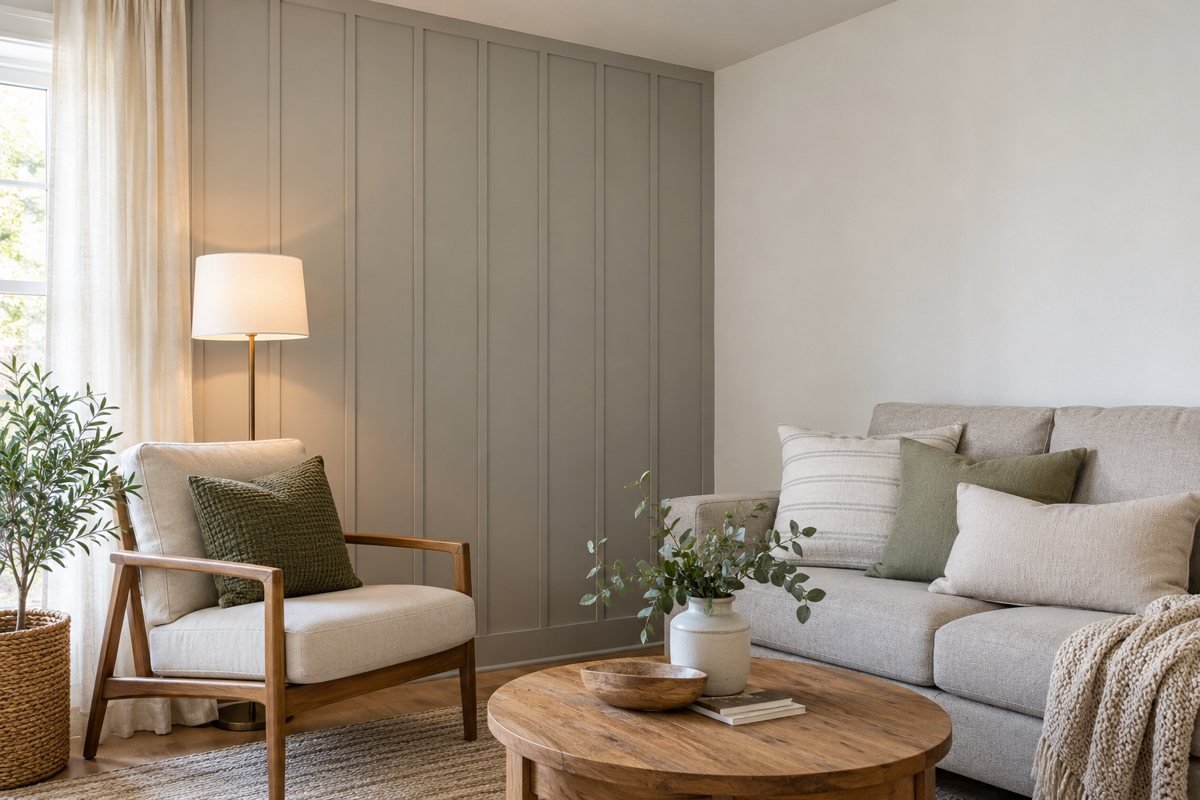
Add soft gray panels to one small wall beside a sofa or armchair. Leave the next wall plain to give the room a clear place to rest. A light curtain and a simple floor lamp can keep the corner feeling calm.
This is a useful way to try paneling without changing every wall. Measure the full corner and check how the panel ends will be finished. Use a shade that works with the large pieces you already own. Once the wall is in place, add decor slowly. You may need fewer pictures or shelves because the panels already bring detail.
Plan the Finish Before Starting the Work
Choose the look first, then check what the work will involve. Decorative trim, wood boards, and ready-made panels are different products. Their fitting and care needs can vary. Ask about the wall surface, edges, finish, and suitable fixings before buying materials.
Do not cover damp patches or damaged walls to hide the problem. Have the cause checked first. Get suitable help for work near cables, outlets, heaters, or other fixed features. If you rent, check what changes are allowed before fitting panels. This article is a style guide, not a set of building instructions.
Keep a sample of the finish beside your sofa, curtains, and floor for a few days. Notice it in morning light and in the evening. Then choose the design that works with the room you use every day. A well-planned feature wall can add enough detail on its own, so leave room to enjoy it before adding more decor.