
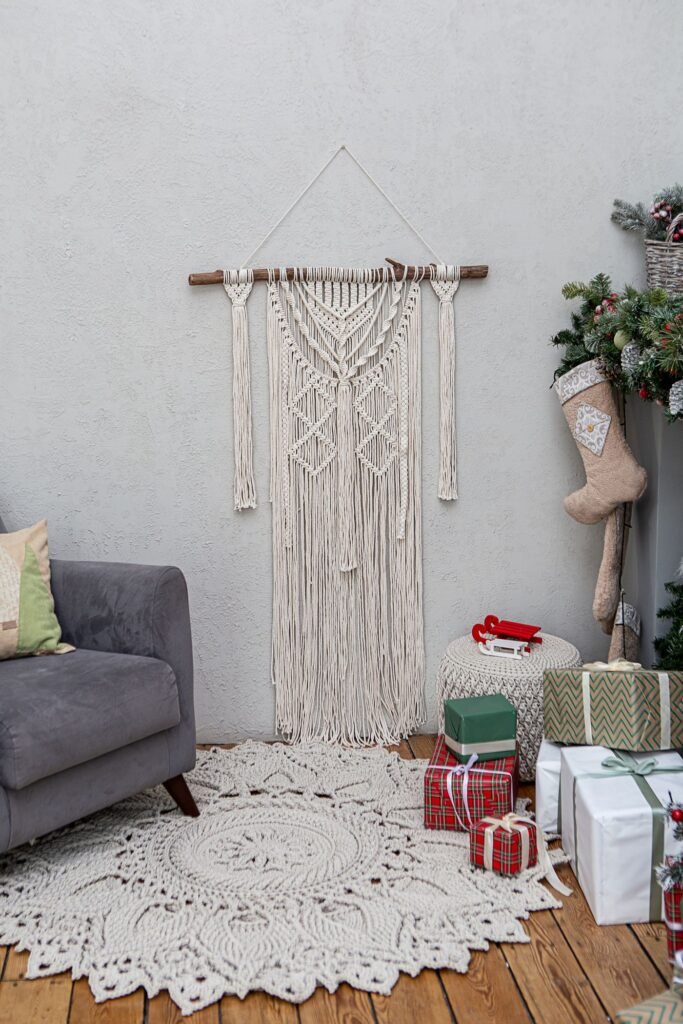
A mantel gives Christmas decorations an obvious home, but plenty of living rooms have a television wall, a bookcase, or a blank stretch of paint instead. You can still create a place for favorite ornaments and family traditions. Start by looking at the room you actually use: where you sit, where guests put their drinks, and which surfaces can spare a little space.
These twelve Christmas living room decorating ideas work with those ordinary features. Choose one main display, then add a few smaller touches where they fit. You do not need to decorate every spot or buy furniture just to imitate a fireplace.
1. Let an existing sideboard become the main display
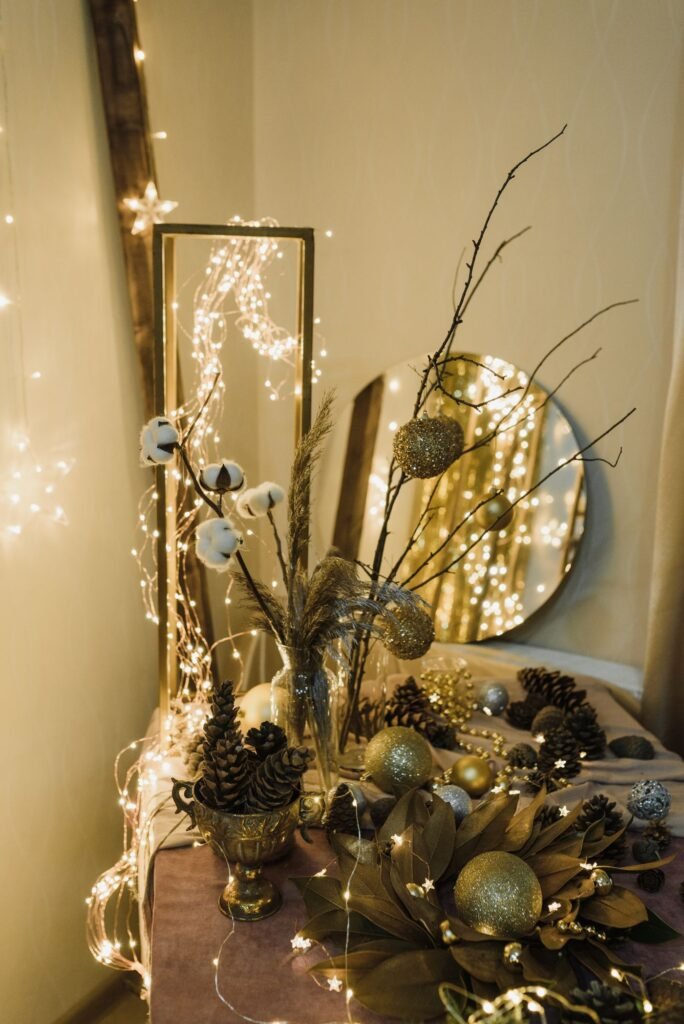
The top of a sideboard or low cabinet can give your Christmas decorations the long horizontal surface a mantel usually provides. Start with one taller piece, such as an existing vase of seasonal stems, then add a small group of ornaments beside it. Look at the arrangement from the sofa. The display should feel connected, with some bare surface around it rather than objects spread across every inch.
Keep the cabinet’s everyday purpose in mind. Leave doors and drawers free to open, and do not let greenery trail across handles or into a walking route. Put fragile pieces away from the edge, especially where children or pets can reach them. If the cabinet also holds serving dishes, choose an arrangement that can move together when you need access.
2. Give one bookcase shelf a Christmas moment
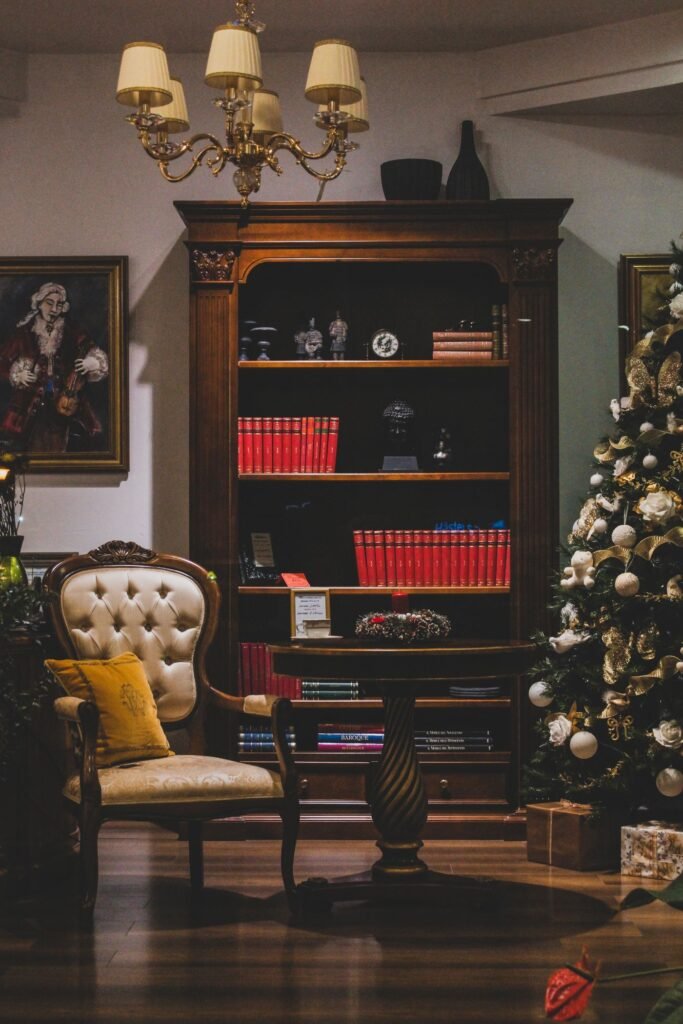
Choose a shelf at a comfortable viewing height and make room for a few seasonal pieces among the books. A small tree shape, a favorite ornament, or a framed card can be enough. Keep some of the usual books in place so the display belongs to the room. You do not need to clear and restyle the entire bookcase to make one shelf feel festive.
Work within the shelf’s depth and load limits, and use a bookcase secured as its manufacturer recommends. Avoid hanging heavy decorations from the front edge or placing ornaments where you must reach past them for everyday items. If you enjoy a fuller look, repeat one color on a second shelf rather than automatically filling every gap with new decorations.
3. Use the window as a seasonal frame
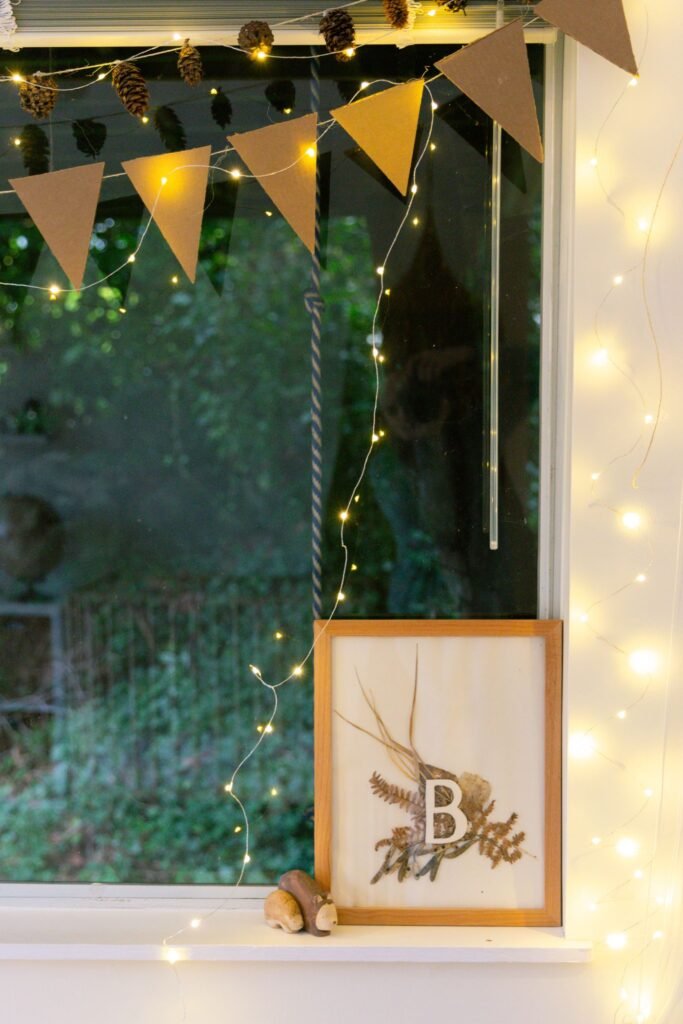
A window can provide a clear focal point when there is no fireplace wall. Try a short length of paper bunting or a few lightweight decorations along a suitable part of the frame. Let the view and daylight remain part of the arrangement. One small detail is often easier to enjoy than several garlands crossing the glass at different heights.
Choose a mounting method intended for the exact surface and decoration weight, following its preparation and removal instructions. Keep handles, ventilation openings, and any window needed for escape clear. Check that blinds and curtains can still operate normally. If you use lights, select a set appropriate for the location and route the cord without trapping it in the window or crossing a walkway.
4. Give empty stockings their own wall display
Stockings can form a Christmas display on a suitable stretch of wall without a mantel underneath them. Space them so their shapes are easy to see, perhaps near the tree or beside a cabinet. Keep the surrounding decorations simple, especially if the stockings already have different patterns or names. A collection gathered in one place can feel deliberate without needing matching replacements.
Use fixings suitable for the wall and the actual load. Follow the product’s surface, weight, waiting-time, and removal instructions; removable adhesive is not suitable for every finish. Consider children who may pull on stockings and avoid unstable weighted holders within reach. When you fill the stockings, reassess their weight. Setting them in an agreed gift-opening spot may suit your household better than leaving the heavier contents suspended.

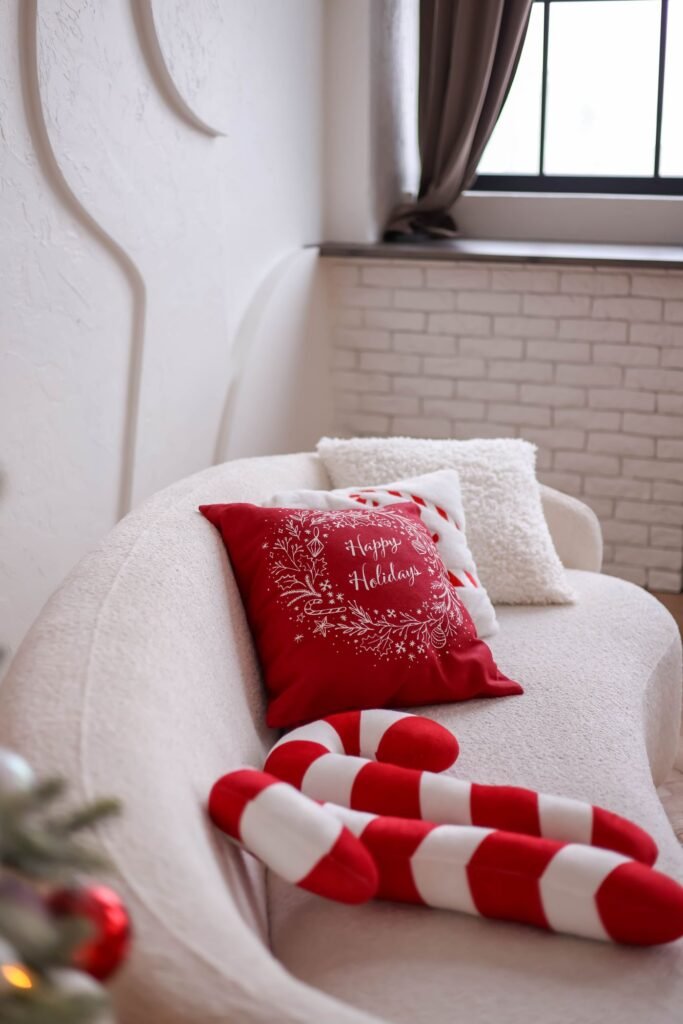
5. Make the sofa part of the Christmas color scheme
A sofa often takes up more visual space than any cabinet, so a modest textile change can carry the season through the room. Try a festive cushion cover, a plain red or deep green cushion you already own, or a checked throw. Pick a detail that works with the existing upholstery instead of feeling you need a completely different set of accessories.
Leave enough seating for people to sit comfortably without first moving a pile of cushions. If the sofa is used for overnight guests, choose pieces that can be put away easily at bedtime. Washable covers are useful when the room is busy with visitors, snacks, and pets. Your Christmas decorating choices can also account for limited storage after the season.
6. Build a quiet winter corner around a comfortable chair
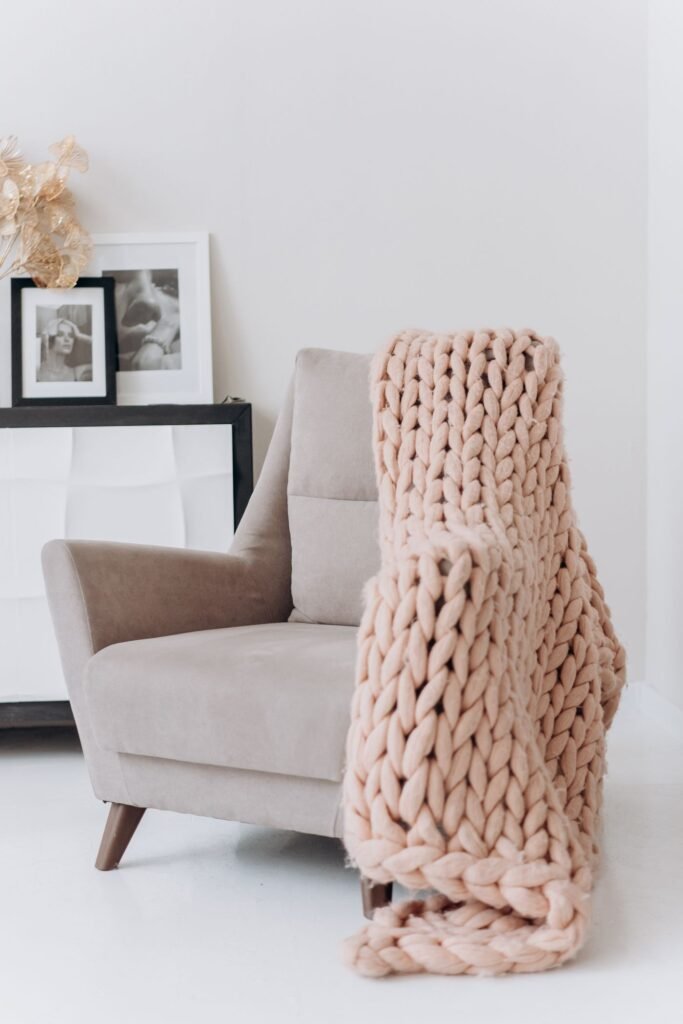
An armchair with a soft throw can create the welcoming feeling people often associate with a hearth. Start with a chair that is comfortable to use, then drape one blanket where it will not drag on the floor. A cream knit, muted pink, or warm brown can sit comfortably beside Christmas greenery without requiring every piece to be red and green.
Keep a nearby table available for a drink or book, and leave the reading lamp easy to operate. The chair should remain a usable seat rather than a stand for decorative gifts. If the corner is narrow, skip an extra floor basket or tree. A small room benefits from a place where someone can settle down during the gathering without moving furniture or stepping over decorations.
7. Keep a coffee-table display low and contained
Bring a little Christmas detail closer to the seating with a small bowl or tray of favorite ornaments. Start with the table’s useful space: allow room for drinks, a remote, or a snack plate, then see what remains. A compact grouping can work better than a long arrangement that divides the table into awkward little gaps.
Choose pieces that suit how the room is used. In a home with young children or pets, delicate glass ornaments may belong somewhere less accessible. A low, stable bowl is easier to see over and move than a tall display. Keep open flames away from greenery, textiles, and wrapping paper; a display without candles can provide plenty of seasonal color while leaving the table straightforward to use.

8. Let a tabletop tree anchor a small side table
A small decorative tree can give a side table a clear Christmas role, particularly when there is no room for a large floor tree. Check the tree’s base against the actual surface, and consider its height from the nearest chair. It should not block conversation or occupy the only practical place to set down a cup.
Use a stable table and keep the base fully supported. If children or pets might pull at it, choose another location rather than relying on a precarious arrangement. A few light ornaments may be enough; small branches can look crowded quickly. For more choices of tree shapes and locations, explore our small Christmas tree ideas and select the option that leaves the room easy to move through.

9. Turn a few Christmas cards into a small changing gallery
Holiday cards can provide the personal detail that usually gathers above a fireplace. Stand a few on a shelf or place a favorite design inside a frame you already own. If you use an existing card holder, keep it somewhere easy to view without filling the entire table beneath it. Rotate the selection as more cards arrive.
Choose a spot away from candles, heaters, and a windowsill that collects moisture. Preserve the original artwork when temporarily changing a frame, storing it clean and flat so it can return later. Handmade cards and family drawings can be especially meaningful here. The display does not need to match perfectly; a small group with space around it can show each piece more clearly than a crowded wall.

10. Keep the television area useful and decorate beside it
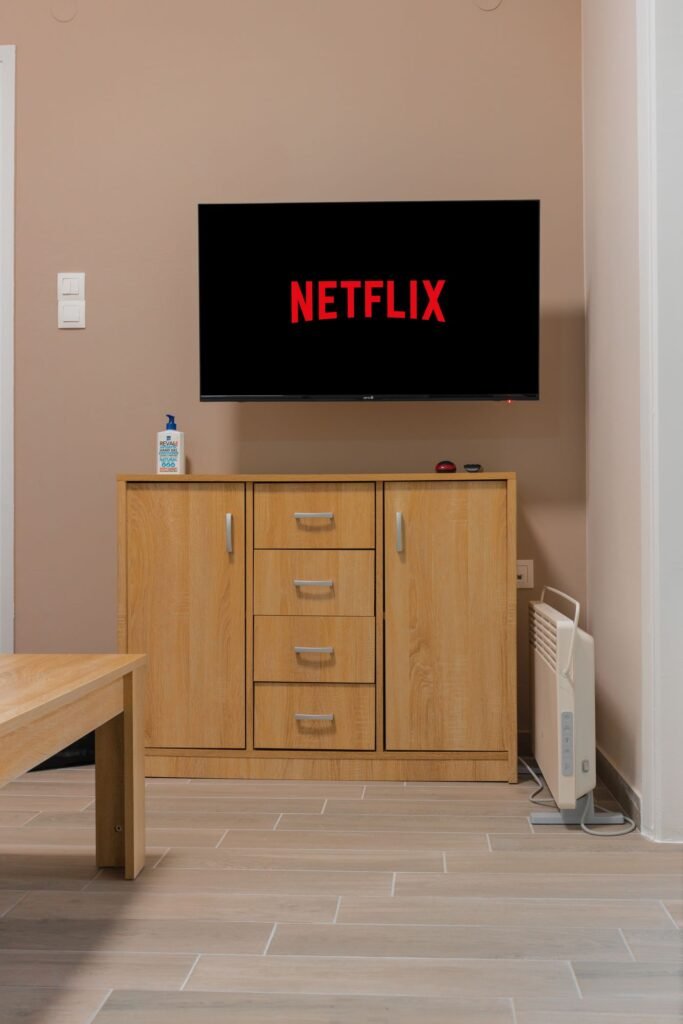
When the television is the room’s main feature, it is tempting to treat the whole screen surround as a substitute mantel. Start with the view from the seats instead. Keep the picture, controls, speakers, and remote receiver unobstructed, and place a modest seasonal detail on a separate nearby surface if space allows. The television area itself can remain simple.
Follow the equipment manufacturer’s ventilation and clearance instructions, keeping decorations away from vents and off the television. Do not drape fabric or greenery over electronics or conceal a power connection behind a display that makes it difficult to reach. Leave cabinet doors usable. For a movie night, the cushions, tree, or small table arrangement elsewhere in the room can supply the Christmas atmosphere without making the screen compete for attention.
11. Choose a ready-made star display for a spare wall
A large star shape or a small group of stars can provide the visual height that a mantel arrangement often gets from a mirror or artwork. Choose a genuinely spare stretch of wall and consider what is below it. A light decoration should still be attached using a method suitable for its material, weight, and position.
If you choose an illuminated paper decoration, use a complete product designed for that purpose and follow its lighting instructions. Do not improvise by placing a bulb inside an ordinary paper ornament. Check light sets for damage and turn decorative lights off before leaving home or going to bed. An unlit paper or fabric star is another option if the nearest outlet would require an inconvenient cord across the room.

12. Let wrapped gifts add color in one clear place
Wrapped presents can become part of the room’s Christmas display instead of creating several separate piles. Choose a spot beside the tree or another suitable area away from the walking route. Repeat a ribbon color if you enjoy a coordinated look, or let the different wrapping papers become the decoration. You do not need to rewrap gifts simply to make them match.
Keep the grouping stable and easy to access, with labels visible enough to find the right present later. Think about pets and curious children before leaving food gifts, ribbons, or fragile contents unattended. Keep presents away from heaters and open flames. If gifts will not stay out safely, put them away and bring them into the room when it is time to exchange them.

Choose a focal point that belongs to your room
Start with the surface or corner that can comfortably hold your main display, then add only the smaller touches you want to live with. A shelf of favorite pieces, a useful seat with a soft throw, or a thoughtful place for stockings can make Christmas feel settled in a room without a mantel.
Walk through the finished space and try its everyday jobs: open the cabinet, watch the television, sit down, and put a drink on the table. Move anything that gets in the way. The most welcoming arrangement leaves room for your traditions and for the people who will share them.