
A small laundry room has a lot to do. It holds dirty clothes, clean clothes, bottles, baskets, and sometimes the things that have no other home. A pretty shelf alone will not fix that. The most useful changes give each step a clear place, even if that place is only a small hook or an empty basket. You can still add color and warmth. Just let the room’s daily jobs lead the design. These ten scenes show ways to make a compact laundry space feel calmer, easier to clean, and more pleasant to use without filling every corner with extra storage.
Start here: Think about the last load you washed and choose the step that caused the most trouble. Measure that spot, keep machine access and walking routes clear, and try one small change before adding more storage.
1. Make a Two-Basket Sorting Corner
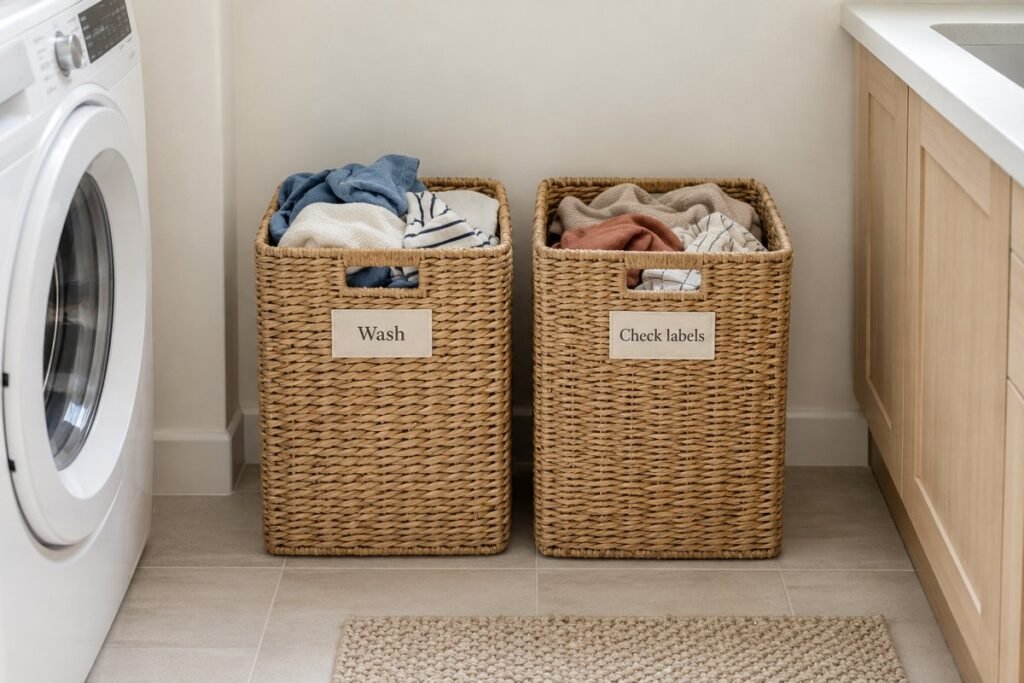
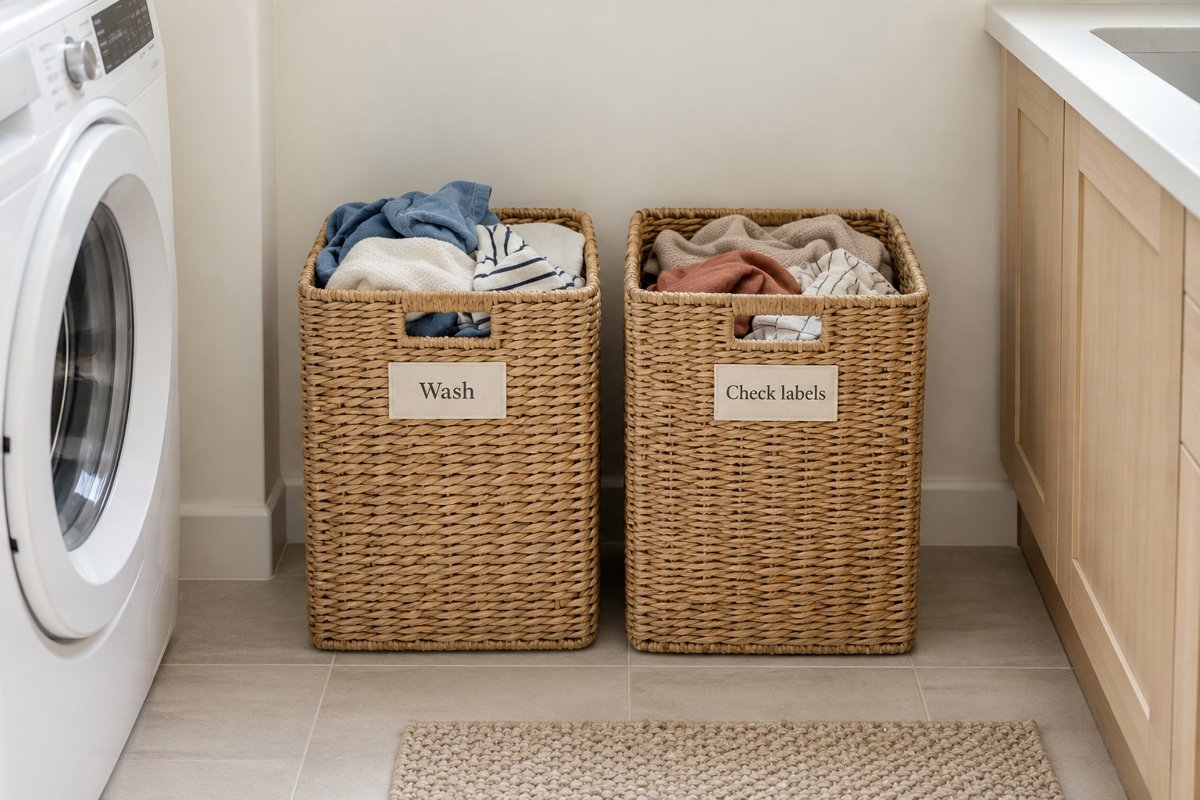
Picture two slim baskets side by side against a pale wall. One holds clothes ready to wash, and the other holds items that need a care-label check. Simple labels on the fronts make the purpose clear. Using two baskets with the same height gives the corner a tidy look, even when the clothes inside are not perfectly folded.
Measure the available floor space before choosing baskets. They should lift out easily without catching on a door or blocking the route to the machines. Use a sorting system that suits your actual washing habits. Do not add five tiny categories just because a photo looks neat. If space is very tight, use one basket with a divider. The aim is to reduce decisions at washing time, not create another job to maintain.
2. Keep One Folding Patch Completely Clear
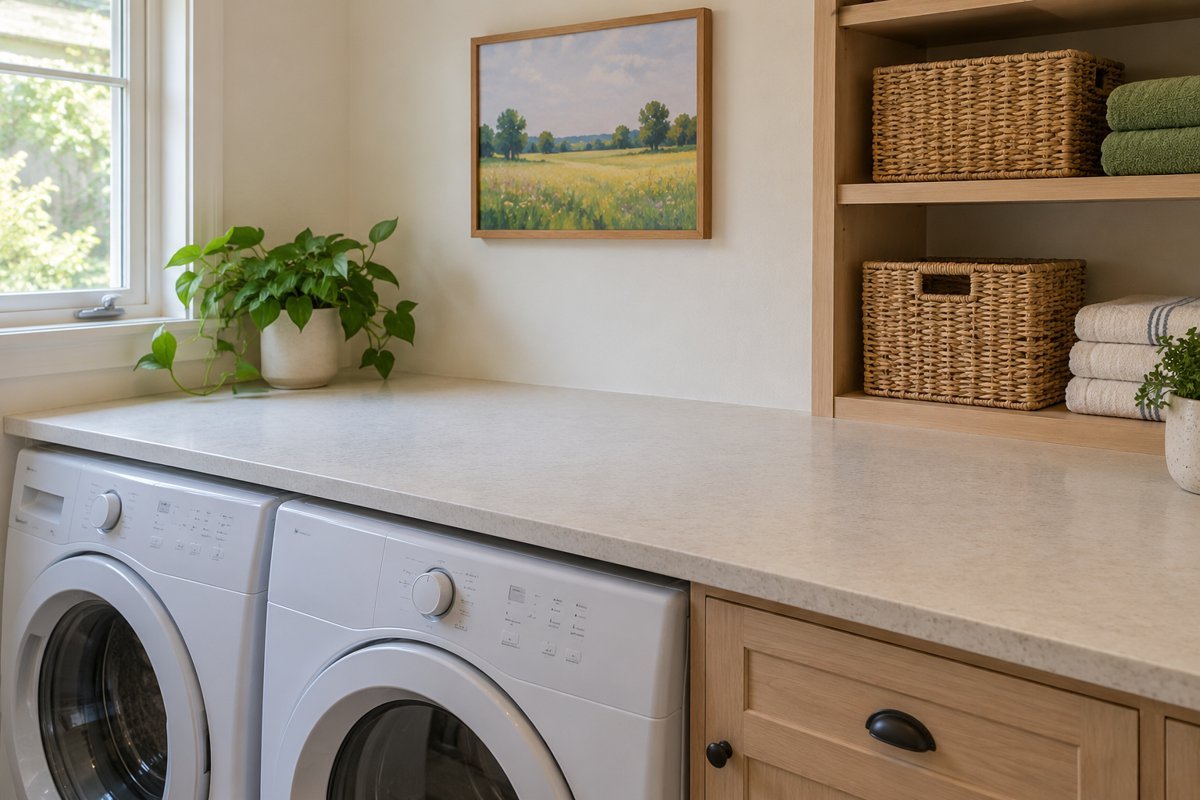
A small clear surface can be more useful than another decorated shelf. Imagine a pale worktop with enough bare space to fold a shirt, with a small wall picture above it. The picture adds color while the worktop stays ready for use. Keep baskets and bottles off this patch so clean clothes do not compete with daily supplies.
Use an existing suitable surface if you have one. Any new counter near appliances needs to follow their installation, ventilation, and service-access requirements. Do not rest a loose board across machines and assume it is secure. If there is no safe room for a fixed worktop, carry a clean basket to a table elsewhere. A laundry room does not have to contain every stage of the process to work well.
3. Create a Small Wall Station for Empty Hangers
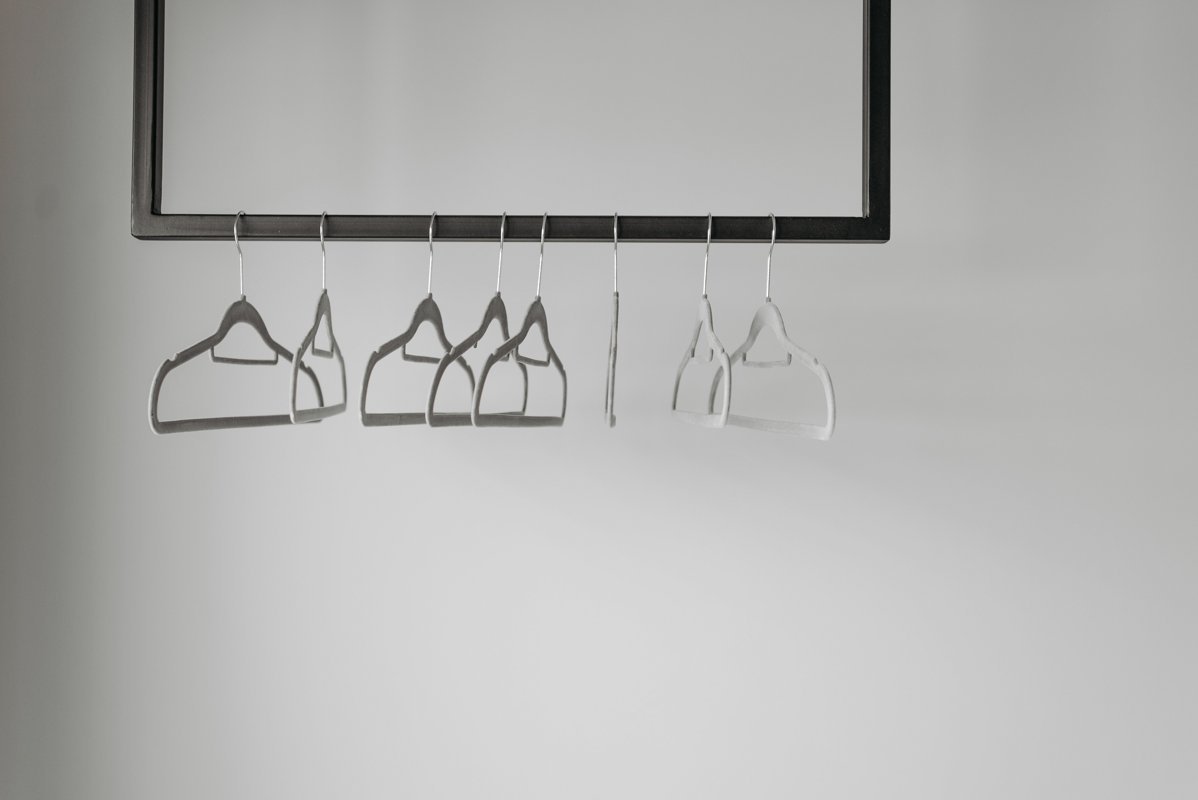
A short wall rail holding a few empty hangers gives freshly dried shirts a clear next step. Picture pale wooden hangers against a soft blue wall, with plenty of room below them. The repeated shapes look orderly while staying useful. Place the rail where hanging clothes will not cover switches, block a door, or brush against the machines.
Use a rail and wall fixings suited to the expected load. Leave room to lift a hanger off without scraping your hand. Keep only the number you normally need for one load. Extra hangers can stay in a closet instead of building up here. If clothes need air drying, use a rack designed for that purpose and allow airflow around them. A hanger station is a temporary work area, not a crowded second closet.
4. Give Small Missing Items a Shallow Catch Tray
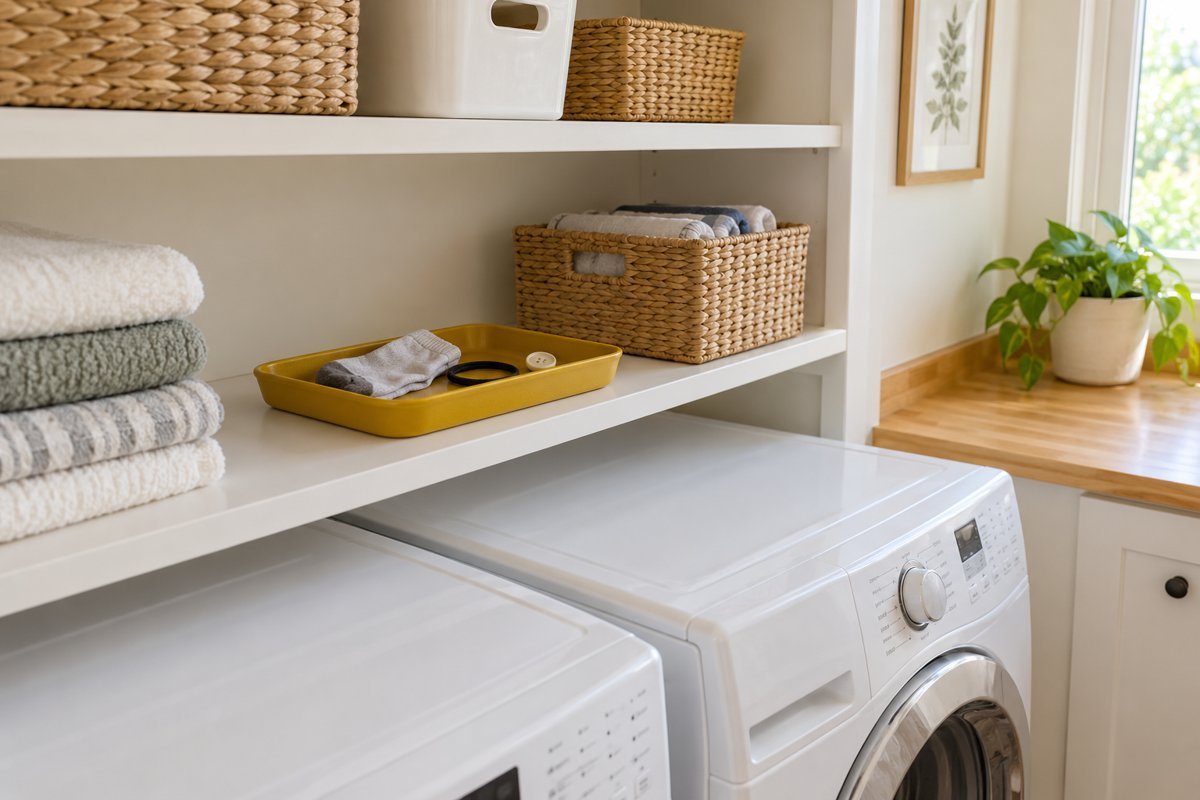
Set a shallow washable tray on a dry, reachable shelf for the odd sock, loose button, or hair tie found during laundry. A mustard-yellow tray against white shelving creates a cheerful little scene. It is small enough to stay useful without turning into a drawer full of things no one checks.
Empty the tray on a regular laundry day. Return items to their rooms, pair socks, and put small objects away safely. Coins, buttons, and other tiny pieces should be kept out of children’s reach. Do not let sharp items collect in an open dish. A catch tray works because it has a limit. When it is full, sort it rather than adding another container. That keeps a helpful pause point from becoming permanent clutter.
5. Use a Closed Cupboard for Laundry Products
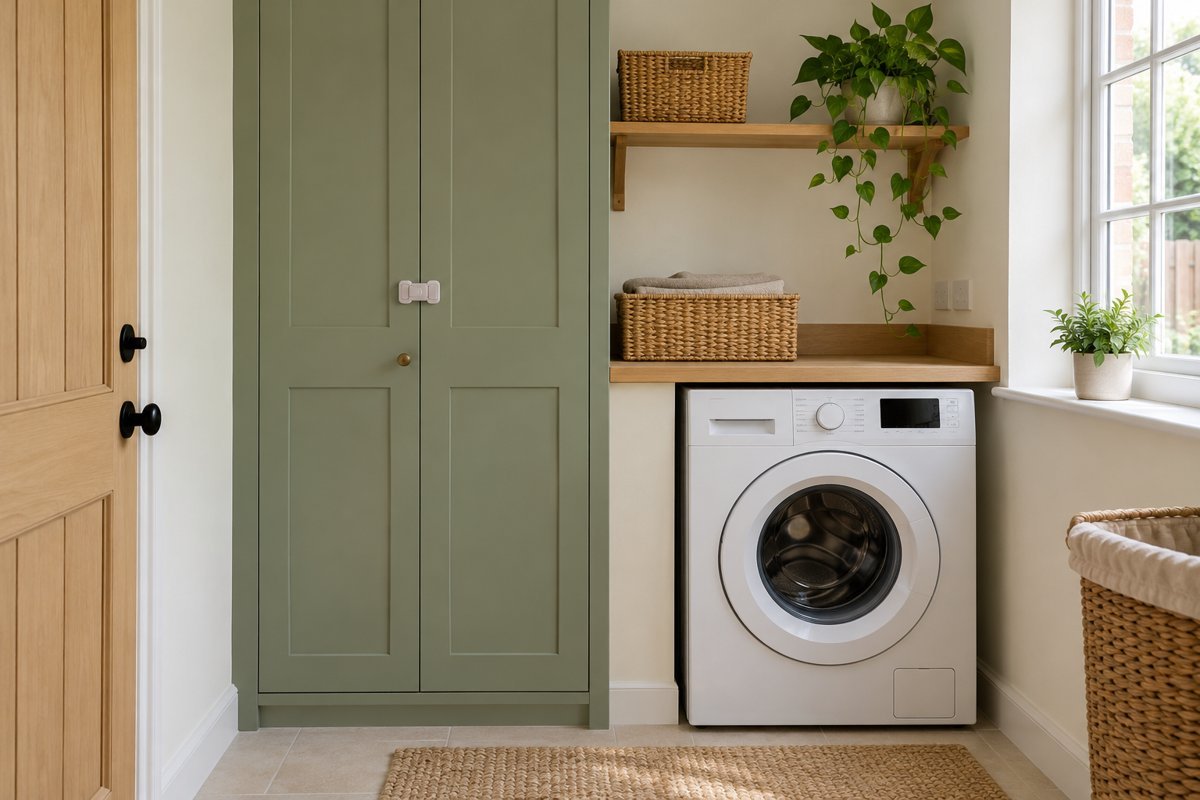
A plain closed cupboard can make a small room look calmer at once. Picture a soft green door beside a white appliance, with one clear label inside showing where the laundry supplies belong. Bottles stay in their original labeled containers, so the room does not need matching jars to feel organized. The smooth cupboard front supplies the tidy visual effect.
Store laundry products according to their labels, securely and out of the reach of children and pets. Use a lock where needed. Do not transfer detergent or pods into food-like jars or open decorative bowls. Keep products separate from items that could be confused with them. Check for leaks and wipe shelves as directed by the product instructions. Useful storage protects the packaging information while making the outside of the room feel less busy.
6. Add Color with a Washable Door Panel
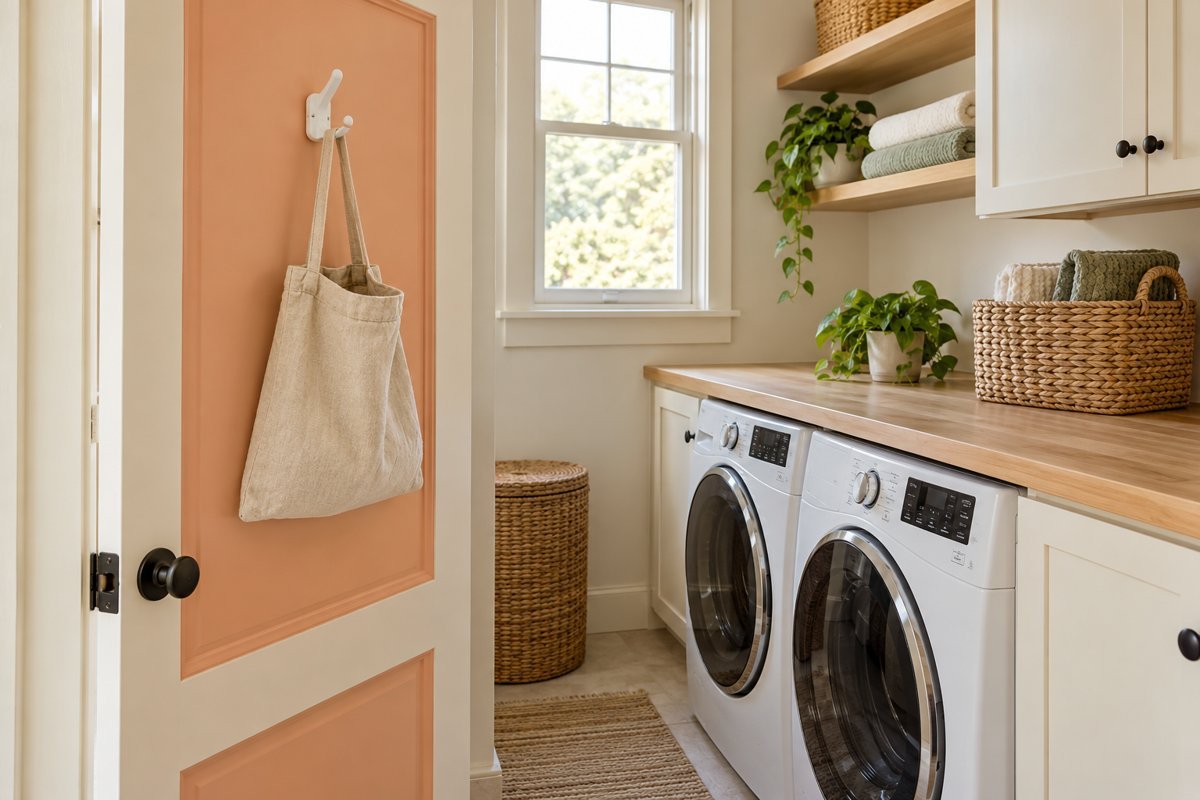
The inside of a laundry door can carry the room’s color without using precious shelf space. Imagine a soft peach painted panel with a simple white hook holding an empty cloth bag. The color makes the room feel finished, while the bag has a real task, such as holding clean reusable cleaning cloths.
Choose paint or another finish suited to the door and room conditions. Make sure any hook and bag allow the door to open and close fully. Keep fabric away from appliance vents and heat. If you rent or cannot change the door, try the same color in a small washable basket instead. A single color area is enough. You do not need to repeat it on every bottle, bin, and label for the room to look connected.
7. Park a Clean-Clothes Basket at Waist Height
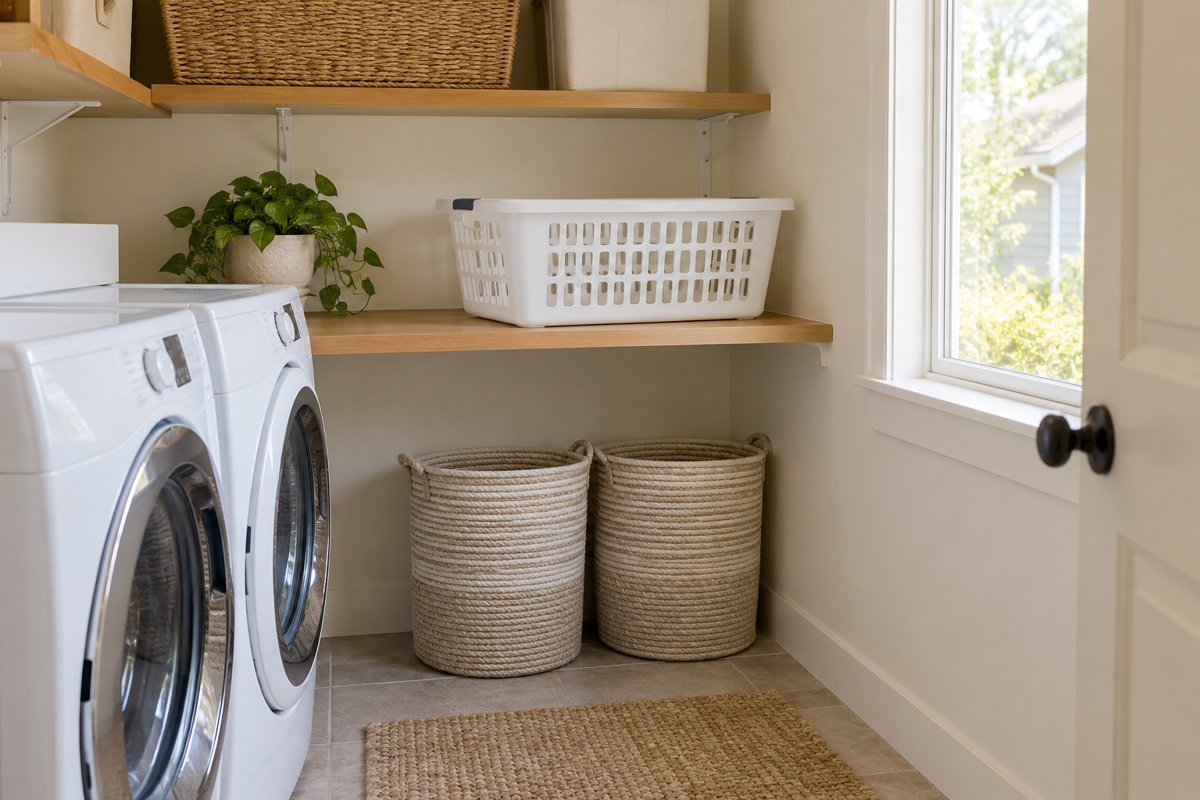
A sturdy shelf at a comfortable height can give a clean-clothes basket a clear parking place. Picture a broad white basket on a wooden shelf, with nothing piled above its rim. The basket is ready to carry away when the load is folded. This scene helps separate clean laundry from the sorting baskets on the floor.
Only use a shelf that is safely fixed and rated for the filled basket’s weight. Check that lifting the basket feels comfortable and does not require reaching over a machine. If the shelf makes the room cramped, use a suitable low bench instead. Do not leave clean clothes parked for so long that the basket becomes a storage unit. Give it a simple next step: carry, put away, and return empty for the next load.
8. Set Up a Care-Label Check Spot
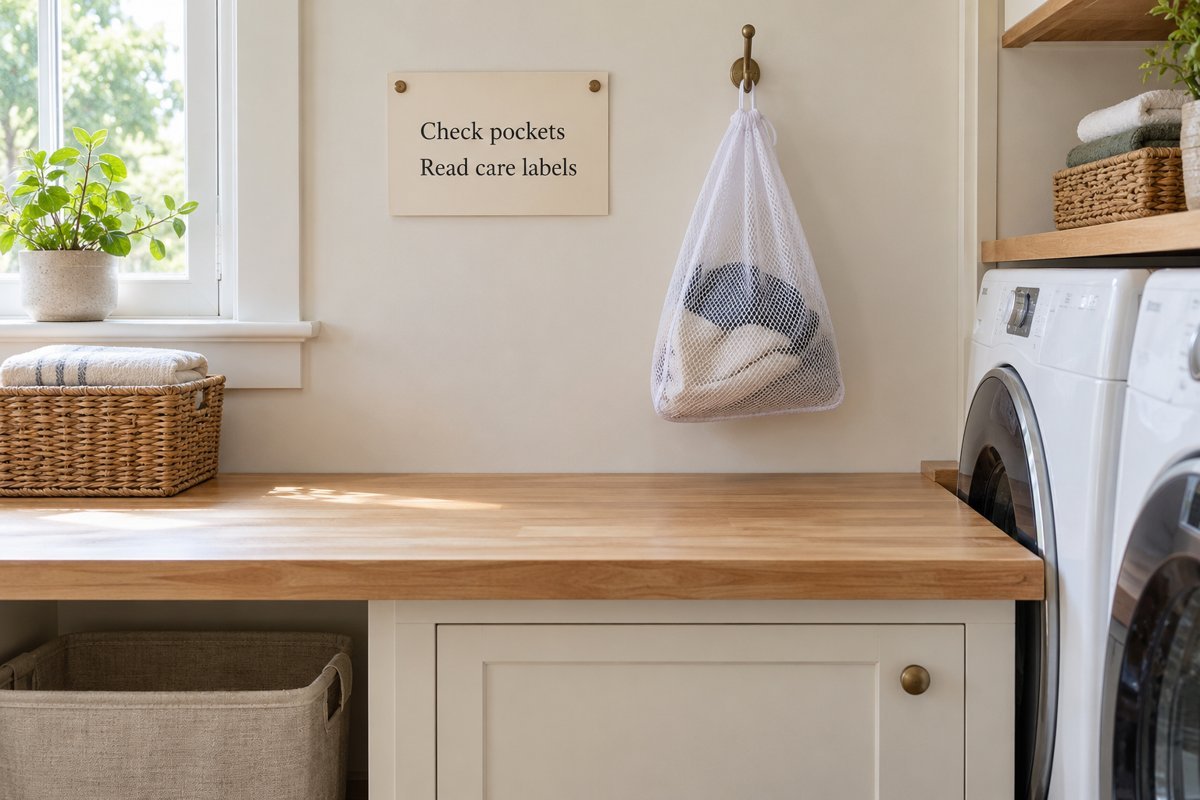
A small notice card above a clear work area can remind you to check pockets and clothing labels. Pair it with a plain mesh wash bag hanging from a nearby hook. The scene is simple: one cream card, one useful bag, and an open patch beneath them. It adds helpful detail without turning the wall into a long instruction board.
Write only the steps that you tend to forget. Follow the garment and appliance instructions rather than a general chart for every fabric. Keep any special-care items apart until you know what they need. Wash bags should be used only where suitable for the garment and machine. A short personal reminder is easier to notice than a crowded page of rules. Replace the card if it gets damp, curled, or hard to read.
9. Give Drying Tools a Neat Home When Folded
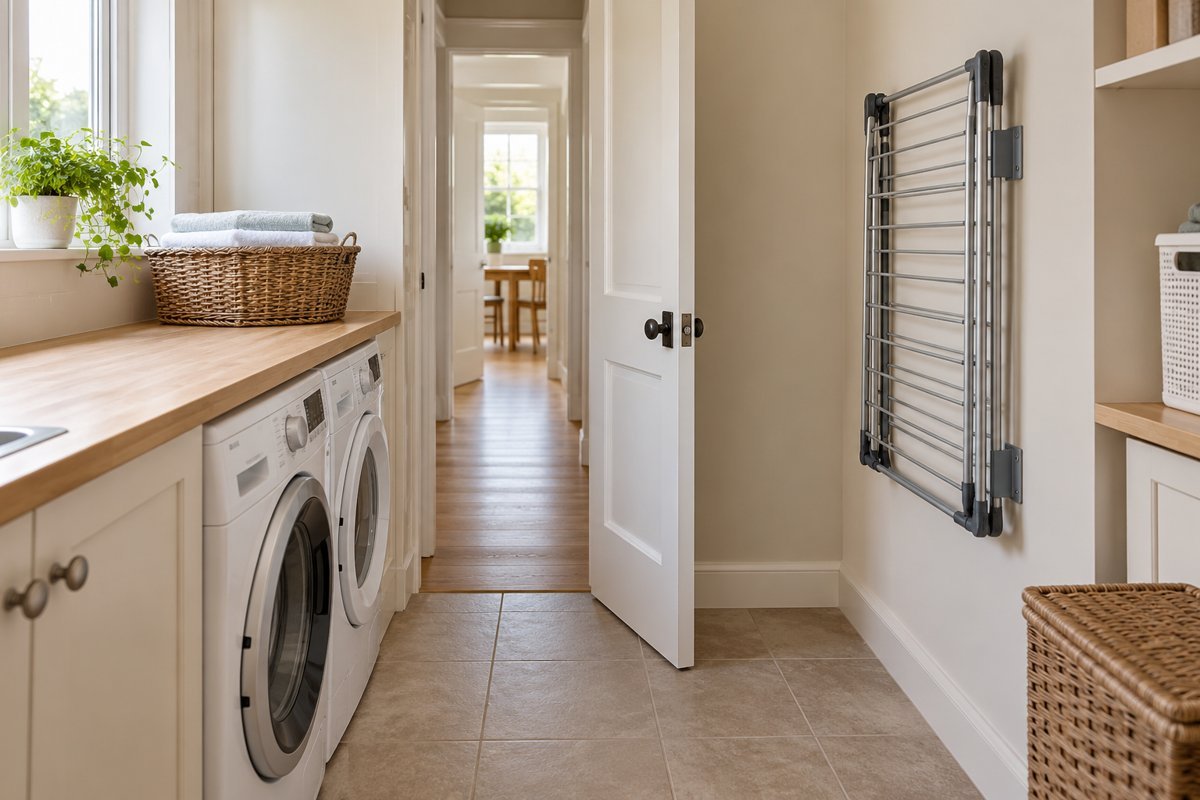
A folded drying rack stored against a suitable wall can look far calmer than one leaning across the doorway. Picture the slim rack held securely in its designated storage spot, with the floor below clear. A nearby plain wall keeps the shape from looking busy. The room feels larger because you can see the route through it.
Use a storage method suited to the rack’s weight and design. Do not hang it from a weak hook or place it where it may fall onto someone. When the rack is open, allow enough space and airflow for clothes to dry. If the room cannot provide that, use it in another suitable area. Keep vents clear and manage moisture with the room’s normal ventilation. Storage should make the tool easier to use, not harder to reach.
10. Finish with One Easy-to-Clean Personal Detail
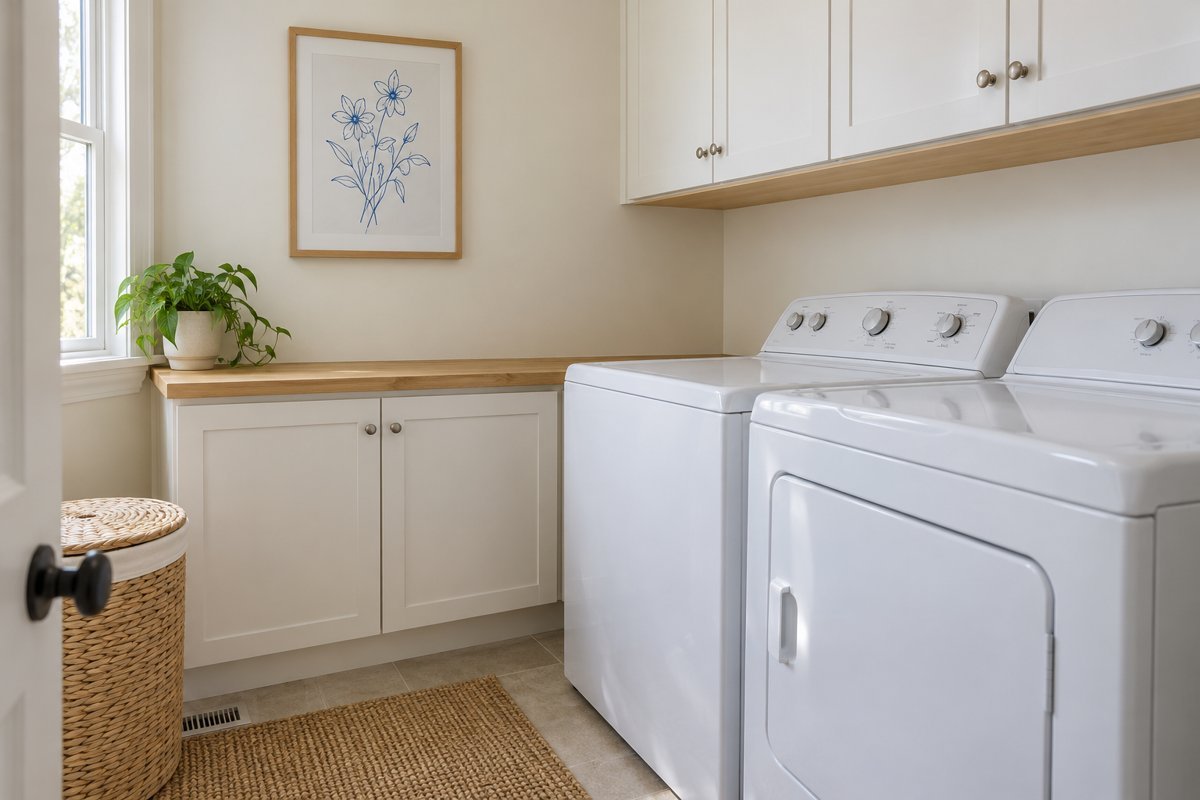
A small framed print on a dry wall can make the laundry room feel like part of your home. Try a simple blue line drawing above white cabinets, or a picture that repeats the color of a nearby room. The art supplies personality without placing extra objects beside the machines. Keep the rest of the scene plain so it remains easy to wipe and sweep.
Choose a secure frame suited to the wall, away from splashes and appliance vibration. Skip trailing plants, loose decorative beads, or fragile stacks where they could fall into your work area. A practical room can be welcoming without looking like a showroom. If the print begins to feel like one more thing to clean, remove it. The most useful finishing touch is the one that makes you smile without slowing the laundry down.
Choose the Change That Solves Your Daily Snag
Look at the last load you washed. Where did the process slow down? Perhaps there was nowhere for hangers, nowhere to fold, or nowhere to put one missing sock. Start with that problem. Measure the space and try moving what you already own before buying new storage. Keep appliance instructions and access needs at the center of the plan.
After a week, check whether the change is helping. A basket that blocks the door needs another home, however neat it looks. A shelf that stays clear may be worth more than three full ones. Build the room around the jobs you do most often, then add one color or picture for warmth. Small laundry spaces feel better when their simple systems are easy to keep.
Common Questions
Where should I start organizing a small laundry room?
Start with the part of your routine that slows you down, such as sorting, finding hangers, or putting clean clothes away. Measure the available space and try a simple basket, tray, or clear surface before adding more storage.
How can I make space for folding in a small laundry room?
Keep one suitable surface clear of supplies, if your room has space for it. Any new counter must respect the appliances’ installation, ventilation, and service requirements. You can also take clean laundry to a table in another room.
Should I put laundry detergent in matching decorative jars?
Keep detergent and other laundry products in their original labeled packaging and store them according to their instructions, securely away from children and pets. A closed cupboard can create a tidy appearance while preserving the product information.
Related Ideas
For more ways to give daily items a useful home, explore our everyday home organization ideas.