

You do not need a new bed to make your bedroom feel different. A fresh color mix, a folded blanket, or fewer pillows can change the whole look. These modern bedding ideas focus on small choices that work in a real home. You can use pieces you already own and add something new only when you need it. The goal is a bed that looks inviting, feels right for you, and takes little effort to make each day. From calm colors to simple patterns, these ideas will help you find a look you enjoy without making your room feel crowded.
1. A Simple White Bed with One Soft Blanket

Start with plain white sheets and one soft blanket you enjoy using. Keep the setup light so the bed feels inviting and easy to make.
Before you plan a new look, think about the bedding you reach for most. Which sheets feel good? Which blanket do you keep using while the others stay in the closet? Make those pieces the base of the bed.
Spread them out and check their color, size, and condition. You may only need to replace one worn item rather than buy a full set. A bed can look lovely in a photo and still feel wrong at night. Start with what works for you, then choose the colors and extra layers around it. This keeps comfort part of the plan.
2. Cream and Gray Bedding with a Soft Green Accent

Pair cream and warm gray bedding with one soft green pillow. The small accent adds color while the larger pieces stay calm.
A short color list makes it easier to mix pieces from different sets. Pick two colors for the larger areas, then use a small amount of a third shade if you want more interest. Cream and warm gray could work with a touch of green. White and blue could use a little tan.
Lay the pieces beside one another before dressing the bed. Look at them in your room’s light rather than relying on a screen. If one shade feels too strong, move it to a smaller piece. A pillow cover is easier to change than the main bed cover.
3. A White Sheet Folded Over a Soft Gray Cover
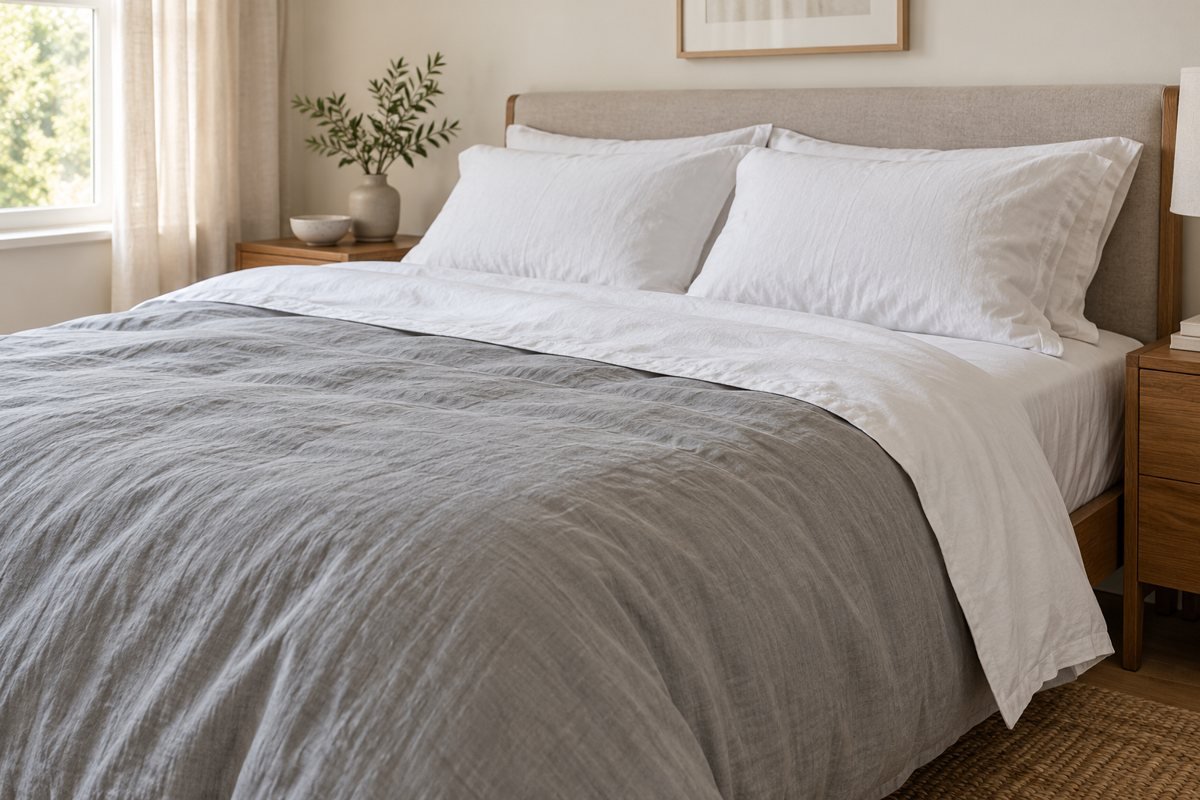
Turn a white top sheet over the edge of a soft gray cover. The narrow white band gives plain bedding a clear finish.
A plain bed does not have to look flat. Fold the top of the sheet over the edge of the main cover so a narrow band shows. Smooth that fold with your hands, then leave the rest of the bed relaxed.
This works well when the sheet and cover have a gentle contrast. Try white against soft gray or cream against pale green. You do not need a sharp color change to see the effect. Check how much fabric you want to turn back before tucking anything in. A small fold may suit a simple bed better than a wide band.
4. Blue Bedding in Light and Dark Shades
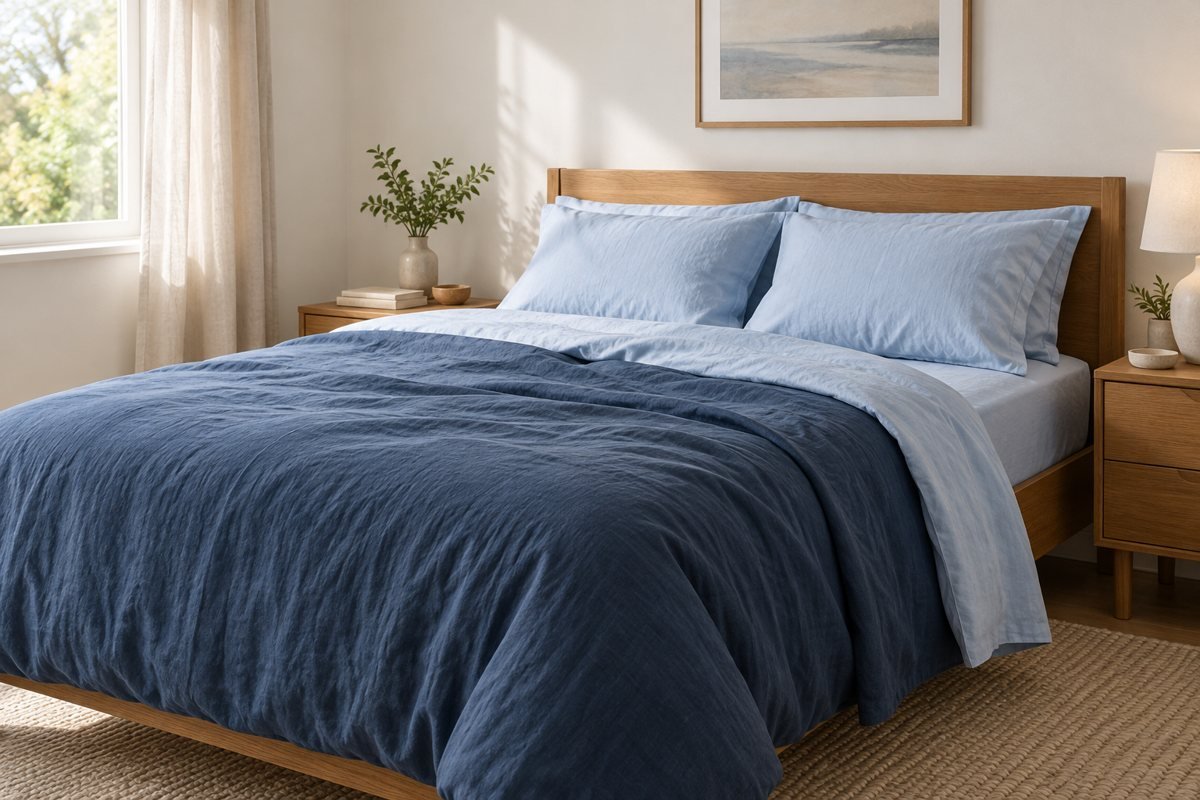
Combine light blue sheets, a deeper blue cover, and pale blue pillowcases. Keep one layer light so the separate shades are easy to see.
If mixing several colors feels hard, stay within one color family. You might pair a light blue sheet with a deeper blue cover and a pale blue pillowcase. The shades do not need to match exactly.
Keep one part of the bed lighter so the layers are easy to see. When every piece is the same deep shade, small details can disappear. Use a plain wall or simple headboard as a backdrop if the bed already has plenty of color. This is a useful way to build a calm look while still making the separate pieces feel like a planned set.
5. A Striped Bed Cover with Plain Pillowcases
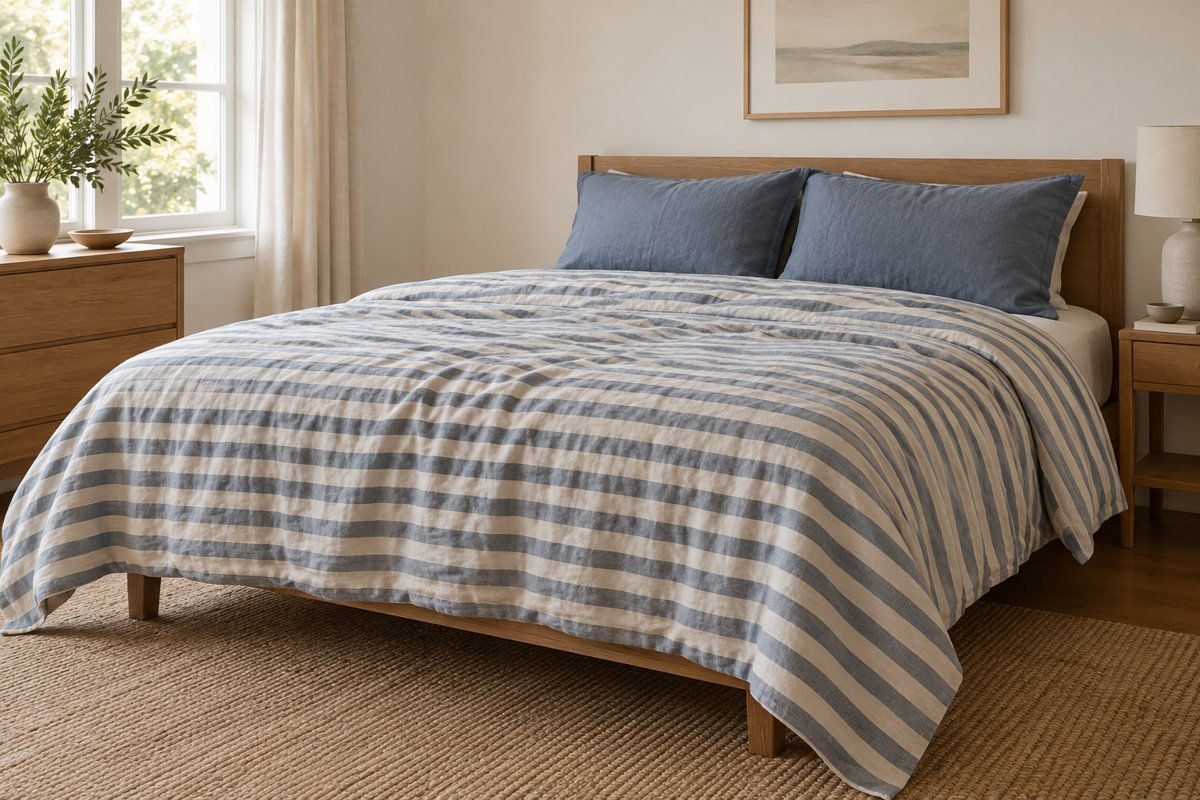
Let a striped cover be the main pattern, with plain pillowcases in one of its colors. Keep other prints away from the bed so the stripes stand out.
A striped sheet or a cover with a bold print can give the bed a clear style. Choose the pattern you like most, then keep the larger pieces around it plain. Pull a color from the print for a pillowcase or throw.
Look at the pattern from the doorway as well as close up. A small print may read almost like a solid color from a distance, while a large one can draw most of the attention. Neither is wrong. The choice depends on what you want to notice first when you walk into the room.
6. Blue Checks and Wide Stripes with Plain White Layers
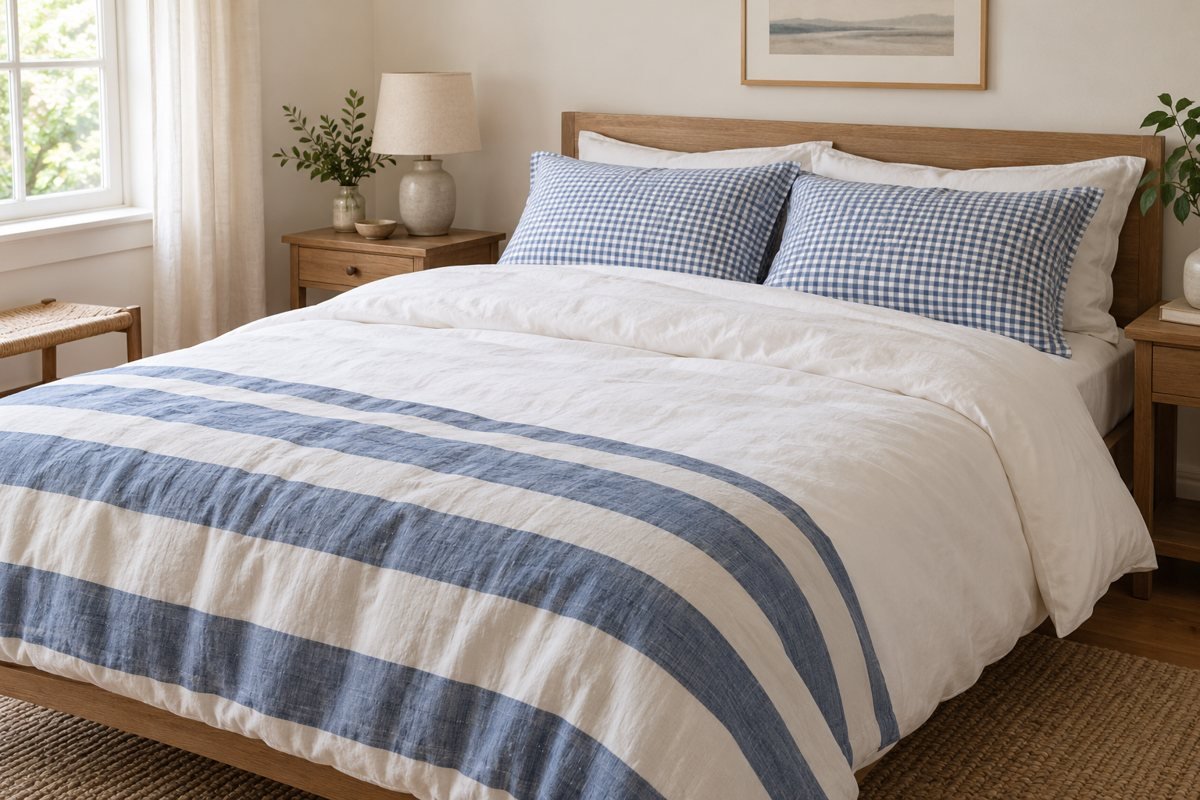
Mix a small blue check with a wide blue stripe and leave plain white fabric between them. The shared color ties the patterns together.
If you enjoy more than one pattern, look for a color they have in common. A small check and a wide stripe can sit together when both include the same soft blue or warm brown. Try the mix with pieces you already own before adding more.
Keep some plain fabric visible between the prints. This gives your eyes a place to rest and makes each pattern easier to see. If the bed feels too busy, remove one patterned piece and look again. You may find that two small touches work better than a full bed of competing prints.
7. Cream Bedding with a Stitched Quilt and Woven Throw

Use cream sheets, a quilt with stitched lines, and one woven throw. The different surfaces give the bed interest without a bold print.
Texture is the way a fabric looks and feels on its surface. A smooth sheet, a quilt with stitched lines, and a woven throw can make a plain bed look more varied. You can keep the colors close together and let the surfaces add interest.
Start with two different finishes instead of several thick layers. Run your hand over each fabric, and think about where it will touch your skin. A rough throw may look nice at the foot of the bed but feel less pleasant near your face. Choose the pieces for how you will use them.
8. A Bed with Two Sleeping Pillows and One Long Accent Pillow
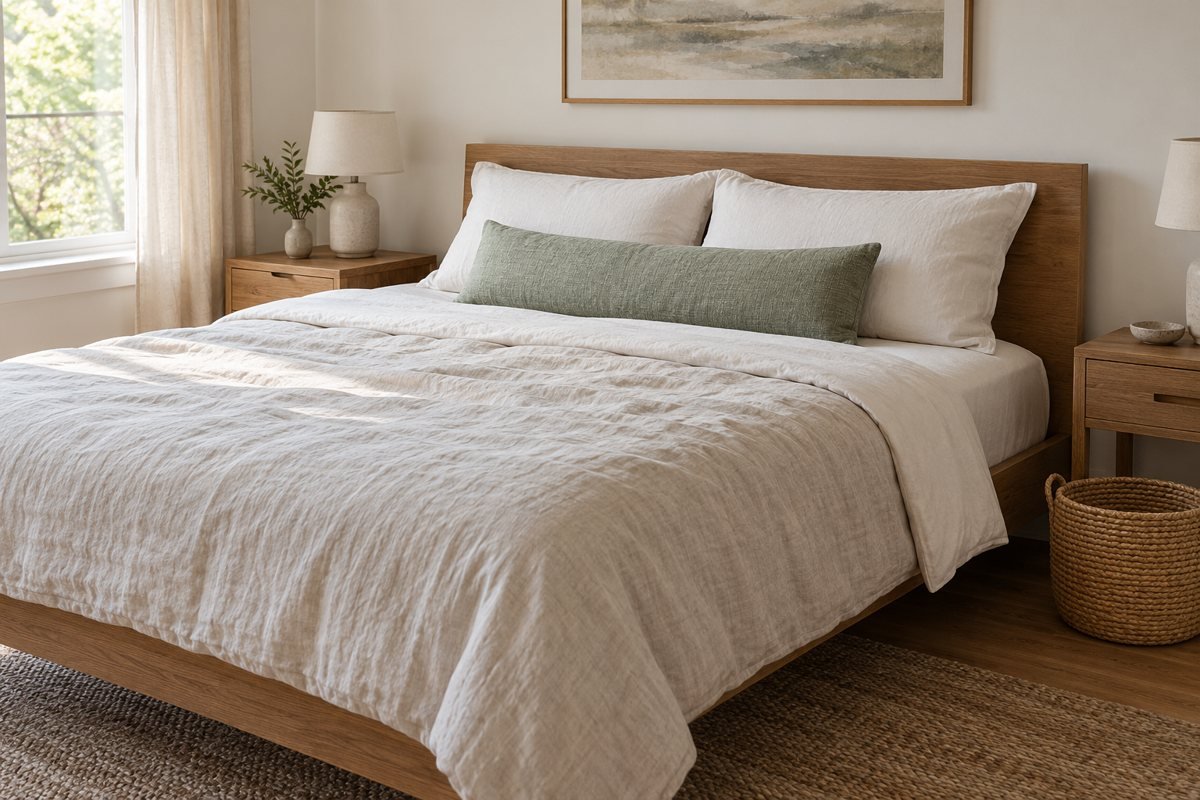
Keep the pillow setup simple with two sleeping pillows and one long accent pillow. Place a clean basket nearby for the extra pillow at night.
Decorative pillows can add color, but they also need somewhere to go at night. Begin with your sleeping pillows, then add one extra shape if you want it. Step back before deciding you need more.
A long pillow can bring a row together without filling the whole bed. A single square pillow may be enough on a smaller bed. Place the extras on a clean bench, shelf, or basket when you sleep rather than dropping them in a walkway. If making the bed feels like a daily chore, reduce the pillow count until the routine feels simple again.
9. A Rust-Colored Blanket Folded Across Neutral Bedding
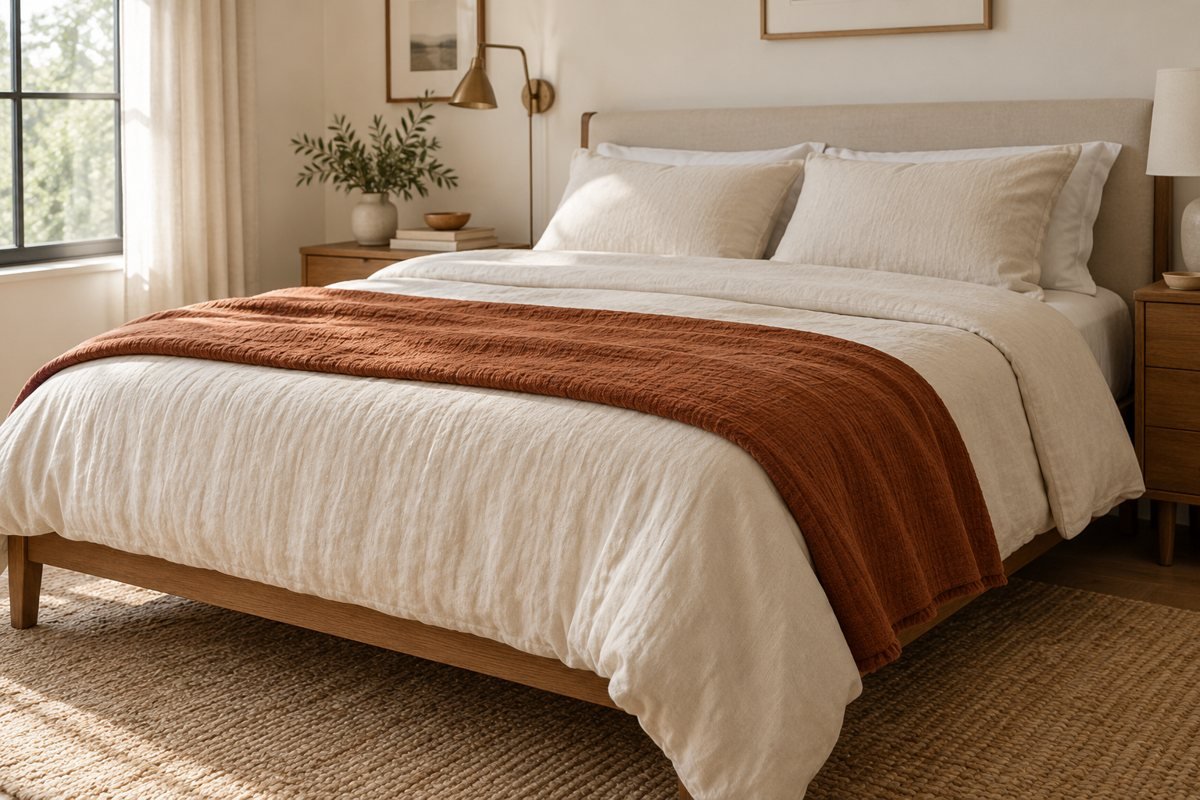
Fold a rust-colored blanket across the foot of a cream bed. Keep the ends off the floor and let the warm band be the main accent.
A folded blanket can add a clear band of color without hiding the bedding beneath it. Fold it to a depth that suits the bed, then place it across the lower part. Try a neat fold first and loosen it if the result feels too stiff.
Choose a blanket you can use, not only one that looks good. If you tend to remove it every night, keep it within easy reach rather than tucked under other layers. Let the ends fall evenly or keep them short. Check that the blanket does not trail onto the floor where it could get dirty.
10. A Light Bed with a Spare Blanket in a Basket
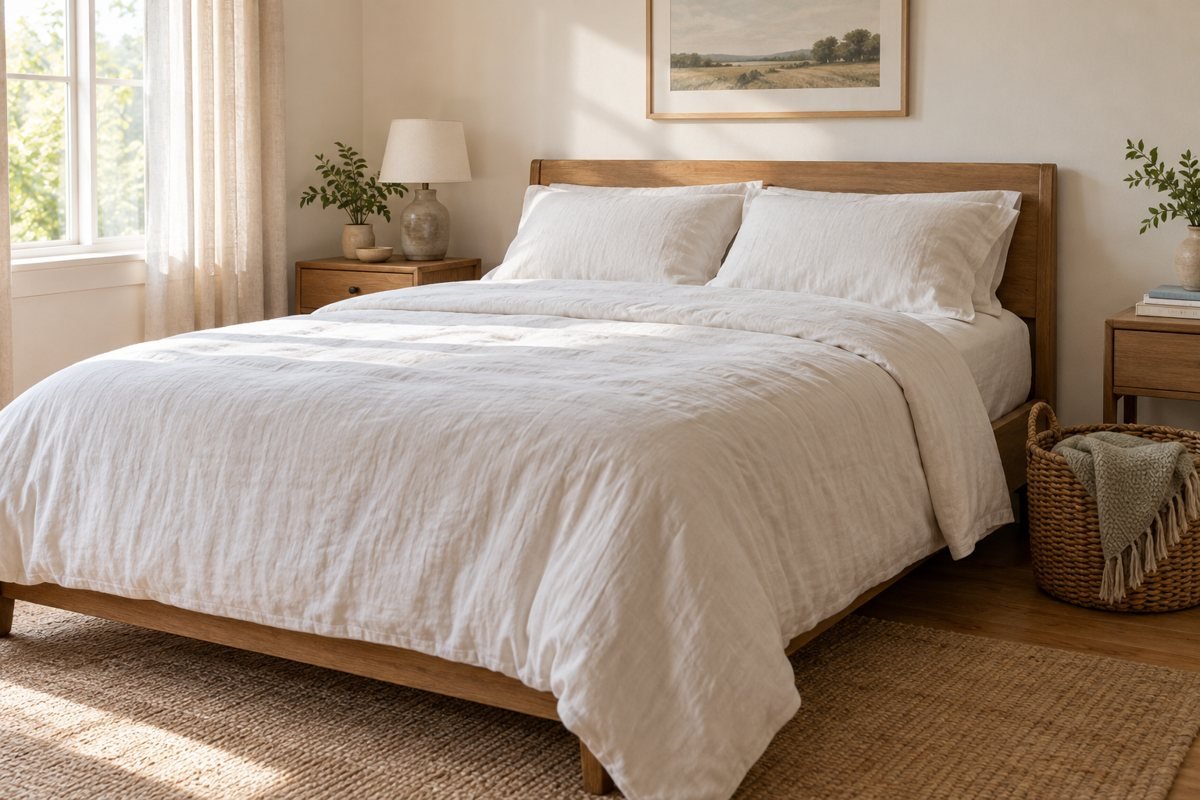
Dress the bed with only the layers you use, then keep a spare blanket in a basket beside it. This gives the room a light look without losing a useful extra layer.
The right number of layers depends on what feels comfortable in your home. A heavy stack may look cozy but be too warm for your room. Begin with the layers you sleep under, then add only what has a clear use.
Keep a spare blanket nearby if the temperature often changes. You can fold it in a basket or place it on a shelf instead of leaving it on the bed all day. This keeps the look lighter while giving you a choice at night. Change the setup when the weather shifts rather than keeping the same layers all year.
11. A Neatly Fitted Bed with an Even Cover Drop

Choose sheets that fit the mattress and a cover that falls evenly on both sides. The finished bed should look settled rather than pulled tight or lost in extra fabric.
Bedding sizes can vary between brands and countries, so check the measurements rather than the name alone. Look at your mattress size and depth when choosing fitted sheets. For a cover, think about how far you want it to fall on each side.
If you are using a duvet, check that the cover and insert are meant to fit together. A loose or tight fit can make the bed harder to arrange. Measure the pieces you already like as a guide. A few minutes with a tape measure can help you avoid buying something that looks right in the packet but fits poorly.
12. A Bed with Plain Bedding and a Folded Spare Set

Use easy-care plain bedding and keep a folded spare set on a nearby shelf. A simple storage spot makes changing the bed more practical.
Care labels matter as much as color when you choose new bedding. Check how each piece should be washed and dried, and whether you have the space and equipment to care for it. A large cover may be awkward if your washing machine is small.
Think about how often you want to wash each item and where you will dry it. Keep at least one useful spare set if that fits your storage space and budget. There is little value in a beautiful layer that spends most of its time waiting for special care. Easy upkeep helps you enjoy the bed more.
13. Neutral Bedding Refreshed with One Patterned Pillow
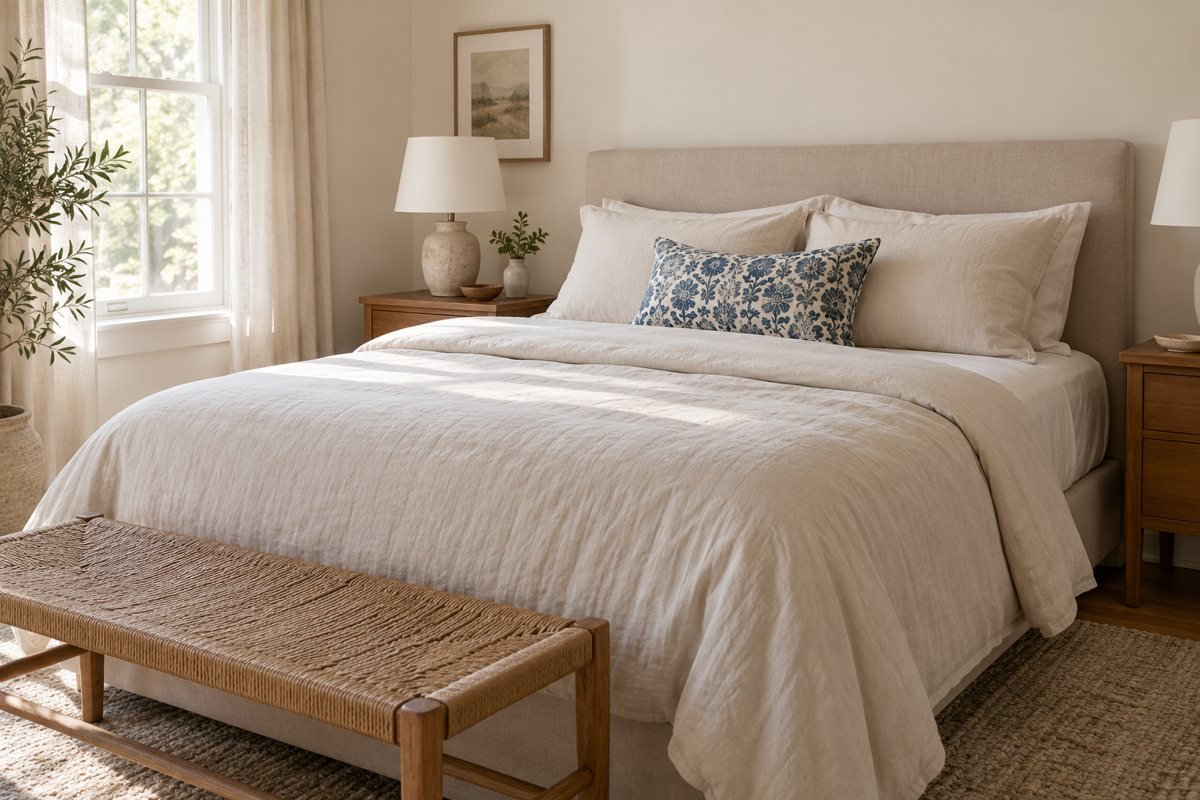
Keep the sheets and main cover neutral, then add one patterned pillow for a fresh look. This small change is easy to try with pieces you already have.
When you want a change, try the smallest step first. Swap one pillow cover, use a different blanket, or bring out a sheet from another set. You may find a new mix without buying anything.
Take a quick photo before and after the change. This helps you spot what worked when the room is no longer right in front of you. Keep the larger pieces steady while you test new colors. If the small change does not feel right, it is easy to undo. Over time, you will learn which shades and patterns you like living with.
14. A Relaxed Bed with Smooth Covers and a Simple Throw
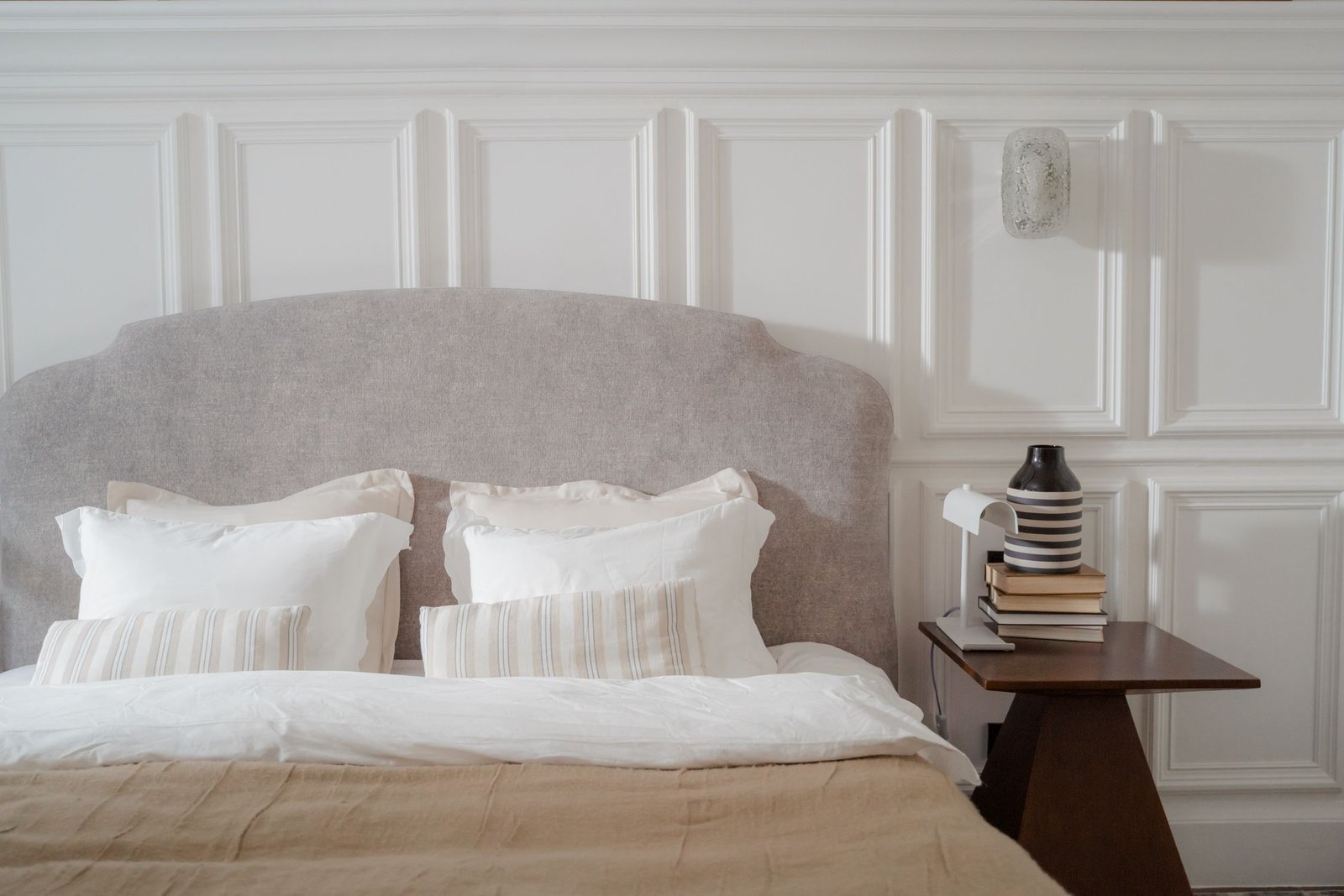
Pull the main cover into place, set the pillows neatly, and finish with one throw. Keep the folds relaxed so the look stays easy to repeat each morning.
A modern bed can look relaxed and still feel cared for. Pull the sheet smooth, bring the main cover into place, and set the pillows where you want them. Finish with the folded blanket if you use one. You do not need to remake every fold from scratch.
Notice which parts of the setup stay neat and which need constant fixing. If a throw slips off or extra pillows always end up on the floor, change that part of the plan. The best bedding look is one you can keep up on an ordinary morning, not only when you have time to style the room.
Make the Bed Work for You
Start with one choice: a color you love, a cover that fits well, or a blanket you already enjoy. Build from there rather than trying every idea at once. Keep the layers useful, give extra pieces a home, and leave yourself room to change things.
You do not need to copy a full bedroom to get a fresh look. A bed that is easy to care for and pleasant to use can make the room feel more settled. Keep what works, remove what gets in the way, and let your own daily routine guide the final result.